The Meaning Behind Purple Finches Suddenly Appearing At Your Pennsylvania Feeder
You glance out the window at your Pennsylvania feeder and something is different. Among the familiar regulars, there’s a bird you haven’t seen in a while, or possibly ever noticed quite this way before.
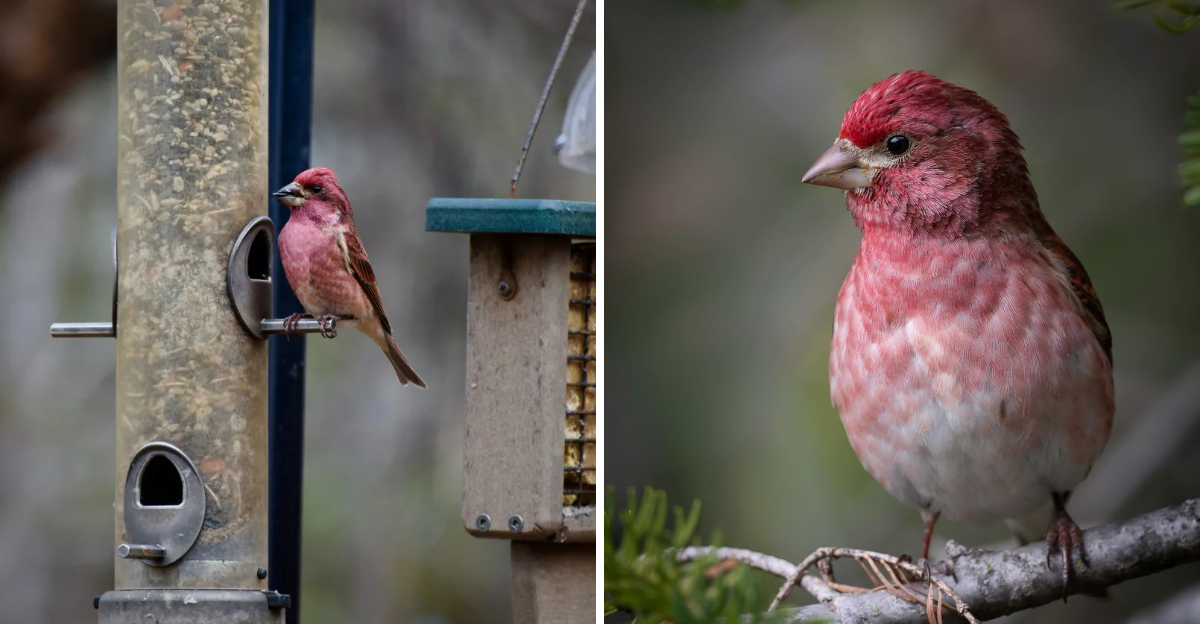
Rich raspberry red on the head and chest, softer streaking below, unmistakably a purple finch. And then suddenly there are several of them, where yesterday there were none. That kind of sudden appearance tends to make a person pay attention.
Purple finches don’t show up at Pennsylvania feeders randomly. Their arrival signals something specific about the season, about conditions in the broader landscape, and about what your feeder is offering that they need right now.
Understanding what’s behind their appearance makes the encounter considerably more interesting than a simple bird sighting.
Beyond the seasonal explanation, purple finches carry symbolic meaning that resonates with many people in ways that go well beyond ornithology. A sudden gathering of them at a feeder tends to feel significant, and across many traditions, it is.
1. Fall Movement May Be Starting
Every fall, something amazing happens across Pennsylvania. Purple finches that spent their summer raising young in northern forests begin moving south, and your backyard feeder might be sitting right in their path.
Late summer and early fall mark the start of what birdwatchers call post-breeding movement, when birds begin shifting away from their nesting grounds.
Purple finches do not always follow the same route every year. Their movements can be unpredictable, which makes a sudden appearance at your feeder feel extra special.
Some years, large numbers push south through Pennsylvania. Other years, only a handful pass through a given area. Paying attention to these patterns over time can make you a sharper backyard birder.
When you notice purple finches at your feeder in late August, September, or October, there is a good chance you are watching this seasonal movement play out right in front of you. Keep a journal or use a free app like eBird to record your sightings.
Tracking when they show up each year can help you predict future visits and get your feeder ready ahead of time.
Stocking up on black-oil sunflower seeds before fall arrives is a smart move. Birds that are traveling long distances need reliable food sources, and a well-stocked feeder can make your yard a regular stopping point.
Even a short visit from a traveling flock is a memory worth having. Fall movement is one of the most exciting times of year for Pennsylvania feeder watchers, so keep your eyes open and your binoculars nearby.
2. You Could Be Seeing A Local Pennsylvania Family
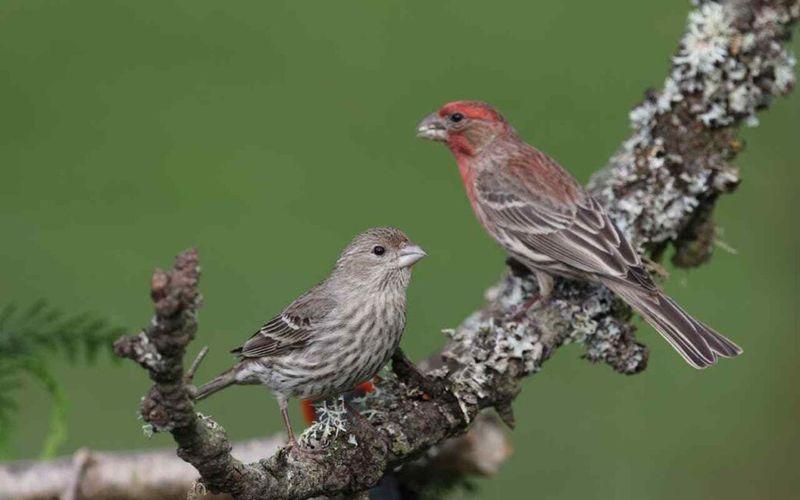
Not every purple finch you see is a traveler from far away. Pennsylvania actually has its own breeding population of purple finches, mostly found in the northern part of the state and at higher elevations like the Pocono Mountains and areas of the Allegheny Plateau.
If you live near these regions, you might be getting a visit from birds that were born just a few miles away.
Your Pennsylvania Garden Changes Every Week. Your Plan Should Too.
Gardening in Pennsylvania changes quickly throughout the season. Every Friday you’ll receive a simple weekly plan showing exactly what to plant, prune, fertilize, harvest, and protect so you never miss the right timing.
After the nesting season wraps up in mid to late summer, young purple finches begin exploring beyond the area where they were raised.
These freshly fledged birds are curious and hungry, and they often wander into new territory while learning how to survive on their own. A well-placed feeder can easily catch their attention during this exploratory phase.
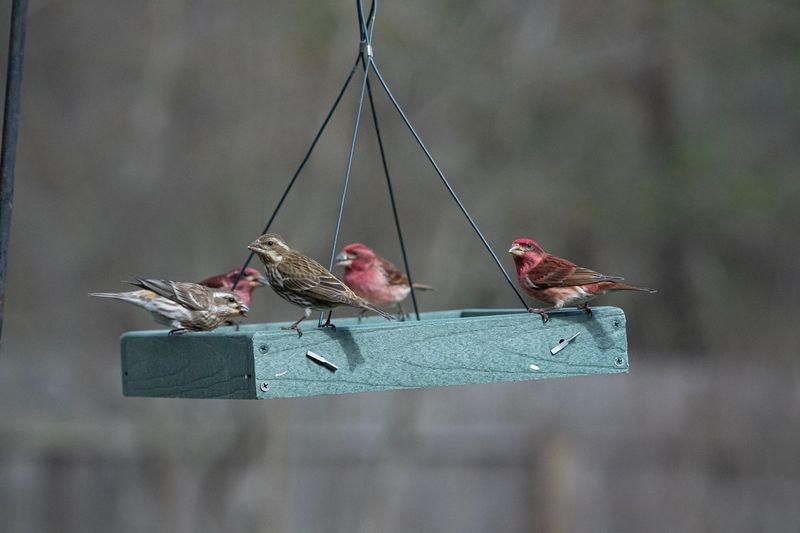
Young purple finches look a lot like adult females, with brown and white streaky patterns and no red coloring yet. If you see a group of streaky birds hanging around your feeder, do not assume they are all females.
Some of them might be young males that have not grown their rosy-red adult plumage yet. Watching them closely with binoculars can help you pick out the subtle differences.
Local family groups tend to stay in a region longer than passing migrants. If you suspect you have a local Pennsylvania family visiting, try keeping your feeder full and consistent.
Adding a fresh water source nearby can also help attract them and encourage repeat visits. Watching young birds learn to use a feeder is one of the most charming experiences a backyard birder can have, and it is completely free.
3. Your Feeder Has Their Favorite Seed
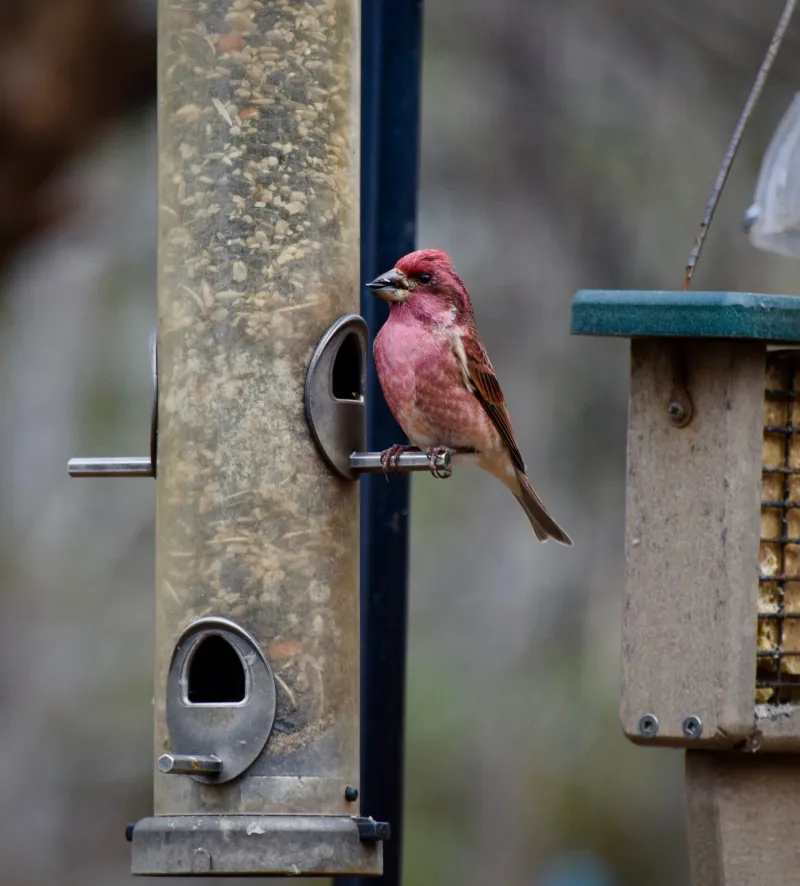
Black-oil sunflower seeds are like a magnet for purple finches. If your feeder is stocked with this type of seed, that alone could explain why these birds showed up out of nowhere.
Black-oil sunflower seeds have thin shells that are easy for small birds to crack open, and they are packed with fat and protein that birds need to fuel their active lives.
Purple finches are seed-eating specialists. Their strong, conical bills are built for crushing seeds efficiently, and they can work through a feeder full of sunflower seeds pretty quickly.
Beyond sunflower seeds, they also enjoy safflower seeds and nyjer seed, sometimes called thistle. Offering a mix of these options can help attract finches and keep them coming back for more.
Feeder placement matters too. Purple finches tend to prefer feeders that are placed near trees or shrubs where they can perch and feel safe before approaching the food.
A feeder hanging out in the open with no nearby cover might get fewer visits than one placed closer to natural vegetation. Trying different locations can make a real difference in how many birds you attract.
Keeping your feeder clean is just as important as keeping it full. Old, wet, or moldy seed can make birds sick and will cause them to avoid your yard.
Rinse your feeder with warm water every week or two and let it dry completely before refilling.
A clean feeder with fresh seed sends a clear signal that your yard is a safe and reliable place to eat. Purple finches will notice and reward you with repeat visits.
4. Nearby Conifers Are Making Your Yard More Appealing
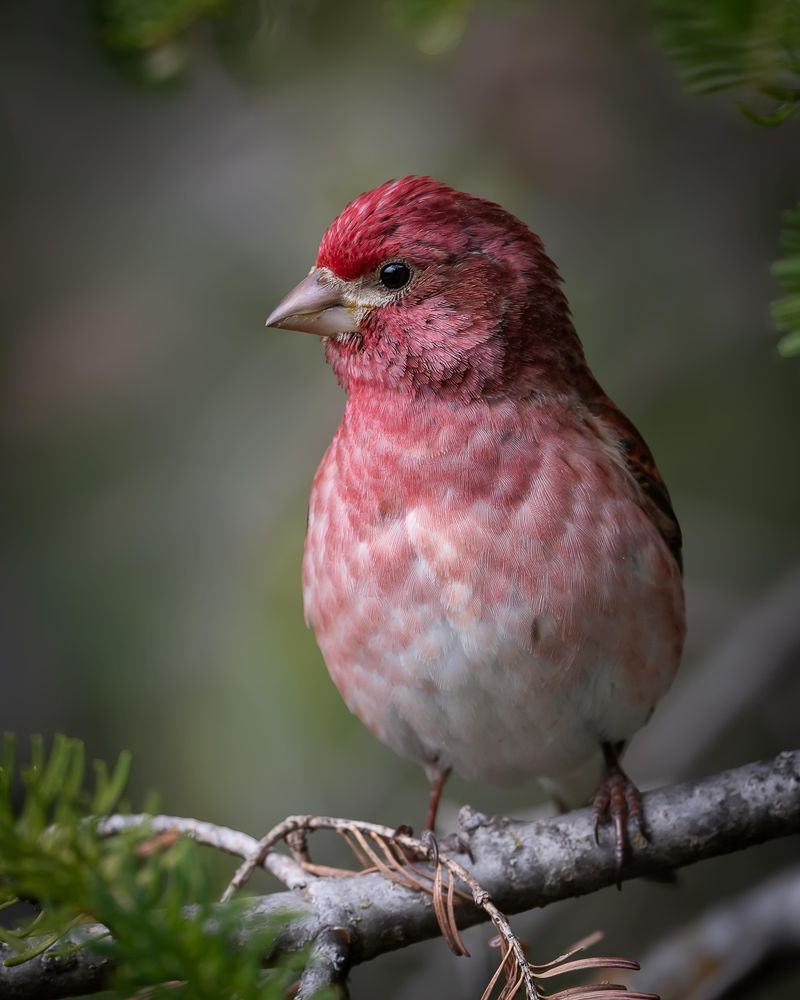
Purple finches are not just attracted to what is in your feeder. They are also drawn to the kind of habitat that surrounds it.
If your yard has pine trees, spruce, hemlock, or other evergreens nearby, you have something that makes your space feel familiar and comfortable to these birds.
Conifers are a core part of the purple finch’s natural habitat, and having them close to your feeder is a big advantage.
Evergreen trees serve multiple purposes for purple finches. They provide cover from predators like hawks and cats.
They offer resting spots where birds can perch between feeding trips. They also provide a windbreak during cooler fall and winter weather.
A yard with a mix of conifers and deciduous trees is especially attractive because it offers both food variety and shelter at the same time.
Purple finches also eat the seeds found inside conifer cones, so nearby evergreens can serve as a natural food source on top of what you put in your feeder.
When cone crops are good, the trees themselves may be drawing the birds in, with your feeder acting as a bonus snack bar. This combination is hard for a passing purple finch to resist.
If you do not have conifers in your yard yet, planting a few is a long-term investment in your birding hobby. Eastern white pine, Norway spruce, and Eastern hemlock are all excellent choices for Pennsylvania yards.
They grow relatively fast and provide year-round benefits for many bird species beyond purple finches. Even a single well-placed evergreen can noticeably improve your yard’s appeal to passing and wintering birds.
5. Natural Food Supplies May Be Shifting
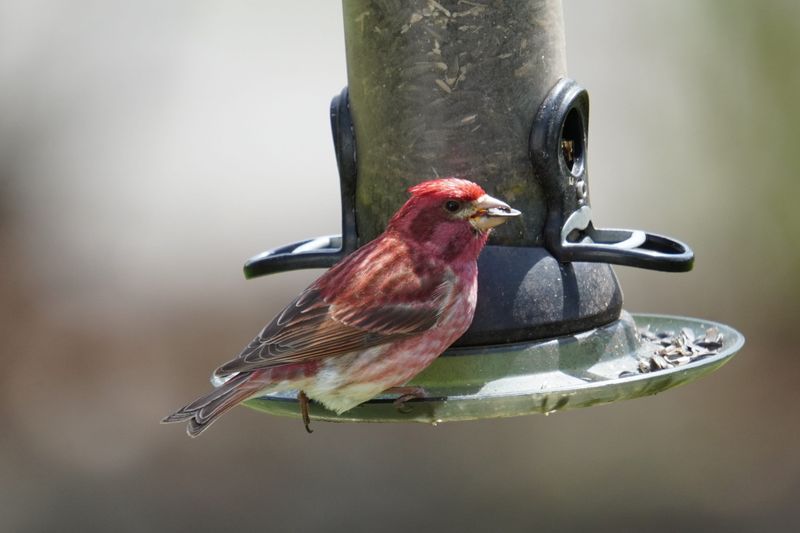
Purple finches spend most of their time foraging for wild foods like tree seeds, berries, flower buds, and insects during the warmer months. But when natural food supplies start to thin out, these birds begin looking for alternatives.
Your feeder might be catching their eye precisely because the wild menu is getting shorter as fall approaches.
Seed and cone crops in forests vary from year to year. Some years, trees produce huge amounts of seeds, which can keep finches well-fed deep into the season.
Other years, crops fall short, and birds have to range more widely to find enough food. When wild resources become scarce, birds that might normally stay hidden in the forest start showing up in backyards and residential areas where feeders are available.
Birders and scientists call this kind of movement an irruption. An irruption year is when finch species show up in unusually large numbers at feeders across a region because natural food sources have dropped significantly.
Purple finches are one of several species that can irrupt in Pennsylvania, along with pine siskins and common redpolls. Seeing a big flock arrive suddenly at your feeder might mean you are witnessing one of these special events.
Paying attention to local birding reports can help you understand what is happening in your area. Groups like the Pennsylvania Society for Ornithology or online platforms like eBird often share information about irruption years and unusual finch movements.
Knowing the broader picture makes your backyard sightings feel even more connected to something larger happening across the region. Keep your feeder stocked and enjoy the show.
6. Make Sure They Aren’t House Finches
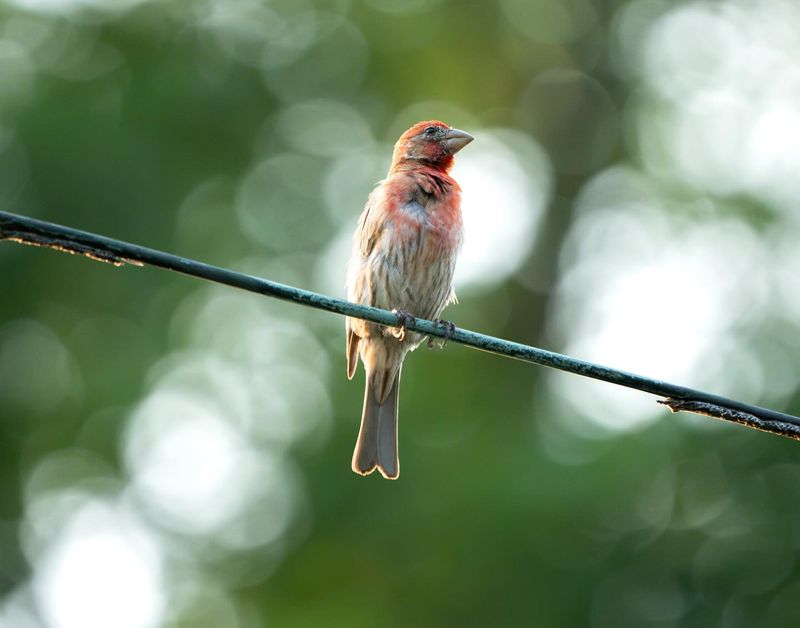
Here is something that surprises a lot of backyard birders: purple finches and house finches look remarkably similar, and mixing them up is one of the most common identification mistakes made at Pennsylvania feeders.
Getting a closer look can save you from recording the wrong bird in your journal and help you truly appreciate what is visiting your yard.
The male purple finch is often described as looking like a sparrow that was dipped in raspberry juice. His red coloring covers his head, chest, and back in a rich, even wash of rosy-red.
House finches, by comparison, show brighter, more orange-red coloring concentrated mostly on the head and chest, with heavy dark streaking running down the belly and sides. That streaking is one of the easiest field marks to look for.
Female purple finches have a bold white eyebrow stripe called a supercilium that stands out clearly against their brown face. Female house finches have a much plainer face with no strong eyebrow stripe.
Learning these differences takes a little practice, but once you see them a few times, they become much easier to spot. Keeping a field guide nearby or using a birding app with photos can speed up your learning.
Bill shape is another clue worth checking. Purple finches have a slightly curved upper bill that gives their face a more rounded look.
House finches have a straighter, smaller bill. Both species are wonderful birds, and having either one at your feeder is a treat.
But correctly identifying which one you are looking at makes the experience even more rewarding and sharpens your birding skills over time.