What California Plumeria Owners Should Do When Leaves Start Yellowing Before Fall
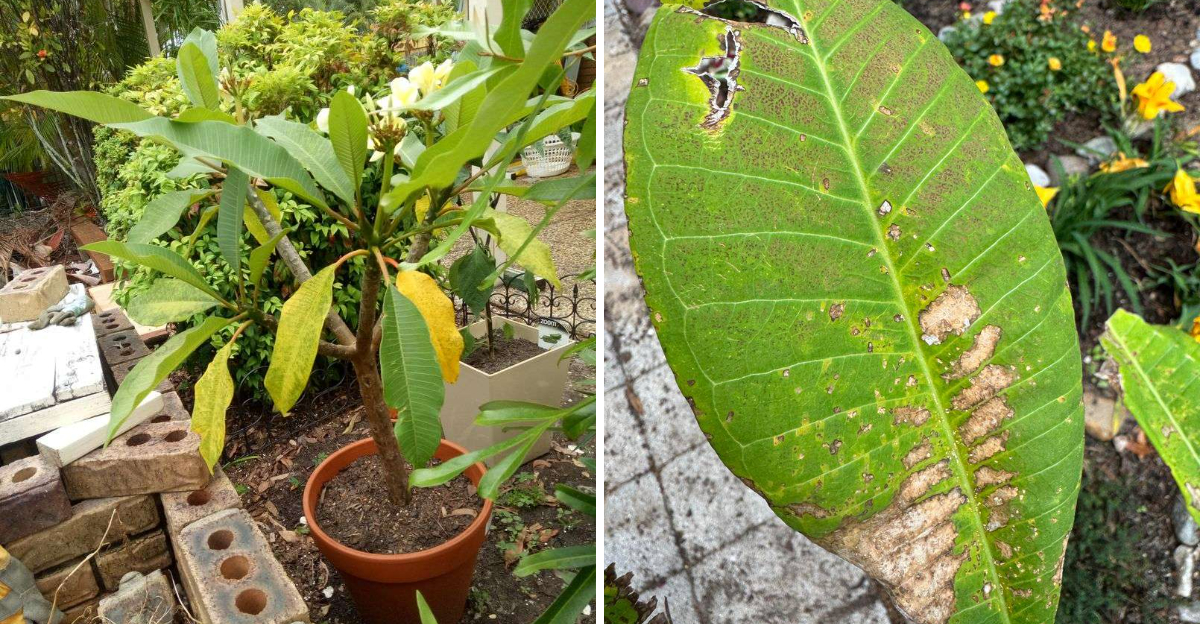
Yellow leaves on a plumeria in late summer have a way of catching California gardeners completely off guard. The plant looked great a few weeks ago, it is still technically growing season, and now something is clearly going on.
Before you panic though, it is worth taking a breath and actually looking at what is happening rather than jumping straight to worst-case scenarios.
San Diego County Master Gardener guidance notes that some leaf drop in November or December can be a completely normal part of the seasonal cycle for plumeria, which means yellowing that shows up well before then is usually pointing to something more specific and worth investigating.
Plumeria rust, spider mite activity, watering habits, drainage issues, and the gradual shift toward cooler fall temperatures can all play a role. The clues are usually right there on the leaves if you know what to look for.
1. Rust Leaves Clues Under The Foliage
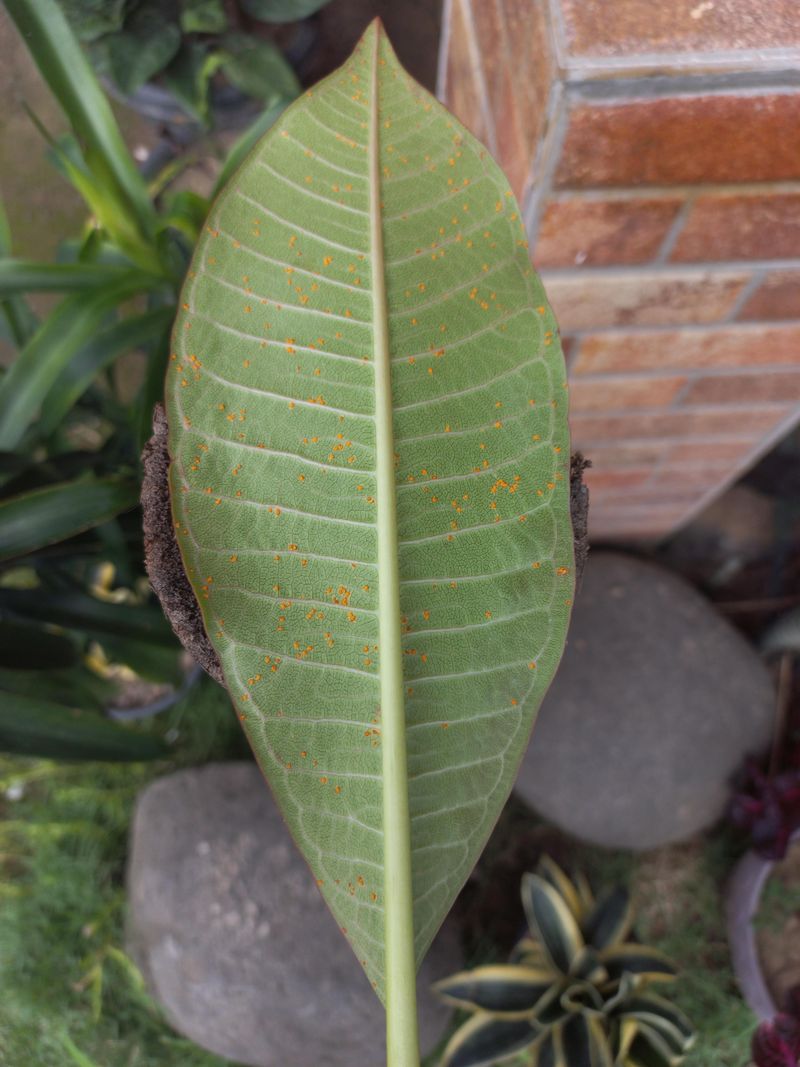
Flipping a yellowing plumeria leaf over can reveal something that general watering or fertilizer changes would never fix. Plumeria rust, caused by a fungal pathogen, produces yellow specks that can appear on both the upper and lower surfaces of affected foliage.
The undersides of leaves often show the most telling signs, including powdery orange or rust-colored spore masses that distinguish this disease from simple seasonal color change.
Not every yellow spot on a plumeria leaf confirms rust, so looking at the overall pattern matters. Rust symptoms tend to appear as scattered specks rather than broad, even yellowing across the whole leaf.
If the discoloration looks patchy and the underside shows any powdery residue, rust becomes a more reasonable possibility worth investigating further.
California gardeners who grow plumeria outdoors in warm Southern California microclimates should check new foliage regularly during the growing season.
Catching rust symptoms early gives you more options for managing the problem through cultural steps before it spreads more widely across the plant.
A hand lens can help make the inspection more reliable when spots are small or the leaf surface is hard to read clearly with the naked eye.
2. Tiny Mites Can Trigger Bigger Changes
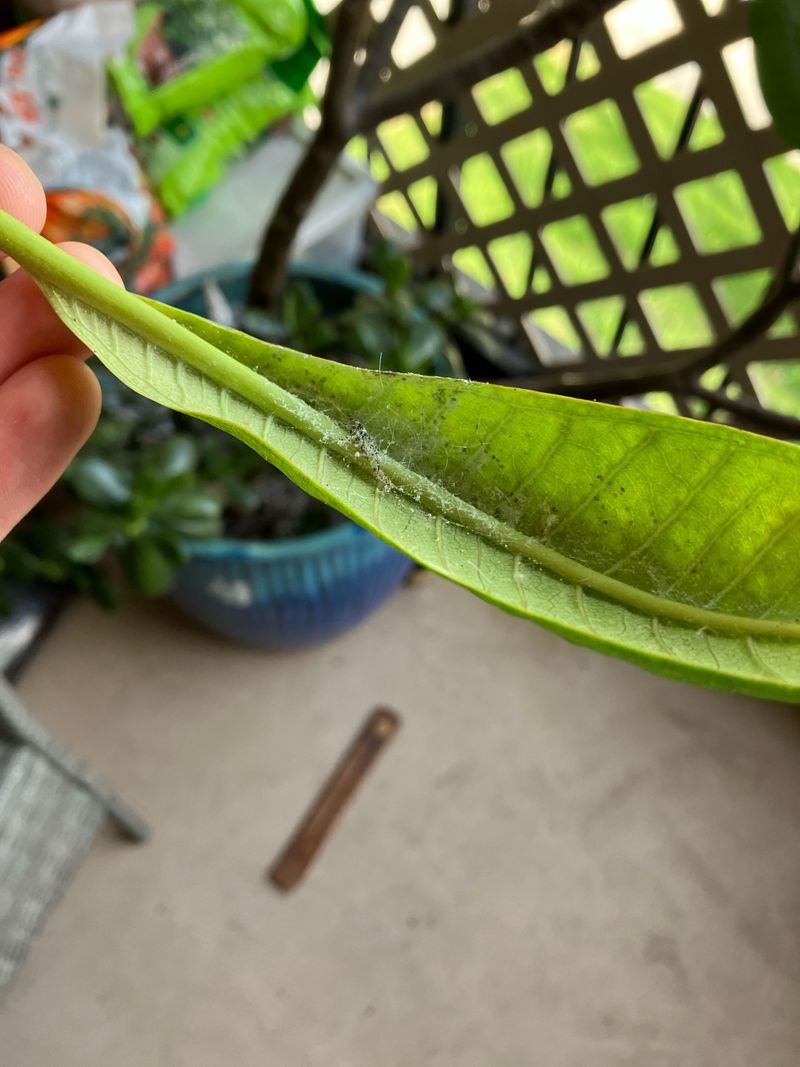
Noticing that a plumeria’s leaves look a little off before any obvious spots appear can be one of the first hints that something very small is causing the trouble.
Spider mites documented on California plumeria include the sixspotted spider mite, which UC IPM identifies as a pest capable of producing leaf yellowing, bronzing, blistering, webbing, deformation, and eventual leaf drop.
Twospotted and Pacific spider mites can also affect plumeria foliage, so keeping identification language measured makes sense when you cannot yet see the pest clearly.
These mites are extremely small, and reliable identification often requires a hand lens rather than the naked eye alone. The undersides of leaves, along midribs and veins, and areas where fine webbing appears are the most useful spots to inspect.
Yellowing alone does not confirm a mite infestation, but when bronzing, distortion, or webbing accompanies the color change, mites become a more likely explanation worth pursuing.
Your California Garden Changes Every Week. Your Plan Should Too.
Gardening in California changes quickly throughout the season. Every Friday you’ll receive a simple weekly plan showing exactly what to plant, prune, fertilize, harvest, and protect so you never miss the right timing.
Southern California’s warm, dry summer conditions can favor mite population growth, making late-summer inspections especially worthwhile for California plumeria growers.
If you spot webbing or stippling that spreads across multiple leaves, a closer look with magnification can help clarify what you are dealing with before deciding on any next steps.
Cultural management and careful monitoring are reasonable starting points when mite activity is suspected.
3. Check The Soil Before Reaching For Water
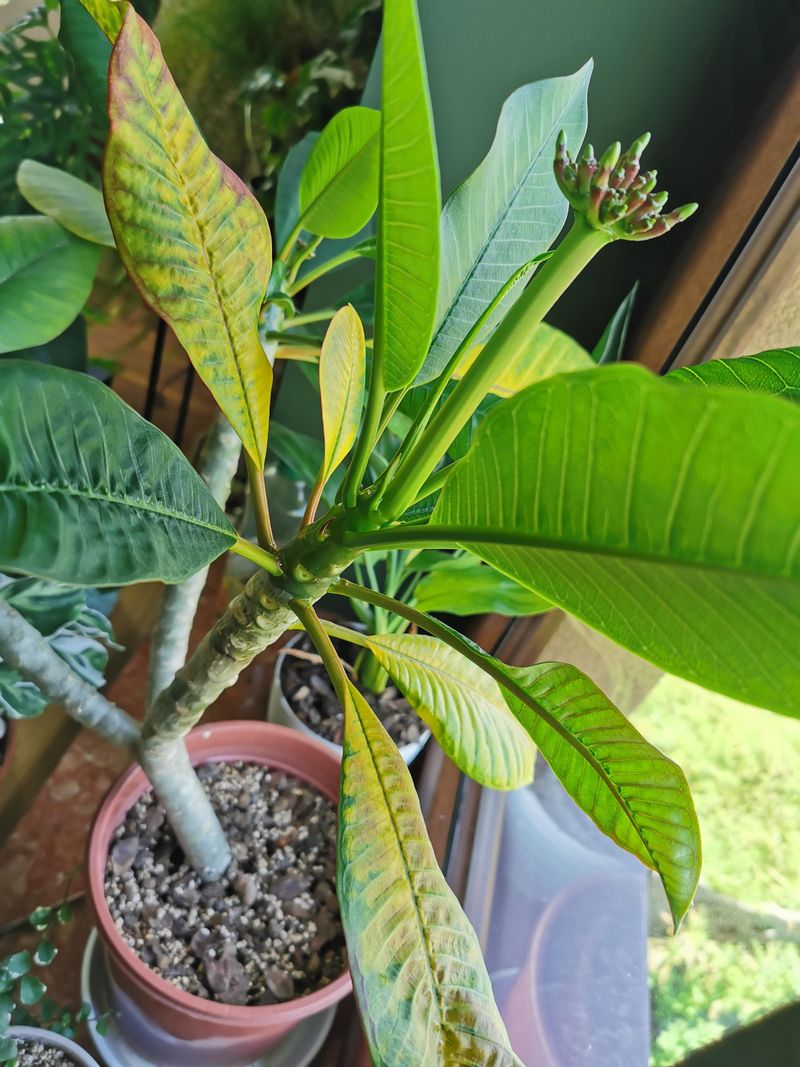
Yellow foliage on a plumeria does not automatically mean the plant is thirsty, and adding more water without checking soil conditions first can sometimes make things worse rather than better.
UC ANR recommends watering plumeria deeply and then allowing the growing medium to dry out somewhat before the next irrigation.
Reaching for the hose as soon as leaves start to yellow skips an important step in the diagnostic process.
Checking soil moisture before making any watering changes is a practical habit that California plumeria owners can build into their regular routine.
Pushing a finger a couple of inches into the potting mix or garden soil gives a more reliable reading than guessing from the surface alone.
A mix that still feels damp well below the surface probably does not need more water yet, regardless of how the foliage looks.
Watering needs vary considerably depending on container size, plant size, heat levels, drainage conditions, and whether the plumeria is growing in the ground or in a pot.
A plumeria in a small container sitting on a hot Southern California patio dries out much faster than one growing in the ground with some afternoon shade.
Matching irrigation to actual conditions rather than following a fixed schedule tends to serve plumeria growers much better over the long run.
4. Good Drainage Matters Beneath The Surface
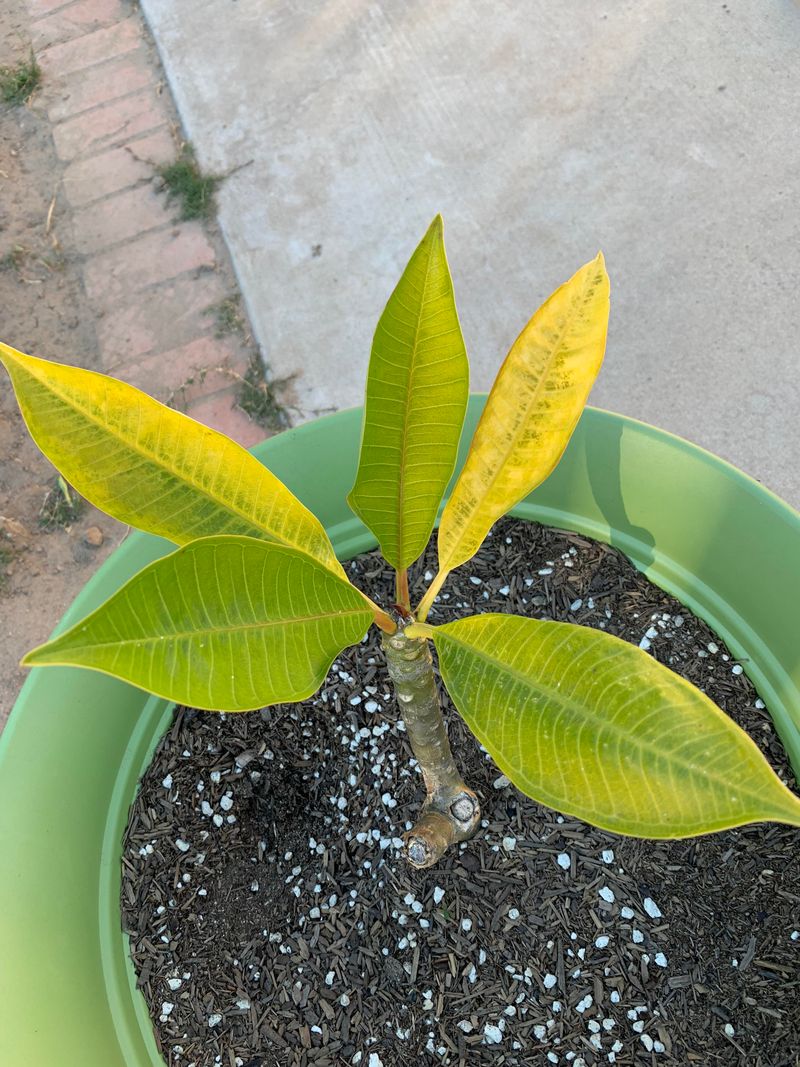
What happens below the soil line can have just as much influence on a plumeria’s foliage as anything visible above ground. UC ANR recommends slightly acidic, well-drained soil for plumeria and specifically suggests a cactus-type potting mix for container plants.
Persistently wet conditions around the roots are not favorable for this plant, and containers that hold water for unusually long periods can create problems that eventually show up as leaf color changes.
Drainage holes are a basic but genuinely important detail for anyone growing plumeria in a pot in California.
A container without adequate drainage, or one where the holes have become blocked, can keep roots sitting in moisture far longer than the plant tolerates well.
Checking whether water flows freely out of the bottom of the pot after irrigation is a quick step that takes very little time but provides useful information.
Gardeners who have recently repotted a plumeria or switched to a heavier soil mix may want to reconsider the growing medium if drainage seems slow.
Cactus-type mixes tend to allow water to move through more freely than standard all-purpose potting soils, which can hold moisture longer than plumeria roots prefer.
Yellow leaves alone are not enough to diagnose a root problem, but drainage is a reasonable factor to rule out when other explanations have not fully accounted for the symptoms.
5. Rusty Leaves Belong Out Of The Garden
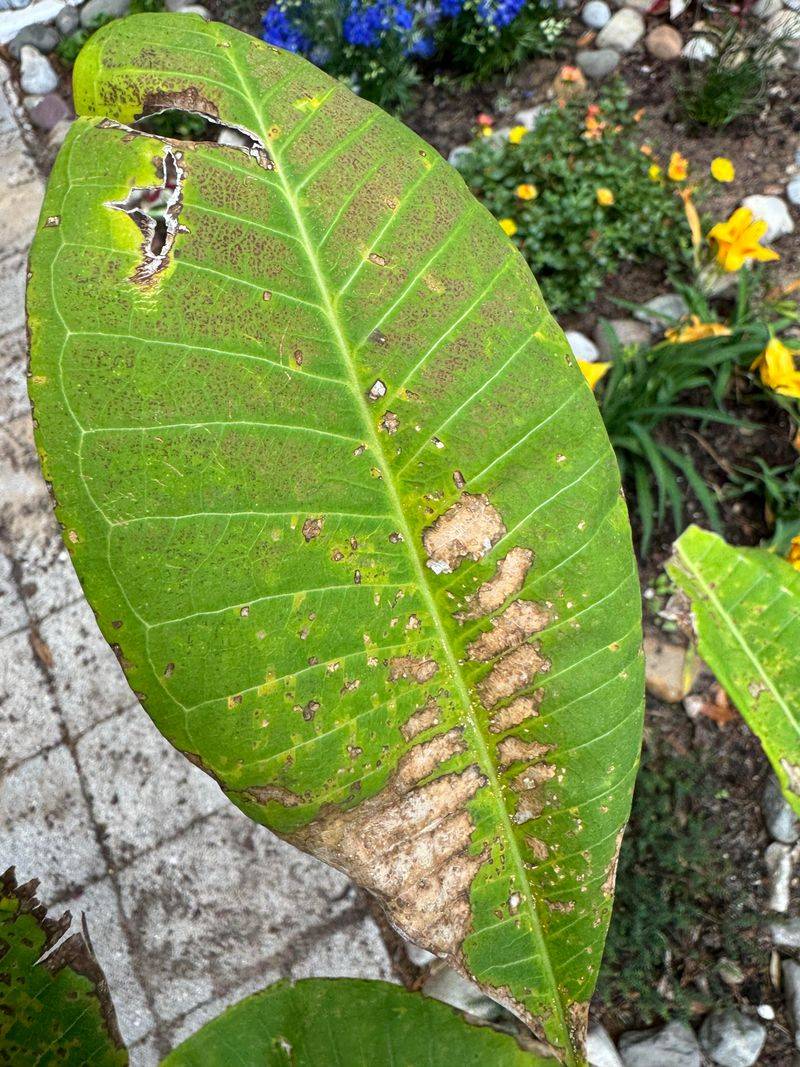
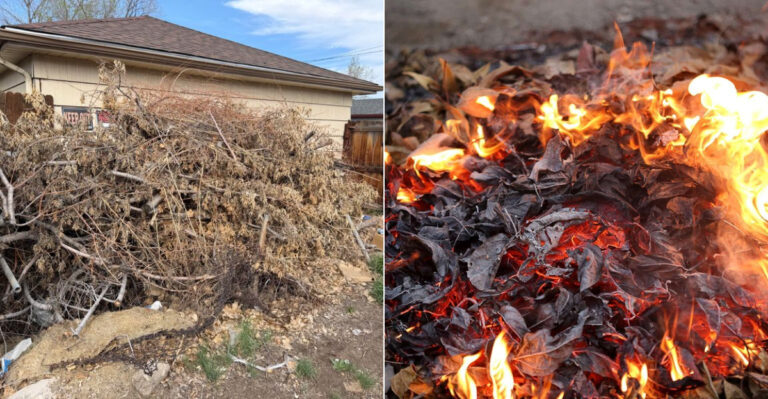
Sanitation is one of the more straightforward cultural steps available when plumeria rust symptoms are clearly present on foliage. UC ANR advises removing affected leaves and collecting dropped foliage as part of cultural management for this disease.
Leaves showing visible rust symptoms, whether still attached or already on the ground, are worth picking up and disposing of carefully rather than leaving them around the base of the plant.
This recommendation applies specifically when rust symptoms are confirmed or strongly suspected, not as a general response to any yellowing that appears before fall.
Stripping healthy foliage simply because a few leaves are turning yellow would remove leaves the plant still needs for photosynthesis and growth.
The goal is to reduce the amount of infectious material near the plant, not to remove every leaf that shows any color change at all.
Careful cleanup around the base of the plumeria is a practical part of the process. Dropped leaves can harbor spores that continue the disease cycle if they are left sitting in the soil or mulch beneath the plant.
Disposing of collected foliage away from the garden, rather than composting it, reduces the chance of reintroducing rust material to the same growing area.
Sanitation by itself may not fully resolve a rust problem, but it is a reasonable and low-cost management step that California plumeria owners can take without delay.
6. Better Airflow Helps Troubled Foliage
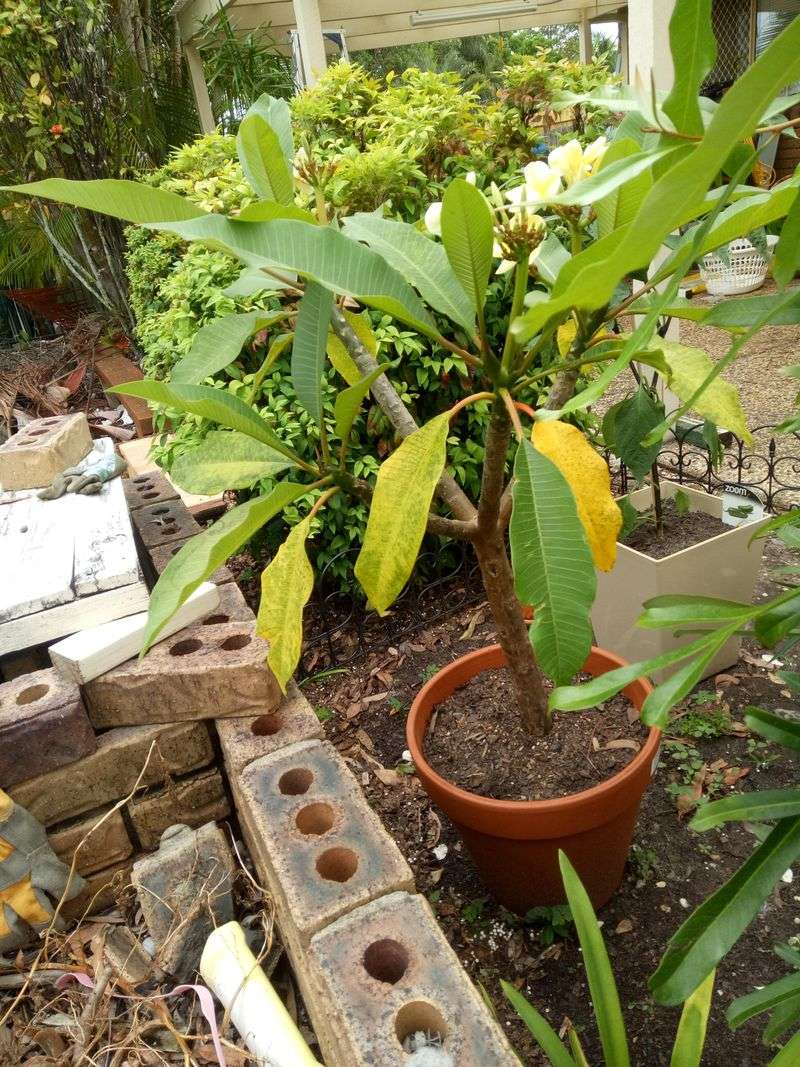
Crowded growing conditions can quietly work against a plumeria’s ability to stay healthy, particularly when a fungal disease like rust is involved.
UC ANR guidance for managing plumeria rust includes increasing airflow around affected plants as a cultural measure worth considering.
When plants are positioned too close together, air moves less freely around the foliage, and moisture lingers on leaf surfaces longer than it would in a more open arrangement.
Rust spores can spread through splashing rain or irrigation water, which makes how and where you water worth thinking about.
Directing irrigation toward the root zone rather than repeatedly wetting the foliage reduces the amount of moisture sitting on leaves and can limit the conditions that favor spore movement.
Overhead watering that soaks the canopy regularly is generally less favorable for plumeria health than ground-level irrigation aimed at the roots.
Practical steps like repositioning potted plumeria to a spot with better air movement or avoiding unnecessary crowding with nearby plants can support overall plant health without requiring significant effort or expense.
Improved airflow is not a complete solution on its own, but combined with sanitation and careful watering habits, it forms part of a reasonable cultural approach for California gardeners dealing with rust or other foliage concerns.
Small adjustments to plant placement can sometimes make a noticeable difference in how well foliage holds up through the rest of the growing season.
7. Cooler Days Call For Less Water
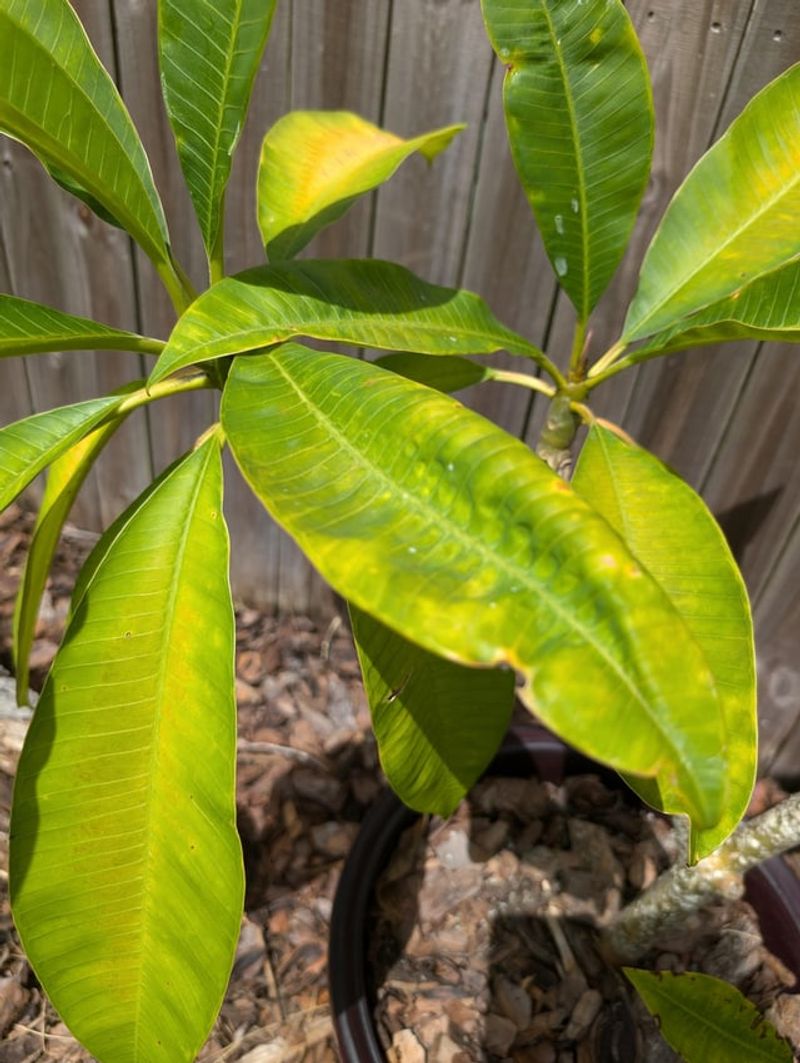
As late summer shifts into fall across California, the environmental conditions that drive a plumeria’s water needs begin to change noticeably. Temperatures drop, days shorten, and the plant’s growth rate starts to slow in preparation for the cooler months ahead.
San Diego County Master Gardener guidance recommends reducing watering frequency as temperatures cool, while continuing occasional thorough irrigation during the gradual transition toward dormancy.
Responding to actual weather and growing conditions, rather than switching to a fixed fall schedule on a particular date, tends to work better for plumeria owners.
Coastal Southern California locations may cool down more gradually than warmer inland areas, so the timing of any irrigation reduction can reasonably vary from one garden to the next.
Watching how quickly the soil dries out after watering gives a more reliable guide than the calendar alone.
Cutting off water abruptly simply because fall has arrived on the calendar is not the approach supported by current horticultural guidance. The goal is a gradual reduction in irrigation frequency that mirrors the plant’s own shift toward a slower growth phase.
Continuing to check soil moisture before watering, even as the season changes, remains a practical habit that helps gardeners avoid both overwatering and unnecessarily stressing a plumeria that still has some active growing weeks left before temperatures drop further.
8. Late Summer Yellowing Is Not Quite Winter Yet
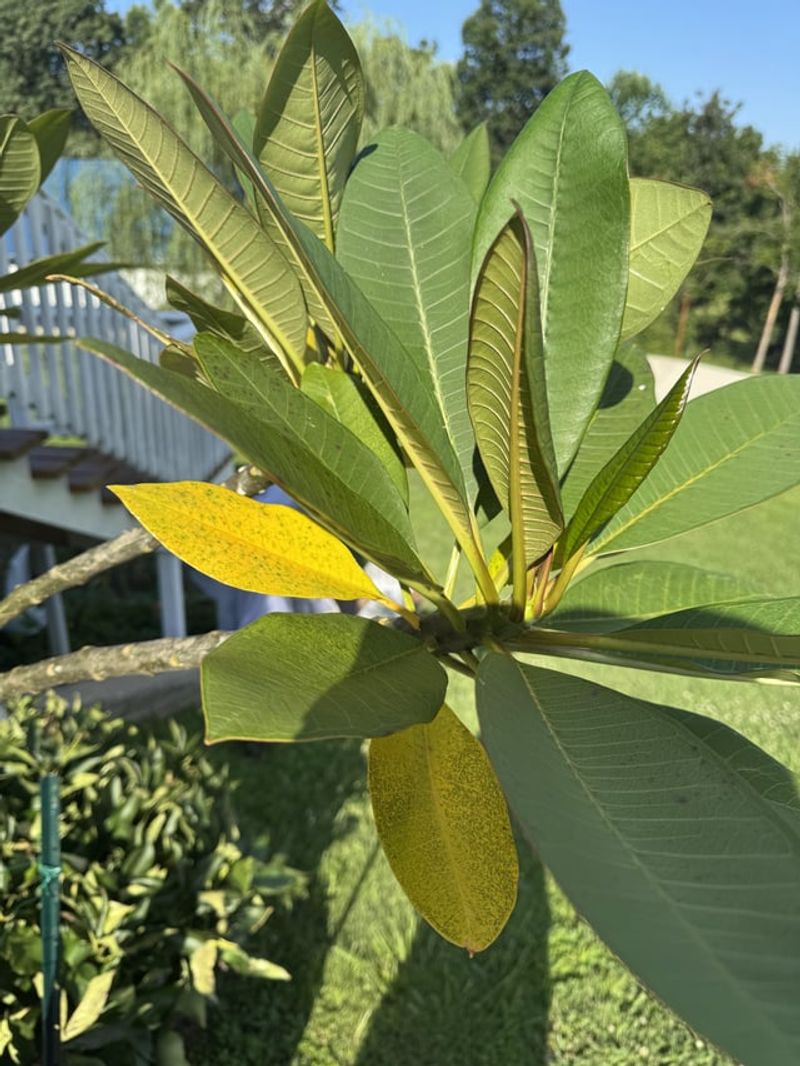
Finding the first yellow leaves on an otherwise lush-looking plumeria in August or September can feel alarming, but the response that makes the most sense is a careful look rather than an immediate intervention.
In Southern California, summer is described as the peak growing season for plumeria, and normal seasonal leaf drop is more commonly associated with November or December according to San Diego County Master Gardener guidance.
Yellowing that appears well before that window is worth examining more closely rather than automatically writing off as early dormancy.
Several different factors can produce similar-looking symptoms, which is why working through a short checklist before taking action tends to give better results than reacting to the color change alone.
Checking foliage for rust specks and powdery residue, looking at the undersides of leaves for webbing or mite activity, assessing soil moisture, and thinking about recent irrigation and drainage conditions all provide useful information.
The pattern of yellowing, whether it is scattered, confined to older lower leaves, or spreading across the whole canopy, can also offer clues about what is happening.
Individual older leaves on a plumeria can yellow and drop naturally without signaling a broader problem.
Watching how symptoms develop over the following week or two, rather than acting immediately on the first yellow leaf, gives a clearer picture of whether the change is isolated or part of a more widespread pattern that deserves a more deliberate response from California plumeria growers.
9. Putting It All Together For Your Plumeria
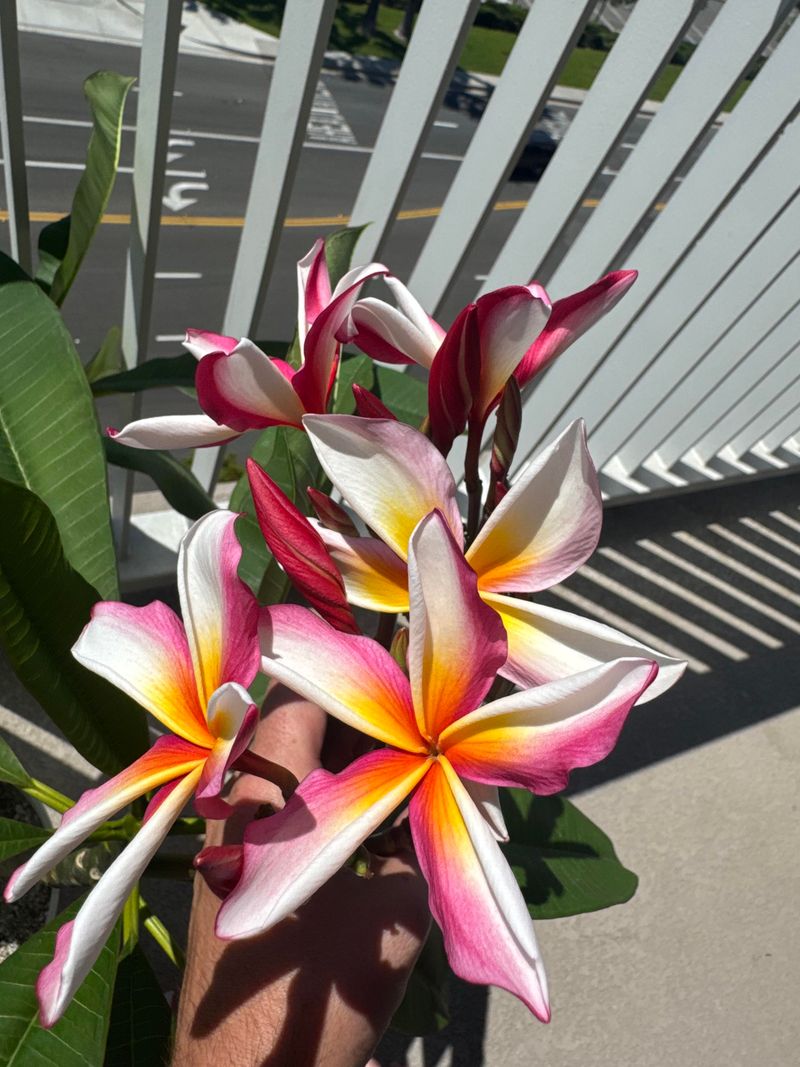
Working through a simple inspection routine when plumeria leaves start yellowing before fall gives California gardeners a much better starting point than guessing.
Looking at the pattern and location of yellowing, checking both sides of affected leaves, assessing soil moisture, and thinking about recent watering and weather conditions all feed into a clearer picture.
No single yellow leaf tells the whole story, but a combination of clues usually points toward a more manageable set of possibilities.
Rust and spider mites are two of the more specific causes worth ruling out, since both produce visible symptoms beyond simple yellowing that can help distinguish them from seasonal or moisture-related changes.
Drainage and watering habits are worth revisiting even when no pest or disease is found, since plumeria in gardens and containers can be sensitive to conditions that shift as summer winds down.
Airflow and sanitation are low-effort steps that support plant health without requiring significant resources.
California’s regional variation means that no single seasonal calendar applies equally to every plumeria grower across the state.
Gardeners in coastal San Diego or Los Angeles County will experience a different fall transition than those in warmer inland valleys.
Staying observant, checking conditions before making changes, and drawing on credible horticultural guidance specific to California plumeria culture gives growers the best foundation for keeping their plants healthy as the season gradually shifts toward cooler weather ahead.