The Meaning Behind Seeing A Great Blue Heron Near Your Oregon Garden
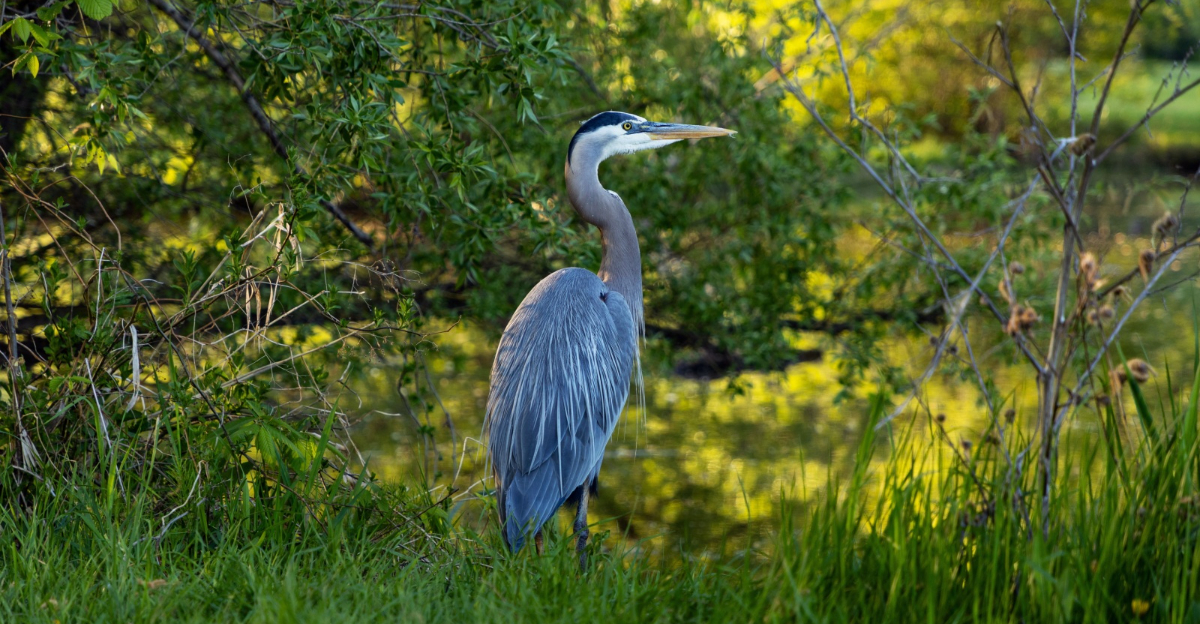
Spotting a giant, prehistoric-looking gray bird standing frozen in your Oregon yard is like having an unexpected Jurassic Park moment in your pajamas.
Great Blue Herons are absolute masters of the staring contest, and they love visiting local ponds, lawns, and creeks (mostly to steal goldfish, let’s be honest).
While some folks might search for spiritual or mystical meanings when one drops by, these leggy visitors are actually telling you something much more practical about your neighborhood.
Their presence is a giant, feathered signpost that your local ecosystem is seriously thriving.
It means you probably have incredibly healthy water, plenty of fat frogs, and a booming backyard food chain.
1. There Is Water Or Reliable Food Nearby
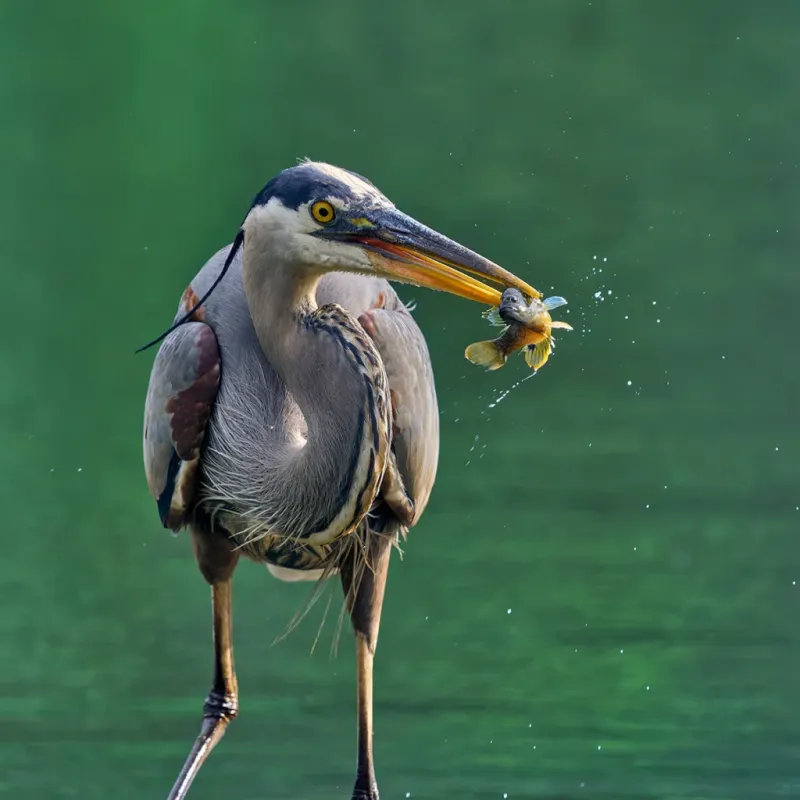
A tall gray bird standing motionless at the edge of a pond is not there by accident. Great Blue Herons are patient, skilled hunters, and when one appears near your Oregon garden, the first thing it is telling you is that food is close by.
Fish, frogs, salamanders, aquatic insects, and other small animals all draw herons into feeding areas.
Oregon’s landscape offers herons a wide variety of hunting opportunities. A backyard water feature, a drainage ditch, a small creek running behind a property, or even a shallow low spot that stays wet after rain can all hold the kinds of prey a heron is looking for.
The bird does not wander randomly. It moves with purpose, scanning water edges and soft ground for movement.
If a heron visits your garden more than once, it is worth looking around at what water sources exist nearby. You may discover a small seasonal stream, a neighbor’s pond, or a wet area you had not fully noticed before.
The heron is essentially pointing toward a feeding corridor that passes through or near your property. Reliable food in the area is almost certainly the reason it keeps coming back.
2. Your Garden Is Close To Suitable Habitat
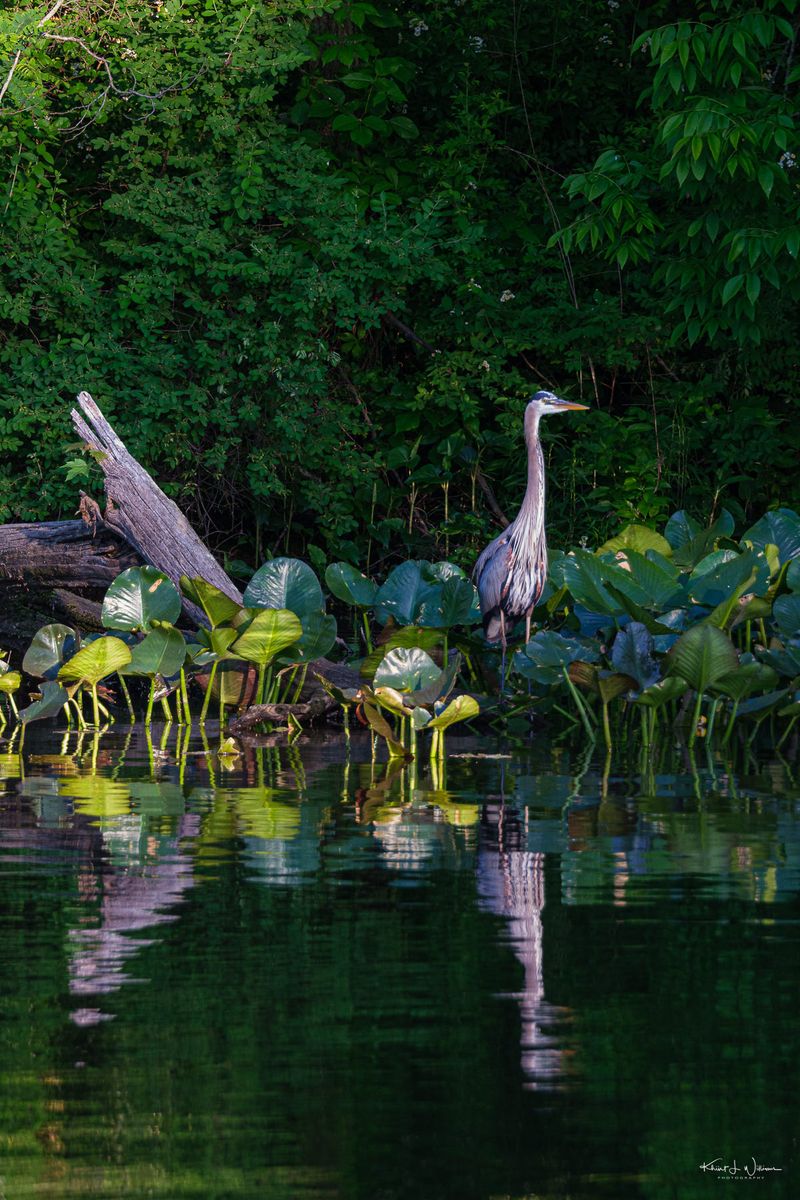
Ripples spreading across a backyard water feature sometimes signal more than wind. They can mean a heron has just lifted off after a feeding stop, heading back toward the wetland, estuary, or stream where it roosts.
Oregon herons use a surprisingly wide range of habitats, including rivers, tidal flats, farm ponds, pastures, and even urban greenways.
When one of these birds shows up near your garden, it often means your property sits within reach of suitable heron habitat.
Oregon’s valleys, coastal areas, and river corridors support healthy heron populations, and those birds move across the landscape daily in search of food.
A garden that borders a wetland edge, a creek corridor, or even a neighborhood park with a water feature may sit right inside a heron’s regular travel route.
This is not a mysterious sign. It is simply geography.
Your garden may be positioned in a way that makes it a natural stop between feeding areas. Homeowners near Oregon’s many waterways, riparian zones, or even retention ponds in suburban developments may notice heron visits more often than they expect.
Your Oregon Garden Changes Every Week. Your Plan Should Too.
Gardening in Oregon changes quickly throughout the season. Every Friday you’ll receive a simple weekly plan showing exactly what to plant, prune, fertilize, harvest, and protect so you never miss the right timing.
The bird is not choosing your garden for any special reason beyond its location relative to the habitat it depends on every day.
3. A Backyard Pond May Be On Its Hunting Route
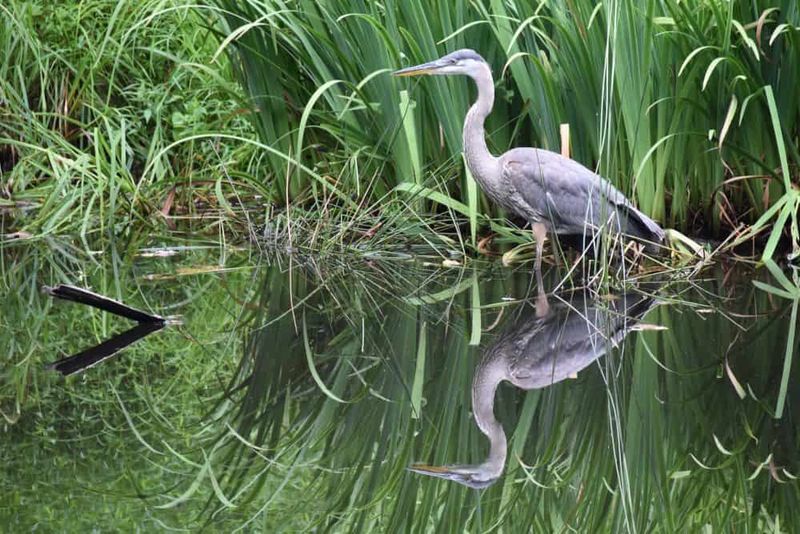
Homeowners who keep koi or goldfish in a backyard pond sometimes walk outside to find a heron already there, standing completely still over the water. It can feel startling, even a little surreal.
But for the heron, that pond is simply a convenient food source along a route it travels regularly. Oregon’s suburban and rural landscapes are full of backyard water features, and herons learn their locations quickly.
A well-stocked ornamental pond is an easy meal. Fish near the surface, especially slower ornamental varieties, are visible targets for a bird that can stand motionless for long stretches before striking.
If you have a pond with fish you care about, there are wildlife-safe options for protecting them, including pond netting, motion-activated sprinklers, or adding deeper areas where fish can retreat out of reach.
The key is to address the situation without harming the bird. Great Blue Herons are native wildlife and part of Oregon’s ecosystem.
Deterring them from a pond does not require anything harmful or aggressive. Simple physical barriers or habitat modifications can reduce visits without putting the bird at risk.
Thinking of the heron as a wild neighbor passing through, rather than a threat, makes it easier to find a calm and practical solution.
4. Healthy Frog And Amphibian Populations Can Attract Herons
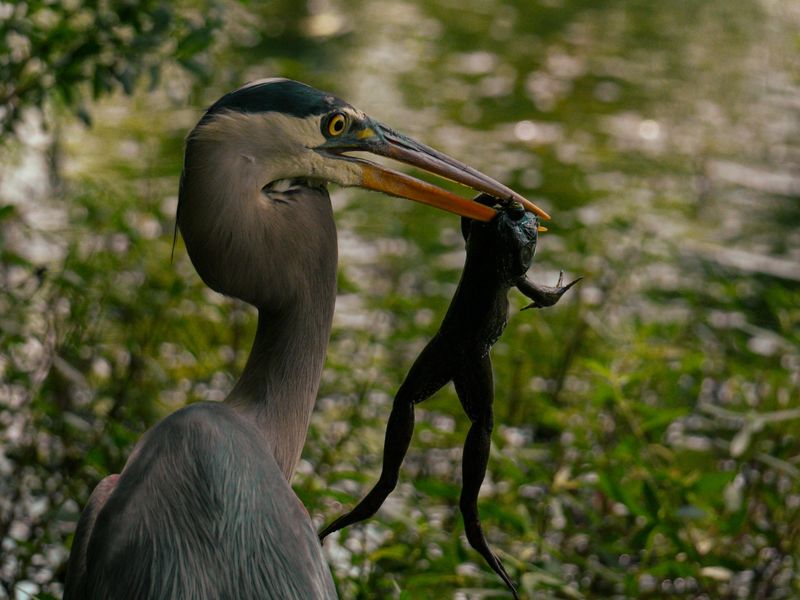
Frogs calling near a garden on a spring evening in Oregon are a welcome sound for many homeowners. They signal a healthy wet area, clean water, and a functioning little ecosystem right in the backyard.
They can also signal to a passing heron that dinner is nearby. Amphibians, including frogs, toads, and salamanders, are a regular part of a Great Blue Heron’s diet in many Oregon landscapes.
If your garden has a pond, a rain garden, a boggy low spot, or even a well-watered area with dense ground cover, it may be supporting amphibian populations without you realizing it.
Pacific tree frogs, red-legged frogs, and rough-skinned newts are all native species that can thrive in garden settings near water.
A heron that appears near these areas is likely responding to the sounds and movements of amphibian activity.
This does not mean you need to remove your frog-friendly habitat. Amphibians are beneficial for gardens, eating pest insects and supporting local food webs.
A heron visit is simply a sign that your garden is part of a living, connected landscape. Enjoying the bird from a respectful distance while keeping your habitat features intact is a reasonable and rewarding response for any homeowner.
5. Open Lawns Can Be Hunting Grounds Too
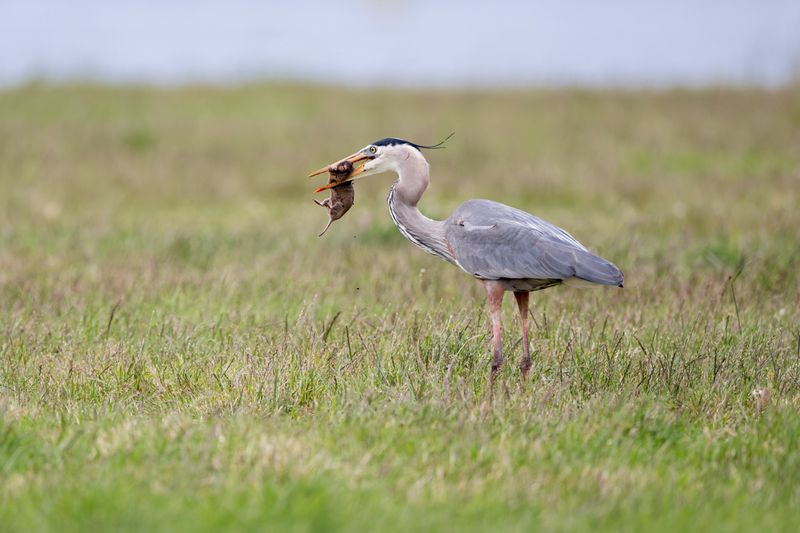
Not every heron sighting happens near water. Sometimes the bird simply appears in the middle of an open lawn, moving slowly across the grass with its long neck bent forward and its eyes fixed on the ground.
For many Oregon homeowners, this is the most surprising kind of heron encounter because it happens so far from what most people think of as heron habitat.
Great Blue Herons forage away from water more often than most people realize. Open fields, pastures, grassy areas, and even suburban lawns can hold small prey worth investigating.
Voles, large insects, earthworms, and other ground-level animals can draw a heron into open spaces. After rain, when earthworms surface and soil becomes soft, a lawn can become an attractive foraging spot.
Oregon’s mix of rural farmland, suburban developments, and urban parks means herons regularly move through a wide variety of open spaces. A heron crossing your lawn is not lost or confused.
It is hunting, using the same patient technique it uses near water. Watching it move across an open yard is a genuinely impressive wildlife moment.
Keeping a respectful distance and avoiding any action that would startle or chase the bird allows you to enjoy the encounter fully.
6. The Bird Is Usually Just Passing Through
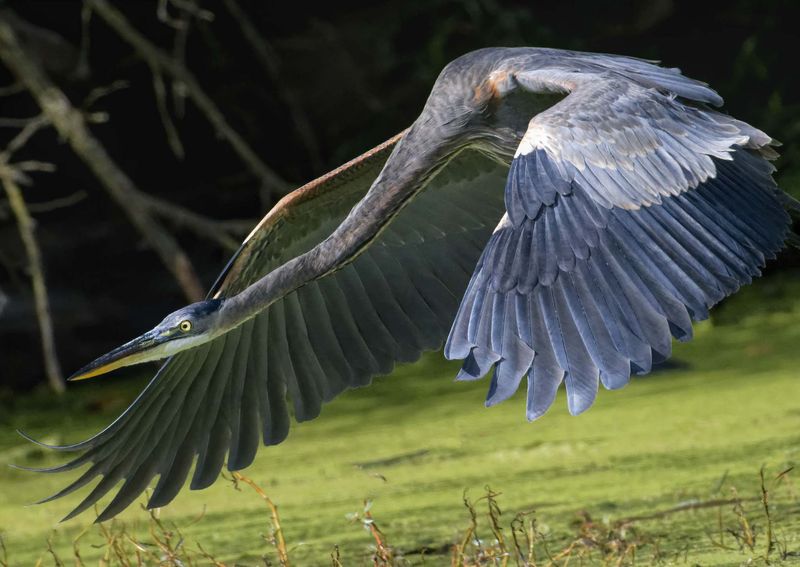
A single heron sighting near your Oregon garden does not mean the bird has claimed your yard as a permanent territory.
More often than not, it is simply moving between feeding areas, following a route that takes it across neighborhoods, over rooftops, along creek corridors, and through open spaces.
Herons cover a lot of ground in a day, and any given stop may last only a few minutes.
Oregon homeowners sometimes feel that a heron visit is a rare or deeply significant event, and in terms of personal experience, it certainly can feel that way.
But from a wildlife behavior standpoint, the bird is doing what it does every day: traveling, scouting, feeding, and moving on.
A single sighting may simply mean your property happened to fall along its path that morning.
If you never see the bird again, that is completely normal. If it returns regularly, it likely means your property or the surrounding area offers consistent food or is positioned along a reliable route between feeding sites.
Either way, the heron is following its instincts rather than making a statement. Enjoying the moment for what it is, a brief and beautiful encounter with a native Oregon bird, is the most grounded way to receive it.
7. Your Garden Does Not Need Feeding Stations
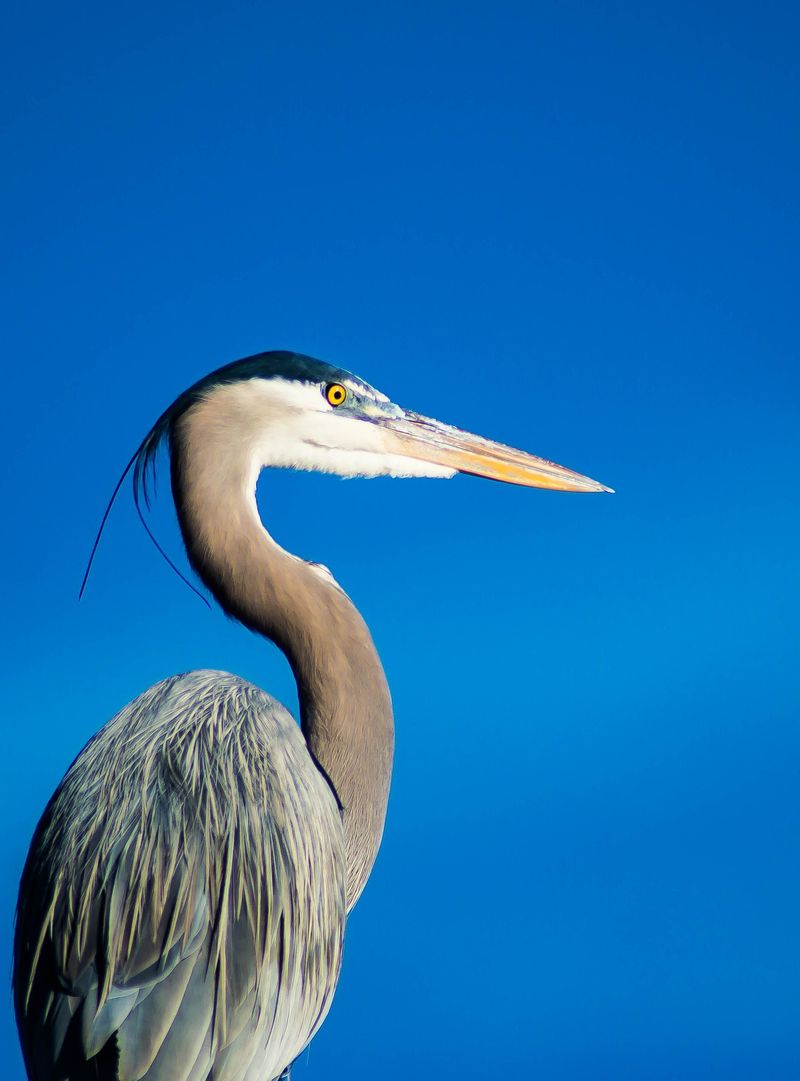
When a striking wild bird appears near the house, the instinct to encourage it to return is understandable. Feeding backyard birds is a popular hobby across Oregon, and many homeowners wonder if putting out food would bring the heron back.
The short answer is that feeding a Great Blue Heron is not something homeowners should attempt, and it is not something the bird needs from people.
Herons are self-sufficient hunters. They do not benefit from human-provided food, and offering fish, meat scraps, or other items near your garden can cause real problems.
It may make the bird associate people with food, reduce its natural hunting behavior, or draw it into situations where it could be harmed. Wild birds that become dependent on human feeding often fare worse in the long run than those that remain fully wild.
Oregon’s wild herons are equipped to find food on their own across a wide range of habitats.
The best thing a homeowner can do is maintain a garden that supports natural habitat features, such as a clean pond, native plantings, or a water source, without trying to directly attract or feed the bird.
Letting the heron be wild is the most respectful and helpful thing any Oregon homeowner can offer it.
8. The Bird Is Protected By Law
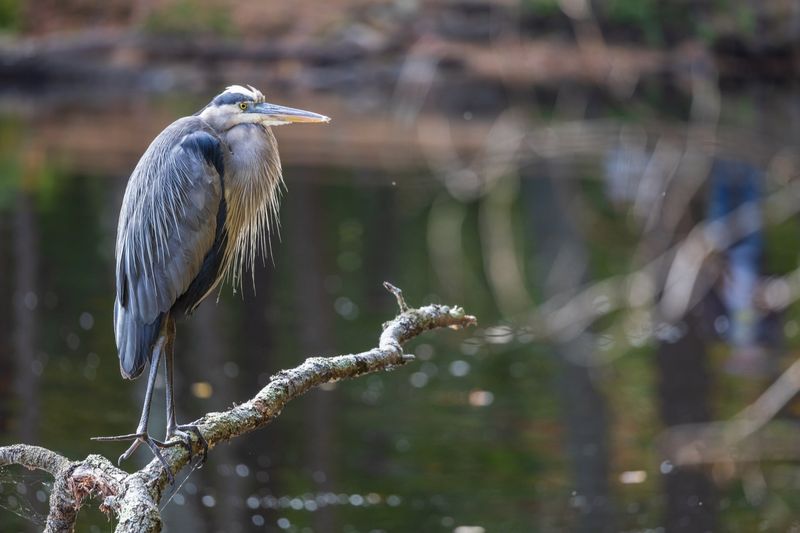
Seeing a Great Blue Heron up close can feel like an invitation to get closer, take a photo, or even try to touch the bird.
It is worth knowing that Great Blue Herons are protected native birds under federal law, specifically the Migratory Bird Treaty Act, which covers a wide range of native bird species across the United States, including Oregon.
This means that herons cannot legally be harmed, harassed, captured, or handled by members of the public.
Even well-meaning actions, like trying to help an injured heron or shooing one away from a pond by chasing it, can cross into territory that puts the bird at risk.
If a heron appears injured or in distress near your home, the right step is to contact a licensed wildlife rehabilitator or your local Oregon Department of Fish and Wildlife office rather than handling the bird yourself.
For most homeowners, the heron near the garden is healthy and simply going about its day.
Watching it from a distance, keeping pets indoors while it is present, and avoiding sudden movements or loud noises near it are all reasonable ways to share space with the bird without causing stress.
Respecting its protected status is both a legal responsibility and a reflection of good wildlife stewardship in Oregon.
9. Its Presence Can Indicate A Healthy Local Ecosystem
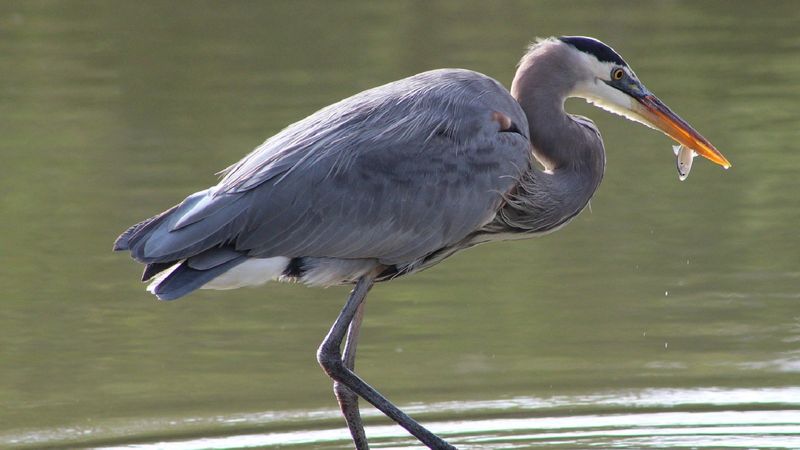
When a Great Blue Heron appears near an Oregon garden, some homeowners take it as a sign that something good is happening in the local landscape. There is some logic to that feeling.
Herons are predators that sit near the top of the food chain in aquatic and wetland habitats, and they tend to show up where food is available, which means smaller animals, clean water, and functioning habitat need to be present first.
A heron visiting a neighborhood creek or backyard pond may suggest that the water supports fish or amphibians, that the surrounding habitat offers cover and prey, and that the local food web is productive enough to support a large wading bird.
In that sense, a heron sighting near your Oregon property can reflect positively on the health of the nearby environment.
That said, a single heron visit is not a guarantee that the entire surrounding ecosystem is thriving. Herons are adaptable and can find food in degraded habitats too.
What the bird’s presence does offer is a small window into the productivity of the local landscape, a reminder that Oregon’s gardens, streams, and neighborhoods are part of a larger living system.
Noticing that connection, and taking steps to support it, is a meaningful response to any heron encounter.