The Meaning Behind Seeing A Northern Flicker On Your Ohio Lawn
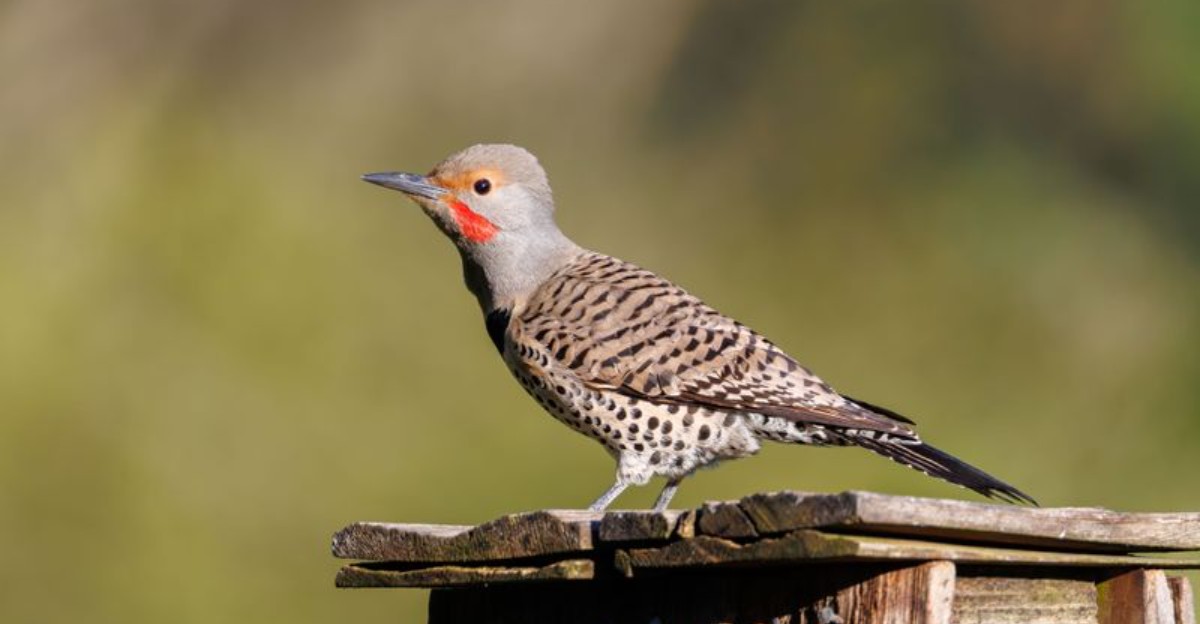
A woodpecker walking around on the ground looks like a bird that lost its way. Spot one on your Ohio lawn and you’ve caught it doing something odd on purpose.
Northern flickers break the woodpecker rulebook. Most of their kin stay glued to tree trunks, but flickers wander across grass with their heads down, working like they’ve lost a set of keys.
Their choice of your yard says plenty about what’s going on beneath the turf. Birds this picky rarely waste time on a patch that has nothing to offer.
Grab a pair of binoculars and watch what it does next. The meaning is hiding in plain sight, right at your feet.
1. Your Lawn Probably Has Ants
Good news first: your yard is not haunted, and the bird digging holes in it is not up to mischief. It is shopping, and the grocery store is right under your grass.
Ants can make up close to 45 percent of what a Northern Flicker eats. That is nearly half of its whole diet, which turns your lawn into an all-you-can-eat buffet.
Most Ohio lawns hide busy ant colonies you may not notice. Small mounds of sandy soil near sidewalks or bare patches are often the front doors to these underground cities.
Flickers break into those colonies to reach the larvae, the soft baby ants tucked deep inside. Larvae are packed with protein and fat, so they make a hearty meal for a hungry bird.
So when a flicker keeps returning to the same spot, take it as a compliment. Your yard is healthy enough to feed wildlife, which is a sign of a lively, natural space.
Birders at Hocking Hills State Park near Logan often spot flickers poking around grassy picnic areas for the same reason. Ants thrive in open, sunny ground, and flickers know just where to look.
Want to test it yourself? Watch where the bird probes, then gently check the spot later for tiny ant trails, and you might be surprised by how many neighbors live underground.
2. Flickers Are The Woodpeckers That Feed On The Ground
Most people picture woodpeckers hammering on tall tree trunks, clinging with stiff tails. A Northern Flicker happily breaks that rule and spends lots of time on the ground.
Instead of drumming on bark, a flicker hops across the grass like a robin with a bigger attitude. It pokes and hammers at the soil with its bill, searching for ants and beetles.
That bill is a little different from other woodpeckers too. It curves gently downward, which helps the bird dig into dirt rather than chisel deep into hard wood.
When flickers do head up into trees, they often sit upright on a horizontal branch. Other woodpeckers usually lean back on their tails against the trunk, so this posture is a handy clue.
Hikers along the trails at Mohican State Park near Loudonville sometimes mistake a ground-feeding flicker for a thrush or meadowlark at first glance. The brown back with black bars blends nicely with fallen leaves and soil.
Your Ohio Garden Changes Every Week. Your Plan Should Too.
Gardening in Ohio changes quickly throughout the season. Every Friday you’ll receive a simple weekly plan showing exactly what to plant, prune, fertilize, harvest, and protect so you never miss the right timing.
Here is a fun trick for your own yard. If a large, spotted bird hops on the lawn and then flies up to perch on a branch, you have probably found a flicker.
Keep a small notebook by the window and jot down when it visits. Patterns often appear, such as morning feeding visits after a soft rain loosens the soil.
3. Some Flickers Are Migrants Passing Through
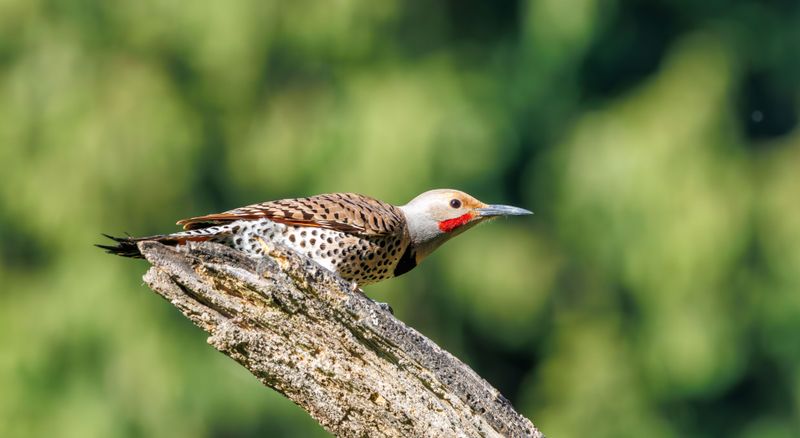
Ever notice more flickers in your yard one September week, then fewer a month later? That is not your imagination playing tricks on you.
Northern Flickers are one of the few woodpeckers that migrate. Many woodpeckers stay put all year, but flickers that nest farther north head south once the weather cools.
Ohio sits right in the middle of the action. Some flickers live here year-round, while others are short-distance travelers stopping to rest and refuel before moving on.
Fall migration usually runs from early September through October. During those weeks, a flicker on your lawn might have started its trip in Michigan or even Canada.
At Shawnee State Park near Portsmouth, in the southern hills, autumn birders often notice extra flickers moving through the forest edges. The rolling woods offer food and shelter for tired travelers heading south.
You can help these visitors by keeping parts of your yard a little wild. A patch of unmowed grass, a brush pile, or a berry bush gives migrating birds a safe pit stop.
A shallow birdbath with fresh water helps too, especially during a dry fall. Seeing a flicker sip and splash is a sweet reward for a few minutes of effort.
So that bird on your grass may be a long-distance guest. Treat it like company passing through town.
4. A Long Tongue Laps Up The Ants
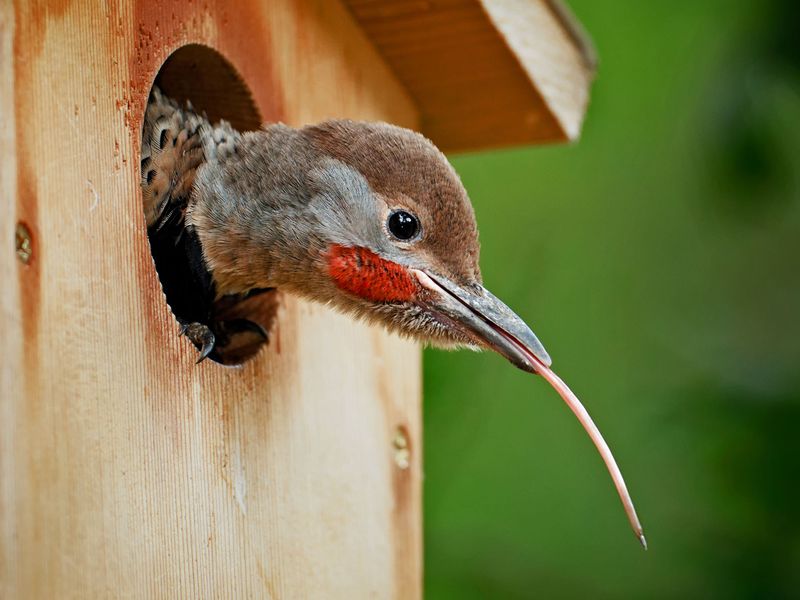
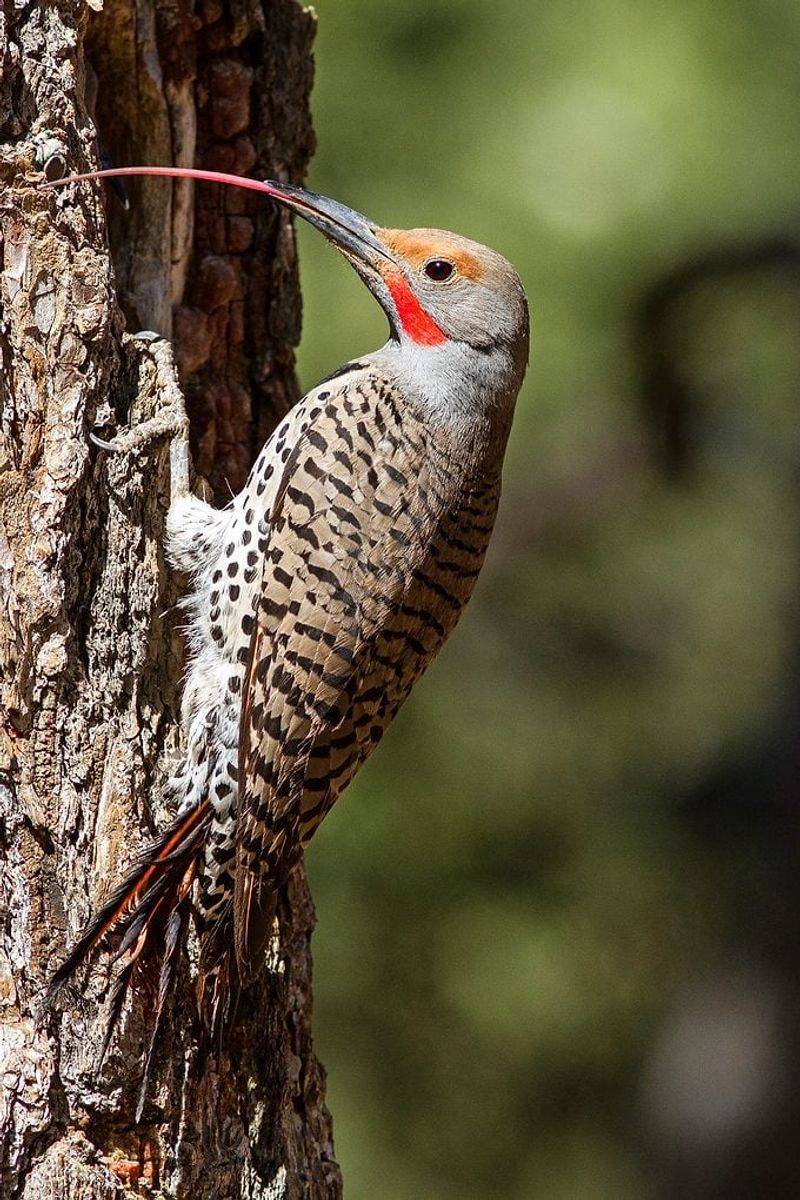
Imagine a tongue so long it wraps around the inside of your head. It sounds like something from a cartoon, yet that is exactly how a Northern Flicker is built.
A flicker’s tongue can stretch about 2 inches past the tip of its beak. For a bird this size, that is like a person licking a snack from across the kitchen table.
The tongue is also coated with sticky saliva. When the bird pokes it into an anthill, ants get glued on and pulled right back into its mouth.
When the tongue is resting, it coils around the back of the skull. Scientists think this setup may also help cushion the brain while the bird pecks.
Watch closely when a flicker feeds on your lawn. You may see quick little head bobs as it flicks that tongue deep into tunnels you cannot see.
Visitors at Tar Hollow State Park near Laurelville can sometimes catch this up close along quiet grassy clearings. A pair of binoculars and a bit of patience go a long way.
Did you know? Some anthills run several inches deep, so that extra reach makes a real difference.
For your own viewing, sit still about 30 feet away and let the bird relax. Sudden movements send it flying, but calm watchers often get a front-row show of nature’s coolest tool.
5. Flickers Use Ants To Clean Their Feathers
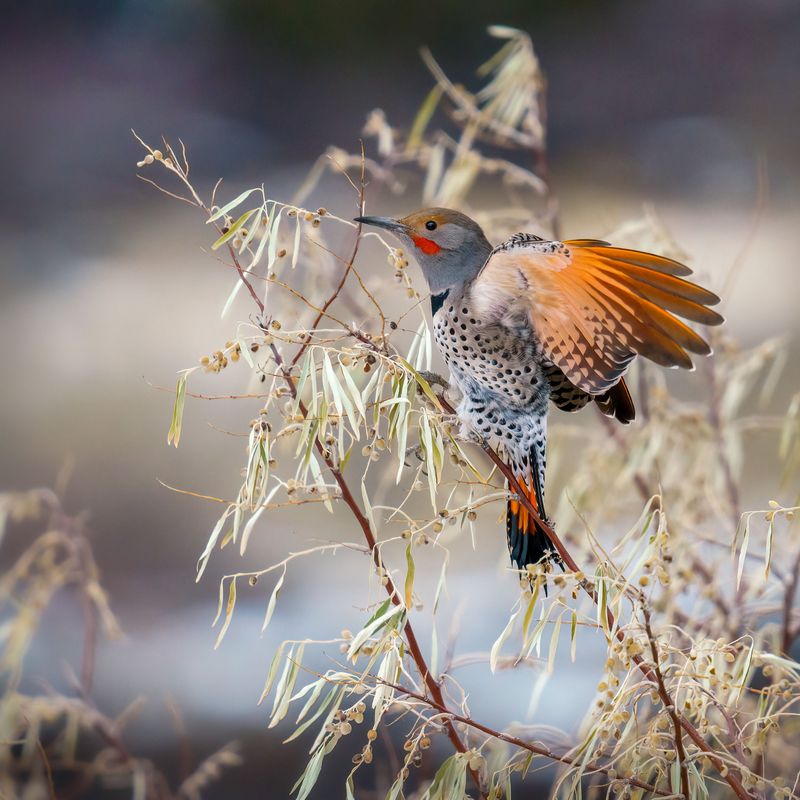
Picture a bird sprawled across an anthill with its wings spread like a beachgoer on a towel. Strange as it seems, this behavior has a name, and it is called anting.
During anting, a Northern Flicker lets ants crawl all over and between its feathers. Sometimes it even picks up ants with its bill and rubs them along its wings.
Ants release a substance called formic acid when they feel threatened. Experts believe this acid may help chase away tiny feather pests like mites and lice.
It may also calm itchy skin, especially during molting. Molting is when birds replace old feathers with new ones, and that process can feel pretty scratchy.
So if you spot a flicker acting oddly on your lawn, there is no need to worry that it is sick or hurt. It is most likely enjoying a natural spa day that keeps its feathers in good shape.
Bird watchers at Beaver Creek State Park near East Liverpool have reported seeing birds doing this in sunny, open patches. Warm summer days seem to be a popular time for it.
Give the bird space if you catch this moment. Grab your phone, zoom in from a distance, and you might capture a rare photo that most birders only read about.
It is one more reason to let a few ant colonies stay in your yard.
6. Fall Berries Join The Menu
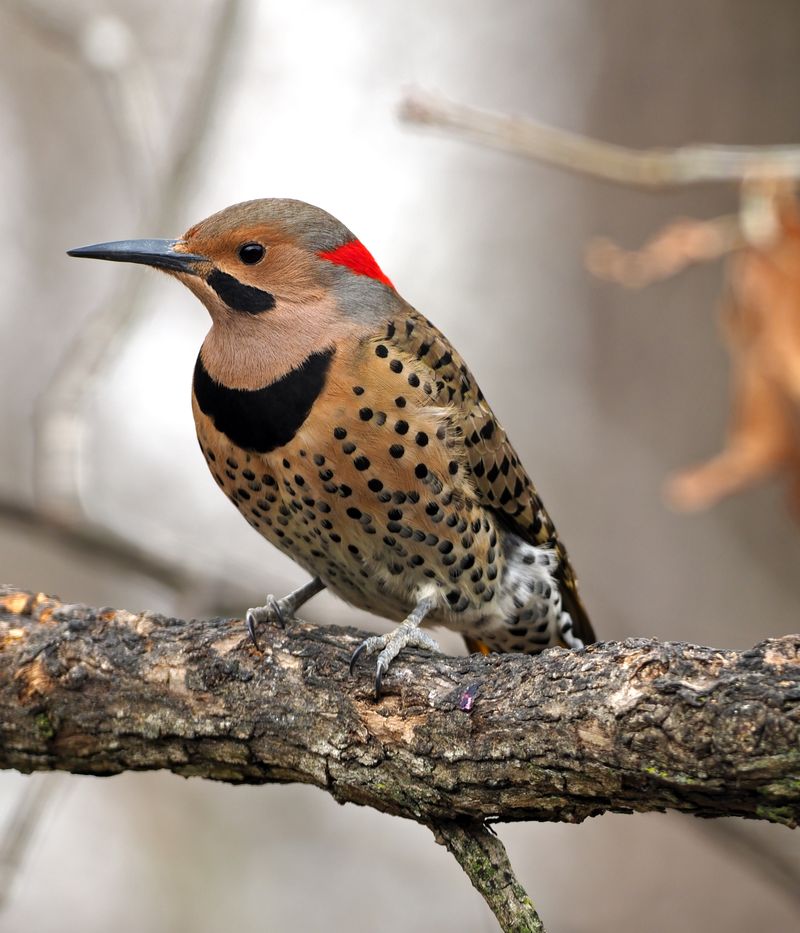
When the leaves turn orange and the air smells like woodsmoke, flickers start craving something sweet. Their summer diet of ants and insects slowly shifts toward fruit.
As bugs become harder to find in cooler weather, flickers happily fill up on berries, seeds, and small fruits from shrubs and vines. Popular picks include dogwood, sumac, wild cherry, wild grape, hackberry, and elderberry.
They even snack on poison ivy berries without any trouble. What gives people an itchy rash is just a tasty treat for many birds.
This menu change explains why you might see flickers in your trees and shrubs more often in fall. They are still around, just eating in different places than in summer.
Around Lake Hope State Park near McArthur, the thick forests are full of dogwood and wild grape. Autumn hikers there often see flickers flashing between branches loaded with fruit.
You can invite them to your own yard by planting native shrubs. Gray dogwood, staghorn sumac, and elderberry all grow well in Ohio and feed many kinds of birds.
Native plants also need less water and care than many fancy imports. That means less work for you and more food for your feathered visitors.
So when the grass gets quiet, look up at your shrubs instead. Your lawn flicker may simply be enjoying a fruity dessert in the branches nearby.
7. Skip Lawn Insecticides To Keep Flickers Safe
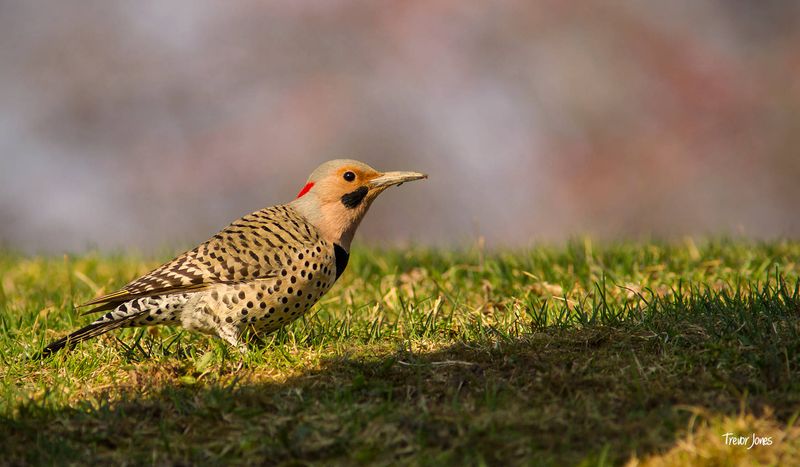
Here is a tough truth that rarely appears on the side of a lawn care bag. Bug sprays meant for grubs and ants can hurt the very birds you enjoy watching.
Lawn insecticides wipe out the ants and beetles that flickers depend on. With less food around, birds have to travel farther and work harder to stay fed.
Some chemicals can harm birds directly too. A flicker that eats poisoned insects or plants may get sick, and young birds face even more risk.
Broad-spectrum sprays are the biggest problem because they target nearly every small creature in the soil. Spray can also drift on the wind and affect gardens and yards nearby.
Malabar Farm State Park near Lucas is a great example of working with nature. The historic farm focuses on healthy soil and sustainable practices, and its fields buzz with birds and helpful insects.
You can try a similar approach at home. Mow a little higher, water deeply but less often, and let clover grow in for a lawn that resists pests naturally.
If grubs become a real issue, look into milky spore or beneficial nematodes. Both options target specific pests and leave birds and bees alone.
Fewer chemicals mean more flickers, more butterflies, and a safer yard for kids and pets. That is a win for everyone.
8. Look For The White Rump When It Flies
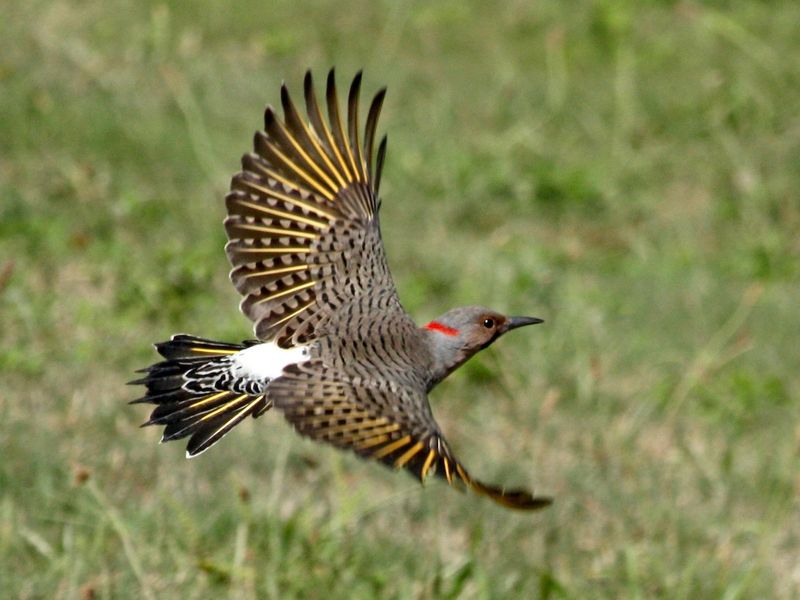
A flicker on the ground can be surprisingly hard to spot. Then it takes off, and a bright white patch on its lower back flashes like a little flashlight.
That white rump is one of the easiest ways to identify a Northern Flicker. It stands out sharply against the bird’s brown, black-barred back.
Scientists think the patch may help confuse predators. A hawk chasing a flash of white can lose track when the bird lands and the patch disappears beneath folded wings.
It might also help flickers keep track of each other while flying through the woods. A quick white signal is easy to follow in dim forest light.
At Nelson-Kennedy Ledges State Park in Nelson Township, the shady trails between tall rock walls make birds tricky to see. That white flash often gives a flicker away as it darts between trees.
Watch for the flight style too. Flickers fly in a bouncy, roller coaster pattern, flapping a few times and then gliding in a gentle dip.
Here is a quick tip for beginners. If a medium-sized bird bursts up from your lawn showing a white patch above the tail, you can feel pretty confident it is a flicker.
Practice makes it easier, so look up whenever something flies from the grass. Soon you will spot that bright patch in a heartbeat.
9. Ohio Flickers Flash Yellow Under The Wings
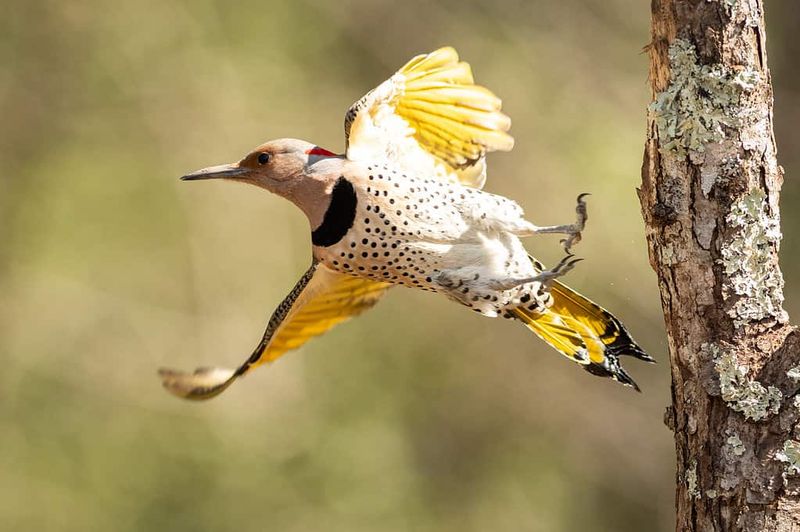
Ohio flickers hide a sunny secret beneath their wings. When they fly, the undersides of their wing and tail feathers glow bright yellow.
These birds belong to a group called the Yellow-shafted Flicker. It lives across the eastern and northern parts of North America, including every corner of Ohio.
Out West, flickers have reddish feathers instead and are called Red-shafted Flickers. The two groups sometimes mix where their ranges meet, creating orange-toned birds.
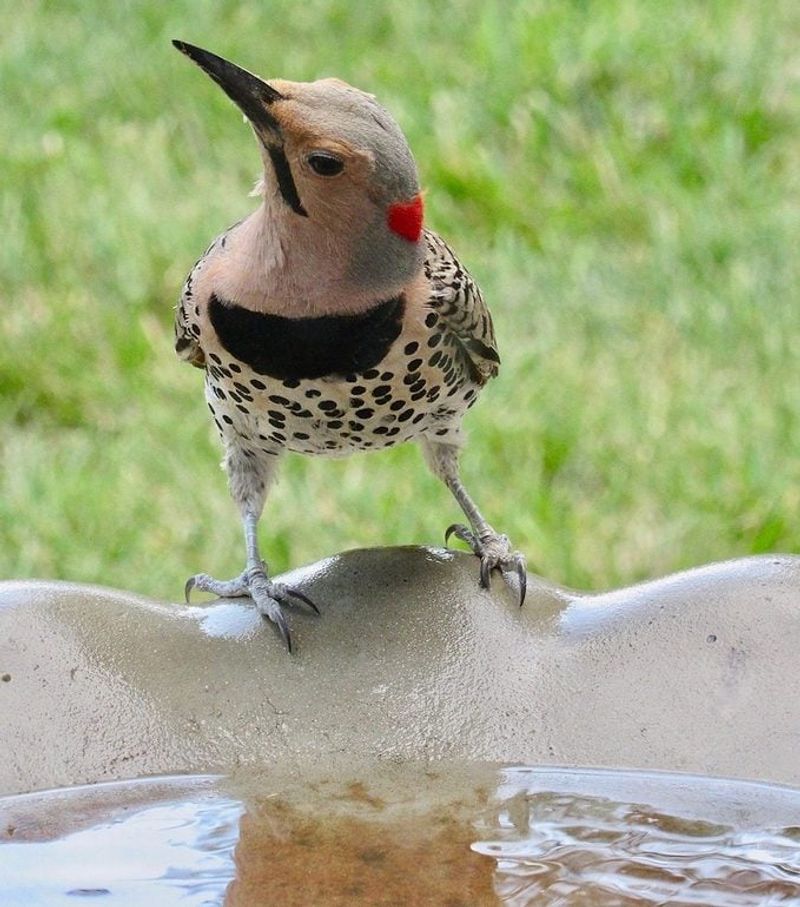
Yellow-shafted males have a few extra style points. Look for a black mustache stripe near the beak and a red crescent on the back of the head.
Females share the yellow flash and red crescent but skip the mustache. That small detail helps you tell a pair apart when both visit your lawn.
Alum Creek State Park in Delaware County offers wide open spaces where flickers glide across meadows and shorelines. On sunny days, that golden wing flash is easy to catch in flight.
Fun fact: the Yellow-shafted Flicker is the state bird of Alabama, where folks call it the Yellowhammer. Ohio missed out on the title, but we get plenty of these golden visitors.
So the next time one bursts from your grass, watch for a burst of gold. It is a cheerful reminder that your yard is part of something wild and wonderful.