The Native Texas Plants That Actually Handle Hurricane Winds Better Than Anything Else
Most Texas homeowners spend hurricane prep season thinking about shutters, generators, and emergency kits, which is completely reasonable. But the plants growing around your home deserve a spot on that checklist too, and they rarely get one.
Along the Gulf Coast and throughout Southeast Texas, saturated soil, relentless coastal wind, and heavy rain can uproot even large, established trees in a single night.
The species you choose, and how thoughtfully you plant them, can make a genuine difference in how your landscape holds up when a serious storm rolls through.
Live oak, bald cypress, southern magnolia, and a handful of other well-suited species have track records worth knowing about. Just keep in mind that no plant is hurricane-proof.
Health, rooting space, pruning history, and wind exposure all factor into how any tree actually performs when conditions get truly extreme.
1. Live Oak For Strong Coastal Wind Resistance
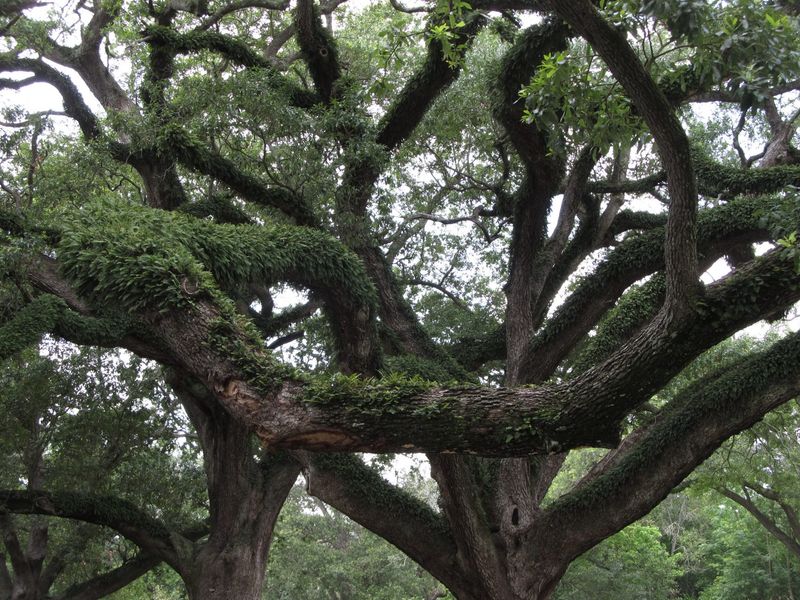
Broad limbs spreading low over a coastal yard give live oak a silhouette that many Texas homeowners recognize immediately, and that wide, anchored form is part of what makes this tree worth considering before hurricane season.
Live oak tends to hold its canopy closer to the ground than many other large trees, which can help reduce the leverage wind places on the trunk and root system during a storm.
That does not mean it is storm-proof, but its naturally low branching and dense wood give it some structural advantages in coastal and near-coastal Texas settings.
Its strength comes from the combination of species traits, good structure, and long-term care rather than from the name “live oak” alone.
Healthy live oaks with well-established root systems and adequate rooting space tend to fare better in strong winds than trees planted too close to pavement, structures, or competing roots.
Compacted soil, shallow planting, and poor drainage can all weaken the root system over time, making the tree more vulnerable when a major storm arrives.
Before planting near a driveway, sidewalk, or building foundation, consider how much space the roots will have to spread over the coming decades.
Pruning history also plays a real role in how a live oak handles wind. Trees that have been over-thinned or topped can develop weak regrowth that breaks more easily in gusts.
Having a qualified arborist evaluate structure and remove crossing, damaged, or poorly attached limbs before storm season is a practical step for any homeowner with live oak on the property.
2. Bald Cypress For Wet Soils And Storm Resilience
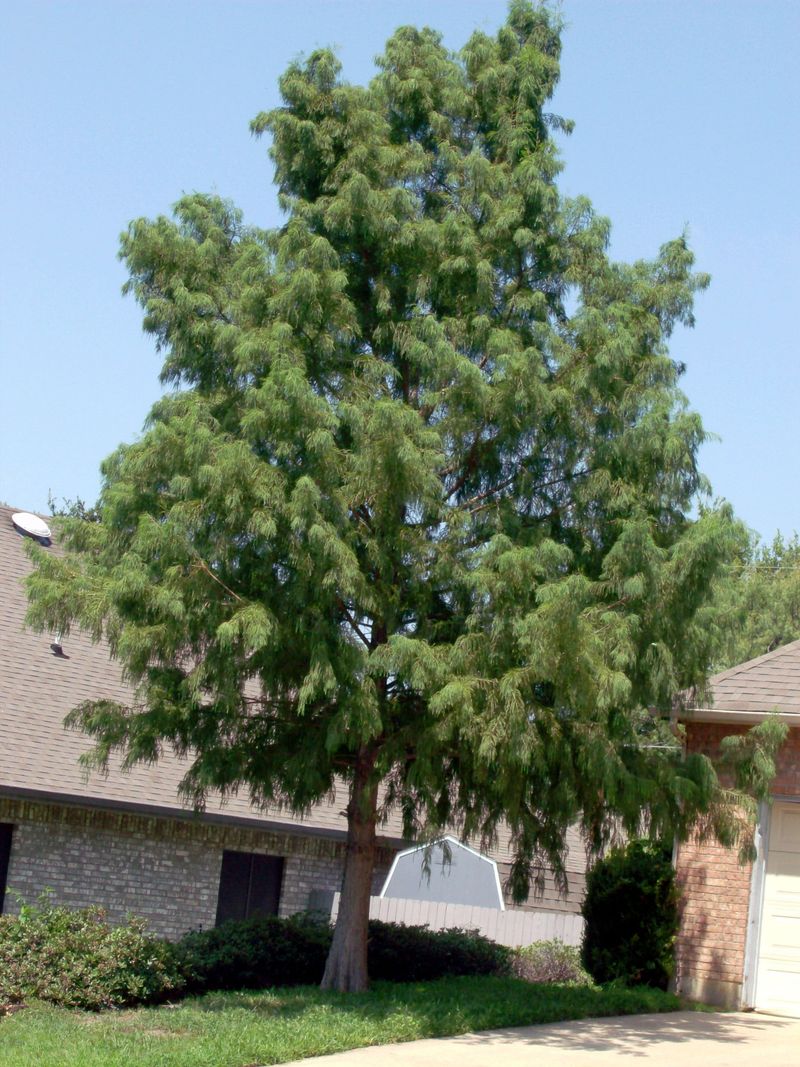
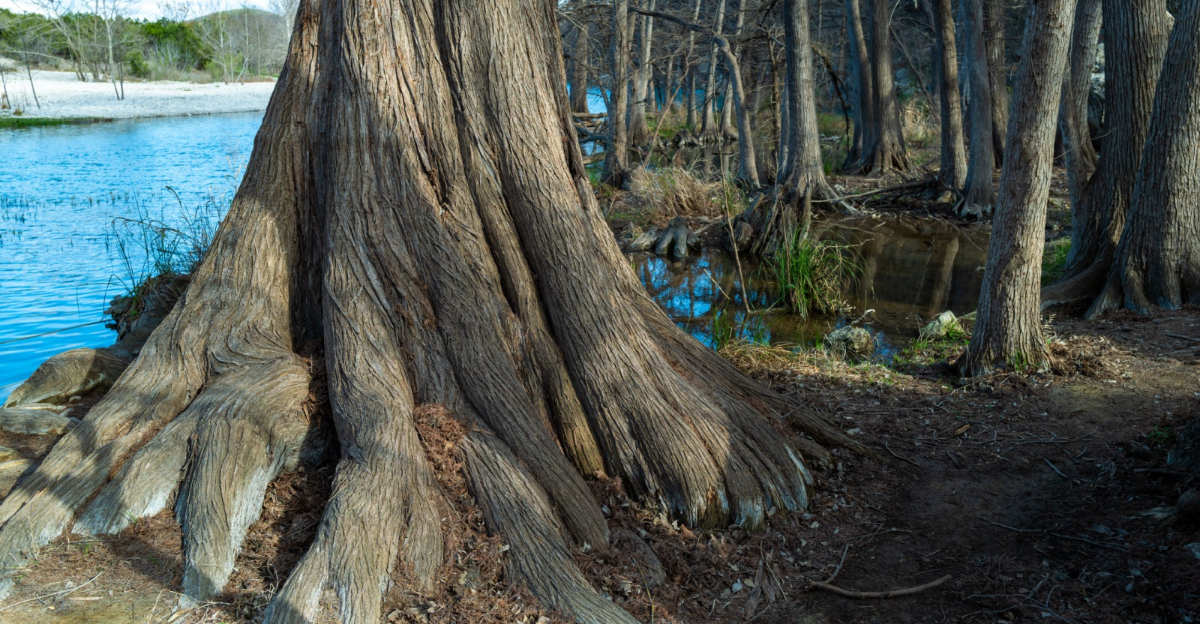
Standing in a flooded bayou or along a Southeast Texas creek, bald cypress looks almost unshakeable, and its reputation for handling saturated soil during storm events is well earned over centuries of growth in the region.
Unlike many trees that struggle when roots sit in standing water for extended periods, bald cypress is naturally adapted to those wet conditions, making it a sensible choice for low-lying Texas yards, drainage swales, and areas that flood regularly after heavy rain.
The iconic knobby root structures called knees that emerge from the soil around bald cypress are thought to help anchor the tree in soft, wet ground.
Your Texas Garden Changes Every Week. Your Plan Should Too.
Gardening in Texas changes quickly throughout the season. Every Friday you’ll receive a simple weekly plan showing exactly what to plant, prune, fertilize, harvest, and protect so you never miss the right timing.
While researchers still study the exact function of those structures, the trees themselves have a long history of surviving along rivers and coastal wetlands where storm flooding and strong winds are common seasonal realities.
Their wide, spreading root systems tend to grip the soil broadly rather than relying on a narrow taproot.
Homeowners in Houston, Beaumont, and other parts of Southeast Texas sometimes overlook bald cypress because they associate it strictly with wild wetland settings.
In reality, it can work well in residential yards where drainage is poor and other trees struggle to establish.
Give it enough space, avoid compacting the soil around the root zone, and plan for eventual height. A healthy, properly sited bald cypress can be a long-term asset in a Texas landscape that regularly deals with heavy rain and coastal storm conditions.
3. Southern Magnolia For A Stronger Native Evergreen Choice
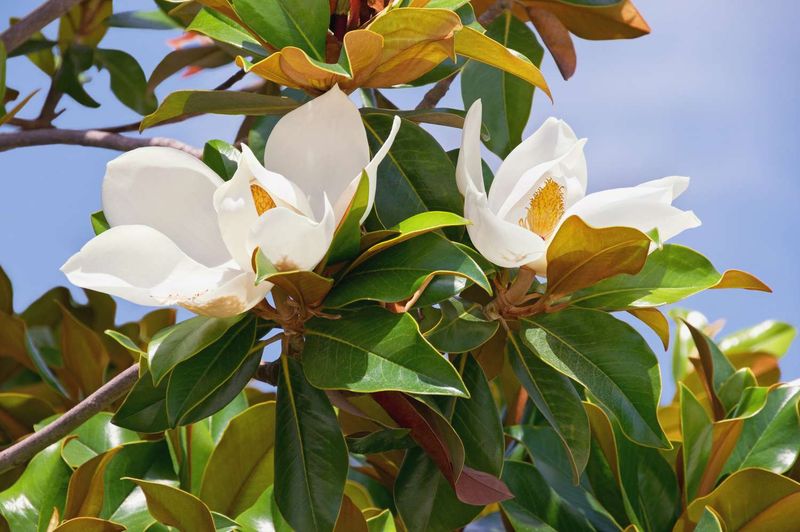
Glossy evergreen leaves catching the wind during a summer storm make southern magnolia one of the more visually dramatic trees in a Texas yard, and that full canopy is both its appeal and its challenge in high-wind conditions.
Because southern magnolia keeps its large leaves year-round, it presents more surface area to the wind than a deciduous tree would during a hurricane or tropical storm.
That said, the species has a long native history along the Gulf Coast and in East Texas, where it has endured countless storm seasons in its natural range.
The key factors that influence how a southern magnolia performs in strong wind are largely the same ones that matter for any large tree: rooting space, soil health, planting depth, and structural pruning over time.
Trees planted with adequate room for root spread, kept in good soil, and shaped thoughtfully as they mature tend to show better wind resistance than those crowded against fences, buildings, or other trees.
Avoid planting southern magnolia where roots will immediately hit hardscape or shallow soil layers.
One practical consideration for homeowners is the weight of fallen magnolia leaves and seed cones after a storm. Even when the tree itself remains standing, cleanup can be significant.
That is not a reason to avoid the species, but it is worth planning for if the tree is near a roof, gutter system, or patio. Healthy, well-structured southern magnolias can be a rewarding and resilient evergreen choice in the right setting.
4. Texas Sabal Palm For Coastal Wind Exposure
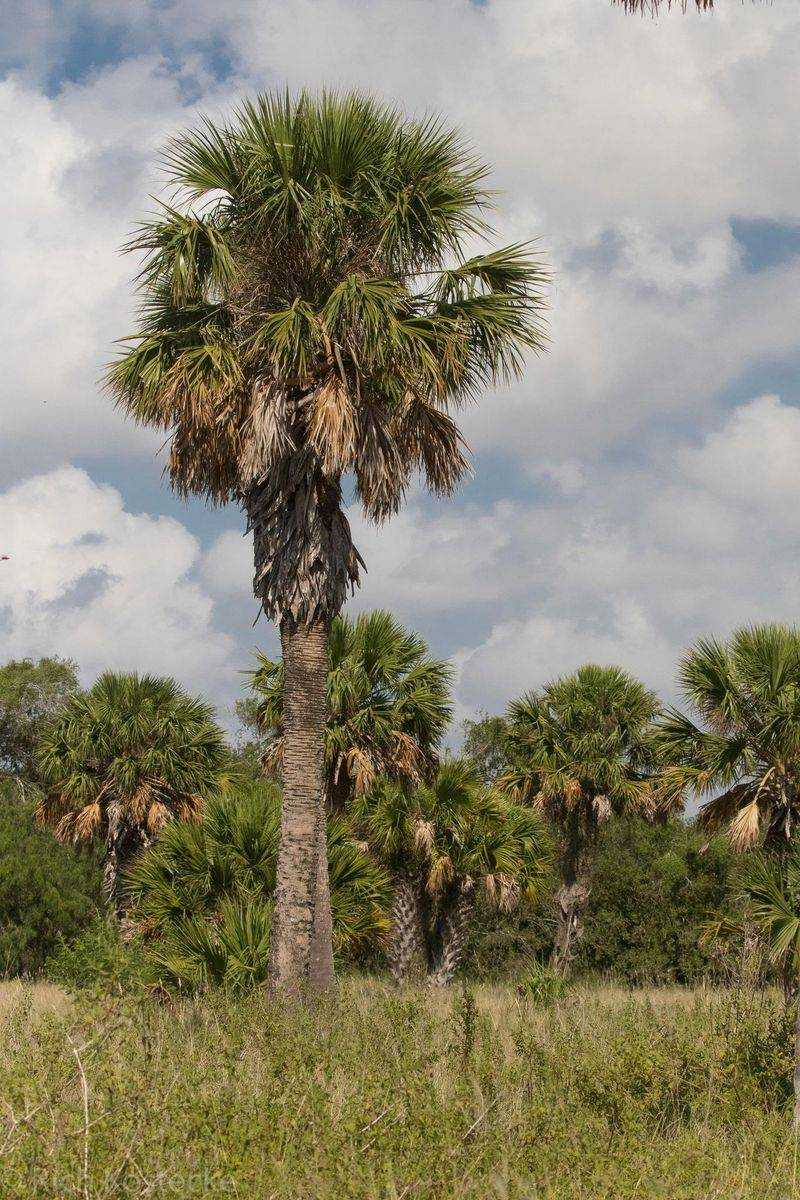
Few sights along the Texas Gulf Coast are more recognizable than sabal palms bending dramatically in a tropical storm, and that flexibility is exactly what makes them worth understanding as a coastal landscape plant.
Unlike rigid-trunked hardwood trees that resist wind through structural strength, palms handle gusts by flexing.
The trunk bends rather than breaks, and the fronds shed wind rather than catching it like a solid canopy. That bending behavior is a survival adaptation shaped by centuries of coastal storm exposure.
That same flexibility is why palms are often judged differently from broad-canopied shade trees when homeowners think about hurricane wind performance.
Texas sabal palm is the only palm species native to Texas, found naturally along the Rio Grande delta and the lower Gulf Coast.
Its native range means it is already adapted to the soil types, humidity levels, and storm patterns of that region, which gives it a practical advantage over non-native palm species planted outside their natural climate zone.
Homeowners in the lower Rio Grande Valley and along the southern coast tend to see the best results with this species in terms of long-term establishment and storm tolerance.
Even with its natural wind flexibility, sabal palm still benefits from thoughtful siting and care.
Planting in well-drained soil, avoiding areas with chronic standing water, and giving the root system room to establish before a major storm arrives all contribute to better outcomes.
Young palms are more vulnerable than mature, established specimens, so planting well ahead of storm season and monitoring root establishment in the first few years makes a meaningful difference for coastal properties.
5. Yaupon Holly For Wind-Resistant Shrub Structure
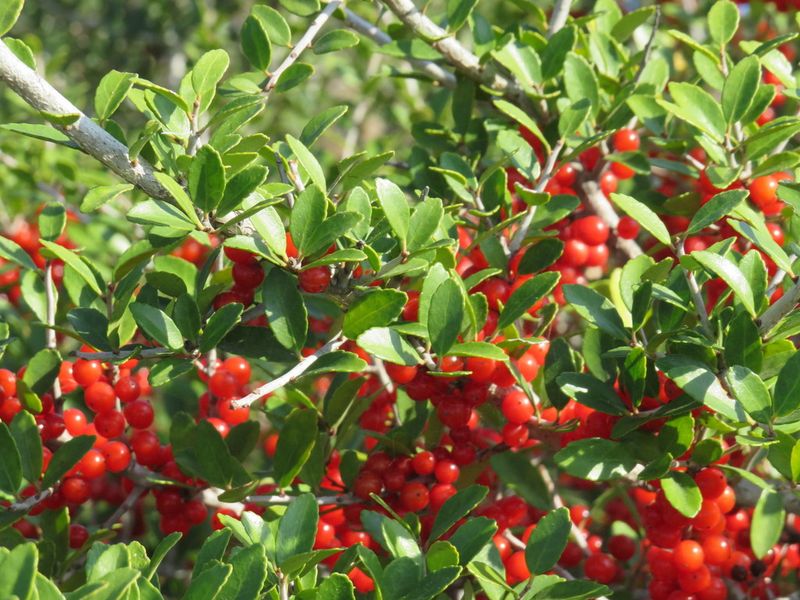
Shrubs rarely get as much attention as large trees when people talk about hurricane-resilient landscaping, but yaupon holly is the kind of tough, adaptable native plant that earns a second look from any homeowner planning a wind-resistant yard.
Low to the ground, flexible in its branching, and deeply rooted over time, yaupon holly can filter wind along fence lines, property edges, and coastal exposures where taller plants might struggle or create more risk during a storm.
Its small, dense leaves do not catch wind the way broad tropical foliage does.
Yaupon holly is native across a wide range of Texas, from the Pineywoods of East Texas to coastal areas near the Gulf. That broad native range means it is already suited to the humidity, soil variation, and storm patterns that come with a Texas landscape.
It tolerates both wet and dry conditions better than many ornamental shrubs, and it can rebound well after storm stress if the root system is healthy and established before the event occurs.
For homeowners considering yaupon holly as part of a wind-screening strategy, planting in layered groups rather than a single exposed row tends to produce better results.
A layered planting with yaupon holly at the shrub level, combined with taller native trees behind it, creates a more graduated wind buffer than any one plant alone could provide.
Keeping shrubs pruned to a natural, open form rather than shearing them into tight balls also helps the canopy move with the wind rather than catching it like a solid wall.
6. Wax Myrtle For Flexible Coastal Screening
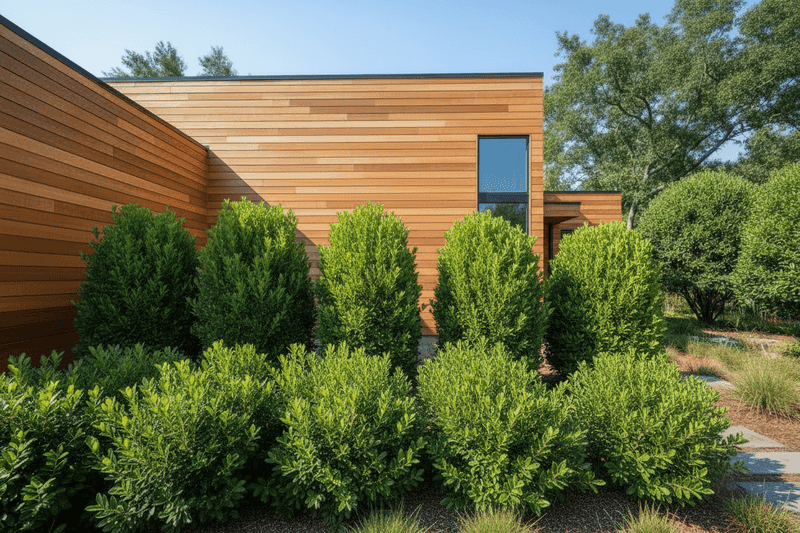
Anyone who has walked past wax myrtle after a rain and caught that sharp, herbal scent knows there is something distinctly Texan about this plant.
Beyond its fragrance, wax myrtle is one of the more practical native choices for coastal homeowners who want a flexible, fast-growing screen that can take wind without snapping.
Its multi-stemmed structure and small, aromatic leaves allow it to bend and recover in gusts rather than presenting a rigid surface that catches storm wind like a sail.
Wax myrtle grows naturally along the Texas Gulf Coast, in Southeast Texas wetlands, and across much of East Texas, which means it is already adapted to the salt air, humidity, and occasional flooding that come with coastal life.
It tolerates wet feet better than many ornamental shrubs, making it a reasonable option for low-lying yards or areas near detention ponds where other plants struggle to establish.
That tolerance for moisture is especially useful in the days following a major storm when soil saturation lingers.
Growth rate is one of wax myrtle’s most practical attributes for homeowners trying to establish a wind screen before storm season.
It fills in quickly compared to many native shrubs, though faster growth also means more frequent light pruning to maintain a strong branching structure over time.
Allowing it to grow in its natural multi-stemmed form, rather than training it into a single trunk, tends to produce a more flexible and wind-tolerant plant.
Spacing plants appropriately and avoiding heavy soil compaction around the root zone will support long-term health in a coastal yard.
7. Cedar Elm For Tough Inland Texas Yards
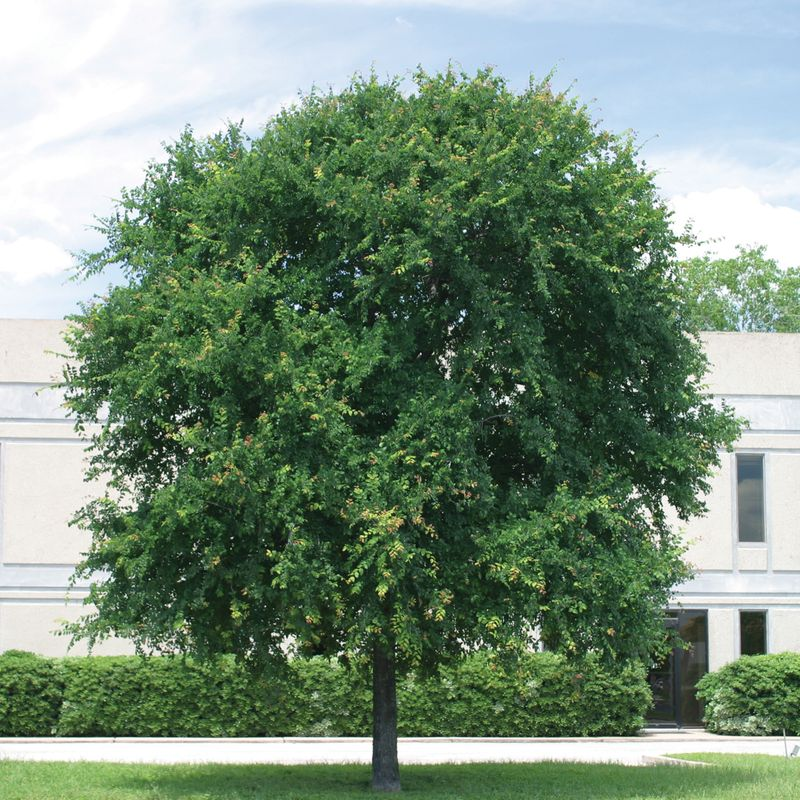
Out in central and inland Texas, where Gulf Coast humidity gives way to drier air and harder soils, cedar elm is a tree that has been quietly doing the hard work of surviving droughts, heavy storms, and clay soil for generations.
It is one of the few native Texas elms that holds up reasonably well in a wide range of soil conditions, from the heavy black clay of the Blackland Prairie to the rocky limestone soils of the Hill Country.
That adaptability makes it a practical choice for homeowners in inland cities like Austin, Waco, and San Antonio who want a native shade tree with some storm resilience.
Cedar elm has a relatively fine-textured canopy with small leaves that do not catch wind as aggressively as large-leafed trees.
That canopy structure allows wind to pass through more easily during strong storm events, which can reduce the mechanical stress placed on the trunk and root system.
The species also tends to develop a strong, upright form with well-attached branch unions when given adequate growing space and appropriate pruning as a young tree.
Like any tree, cedar elm performs best when planted correctly from the start.
Setting it at the right depth, avoiding soil compaction over the root zone, and giving it enough space to develop a wide root system are all steps that pay off years later when a strong storm moves through.
Having the structure assessed by a professional before storm season is a practical habit for any large cedar elm growing near a home, fence, or utility line in a yard.