The Meaning Behind That Loud Buzzing In Your Ohio Trees Right Now
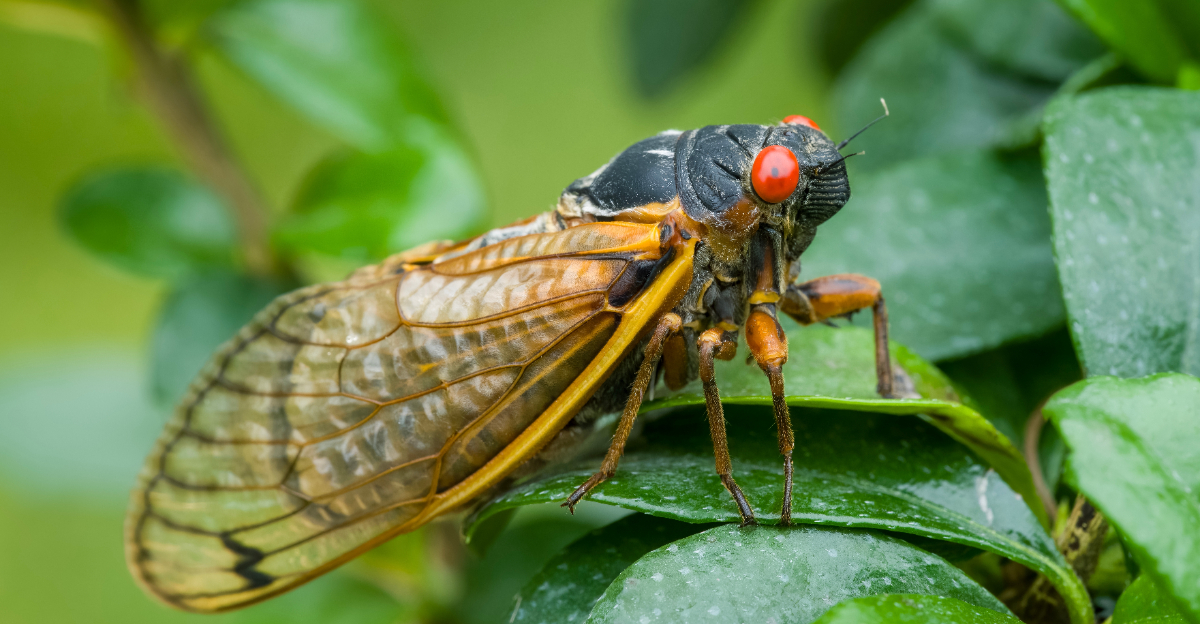
That electric buzz pouring out of your Ohio trees can make a quiet yard sound almost mechanical. It often swells through the afternoon, fades for a moment, then rises again from somewhere high in the canopy.
The noise can seem sudden, especially late in summer, but it usually follows a seasonal pattern that has been building out of sight for months. Heat, daylight, and the time of year all help explain why your trees have suddenly become so loud.
The sound can also tell you something about what is happening in the landscape right now, even when you cannot spot the source from the ground. For most homeowners, the real mystery is not just what is making the noise.
It is why it has appeared now, why some trees seem louder than others, and how long that relentless chorus is likely to stick around.
1. That Buzz Is A Late-Summer Mating Call
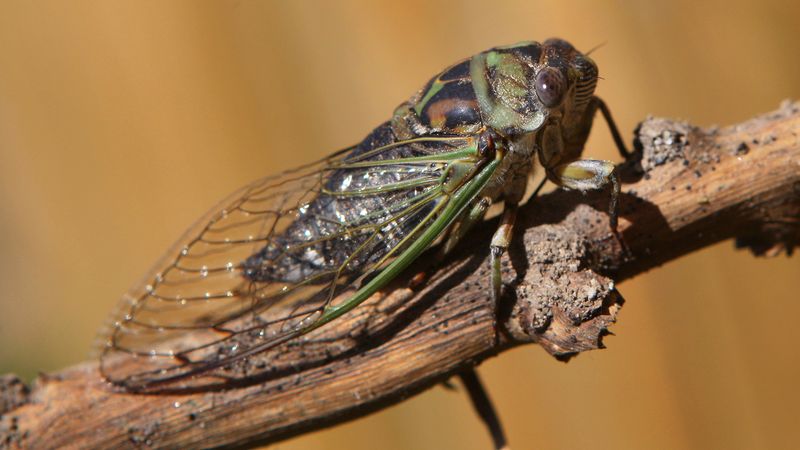
Every year, right around the hottest stretch of summer, the treetops in Ohio neighborhoods suddenly erupt with sound. That steady, pulsing buzz rising from the canopy is not random noise.
Male dog-day cicadas are calling out to attract females, and the entire performance is driven by one goal: reproduction.
Ohio State University Extension confirms that dog-day cicadas are the familiar annual visitors behind this late-summer sound. Adults generally begin appearing in July and remain active into late summer.
The mating call reaches its peak intensity during the warmest parts of the day, which is why the buzz often seems loudest right when the afternoon heat is most intense.
The sound itself has a distinctive quality that separates it from other insect noises. Depending on the species, the call can be a sustained drone or a rhythmic pulsing pattern.
Females respond to the calls of males from the same species, making the sound a precise communication signal rather than just background noise.
Understanding what drives that buzzing changes how the whole experience feels. A quiet yard suddenly filling with that electric hum is not a warning sign.
It is a seasonal event tied directly to the natural rhythm of late summer, playing out the same way it has for countless generations in trees across the region.
2. Male Cicadas Are Making All The Noise
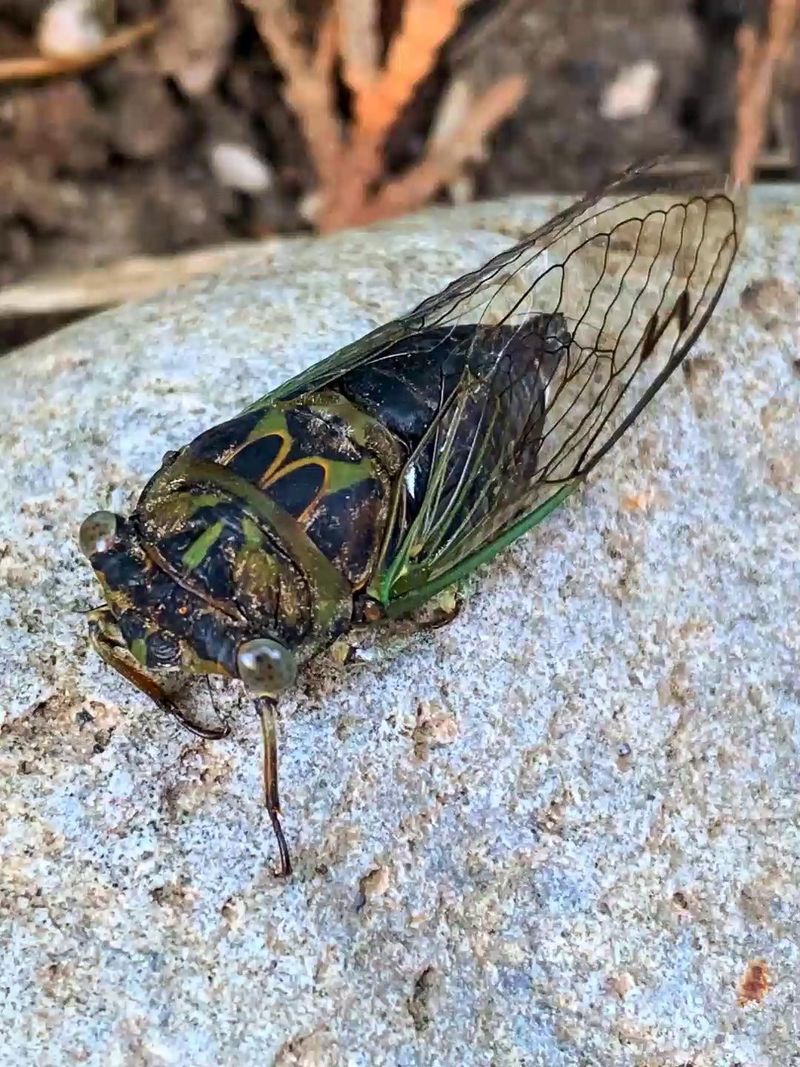
You might be surprised to learn that only one half of the cicada population is responsible for all that noise. Male dog-day cicadas are the callers.
Females do not produce the same mating calls, which means every buzz you hear from the treetops is coming from a male working hard to get noticed.
Males produce sound using specialized structures called tymbals, located on the sides of their abdomens. Tymbals are ribbed membranes, and muscles rapidly flex them inward and outward in quick succession.
Each flex produces a click, and the rapid repetition of those clicks blends together into the continuous buzzing sound that carries across yards and neighborhoods.
According to entomology resources, a male cicada’s abdomen is largely hollow. That cavity amplifies sound much like the resonating chamber of a musical instrument.
Your Ohio Garden Changes Every Week. Your Plan Should Too.
Gardening in Ohio changes quickly throughout the season. Every Friday you’ll receive a simple weekly plan showing exactly what to plant, prune, fertilize, harvest, and protect so you never miss the right timing.
A small insect generating that much noise might seem unlikely, but the hollow body cavity plays a central role in boosting the volume.
Females have hearing organs that allow them to detect and respond to the calls of males from their own species. So while the male is the performer, the female is very much the audience.
The whole exchange is a finely tuned biological system, and it plays out every summer in the shade trees lining local streets and yards.
3. Dog-Day Cicadas Return Every Summer
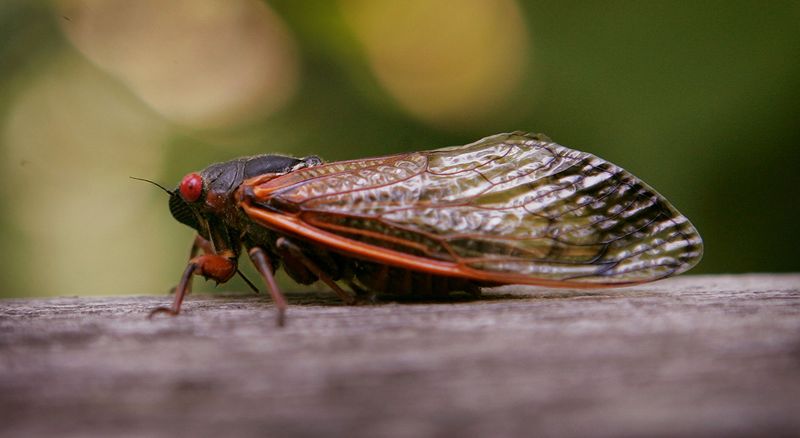
Few sounds feel as reliably summer as the buzz that starts climbing out of the treetops each July. Homeowners across Ohio expect it every single year, almost like a seasonal clock ticking over.
Dog-day cicadas earn the name annual cicadas precisely because adults appear each summer without fail.
Ohio State University Extension explains that this yearly appearance can be a little misleading. An individual cicada does not complete its entire life cycle in just twelve months.
OSU guidance notes that dog-day cicadas spend roughly two to three years developing underground before they ever become adults.
What makes the annual pattern possible is overlapping generations. While one group of nymphs is still maturing underground, an earlier generation is already emerging as adults above the surface.
Because different groups develop on slightly offset schedules, some adults are always ready to emerge by midsummer, keeping the annual cycle consistent year after year.
Dog-day cicadas are a completely separate group from the 13-year and 17-year periodical cicadas that sometimes make national news. Periodical cicadas emerge in massive synchronized numbers after spending over a decade underground.
Dog-day cicadas emerge in far more modest numbers and do so every summer, which is why the buzzing feels familiar rather than overwhelming. Knowing the difference helps put the late-summer soundtrack into proper perspective.
4. Years Underground Lead To A Noisy Finale
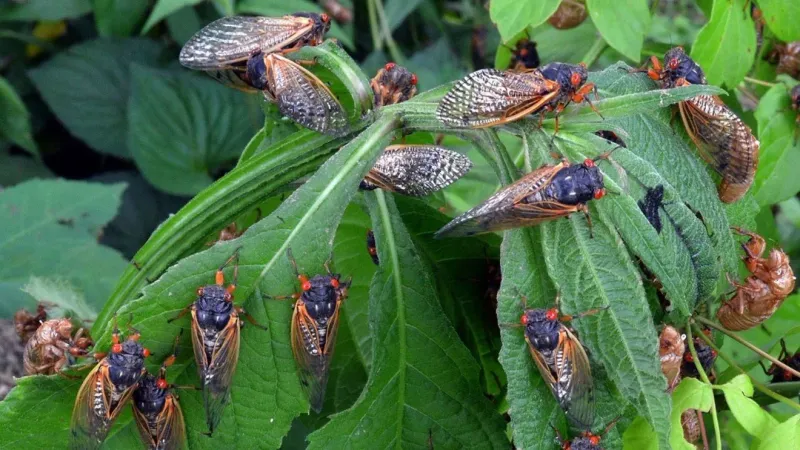
Most of a dog-day cicada’s life happens completely out of sight. Long before any buzzing reaches the treetops, the insect spends years living underground as an immature form called a nymph.
The contrast between that hidden early life and the loud adult stage is striking.
Ohio State guidance explains that dog-day cicada nymphs develop underground for multiple years. During that time, they feed on fluids from tree roots.
Research supported by OSU and similar university extension sources indicates that this feeding does not typically cause significant harm to established, healthy trees.
When a nymph finally reaches maturity, it moves upward through the soil toward the surface. Once above ground, it climbs a nearby tree trunk, fence post, or other vertical surface.
There, it splits open its outer covering and emerges as a fully winged adult, ready to join the summer chorus.
The adult stage lasts only a few weeks. A dog-day cicada spends several years developing quietly underground.
Its brief adult life is then devoted largely to finding a mate and continuing the cycle. That dramatic shift from years of silence underground to a few noisy weeks in the treetops is one of the more vivid contrasts in the insect world.
It gives the late-summer buzz a kind of earned quality that is hard to ignore once you understand what came before it.
5. Empty Shells Mark A Recent Emergence

Finding what looks like a hollow insect frozen on a tree trunk can catch anyone off guard. Those tan or brown shells gripping the bark are not living creatures.
They are exuviae, the shed outer coverings left behind when cicada nymphs complete their transformation into winged adults.
Exuviae is the scientific term for shed insect skins, but in everyday language they are simply empty shells. Each one marks the exact spot where a nymph climbed up, split open its old covering, and pulled free as a new adult.
The shell holds its grip on the bark long after the insect has moved on.
Spotting several shells clustered on tree trunks, fence posts, or wooden structures is a reliable sign that cicadas recently emerged nearby. The nymphs climb upward before shedding, which is why the shells almost always appear above ground level rather than at the base of the tree.
One thing worth keeping in mind is that an empty shell does not tell you exactly how many adults are still active in the area. The shells simply confirm that emergence happened at that location.
Children often collect them, and they make surprisingly good teaching tools. A single shell preserves the nymph’s outline in precise detail, including its legs.
You can even see the split along the back where the adult emerged.
6. Your Trees Usually Aren’t In Serious Trouble
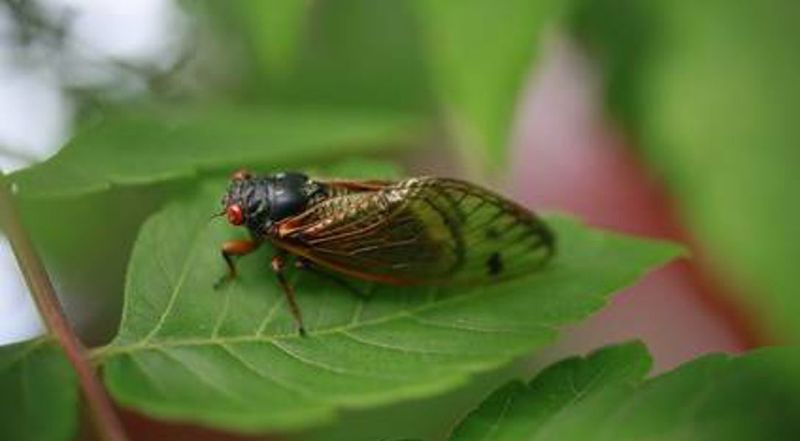
Seeing insects covering your trees and hearing that relentless buzz overhead can make any homeowner start worrying about the canopy. A closer look at what the science actually says should bring some reassurance.
Ohio State University Extension guidance indicates that nymph feeding on tree root fluids has not been shown to cause significant harm to established, healthy trees.
Adult females do create small injuries in twigs when they deposit their eggs. A female uses a saw-like structure to make a slit in a twig, then places her eggs inside.
This can cause the tip of a twig to brown and droop, a visible effect sometimes called flagging.
Because annual dog-day cicadas appear in far lower numbers than major periodical cicada emergences, twig injury from egg-laying tends to be scattered and limited.
On a large, established tree, the affected twigs usually represent a very small portion of the overall canopy.
OSU guidance does not recommend routine pesticide treatment for annual cicada activity on established trees.
Younger or recently planted trees may warrant closer attention since they have less overall canopy to absorb any twig loss.
If you have newly planted trees and notice significant flagging, checking with your local Ohio State University Extension office is a reasonable step.
For most mature trees, though, the annual cicada season passes without leaving any lasting mark on overall tree health.
7. Large Wasps Follow The Summer Chorus
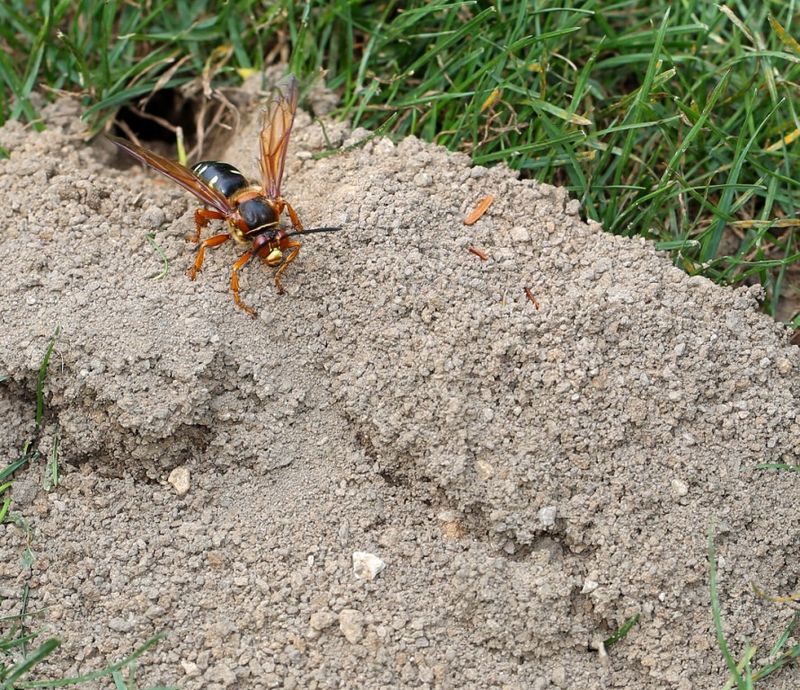
Around the same time the cicada chorus gets loud, some homeowners start noticing something else: large, low-flying wasps patrolling sunny patches of lawn or bare soil. The timing is not a coincidence.
These are Sphecius speciosus, a large solitary wasp whose season lines up directly with annual cicada activity.
Ohio State entomology resources explain that female Sphecius speciosus capture annual cicadas as prey for their underground nests. A female will locate a cicada, sting it to paralyze it, and then carry it back to a burrow she has prepared in the ground.
The paralyzed cicada serves as a food source for her developing larva.
Despite their size and the alarm they can cause, these large ground-nesting wasps are generally not aggressive toward people. Males may patrol territories and investigate movement, but males cannot sting.
Female wasps focus on hunting cicadas rather than defending against people. Stings are considered uncommon when people simply continue their normal outdoor activities.
Their presence in a yard does not mean trees are unhealthy or that something has gone wrong. Sphecius speciosus simply follows the food supply, and right now that supply is buzzing loudly overhead.
Once the annual cicada season winds down, these large wasps disappear from view as well. Their brief, dramatic appearance is entirely tied to the same late-summer cycle driving the noise in the treetops.
8. These Cicadas Aren’t Locusts At All
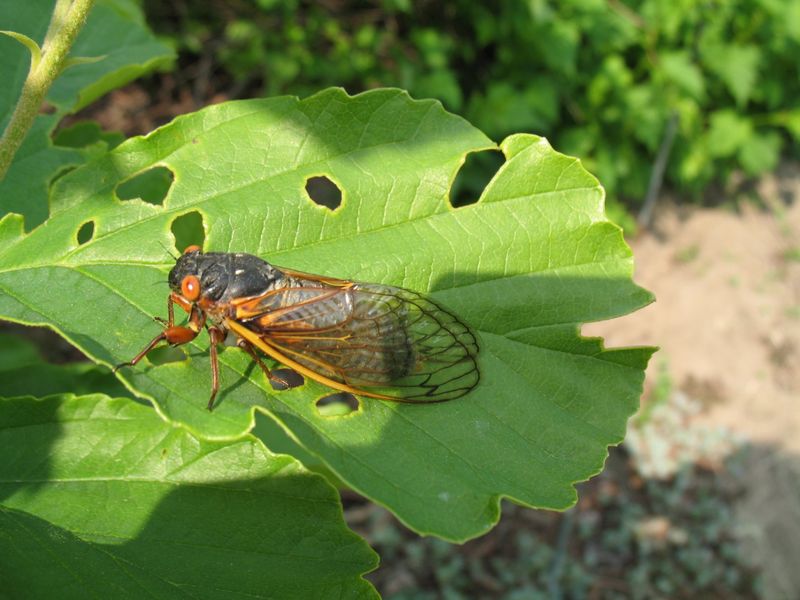
Plenty of people hear that loud summer buzzing and reach for the word locusts. The label gets passed around neighborhoods without much thought, and it has stuck around for generations.
Ohio State University Extension makes clear, though, that cicadas and locusts are entirely different insects with nothing close to the same biology or behavior.
Locusts are grasshoppers, belonging to the order Orthoptera. Cicadas belong to the order Hemiptera, a completely separate insect group.
The two look different, sound different, and behave very differently. The confusion may persist partly because early European settlers used familiar Old World terminology.
They applied it when encountering large numbers of cicadas in North America for the first time.
Locusts are known for forming destructive swarms that strip vegetation across wide areas. Annual dog-day cicadas do not behave that way.
They do not swarm in the agricultural sense, and they do not consume leaves or crops the way swarming grasshoppers do. Their feeding habits and their effects on the landscape are simply not comparable.
Calling the late-summer buzz a locust invasion paints a picture that does not match what is actually happening. The sound coming from local trees right now belongs to annual cicadas going through a normal seasonal cycle.
No swarm is stripping the landscape. No emergency is unfolding in the canopy.
A familiar summer insect is simply doing what it has always done, right on schedule, the same as it did last year and the year before that.