The Michigan Container Plant Mistake That Destroys More Plants In July Than Any Pest Or Disease
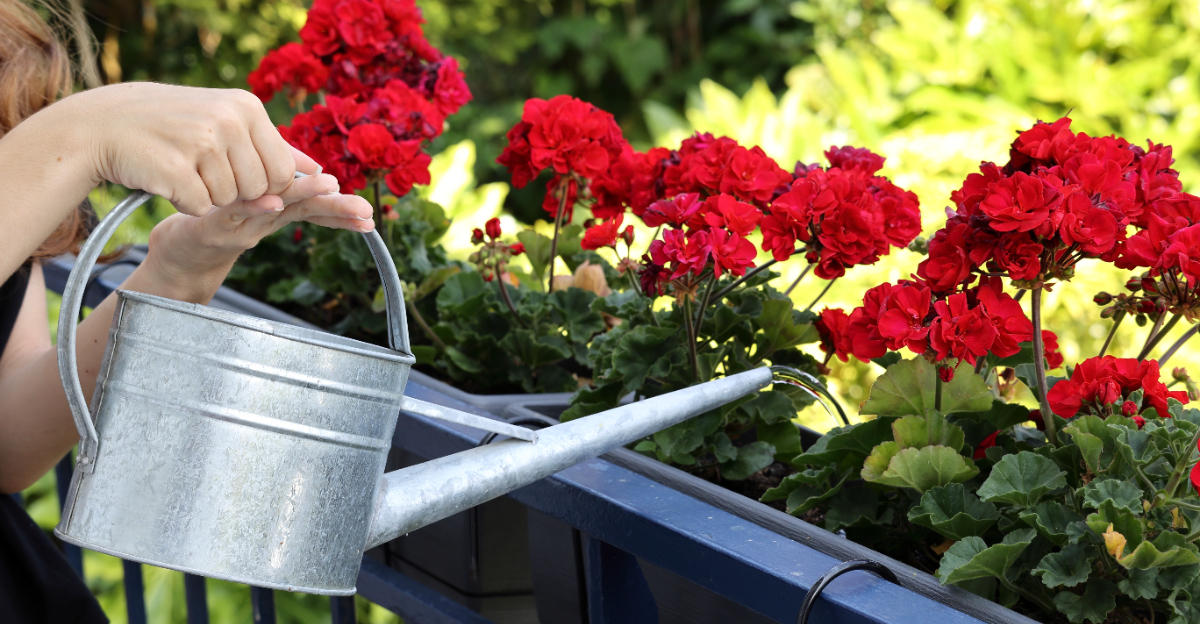
Pests get blamed. Disease gets blamed.
The actual cause of more container plant failures in Michigan July than either of those combined is a mistake so common and so well-intentioned that most gardeners never connect it to the decline they are watching happen. It does not look like neglect.
It looks like attentive care, which is exactly why it persists season after season among gardeners who are genuinely trying to do right by their containers.
July’s heat in Michigan accelerates the consequences of this mistake faster than any other month, turning what would be a minor setback in May into irreversible root damage within days during a heat wave.
1. Watering By Habit Is The Big Mistake
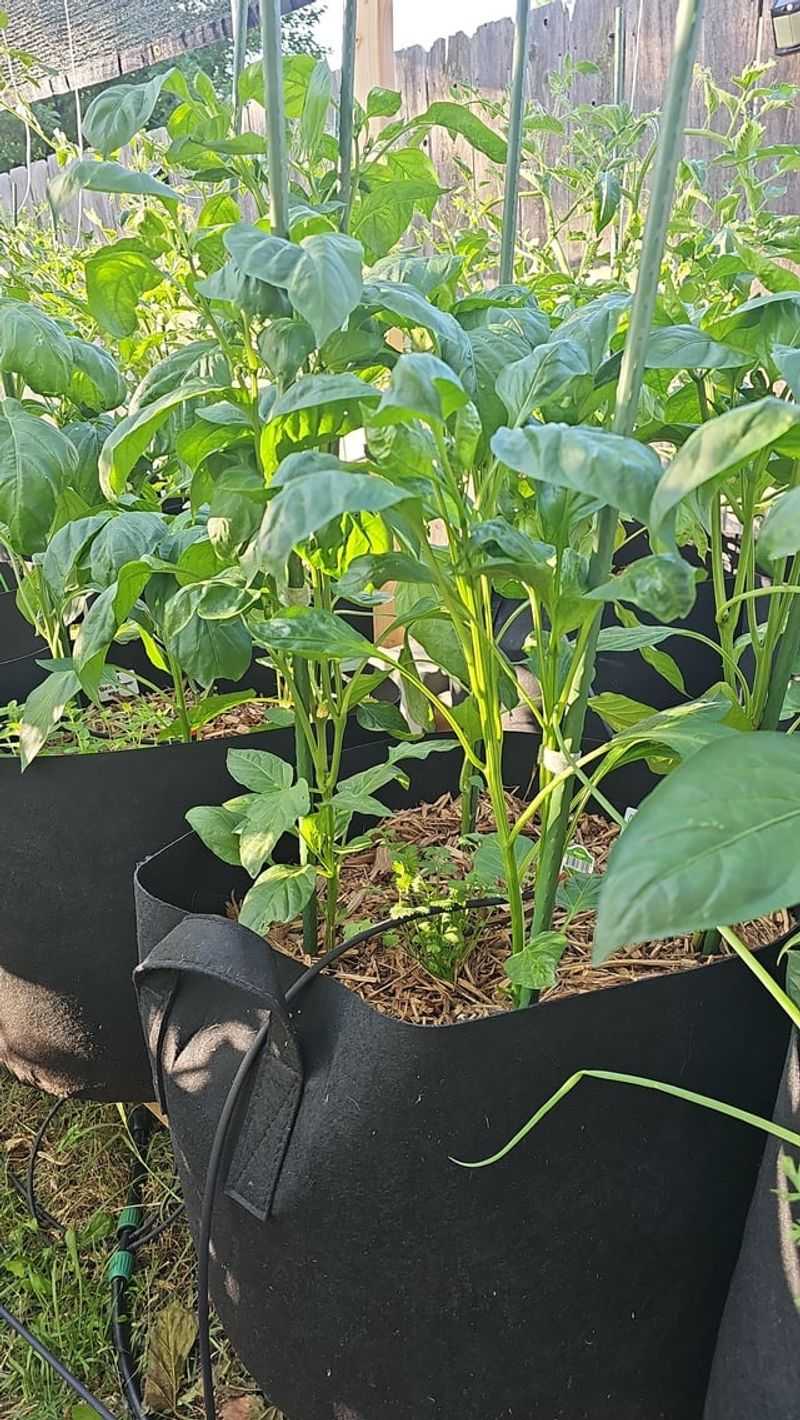
Most gardeners water their containers the same way every single day, like clockwork, without ever stopping to check whether the soil actually needs it. That habit feels responsible, but in July, it can quietly work against you.
A container pot sitting in full Michigan summer sun does not follow a schedule. It dries out based on temperature, wind, sun exposure, and how fast the plant inside is drinking water.
The sides of a pot are completely exposed to warm air, direct sunlight, and drying wind. Unlike a garden bed where surrounding soil helps hold moisture in, a container has no buffer zone.
The potting mix inside can go from moist to bone dry in just a few hours on a hot afternoon, even if you watered that same morning.
Michigan State University points out that containers, raised beds, and hanging baskets may need water more than once daily during hot weather. That is a big shift from the once-a-day routine most people follow.
Vegetables growing in containers can especially need twice-daily watering as the plants get bigger and pull more moisture from the soil.
The fix starts with one simple change. Before you grab the hose, stick your finger two inches into the potting mix.
If it feels dry at that depth, the plant needs water. If it still feels cool and slightly moist, you can wait.
Your finger is honestly the most reliable watering tool you own. Checking the soil instead of watching the clock is the single most powerful habit shift a Michigan container gardener can make in July.
2. A Quick Splash Does Not Reach The Roots
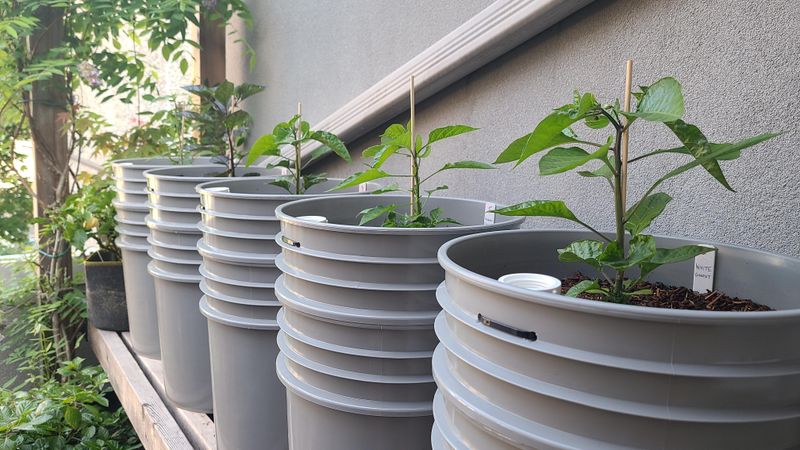
Picture this: you walk outside, give each pot a quick five-second splash, and head back inside feeling like the job is done. The surface of the potting mix looks dark and wet, so everything seems fine.
But just a few inches below that surface, the root ball is still completely dry and pulling nothing from the soil around it.
Roots do not live at the top of the pot. They grow downward and outward through the lower portion of the potting mix, searching for moisture.
When you only wet the surface, the water never reaches where it matters most. The plant can show signs of stress even though the top of the pot looked wet an hour ago, which can be confusing if you do not know what is happening underground.
Your Michigan Garden Changes Every Week. Your Plan Should Too.
Gardening in Michigan changes quickly throughout the season. Every Friday you’ll receive a simple weekly plan showing exactly what to plant, prune, fertilize, harvest, and protect so you never miss the right timing.
The right approach is to water slowly and steadily, giving the potting mix time to absorb moisture evenly from top to bottom. You want to keep watering until you see water flowing out of the drainage holes at the base of the pot.
That is your signal that the entire root zone is actually moist, not just the surface layer.
Michigan State University recommends watering containers until the soil is entirely moist and water exits through the drainage holes. A slow, thorough watering session does far more good than three quick splashes throughout the day.
Taking an extra minute or two per pot can completely change how your plants perform during the hottest stretch of a Michigan summer.
3. Small Pots Dry Out First
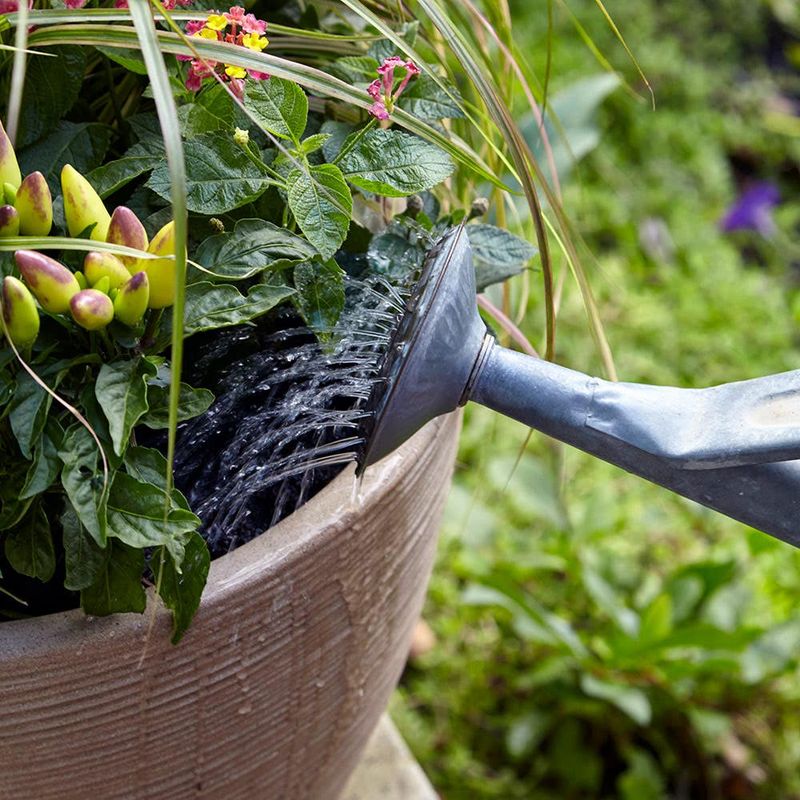
Small containers have a sneaky disadvantage that catches a lot of gardeners off guard. There is simply less potting mix inside, which means less moisture stored in the soil, and less time before the roots start feeling the stress of dryness.
On a hot July afternoon in Michigan, a six-inch pot can go from perfectly moist to dangerously dry in just a couple of hours.
Herbs like basil and thyme are especially sensitive to this. Peppers, tomatoes, and petunias grown in small containers can also struggle fast when the potting mix dries out completely.
These plants are already working hard in the summer heat, and a small pot gives them very little cushion when temperatures climb into the upper eighties or beyond.
Hanging baskets fall into this same category because they usually hold a limited amount of potting mix and have a large surface area exposed to drying air. Checking small pots more frequently than large planters is not extra work.
It is just smart gardening. A large half-barrel planter holds a lot more moisture reserve than a small clay pot on a sunny railing.
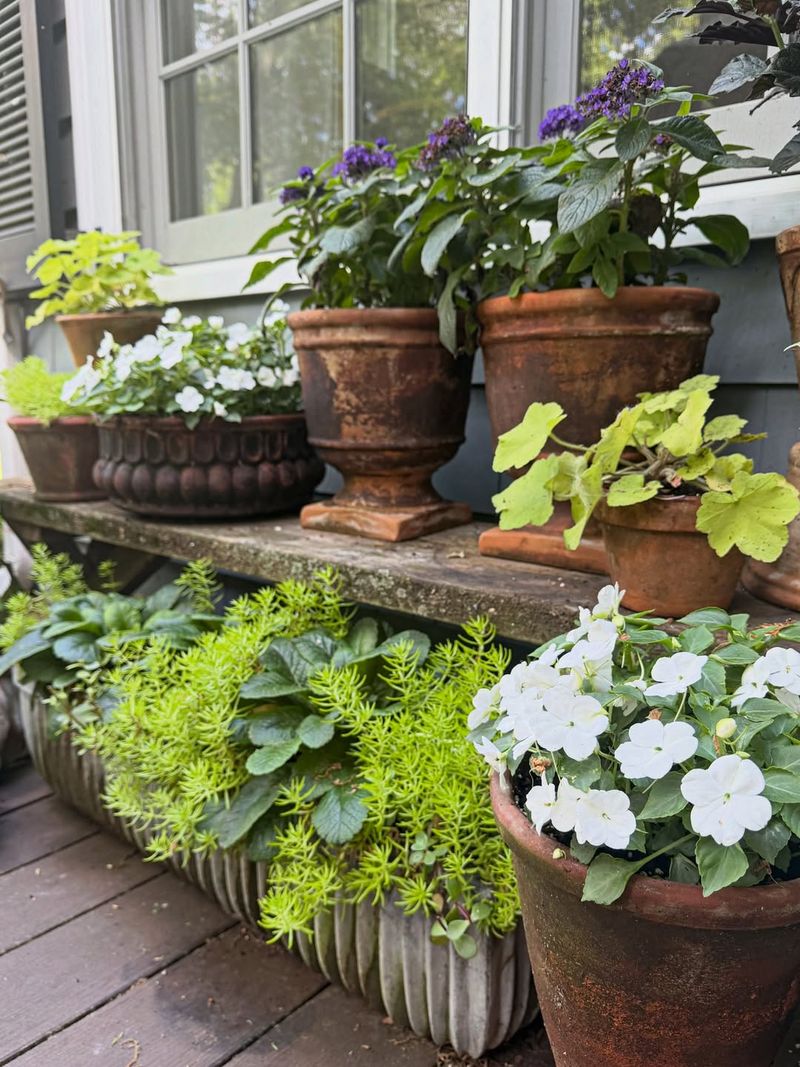
One helpful trick is to group small containers together in a cluster rather than spreading them out individually. Clustered pots shade each other slightly, which slows down moisture loss from the sides and surface.
You can also move small pots to a spot with afternoon shade during the hottest weeks of July, giving the potting mix a better chance to hold onto moisture between watering sessions.
4. Hanging Baskets Need Extra Attention
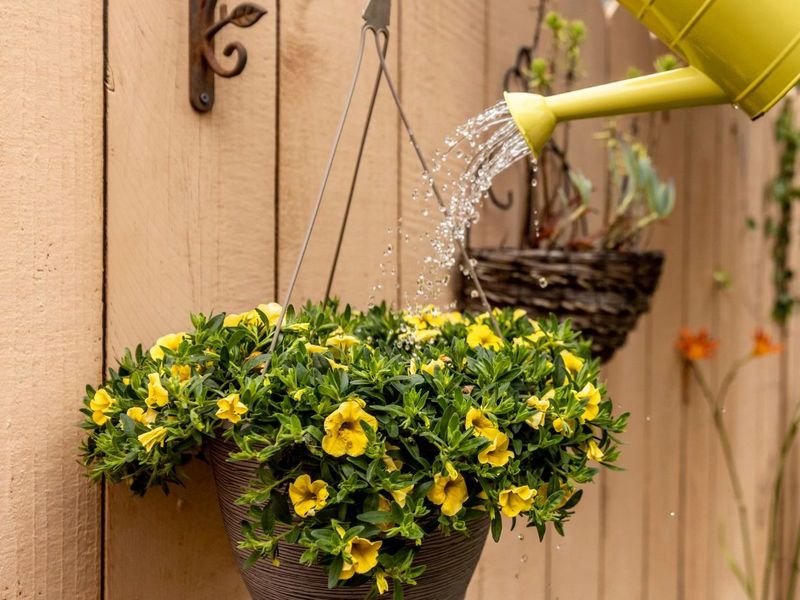
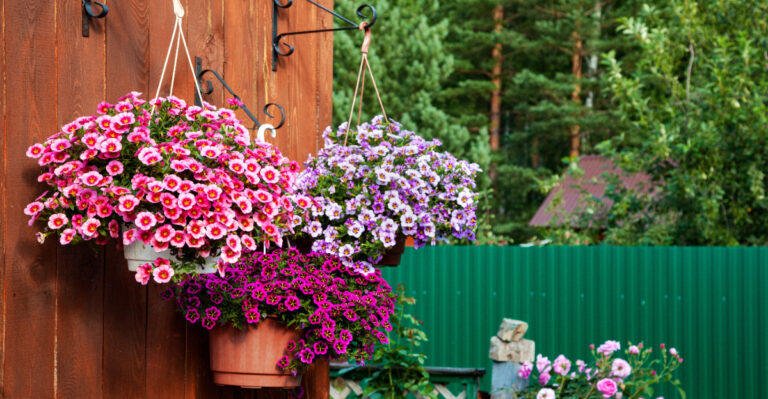
Hanging baskets are some of the most beautiful things you can put on a Michigan porch or deck in summer, but they are also among the most demanding when it comes to water.
Unlike a pot sitting on the ground, a hanging basket is completely surrounded by moving air on every side, including the bottom.
That means moisture escapes from all directions at once, not just from the top.
On a breezy, sunny July day in Michigan, a hanging basket can lose moisture incredibly fast. The same impatiens or calibrachoa that looks perfectly happy in a shaded garden bed might be struggling by noon if it is hanging in full sun with wind hitting it from all sides.
The exposure level is just not the same, and many gardeners do not account for that difference.
Michigan State University suggests checking hanging baskets in the morning and again in the evening during hot spells. That two-check routine can prevent the kind of dramatic afternoon wilt that stresses plants and sets them back for days.
A basket that dries out completely once is more vulnerable the next time, so consistency really pays off.
One easy way to check a hanging basket is to lift it gently. A well-watered basket feels noticeably heavier than a dry one.
That weight test takes about two seconds and tells you instantly whether the basket needs attention.
Some gardeners also find that self-watering hanging baskets with built-in reservoirs make July much less stressful for both the plants and the person caring for them.
5. Drainage Holes Still Matter
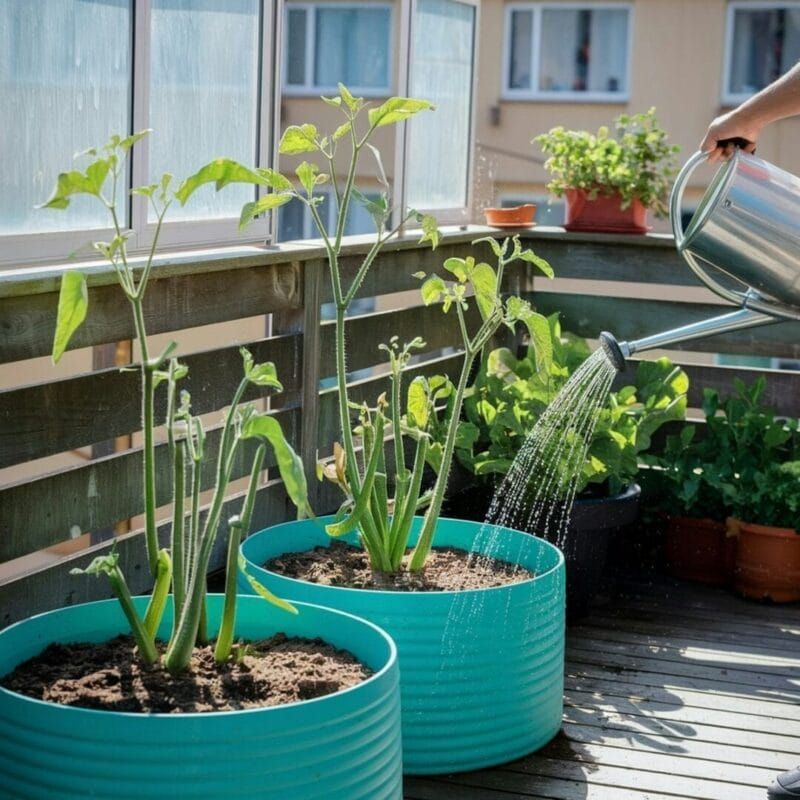
Watering more often sounds like the obvious solution to dry container plants, but there is an important catch that trips up a lot of well-meaning gardeners. Without proper drainage holes in the bottom of the pot, extra water has nowhere to go.
It collects around the roots, pushes out the oxygen in the soil, and creates soggy conditions that stress plants just as much as dryness does.
Roots need both water and air to stay healthy. When a container holds standing water at the bottom for too long, the roots begin to suffer from a lack of oxygen rather than a lack of moisture.
The plant can actually look wilted even when the soil is soaking wet, which can trick you into adding even more water and making the situation worse.
The goal is evenly moist potting mix throughout the container, not wet at the bottom and dry at the top, and not soaking from top to bottom without any drainage.
Drainage holes let excess water escape so the potting mix can hold just the right amount of moisture without becoming waterlogged. Always check that the holes are not blocked by roots or debris.
If your pot is sitting in a saucer, empty that saucer after watering so the container is not reabsorbing standing water for hours.
A little water sitting in a saucer is fine briefly, but letting it pool there all afternoon can undo the good drainage your holes provide.
Good drainage is not optional for container success in a Michigan July. It is the foundation everything else builds on.
6. Morning Checks Prevent Afternoon Panic
There is a real difference between checking your containers at seven in the morning versus rushing out at two in the afternoon to find wilted, heat-stressed plants flopped over in the sun.
Morning is the best time to assess what your containers need because the air is cooler, the soil has had all night to settle, and you still have time to water before the hottest part of the day arrives.
When you water in the morning, the moisture soaks into the root zone before temperatures peak. Plants can pull that water up through their stems and leaves throughout the afternoon, staying cooler and more resilient as the heat builds.
An afternoon emergency watering session can help a stressed plant recover, but it is never as effective as a morning routine that prevented the stress from happening at all.
Michigan State University notes that container vegetables may need watering twice daily as plants grow larger and use more water. That second check does not have to be a full watering session every time.
Late afternoon is a good moment to lift smaller pots, poke the soil, and decide whether anything needs a top-up before the evening cools things down.
Building a morning check into your routine takes only a few minutes, but it completely changes your relationship with container gardening in July. Instead of reacting to wilted plants, you are staying ahead of them.
Gardeners who check in the morning tend to catch problems early, adjust faster, and end up with containers that look noticeably better throughout the entire summer season.
7. Mulch Helps Pots Hold Moisture Longer
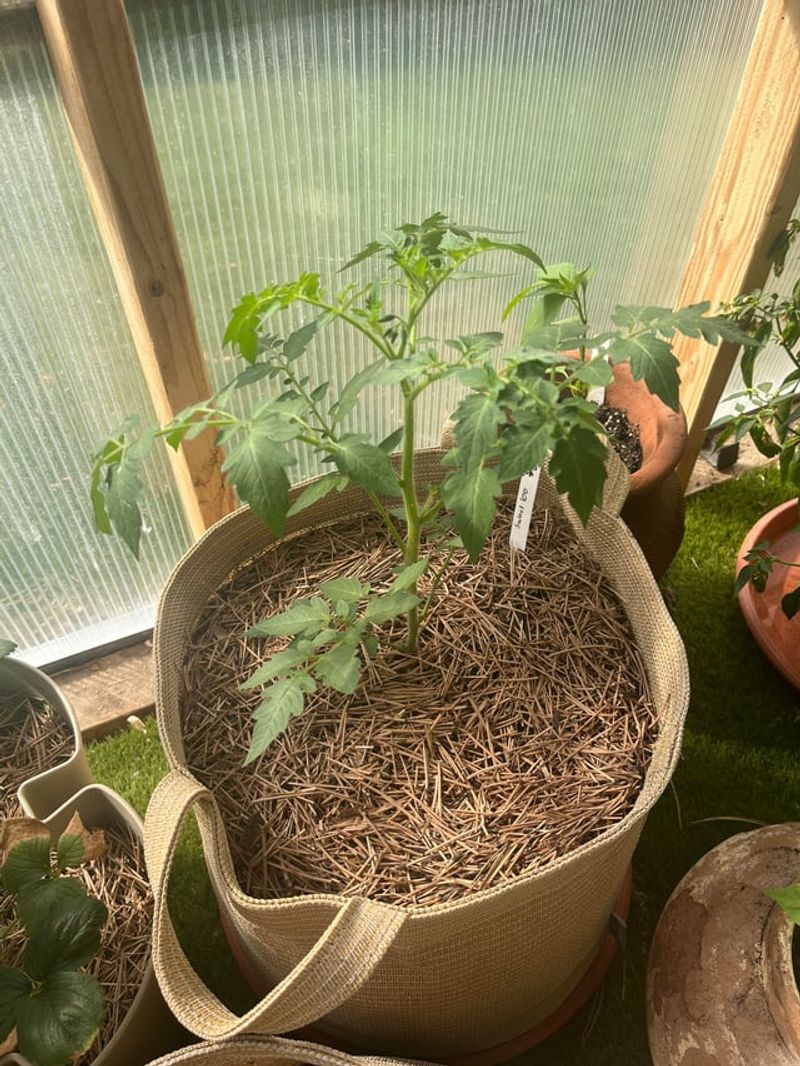
Most people think of mulch as something you spread around trees or garden beds, but it works surprisingly well inside container pots too.
A light layer of organic mulch on top of the potting mix acts like a mini shade cover for the soil surface, slowing down the rate at which moisture evaporates into the warm July air.
It is a small addition that quietly makes a noticeable difference.
Shredded bark, compost, straw, or leaf mulch all work well for this purpose. You only need about an inch or two on top of the potting mix.
That thin layer is enough to moderate the soil surface temperature, keep roots a bit cooler during the hottest hours of the day, and reduce how quickly the top of the pot dries out between waterings.
The University of Minnesota Extension highlights that mulch can help containers by moderating soil surface temperature and keeping roots cooler in hot sun.
Cooler roots are more efficient at absorbing water, which means your plant gets more benefit from each watering session.
On a ninety-degree Michigan afternoon, that difference in root temperature can genuinely matter.
One thing to keep in mind is placement. Pull the mulch slightly away from the main stem or crown of the plant so it does not trap moisture directly against the base, which can cause stem rot over time.
Mulch is meant to cover the soil, not the plant. Applied correctly, it is one of the easiest, lowest-cost ways to help your container plants handle Michigan July heat with much less stress on both the plant and the gardener.
8. The Best Fix Is A Soil First Routine
After learning all the ways containers can dry out in July, the solution turns out to be refreshingly simple. You do not need expensive gadgets or complicated systems.
What works best is a consistent, soil-first routine that takes just a few extra minutes each morning and removes all the guesswork from your container care.
Start by pressing two fingers about two to three inches into the potting mix of each container. If the soil feels dry at that depth, it is time to water.
If it still feels cool and slightly damp, you can skip it or check again later. For smaller pots, you can also lift them gently.
A pot that feels surprisingly light is almost always a pot that needs water.
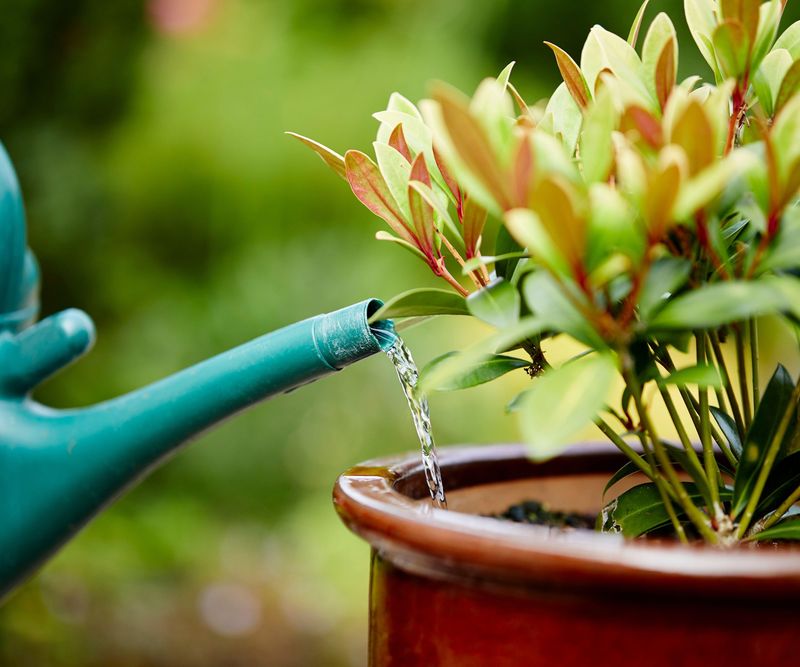
When you do water, go slowly. Let the water soak in rather than rushing.
Keep going until you see water flowing steadily out of the drainage holes at the bottom, which confirms the entire root ball is moist. After watering, check the saucer underneath and empty it if water has pooled there for more than thirty minutes or so.
If a container looks stressed even after watering, consider moving it to a spot with afternoon shade for a day or two. Many plants recover quickly once they get a break from direct afternoon sun.
The University of Minnesota Extension also reminds gardeners that mulching the soil surface can extend the time between waterings. Container plants thrive on observation, not guesswork.
The more you pay attention to what the soil is actually telling you, the better your plants will look all the way through summer.