The Michigan Native Berry Bush That Helps Deter Ticks And Produces Tons Of Fruit
A brushy Michigan yard edge does not have to stay that way, and American elderberry is one of the most practical native shrubs for making it better.
This plant belongs in Michigan’s wooded borders and moist low spots naturally, which means it establishes well, performs reliably, and does not need much convincing to thrive.
Spring brings large white flower clusters that pollinators genuinely love. Late summer brings the dark berry bunches that make birds very happy indeed.
And the open, upright structure elderberry grows into pairs well with the kind of managed edge that keeps leaf litter cleared, brush trimmed, and a clean barrier between wilder areas and everyday outdoor spaces.
The result is a yard border that looks intentional, supports wildlife, and stays easier to manage all season long.
1. American Elderberry Fits A Tick-Smart Edge
Wooded yard borders in Michigan can feel like a guessing game when you are trying to balance natural beauty with smart outdoor habits.
American elderberry fits well into that kind of edge because it is a native shrub that belongs in the landscape rather than fighting against it.
Planting it along a fence line or brushy border gives the area a more intentional look while supporting pollinators and wildlife that are already visiting your yard.
The shrub does not repel ticks through scent, chemistry, or any property of its fruit. That is worth saying clearly, because the idea of a tick-repelling plant is appealing but not supported by credible evidence in a home landscape setting.
The real value of elderberry in a tick-smart yard comes from how it fits into a managed edge design.
Keeping a strip of wood chips or gravel between wild growth and your lawn, patio, or path is one of the most practical steps you can take.
Elderberry planted behind that barrier, with trimmed lower branches and cleared leaf litter around its base, becomes part of a border that is both useful and easier to maintain.
Michigan yards with sunny or partly sunny edges near moist low spots are often well suited for this kind of planting approach.
2. Big Berry Clusters Bring Summer Harvests
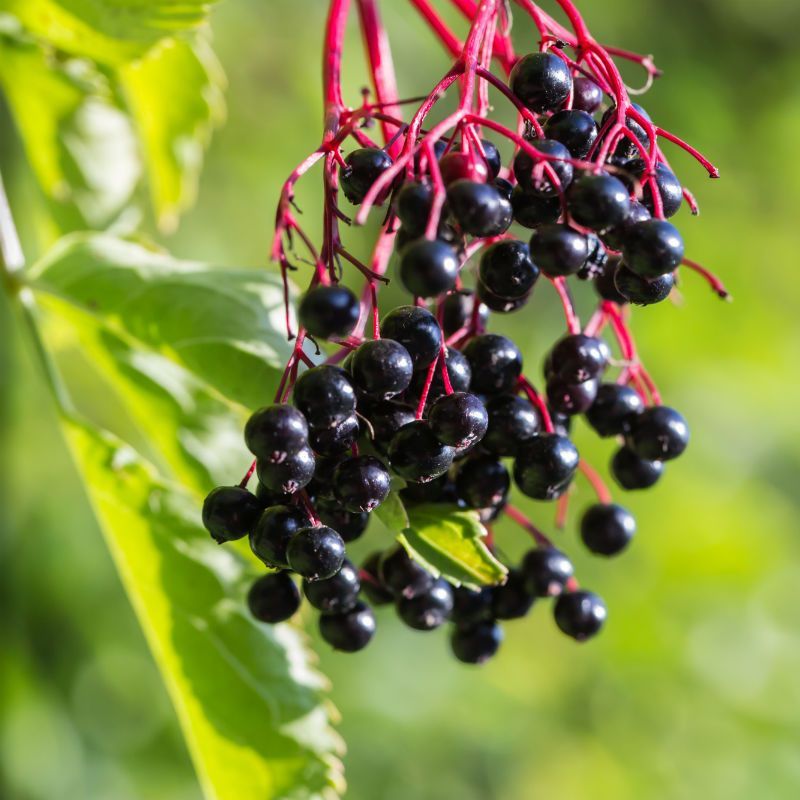
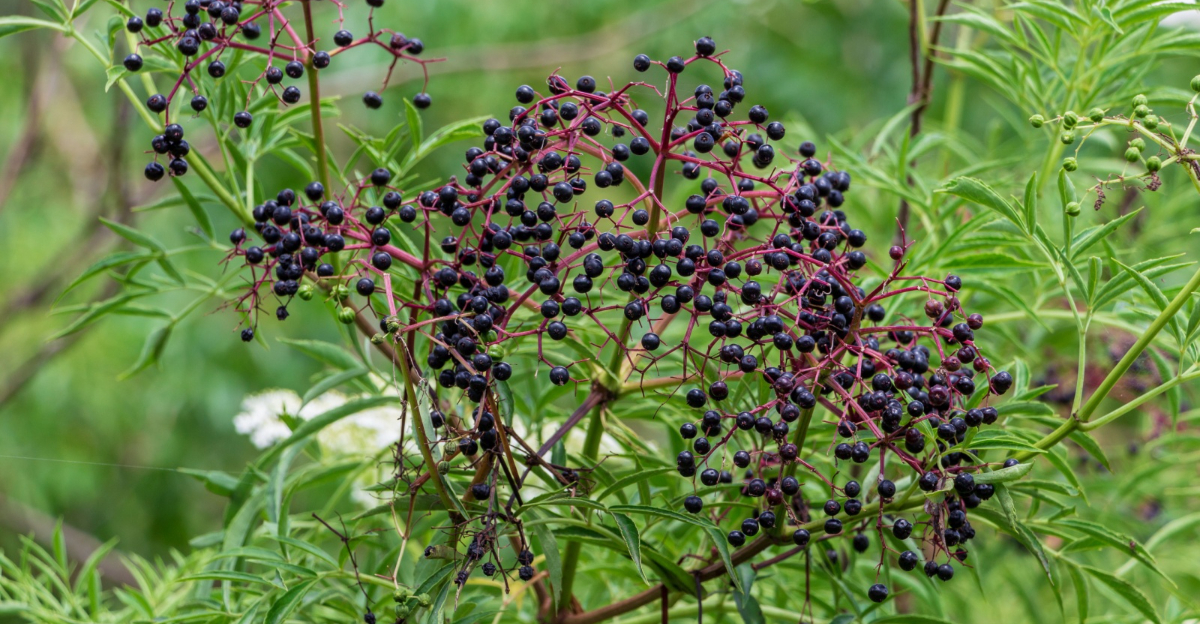
Late summer in Michigan brings one of the most rewarding sights a native plant gardener can enjoy: heavy, drooping clusters of small dark berries weighing down the flexible branches of a mature American elderberry.
Each cluster, called a cyme, can hold dozens to hundreds of individual berries, and a well-established shrub may produce several of them in a single season.
That kind of output is hard to ignore when you are looking for a productive native plant.
Elderberries are used in syrups, jellies, and baked goods, though they should always be cooked before eating because raw berries can cause stomach upset.
The harvest window is relatively short, so checking the shrub every few days once the clusters start turning from green to deep purple helps you catch the fruit at its best.
Clusters are usually ready when the berries are fully dark and the stems take on a reddish tone.
Harvesting is straightforward. You can snip entire clusters with a pair of garden scissors and then use a fork to strip the berries from the stems over a bowl.
Planting two or more elderberry shrubs nearby can improve fruit production through cross-pollination, so Michigan gardeners with enough yard space along a sunny or partly sunny edge may want to consider starting with at least a pair of plants.
3. White Flower Clusters Add Early Season Interest
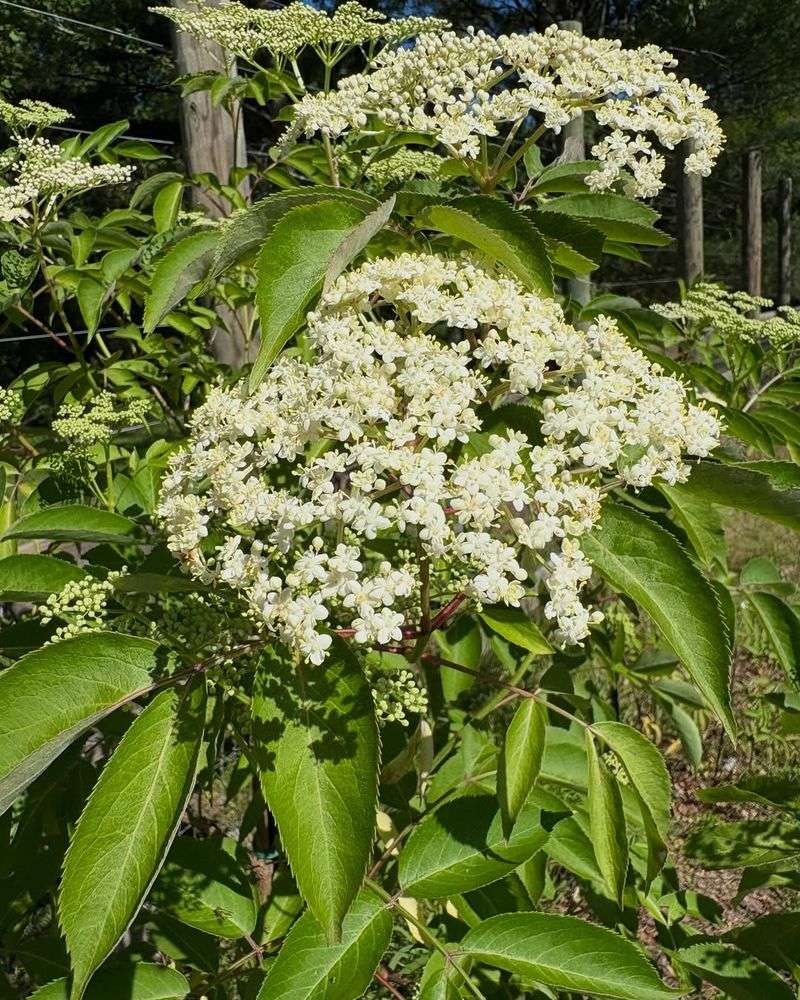
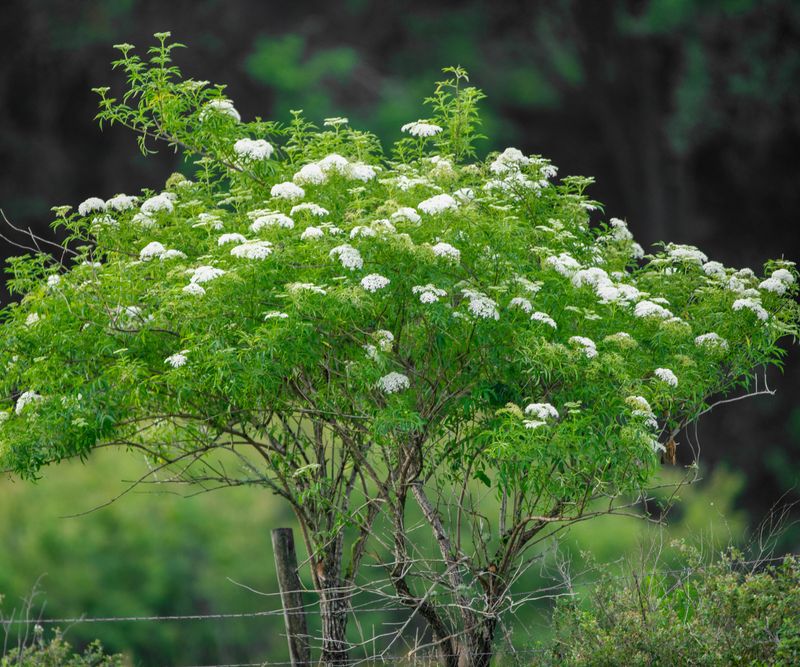
Before the berries arrive, American elderberry puts on a different kind of show. In late spring to early summer, the shrub produces large, flat-topped clusters of tiny white flowers that can measure several inches across.
These flower heads, called corymbs, appear in generous numbers on healthy plants and give the shrub a soft, airy appearance that feels right at home along a naturalized Michigan yard edge.
Pollinators respond quickly to those flowers. Bees, flies, and small butterflies are common visitors, and the activity around a blooming elderberry can be lively on warm mornings.
For gardeners who want to support native pollinators without adding a lot of high-maintenance plants, elderberry delivers early season interest without much fuss.
The flowers themselves are also edible when used carefully. Some cooks use fresh flower clusters to make elderflower cordial or fritters, though the raw flowers should be used in moderation and the stems avoided entirely.
If you plan to harvest both flowers and berries from the same shrub, keep in mind that removing flowers reduces the number of berry clusters that develop later in the season.
Michigan gardeners who want a full berry harvest may prefer to let the flowers develop naturally and focus on enjoying the pollinator activity rather than harvesting the blooms themselves.
4. Moist Soil Helps Elderberry Settle In
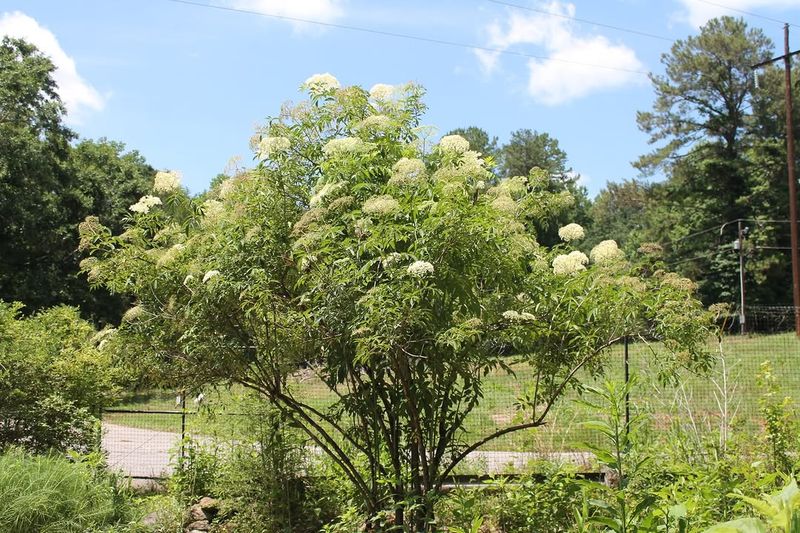
Soggy corners and low spots that collect water after a Michigan rainstorm are often the trickiest parts of a yard to plant. Many ornamental shrubs struggle in those conditions, but American elderberry actually handles them well.
Its natural habitat includes streambanks, wetland edges, and moist woodland borders, so a yard with reliably damp soil is not a problem for this shrub. In fact, it often settles in faster and grows more vigorously in those spots than in dry, sandy ground.
That said, elderberry is reasonably adaptable and can tolerate average garden soil as long as it does not dry out completely during hot Michigan summers.
Adding a layer of organic mulch around the base helps retain moisture and keeps the root zone more consistent through dry spells.
Avoid piling mulch directly against the stems, which can create conditions that encourage rot and pest pressure.
If you have a rain garden, a low border near a downspout, or a naturally moist fence line, American elderberry is worth considering as an anchor plant for that space.
It fills in quickly and provides enough height and density to give the area a finished look without requiring constant attention.
Michigan homeowners who have struggled to find the right plant for a perpetually wet corner often find that elderberry is one of the more straightforward solutions available.
5. Full Sun Can Support Better Fruit Production
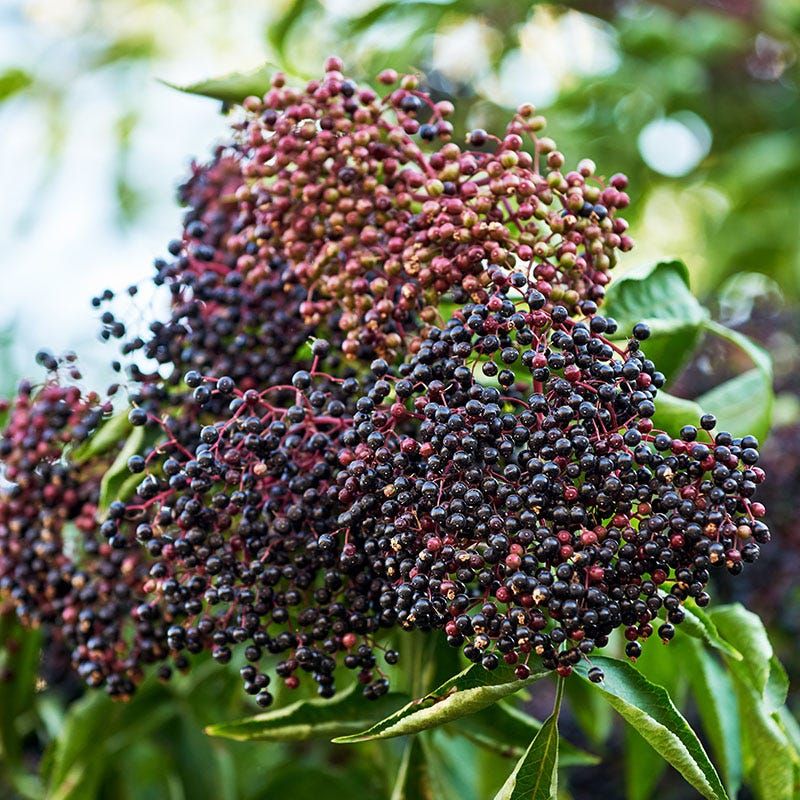
Sunlight makes a real difference with American elderberry, especially when fruit production is one of your goals.
Shrubs planted in full sun, meaning at least six hours of direct light each day, tend to produce more flower clusters and ultimately more berries than those tucked into shadier spots.
If your Michigan yard has a sunny fence line, an open south-facing edge, or a bright border along a driveway or path, those locations are worth considering before you decide where to plant.
Partial shade is workable, and elderberry will still grow and flower in spots that receive four to six hours of sun.
However, fruit clusters may be smaller or fewer, and the overall shape of the shrub can become more open and leaning as it reaches toward available light.
For a tidier, more productive plant, sunny placement tends to give better results over time.
Sun exposure also affects how quickly the shrub establishes itself after planting. A young elderberry in a well-lit spot with consistent moisture usually puts on noticeable growth within its first full season.
Pruning in late winter or early spring by removing older, thicker canes encourages fresh growth that tends to carry the best flower and fruit production.
Michigan gardeners who take a little time each year to manage the older canes often end up with a healthier, more productive shrub over the long run.
6. Large Growth Needs Thoughtful Placement
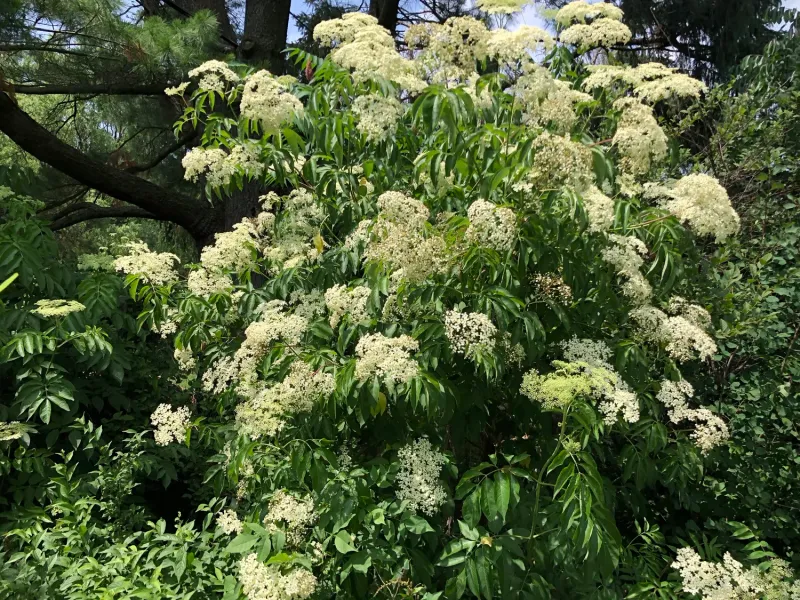
One thing that surprises some Michigan gardeners is how large American elderberry can get in a favorable spot. A mature shrub may reach eight to twelve feet tall and spread nearly as wide, with multiple arching canes that create a full, rounded silhouette.
That size is one of its strengths as a privacy screen or naturalized border plant, but it can feel like too much if you plant it too close to a patio, path, or foundation without a plan for managing it.
Spacing matters from the start. Giving each shrub at least six to eight feet of room on all sides allows for natural growth without constant cutting back.
If you are planting a row of elderberries along a property edge or fence line, spacing them eight to ten feet apart gives them room to fill in while keeping the planting from feeling overcrowded as the years pass.
Elderberry responds well to regular pruning, so managing its size is not a difficult task once you understand its growth habit. The shrub sends up new canes from the base each year, and older canes tend to become less productive over time.
Removing the oldest, thickest canes in late winter keeps the plant more open and vigorous.
Michigan homeowners who plan ahead for the eventual size of this shrub tend to have a much more satisfying experience with it than those who plant it in a tight space and then struggle to keep it in bounds.
7. A Managed Edge Matters More Than The Shrub Alone
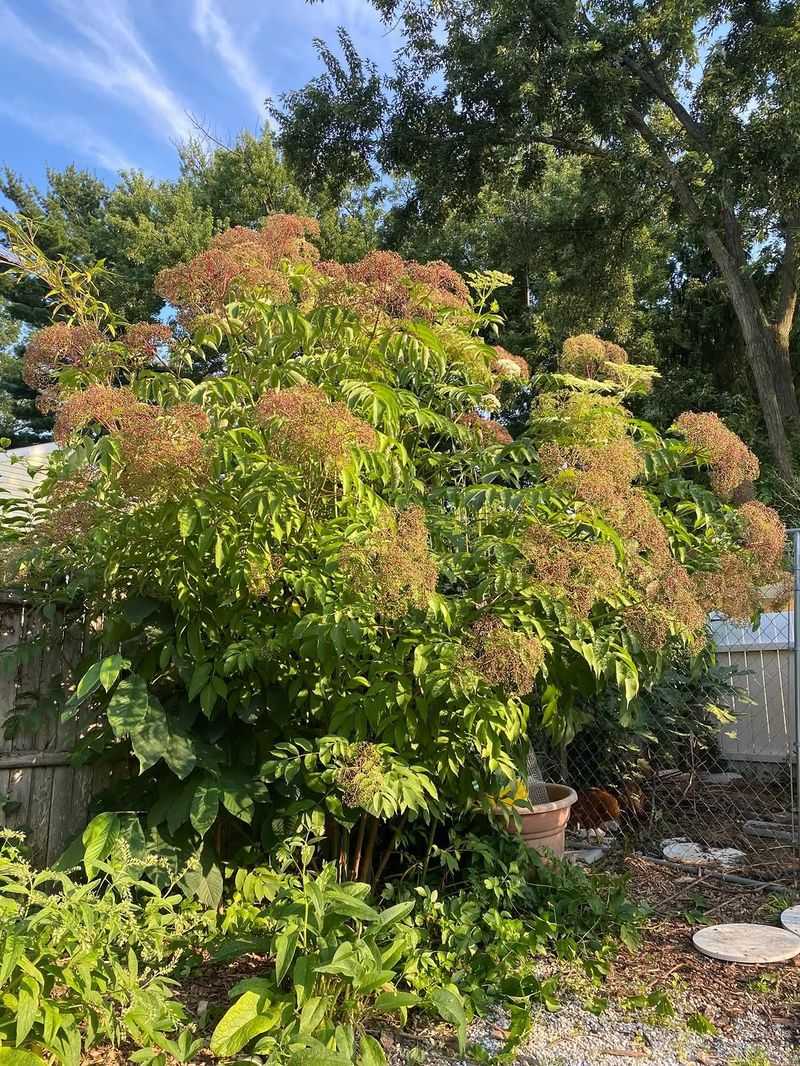
Planting American elderberry along your yard edge is a good move, but the shrub itself is not what makes a border tick-smart. The real difference comes from how the entire edge is managed.
Dense, uncleared growth right next to a lawn, path, or patio creates the kind of habitat where ticks are more likely to be encountered, regardless of what shrubs are growing there.
Keeping that transition zone open and maintained is the more important part of the equation.
A strip of wood chips or gravel placed between wild or naturalized plantings and the areas where people and pets spend time is one of the most practical steps a Michigan homeowner can take.
Ticks tend to stay in shaded, leafy, humid areas and are less likely to cross a dry, open barrier.
Removing leaf litter from around shrub bases, keeping grass trimmed along the border, and clearing brush from areas near seating and play spaces all contribute to a lower-contact edge.
Elderberry fits into this approach because it can be maintained as a tidy, upright shrub with some regular pruning rather than left to sprawl into a tangled mass.
Pairing it with good edge management habits makes the whole border feel more intentional and easier to enjoy.
Michigan families who spend time outdoors near their yard edges benefit most when the planting plan and the maintenance routine work together rather than one being ignored in favor of the other.
8. Birds May Notice The Berries First
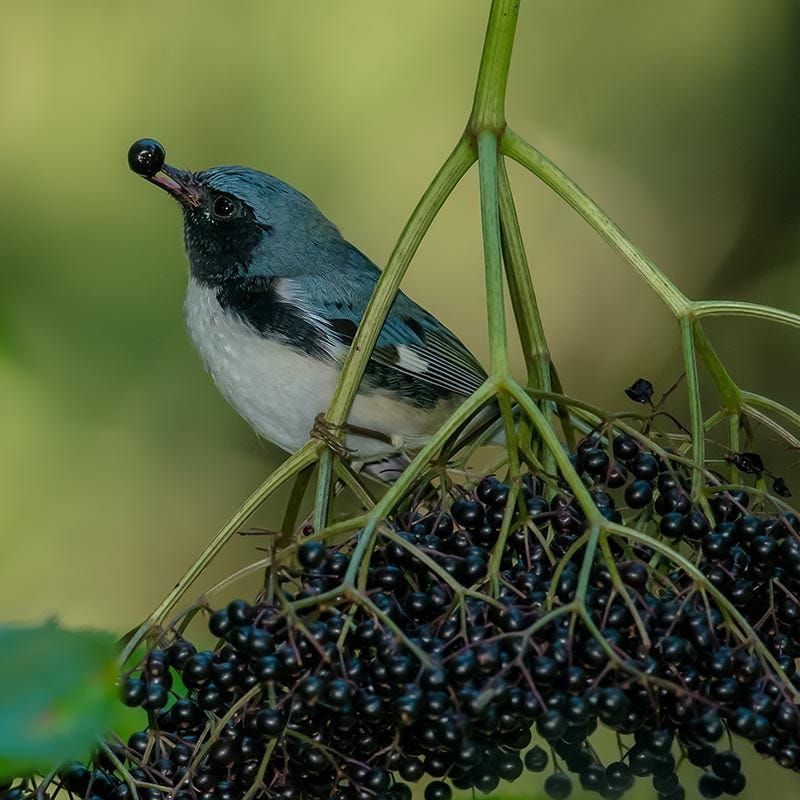
If you are hoping to harvest elderberries for your own kitchen, plan on sharing at least some of them with the birds.
Robins, cedar waxwings, catbirds, and several other species that are common across Michigan are drawn to elderberry fruit, and they can move through a fruiting shrub quickly once the berries ripen.
For gardeners who planted elderberry primarily for wildlife value, this is exactly the point. For those expecting a full harvest, it helps to be ready to pick promptly once the clusters darken.
Bird activity around a fruiting elderberry can be lively and fun to watch from a nearby window or patio.
Multiple species may visit within the same morning, and the movement and sound add a layer of interest to the yard edge that goes well beyond what any purely ornamental shrub provides.
Michigan gardeners who enjoy watching wildlife often find that elderberry becomes one of the most active spots in their yard during late summer.
Netting individual clusters before they fully ripen is one option for protecting a portion of the harvest if you want to reserve some berries for your own use. Leaving a few clusters uncovered lets birds enjoy the fruit while you collect the rest.
Elderberry works well as part of a wildlife-friendly yard edge in Michigan precisely because it offers something useful to multiple visitors, including the gardener who planted it in the first place.