The Michigan Spruce Disease That Causes Needles To Drop From The Inside Out
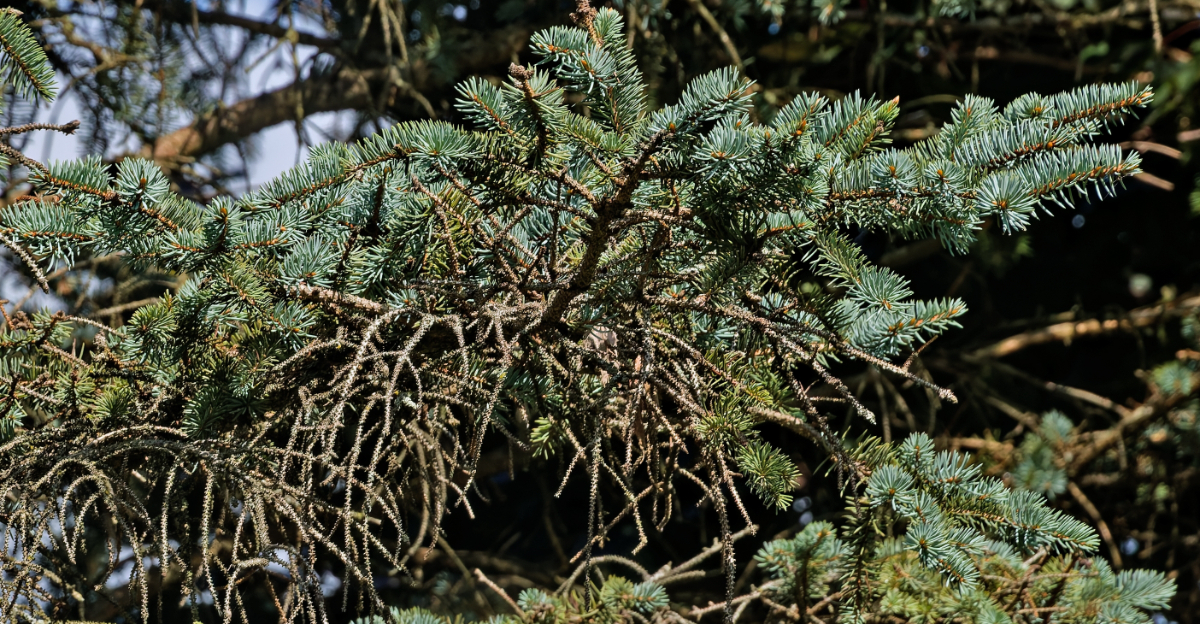
One of the most common spruce problems Michigan homeowners run into starts quietly, deep inside the tree’s canopy.
Instead of thinning evenly or dropping needles from the outside in, this disease causes older, inner needles to brown and fall first, often while the outer branches still look green and healthy.
This inside-out pattern makes the problem easy to miss in its early stages, since a quick glance at the tree from outside doesn’t reveal much.
By the time thinning becomes obvious from a distance, the disease has often been progressing for a while, especially on lower branches where moisture tends to linger longest.
Left untreated, this pattern can repeat year after year, gradually weakening the tree’s overall appearance and health. Here’s what’s behind this distinctive inside-out needle drop and what Michigan spruce owners should watch for.
1. Start By Looking At The Inner Needles
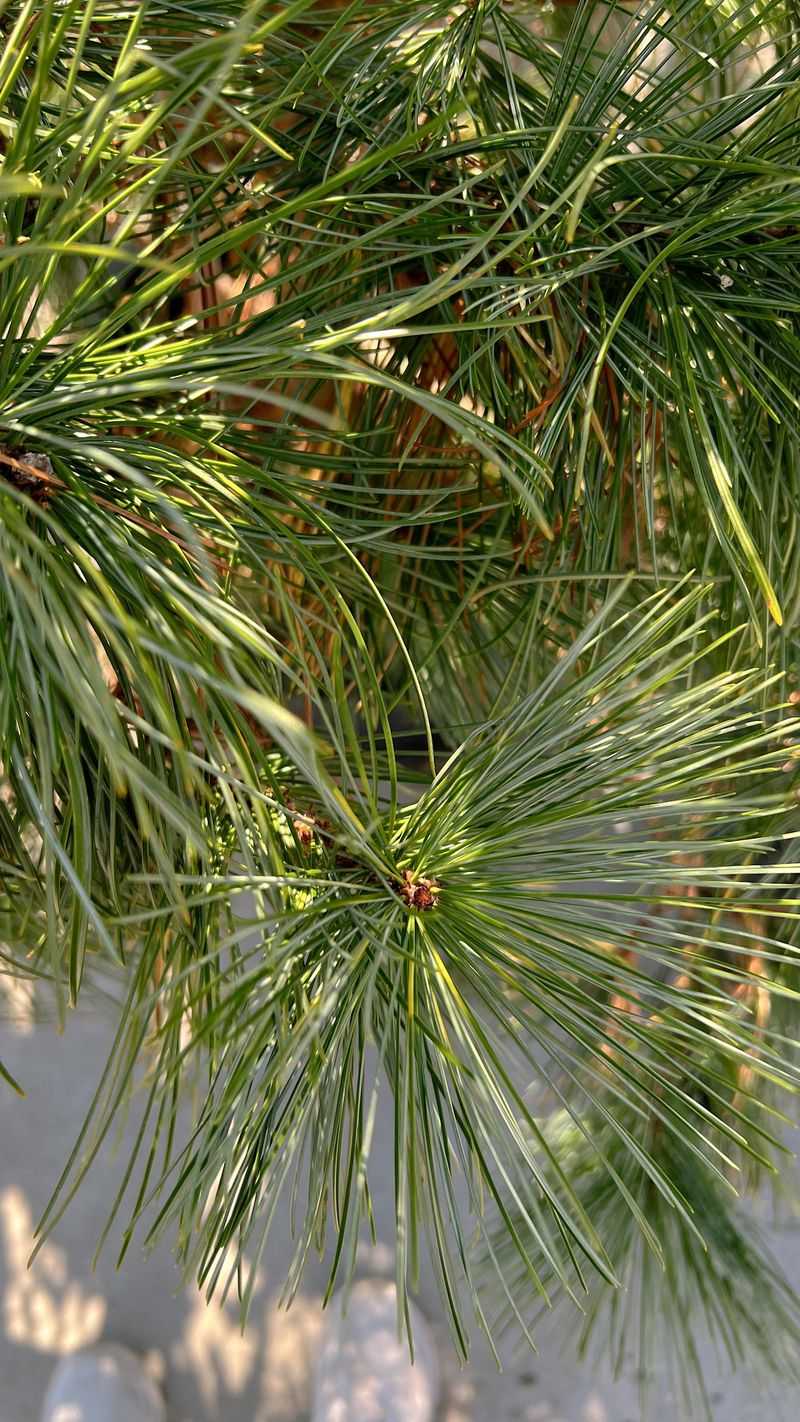
Take a quiet moment and peek toward the middle of your spruce, close to the trunk. That inner zone is where Rhizosphaera usually shows up first. Rhizosphaera primarily affects older needles, especially those deeper inside the canopy.
Older needles get infected earlier because they have been exposed to spores for more seasons. Newer growth at the branch tips stays green for a while, so the tree can look fine from a distance. Up close, though, the story changes fast.
An interior that keeps getting thinner while the outside stays leafy is a big warning sign. The tree slowly loses its inner needles, leaving bare twigs surrounded by a green shell. That hollow look is not normal, and it should grab your attention.
Try walking around the whole tree and checking several branches, not just one. If many branches share that same bare-inside pattern, Rhizosphaera moves up the suspect list. A single thin spot might mean nothing, but a repeating pattern means plenty.
Spotting this early gives you a real advantage. You can start good care habits and protect the fresh growth before the problem spreads higher.
Waiting until the tree is heavily thinned can make it harder to protect enough healthy foliage and improve its appearance.
Make inner-needle checks a spring and late-summer habit. A few minutes of looking can tell you whether your spruce is thriving or quietly struggling from the middle out.
2. Watch For Browning From The Bottom Up
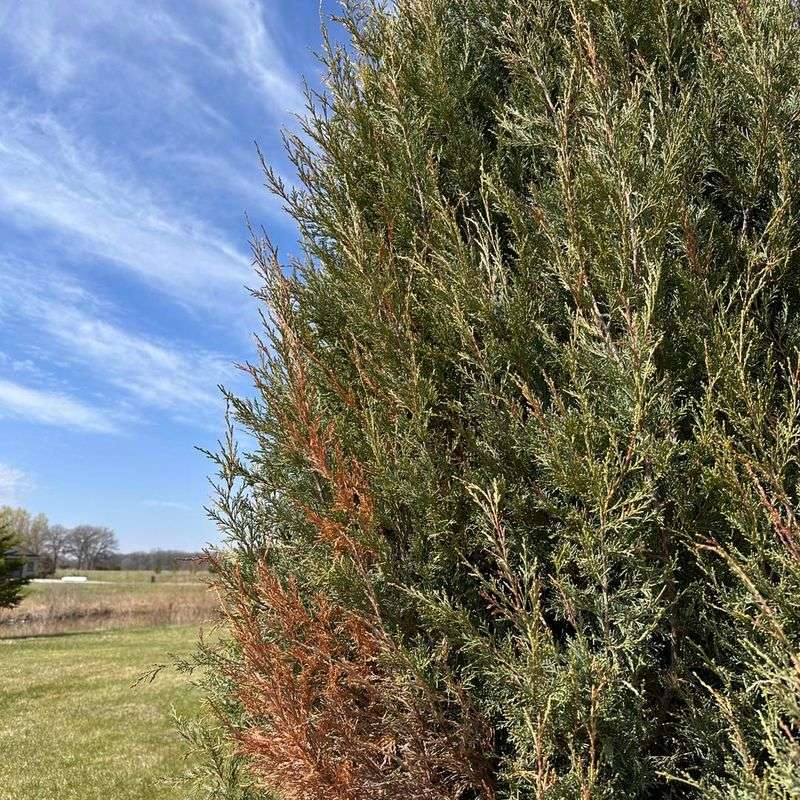
Lower branches often show symptoms first, especially where shade and limited airflow keep the needles wet for longer.
Those damp conditions give the fungus a cozy place to grow and spread. Browning that begins near the bottom and creeps upward is a classic clue.
The trouble does not usually jump to the top right away. Instead, symptoms can progress upward as spores spread to susceptible needles during wet weather. Along with moving up, the damage also spreads outward.
A branch might first show browning near the trunk, then the thin, tired look reaches toward the tip over time. Watching this two-way pattern helps you understand how established the problem has become.
Your Michigan Garden Changes Every Week. Your Plan Should Too.
Gardening in Michigan changes quickly throughout the season. Every Friday you’ll receive a simple weekly plan showing exactly what to plant, prune, fertilize, harvest, and protect so you never miss the right timing.
Rain plays a big role here. Water splashing off infected lower needles carries spores to healthy branches above. That is why wet springs and crowded, shaded spots can speed things along.
Keep an eye on the overall shape of your spruce through the seasons. If the bottom third looks rough while the top still seems full, you are likely watching this upward march in action. Track it with a quick photo every few weeks.
Early attention pays off. Once you notice bottom-up browning, you can improve airflow, clean up fallen needles, and plan protection for the fresh growth.
Catching the problem early gives you a better chance of protecting new growth and limiting further thinning.
3. Look For Purple Or Brown Needles
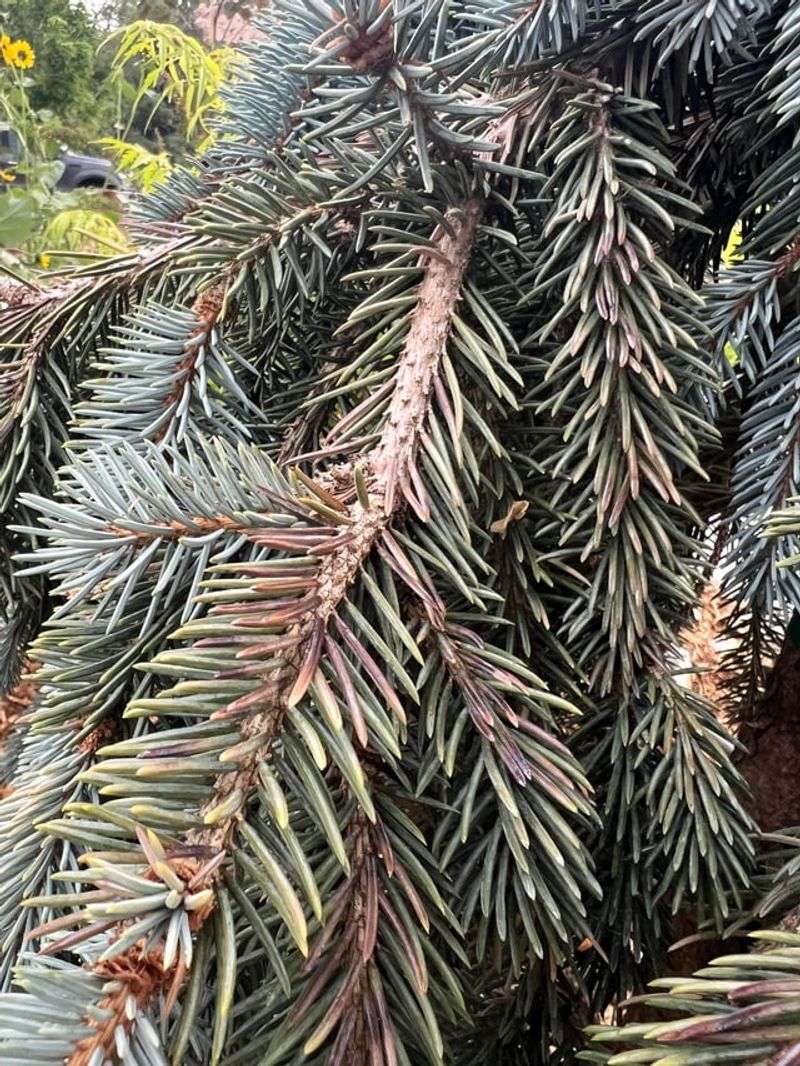
Color changes tell a story on a spruce. Before infected needles drop, they usually shift away from that healthy blue-green. Watching for these color clues can help you catch trouble sooner.
Many needles first turn a yellowish shade. From there, they can slide into a reddish-purple tone that stands out against the healthy parts of the tree. Eventually they fade to plain brown and let go of the branch.
That reddish-purple stage is especially worth remembering. It is not something you see on a happy, thriving spruce. When you spot that odd purple cast on inner or lower needles, Rhizosphaera becomes a strong possibility.
Michigan State University resources note this kind of discoloration on infected spruce needles, so you are not imagining things. These color changes are common symptoms of infected spruce needles.
Try comparing suspicious needles with clearly healthy ones from the outer tips. Holding them side by side makes the yellow, purple, and brown tones easier to notice. Good light helps a lot too, so step into the sun for your check.
Once needles reach the brown stage, they usually fall soon after. Cleaning those fallen needles from under the tree is smart, since they can carry spores that reinfect fresh growth.
Keep a mental picture of these color steps: green to yellow, then reddish-purple, then brown. That simple sequence turns you into a sharper backyard detective and gives your spruce a better shot at staying full and lovely.
4. Use A Hand Lens To Check For Black Specks
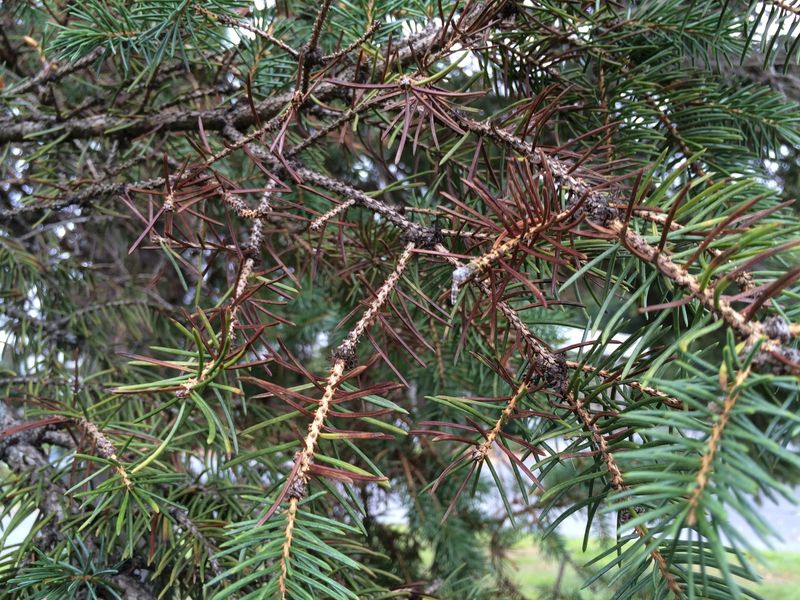
Grab a cheap magnifying lens and turn into a tree detective for a minute. The clearest sign of Rhizosphaera hides on the needles themselves, and it is far too small to notice with your eyes alone.
Under magnification, look for tiny black dots lined up in neat rows along the needle. These little specks are the fungus fruiting bodies, and they push out through the needle surface where its natural breathing pores sit.
Healthy spruce needles have small white waxy dots in those same rows. The fungus replaces or covers them with dark, round bumps. Spotting that switch from white to black is a strong diagnostic clue.
Try checking several browning or purple needles, not just one. Finding the characteristic black fruiting bodies on several symptomatic needles makes Rhizosphaera more likely. Pick needles from the inner, lower branches where the disease loves to start.
A basic 10x hand lens works great, and it costs very little. Hold the needle in good light, bring the lens close to your eye, then move the needle until the dots snap into focus.
Rows of black fruiting bodies are a strong clue for Rhizosphaera, although similar symptoms can occur with other spruce diseases. That means you can treat the right issue instead of guessing.
Keep your lens handy in the garage or garden kit. A quick close-up look saves you from mistakes and helps you make smart choices about protecting the rest of your spruce.
5. Do Not Assume Every Bare Spruce Has Needle Cast
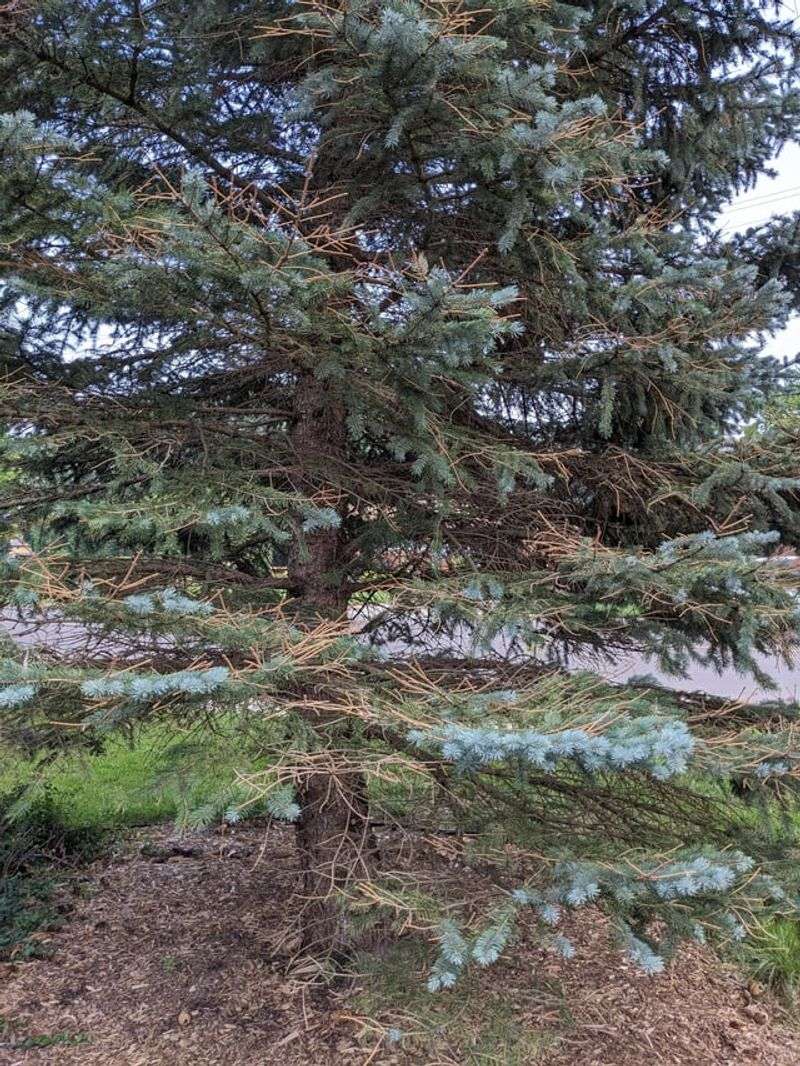
Slow down before you blame Rhizosphaera for every bare branch. Plenty of other troubles can strip needles from a spruce, and treating the wrong one wastes time and money.
Drought stress is a big one. When roots cannot pull up enough water, needles fade and drop even without any fungus around. Winter injury can do the same, especially after harsh cold and wind.
Tiny pests add to the confusion. Spider mites suck juices from needles and leave them speckled and dull, mimicking disease. A quick tap of a branch over white paper can reveal these crawling troublemakers.
Then there are other fungal problems. Cytospora canker damages branches and causes browning, while Stigmina needle blight looks a lot like Rhizosphaera and even makes similar black specks. Telling them apart sometimes takes a close look or expert help.
Because the causes overlap, correct diagnosis matters before you buy any product. Spraying a fungicide will not help a tree that is really suffering from dry soil or mites. You would just spend money for nothing.
Try gathering clues instead of guessing. Note the pattern, check needles with a lens, feel the soil moisture, and look for pests. Snap clear photos of the symptoms too.
When you feel stuck, reach out to a local extension office or a certified arborist. They can pin down the real problem and point you toward the right fix, giving your spruce the care it actually needs to recover.
6. Know Which Spruce Is Most Vulnerable
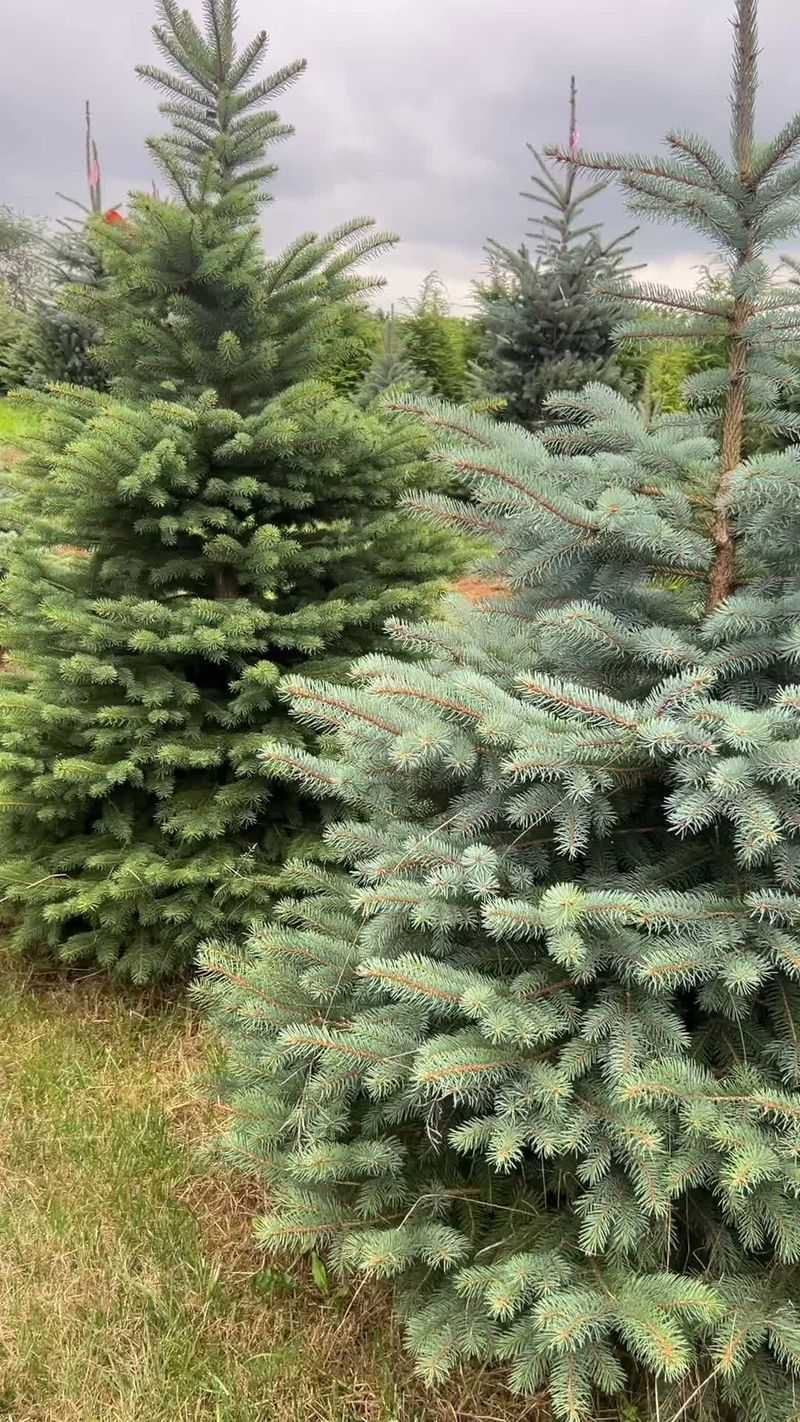
Not all spruce trees face the same risk. Colorado blue spruce sits at the top of the worry list when it comes to Rhizosphaera needle cast. If you own one, it deserves extra attention.
Those famous blue needles are beautiful, but the tree is especially prone to this fungus. Michigan State University points to Colorado blue spruce as highly susceptible, which is why so many struggling blue spruces turn out to have needle cast.
Other spruce types tend to hold up better. Norway spruce and white spruce often show more resistance, though no tree is completely safe when conditions favor the fungus. Choosing a tougher species can save you headaches later.
Planning a new planting? Consider a less vulnerable spruce or even mix different evergreens in your yard. Variety helps, because a single problem cannot sweep through trees that do not all share the same weakness.
If a blue spruce already anchors your landscape, do not panic. Knowing its risk simply means you should watch it closely and give it great care. Good spacing, clean-up, and healthy soil go a long way.
Try learning which spruce you actually have before making decisions. The needle color, shape, and feel can help you identify it, and a nursery or extension office can confirm.
Understanding your tree species turns guesswork into smart action. When you know a Colorado blue spruce needs closer monitoring, you can step in early and keep it looking sharp for years.
7. Improve Air Movement Around The Tree
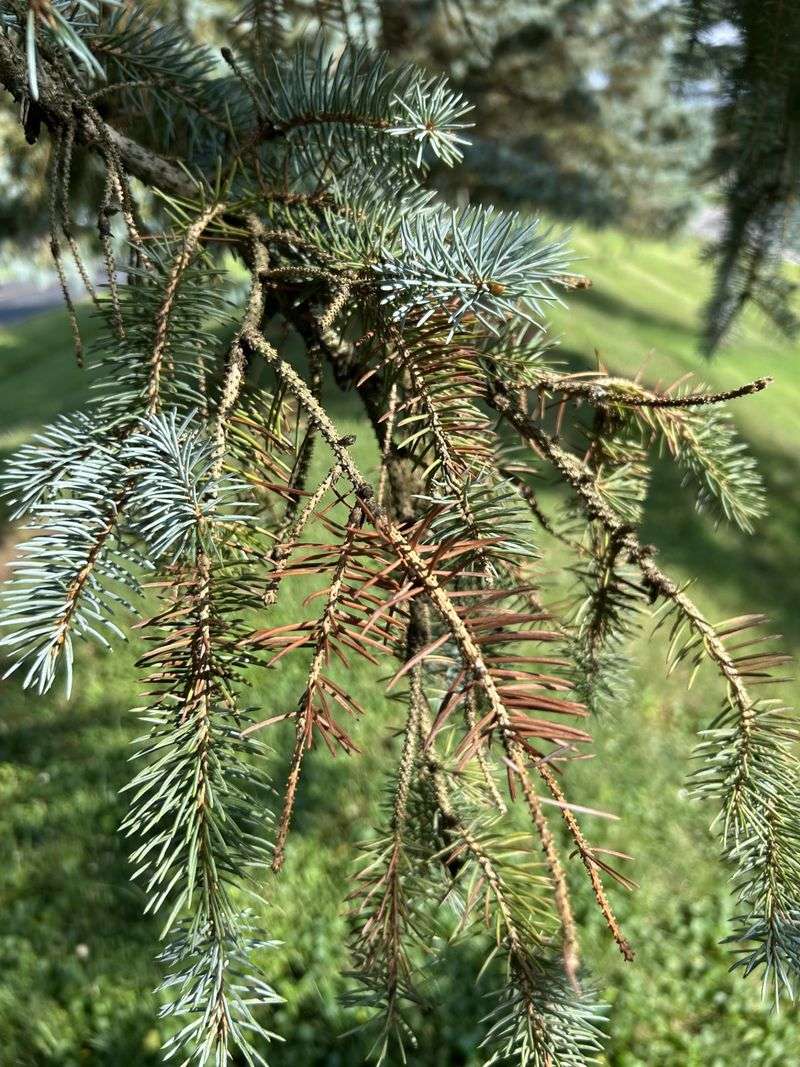
Air is a quiet helper in the fight against needle cast. When breezes move freely through a spruce, wet needles dry out faster, and the fungus loses the damp conditions it loves.
Crowded plantings create the opposite. Trees packed close together trap moisture, block sunlight, and hold humidity around the foliage for hours. Those soggy conditions basically roll out a welcome mat for spores.
Spacing makes a real difference. Giving each spruce room to breathe lets sun and wind reach every branch. When you plan new trees, leave generous gaps so they will not crowd each other as they grow.
Already have tight plantings? You can still help by trimming nearby shrubs, weeds, and low branches that block airflow near the base. Opening up that lower zone speeds drying where the disease usually begins.
Watering habits matter too. Try to water the soil, not the needles, and do it early in the day. Avoid overhead irrigation that keeps spruce foliage wet for extended periods, especially overnight.
Sunlight teams up with airflow. Good sunlight and airflow can help foliage dry more quickly after wet periods. Shady, still corners tend to stay damp and invite trouble.
Think of airflow as free, ongoing protection. It costs nothing once your spacing is right, and it works day after day. Combining open spacing, smart watering, and good light gives your spruce a strong defense and keeps its needles fuller and greener through the seasons.
8. Protect New Needles Rather Than Trying To Cure Old Ones
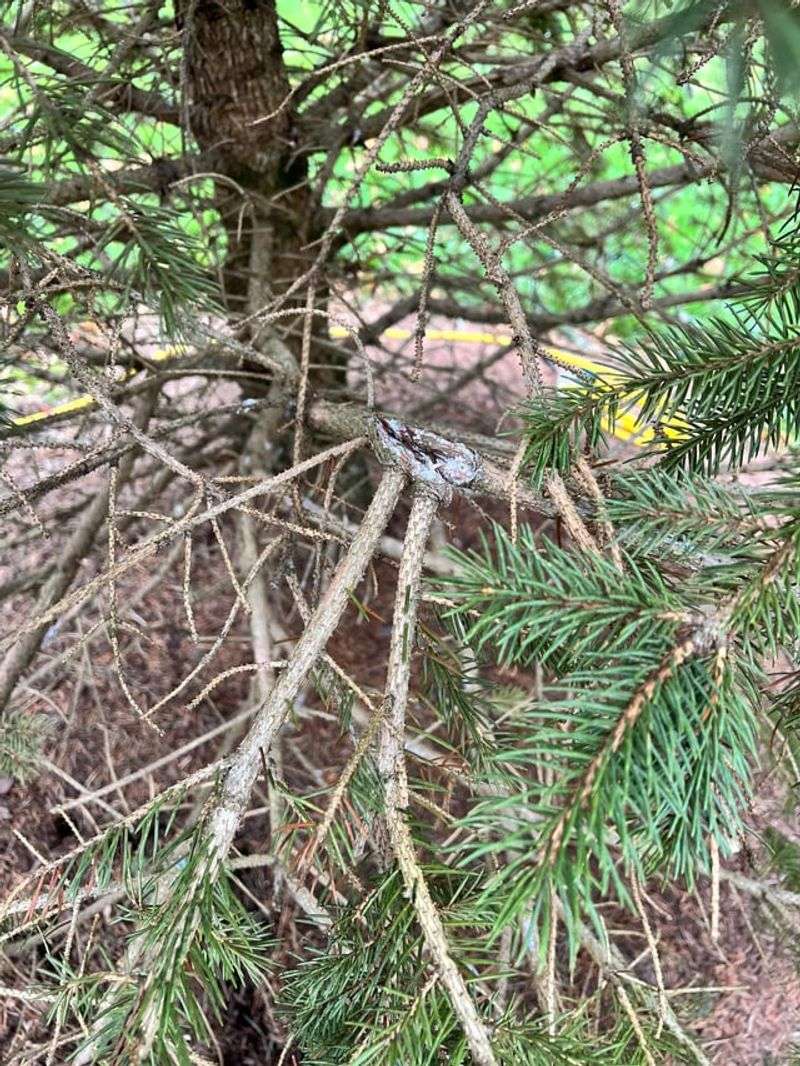
Here is a truth that saves a lot of frustration: needles already damaged by Rhizosphaera will not turn green again. Once a needle browns and drops, it is gone, and no spray brings it back.
That fact changes your whole game plan. Instead of chasing a cure for old needles, you focus on shielding the fresh growth that appears each spring. Those new needles are the tree future, and they are worth protecting.
Fungicide timing centers on new growth. When applied at the right moments, protective sprays coat emerging needles and block spores from settling in. This guards the healthy needles rather than fixing the ruined ones.
Patience is part of the deal. A treated spruce may look thin for a season or two while it slowly builds a fuller layer of protected needles. Improvement shows up in the new growth, not the old bare spots.
Good habits boost your results. Raking up fallen needles removes hidden spores, and proper spacing keeps foliage dry. Together these steps lower the number of spores waiting to attack fresh needles.
Consistency wins. Because the disease can recur, protective treatments may need to be repeated over multiple growing seasons. Skipping treatments lets the problem creep back.
Shift your mindset toward the future, and the whole task feels doable. By guarding each new flush of needles, cleaning up debris, and keeping air moving, you help your spruce rebuild its green shape and stay a proud part of your yard.