Before Planting Wisteria Near A Fence, North Carolina Gardeners Should Know This
Almost every spring it happens somewhere in North Carolina.
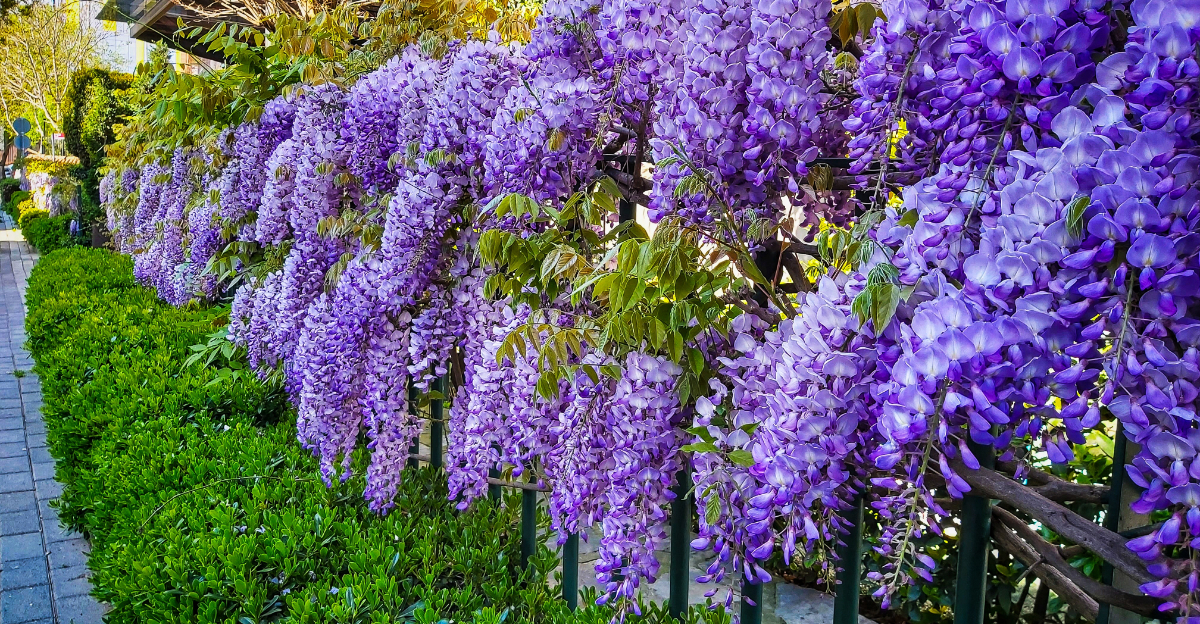
A gardener sees it for the first time. The cascading purple blooms, the fragrance drifting across the yard, the way the whole vine looks like it belongs in a painting. By the following weekend, they are at the nursery with a container plant and a plan for the back fence.
A few years later, that same gardener is on their knees with loppers trying to keep the thing from consuming the shed.
Wisteria is genuinely one of the most beautiful vines available to a North Carolina gardener. It is also one of the most misunderstood.
The plant on the nursery shelf looks manageable. What it becomes with a few warm seasons and North Carolina humidity behind it is a completely different situation.
Have you ever looked at a wisteria in full bloom and wondered what the person who planted it actually knows now that they did not know then?
There is quite a bit. And most of it is the kind of information that belongs before the hole gets dug.
1. Wisteria Can Outgrow A North Carolina Fence Faster Than Almost Any Other Vine
Ask anyone who has grown wisteria for more than a few seasons and you will notice something in their expression before they say a word. It is not quite a smile. It is the look of someone who learned something the hard way.
Wisteria can grow ten to thirty feet in a single season under favorable conditions. In North Carolina’s warm, humid climate, favorable conditions show up reliably every year without any encouragement from the gardener.
At maturity, a single plant can stretch thirty to sixty feet long and spread just as wide if left unmanaged.
That sprawling, vigorous growth is part of what makes it spectacular during bloom season. It is also exactly what makes it so difficult to manage on a standard garden fence.
The vine does not only grow long. It grows thick. Over time the main trunk develops into heavy, woody growth that resembles a small tree trunk more than a delicate vine.
That structural weight adds up faster than most gardeners anticipate. A fence that looked perfectly solid at planting time can start leaning, warping, or bowing within just a few years of supporting an established plant.
North Carolina’s growing zones cover most of the USDA hardiness range where wisteria thrives with very little input. The vine does not need help. It needs management.
Understanding what this plant becomes at maturity, before it goes in the ground, is the most useful thing a North Carolina gardener can do.
The nursery pot is misleading. The vine that comes out of it is not.
2. Most Common Fences Cannot Handle The Weight Of A Mature Wisteria
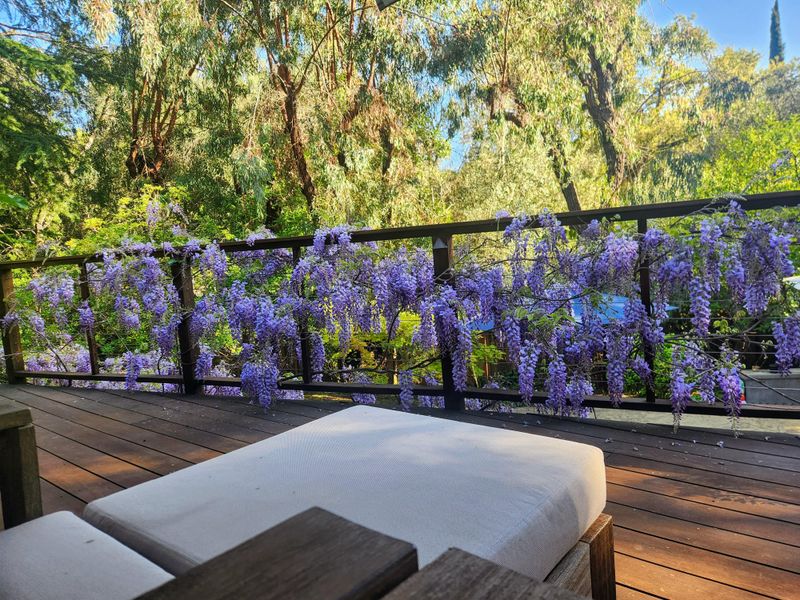
Many gardeners picture wisteria draping gracefully over a white picket fence or trailing along a simple wire border. The visual is appealing. The structural reality is considerably less charming.
A mature wisteria vine can reach several hundred pounds when the woody trunk, dense network of stems, and heavy spring flower clusters are factored together.
Your North Carolina Garden Changes Every Week. Your Plan Should Too.
Gardening in North Carolina changes quickly throughout the season. Every Friday you’ll receive a simple weekly plan showing exactly what to plant, prune, fertilize, harvest, and protect so you never miss the right timing.
Standard garden fences are not designed to carry that kind of sustained load over many years.
Wooden privacy fences, decorative picket fences, and basic wire fencing are among the most common choices in North Carolina yards.
None of them were engineered with a vigorous wisteria plant in mind. The vine twines and wraps around whatever it contacts, and as stems thicken over seasons they can split fence boards or crush structural elements from the inside out.
Even fences that feel solid initially can begin shifting under the combined pressure of vine weight pulling downward and outward, plus wind load on dense foliage through storm season.
Posts set in shallow soil or without concrete footings are particularly vulnerable to leaning or pulling free from the ground entirely.
Purpose-built, sturdy structures are the recommended approach for supporting wisteria over the long term. A fence that was not engineered with this vine in mind is likely to show the consequences within three to four years.
The vine does not mean to be destructive. It is just being a vine. Unfortunately it is very, very good at it.
3. Chinese And Japanese Wisteria Need Extra Caution
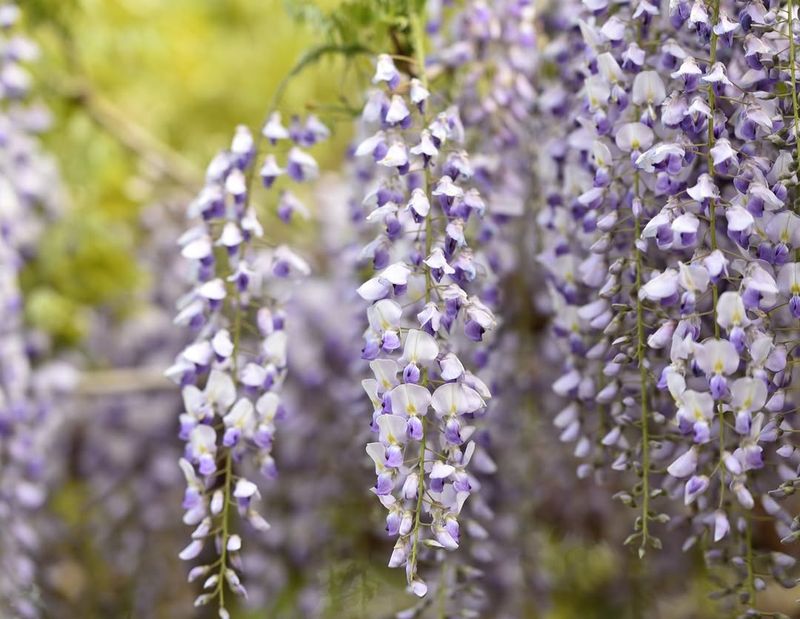
Not all wisterias behave the same way, and the species selection matters considerably more in North Carolina than most plant tags suggest.
Chinese wisteria and Japanese wisteria are the two most popular varieties. They are also the two most problematic.
Both are classified as invasive plants in North Carolina and appear on state lists of species of concern for ecological impact.
These Asian species spread through underground runners, dropped seeds, and the persistent force of their vining growth. Once established near a fence line, they do not stay there.
They reach into neighboring trees, overtop shrubs, and move into natural areas where they shade out native plants. In North Carolina’s forests and woodland edges, unchecked Asian wisteria has caused documented ecological damage that takes significant effort to reverse.
Selling and planting these varieties is not currently prohibited statewide, but conservation organizations and horticulture specialists consistently advise against introducing them into new landscapes, particularly near open land where seeds can travel with the wind.
For homeowners who already have one of these species established on their property, realistic management rather than complete removal is often the practical goal.
Consistent pruning multiple times per year combined with monitoring for new shoots along the fence line and beyond is the standard ongoing approach.
The plant looks beautiful in bloom. It also looks beautiful in someone else’s forest, which is where it tends to end up eventually.
4. A Native Alternative Exists And Usually Works Better For North Carolina Yards
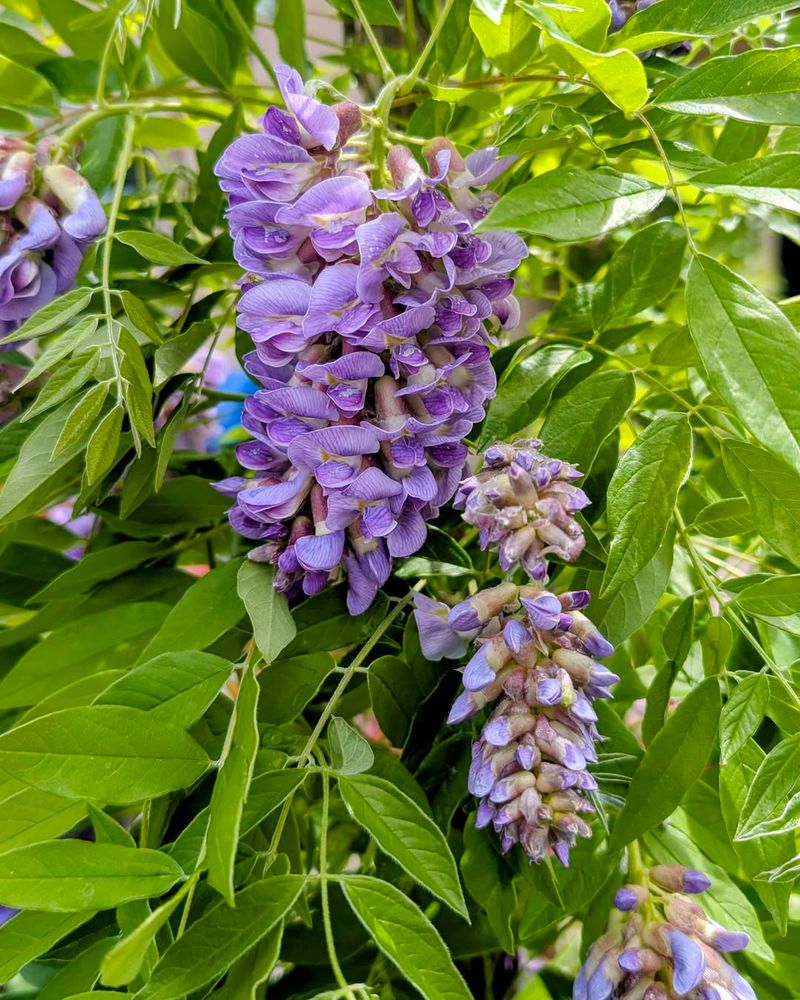
There is genuinely good news for North Carolina gardeners who love the look of wisteria but want to avoid the problems that come with the Asian species.
American wisteria and Kentucky wisteria are native alternatives that offer beautiful blooms without the invasive behavior that makes their Asian counterparts problematic.
These species are native to the southeastern United States, including portions of North Carolina, which means they evolved within the local ecological context rather than outside it.
American wisteria blooms in late spring with fragrant lilac-blue flower clusters and often produces a second flush of blooms later in the season.
Its growth rate is more manageable compared to Chinese and Japanese varieties, and it does not spread as readily through runners or self-seeding into surrounding natural areas.
Cultivars like Amethyst Falls and Nivea have become favorites among North Carolina gardeners who want the classic wisteria aesthetic without the ongoing management drama.
Amethyst Falls is particularly valued for blooming at a younger age than most wisteria varieties, sometimes flowering in the first or second year after planting. It also tends to stay more compact, which makes fence-line planting considerably more realistic.
Native wisteria still requires proper support and regular pruning. The American species is not maintenance-free. The difference is that it stays where it is put rather than spreading into the neighbor’s yard, the local woodland, and whatever else is within reach.
Amethyst Falls delivers the bloom. It does not deliver the five-year renovation project.
5. Wisteria Needs Far More Space Than The Container Plant Suggests
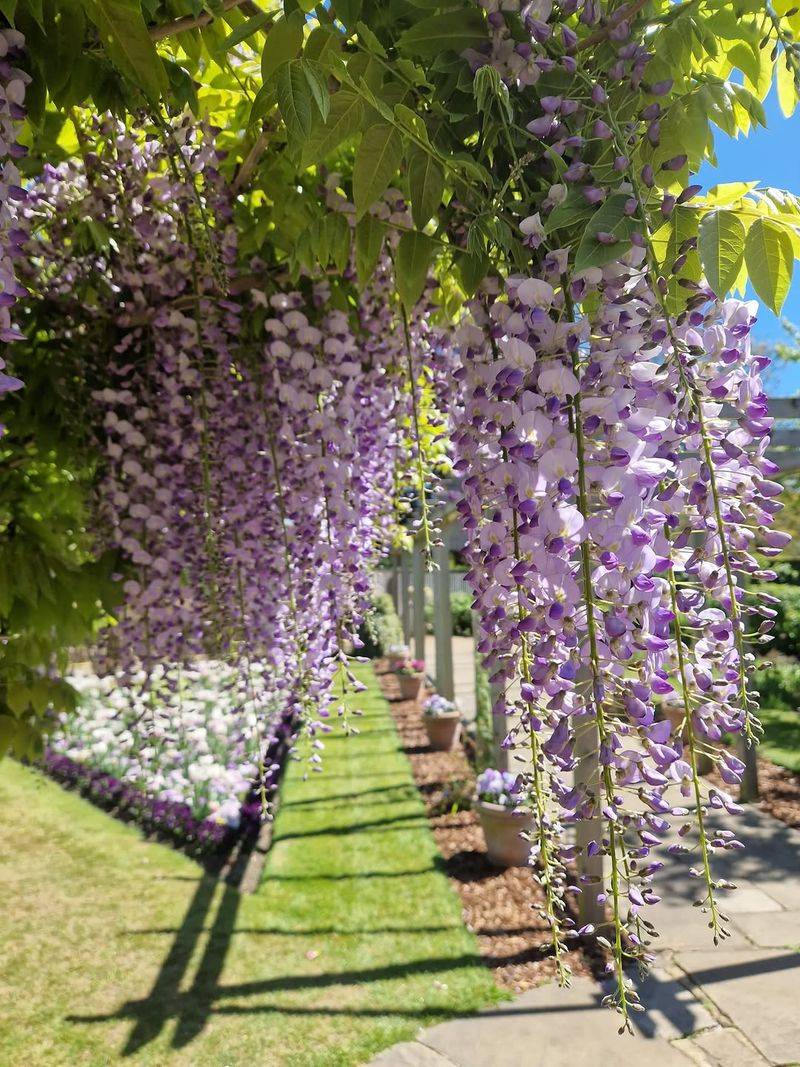
One of the most consistent mistakes North Carolina gardeners make when planting wisteria near a fence is underestimating how much room the plant will eventually require.
The container from the nursery looks manageable. The plant it produces in three to five seasons is an entirely different proposition.
Wisteria needs room to expand in every direction, and planning for that expansion before planting prevents significant problems later.
For Asian species capable of spreading dozens of feet, placing the plant too close to structures, property lines, or neighboring plantings creates ongoing conflict that only intensifies with each growing season.
Even for the more manageable American species, leaving generous open space around the base allows easier access for pruning and maintenance. A plant you cannot easily reach from multiple angles becomes progressively harder to manage well.
Consider what sits adjacent to the fence, not just the fence itself. Wisteria growing along a boundary will reach toward neighboring yards, sidewalks, alleys, and garden beds on the other side.
Planning for that lateral spread in advance prevents conversations with neighbors and cleanup projects that were not part of the original vision.
Soil quality affects how aggressively the plant expands. Wisteria planted in rich, heavily amended soil tends to prioritize vegetative growth over flower production.
Leaner soil conditions encourage blooming and can help moderate the plant’s enthusiasm for spreading beyond intended boundaries.
The container plant is not lying about what it is. It is just not showing you what it is about to become.
6. A Fence Near The House Creates A Direct Path To Your Roofline
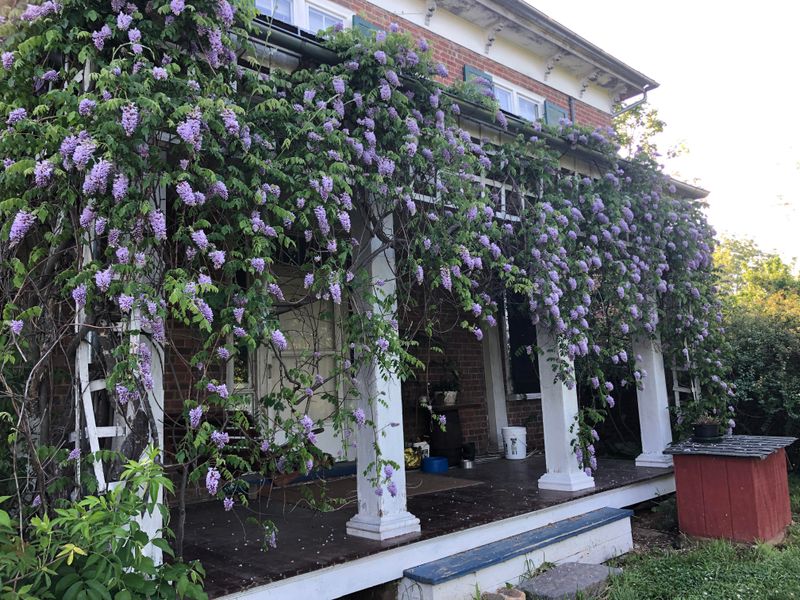
A fence close to the house seems like a natural anchor point for wisteria, offering a starting structure and a clear visual line toward the building.
That placement is one of the more reliably problematic decisions a North Carolina homeowner can make with this vine.
Wisteria planted within reach of a home has a well-documented pattern of working its way toward gutters, eaves, and rooflines where it causes serious structural damage.
The vine’s tendrils are persistent and precise. They find gaps between boards, work under shingles, and push into the joints of gutters and downspouts.
Once inside those spaces, thickening stems exert outward pressure that cracks caulking, lifts flashing, and pulls gutters away from their mounting brackets.
Homeowners who let this growth go unaddressed for a single full season often find substantial repair bills waiting by fall. Roof and gutter damage from wisteria is not an unusual worst-case scenario.
It is a predictable outcome when the vine is planted within range of the structure and not pruned frequently enough to keep it contained.
North Carolina’s long growing season gives the vine many months each year to make measurable progress toward the roofline.
A freestanding pergola or arbor positioned well away from the house offers the visual drama of wisteria in bloom without putting the roof, siding, or gutters at risk.
The vine will find the house if given the chance. The question is whether the fence gives it that chance before the gardener realizes what is happening.
7. This Vine Requires A Twice-Yearly Pruning Commitment From Day One
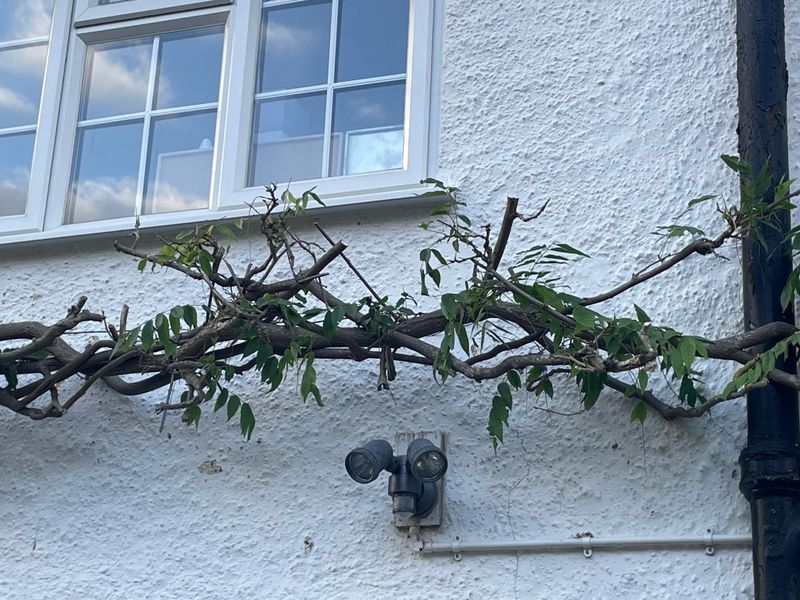
Pruning wisteria once and moving on is not a workable strategy. This vine requires a consistent twice-yearly pruning commitment starting from the first season in the ground.
One round in late winter before new growth begins and another in midsummer after the spring flush has slowed. Both rounds matter and neither can be skipped without consequence.
Winter pruning focuses on cutting back the long, flexible shoots from the previous season to just a few buds from the main framework. This redirects the plant’s energy toward flower production rather than endless vegetative expansion.
Summer pruning targets the fast-growing new shoots that follow the spring bloom, cutting them back to about five or six leaves from the base of each shoot.
Missing even one pruning cycle creates a significant setback.
Wisteria grows quickly enough that a single season of neglect adds several feet of unmanaged growth to the fence line, reaching into areas not intended and making the next session far more labor-intensive than it needs to be.
Quality bypass loppers and sharp pruning shears are the essential tools. For established plants with thick woody growth, a pruning saw is also necessary.
Long sleeves and gloves are worth wearing since wisteria sap causes skin irritation in some people.
Consistency over time is what separates a beautiful wisteria from an overwhelming one. The vine is not trying to be difficult. It just grows like it has somewhere important to be at all times.
8. The First Three Years Of Training Determine The Next Decade Of Management
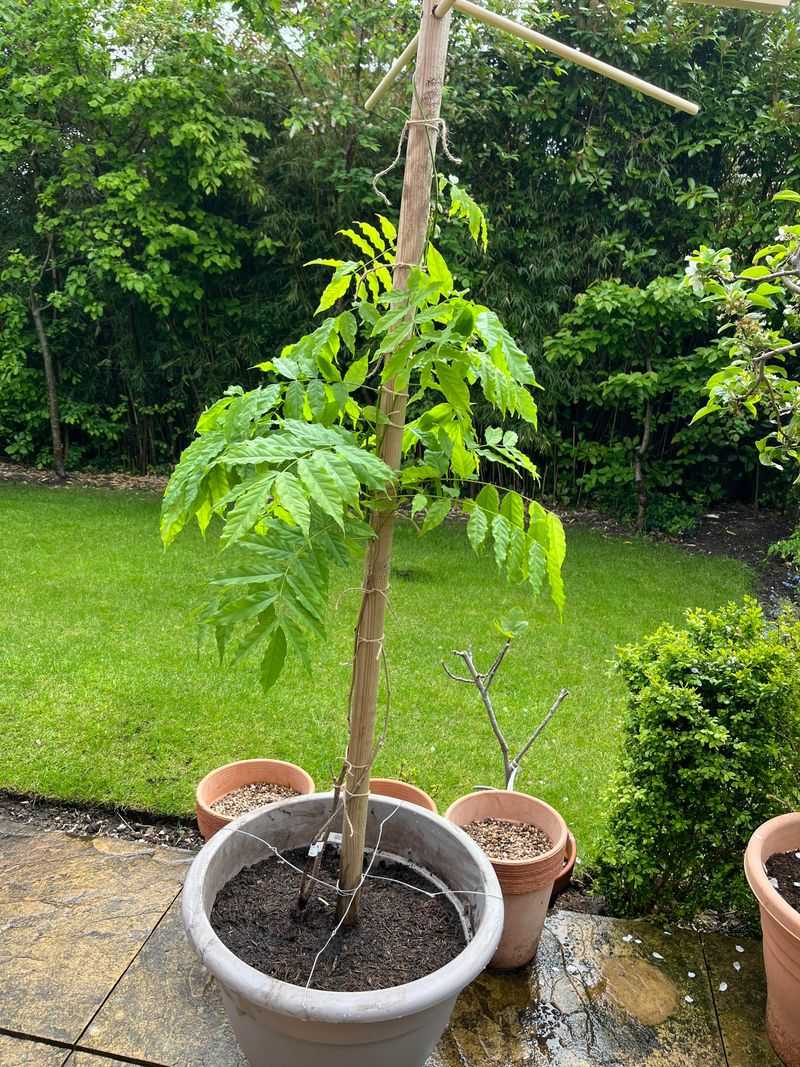
The window between planting and the point when a wisteria’s main trunk hardens into rigid, established wood is the most important period for shaping how the vine will behave for the next decade.
Young stems are flexible, cooperative, and easy to redirect. Once the structure solidifies, changing it requires drastic intervention that can delay flowering for an entire season.
Start by selecting two or three strong main stems and training them along the fence in the intended direction.
Soft garden ties or jute twine attached without wrapping too tightly keeps stems guided without restricting growth or causing damage over time.
Shoots heading in unwanted directions should come off early, before they establish themselves and become more difficult to redirect.
The objective during those early seasons is building a clear framework of main branches from which flowering spurs will develop over time.
Early structural decisions determine how manageable and visually attractive the plant remains for years ahead.
Letting young shoots grow freely during the establishment phase creates a tangled, difficult-to-sort situation that compounds with each passing season.
Disciplined early training produces a healthier, more floriferous, and significantly more controllable plant over the long term. The temptation to let a young vine run freely to speed up establishment is understandable.
It is also how the shed disappears.
9. The Support Structure Needs To Be Built Before Anything Gets Planted
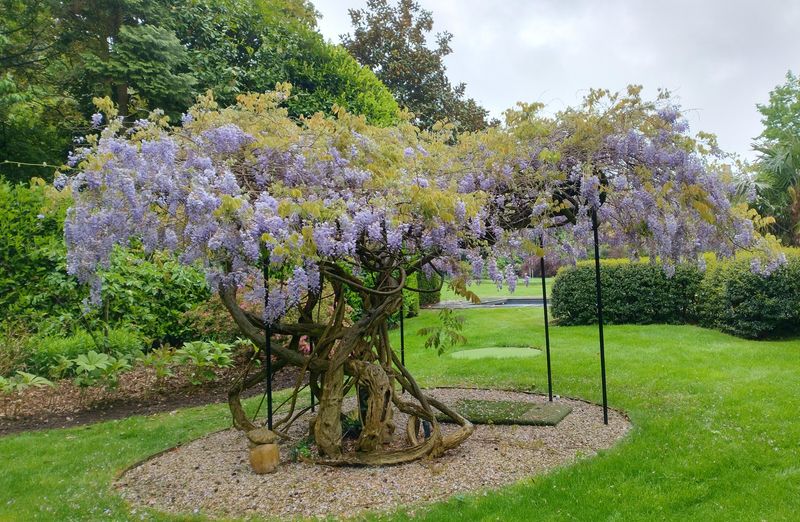
A standard fence may need significant reinforcement, or complete replacement, before wisteria goes anywhere near it.
The support system for this vine needs to be engineered for sustained load-bearing across many years, not simply something that looks appropriate at planting time.
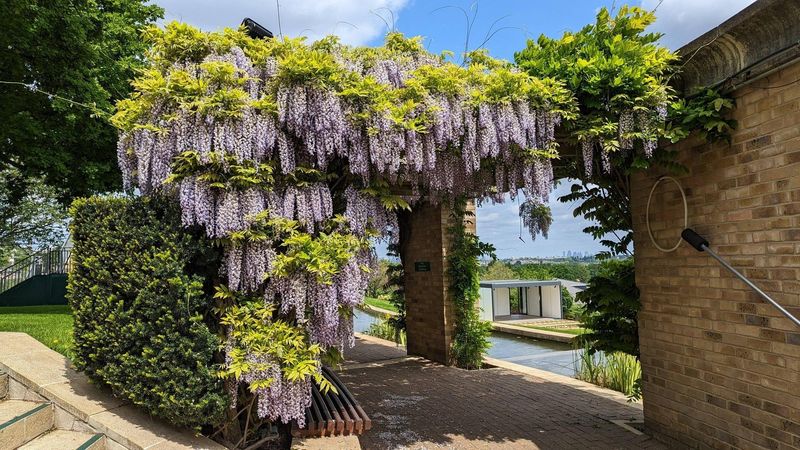
Sturdy timber posts set in concrete, heavy-gauge galvanized wire strung between solid anchor points, or purpose-built pergola structures are the types of supports that hold up reliably under wisteria’s long-term demands.
Posts should be minimum four-by-four lumber, with six-by-six being preferable for larger installations. Setting them at least two feet deep in concrete resists the lateral and downward forces the vine exerts as it matures.
Galvanized wire and heavy-duty eye bolts create a tensioned wire system along masonry walls or between timber posts that gives the vine something to twine around while keeping structural elements rigid.
Thin wire, plastic lattice, and lightweight trellis panels are not adequate primary support for a mature wisteria. They will not hold.
Some North Carolina homeowners invest in custom-built pergolas from cedar, black locust, or pressure-treated lumber specifically to support wisteria as a permanent landscape feature.
A well-built support system combined with consistent pruning is what separates a wisteria that is genuinely rewarding from one that becomes a structural and horticultural problem requiring expensive intervention.
Build it right the first time. The vine will test whether you did.