The Most Underrated North Carolina Native Plant For A Birdbath Edge That Stays Splashy All Summer
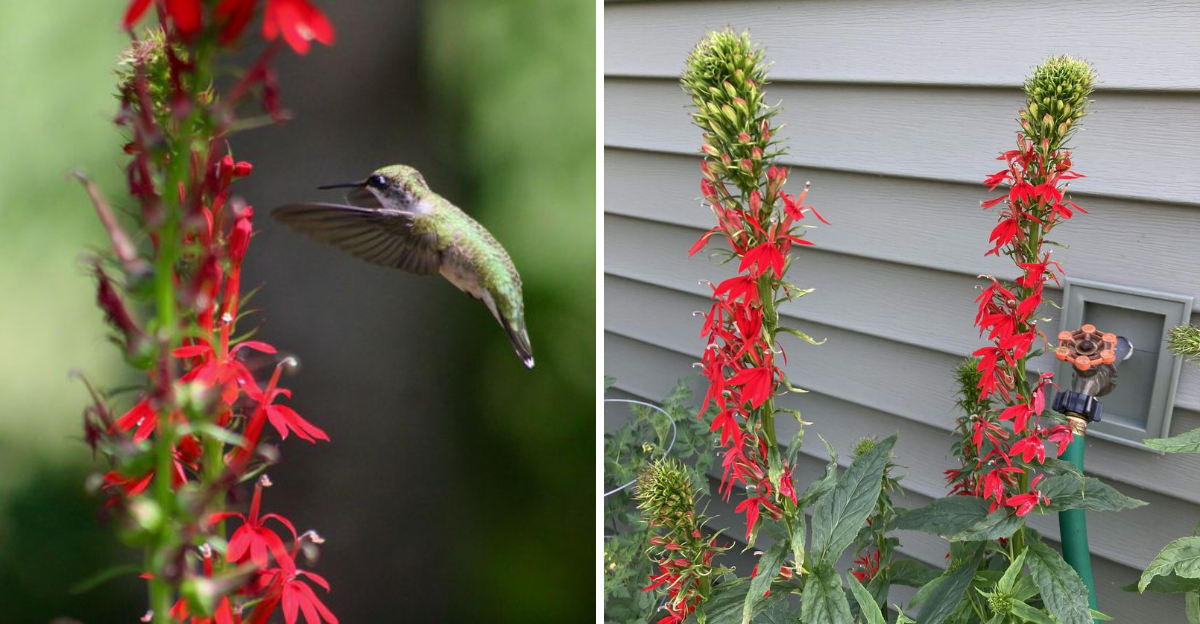
A birdbath can create more than a place for chickadees, cardinals, and hummingbirds to stop for water.
Around the basin, splashes and drips often leave a narrow ring of soil cooler and damper than the surrounding bed.
In the right North Carolina yard, that moist edge can support a native perennial with far more drama than its footprint suggests.
Cardinal flower, Lobelia cardinalis, sends up vivid red flower spikes during summer and into fall while thriving in consistently moist to wet soil.
Hummingbirds are especially drawn to the tubular blooms, and butterflies and other pollinators visit them too.
So what makes this native such a smart birdbath companion?
The answer is not splash alone. Cardinal flower performs best where the root zone stays reliably moist, the soil does not dry hard between waterings, and hot afternoon sun is moderated in warmer sites.
Match those conditions, and a forgotten wet ring can become one of the brightest wildlife corners in the yard all season without demanding a broad garden bed nearby.
Plant Cardinal Flower Beside Splashy Water
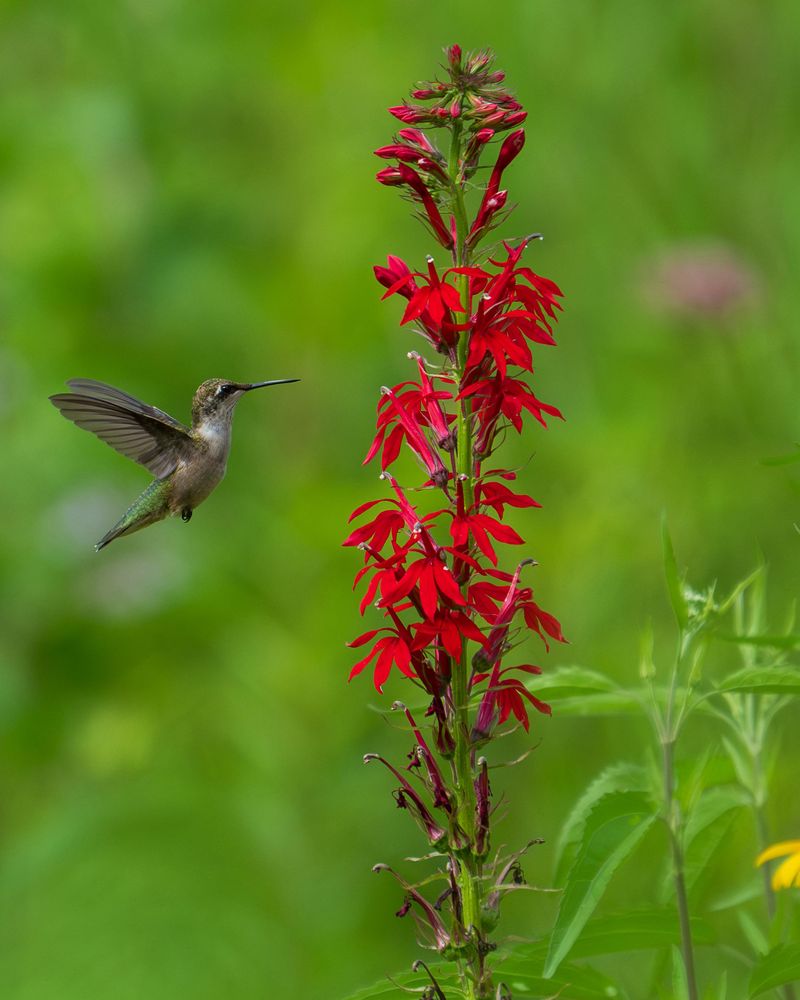
A splashy birdbath edge can suit cardinal flower beautifully, but the important word is consistently.
Lobelia cardinalis prefers rich soil that stays moist to wet. NC State Extension notes that the soil should not be allowed to dry out, and the plant can tolerate brief flooding.
That makes a naturally damp birdbath border, rain-garden edge, or low spot a better match than a dry bed that receives only occasional droplets.
Watch the soil for several days before planting.
A birdbath on sandy ground may shed water so quickly that the root zone dries despite frequent splashing. Heavier soil with good moisture retention can hold that water longer.
The plant does not need permanent standing water.
It needs a root zone that remains reliably moist through summer heat. Supplemental watering may still be necessary during dry stretches, even beside a busy birdbath.
Place the plant close enough to benefit from the damp microclimate without crowding the pedestal.
That gives roots access to moisture while leaving room for birds to land and for you to clean or refill the basin.
The birdbath supplies part of the story. The soil finishes it.
Cardinal flower thrives when the splash zone stays genuinely moist rather than merely looking wet for ten minutes after a robin takes a bath.
Afternoon Shade Helps The Scarlet Spikes Handle Carolina Heat
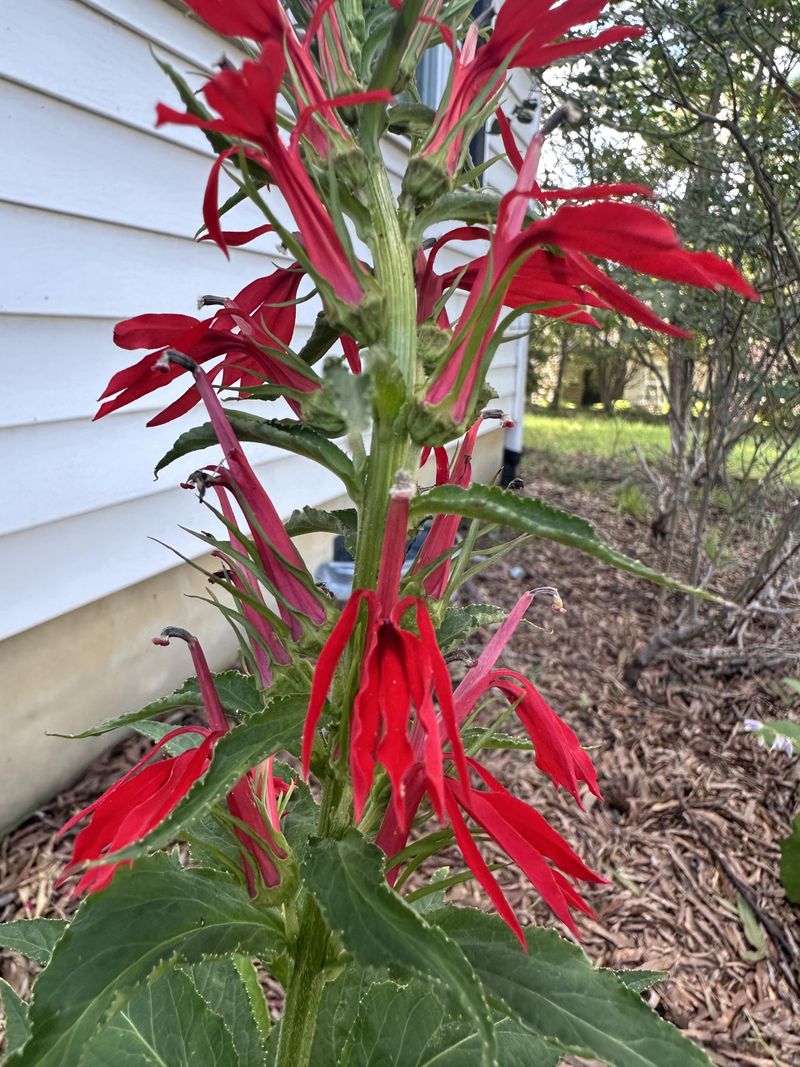
Cardinal flower accepts a surprisingly broad range of light, but North Carolina summer heat makes afternoon exposure worth watching.
NC State Extension lists full sun, partial shade, and dappled sunlight as suitable conditions. The same source also notes that afternoon shade is appreciated in hot summer climates.
That makes an east-facing birdbath or a site beneath a high tree canopy especially useful.
Morning sun can support strong flowering.
Later protection helps keep the root zone cooler and reduces the moisture loss that comes with a long blast of western sun. A birdbath beside a porch, woodland edge, or open-canopy tree may already create that balance.
Your North Carolina Garden Changes Every Week. Your Plan Should Too.
Gardening in North Carolina changes quickly throughout the season. Every Friday you’ll receive a simple weekly plan showing exactly what to plant, prune, fertilize, harvest, and protect so you never miss the right timing.
Deep shade can reduce the flower show.
The plant still needs useful light to build strong stems and support its summer bloom cycle. Aim for bright conditions with relief from the harshest part of the day rather than a dark corner that never sees much sun.
Watch the site before planting.
A spot that feels cool in spring may become much hotter as the sun angle changes through summer.
Cardinal flower is not fragile, but it does ask for moisture and reasonable heat protection to line up.
When those two needs meet, the plant can rise above the birdbath edge with vivid red blooms while the lower foliage stays comfortable in the damp soil below.
Tall Red Flowers Turn A Small Wet Ring Into A Vertical Feature
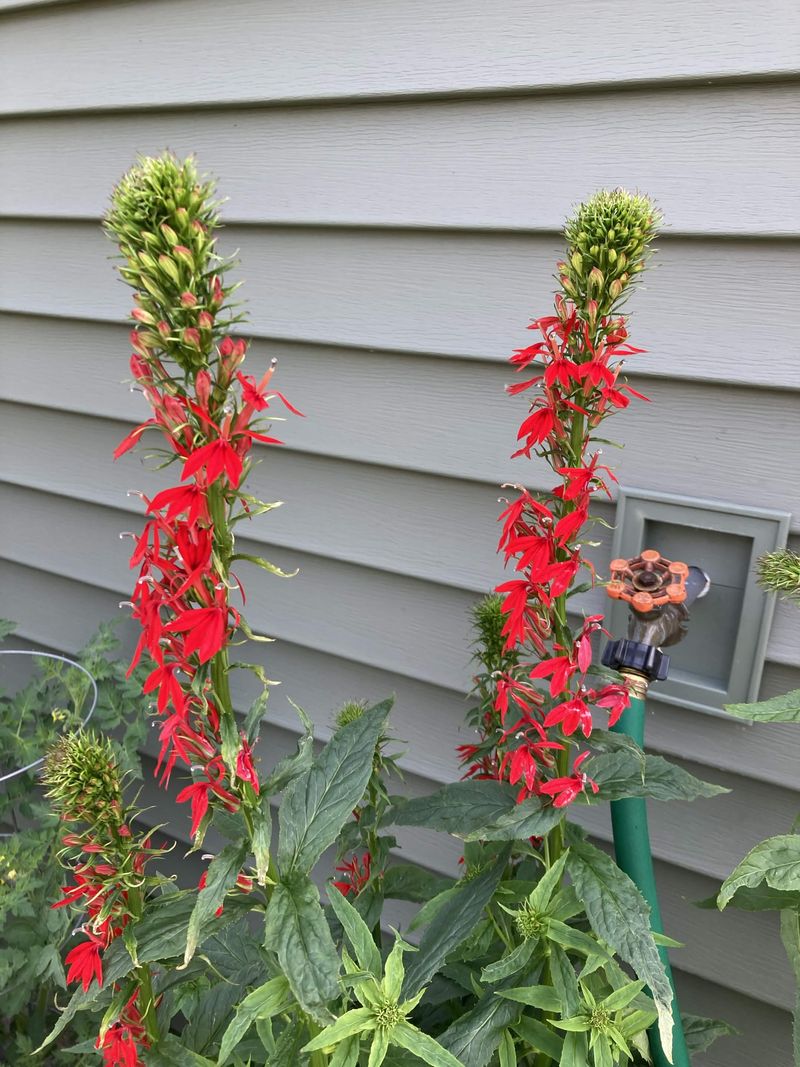
The patch around a birdbath may be narrow, but cardinal flower does not need much horizontal room to make an impact.
NC State Extension lists mature plants at roughly 4 to 5 feet tall and about 1 to 2 feet wide. That upright habit lets the plant add height without spreading into a broad shrub-sized footprint.
The flowers appear on erect terminal spikes.
Bright red tubular blooms open from the lower part of the spike upward, creating a long column of color instead of one short burst near the ground.
NC State lists the bloom period from July into October, giving the plant strong late-summer and early-fall value.
That shape works especially well beside a birdbath.
The basin stays visually open while the flowers rise behind or beside it. One plant can create a strong accent, while a small group gives the area a fuller, more natural look.
Leave enough room around the base.
The mature width may reach a couple of feet, and foliage needs space rather than constant rubbing against the pedestal or nearby path.
The height also changes how the corner reads from across the yard.
A damp ring that once looked like leftover space becomes a deliberate vertical feature.
Cardinal flower does not hide the birdbath. It gives the water feature a bright red backdrop that becomes more dramatic just as many summer gardens start looking tired.
Tubular Blooms Give Hummingbirds A Reliable Summer Stop
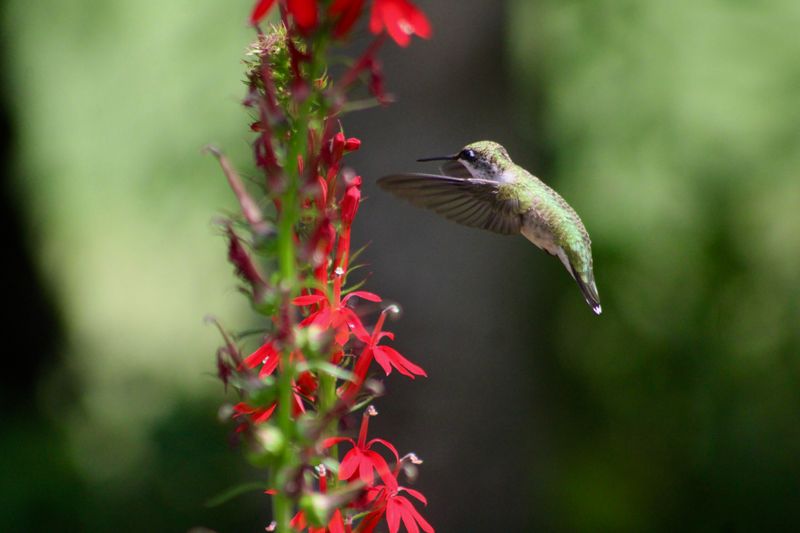
Cardinal flower earns its wildlife reputation the moment hummingbirds discover the red spikes.
NC State Extension identifies the flowers as attractive to hummingbirds, butterflies, and other pollinators. The tubular blooms arrive during summer and can continue into fall, adding wildlife value during the later part of the growing season.
That pairing makes sense beside a birdbath.
The same corner can offer water and nectar within a small footprint, giving visiting wildlife two useful resources close together.
The plant does not replace a broader habitat planting, but it can strengthen a yard that already includes native trees, shrubs, and flowers.
Avoid treating the flowers with broad insecticides.
Pollinators may visit the blooms throughout the season, so unnecessary spraying works against the wildlife value that made the plant worth adding in the first place.
Let several flower spikes develop where space allows.
A small grouping creates a stronger patch of color and gives hummingbirds more blossoms to visit during a stop.
The birdbath itself should stay clean and refreshed separately.
Cardinal flower benefits from the moist soil around the feature, while birds benefit from clean water in the basin.
That combination turns a decorative corner into something more useful.
The red flowers bring motion above the bed, the water brings birds down to the basin, and the damp soil finally has a plant that appreciates the extra moisture instead of merely tolerating it.
Mulch Helps The Root Zone Stay Moist Between Splash Sessions
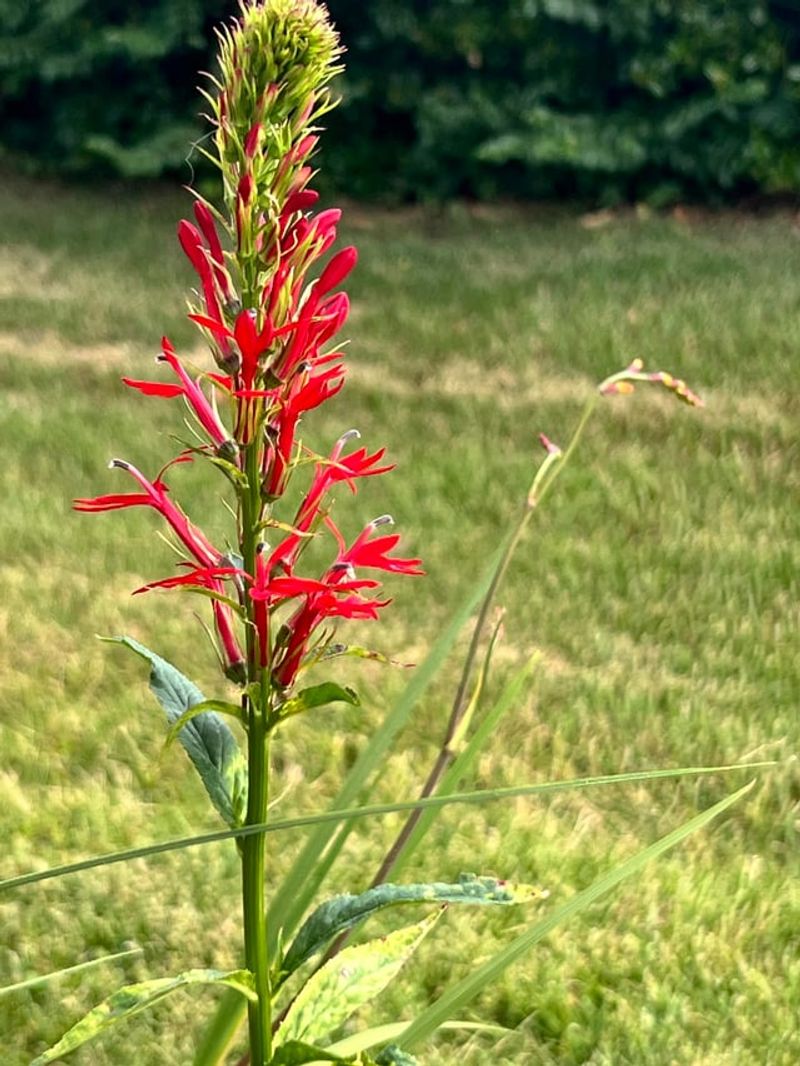
A birdbath can add regular drips, but summer evaporation can still pull moisture from the soil faster than the plant wants.
A light organic mulch helps smooth out that moisture swing.
NC State Extension notes that mulch around the root zone can help retain the soil moisture cardinal flower needs.
Shredded leaves, fine bark, or another suitable organic material can slow moisture loss and protect the root zone during hot weather.
Keep the mulch layer modest.
A couple of inches is usually enough to protect the soil surface without burying the crown. Leave a little open space immediately around the stems so the plant base is not packed under damp material.
Check the soil beneath the mulch rather than judging by the surface.
The top can look dry while moisture remains available several inches down. The reverse can happen after a quick splash, with the surface looking dark while deeper soil stays too dry.
Water deeply during extended dry periods.
Cardinal flower should not be asked to survive on whatever happens to leave the birdbath. The plant’s moisture requirement is real, and a dry summer may call for supplemental irrigation.
Mulch makes that job easier.
It also helps reduce soil splash around the basin and gives the planting a cleaner edge.
The goal is not to create a soggy mound. It is to keep the root zone evenly moist enough for steady growth and strong flower spikes.
Brief Flooding Is Fine, But Constantly Dry Soil Is The Bigger Problem
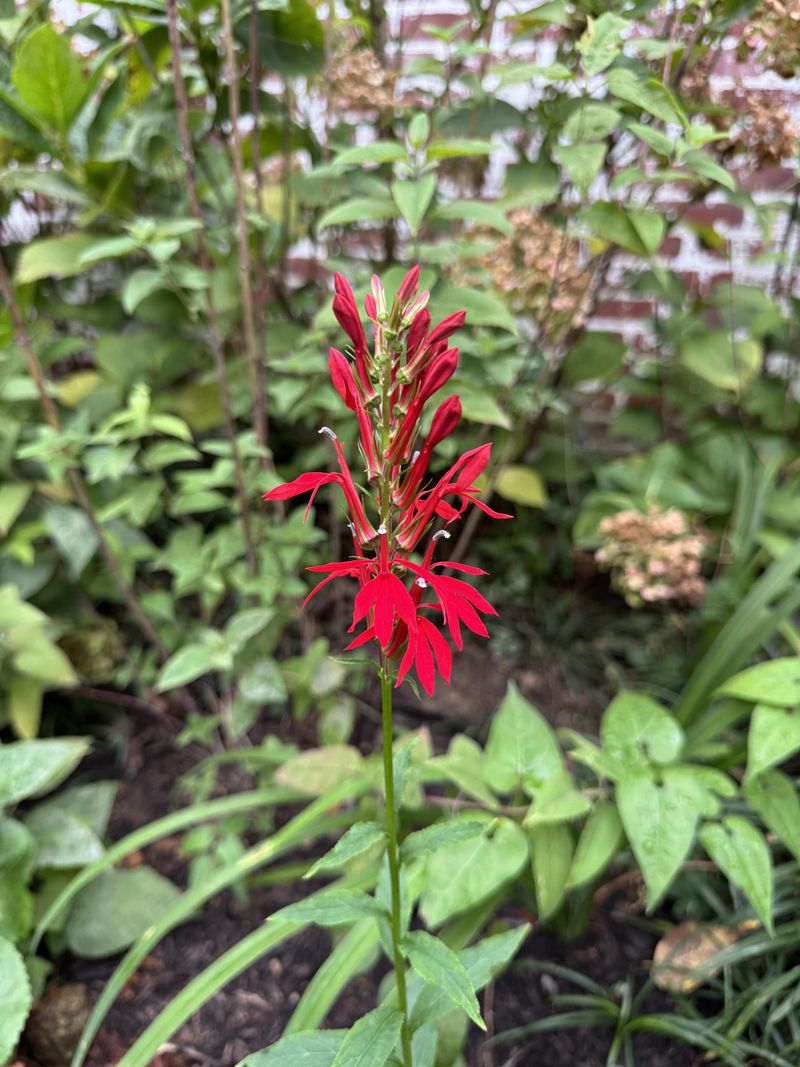
The wettest moment around a birdbath usually comes after several birds use it in quick succession.
Cardinal flower can handle that temporary burst of moisture well.
NC State Extension says Lobelia cardinalis tolerates brief flooding and grows well in moist to occasionally wet soil. That makes temporary saturation much less concerning than it would be for many ordinary border perennials.
The bigger problem is the opposite extreme.
Soil that dries hard between splash events works against this plant’s natural preferences. A site with fast drainage and no supplemental water may look suitable right after the basin is refilled, then become too dry by the following afternoon.
Pay attention to the whole root zone.
A shallow wet surface does not guarantee moisture several inches down. Press a finger into the soil or use a small trowel to check deeper moisture during the first summer.
Avoid placing the crown in a permanently submerged pocket.
The plant tolerates wet soil and brief flooding, but the birdbath edge should still function as a planting bed rather than an underwater planting.
Naturally damp low spots can work beautifully.
That is why cardinal flower is suited to rain gardens, water gardens, riparian areas, and similar moist landscapes.
Beside a birdbath, the same principle applies on a smaller scale. Short wet spells are welcome. Repeated deep drying is the condition that deserves more attention.