Why Forsythia Is the Easiest Shrub to Root From Cuttings in North Carolina
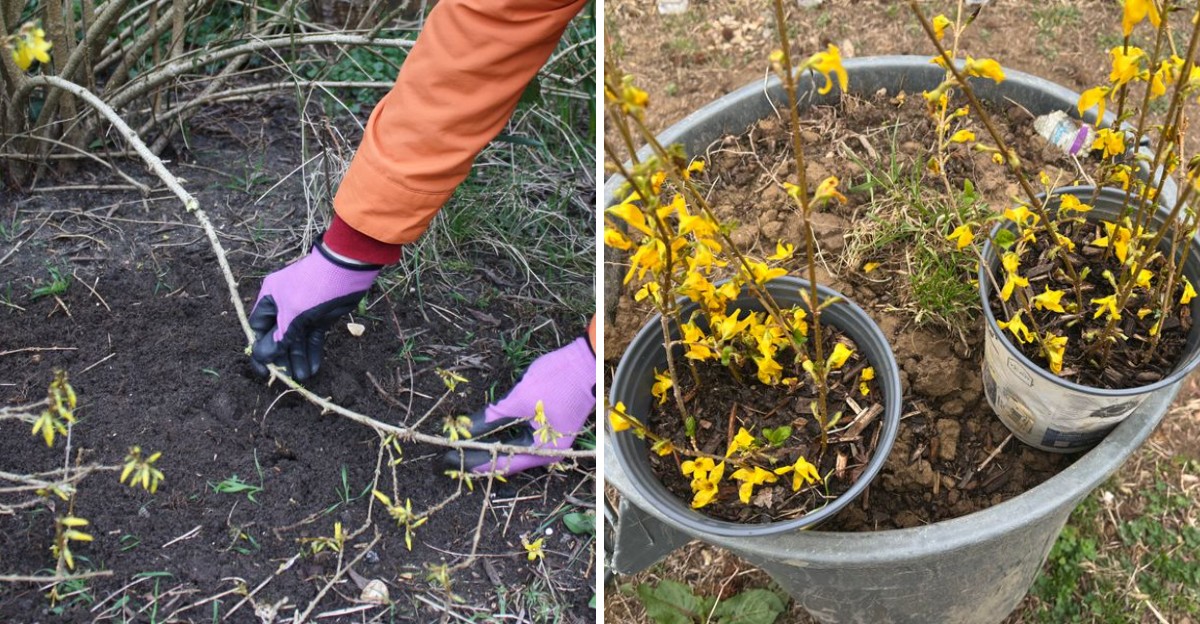
A branch that touches the ground can quietly grow its own roots and become a brand new shrub. No shovel, no fancy tools, and no help from you are required.
I find that a little bit thrilling. One plant in my yard has been doing this for years, sneaking new babies into the mulch while I pretend I planned it.
Here in North Carolina, our warm summers and steady rain make that trick even easier to copy.
You can snip a few green stems in early summer, stick them in a pot, and watch them wake up. Personally, I think it feels like getting free plants from a very generous friend.
Why does this sunny shrub root faster than almost anything else in the garden? And what simple mistakes slow it down? You’re in for a pleasant surprise once you see how little it asks of you.
1. Those Arching Forsythia Branches Are Practically Built to Grow Roots
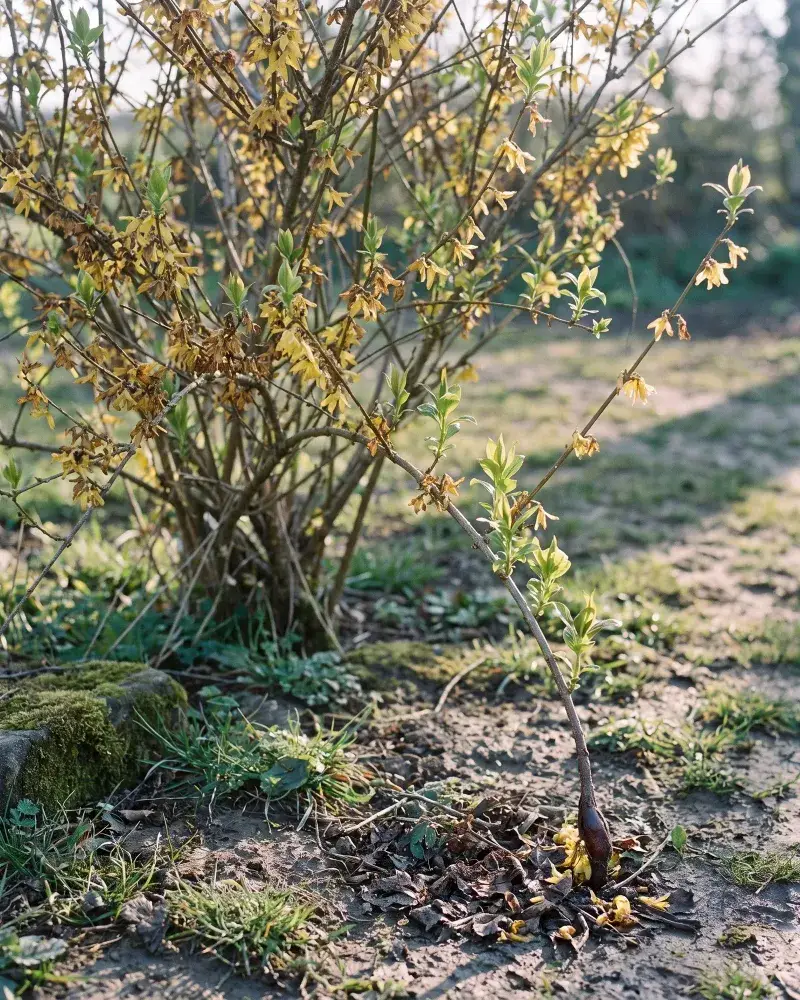
Walk past an old forsythia hedge and you might spot something sneaky. Long, arching canes bend down, touch the soil, and quietly start new plants all on their own.
Gardeners call this tip layering, and forsythia does it without any help. That habit tells you a lot about the plant. Its stems carry a strong natural ability to form roots, even before you get involved.
Inside each stem node, the spot where leaves attach, sit cells that can switch jobs. When a stem is cut or buried, these cells start building roots instead of leaves. Forsythia has plenty of these active spots along every cane.
NC State Extension lists forsythia among the easy shrubs to start from stem cuttings, and growers have relied on it for generations. Many people get success rates so high that rooting hormone feels optional.
I love that this shrub gives you a head start. Most plants make you work for every new root. Forsythia seems to be waiting for permission.
Fun fact: the plant is named after William Forsyth, an 18th-century Scottish gardener who helped run royal gardens in London. He probably never guessed how many backyard pots his namesake would fill.
2. Snip Softwood Forsythia Stems in Late Spring and Early Summer

Timing makes a huge difference, and forsythia gives you a wide window. The sweet spot is softwood season, right after the yellow flowers fade.
In most of North Carolina, that means late May through early July. Mountain gardeners may run a couple of weeks behind the Piedmont and coast, since spring arrives later at higher elevations.
Look for this year’s new growth. A good stem bends easily but snaps when bent sharply, kind of like a fresh green bean. If it flops like a noodle, it’s too young. If it feels stiff and woody, wait for another method.
Take cuttings about 4 to 6 inches long. Make your cut just below a leaf node, since roots love to form there.
Morning is the best time to snip. Stems are full of water before the afternoon heat, and that helps them stay fresh while you work.
Your North Carolina Garden Changes Every Week. Your Plan Should Too.
Gardening in North Carolina changes quickly throughout the season. Every Friday you’ll receive a simple weekly plan showing exactly what to plant, prune, fertilize, harvest, and protect so you never miss the right timing.
Keep cuttings in a damp paper towel or a plastic bag in the shade until planting. A cutting that wilts badly loses energy it needs for rooting.
Personally, I like to snip right after a gentle rain. The plant is happy, the stems are plump, and my cuttings look ready to go.
3. A Few Easy Prep Steps Get Each Cutting Ready to Root

Getting your cuttings ready takes about two minutes. No special skills required, just a clean pair of pruners and a little patience.
Start by pulling off the leaves on the bottom half of each stem. Leaves buried in soil tend to rot, and bare nodes are exactly where new roots will pop out.
Leave two to four leaves at the top. Those leaves make food for the cutting, but too many lose water fast. If the top leaves are large, you can trim them in half.
Next comes rooting hormone, which is optional for forsythia. Many gardeners skip it and still get great results. Still, a light dip in powder or gel can speed things up and give you more even roots.
Tap off any extra powder. A thin dusting works better than a thick coat. Here’s a handy trick I use. Poke a hole in the soil with a pencil first, then slide the cutting in. That way the hormone stays on the stem instead of rubbing off.
Clean your pruners with rubbing alcohol between plants. It’s a small habit that helps keep plant diseases from spreading to your new batch.
4. Your Forsythia Cuttings Want a Cozy Pot With Plenty of Humidity
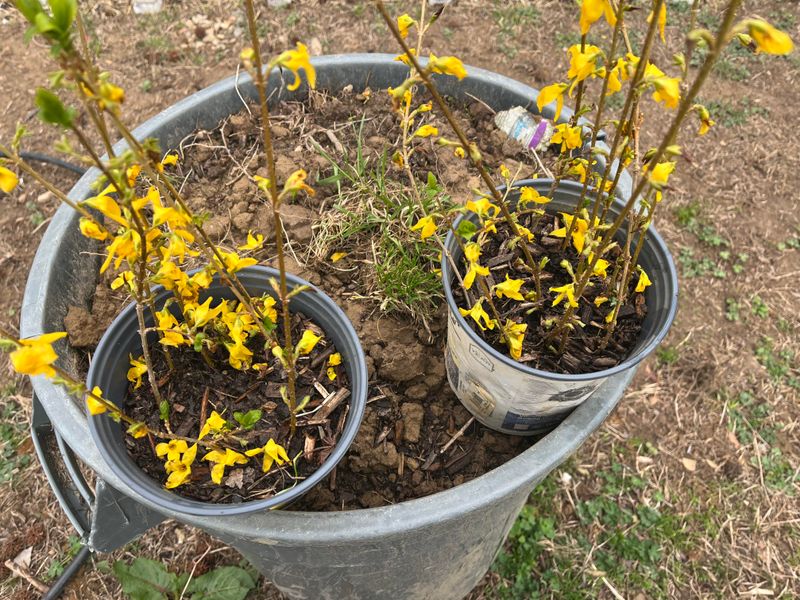
Think of a new cutting as a plant with no straw to drink from. Until roots form, it relies on moist air and damp soil to stay healthy.
A loose, well-draining mix works best. Try equal parts perlite and peat-free potting mix, or coarse sand mixed with potting soil. Heavy garden soil holds too much water and can lead to rot.
Push each cutting about 2 inches deep and firm the mix around it. Several cuttings can share one pot, as long as their leaves don’t crowd each other.
Now for humidity. Cover the pot with a clear plastic bag or an old soda bottle with the bottom cut off. Little sticks keep the plastic from touching the leaves.
Placement matters a lot during a Carolina summer. Bright shade is ideal, such as under a tree or on a covered porch. Direct afternoon sun can cook cuttings under plastic in minutes.
Check the soil every couple of days. It should feel like a wrung-out sponge, not soggy. I usually open the cover for a few minutes each morning. Fresh air helps prevent mold, and I get to admire my little crop.
5. Watch for New Forsythia Leaves and Gentle Root Resistance in a Few Weeks
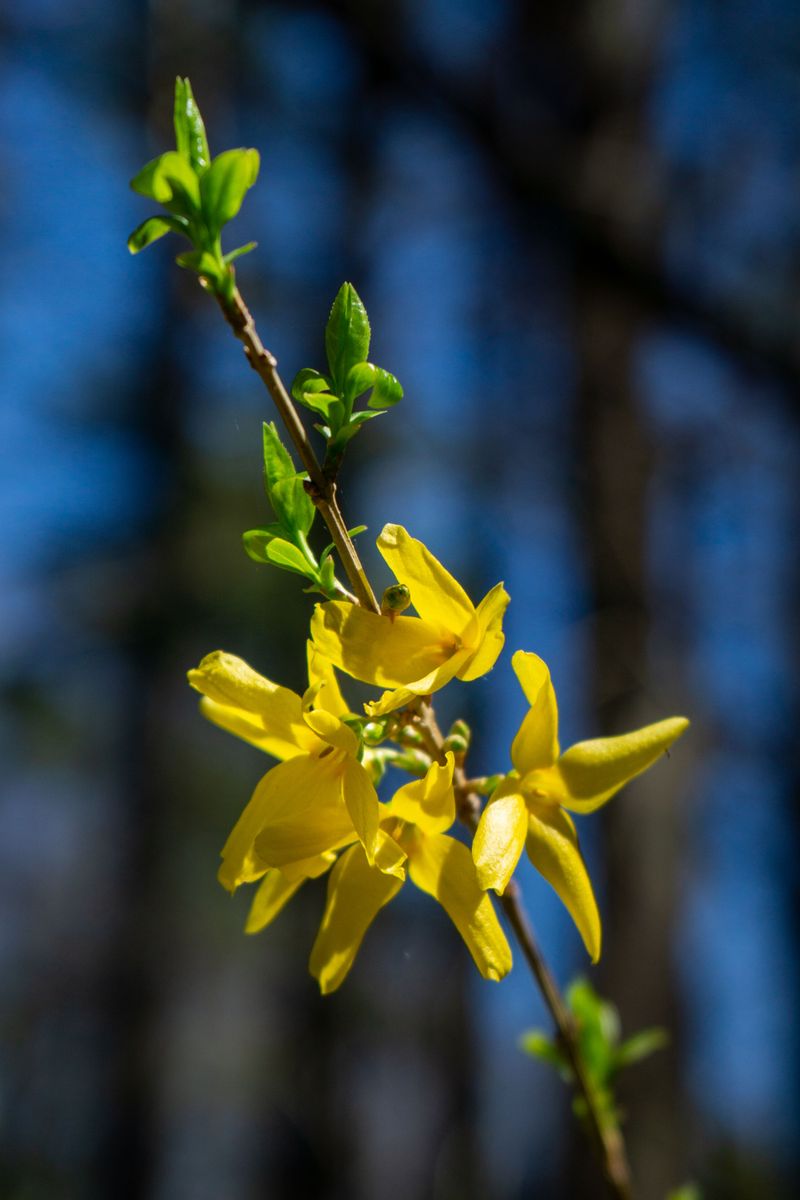
Patience pays off quickly with this shrub. Many forsythia cuttings start rooting in about three to six weeks, though some take up to eight.
Fresh new leaves at the tip are a hopeful sign. Even better is the gentle tug test. Pull very lightly on a cutting. If it resists, roots are holding on underneath.
Resist the urge to dig them up every few days. Constant checking can tear tender roots and set the cutting back.
Once you feel resistance, start opening the plastic cover a little longer each day. Over about a week, your cuttings get used to drier air. Gardeners call this hardening off.
When roots fill the bottom of the pot, move each plant into its own container with regular potting mix. Handle the root ball gently and water well afterward.
Don’t worry if a few cuttings fail. Even easy plants have duds now and then. That’s why I always take more than I need.
A small bit of fertilizer at half strength helps once roots are established. Feeding too early can burn new roots, so wait until you see steady growth before giving that boost.
6. Bending a Low Forsythia Branch Into the Soil Works Like Magic Too
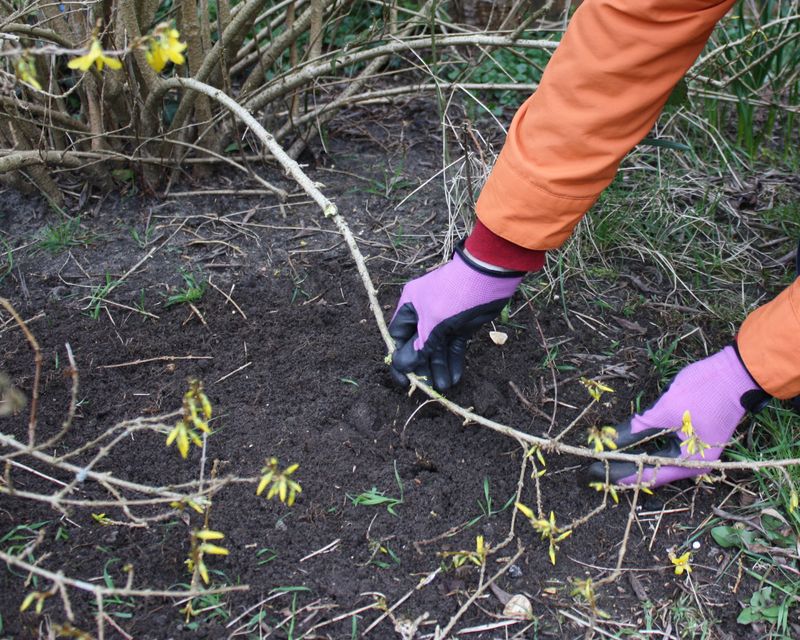
Some days you just don’t feel like fussing with pots. Forsythia offers a lazy gardener’s backup plan called layering, and it works beautifully.
Choose a low, flexible branch that easily reaches the ground. Scrape a small strip of bark off the underside where it will touch the soil. That tiny wound encourages roots.
Pin the branch down with a landscape staple, a bent wire, or a flat rock. Cover the wounded section with a couple of inches of soil and leave the tip sticking up.
Then mostly leave it alone. Keep the spot watered during dry spells, which matters during hot North Carolina summers.
Roots usually form within a few months. Many gardeners wait until the following fall or late winter to cut the new plant free from its parent.
Once separated, dig the young shrub with a good ball of soil and move it to its new home. Fall planting is great in our region because cooler air and warm soil help roots settle in.
I find layering nearly foolproof. The parent plant keeps feeding the branch until it’s ready, so there’s very little risk of losing it along the way.
7. Give Your New Forsythia Shrubs Plenty of Sun and Elbow Room

Success brings a happy problem. Suddenly you’ve got a dozen baby shrubs and need a plan for all of them.
Forsythia blooms best in full sun, at least six hours a day. It tolerates part shade, but flowers get sparse. Most common types grow 8 to 10 feet tall and just as wide, so space them generously.
Plant rooted cuttings in fall across much of North Carolina, from the mountains to the coast. The plant thrives in USDA zones 5 through 8, which covers our whole state.
Keep them away from natural areas and stream banks. Forsythia isn’t listed as invasive in North Carolina, yet its spreading canes can root wherever they land. A little trimming keeps it in its own space.
Prune right after spring flowering, not in fall or winter. Forsythia sets next year’s flower buds in summer, and late pruning snips off that yellow show.
Extra plants make wonderful gifts for friends, schools, or plant swaps. I like sharing them with a short note on when to prune.
Start with just a handful of cuttings this summer. By next spring, you could have a row of young shrubs on their way to becoming a cheerful yellow hedge.