Skip Lamb’s Ear In North Carolina Humid Borders And Plant This Silver Native Instead
Silver sedge gives North Carolina gardeners a native alternative to lamb’s ear that handles humidity far better without sacrificing that soft, silvery look.
Lamb’s ear often struggles in humid climates, developing fungal issues and rot when moisture lingers on its fuzzy leaves.
Silver sedge, by contrast, tolerates North Carolina’s sticky summers while maintaining attractive color and texture throughout the growing season.
Its clumping habit works well along border edges, providing a similar visual softness without constant maintenance concerns.
This native option also handles both sun and partial shade, offering more flexibility than lamb’s ear typically allows. Reduced disease pressure means less time troubleshooting rot or mildew throughout the humid summer months.
Silver sedge pairs nicely with flowering perennials, adding contrast without competing for attention. Making this simple swap gives humid borders a resilient, low fuss alternative that actually thrives in local conditions.
1. North Carolina Humidity Can Leave Lamb’s Ear Looking Tired
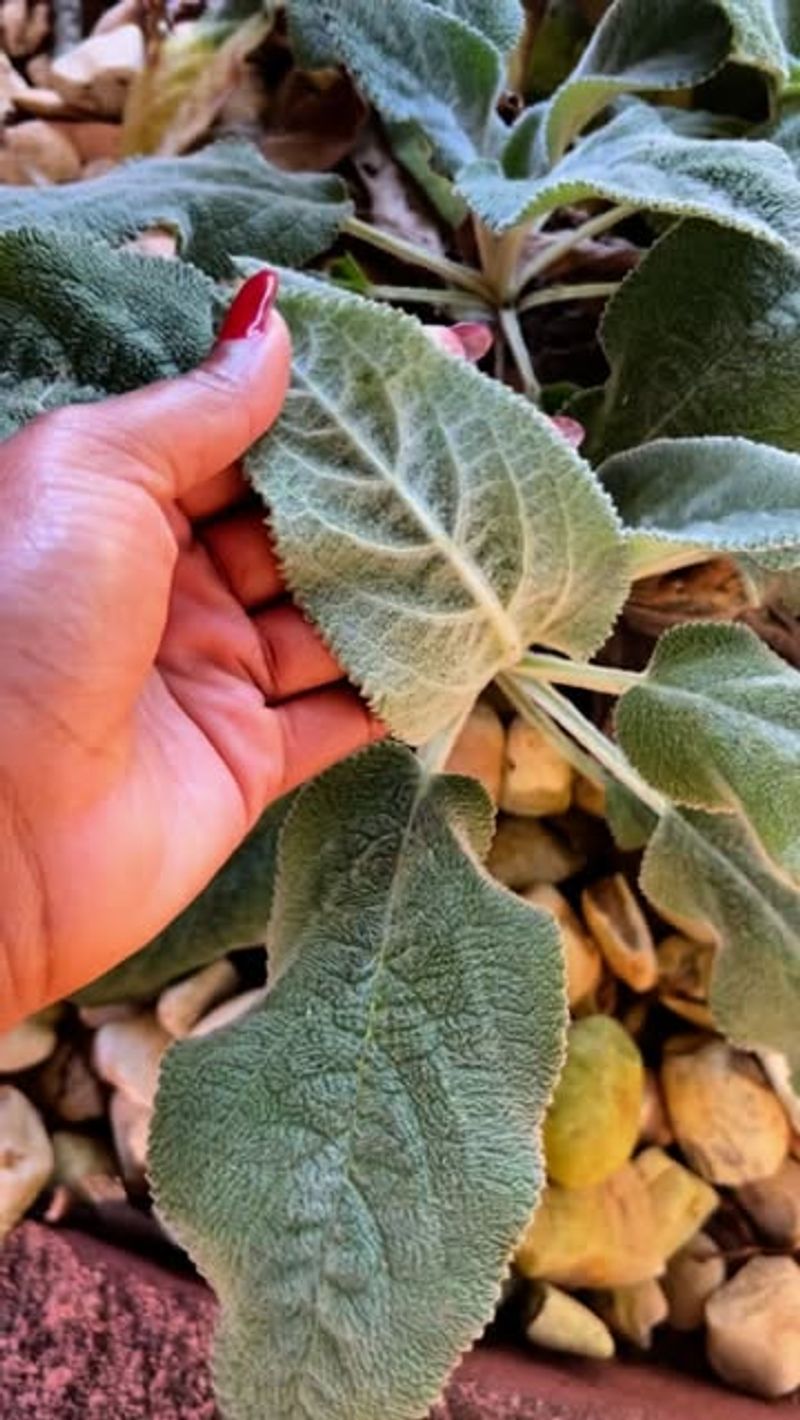
Most gardeners fall for Lamb’s Ear the moment they touch it. Those thick, velvety silver leaves feel almost too good to be true, and in the right climate, they really do shine.
The problem is that North Carolina summers are anything but dry, and that is where the trouble starts.
Lamb’s Ear, known botanically as Stachys byzantina, thrives in dry to moderately moist conditions with excellent drainage and good air movement around its leaves.
When humidity rises and rainfall is frequent, those same fuzzy leaves become a trap for moisture.
Water clings to the woolly surface after rain showers, irrigation, or heavy morning dew, and it simply cannot evaporate fast enough in the thick summer air.
Over time, trapped moisture on the foliage creates the perfect environment for fungal issues. Leaf spotting, browning, and a generally ragged appearance can spread across the planting quickly.
What started as a crisp silver border accent can look patchy and worn by midsummer. This is not a reflection of poor gardening skills. It is simply a matter of climate mismatch.
Lamb’s Ear performs beautifully in Mediterranean-style climates or in regions with warm, dry summers and cool nights. North Carolina’s combination of heat, humidity, and regular summer rainfall pulls it in the opposite direction.
Gardeners who want that soft silver look in a humid border deserve a plant that is built for the conditions they actually have, not the conditions they wish they had.
2. Heavy Moist Soil Can Cause Problems For Lamb’s Ear
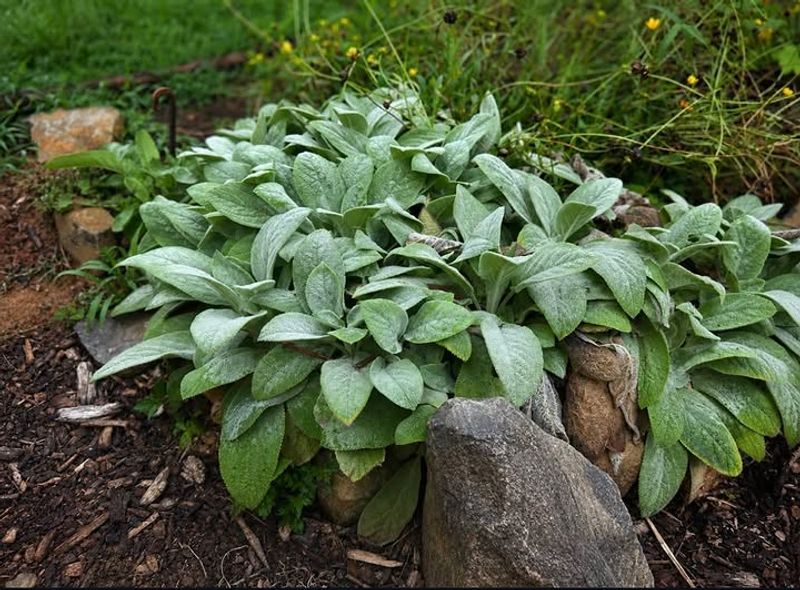
Soil type matters just as much as rainfall when it comes to keeping Lamb’s Ear healthy. In North Carolina, many garden borders sit on heavy clay soil that compacts easily, drains slowly, and stays moist for long stretches after rain.
For a plant that prefers lean, well-drained ground, that combination is genuinely tough to manage.
When the soil around Lamb’s Ear stays wet, the crown and roots sit in conditions they were never designed for. Moisture builds up around the base of the plant, lower leaves begin to rot, and the whole clump can deteriorate from the ground up.
Your North Carolina Garden Changes Every Week. Your Plan Should Too.
Gardening in North Carolina changes quickly throughout the season. Every Friday you’ll receive a simple weekly plan showing exactly what to plant, prune, fertilize, harvest, and protect so you never miss the right timing.
Raised beds and sloped planting areas can help by improving drainage, but not every garden has those options available.
Frequent irrigation compounds the issue. Many mixed borders get regular watering to support thirstier neighboring plants, and Lamb’s Ear simply cannot tolerate that kind of consistent moisture without suffering.
Limited air movement between plants, common in densely planted borders, makes things worse by slowing the drying process even further.
It is also worth knowing that Lamb’s Ear is not native to North Carolina. It originates from Turkey, Armenia, and Iran, where summers are hot but dry, and winters are cold and clear.
The plant’s entire biology is shaped around those conditions, not the humid subtropical climate of the Piedmont or Coastal Plain.
Choosing a plant that genuinely suits your soil and climate from the start saves a lot of time, effort, and garden space in the long run.
3. Plantain Pussytoes Provides Soft Silver Native Foliage
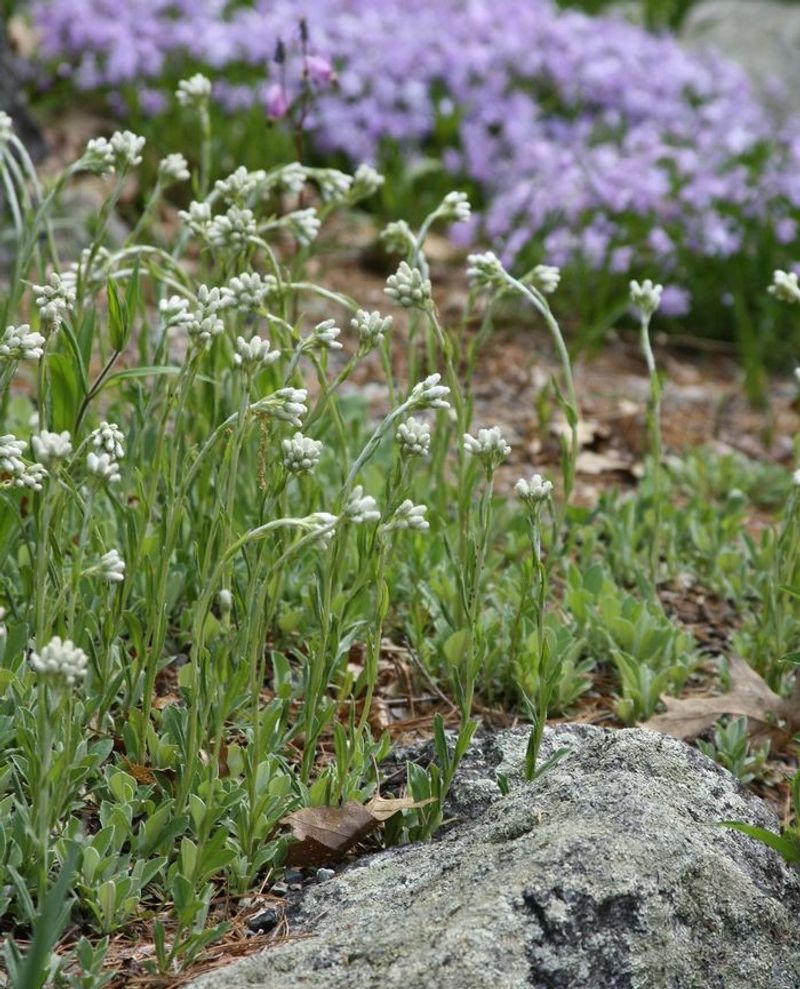
Picture a plant that offers the same soft, silver-toned foliage as Lamb’s Ear but actually belongs in North Carolina.
That plant is Plantain Pussytoes, and it has been quietly growing in the region’s woodlands, meadows, and rocky slopes long before anyone planted a formal garden border.
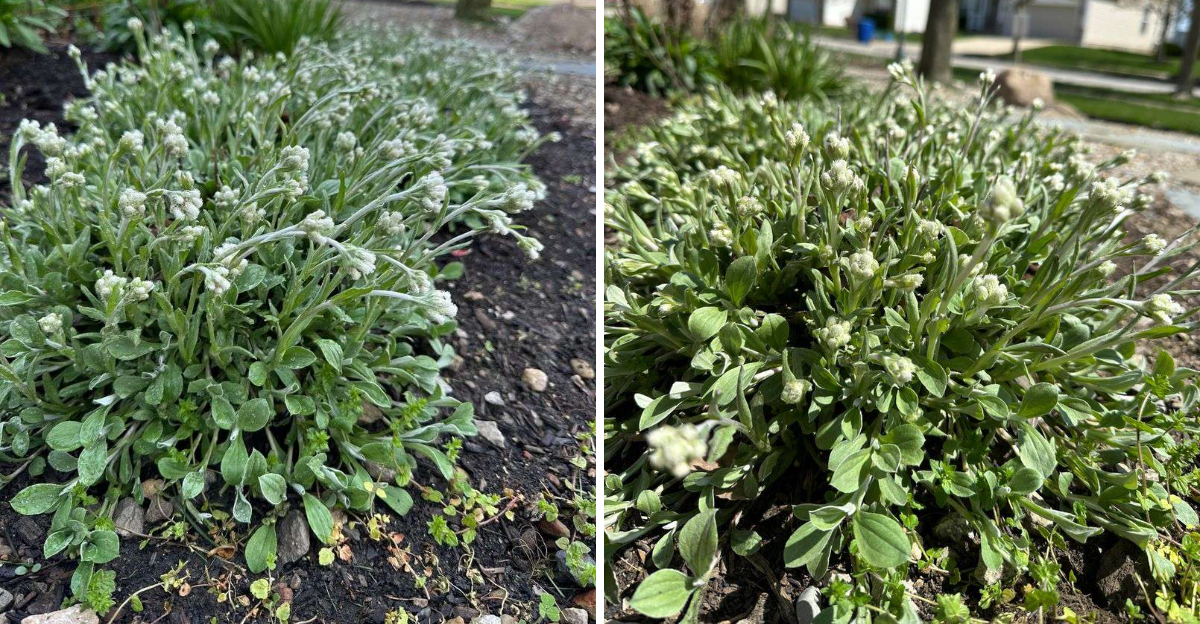
Antennaria plantaginifolia forms tidy low rosettes of rounded leaves covered in fine white hairs that give the foliage a soft gray-green to silvery appearance.
The texture is genuinely woolly, similar enough to Lamb’s Ear to satisfy the same design instinct but rooted in a plant that evolved for exactly this region’s conditions.
The leaves stay compact and close to the ground, creating a neat, natural-looking mat rather than a sprawling clump.
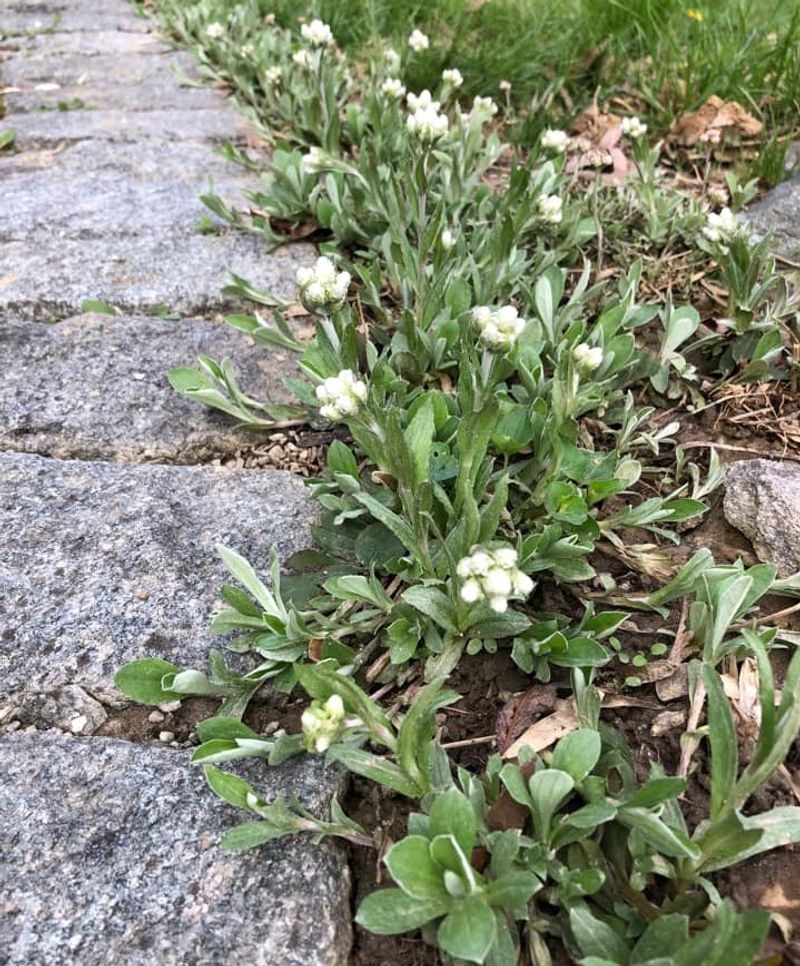
Mature rosettes typically reach just two to four inches in height, making Plantain Pussytoes a natural fit for the very front of a border where low, ground-hugging plants create a clean edge.
It works beautifully alongside other North Carolina natives, blending into a planting that feels cohesive and intentional rather than assembled from unrelated species.
One of the most appealing qualities of this plant is how it brightens a border without competing with taller companions. The silver-gray foliage catches light in a way that makes surrounding greens look richer and more layered.
Whether you place it along a sunny border front or tuck it near a lightly shaded pathway, the soft foliage adds a quiet elegance that feels completely at home in a regional native garden.
4. Plantain Pussytoes Forms A Low Spreading Ground Cover
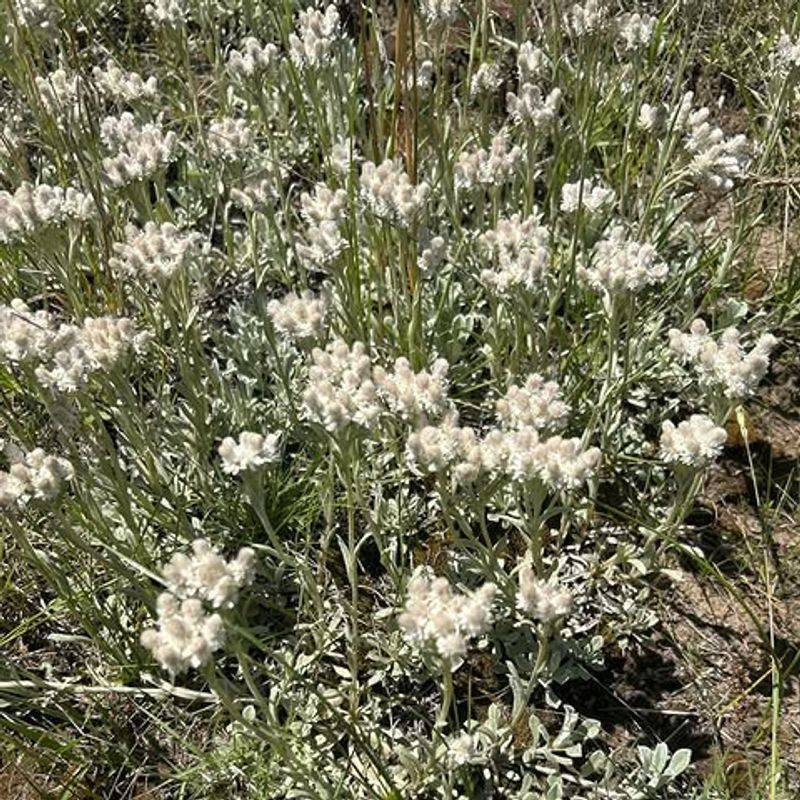
Some plants stay exactly where you put them, and others slowly work their way outward in the most satisfying way. Plantain Pussytoes belongs to the second group.
Over time, it spreads through short surface runners that root near the parent plant and gradually build small, connected colonies of soft silver rosettes. This spreading habit is gentle and manageable, nothing aggressive or invasive.
Under good conditions, a single plant can spread roughly one to two feet wide, filling in open soil along border edges, around stepping stones, or between rocks without crowding out its neighbors.
The mature height stays between two and eight inches depending on light and soil conditions, keeping the overall profile low and tidy.
That low growth is one of its most practical strengths. Open soil along a border front is an open invitation for weeds, and a spreading ground cover that naturally fills those gaps reduces the need for frequent hand weeding.
Plantain Pussytoes covers the ground gradually but reliably, creating a living mulch of sorts that also happens to look beautiful.
Around shrubs, ornamental grasses, and taller native perennials, the low mat of silvery rosettes creates a layered look that makes a border feel complete and intentional.
It works especially well alongside rocks and gravel, where its natural habitat origins really come through in the texture and color contrast.
Gardeners who enjoy a planting that fills in over time with minimal fuss will find Plantain Pussytoes to be a genuinely rewarding choice for border edges and open ground cover areas.
5. Plantain Pussytoes Fits Lean Well-Drained Borders
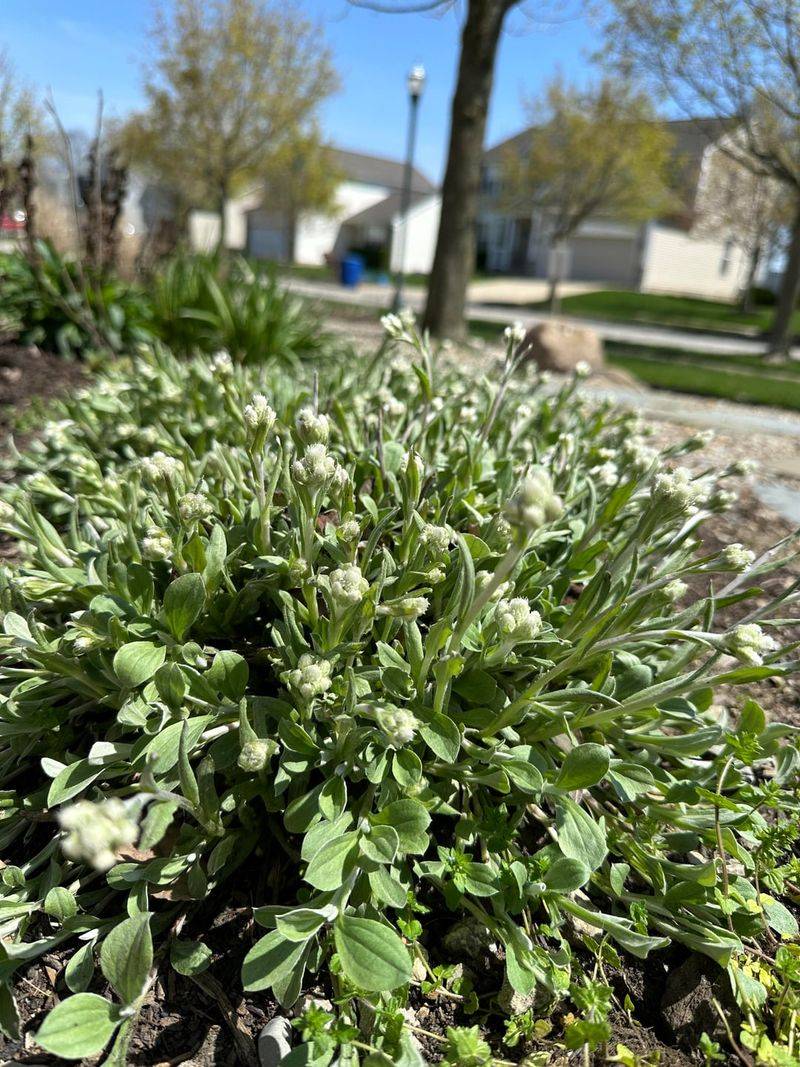
Here is something that surprises a lot of gardeners: being native to North Carolina does not mean a plant wants wet feet.
Plantain Pussytoes is a native species, but it naturally grows in lean, dry, rocky, or sandy soils with sharp drainage and plenty of sunlight.
Its native habitat includes open woodlands, dry ridges, rocky outcrops, and sunny meadow edges, not soggy lowlands or heavily amended garden beds.
For humid borders in North Carolina, the best strategy is placement. Put Plantain Pussytoes in the driest, best-drained section of your border.
A raised edge, a rocky slope, a gravel garden, or a sunny border front with sandy or gritty soil will give it the conditions it needs to thrive.
Even within a garden that experiences regular rainfall, choosing the right microclimate within the space makes a real difference.
Rich soil and excessive organic matter can actually work against this plant. When the soil is too fertile and moisture-retentive, Plantain Pussytoes tends to become loose and floppy rather than forming those crisp, compact rosettes that make it so attractive.
Lean soil keeps it tight, healthy, and looking its best season after season. Full sun is ideal, though it will tolerate partial shade without too much complaint. Avoiding overwatering after establishment is one of the simplest ways to keep it performing well.
Once it settles in, it is genuinely low-maintenance and asks for very little beyond good drainage and occasional light grooming to remove older leaves.
6. Spring Flowers Add Gentle Seasonal Interest
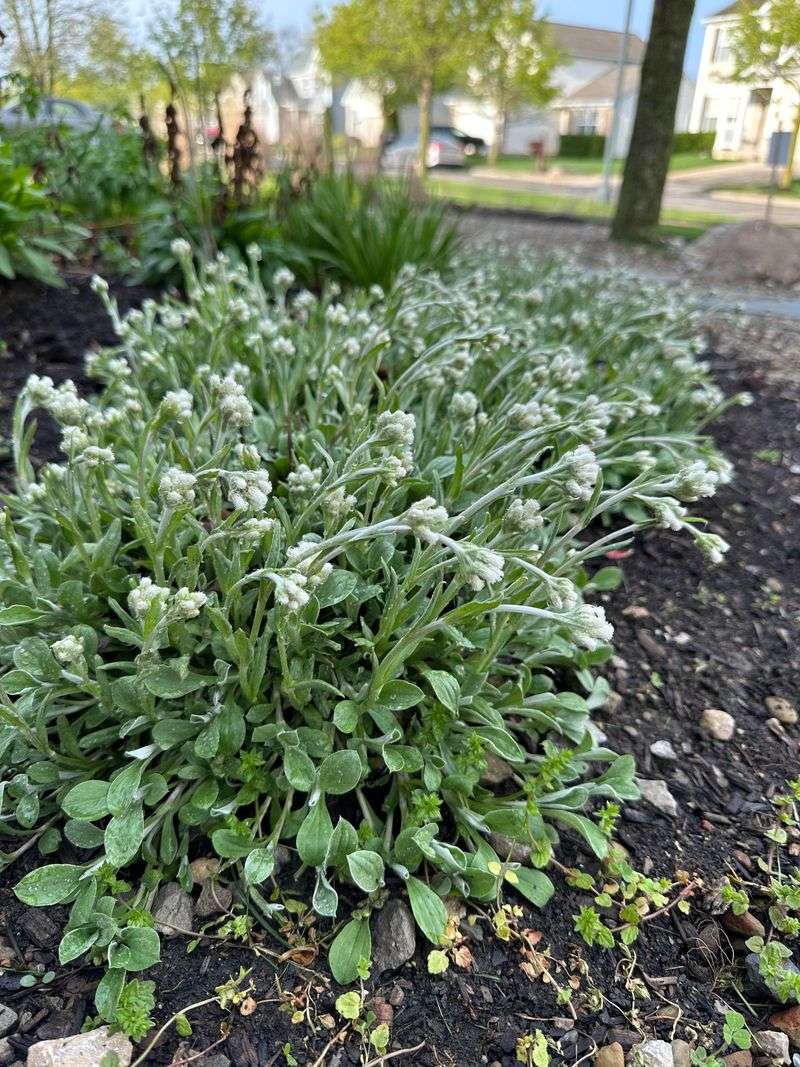
Foliage plants earn their place in a border all season long, but a plant that also blooms is always a bonus.
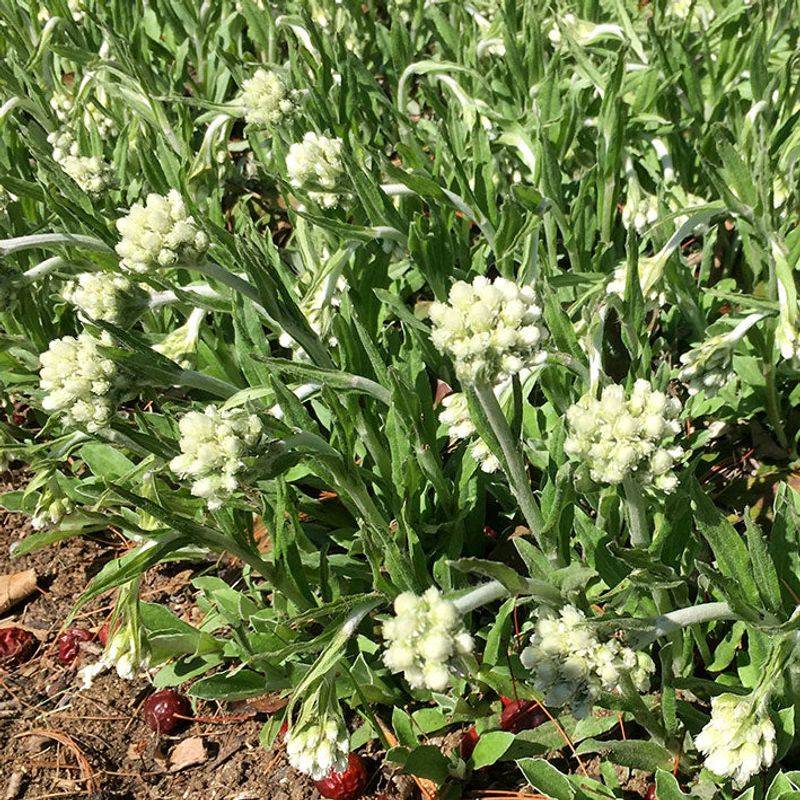
Plantain Pussytoes puts on a quiet and charming spring show with small clusters of creamy white flowers that rise on upright stems above the low silver rosettes.
The effect is subtle but genuinely lovely, especially when several plants grow close together.
Blooming typically happens in early to mid-spring, often from March through May depending on location and weather.
The flowering stems reach a few inches above the foliage, creating a soft, layered look that bridges the gap between the ground-hugging leaves and taller plants in the border.
Up close, the flowers have a cottony texture that matches the woolly leaves below them. One interesting fact about Plantain Pussytoes is that male and female flowers occur on separate plants.
Female plants tend to produce the more showy flower clusters, so planting several individuals together increases the visual impact and ensures you get both types represented in your planting.
Combining Plantain Pussytoes with other spring-blooming North Carolina natives creates a layered and seasonally dynamic border.
Think wild blue phlox, Carolina blue-eyed grass, or golden Alexanders blooming nearby while the silver foliage of Plantain Pussytoes weaves through the foreground.
The contrast between the soft white flowers and the gray-green leaves ties the whole composition together in a way that feels natural rather than designed, which is exactly the look most native garden enthusiasts are going for.
7. Plantain Pussytoes Supports Pollinators And Butterflies
A silver foliage plant that also feeds butterflies is a rare find, and Plantain Pussytoes genuinely delivers on that front.
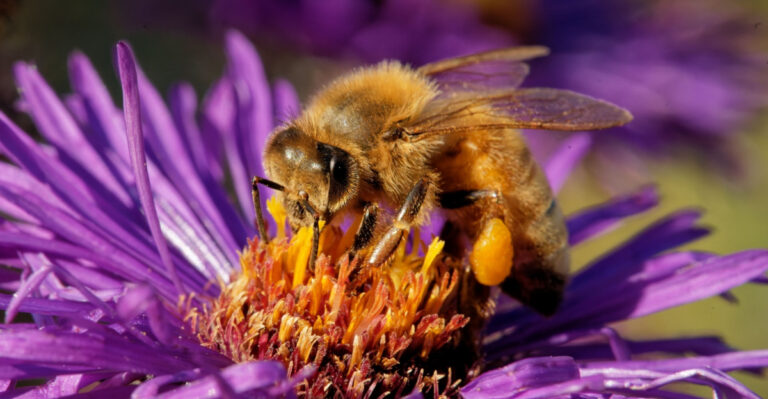
The small creamy flowers that appear in spring attract bees, small native flies, and a variety of other early-season pollinators that are actively foraging before many other plants have started to bloom.
That early timing makes it a valuable resource in the spring garden. Perhaps the most exciting wildlife connection is its role as a larval host plant for the American Lady Butterfly, Vanessa virginiensis.
The caterpillars of this beautiful orange and brown butterfly feed on Antennaria species, making Plantain Pussytoes a meaningful addition to any garden focused on supporting native butterfly populations.
Seeing American Lady caterpillars sheltering in a small silk nest on your ground cover is a sign that your garden is genuinely working as a habitat, not just a pretty space.
It is worth being realistic about scale. One or two plants will not transform a yard into a butterfly sanctuary overnight.
But planting Plantain Pussytoes as part of a broader native planting that includes other host plants, nectar sources, and sheltered areas builds a garden ecosystem that grows more valuable with each passing season.
Choosing a native silver foliage plant over a non-native one means every square foot of your border does double duty. You get the ornamental quality you want alongside real ecological function.
That balance between beauty and purpose is what makes native gardening so satisfying and genuinely worthwhile for both gardeners and wildlife alike.
8. Plantain Pussytoes Brings Natural Character To The Border
When a plant feels like it belongs somewhere, the whole garden looks more grounded and intentional.
Plantain Pussytoes is native to the eastern United States, including North Carolina, and that regional connection shows in how naturally it fits alongside other local native plants.
It does not look like something dropped into the border from a different climate zone, because it genuinely is not.
For practical planting, space individual plants about twelve to eighteen inches apart to allow room for the natural spreading habit to develop without overcrowding.
During the first season, water occasionally to help the roots establish, especially during dry spells.
Once settled in, reduce irrigation significantly. Established plants are quite drought-tolerant and actually prefer to stay on the dry side.
Fertilizer is largely unnecessary and can cause more harm than good by encouraging soft, floppy growth that loses the compact form that makes the plant so attractive. Skip the amendments and let the lean soil do its job.
If organic matter builds up around the base of the plants over time, gently clear it away to maintain good drainage around the crown.
Plantain Pussytoes suits dry sections within a humid climate rather than consistently moist soil, and that distinction matters for placement.
A raised border front, a gravel strip, or a rocky sunny edge within a North Carolina garden gives it everything it needs to perform season after season.
For gardeners ready to swap out a struggling non-native for something genuinely suited to their region, this quiet little silver native is a rewarding and inspired choice.