The Most Useful Native Shrub You Can Plant In Pennsylvania
There are thousands of plants you could add to a Pennsylvania garden. But every once in a while, a plant earns the word useful in a way that most others simply don’t.
Not useful in one dimension, not just attractive or just drought tolerant or just wildlife friendly, but genuinely useful across so many fronts that it becomes hard to justify not having it somewhere in your yard.
This native Pennsylvania shrub is that plant. It handles the state’s climate through every season without complaint.
It supports pollinators generously, feeds birds through multiple seasons, and provides the kind of dense habitat structure that benefits the broader yard ecosystem in ways most ornamental shrubs never come close to matching.
It works as a privacy screen, a garden anchor, a foundation planting, or a wildlife corridor depending on how and where you use it.
And because it’s native to Pennsylvania, it belongs here in a deep and meaningful way that no imported ornamental can replicate.
Buttonbush Handles Pennsylvania’s Wettest Garden Spots
Some plants look great in a garden catalog but fall apart the moment their roots sit in standing water. Buttonbush is not one of those plants.
Cephalanthus occidentalis actually thrives in wet conditions that would stress most other shrubs, making it a rare and valuable find for Pennsylvania homeowners.
Pennsylvania has no shortage of low spots, stream banks, and rain garden zones that stay damp for long stretches. Most shrubs planted in those areas struggle, turn yellow, and never really take off.
Buttonbush, on the other hand, settles right in and starts growing with confidence.
It works beautifully along pond edges, drainage swales, and areas that collect rainwater after a storm. You can also use it in a designed rain garden to help slow and absorb runoff naturally.
Its deep root system helps stabilize soil, which is a bonus near stream banks prone to erosion.
Buttonbush can even grow with its roots partially submerged in shallow water for short periods. That level of tolerance is impressive and nearly unmatched among native Pennsylvania shrubs.
It gives gardeners a real solution for spaces that feel impossible to plant.
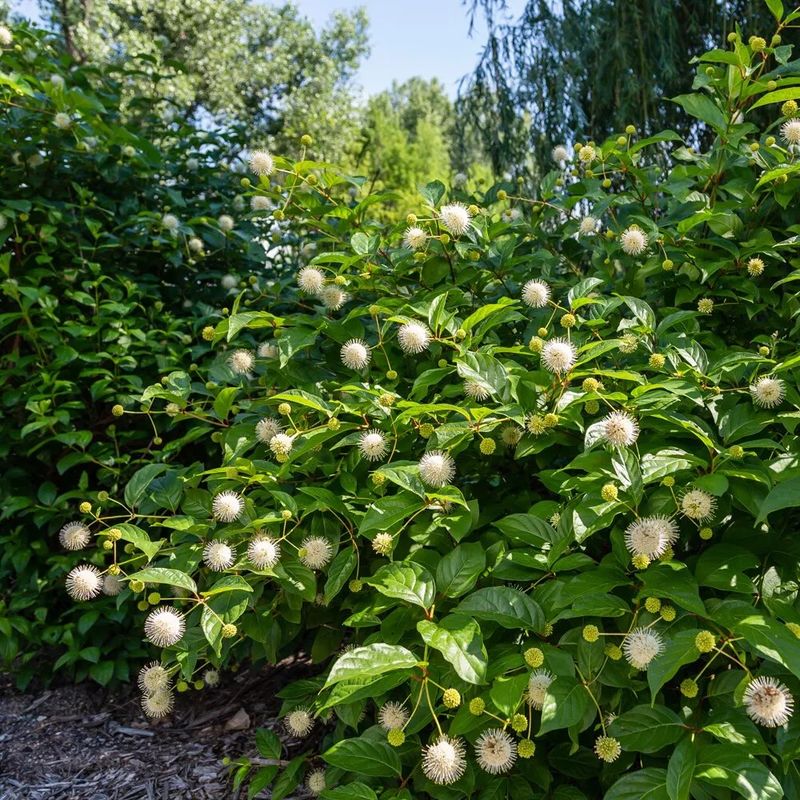
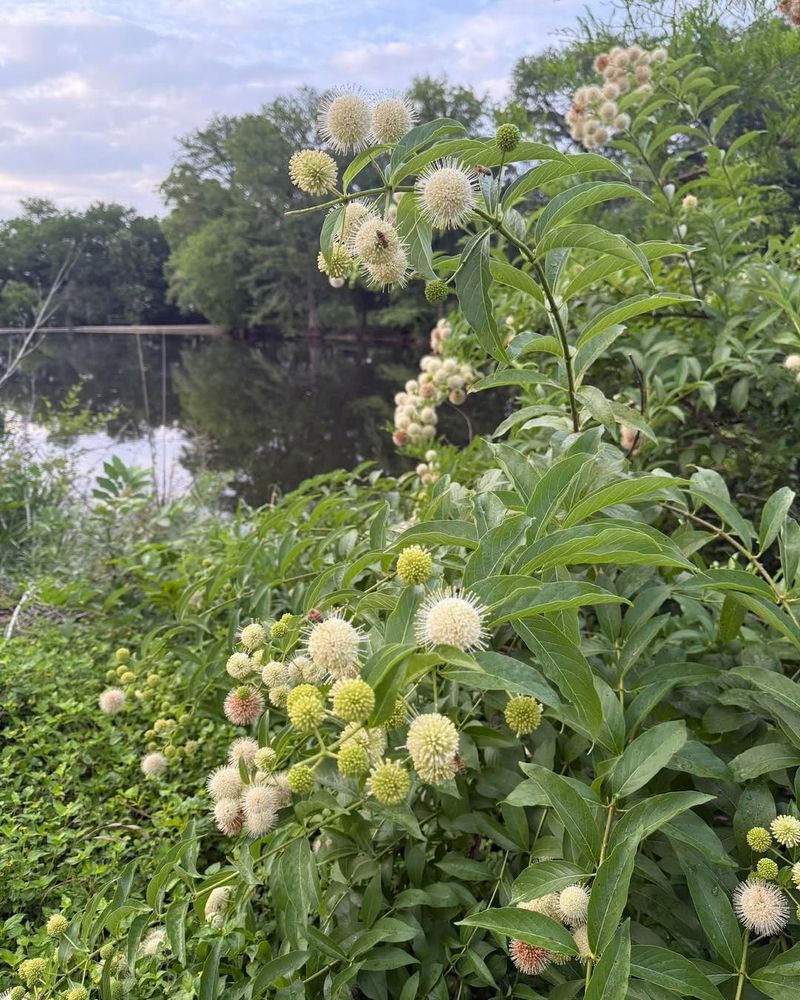
Mature plants typically reach six to twelve feet tall and wide, so they fill a space with lush green foliage quickly. The leaves are large, glossy, and deep green, giving the shrub a healthy and full appearance all season long.
If your yard has a wet problem area, buttonbush turns that challenge into an opportunity.
Its Summer Flowers Feed Pollinators
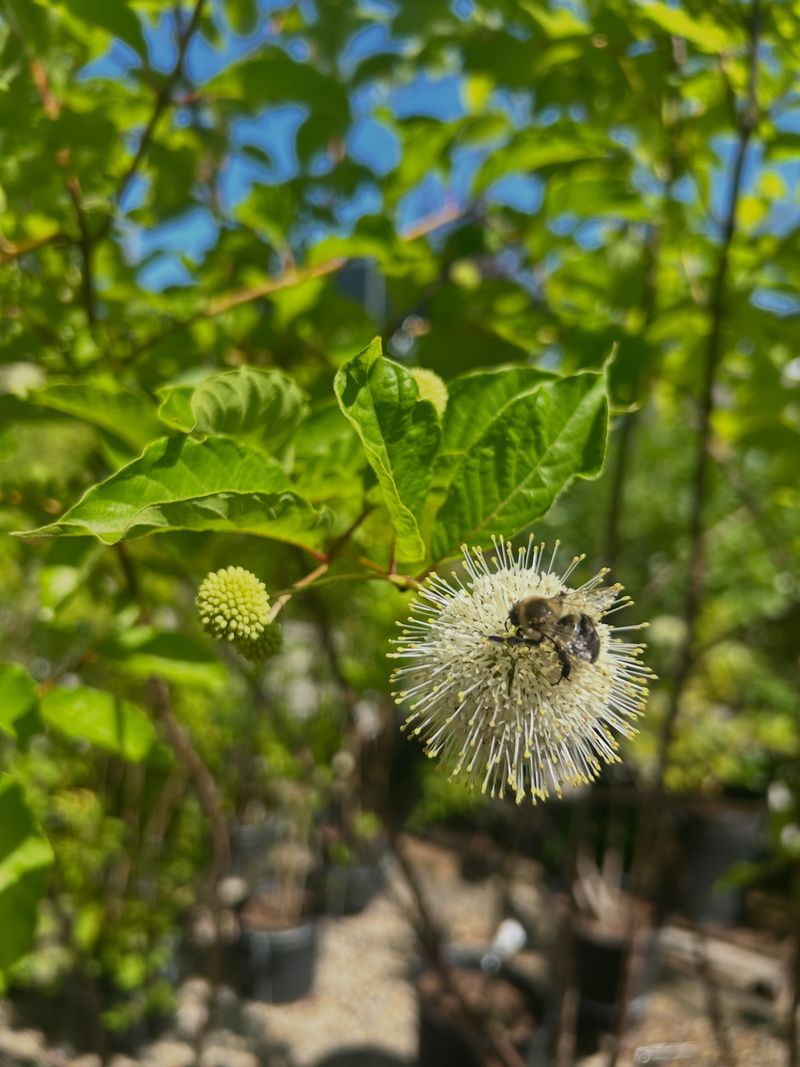
Walk past a blooming buttonbush on a warm July afternoon and you will hear it before you see it. The buzzing of bees, the flutter of butterfly wings, and the hum of activity around those round white flower clusters is something special.
Few native shrubs draw this kind of pollinator attention so reliably.
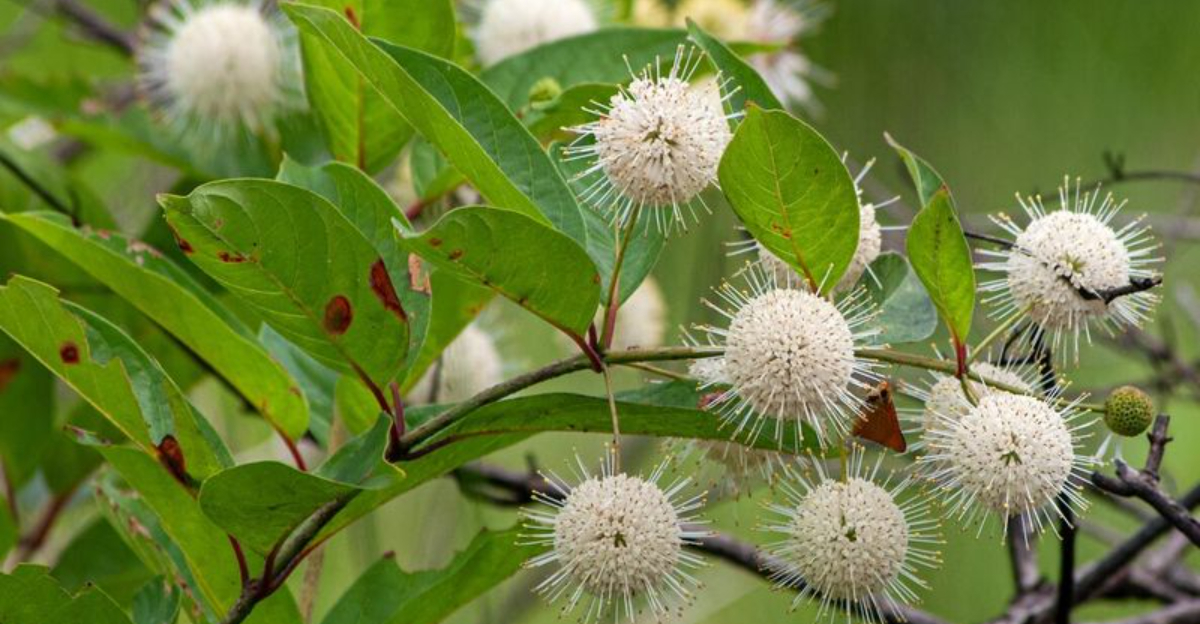
The flowers appear from June through August, right when many pollinators are at their most active. Each bloom is a tight, spherical cluster made up of dozens of tiny tubular flowers packed together.
Your Pennsylvania Garden Changes Every Week. Your Plan Should Too.
Gardening in Pennsylvania changes quickly throughout the season. Every Friday you’ll receive a simple weekly plan showing exactly what to plant, prune, fertilize, harvest, and protect so you never miss the right timing.
They look almost like little white pincushions, and insects cannot seem to get enough of them.
Bees are especially drawn to buttonbush flowers. Honeybees, bumblebees, and native solitary bees all visit regularly to collect nectar and pollen.
Butterflies like swallowtails and skippers are frequent visitors too, making the shrub a natural gathering spot for a wide variety of beneficial insects.
Beyond bees and butterflies, buttonbush also attracts hummingbirds in some regions. The nectar-rich flowers are a reliable food source during the height of summer.
Planting buttonbush near other pollinator-friendly plants creates a corridor of food that keeps beneficial insects coming back all season.
Supporting pollinators is not just good for wildlife. It helps your entire garden thrive.
Better pollination means more fruit, more seeds, and more plants. By adding buttonbush to a wet or moist area, you are investing in the health of the whole yard.
The flowers also carry a faint, pleasant fragrance that makes spending time near this shrub a genuinely enjoyable experience.
Birds Benefit From Its Fall Seedheads
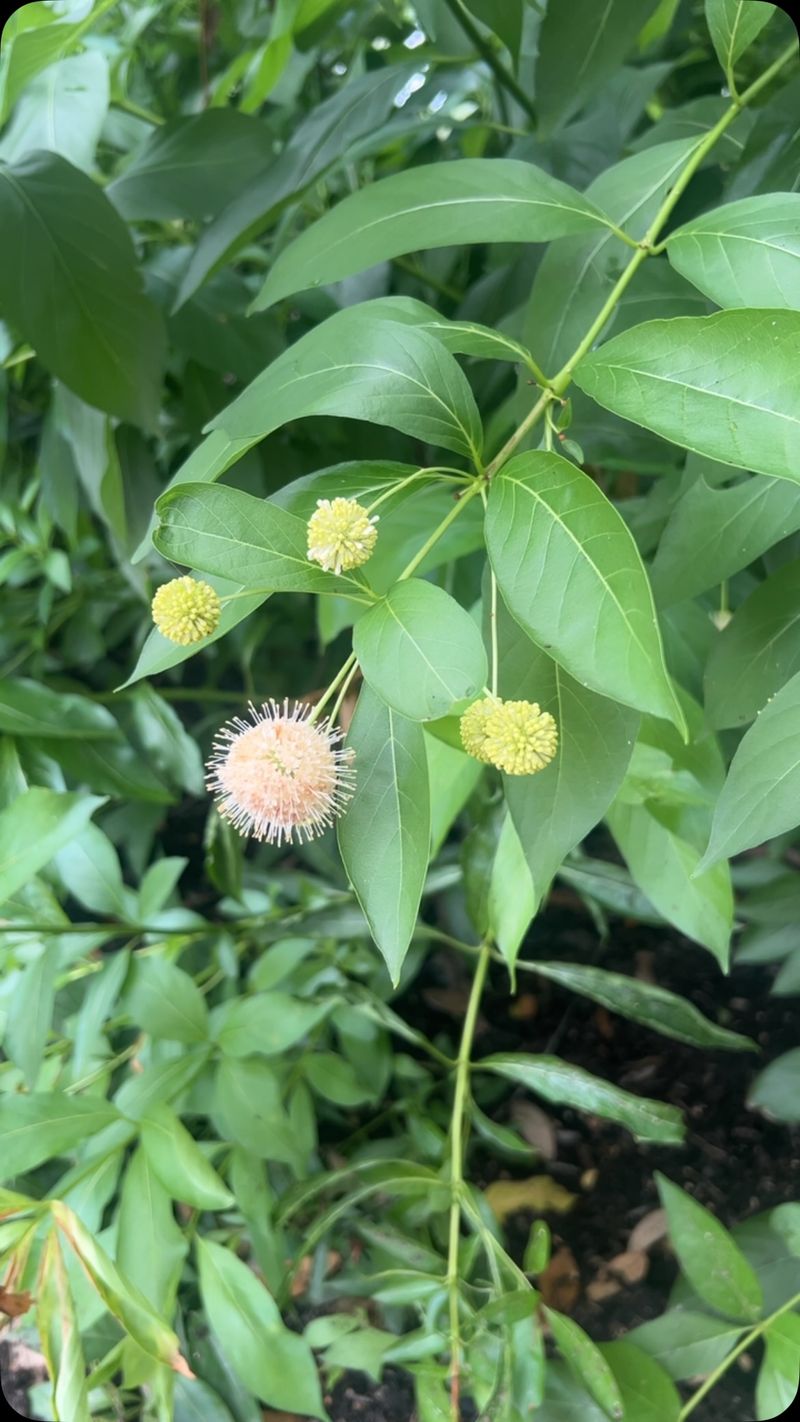
Once the summer flowers fade, buttonbush does not just go quiet. It shifts into its next role as a food source for birds heading into fall and winter.
The round seed clusters that form after flowering are packed with small seeds that many bird species actively seek out.
Ducks are among the biggest fans of buttonbush seeds. Wood ducks, mallards, and other waterfowl will visit plants growing near water to feed on the seedheads.
If your property borders a pond, stream, or wetland, you may start noticing more bird activity around your buttonbush as summer winds down.
Songbirds also take advantage of the seeds. Goldfinches, sparrows, and other small birds pick at the seedheads during migration and through the cooler months.
Having a reliable native food source in your yard can make a real difference for birds preparing for long journeys or cold weather ahead.
The seedheads themselves are also visually interesting. They turn from green to brown as they mature and hold their shape well into winter.
That texture adds a nice seasonal element to the garden, especially when paired with ornamental grasses or other late-season plants.
Leaving the seedheads in place through winter instead of cutting them back is one of the easiest things you can do for local wildlife. Birds need those natural food sources most when temperatures drop and other food becomes scarce.
Buttonbush makes that kind of low-effort wildlife support completely effortless. It gives back to the ecosystem long after its blooming season is over, proving that its value extends well beyond a single month or two.
It Creates Valuable Wildlife Habitat
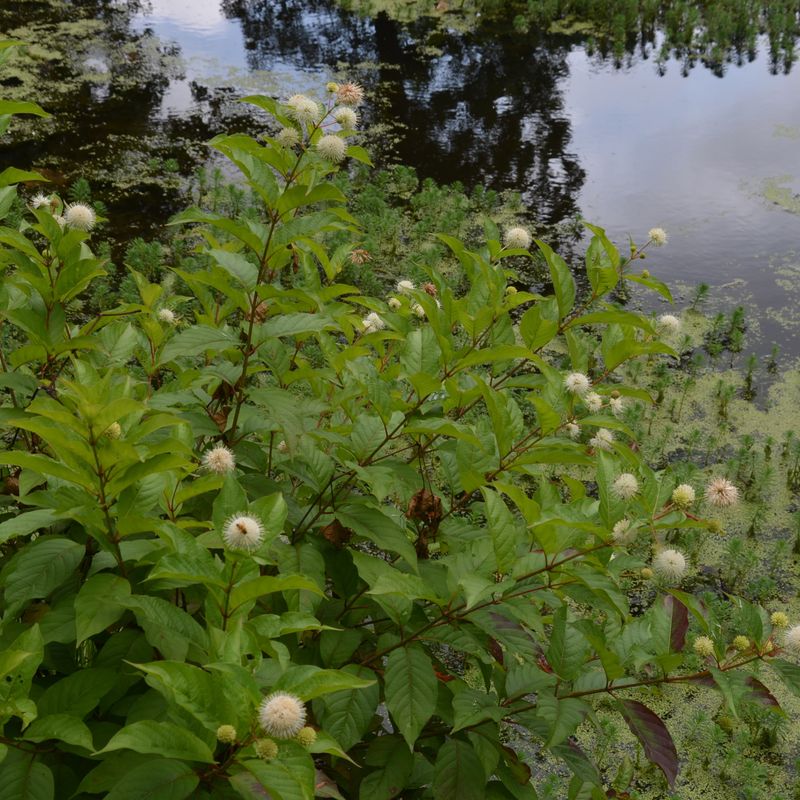
A garden filled with only flowers can be beautiful, but a garden that also offers shelter is truly alive. Buttonbush brings that kind of layered habitat to any yard.
Its dense, branching structure gives small animals a place to rest, nest, and take cover from predators.
The thick branches grow in a way that creates natural hiding spots. Small mammals like rabbits and chipmunks may use the base of the shrub for cover.
Birds often nest within the dense canopy, tucking their nests safely among the leaves and stems during the spring and summer breeding season.
Aquatic insects also benefit from buttonbush when it grows near water. The stems and roots that extend into shallow water provide surfaces for insects to lay eggs and for larvae to develop.
These insects then become food for fish, frogs, and the birds that feed along the water’s edge.
In a naturalized landscape or a backyard wildlife garden, buttonbush adds real structural value. It fills a middle layer between low groundcovers and tall trees, creating the kind of layered habitat that supports the most biodiversity.
That layering is something wildlife experts consistently recommend for healthy native gardens.
Pennsylvania is home to a wide range of wildlife that benefits from native plantings. By choosing buttonbush, you are actively contributing to a healthier local ecosystem.
It is not just a pretty plant. It is a functional piece of the natural environment that gives back in multiple ways at once.
Adding even one or two buttonbush shrubs can meaningfully increase the wildlife value of an average suburban yard.
Plant It In The Right Location
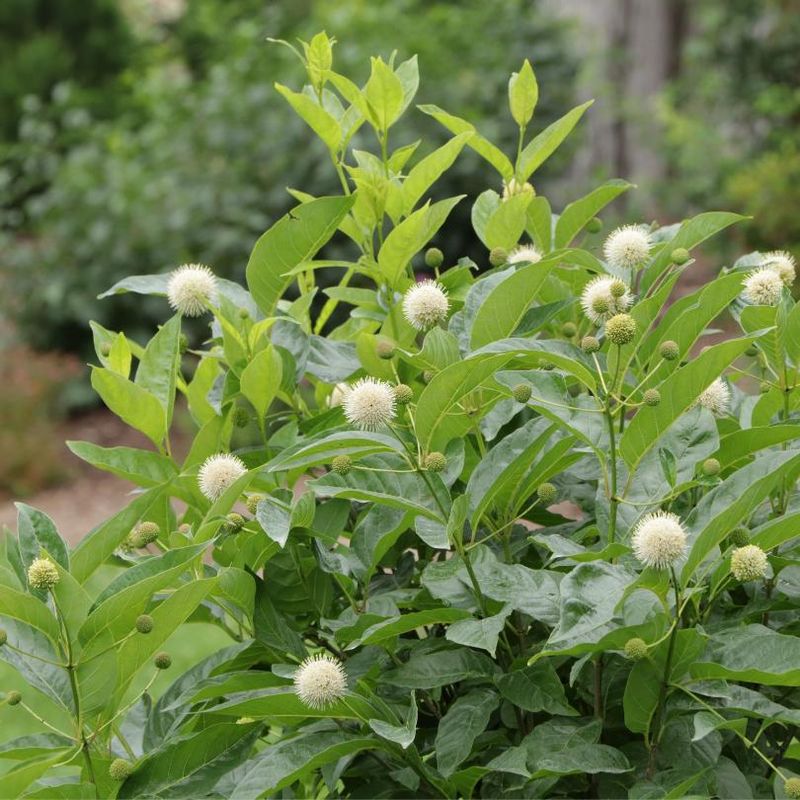
Getting the location right is the single most important step when planting buttonbush. Put it in the right spot and it will reward you for years.
Put it somewhere too dry or too shaded and it will struggle to reach its full potential.
Buttonbush performs best in full sun to partial shade. It can handle a few hours of shade each day, especially in hotter areas, but it flowers most heavily when it gets at least six hours of direct sunlight.
More sun generally means more blooms, which means more pollinators and more bird activity.
Soil moisture is equally important. Buttonbush loves consistently moist to wet soil.
It is a natural fit for rain gardens, low-lying areas, stream banks, and pond edges. Planting it in a dry, sandy spot without regular watering will leave the shrub looking stressed and will slow its growth considerably.
When choosing a planting spot, think about the shrub’s mature size. Buttonbush can grow six to twelve feet tall and nearly as wide.
Give it room to spread without crowding nearby plants or structures. Planting too close to a fence, walkway, or foundation will create problems as the shrub matures over the years.
Spring or early fall are the best times to plant buttonbush in Pennsylvania. The cooler temperatures help the roots establish before summer heat or winter cold arrives.
Water the plant regularly during its first growing season, even though it loves moisture naturally. Once established, it becomes much more self-sufficient and needs far less attention from you going forward.
Minimal Maintenance Makes It A Long-Term Garden Asset
One of the best things about buttonbush is how little it asks of you once it is settled in. Many gardeners are surprised to find that a shrub this productive and wildlife-friendly requires so little ongoing care.
After the first season, maintenance is genuinely minimal.
Watering needs drop significantly after the first year. Since buttonbush is adapted to Pennsylvania’s natural rainfall patterns and thrives in moist environments, it rarely needs supplemental irrigation once established.
If it is planted in a naturally wet area, you may never need to water it at all after year one.
Fertilizing is generally not necessary. Native plants like buttonbush are adapted to local soil conditions and do not need the extra boost that some non-native ornamentals require.
Adding too much fertilizer can actually cause problems, encouraging excessive leafy growth at the expense of flowers.
Pruning is optional and mostly a matter of personal preference. Buttonbush can be lightly shaped in late winter or early spring to manage its size or improve its form.
Avoid heavy pruning in summer, which can remove developing flower buds and reduce the bloom display you have been waiting for all year.
The key to long-term success is simply choosing the right spot from the beginning. A buttonbush planted in the correct conditions will grow steadily, bloom reliably, and support wildlife year after year without much intervention.
It is the kind of plant that rewards smart planning rather than constant attention. For busy gardeners or those new to native plants, that low-demand quality makes buttonbush one of the most practical choices available in Pennsylvania.