The Native California Plants That Can Replace Thirsty Foundation Shrubs This Fall
By late August, the junipers lining the front of the house look tired, half brown, and somehow still thirsty despite weekly watering.
Plenty of California homeowners hit that exact wall and start wondering if there is something smarter to plant than another water-hungry shrub just like it.
There is, and many people drive past it every single day without realizing what it is.
California’s own hillsides have been solving this problem for thousands of years, quietly, without a single sprinkler involved.
Six native plants can step into those same tired foundation beds, each one built for a completely different spot. Sun, shade, a slope, a shady north wall, the space right along a walkway.
Some bloom blue in spring. One saves its brightest color for the hottest weeks of summer, right when everything else has already given up. One just holds the whole planting together with berries and evergreen leaves.
Meet the lineup that could finally replace those sad, thirsty junipers for good.
1. Manzanita Handles Dry Foundation Beds
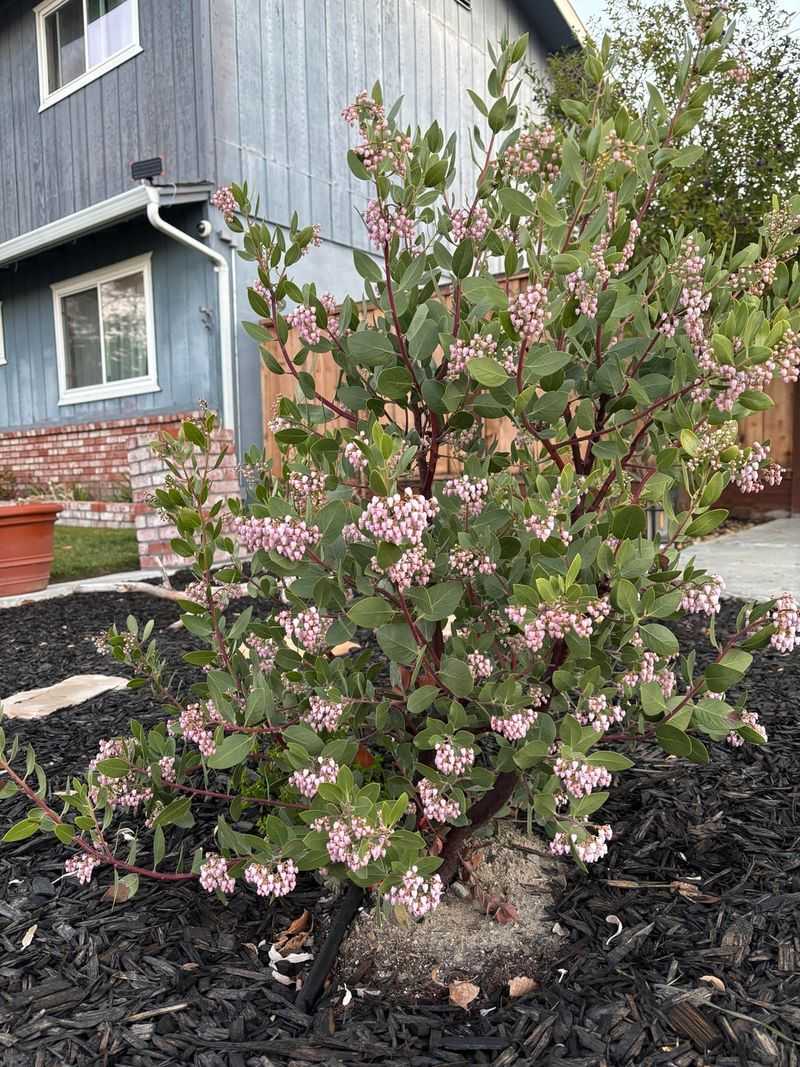
Run your hand along a manzanita’s smooth, mahogany-colored bark, and you start to understand why California gardeners keep coming back to this plant.
It looks polished all year, with small leathery leaves and tiny urn-shaped flowers that open in winter when almost nothing else bothers to bloom. Bees show up for those flowers like clockwork.
Fun fact worth knowing. Manzanita means little apple in Spanish, a nod to its miniature fruit dotting the branches. Foundation beds suit the compact selections best here.
Cultivars such as Emerald Carpet and Howard McMinn stay low enough to sit near a wall without ever blocking a window.
UC ANR lists Arctostaphylos among the dependable low-water shrubs for home landscapes across much of the state.
Drainage matters far more than fertilizer with this plant, so set the root ball slightly high in the hole rather than burying it deep. Soggy soil against the crown invites rot fast.
Keep mulch pulled back a few inches from the stem itself. Watering honesty helps here too. During the first one or two growing seasons, plan on a deep soak every week or two so roots reach down into native soil rather than lingering near the surface.
After that, most manzanitas cruise through summer on an occasional deep watering, sometimes just once a month.
Skip summer overhead sprinklers, which can encourage fungal trouble on dry-adapted natives that never asked for that much moisture.
Prune lightly and only to shape the plant. Heavy shearing wrecks the sculpted branch structure that makes this shrub worth staring at in the first place.
Give it sun, room to breathe, and it will outlast the boxwoods it replaced by a wide margin.
2. Ceanothus Adds Spring Color On Little Water
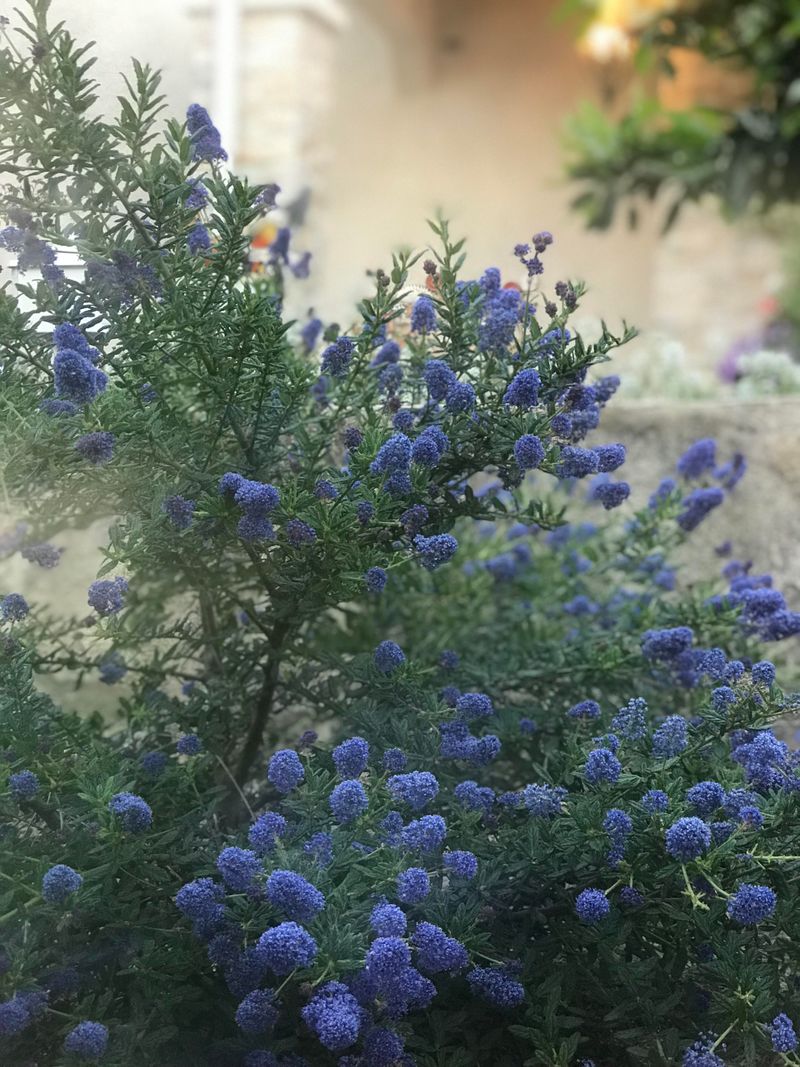
Spring in the California foothills often means one thing. Hillsides washed in blue, courtesy of ceanothus, better known as California lilac, though it shares no actual relation to true lilacs at all.
Flowers range from powder blue to deep violet, with a few white forms mixed in for variety.
Your California Garden Changes Every Week. Your Plan Should Too.
Gardening in California changes quickly throughout the season. Every Friday you’ll receive a simple weekly plan showing exactly what to plant, prune, fertilize, harvest, and protect so you never miss the right timing.
Sizes vary wildly here, which is good news for foundation planting.
Ground-hugging types like Yankee Point spread wide and stay under three feet, while Ray Hartman climbs into small-tree territory and belongs well away from the house. Read the tag before you buy, every single time.
Pollinators treat the blooms like an open buffet, and native bees show up in numbers loud enough to hear from the porch.
The California Native Plant Society groups ceanothus with the state’s top low-water shrubs, and UC ANR recommends it for unirrigated or lightly irrigated beds.
One caution worth remembering. Ceanothus resents summer water once settled in, and overwatering an established plant is the fastest way to destroy it outright.
The first season or two runs differently, though, and young plants need regular deep soakings while roots spread out into the surrounding soil.
Plant on a slope or a raised bed if your soil tends to hold water. Pinch tips on young shrubs to build fullness, but leave the pruning saw in the shed where it belongs.
Many ceanothus live eight to fifteen years, shorter than a hedge yew but considerably more interesting while it lasts.
Cut flowers hold their scent indoors too, a small bonus most foundation shrubs never bother offering. Deer tend to browse young growth, so a temporary cage helps in rural yards until the plant toughens up.
3. Toyon Offers Year Round Structure
Hollywood may actually owe its name to this shrub.
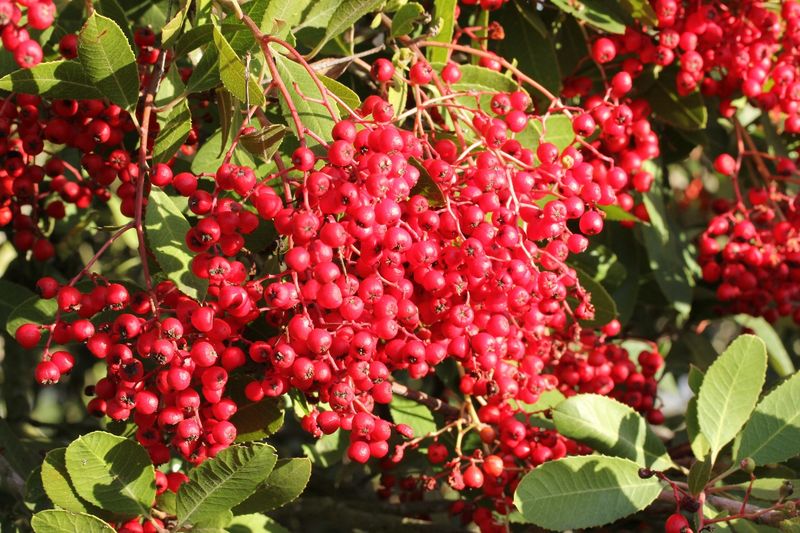
Toyon, also called Christmas berry, covers itself in bright red fruit from late fall into winter, and early Californians used the branches as holiday decoration long before anyone thought to name a neighborhood after it.
Robins, mockingbirds, and cedar waxwings strip the berries clean within weeks.
Structure is the real selling point for foundation beds here. Toyon holds glossy, toothed evergreen leaves all year, so the front of a house never looks bare in the winter.
Left alone it can reach fifteen feet or more, though regular light pruning keeps it in a manageable six to eight foot range.
Creamy white flower clusters open in early summer and feed a long list of insects passing through.
UC ANR describes Heteromeles arbutifolia as tough, adaptable, and comfortable in sun or partial shade, which makes it especially useful on the shadier north side of a house.
Watering follows the same native rhythm as the others on this list. Plan to irrigate deeply every week or two through the first summer or two after planting.
Once roots are down, a monthly soak in the hottest stretch is usually plenty, and mature plants in coastal areas often need none at all.
Skip the shears that turn shrubs into sad green meatballs. Thin a few branches instead, and the plant keeps its open, layered look while still screening the utility meter nicely. Birds will thank you every December in their own way.
One warning worth repeating clearly. The berries are fine for birds but not a snack for people or pets. Toyon also handles clay better than many natives, a genuine relief in valley yards where drainage tends to be stubborn.
4. Western Redbud Brings Early Spring Bloom
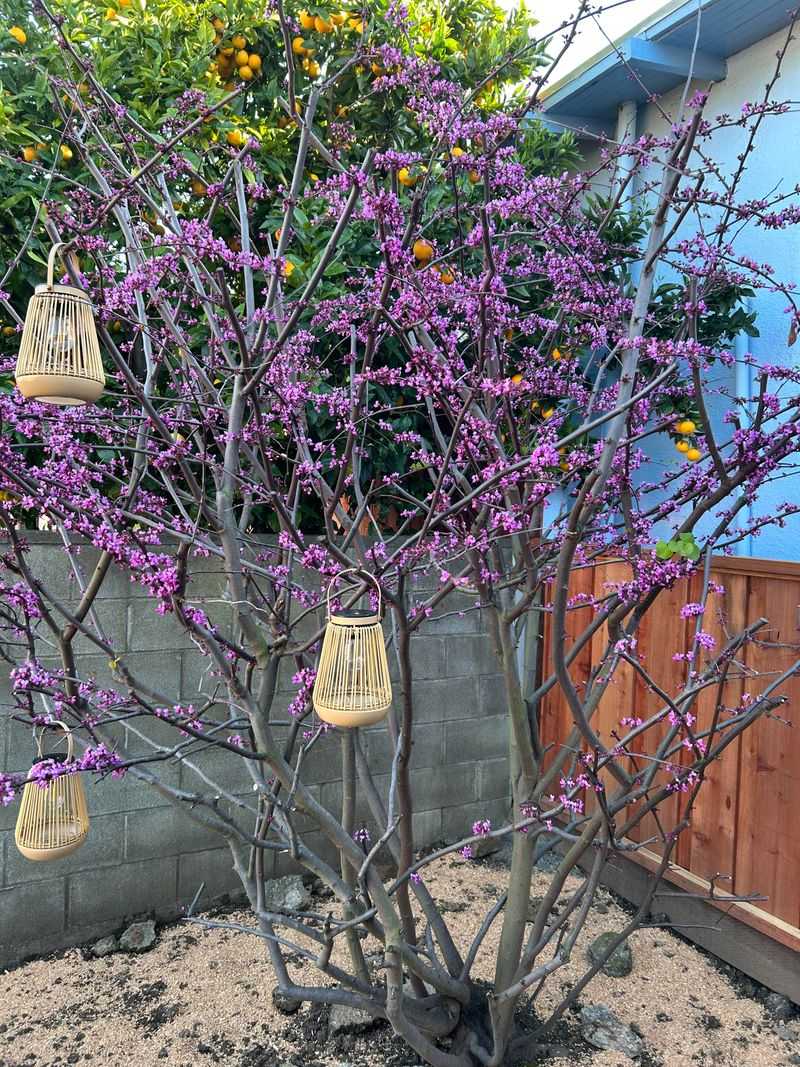
Before the leaves even show up, western redbud lights up with magenta flowers pressed right against bare branches.
The display lands in February or March depending on where you live, and it genuinely stops traffic when it happens. Blue-green heart-shaped leaves follow soon after, then seed pods that turn wine red by fall.
Think of Cercis occidentalis as a large shrub or a small multi-trunk tree, usually ten to fifteen feet tall at maturity.
That size makes it a corner anchor rather than a window-hugger, so plant it eight to ten feet out from the wall to give branches room to spread.
Fall color is a bonus nobody mentions enough, with leaves turning yellow or red before dropping in autumn. Redbud is deciduous, so if you want green all winter, pair it with toyon or manzanita nearby to fill the gap.
Bees and butterflies work the flowers hard in early spring.
UC ANR notes that western redbud grows across much of California and takes summer drought well once its roots are established.
Established is the key word doing all the work in that sentence. New plants want steady deep watering through their first year or two, especially in inland heat.
Plants in colder inland areas tend to bloom more heavily, since a winter chill helps set flowers ahead of spring. Prune in late winter if you want a cleaner trunk line. Otherwise let it grow into the loose vase shape it naturally prefers.
Coastal gardeners sometimes see fewer flowers, so set expectations by region before planting. Either way, the seed pods hang on and give the shrub something to show off come fall.
5. Deer Grass Softens Foundation Lines
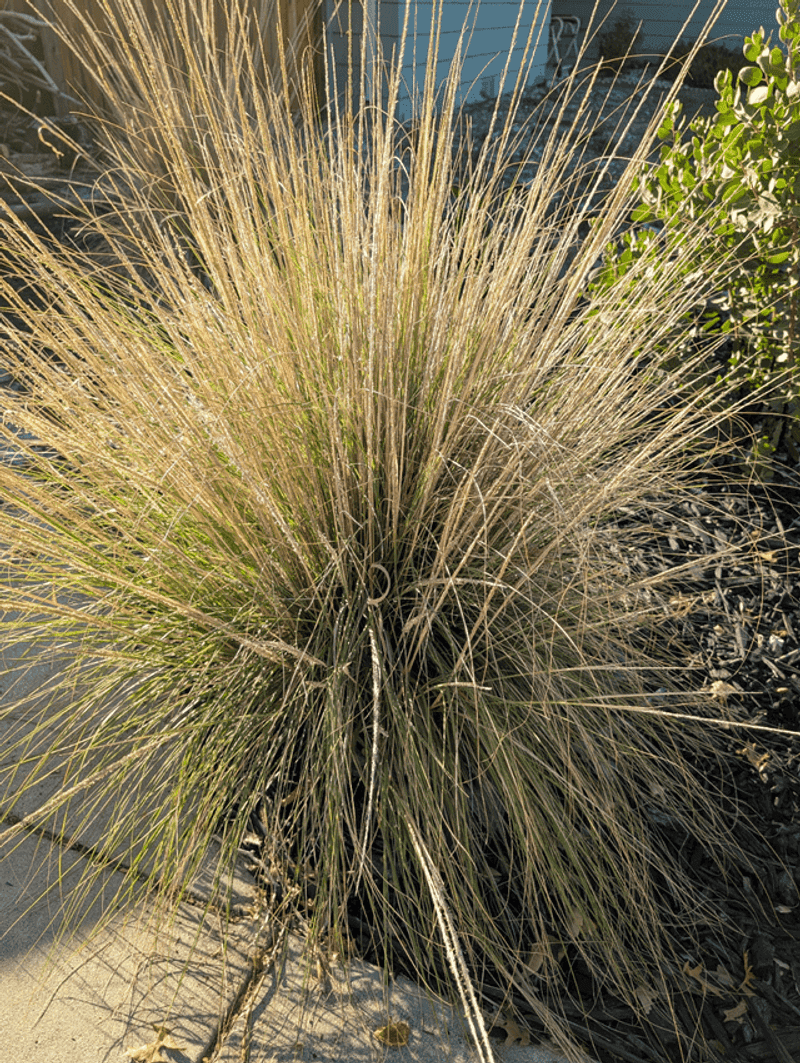
Not every foundation plant needs to be woody, and deer grass makes a strong case for that idea.
Muhlenbergia rigens forms a rounded clump about three to four feet across with slender flower spikes shooting up above it. Wind moves through it in a way a clipped hedge will never manage.
Softening hard lines is what this grass does best. Set three or five plants in a loose drift along the base of a wall, and the boxy edge of the house seems to disappear entirely. Odd numbers look more natural than tidy rows every time.
Native people across California used deer grass stalks as the foundation material in coiled baskets, a use that goes back many generations.
Basket weavers still tend patches today for that exact reason. UC ANR lists it as a low-water, low-maintenance choice for home landscapes.
Care comes down to essentially one yearly chore. Cut the clump back to about six inches every two or three years in late winter, before new growth pushes up. That single trim keeps it tidy and green instead of shaggy and brown in the middle.
Water weekly through the first season so the clump bulks up properly. After that, deer grass gets by on rainfall in most of the state, with a deep drink now and then during long heat waves. Full sun keeps the form dense and upright.
It also plays well with the other four plants on this list, filling gaps between shrubs without competing for space or attention. Skip it directly under a roofline that dumps water, since constant drips flatten the clump fast.
6. Coffeeberry Handles Sun Or Shade Without Complaint
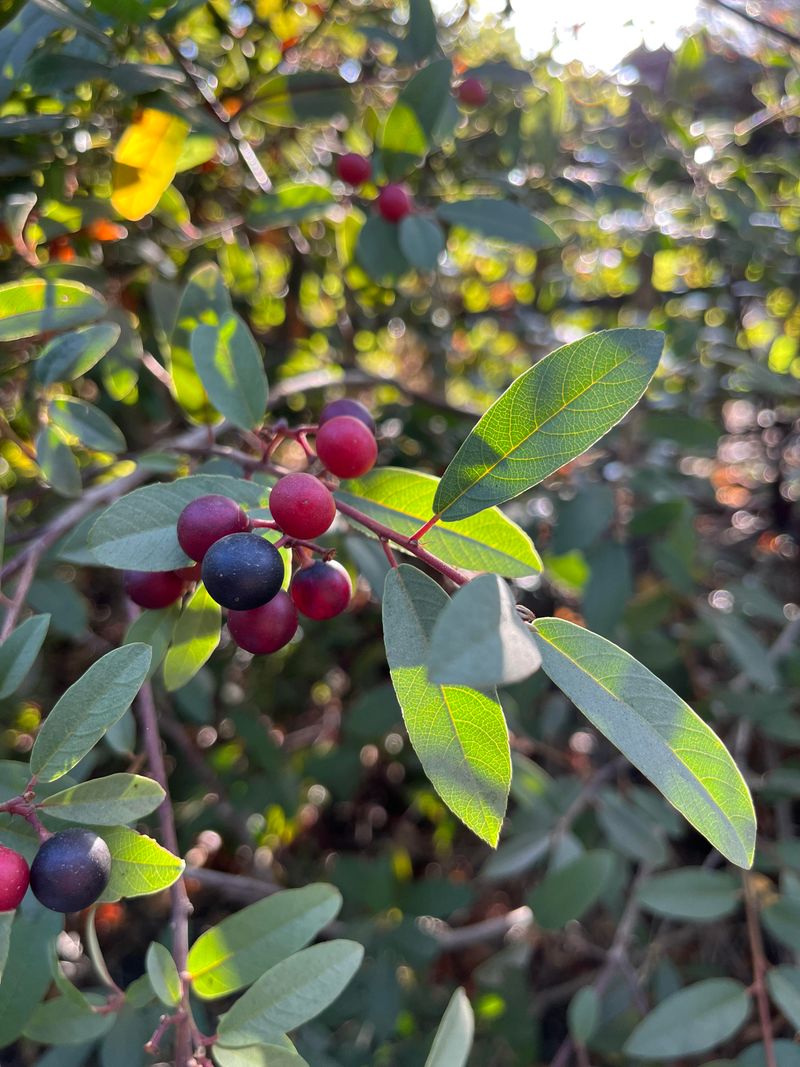
Few native shrubs work as hard in as many spots as coffeeberry. Frangula californica, sometimes still sold under its old name Rhamnus californica, holds glossy, deep green leaves year round and asks almost nothing in return for the effort.
Foundation beds often mix sun and shade throughout the day as the house casts shifting shadows, and coffeeberry shrugs that off without missing a beat.
It performs in full sun along a south wall just as comfortably as it performs tucked into shade on the north side.
Small greenish flowers open in late spring, easy to miss but steady with nectar, and they feed native bees and other small pollinators for weeks.
Berries follow through summer, shifting from green to red to a deep coffee-bean black by fall, which is exactly where the plant gets its name.
Birds including mockingbirds, robins, and towhees work through those berries steadily, making this one of the more reliable wildlife shrubs on a foundation planting list.
UC ANR lists coffeeberry among the adaptable, low-water natives suited to home landscapes across much of the state.
Compact cultivars such as Mound San Bruno and Eve Case stay in the four to six foot range, dense enough to screen a foundation without ever needing much of a haircut.
Water deeply every week or two through the first year or two while roots establish themselves in the new spot.
After that, an occasional deep soak during the driest stretches is usually plenty, and established plants in milder coastal areas often coast through summer on rainfall alone.
7. California Fuchsia Brings Color When Everything Else Fades
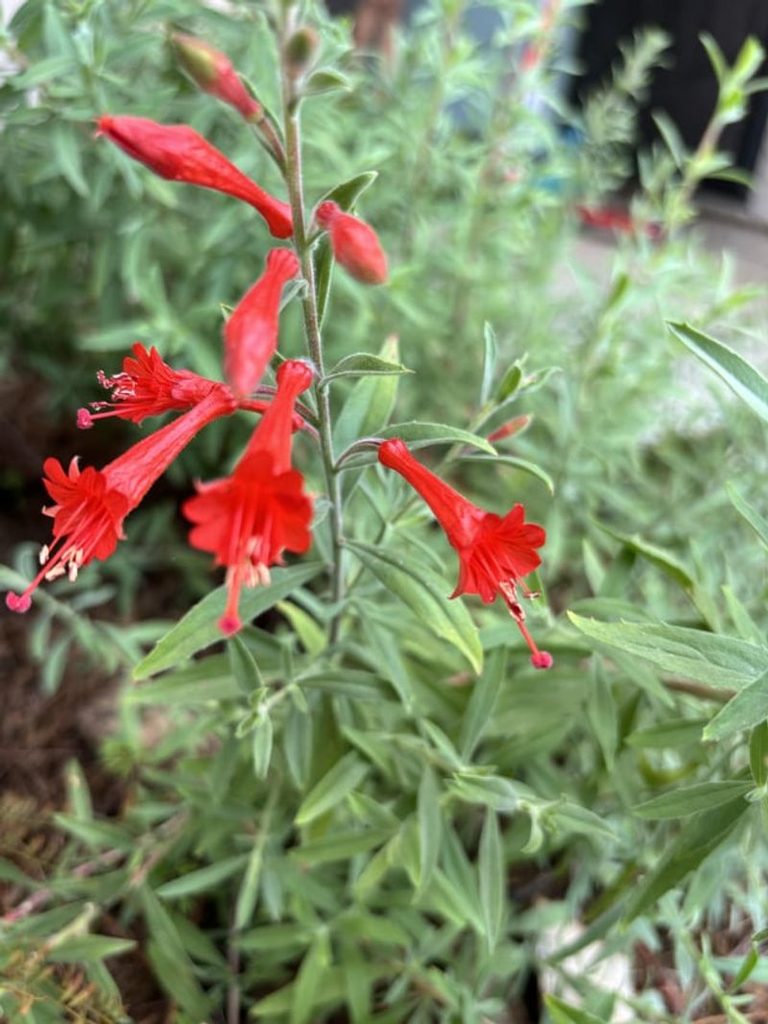
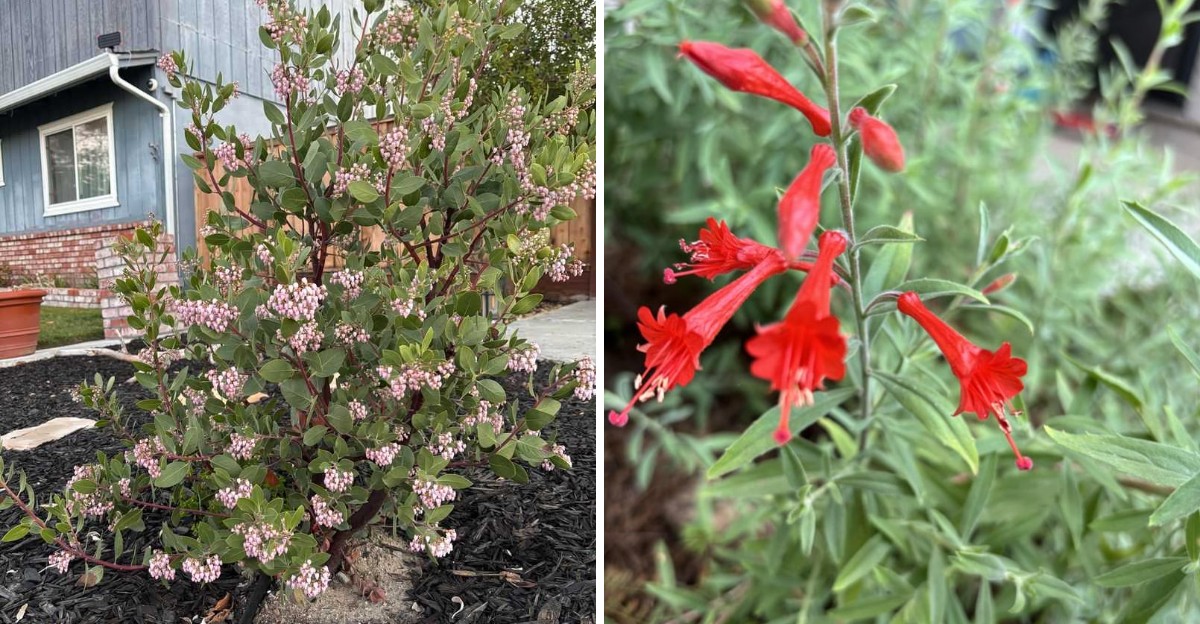
Most native shrubs finish their color show by early summer, leaving foundation beds a little flat right when California heat peaks. California fuchsia breaks that pattern completely, saving its best display for August and September instead.
Epilobium canum sends up bright tubular flowers in vivid orange-red, sometimes closer to true scarlet, right through the hottest, driest stretch of the year.
Hummingbirds treat it like a lifeline during that window, and migrating birds passing through in fall rely on it more than most gardeners realize.
This plant runs lower and looser than the shrubs on this list, generally staying under two feet tall while spreading gradually by underground runners.
That habit makes it useful for filling gaps at the front of a foundation bed, softening the transition between taller shrubs and a walkway or lawn edge.
UC ANR includes California fuchsia among the state’s reliable low-water perennials, noting its tolerance for poor soil and minimal care once established.
Good drainage matters more than soil richness here, so a foundation bed with decent drainage suits it well.
Water regularly through the first growing season to help the spreading roots settle in, then taper off considerably.
Established clumps often need only an occasional deep watering through summer, sometimes none at all in cooler coastal gardens.
Cut the plant back hard in late winter, close to the ground, and fresh growth returns quickly each spring ready for another late-summer show.
Pair it with manzanita or deer grass nearby, and the foundation bed keeps something blooming across nearly the whole year.