The Native Michigan Plant That Attracts Every Predatory Insect In Your Zip Code (In A Good Way)
Biological pest control is most effective when the predatory insects doing the work are already present in the garden before pest populations have a chance to build.
The challenge is that most garden plants do nothing meaningful to attract or retain those beneficial insects, leaving them to show up randomly rather than consistently.
One native Michigan plant changes that dynamic in a way that is genuinely remarkable, drawing an unusually diverse range of predatory and parasitic insects throughout the entire growing season.
It works because of a specific combination of flower structure, bloom timing, and plant chemistry that beneficial insects respond to strongly.
Gardeners who have added it to their yards describe a noticeable shift in how pest pressure behaves across the entire garden, not just in the immediate area where the plant is growing.
1. The Plant Is Virginia Mountain Mint
Not every garden superstar looks flashy, and Virginia mountain mint is a perfect example of that.
Known by its scientific name Pycnanthemum virginianum, this native Michigan plant goes by several common names including common mountain mint.
It does not literally pull every single predatory insect from your zip code into your backyard, but it absolutely ranks among the top native plants for drawing a wide, impressive mix of beneficial insects to one spot.
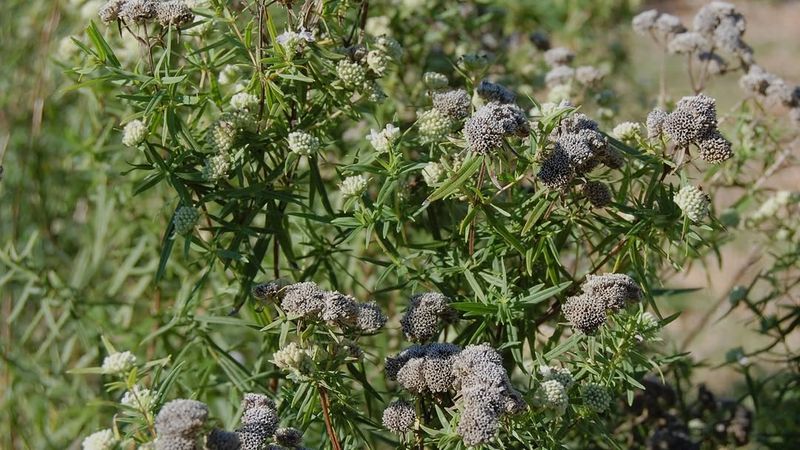
Walk past a blooming patch and you will notice the activity immediately. The plant has square stems, a classic sign it belongs to the mint family, and its leaves carry a clean, sharp minty scent that is noticeable even without touching them.
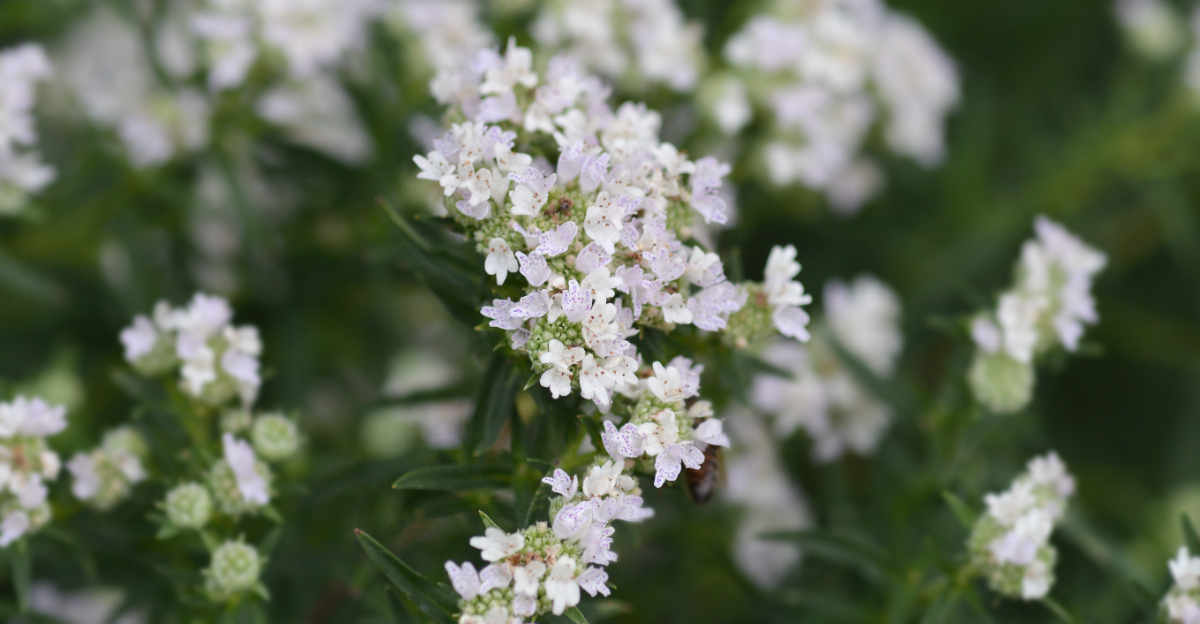
The small white flowers cluster tightly together at the tops of the stems, creating a landing pad that buzzes with visiting insects on warm summer days.
Virginia mountain mint fits naturally into sunny Michigan native plantings, rain gardens, pollinator strips, and garden borders.
It thrives in full sun and tolerates a range of soil types, including the heavier clay soils common across much of Michigan.
Gardeners who add it to their landscape often say it quickly becomes one of the most visited plants in the yard, which makes complete sense once you understand what it offers to the insect world.
Starting with just a small clump can make a noticeable difference in how many beneficial insects your garden supports through the summer months.
2. Its Small Flowers Are Built For Tiny Beneficial Insects
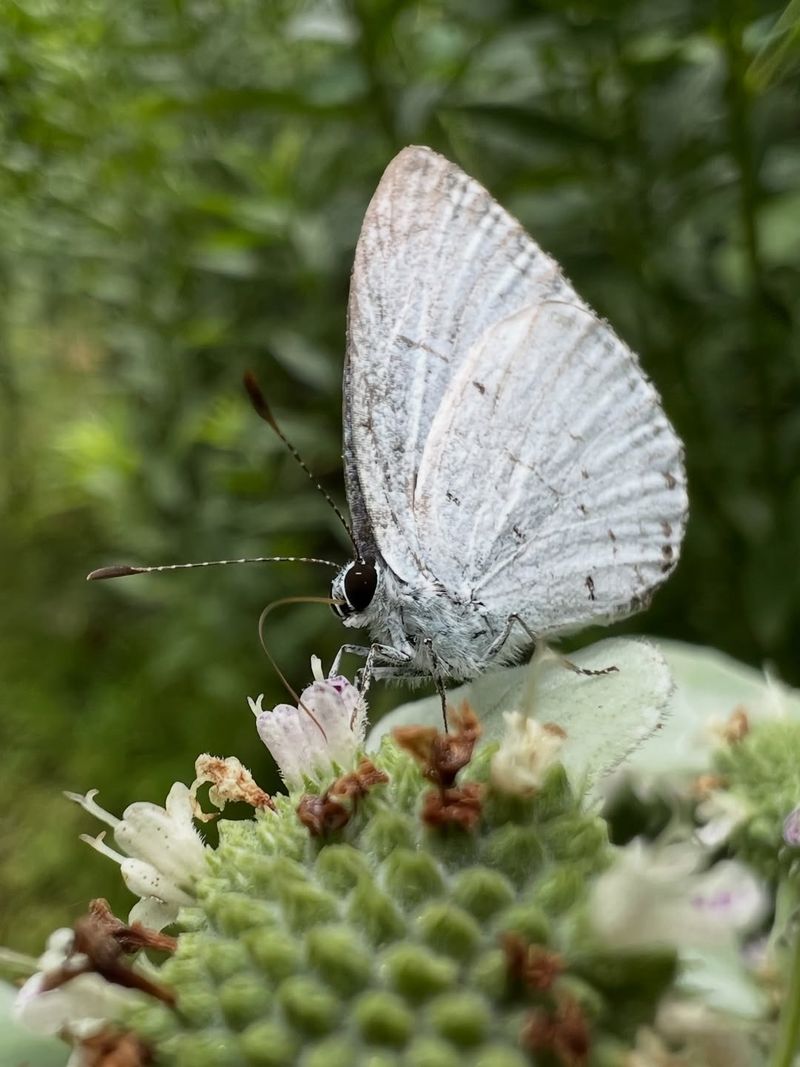
Size matters a lot in the insect world, and Virginia mountain mint seems to know that.
The plant produces clusters of tiny, wide-open flowers that make nectar and pollen easy to reach for small insects.
Unlike deep tubular flowers that favor only long-tongued pollinators, mountain mint flowers are built for accessibility.
Small wasps, hoverflies, soldier beetles, and a whole range of flower-visiting beneficial insects can feed from them without any trouble at all.
Many gardeners focus on big showy blooms and miss a key point: a large portion of garden-friendly insects are small.
Parasitoid wasps, for example, are often no bigger than a sesame seed. Without open, shallow flowers, those tiny insects simply cannot access the nectar they need as adults.
Your Michigan Garden Changes Every Week. Your Plan Should Too.
Gardening in Michigan changes quickly throughout the season. Every Friday you’ll receive a simple weekly plan showing exactly what to plant, prune, fertilize, harvest, and protect so you never miss the right timing.
Virginia mountain mint solves that problem naturally because its flower structure suits insects across a wide range of body sizes.
Here is something worth knowing that surprises many gardeners. Even insects whose young stages reduce pest pressure in your garden still need nectar and pollen as adults to survive and reproduce.
Adult hoverflies, for instance, need flower resources to fuel egg production, even though their larvae are the ones that actually feed on aphids.
By providing a reliable nectar source, mountain mint keeps those beneficial adults present and active near your garden through the whole summer season.
That connection between adult feeding and larval pest reduction is exactly why planting the right flowers matters as much as any other garden strategy.
3. It Can Support Parasitoid Wasps Around Vegetable Beds
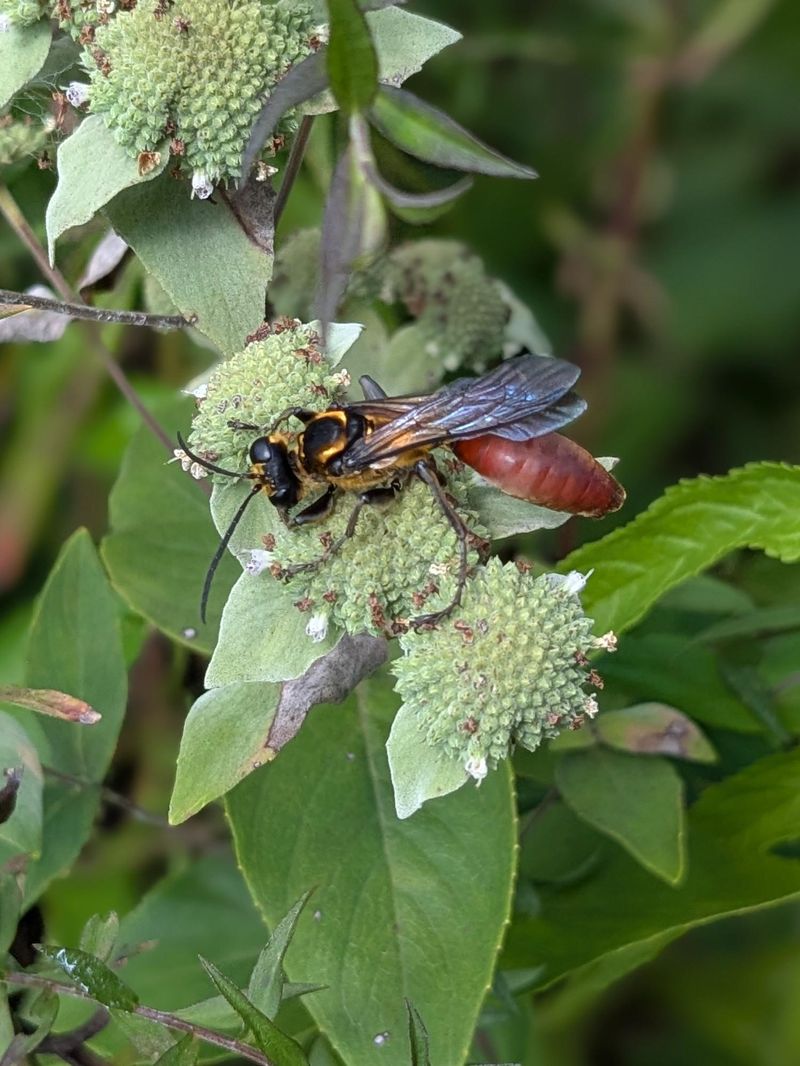
Parasitoid wasps sound intimidating, but they are some of the most valuable insects a vegetable gardener can have nearby.
Names like braconid wasps, ichneumonid wasps, and chalcid wasps come up often in conversations about natural pest management, and for good reason.
These wasps spend their larval stages inside or on pest insects, which means their life cycles naturally help reduce pressure from caterpillars, aphids, beetle larvae, whiteflies, and other common garden problems.
Adult parasitoid wasps have a different diet than their young. The adults need nectar from flowers to fuel their activity and reproduction.
Because most parasitoid wasps are quite small, they need flowers with open, easily accessible nectar sources.
Virginia mountain mint fits that requirement well, and gardeners who grow it near vegetable beds may notice higher numbers of these tiny wasps working the nearby plants through the summer.
It would be unrealistic to promise that every parasitoid wasp species in your area will show up just because you planted mountain mint.
Local insect populations depend on many factors, including what pests are present, what habitat surrounds your garden, and how diverse your overall planting is.
What is fair to say is that mountain mint creates a better environment for these wasps to thrive near your vegetables.
Pairing it with other native flowering plants that bloom at different times can extend that support even further, giving parasitoid wasps more reasons to stay active in and around your garden from spring through fall.
4. It Attracts Flower-Visiting Predatory Wasps
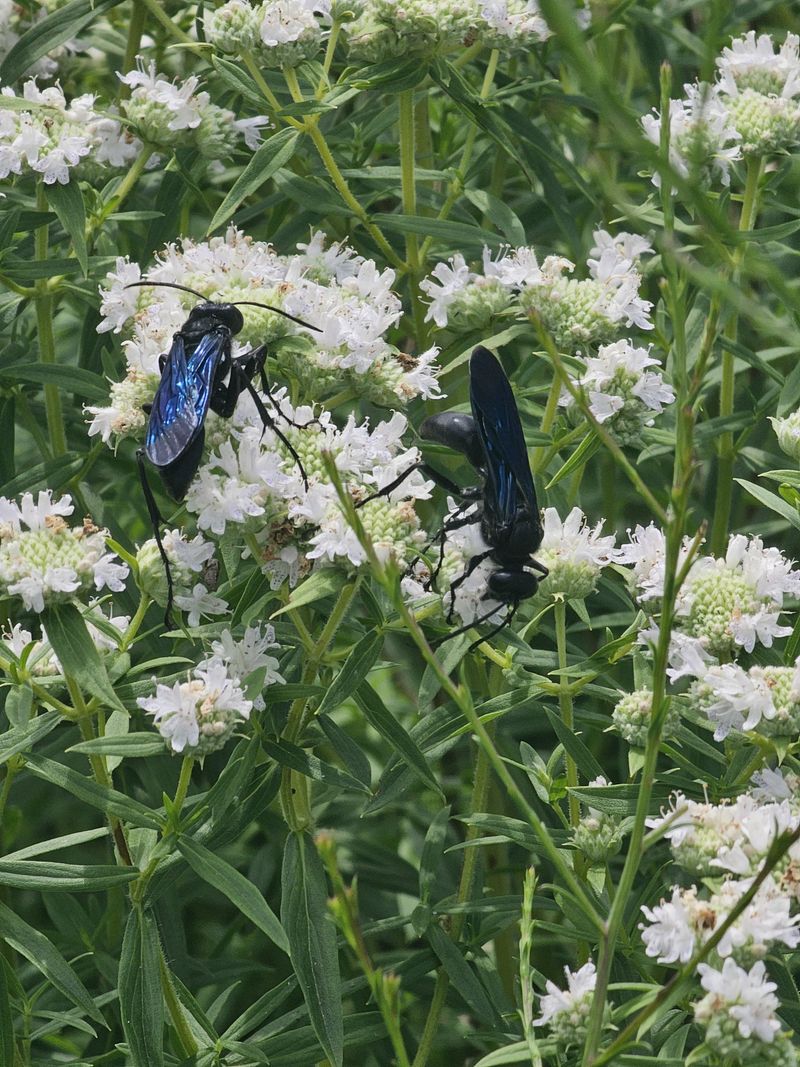
Wasps have a reputation problem, and most of it is undeserved.
When people picture wasps, they think of yellow jackets at a picnic, not the dozens of solitary species quietly working through gardens on warm afternoons.
Virginia mountain mint draws in flower-visiting wasps of several kinds, including thread-waisted wasps and scoliid wasps, two groups that are genuinely useful in a balanced garden setting.
Thread-waisted wasps, recognizable by their narrow waist and slender build, are solitary hunters.
Adults visit flowers for nectar while spending much of their energy hunting prey such as caterpillars and grasshoppers to provision their nests.
Scoliid wasps, which are larger and often have colorful banding, are known for parasitizing the grubs of scarab beetles, including Japanese beetle grubs that damage lawns and garden roots.
Seeing either of these wasps on your mountain mint is genuinely good news for the garden around it.
Most flower-visiting wasps are completely focused on feeding when they land on blooms. They are not interested in people or pets, and they rarely sting unless directly handled or trapped.
A calm, relaxed attitude around them goes a long way. Gardeners who understand what these wasps actually do often find themselves genuinely happy to see them feeding on the mountain mint.
The plant acts like a refueling station, and the wasps carry that energy back into the surrounding landscape where they continue doing work that benefits the whole garden.
It is a quiet, effective partnership that costs nothing beyond planting the right flower.
5. It Brings Hoverflies That Help With Aphids
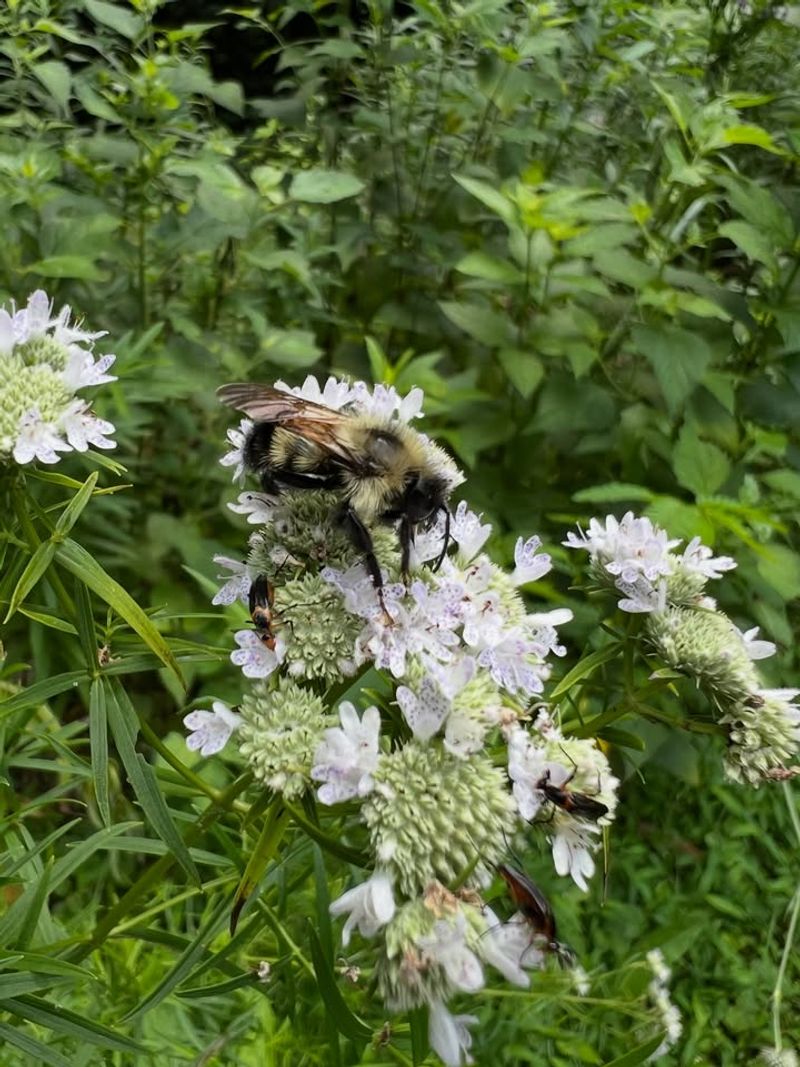
Hoverflies are one of the garden world’s best-kept secrets, and Virginia mountain mint is one of the fastest ways to bring them in.
Also called syrphid flies, these insects are masters of disguise. Many species mimic the yellow and black banding of bees or wasps, which fools predators into leaving them alone.
Up close, though, they are completely harmless flies with big eyes and the remarkable ability to hover perfectly still in midair before zipping to the next flower.
Adult hoverflies visit flowers for nectar and pollen, and mountain mint is genuinely attractive to them because of its open, accessible blooms.
What makes hoverflies especially valuable is what happens after those adults lay their eggs near aphid colonies.
The larvae that hatch are voracious feeders on soft-bodied pests, particularly aphids.
A single hoverfly larva can consume hundreds of aphids during its development, making the adult’s flower visit a long-term investment in your garden’s health.
Planting Virginia mountain mint near roses, vegetable beds, fruit plants, or native borders puts hoverfly adults right where their egg-laying activity will have the most impact.
Aphid pressure on tomatoes, peppers, beans, and roses can be significant in Michigan summers, and having a steady population of hoverflies nearby changes the balance noticeably.
The best part is that attracting them requires no sprays, no traps, and no special equipment.
Just grow the plant in a sunny spot, let it bloom freely, and the hoverflies will find it on their own terms and schedule.
6. It Helps Support Lady Beetles, Minute Pirate Bugs, And Other Small Predators
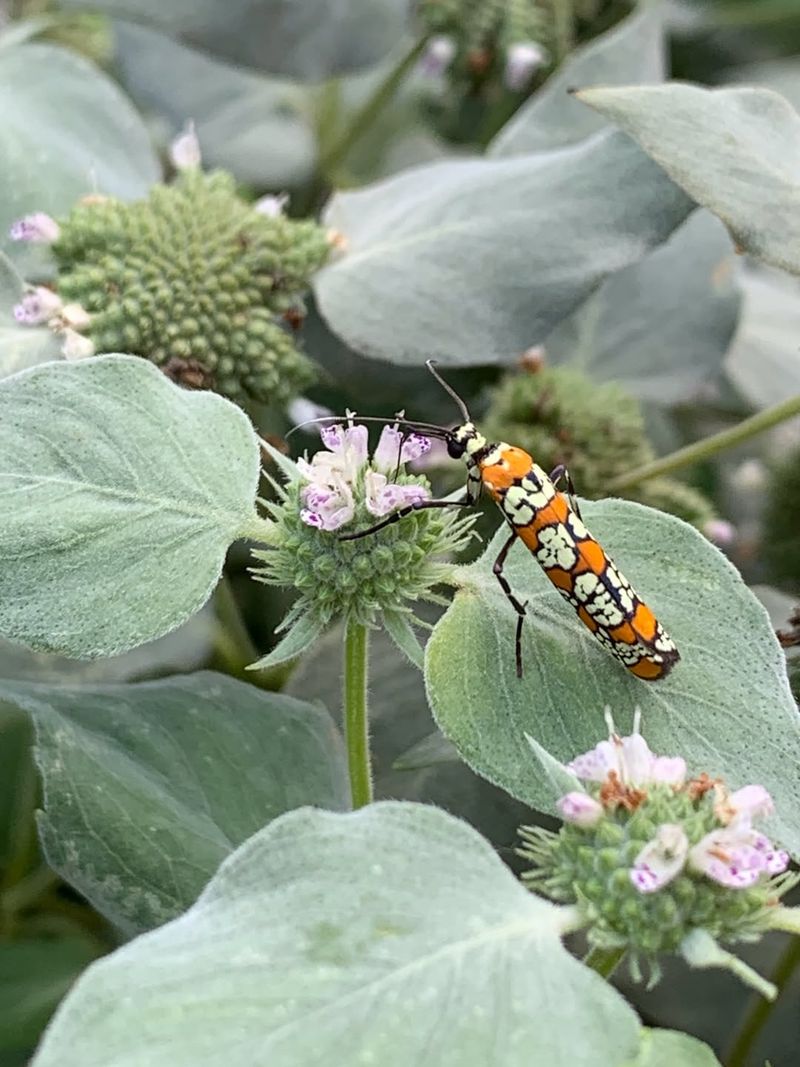
Beyond wasps and hoverflies, Virginia mountain mint plays a supporting role for a whole cast of small predatory insects that most gardeners never think about by name.
Lady beetles are probably the most familiar faces in this group, known for feeding on aphids at both the adult and larval stages.
Less familiar but equally useful are minute pirate bugs, tiny fast-moving insects that feed on aphids, mites, thrips, small caterpillars, and insect eggs with impressive efficiency for their size.
Lacewings are another group worth mentioning. Adult lacewings often feed on nectar and pollen, while their larvae, sometimes called aphid lions, feed aggressively on a wide range of soft-bodied pest insects.
Nectar-rich native plantings like Virginia mountain mint can help support adult lacewings and keep them active in the area longer.
The same logic applies to several other small predatory insects that need flower resources as adults even when their young are the primary pest feeders. Connecting this back to Michigan food gardens makes the picture even clearer.
Vegetable beds face pressure from aphids, mites, and thrips through the whole growing season, and small predatory insects are one of the most consistent natural checks on those populations.
Growing flowering native plants right along garden edges, rather than in a separate pollinator bed far away, puts these insects exactly where they are most useful.
Virginia mountain mint works especially well for this because it stays compact enough to fit along borders without crowding out the vegetables it is meant to protect.
7. Its Bloom Window Matches Michigan Summer Pest Pressure
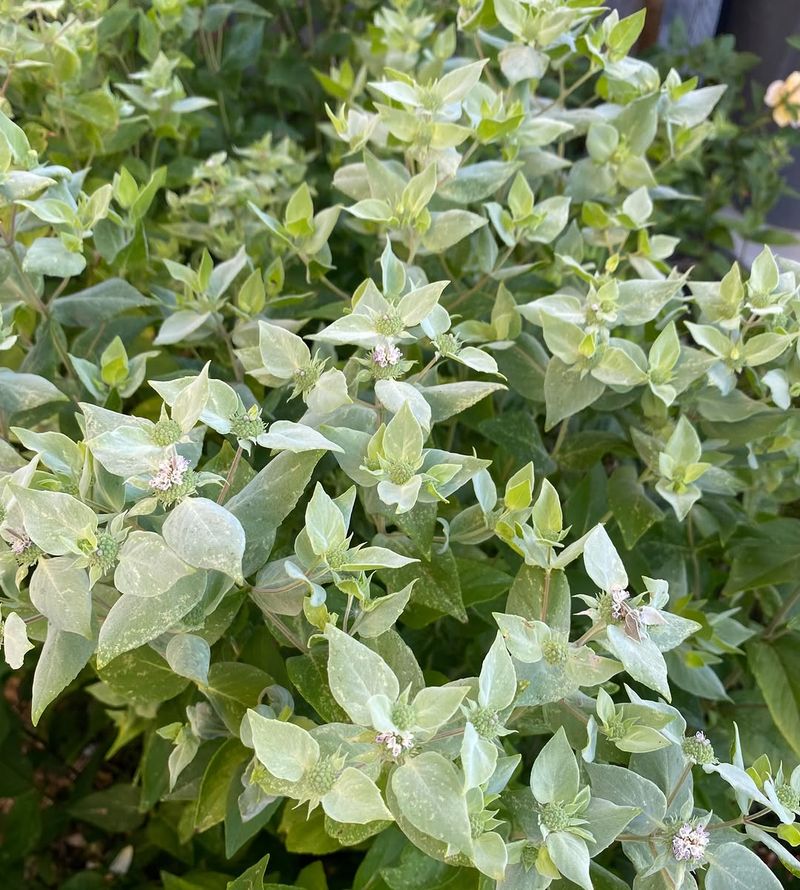
Timing is everything in a Michigan garden, and Virginia mountain mint has it figured out.
The plant blooms from July into early September, which lines up almost perfectly with the peak of summer pest pressure across Michigan’s vegetable gardens, flower beds, and fruit plantings.
That overlap is not a coincidence from a garden planning standpoint. It is exactly the kind of timing that makes a plant worth including in any serious native planting.
July through September is when many Michigan gardeners notice the most active aphid colonies, caterpillar feeding, and beetle pressure on their crops.
It is also when beneficial insect populations need the most fuel to keep up with their own reproduction and activity.
A plant that blooms reliably through those same weeks gives beneficial insects a consistent food source right when demand is at its highest, which helps keep them present and active near your garden rather than wandering off in search of better resources.
Pairing Virginia mountain mint with native plants that bloom earlier, like wild geranium or golden Alexanders in spring, and later, like asters and goldenrod in fall, creates a continuous bloom sequence.
This supports beneficial insects from the moment they emerge in spring through the last warm days of October. Mountain mint holds the critical middle stretch of that sequence together.
Michigan gardeners who build this kind of layered bloom calendar often notice a real shift in how balanced and resilient their gardens feel through the full season, with fewer dramatic pest outbreaks and more visible insect activity overall.
8. It Works Best In Sun With Room To Spread
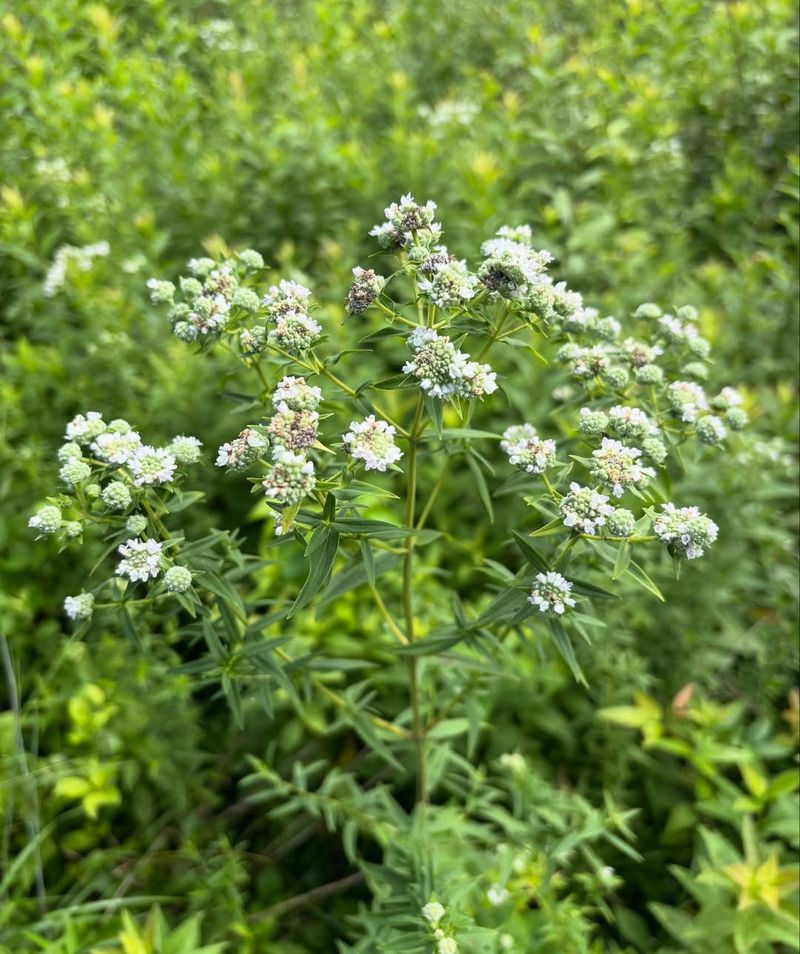
Knowing where to put Virginia mountain mint makes all the difference between a plant that thrives and one that just survives. Full sun is where this plant truly performs.
It will tolerate light shade, but bloom production drops noticeably when sunlight is reduced, and fewer blooms means fewer visiting insects.
For Michigan gardeners looking to maximize the beneficial insect activity around their gardens, a sunny location is the clear first choice.
Virginia mountain mint spreads by underground rhizomes, which means it will slowly expand outward from where you first plant it. That spreading habit is actually useful in the right spot.
Along vegetable garden edges, orchard borders, sunny native beds, or pollinator strips, a spreading colony of mountain mint creates a wider foraging zone for beneficial insects, giving them more blooms to work across and more time to spend near your crops.
In tight spaces, a simple root barrier or periodic division keeps the spread manageable without much effort.
Rain garden edges and bioswale borders are also excellent placements because mountain mint handles occasional wet feet better than many sun-loving natives.
The key in any location is avoiding dense shade from large trees or buildings that block afternoon sun.
When beneficial insects visit mountain mint blooms along a garden edge, they naturally move into the adjacent vegetable rows, fruit plants, and flower beds while foraging. That movement is exactly what you want.
Planting mountain mint as a living border, rather than isolating it in a distant bed, puts its insect-attracting power right where your garden needs it most throughout the whole growing season.