The Native Michigan Vine That Covers A Trellis Without Strangling Nearby Trees
Some vines arrive with good manners. Others treat the whole yard like a race to the roof.
Michigan gardeners know how quickly a pretty vine can become a problem once stems wrap around shrubs, fences, and young trees.
Then one native vine takes a different route.
It climbs high, covers wide spaces, flashes brilliant red in fall, and still skips the tight spiral that makes some vigorous vines such difficult neighbors.
So what gives this one its grip?
Look closely at the stems and the secret becomes almost comical. Tiny pads do the hard work. No tug-of-war with a tree trunk required.
That does not mean you can plant it and forget every boundary. This vine has energy, reach, and absolutely no respect for an undersized trellis.
Give it the right support, though, and it can turn a plain fence into a leafy backdrop while birds get an autumn bonus.
Through the whole season, meet the Michigan native that knows how to cling without a botanical
Train Virginia Creeper Up A Trellis
Virginia creeper behaves best when you give it a destination before the first long stem starts to roam.
Set the young plant near a sturdy trellis, fence panel, or arbor. Leave a few inches between the root crown and the support so air can move around the base.
Guide the first stems toward the structure with soft cloth ties or flexible plant tape.
Keep every tie loose. Wire and tight plastic ties can bite into thicker stems later.
Then check the vine every week or two through its active season.
A fresh shoot that heads toward your lilac is easy to redirect. A mature stem that reaches ten feet into the shrub creates a much bigger Saturday project.
Virginia creeper can reach impressive heights. Federal plant records describe vines that climb to about 60 feet, so a tiny decorative tower may disappear under the plant faster than you expect.
That vigor is useful on a broad trellis.
It becomes far less fun on a support built for a dainty clematis.
Give the vine plenty of surface area from day one. You will spend less time with pruners later.
This plant does not need strict discipline. It needs directions.
Start the route early, keep the main stems on the trellis, and let Virginia creeper turn all that enthusiasm into a leafy wall instead of a neighborhood tour.
Let Tendrils Climb Without Twining
Virginia creeper has a clever grip that separates it from the vines gardeners often fear most.
The stems do not twist themselves around trunks the way many vines that twist do.
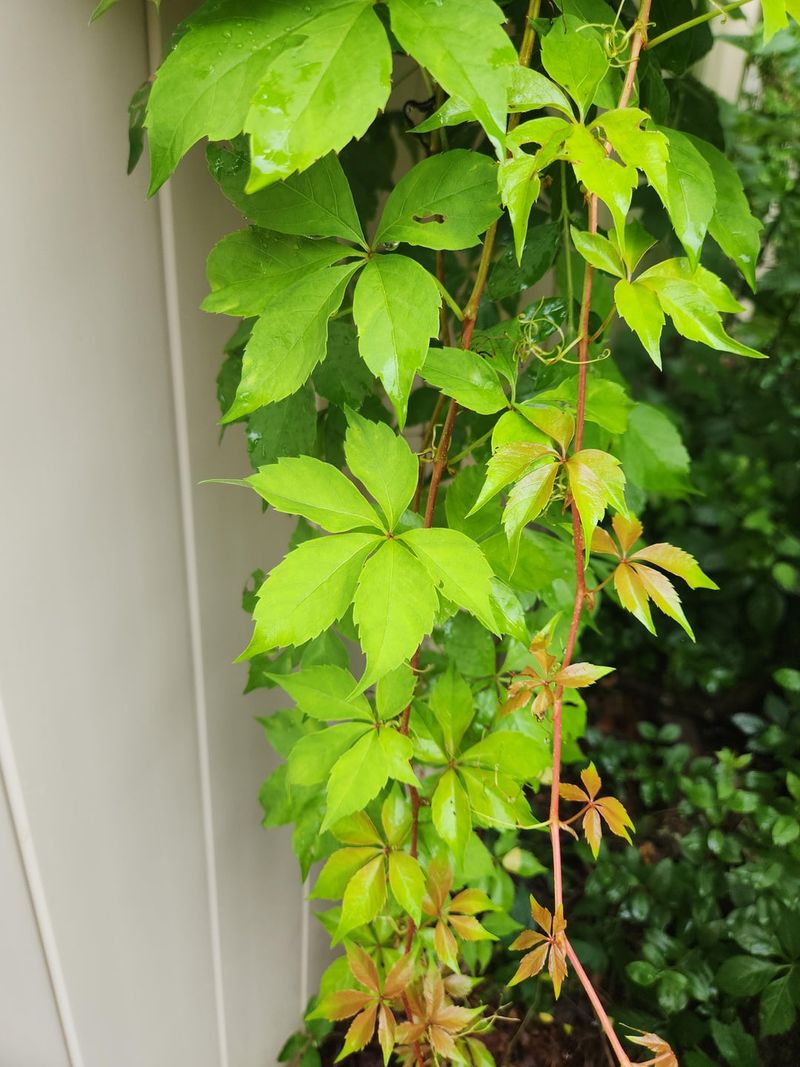
Instead, slender tendrils end in tiny adhesive discs that stick to nearby surfaces.
That difference is the whole reason this native works so well on a trellis near shrubs and trees.
You will not get the same tight coil on a young trunk that can make other vigorous vines such risky neighbors.
Still, give Virginia creeper its own support.
The adhesive pads can cling firmly to bark, wood, brick, and other surfaces. Local Michigan guidance also warns against direct attachment to painted walls because removal can damage the finish.
Your Michigan Garden Changes Every Week. Your Plan Should Too.
Gardening in Michigan changes quickly throughout the season. Every Friday you’ll receive a simple weekly plan showing exactly what to plant, prune, fertilize, harvest, and protect so you never miss the right timing.
A separate trellis solves most of that problem.
Set it a little away from house walls or painted trim. Then let the vine cover the structure instead of the house.
Nearby trees deserve the same boundary.
The vine may climb a trunk without a tight wrap around it, but dense growth can still reach the canopy and compete for light.
That makes regular redirection a smart habit.
The grip is gentle in one sense, not harmless in every situation.
Virginia creeper does not need to squeeze a tree to become an unwanted guest.
Give those adhesive pads a proper spot on your trellis, and everybody in the yard gets along much better.
Use It In Sun Or Shade
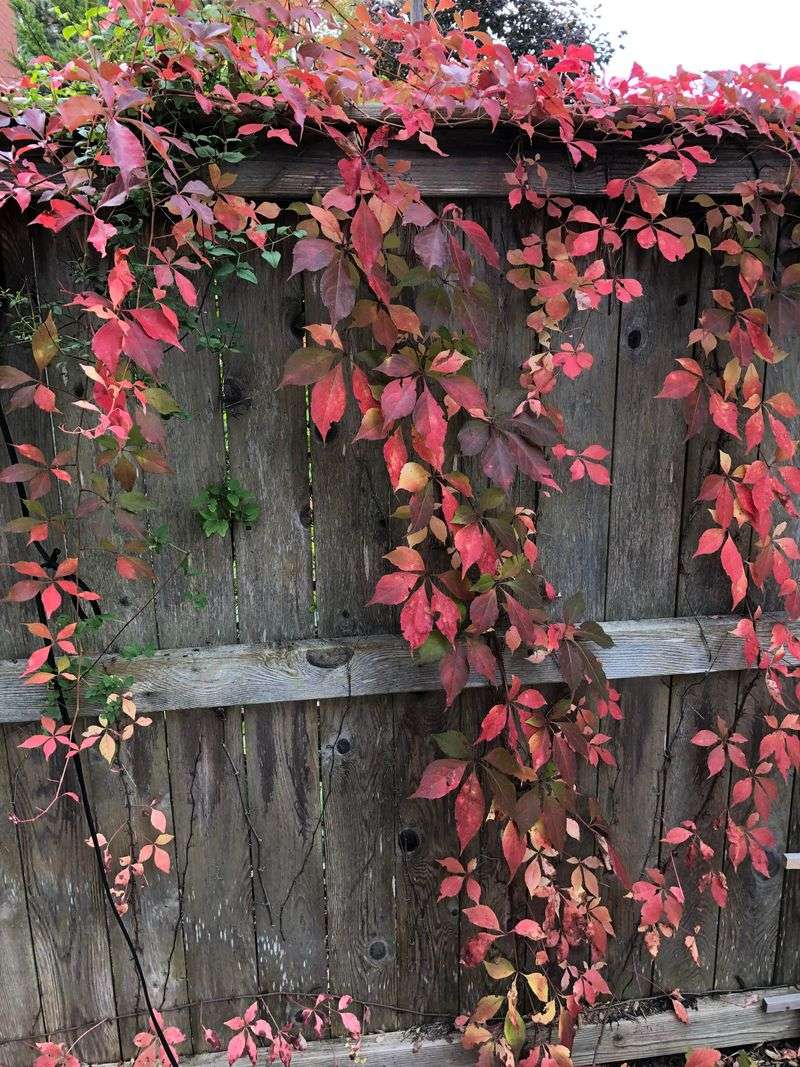
Virginia creeper is unusually relaxed about light, which makes it useful in the awkward parts of a Michigan yard.
Full sun works. Partial shade works too.
The species also tolerates deeper shade in natural settings, although it often climbs toward brighter areas when light becomes scarce.
That flexibility gives you options.
A sunny fence can develop dense foliage and strong autumn color. A trellis beside mature trees can still support healthy growth without the need for an open site with southern exposure.
Soil gets a similar amount of patience from this vine.
Virginia creeper can grow in coarse sand, clay, and many conditions between those extremes.
Local Michigan plant guidance also notes its broad tolerance for soil and light.
New plants still deserve basic care.
Water well after the plant goes into the ground. Keep the root zone evenly moist through dry spells during the first season, then let the established root system do more of the work.
A modest layer of mulch can help hold soil moisture.
Keep it away from the main stem so the crown stays clear.
You do not need to hunt for the one perfect corner.
Choose a support with enough room, avoid a chronically soggy spot, and give the vine time to settle.
Virginia creeper is not fussy about the view.
Sun or shade, it mainly wants something solid to climb and enough space to show off.
Turn Fall Foliage Brilliant Red
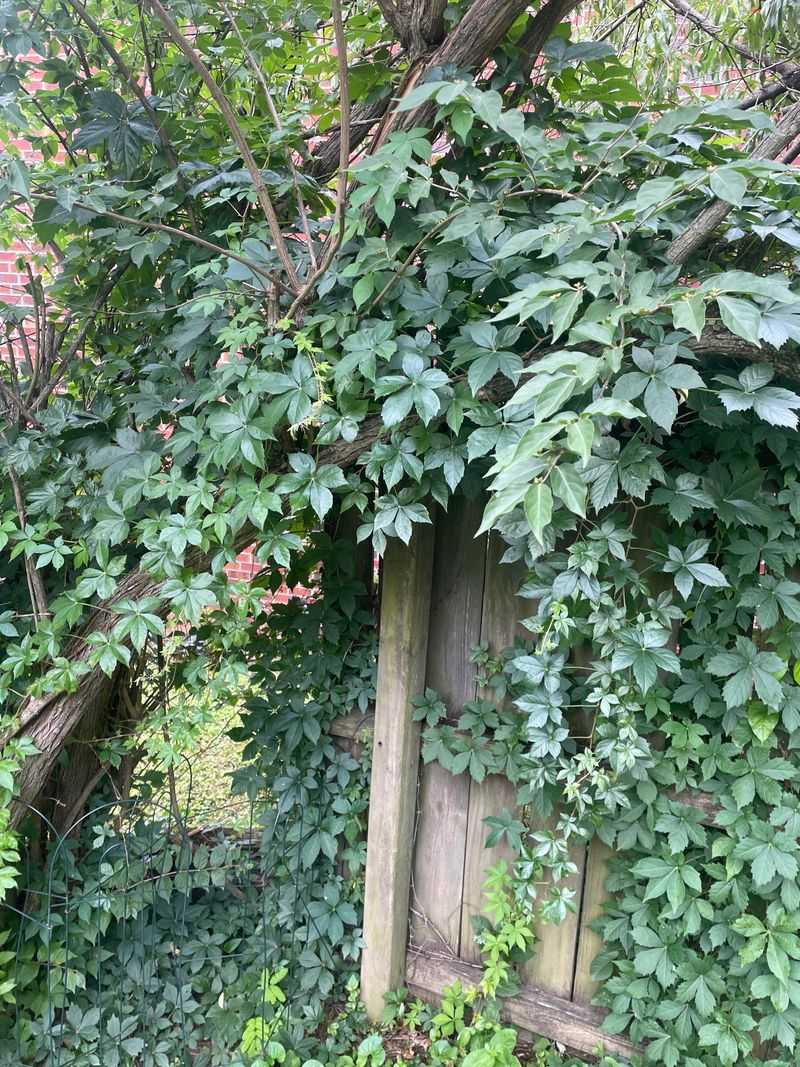
Summer green is only the first act.
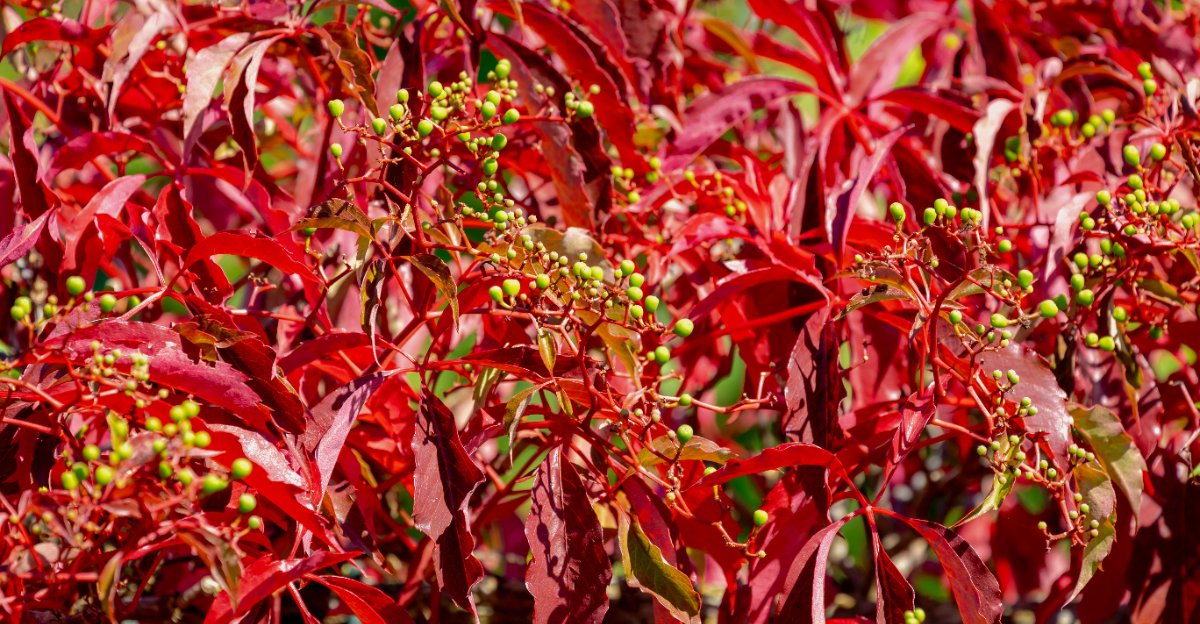
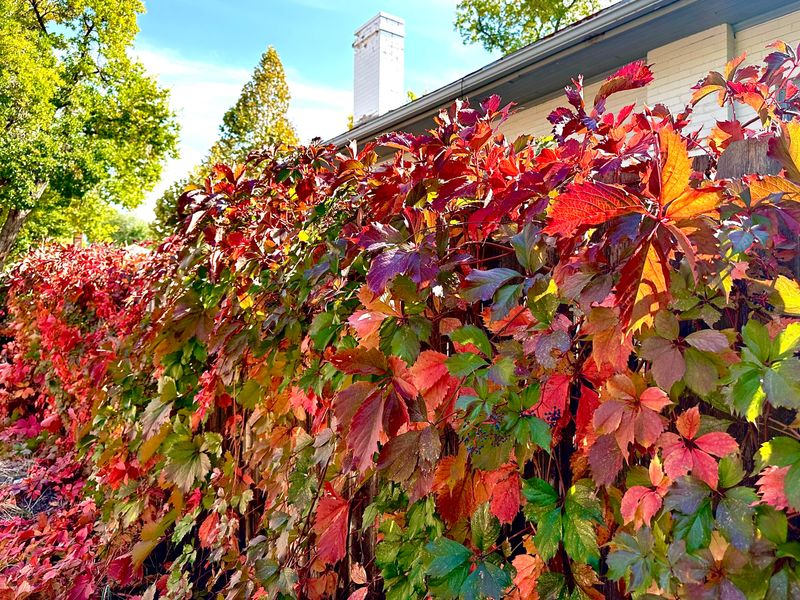
Once Michigan nights cool, Virginia creeper can shift into vivid red, crimson, and red-purple tones.
The five-leaflet foliage makes that color look layered across a trellis instead of flat. Michigan plant guidance specifically notes brilliant red to red-purple fall color on this native vine.
Sun can help the display look richer, but every year writes its own version.
Temperature, plant health, and local conditions all influence the final shade.
One autumn may give you scarlet. Another may lean burgundy or purple.
That variation is part of the fun.
A fence that spent July as a green backdrop can suddenly become the loudest feature in the yard by October.
Do not panic when leaves drop soon after the peak.
Virginia creeper is deciduous, so bare stems are part of its normal winter look.
A sturdy trellis keeps those stems orderly once the foliage disappears.
That structure also makes a late-winter trim much easier because you can see exactly where each runner went.
Your maple trees do not get to keep all the autumn applause.
Give Virginia creeper a broad frame, and it can turn an ordinary fence into a seasonal finale with almost no extra decoration.
Pumpkins may still get the porch.
The trellis has its own October costume.
Leave Dark Berries For Wildlife
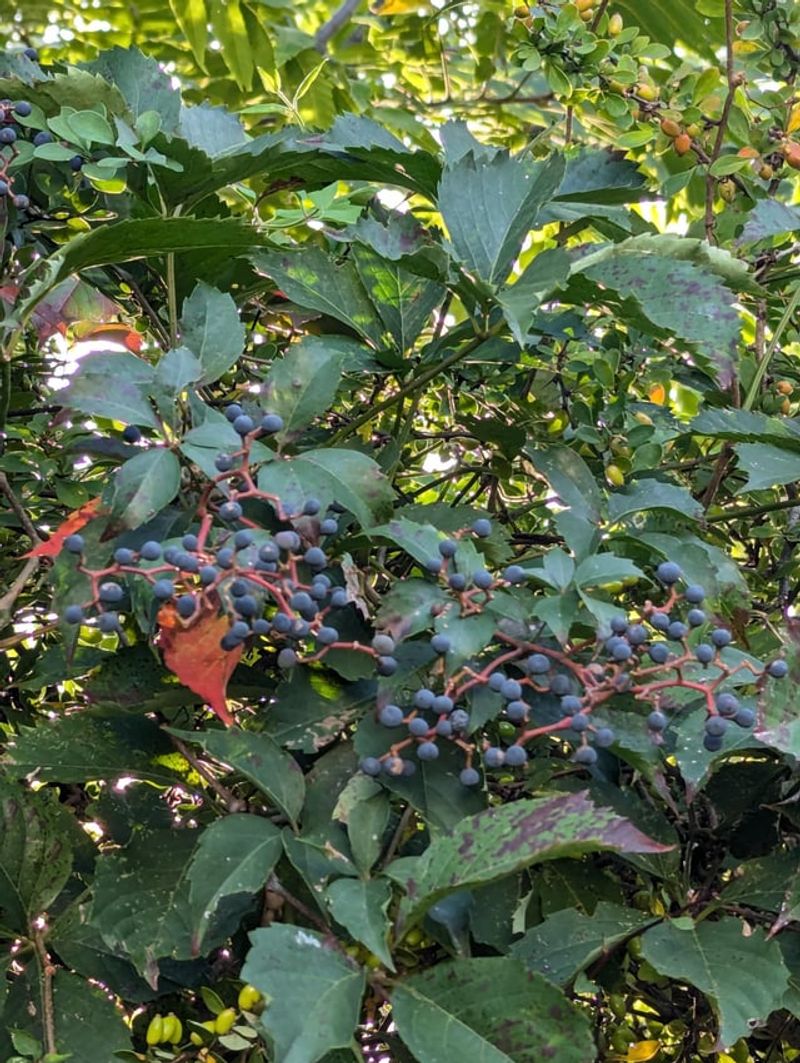
Late summer adds a second reward after the foliage has done most of the visual work.
Virginia creeper produces dark blue to purple fruit on bright red stems.
The berries attract songbirds, and federal wildlife records also note use by squirrels and other small animals.
That makes a trellis more than a privacy screen.
By fall, the vine can offer both cover and food while many ornamental vines have little left to contribute.
Leave the fruit for wildlife rather than strip every cluster for a cleaner look.
Birds often take care of the cleanup on their own schedule, which is a maintenance plan most gardeners can support.
Keep one important boundary in mind.
The berries are not food for people. Michigan plant guidance describes them as poisonous to humans, so teach children to leave the clusters alone and keep curious pets away from unfamiliar fruit.
You do not need to turn the vine into a bird feeder with a roof and tiny welcome mat.
Just let the fruit stay where it forms.
A trellis full of red foliage already looks impressive.
Add dark berries and bird visits, and the vine starts to feel like the yard booked its own fall dinner crowd.
No reservation required.
The robins probably ignored the dress code anyway.
Cover Fences With Fast Native Growth
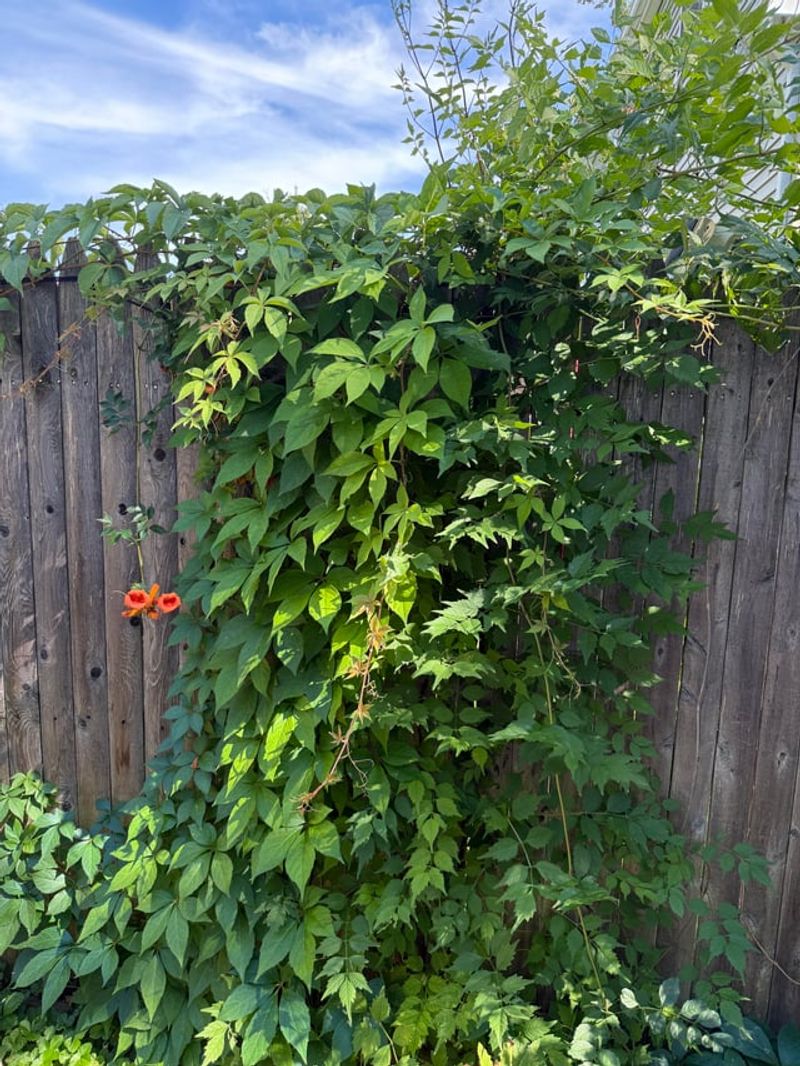
Virginia creeper can make a plain fence look established much sooner than a slow ornamental shrub row.
The vine has plenty of reach.
Federal records describe stems that can climb about 60 feet, while Michigan sources note that the plant can act as both a high vine and a groundcover.
That is useful power, but the support needs to match it.
Choose a sturdy fence, broad trellis, or arbor with enough surface area for mature stems.
Lightweight plastic lattice may look fine at first, yet a large woody vine can become more than it was built to carry.
Leave access for repairs too.
A separate trellis a few inches away from a fence gives you room to reach boards, paint, screws, and posts without the need to peel an entire vine off the structure.
Arbors can work beautifully as well.
Guide stems along the top so the canopy stays balanced. Cut back excess growth before it piles into one heavy mass or blocks too much light below.
This is where a little forethought saves a lot of effort later.
Virginia creeper loves a big canvas.
Give it one, and the vine can turn a bland boundary into a broad green backdrop with berries and fall color built in.
Give it a tiny lattice, and the lattice may regret its career choice.