The Native North Carolina Wildflowers That Handle Heavy Clay Better Than Black-Eyed Susans
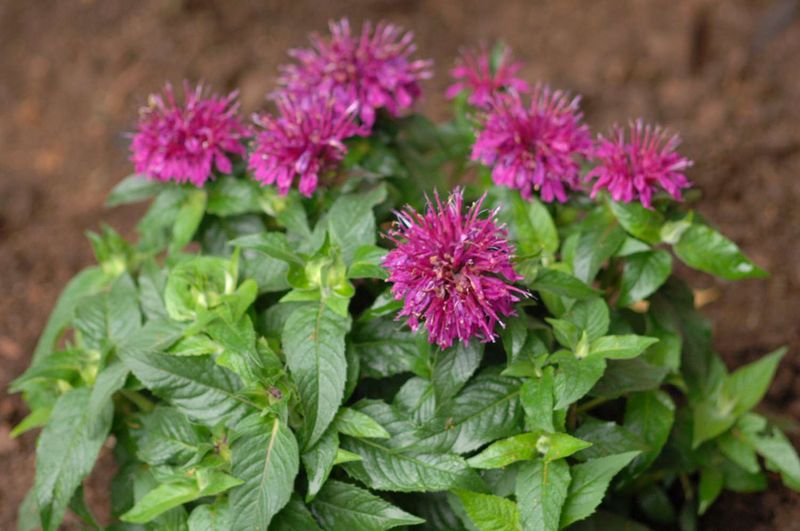
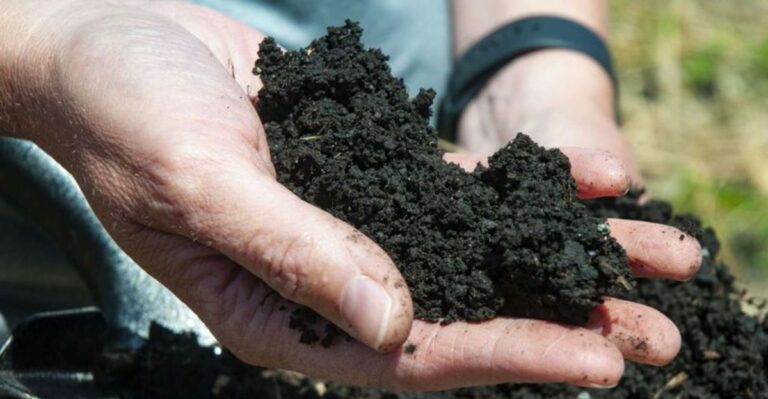
You crouch down to plant along the back fence on a sticky July morning, and your trowel hits red clay so hard it feels like brick. Black-eyed Susans get planted here every spring in North Carolina, and half of them sulk, rot, or fade by August. The good news is that clay is not the enemy some folks make it out to be. Plenty of native wildflowers actually thrive in that dense Piedmont ground, feeding pollinators and shrugging off drought while your Susans struggle.
Here are ten of them worth putting in the dirt this season.
1. Purple Coneflower Digs In Where Others Quit
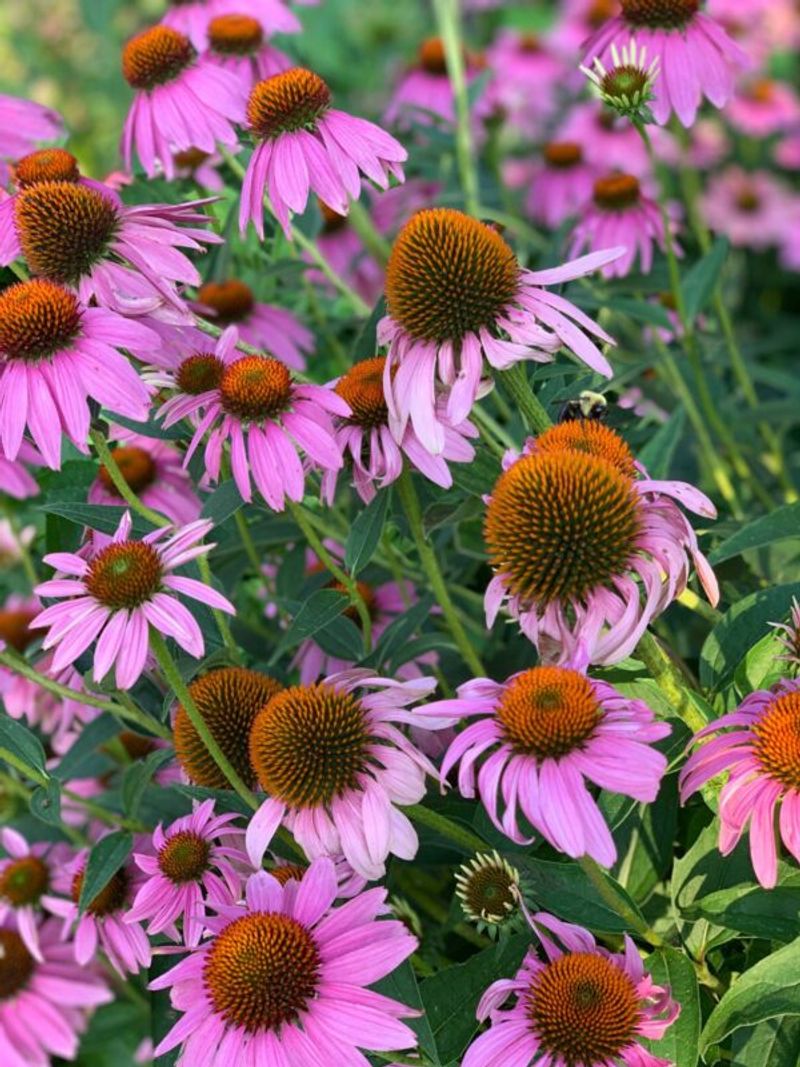
Picture the driest corner of your yard in August, the spot where the hose barely reaches and the ground cracks open. Purple coneflower (Echinacea purpurea) planted itself there in your neighbor’s bed years ago and has not asked for a thing since.
Most people assume it needs loose, fluffy soil like the bag of potting mix promises. The truth is the opposite. Its deep taproot, sometimes reaching 24 inches down, actually pushes through compacted clay and finds moisture that shallow-rooted plants never touch. Clay holds water, and coneflower knows how to wait for it.
Set plants about 18 inches apart in full sun, meaning six or more hours a day. Water deeply once a week the first summer to help that taproot settle, then step back. NC State Extension lists it among the most reliable natives for Piedmont conditions.
Goldfinches will strip the dried seed heads all winter if you leave them standing. So do not deadhead everything in fall. You get purple blooms from June into September, then a bird feeder for free.
Not a magic solution for soggy, standing-water spots, but genuinely tough where the ground bakes hard.
2. Butterfly Milkweed Feeds Fall Monarchs In Packed Ground
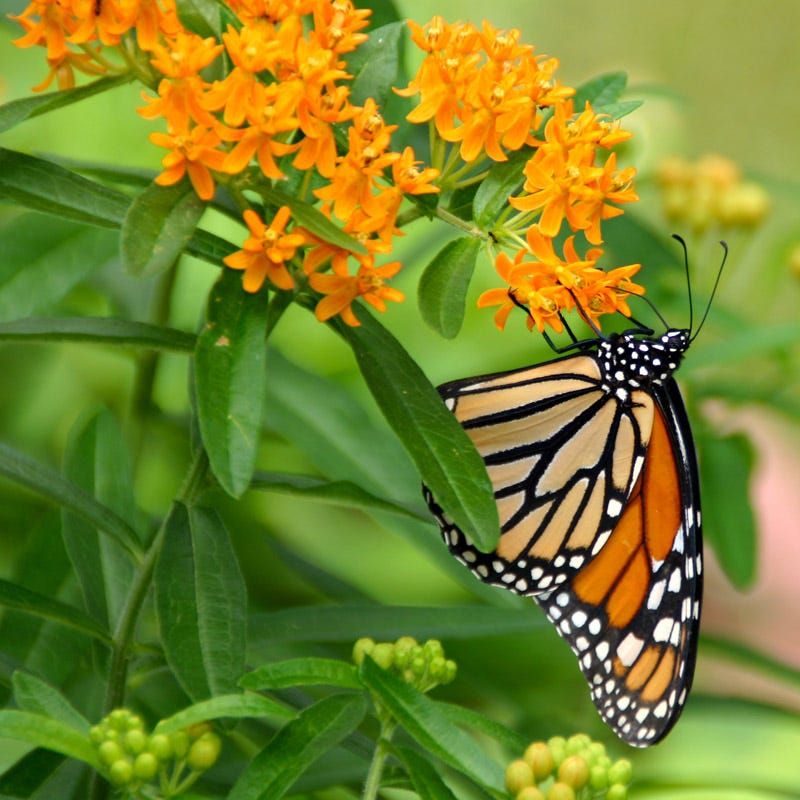
A blaze of orange against dull summer green stops you mid-mow every single time. Butterfly milkweed (Asclepias tuberosa) is the one native that makes people pull over on rural Piedmont roads to ask what it is.
Here is where it gets interesting. Unlike its swamp-loving milkweed cousins, this species genuinely prefers dry, lean, compacted soil. Rich, watered beds actually rot its roots. Your bad clay is its happy place.
Give it full sun and space plants roughly 12 to 18 inches apart. Do not baby it. Skip the fertilizer, skip the extra water once established, and resist the urge to move it, because it grows a fragile taproot that hates being disturbed.
The payoff arrives in fall. Monarchs migrating south through North Carolina in September and October lay eggs on milkweed leaves, and the caterpillars need them to survive. You are not just planting a flower, you are stocking a rest stop on a 3,000-mile journey.
Slow to wake in spring, so mark the spot. It may not emerge until May, and many folks accidentally dig it up thinking it died.
3. Joe Pye Weed Turns Wet Clay Into An Asset
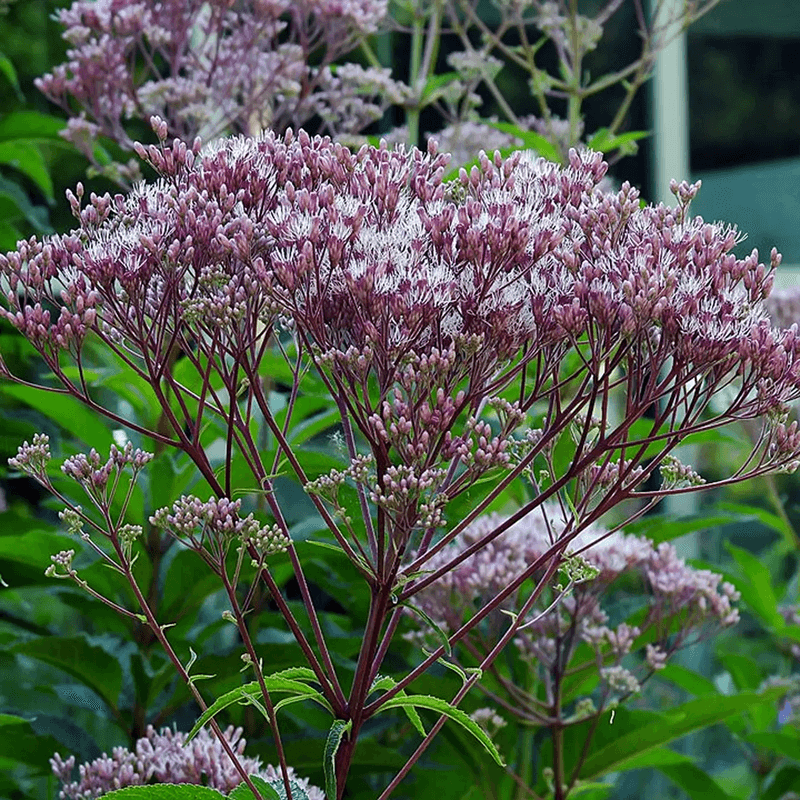
That low spot near your downspout where water pools after every afternoon storm? Most flowers drown there. Joe Pye weed (Eutrochium fistulosum) treats it like a spa day.
Your North Carolina Garden Changes Every Week. Your Plan Should Too.
Gardening in North Carolina changes quickly throughout the season. Every Friday you’ll receive a simple weekly plan showing exactly what to plant, prune, fertilize, harvest, and protect so you never miss the right timing.
Clay drains slowly, which frustrates gardeners but delights this towering native. It wants moisture and does not mind heavy, dense ground one bit. In the right damp corner it climbs 5 to 7 feet tall, topped with dusty mauve flower heads the size of dinner plates.
Plant it at the back of a bed, about 24 to 36 inches apart, in full sun to part shade. Cut it to the ground in late winter and it returns every spring, bigger than before.
Come late summer, the blooms hum. Swallowtails, monarchs, and bumblebees all pile on at once, and the whole plant seems to vibrate. It is one of the few natives that makes a soggy problem area look intentional.
Give it room. It spreads slowly by rhizome, so it is not for a tight, tidy border. But along a fence line or rain garden, it earns its space.
4. New England Aster Saves The Late-Season Buffet
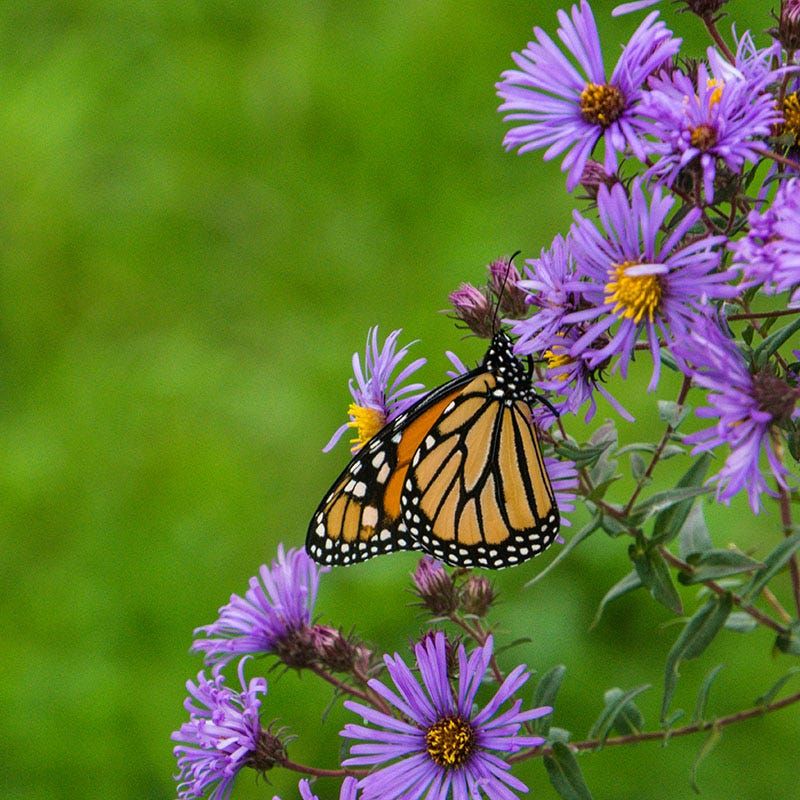
By October most of your garden looks tired, half the blooms gone brown. Then New England aster (Symphyotrichum novae-angliae) opens hundreds of purple stars right when everything else clocks out.
Its timing is the whole point. When fall monarchs pass through North Carolina looking for fuel before the long flight to Mexico, this aster is one of the last big nectar sources standing. Bees load up on it too, storing energy before the cold.
Clay suits it fine, especially clay that stays a little moist. Plant in full sun, space about 18 to 24 inches apart, and pinch the stems back by half in late June to keep it bushy instead of floppy.
It can reach 4 feet if you let it run, so that mid-summer pinch genuinely matters. Skip it and you get tall, leggy stems that flop over after the first hurricane-season downpour.
Leave the stems standing through winter. Native bees tuck into the hollow stalks to overwrite the cold, and you get a head start on next year’s pollinator crowd.
5. Wild Bergamot Shrugs Off Drought And Deer
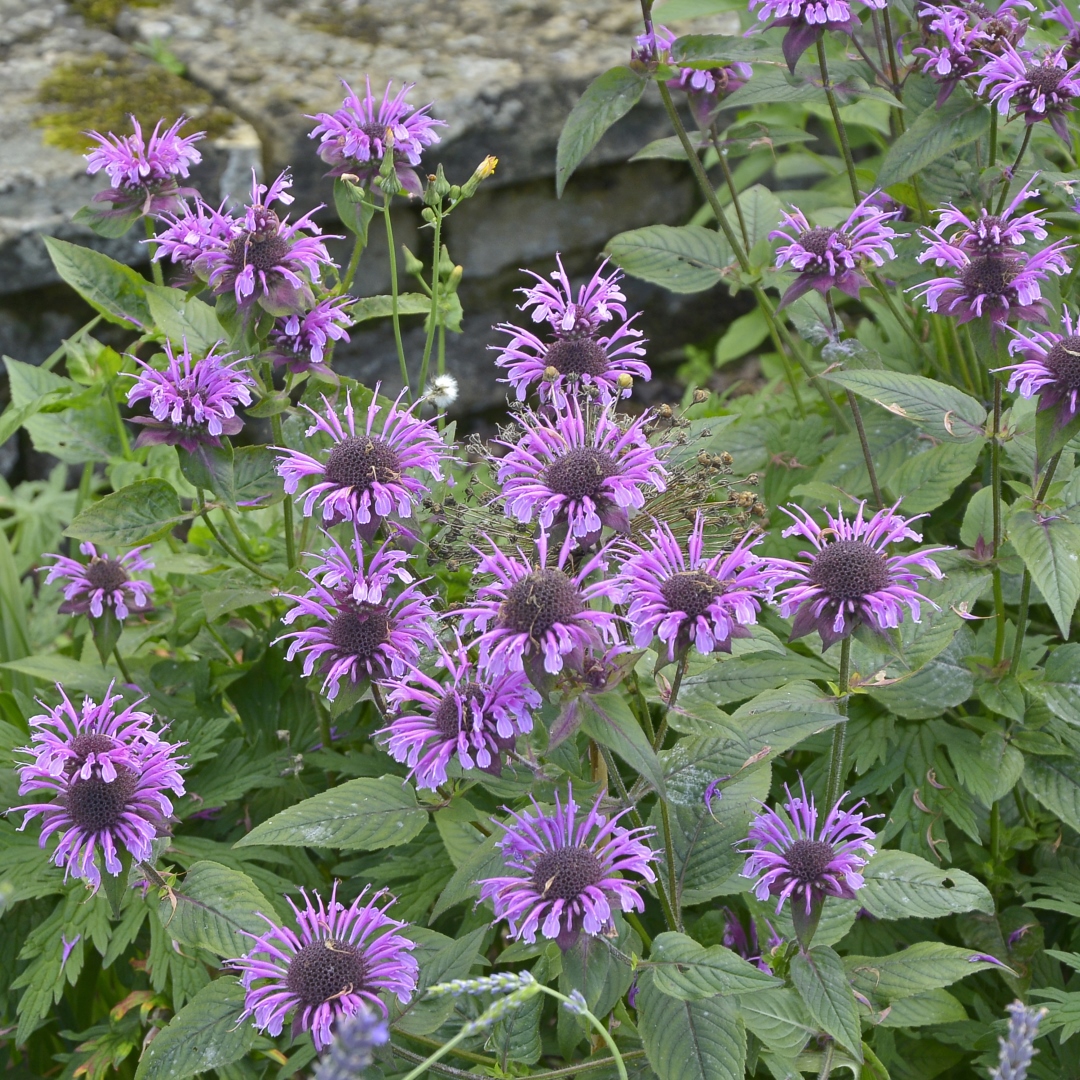
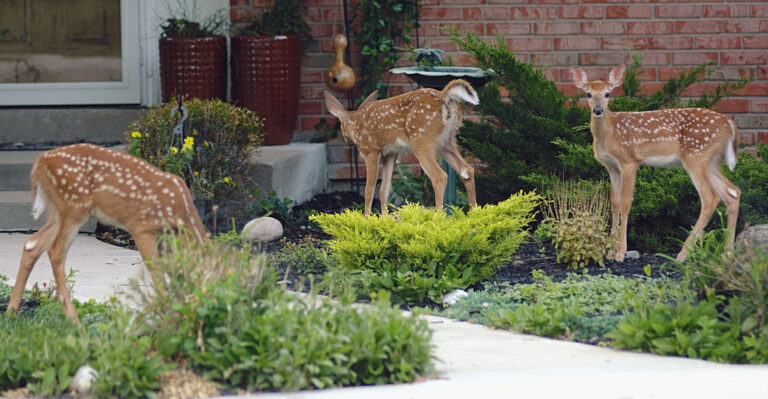
Crush a leaf between your fingers and your whole hand smells like an herbal tea shop. Wild bergamot (Monarda fistulosa), also called bee balm, carries a scent that pollinators love and deer politely avoid.
That fragrance is its defense. Deer and rabbits nibble almost everything in a Piedmont yard, but they tend to walk right past the minty foliage on this one. So it is a rare native that survives where hungry critters roam.
Lavender, shaggy flowers open in mid-summer on plants 2 to 4 feet tall. Hummingbirds and native bees work them nonstop. Clay is no obstacle, and once rooted it laughs off the dry August stretch between storms.
Set plants 18 to 24 inches apart in full sun with decent airflow. Powdery mildew, a gray dusty coating, can hit crowded plants in our muggy summers, so give it breathing room.
It spreads by runners, filling in gaps you did not know you had. Divide clumps every three years or so to keep it in bounds, and share the extras over the fence.
6. Blazing Star Sends Roots Down Like Anchors
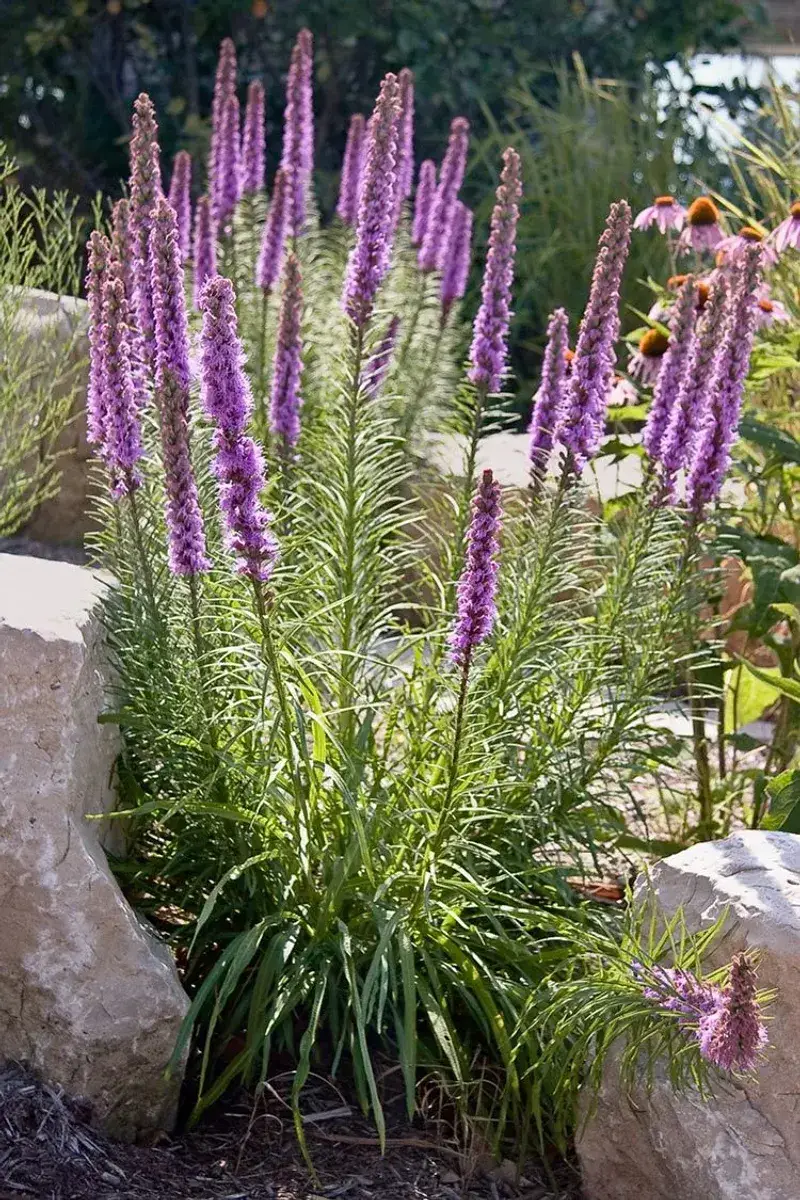
Tall purple spikes that bloom top-down instead of bottom-up always catch first-time visitors off guard. Blazing star (Liatris spicata) does everything a little backward, and that is part of its charm.
Underground it grows from a corm, a bulb-like storage root, that drills into clay and stockpiles water. That is how it survives a dry Sandhills summer or a Piedmont drought without wilting. The dense ground actually helps hold that corm steady against wind.
Plant corms about 4 inches deep and 12 to 15 inches apart in full sun. The flower spikes shoot up 2 to 4 feet in July and August, and butterflies treat them like a landing strip.
Goldfinches and other seed eaters clean off the fluffy spent flowers in fall, so leave the stalks a while. Then cut back in late winter.
It stands straight where floppy plants fail. That vertical shape gives a flat clay bed some height and structure without any staking, which genuinely saves you a chore.
7. Black-Eyed Susan’s Tougher Cousin Brown-Eyed Susan
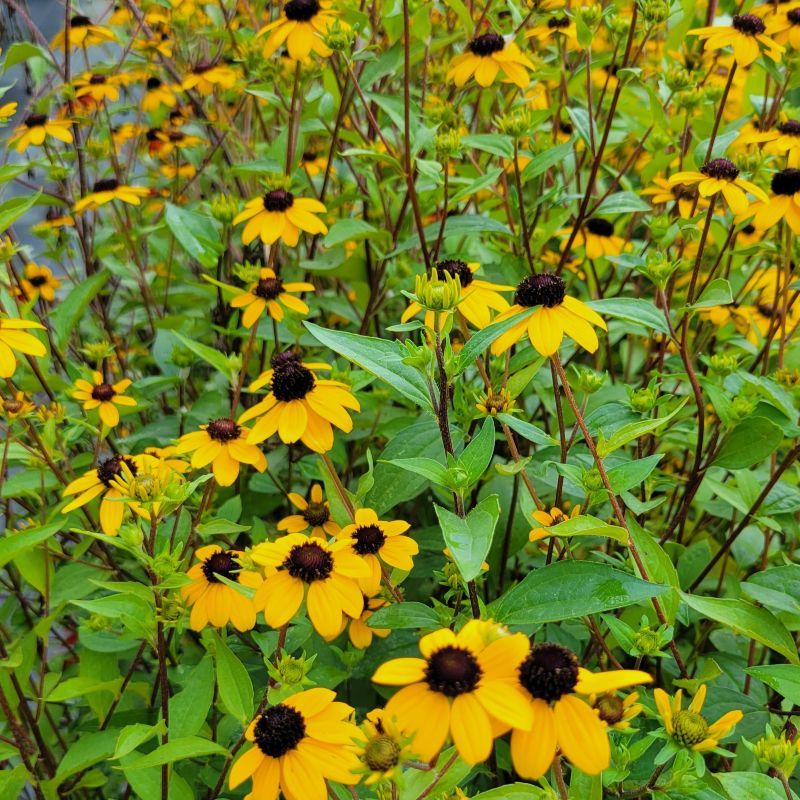
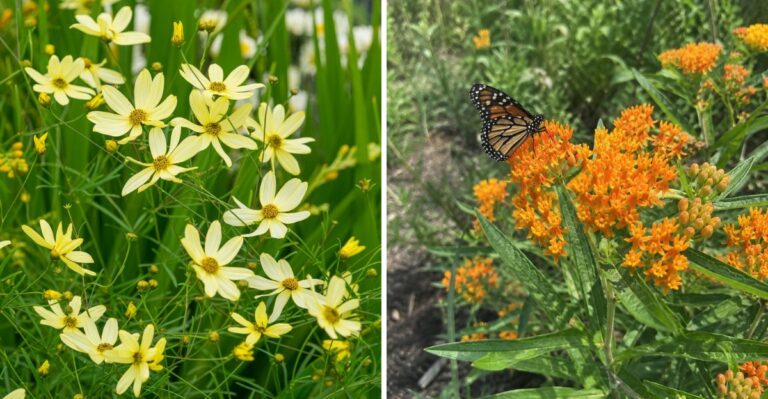
Feels like a bit of a cheat to swap one Susan for another, but hear this out. Brown-eyed Susan (Rudbeckia triloba) is the cousin that actually earns its keep in heavy ground.
Regular black-eyed Susans often sulk in wet clay and fizzle after a couple of years. Brown-eyed Susan, by contrast, throws out hundreds of smaller golden blooms on a branching, shrub-like frame and handles both clay and part shade far better.
It grows 2 to 3 feet tall and just as wide, blooming from July clear into October. That long run means steady nectar during the muggy stretch when other flowers give up.
Plant 18 to 24 inches apart in full sun to light shade. It behaves as a short-lived perennial but reseeds gently, so a patch tends to renew itself without any effort from you.
The blooms are smaller than the classic Susan, but there are ten times as many. From across the yard it reads as one glowing yellow cloud, and the finches love the seed heads.
8. Goldenrod Gets Blamed For Allergies It Never Caused
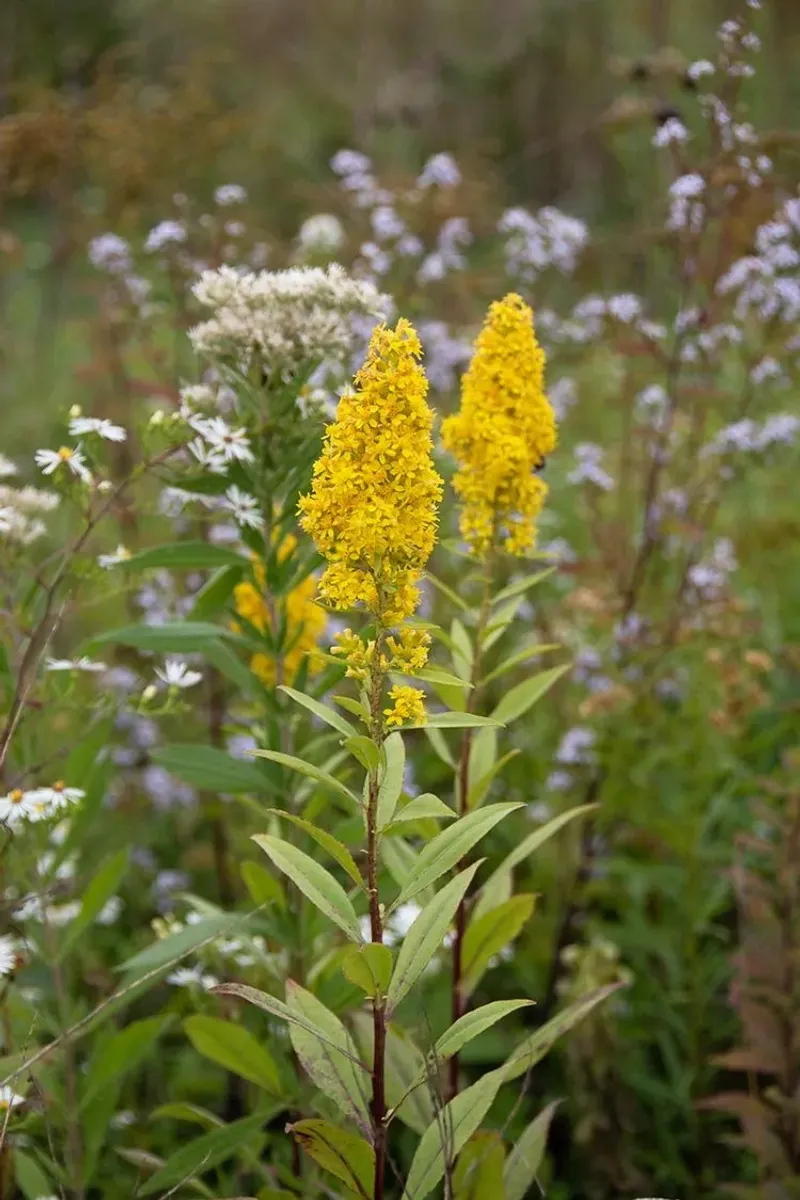
Half your neighbors yank goldenrod out believing it wrecks their sinuses every fall. Here is the myth buster: goldenrod (Solidago) pollen is heavy and sticky, carried by insects, not wind. The real allergy culprit is ragweed blooming at the same time.
So the plant taking the blame is genuinely one of the best pollinator plants North Carolina has. In September and October, its golden plumes swarm with bees, wasps, and migrating monarchs stocking up for the trip south.
Clay does not slow it down. Full sun keeps it upright, and species like wreath goldenrod tolerate shade too. Look for well-behaved types such as Solidago rugosa, because a few wild kinds do spread aggressively.
Space clumps 18 to 24 inches apart and cut back in late winter. Little else is required. It shrugs off drought, poor soil, and the occasional hurricane wind.
Pair it with purple asters and you get the classic gold-and-violet fall show. That combo is not just pretty, it feeds the last wave of pollinators before frost, which in the Piedmont usually lands in late October or early November.
9. Swamp Sunflower Lights Up October Like A Bonfire
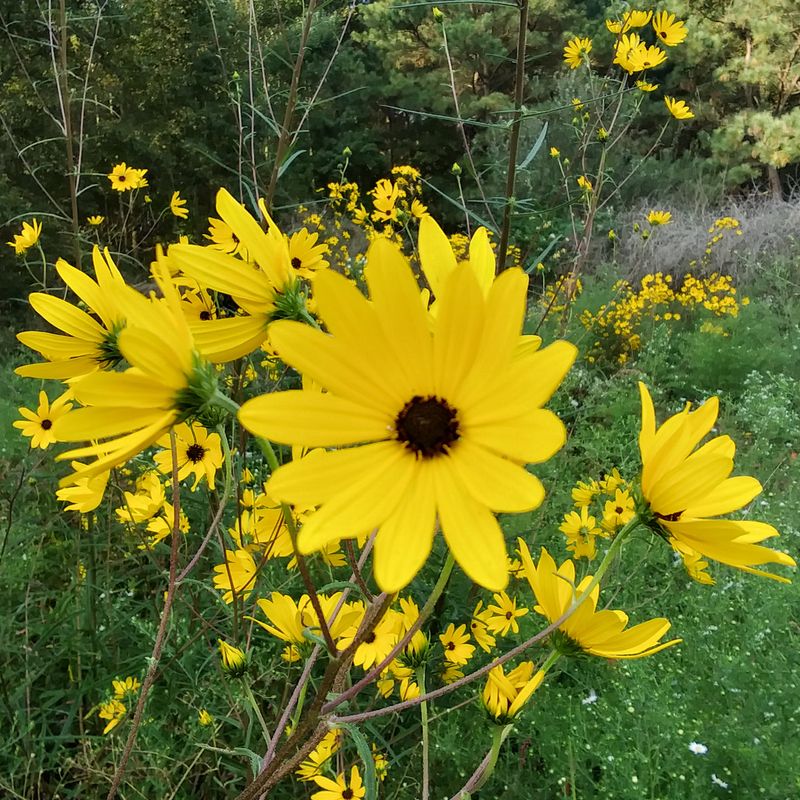
Nothing prepares you for the moment a swamp sunflower (Helianthus angustifolius) erupts in mid-October. One week it is a plain green shrub, the next it is a 6-foot wall of gold that people slow down to photograph.
Do not let the name fool you. It handles heavy, wet clay beautifully, exactly the kind of ground where regular sunflowers would rot. Coastal Plain gardeners in particular love it for soggy, low-lying beds.
Give it full sun and plenty of room, spacing plants about 24 to 36 inches apart. It can top 6 feet, so pinch it back by a third in June if you want a shorter, sturdier stand.
Bees and late butterflies swarm the blooms when almost nothing else is flowering. It is the closing act of the pollinator season, and it goes out loud.
Leave the seed heads for finches and sparrows through winter. The tall dry stems also give beneficial insects a place to hunker down until spring warms the clay back up.
10. Eastern Bluestar Earns Its Keep In Three Seasons
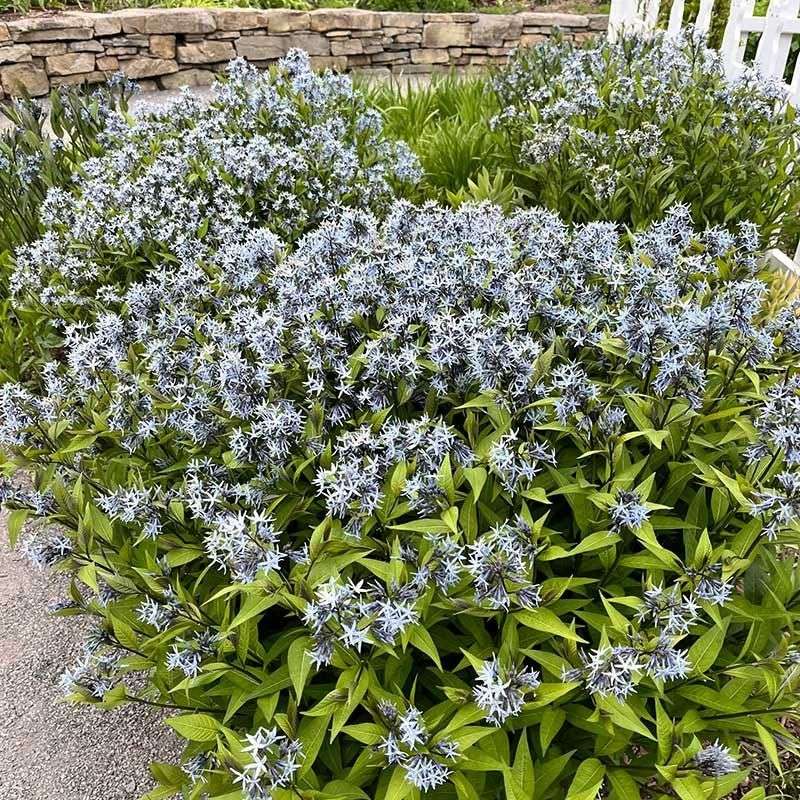
Most wildflowers give you one good moment. Eastern bluestar (Amsonia tabernaemontana) hands you three, and it does it in the meanest clay you own.
Spring brings clouds of soft powder-blue flowers on a rounded 2 to 3 foot mound. Summer settles into clean, willowy green foliage that never flops or browns. Then fall arrives and the whole plant turns brilliant butterscotch gold, glowing for weeks.
That long season of interest is the reason to make room for it. It works as a shrub-like anchor that ties a messy native bed together and looks tidy even between bloom times.
Plant 24 to 36 inches apart in full sun to part shade. It asks for almost nothing once its deep roots take hold in your clay, and deer tend to leave the milky-sapped stems alone.
Give it two or three years to reach full size, because it starts slow and finishes strong. After that, it is one of the most trouble-free natives you can grow across North Carolina, from the mountains to the coast, and it closes out a bed with quiet confidence.