The Native Ohio Flowers That Satisfy Carpenter Bees Enough To Leave the Porch Alone
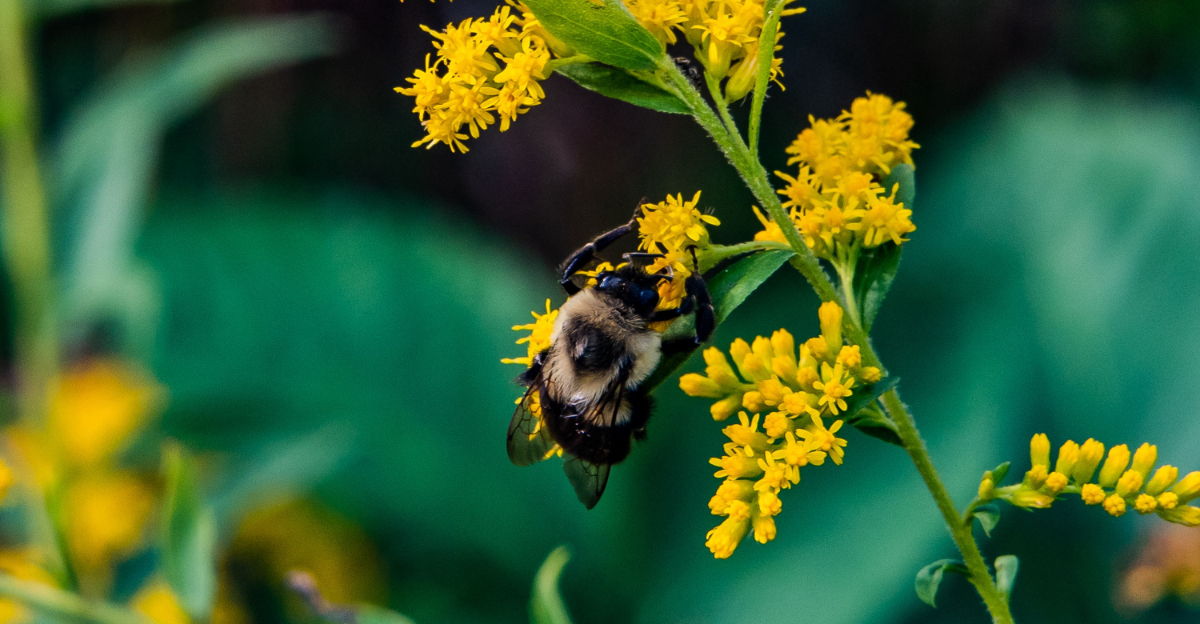
Carpenter bees are not interested in your porch because they have something against you personally. They are looking for two things: wood to nest in and flowers to feed from.
Your porch handles the first requirement beautifully. The second is where your yard either gives them a reason to move on or keeps them drilling in the same spots all season long.
A yard with the right native flowers pulls carpenter bee attention away from structures and toward something they actually prefer. Not every flower makes the cut.
Carpenter bees are specific about what they feed from, and Ohio’s native plants include several that hit that mark far better than typical garden ornamentals. This is not a guaranteed fix and nothing about carpenter bees is that simple.
But a yard that feeds them well tends to be a yard where the porch takes less damage. Ohio’s native flowers have a real role to play here.
1. Plant Bee Balm Away From Porch Rails
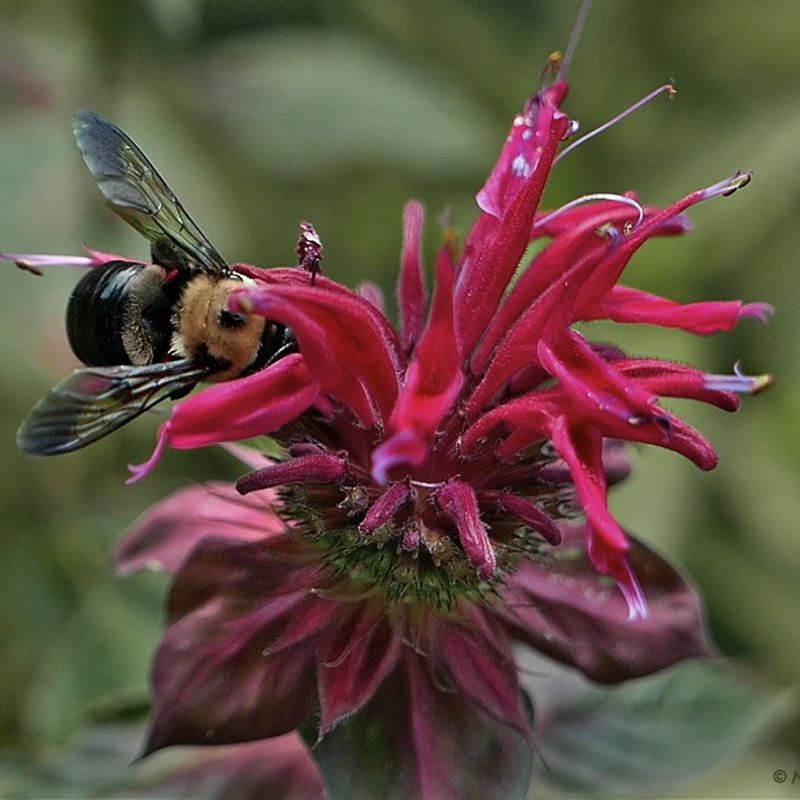
A porch rail gets a lot less attention when the busiest blooms sit several yards away in full sun. Bee balm, known botanically as Monarda didyma, produces tubular, nectar-rich flowers that are hard for many pollinators to ignore.
The blooms come in shades of red, pink, and purple, and they tend to peak in midsummer when carpenter bee foraging is in full swing.
Carpenter bees are physically strong enough to access many flower shapes. But bee balm gives them a reliable, rewarding food source that keeps them occupied well away from your deck boards.
Planting a cluster of it at least ten to fifteen feet from the porch puts the feeding zone clearly in the garden, not on the structure.
Bee balm grows well in full sun with decent moisture and spreads gradually over time. It does best in garden beds with good air circulation, which also helps reduce powdery mildew.
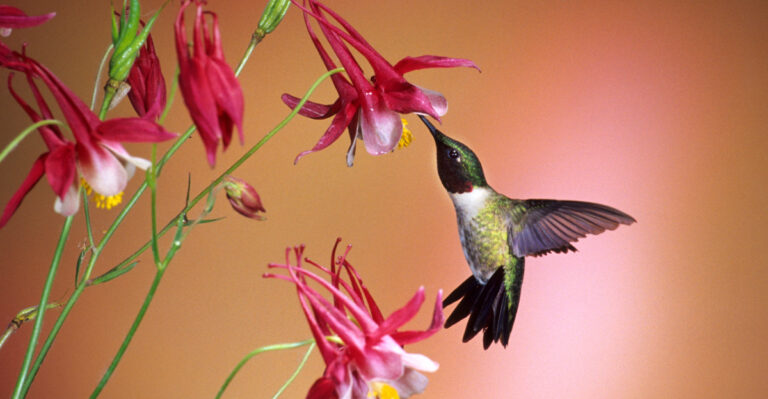
Native Monarda species are confirmed as Ohio-native plants by the Ohio Department of Natural Resources. They support bumblebees, carpenter bees, hummingbirds, and several native bee species all at once.
This plant does not stop carpenter bees from nesting in bare wood. Sealing or painting exposed porch surfaces is still the most reliable way to protect wooden structures from nesting damage.
2. Use Wild Bergamot To Draw Bees Into The Garden
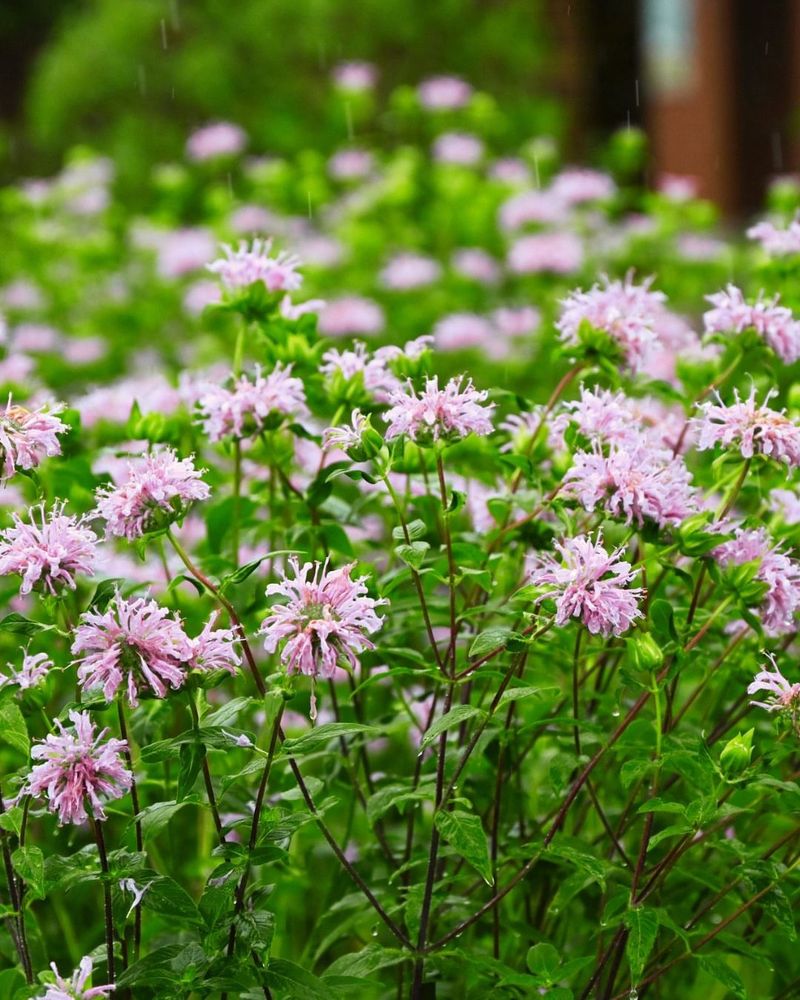
Out in a sunny patch with good airflow, wild bergamot has a way of becoming one of the most visited spots in the yard. Monarda fistulosa produces lavender-pink flower heads that bloom from early to midsummer.
The flowers have a light fragrance and offer accessible nectar that attracts a wide range of native bees, including carpenter bees on foraging runs.
Wild bergamot is closely related to bee balm but tends to be a bit more drought-tolerant once established. It handles the variable summer conditions common in home landscapes across this state without much fuss.
Planting it in a dedicated pollinator corner, away from the porch, creates a natural draw that pulls bee activity into the open garden.
Your Ohio Garden Changes Every Week. Your Plan Should Too.
Gardening in Ohio changes quickly throughout the season. Every Friday you’ll receive a simple weekly plan showing exactly what to plant, prune, fertilize, harvest, and protect so you never miss the right timing.
According to Ohio State University Extension resources, Monarda fistulosa is a true Ohio native that thrives in full sun and well-drained soil. It spreads slowly by rhizome and can form a modest colony over a few seasons.
That spreading habit is actually useful here. A larger patch means more flowers and more reason for bees to stay in the garden rather than drift toward wood.
Wild bergamot does not repel carpenter bees or prevent nesting. Pairing it with sealed or painted porch surfaces gives you the most practical two-part approach to managing carpenter bee activity around your home.
3. Add Purple Coneflower Beyond The Deck
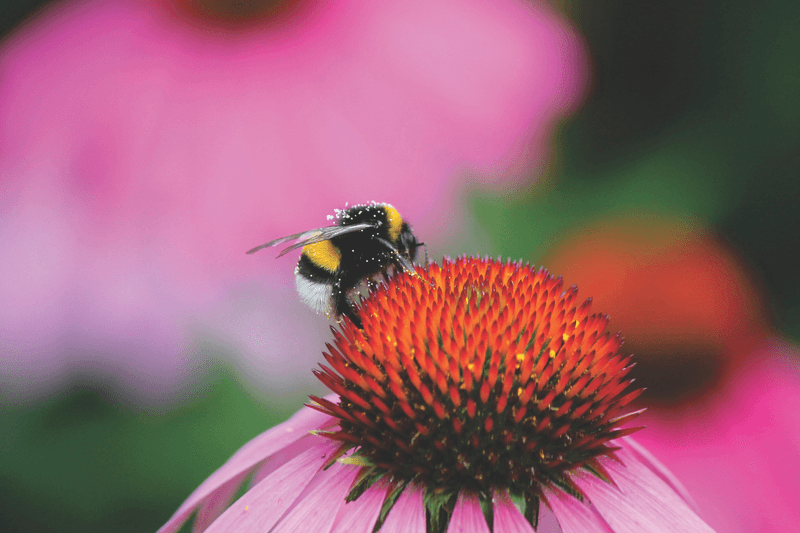
Few summer flowers are as instantly recognizable as purple coneflower, and fewer still pull in as many different pollinators at once. Echinacea purpurea blooms from midsummer into early fall, giving it one of the longer useful windows of any native garden plant.
The raised central cone and swept-back petals create a landing platform that works well for larger bees, including carpenter bees looking for a reliable nectar stop.
Placing coneflowers beyond the deck, rather than right next to it, shifts that foraging activity farther into the yard.
A bed positioned ten or more feet away from the structure gives bees a clear destination that has nothing to do with your porch posts or railings.
Coneflower also attracts goldfinches later in the season when seed heads form, which adds another reason to keep it in a visible garden spot.
Echinacea purpurea is native to much of the eastern and central United States, including this state. It is widely confirmed as a reliable pollinator plant by university extension programs.
It grows in full sun, tolerates some drought once established, and comes back reliably each year as a perennial. Purple coneflower alone will not solve a carpenter bee nesting problem.
Exposed, unpainted wood near the porch still needs to be sealed or treated to reduce nesting interest from these bees.
4. Grow Mountain Mint Where Bees Can Feed Safely
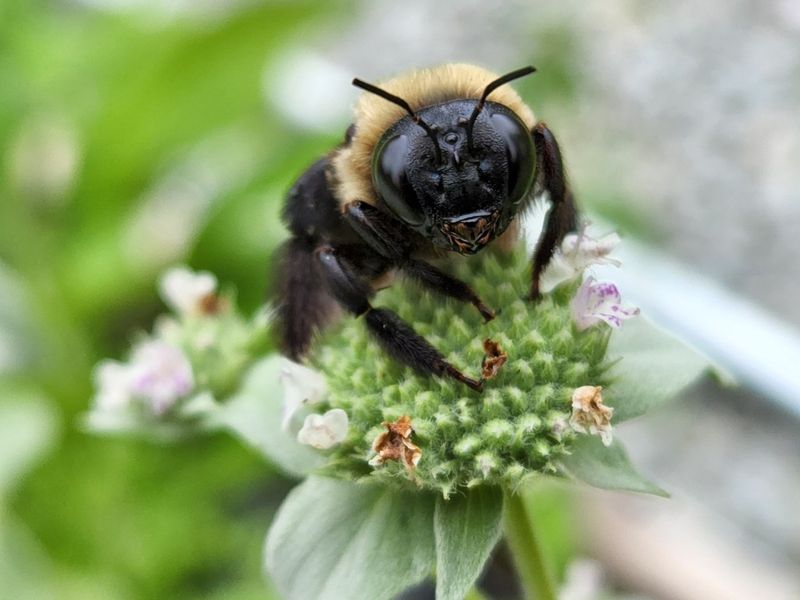
Walk past a patch of mountain mint on a warm afternoon and you will likely hear it before you see it. The small white flowers of Pycnanthemum species produce nectar in such consistent quantities that native bees seem to treat the plant like a scheduled stop.
Carpenter bees, bumblebees, sweat bees, and many other beneficial insects all show up regularly when mountain mint is in bloom.
Mountain mint blooms in midsummer and keeps going for several weeks. That extended season makes it one of the more dependable plants in a pollinator-focused garden.
Placing it in a sunny corner well away from the porch gives bees a feeding spot that has nothing to do with your deck posts or wooden trim.
One thing worth knowing before planting: several Pycnanthemum species spread enthusiastically in good conditions. Giving it a defined bed or using it along a fence line or property edge helps contain it without reducing its value to pollinators.
Both Pycnanthemum virginianum and Pycnanthemum muticum are considered native to Ohio according to ODNR plant records. Mountain mint does not drive carpenter bees away from wood.
It simply gives them a more rewarding place to spend their time. Sealing bare or weathered wood on your porch is still the most direct way to reduce nesting activity near the house.
5. Plant Black Eyed Susan Away From Bare Wood
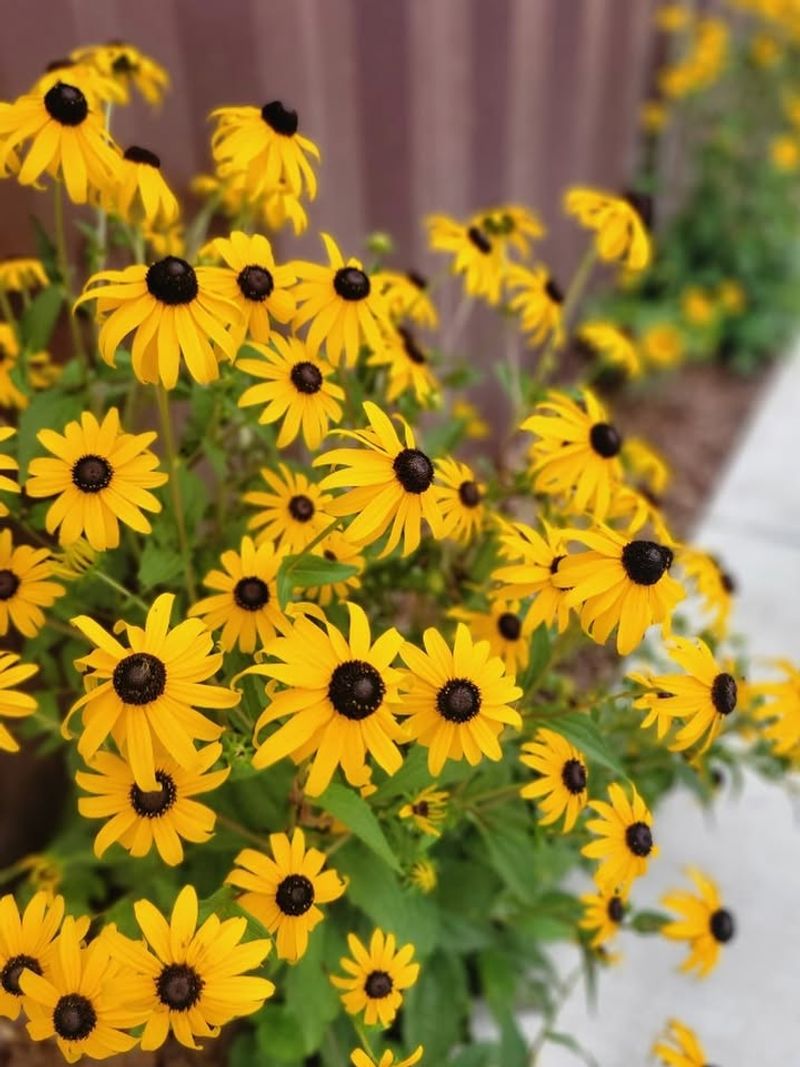
There is something steady and cheerful about a stand of black eyed Susans holding their blooms through the hottest part of summer.
Rudbeckia hirta is one of the most recognizable wildflowers in this state, and its open, flat flower heads make nectar and pollen easy for a wide range of bees to access.
Carpenter bees are among the visitors that show up regularly when these flowers are in bloom.
The long bloom season is one of this plant’s most practical features. Black eyed Susans often start flowering in early summer and keep going well into fall.
They bridge the gap between earlier summer bloomers and late-season plants like goldenrod.
Planting them in a sunny bed away from bare or unfinished wood puts that extended activity in the garden rather than near structures that could attract nesting interest.
Rudbeckia hirta is native to Ohio and grows well in full sun with average to dry soil once established. It self-seeds readily, so a small planting can expand naturally over time.
That self-seeding habit makes it a low-effort choice for filling out a pollinator bed. Black eyed Susan does not prevent carpenter bee nesting in wood.
Any exposed, weathered, or unpainted boards near the porch should still be sealed, painted, or repaired. That reduces the chance that carpenter bees choose your structure over the garden.
6. Use Anise Hyssop To Build A Bee Friendly Corner
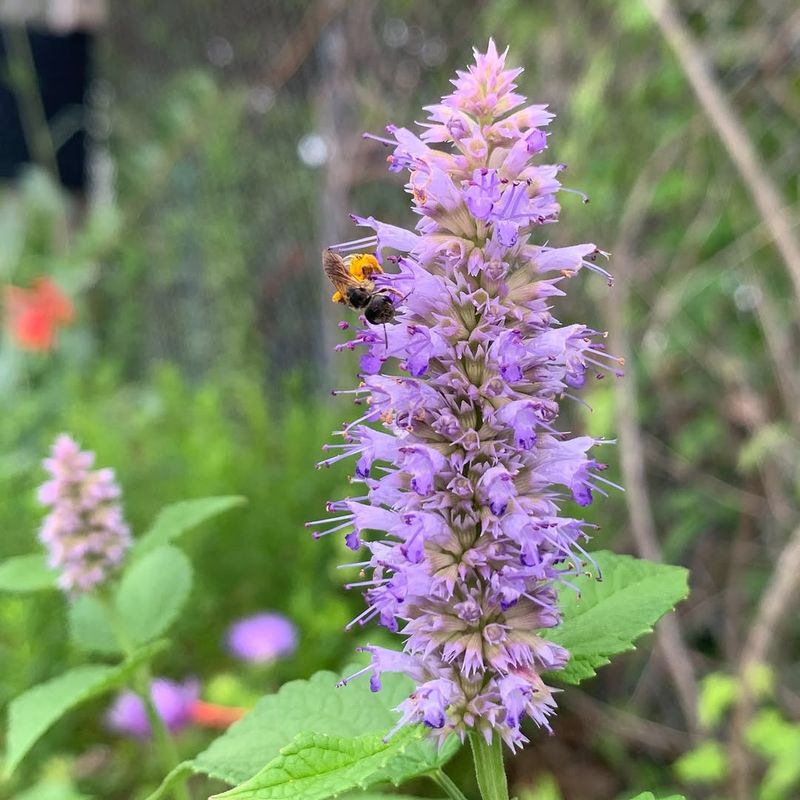
Some plants earn their place in a pollinator garden by being genuinely hard to overlook. Anise hyssop, Agastache foeniculum, produces tall spikes of small purple-blue flowers that bloom from midsummer into early fall.
The flowers have a light anise scent and offer nectar that many bee species find highly attractive. Carpenter bees visit for nectar, and the upright flower spikes give them easy access.
Anise hyssop is not native to Ohio in the strictest botanical sense. However, it is widely recommended by university extension programs as a regionally appropriate pollinator plant for Midwest home gardens.
It performs well in full sun with good drainage and handles summer heat without much trouble. Planting it as part of a larger flower corner, rather than as a solo plant, gives bees more reason to stay in that area of the yard.
The key with anise hyssop is placement and pairing. A dedicated corner that includes anise hyssop alongside other native bloomers creates a more appealing feeding zone than any single plant could on its own.
That concentration of nectar sources is what helps draw bee activity away from the porch and into the garden. Anise hyssop does not repel carpenter bees or prevent nesting in wood.
Protecting porch surfaces through painting, staining, or sealing remains the most effective structural step you can take.
7. Add Goldenrod For Late Season Nectar
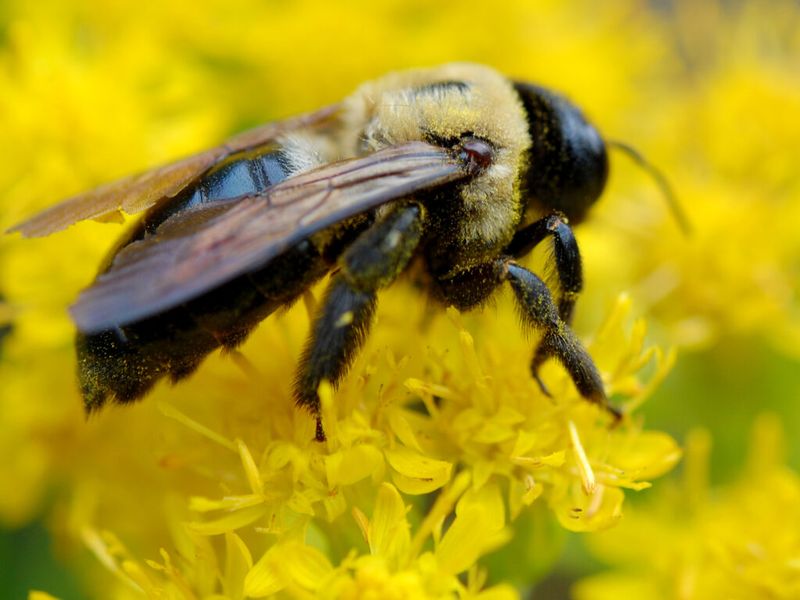
By late summer, a lot of the flashy garden flowers have finished their run. Goldenrod steps in right when many pollinators need it most.
Solidago species native to this state produce dense clusters of small yellow flowers that are packed with nectar and pollen. Carpenter bees, along with dozens of other native bee species, rely heavily on goldenrod as summer transitions into fall.
Goldenrod has an unfair reputation that is worth clearing up. It does not cause seasonal allergies.
That blame belongs to ragweed, which blooms at the same time but spreads pollen through the air. Goldenrod pollen is heavy and sticky, designed to move by insect, not wind.
It is completely safe to grow near the house and in home garden beds.
For home landscapes, choosing a clump-forming species or a named cultivar helps keep goldenrod from spreading too aggressively.
Solidago rugosa, Solidago nemoralis, and Solidago speciosa are all native to this region and work well in residential garden settings.
Planting goldenrod in a sunny bed away from the porch gives late-season foragers a clear destination in the yard. Goldenrod does not stop carpenter bees from investigating bare wood.
Sealing or painting exposed porch surfaces is still necessary, especially heading into fall when bees may be checking out potential overwintering spots near structures.
8. Grow Asters To Keep Fall Bees Busy
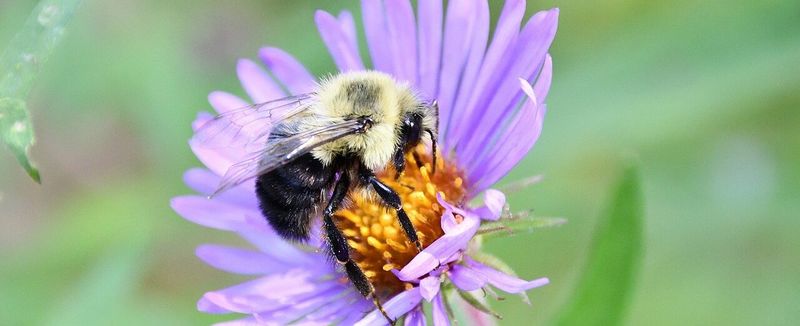
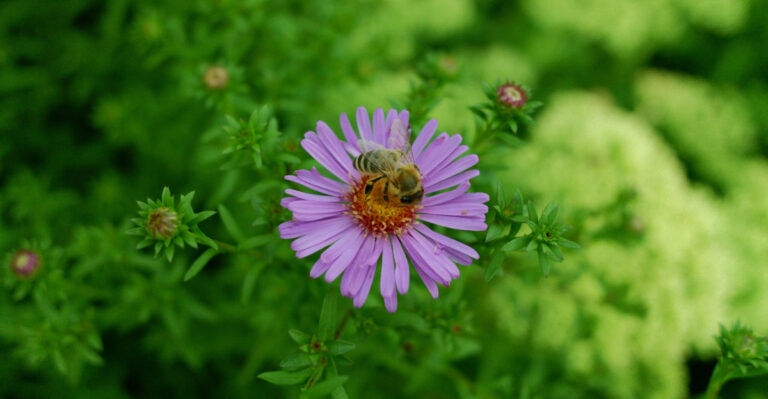
When most of the garden has wound down for the year, native asters are just getting started. Symphyotrichum species bloom from late summer through October, offering one of the last reliable nectar and pollen sources before cold weather arrives.
For carpenter bees and other native bees still foraging in fall, a patch of asters in full bloom is a genuinely useful resource.
Several Symphyotrichum species are native to this state. These include Symphyotrichum novae-angliae, the New England aster, and Symphyotrichum oblongifolium, the aromatic aster.
Both perform well in home garden conditions and attract a wide range of pollinators during their bloom period. Planting them in a sunny bed away from porch activity zones keeps fall foraging activity in the garden rather than near the house.
Native asters are also valuable for specialist bees, including some Andrena and Colletes species that depend on aster pollen during their fall flight periods. That ecological detail makes asters more than just a late-season filler.
They serve a real function in supporting native bee populations through the end of the season. Asters do not prevent carpenter bees from nesting in or near wood.
Any bare, weathered, or unfinished boards on the porch should still be sealed or painted before winter. That reduces the chance of bees returning to the same spots next spring.