The Native Ohio Plant That Covered Prairies Before Settlement And Is Coming Back
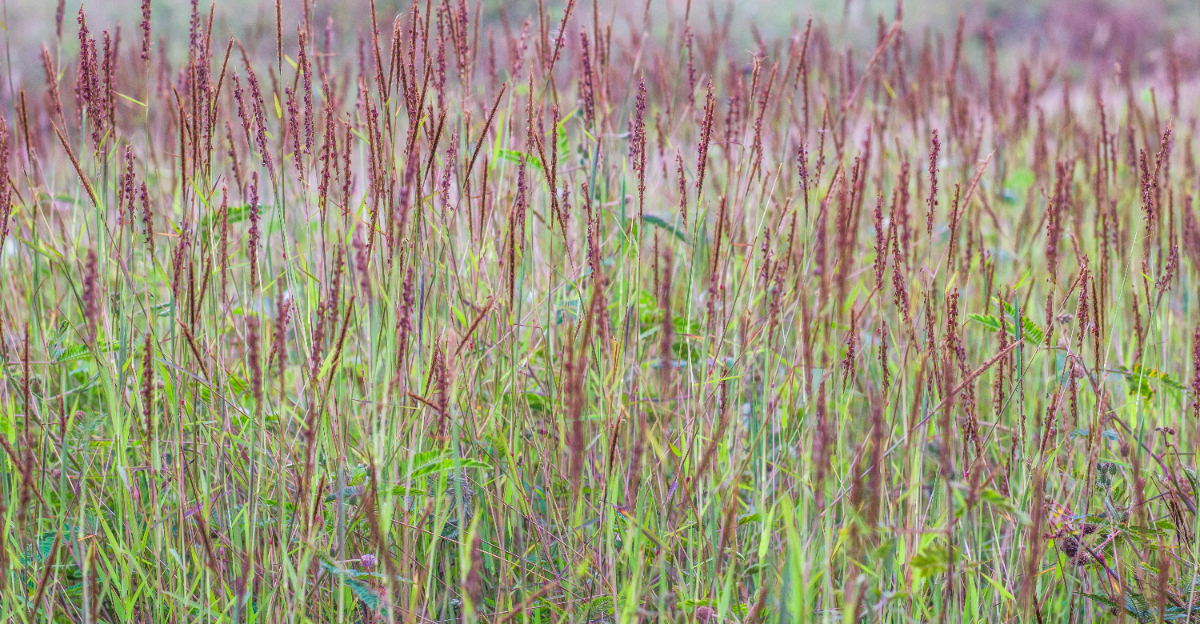
Before Ohio was farmland, it was prairie. It was vast and wind-driven, alive with grasses that grew taller than a person on horseback.
It supported an ecosystem that most Ohioans today have never seen intact. One plant stood at the center of that landscape more than any other.
It is coming back. It is not coming back in the sweeping way it once existed.
It is returning in Ohio gardens, restoration projects, and yards where people have started asking what belonged here before the plow arrived. Those who have planted it tend to describe the experience the same way.
Something clicks into place that did not feel right before. This grass is not a relic or a museum piece.
It performs. It feeds wildlife, anchors soil, provides winter structure, and grows with a presence that makes most ornamental grasses look like they are trying too hard.
Ohio’s prairie past is closer than most people realize. It starts with one plant.
1. Meet Big Bluestem The Grass That Built Prairies
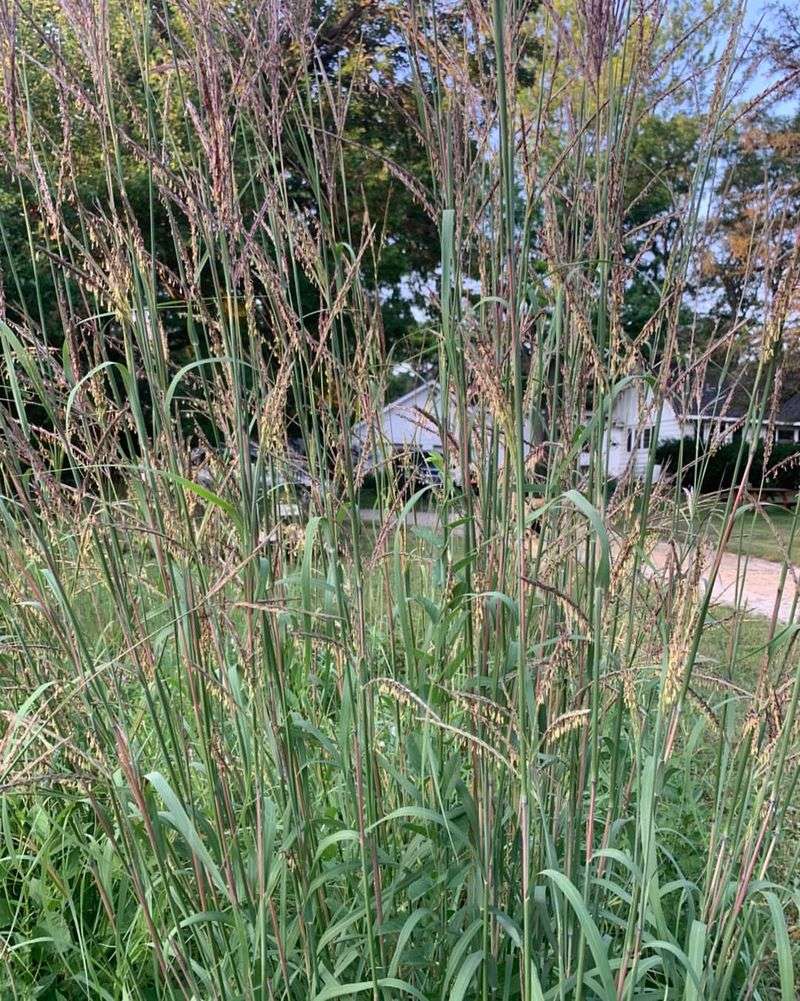
A grass that can grow taller than most adults is not something you forget once you have seen it in full late-summer form. Big bluestem, known scientifically as Andropogon gerardii, is a native warm-season grass.
It is one of the signature species associated with tallgrass prairie systems across the Midwest and parts of the eastern United States.
OSU Extension and native plant sources describe it as a clump-forming, upright grass that can reach five to seven feet or more in the right site.
The stems and leaf bases often show a noticeable blue-green color in summer, which is part of where the common name comes from.
By fall, the plant shifts into rich shades of bronze, copper, and burgundy, making it one of the more visually striking native grasses available.
It is a warm-season grass, meaning it greens up later in spring and grows most actively during the hottest months of the year.
Recognizing big bluestem as a structural grass matters before you plant it. It is not a small border grass or a lawn substitute for tight spaces.
Native plant sources recommend treating it as a tall background plant or meadow anchor, giving it open sun and enough room to reach its natural size without crowding.
2. Know Why It Once Ruled Tallgrass Openings
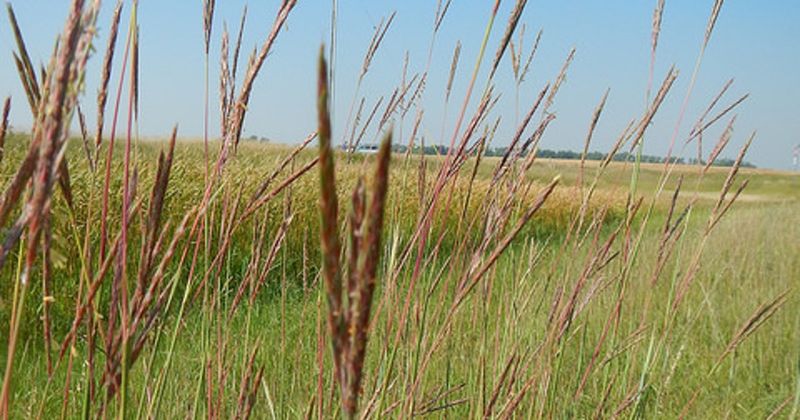
Open land, strong sun, periodic fire, and the movement of grazing animals once shaped a grassland world that most people today can only imagine. Big bluestem was a major grass in tallgrass prairie systems and open grassland landscapes.
Those landscapes existed across parts of Ohio and the broader Midwest before widespread settlement. The Ohio Department of Natural Resources and prairie restoration sources note that these prairie openings depended on specific conditions.
Those conditions included soil type, hydrology, sunlight, and natural disturbance cycles.
Settlement brought farming, tile drainage, land clearing, and fire suppression that dramatically reduced prairie habitat across the state. Open grassland communities once existed in the western, central, and southern regions.
Over the past two centuries, much of that land was converted to cropland, developed land, or closed-canopy vegetation. Big bluestem did not disappear entirely, but its presence became fragmented and limited to remnant sites, roadsides, and protected areas.
Your Ohio Garden Changes Every Week. Your Plan Should Too.
Gardening in Ohio changes quickly throughout the season. Every Friday you’ll receive a simple weekly plan showing exactly what to plant, prune, fertilize, harvest, and protect so you never miss the right timing.
Before planting big bluestem, prairie restoration guidance recommends learning about local prairie history and visiting a restored prairie or remnant if one is accessible nearby.
Seeing the plant in a natural or restored context helps you understand its scale, its companions, and the kind of open, sunny environment where it genuinely belongs.
That knowledge makes for a more thoughtful and successful planting.
3. See The Turkey Foot Seed Heads In Late Summer
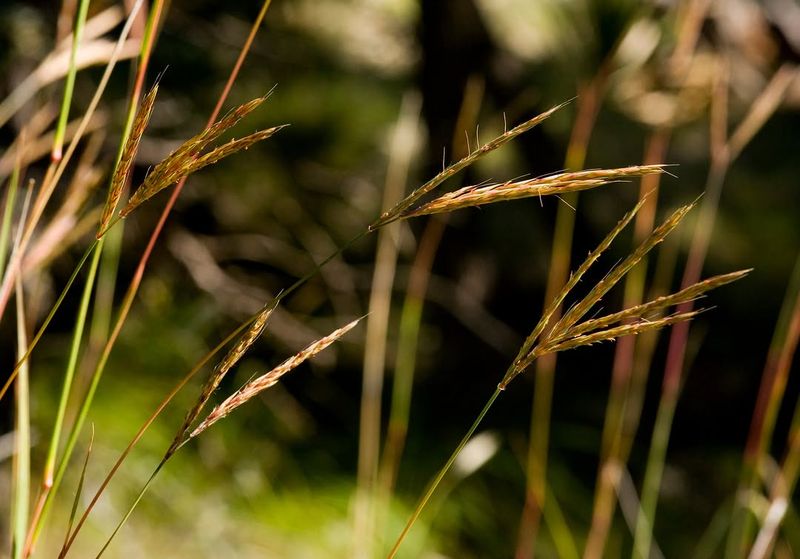
Few native grasses have an identification feature as memorable as the seed head on big bluestem.
The flowering and seed structure is made up of three branching spikes that spread out from the top of the stem, a shape that is widely compared to a turkey’s foot.
University extension sources and botanical garden descriptions consistently use this feature as the primary identification clue. It helps identify Andropogon gerardii in the field.
These seed heads typically appear in late summer and persist well into fall and winter. Leaving them standing through the colder months adds textural interest to a meadow or native bed and provides some habitat value for birds that forage on grass seeds.
Prairie restoration sources note that standing grass structure also helps protect the plant’s crown during winter and reduces soil disturbance from wind and frost.
Earlier in the season, big bluestem looks much less dramatic. The plant spends the first part of summer building height and leafy structure before the seed heads emerge.
New gardeners sometimes worry that the plant is underperforming in June and July, but patience pays off. By August, the turkey foot seed heads rise above the foliage and make the plant easy to spot from a distance.
Learning this seasonal rhythm helps you appreciate the plant’s full-year arc.
4. Plant It Where Sun Gives It Room To Rise
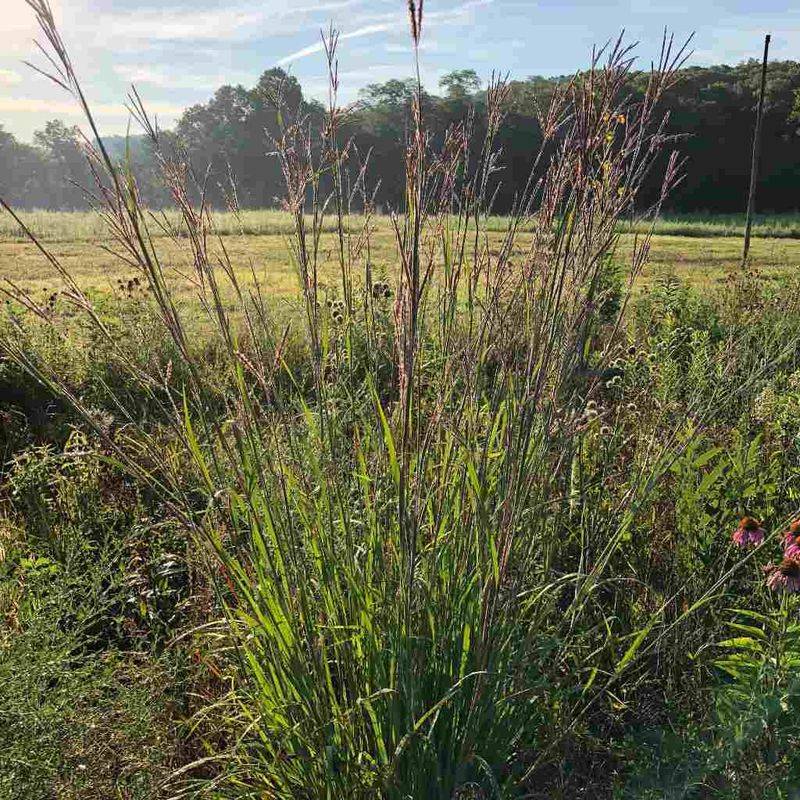
Sunlight is non-negotiable for big bluestem. Native plant sources and OSU Extension guidance are consistent on this point.
The grass performs best in full sun, meaning at least six hours of direct sun per day, and ideally more. In shaded or partially shaded sites, the stems tend to lean, flop, or produce weak growth that does not reflect the plant’s natural upright character.
Soil drainage matters too. Big bluestem is adaptable to a range of soil types, including lean or rocky soils, but it generally does not thrive in consistently waterlogged conditions.
Prairie restoration guidance notes that it performs well in average to dry soils once established, which makes it a reasonable choice for sunny slopes, open back corners, meadow-style beds, or areas where irrigation is not practical.
Height is the other factor to plan for honestly. A mature clump can easily reach five to seven feet, and some plants go taller in productive sites.
That scale makes it a poor fit for narrow walkway borders, small foundation beds, or spots where tall grasses would block sightlines or crowd neighboring plants. Compact cultivars exist, but their mature sizes and site needs should be confirmed before purchase.
Giving big bluestem the open, sunny space it genuinely needs is the most reliable way to see it perform at its best.
5. Use It To Bring Prairie Structure Back Home
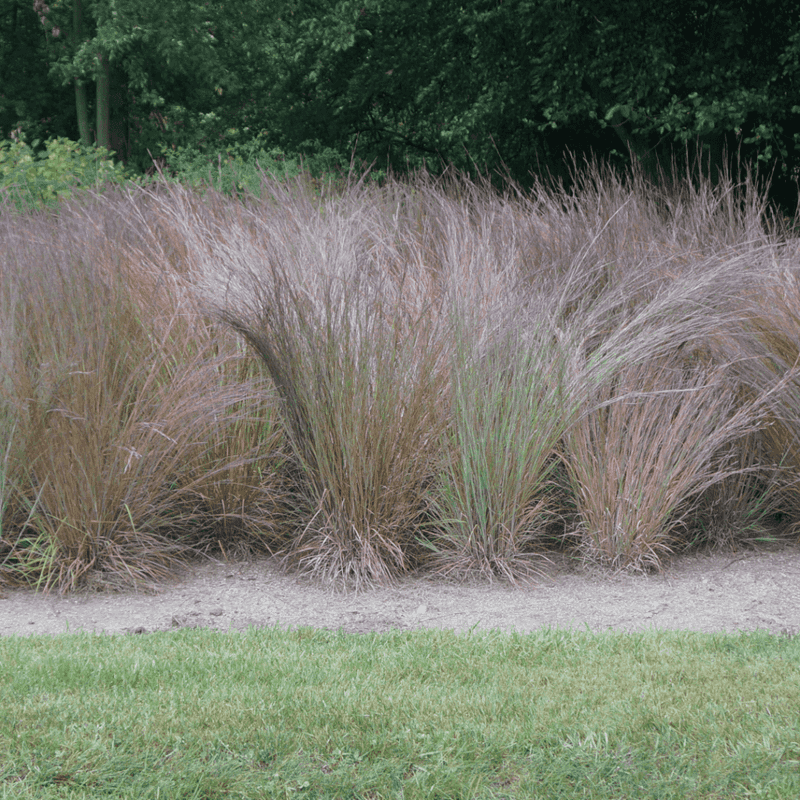
A single tall grass can change the feel of a yard more than most people expect. Big bluestem brings vertical structure, seasonal movement, and a naturalistic quality that most ornamental grasses cannot replicate.
It belongs to the regional landscape in a way that imported species simply do not. Prairie restoration sources describe it as a structural anchor in native meadow and prairie-style plantings.
In a home landscape, big bluestem works well as a background plant along a fence line or property edge, as a soft screen between spaces, or as the tall framework around which shorter native flowers and grasses are arranged.
Native landscaping guidance suggests replacing even a small patch of unused lawn with big bluestem and compatible native companions.
That can be a meaningful step toward supporting local ecology.
Planning and maintenance matter from the start. A prairie-style planting is not a set-and-forget project.
Weeds are the biggest challenge during establishment, and young native grasses can be slow to fill in while roots develop below ground. The planting will look rough in its first season and more intentional by the second or third year.
Realistic expectations and consistent early care make the difference between a planting that thrives and one that gets abandoned. Planting one grass does not restore a prairie, but it does begin to restore prairie structure in a meaningful way.
6. Pair It With Coneflowers Milkweed And Blazing Star
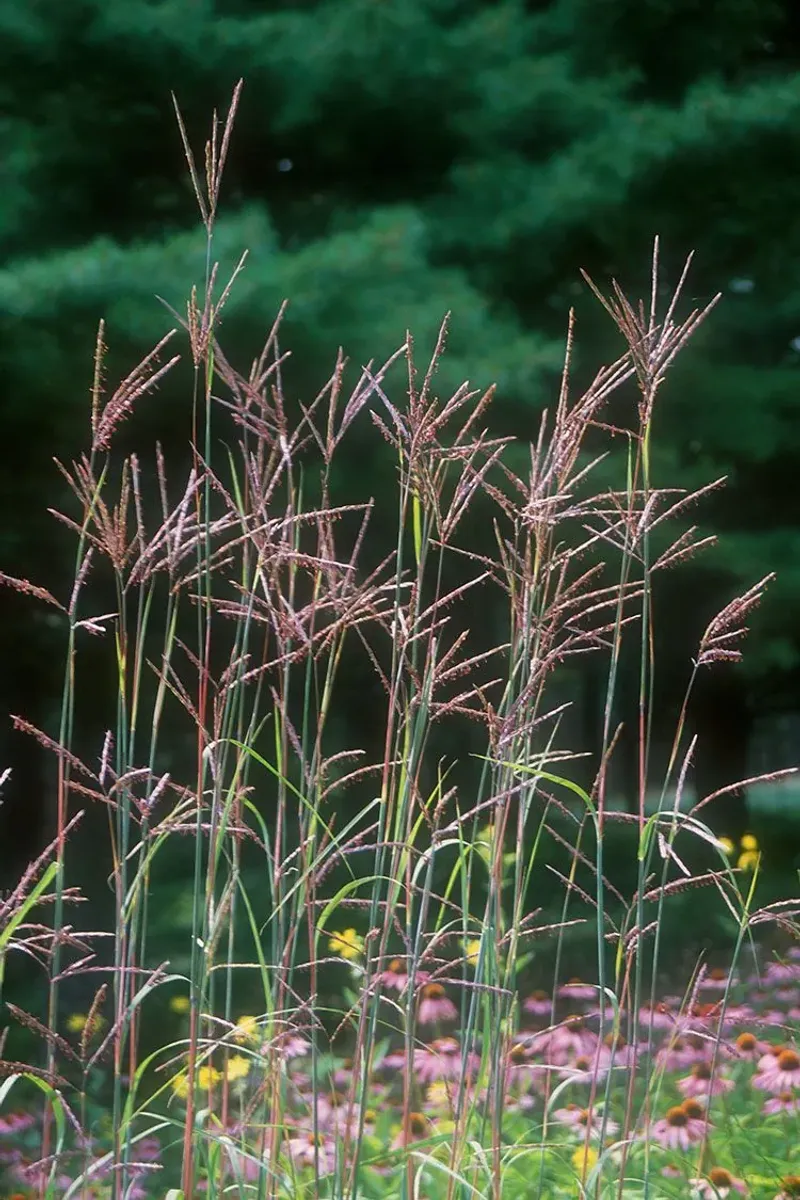
Prairie plants rarely grow alone in nature, and big bluestem is no exception. Pairing it with the right native companions creates a planting that looks intentional, supports more wildlife, and is more resilient over time.
Native plant sources and prairie restoration guides consistently suggest sun-loving natives that tolerate the same lean soils and open conditions that big bluestem prefers.
Purple coneflower (Echinacea purpurea) is a well-documented Ohio native that pairs naturally with big bluestem in sunny, well-drained sites.
Blazing star (Liatris spicata) is another native prairie species that thrives in similar conditions and adds vertical purple flower spikes in midsummer.
Common milkweed (Asclepias syriaca) is a native prairie plant that supports monarch butterflies and fits well in larger, open plantings where it has room to spread.
Black-eyed Susan (Rudbeckia hirta) and native asters and goldenrods round out the bloom season and provide late-season color and seed resources.
Little bluestem (Schizachyrium scoparium) is a shorter native grass that pairs well with big bluestem. It adds textural contrast without competing aggressively for space.
When layering plants, prairie planting guidance recommends placing big bluestem toward the back or center of a bed, mid-height flowers in front of it, and lower or spreading plants along the edges.
That layered approach keeps the planting visually balanced and ecologically diverse.
7. Give Deep Roots Time To Rebuild The Soil
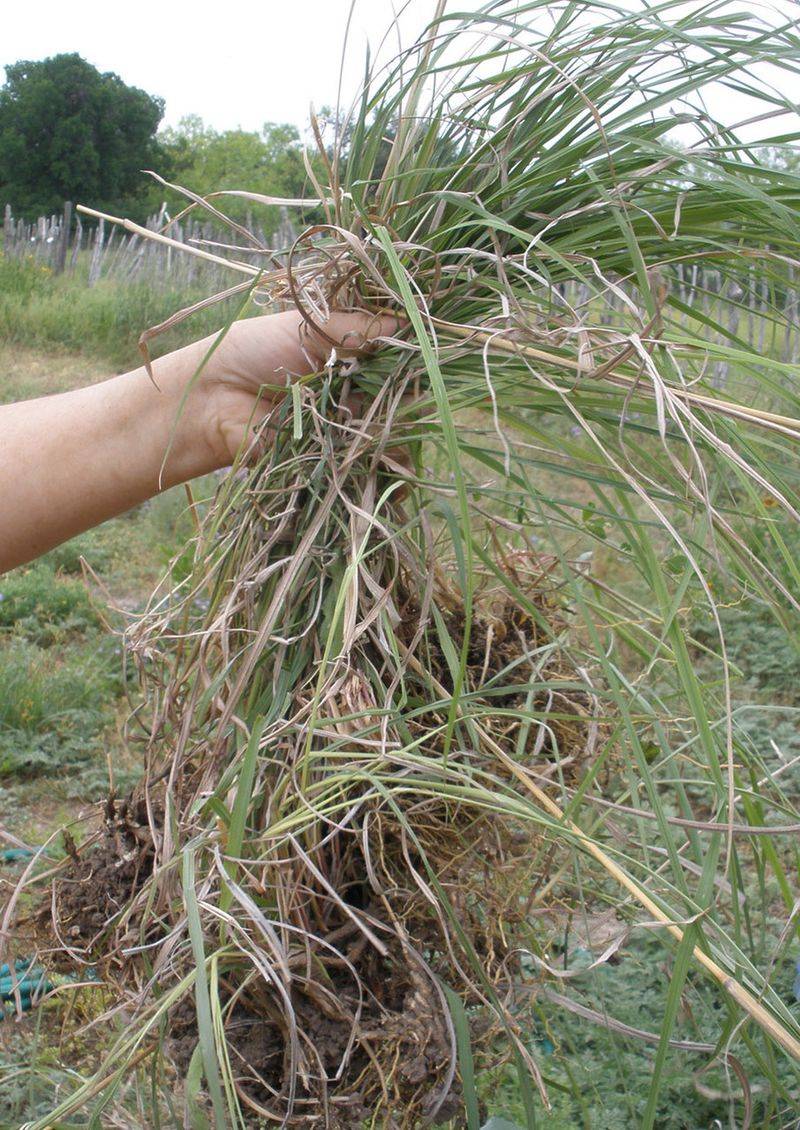
What happens underground with prairie grasses is just as remarkable as what happens above the soil surface. Big bluestem is known for developing deep, fibrous root systems that can extend several feet into the ground over time.
University extension sources and prairie ecology references describe this root depth as one of the defining characteristics of tallgrass prairie grasses.
It contributes to soil structure, organic matter, and drought resilience once plants are fully established.
Those roots take time to develop. During the first growing season, and sometimes the second, big bluestem puts a significant amount of its energy into root establishment rather than visible above-ground growth.
This is normal and expected behavior for a native warm-season grass.
Prairie restoration guidance consistently advises patience during this phase and recommends keeping the planting area weeded so young plants are not outcompeted before roots have a chance to anchor deeply.
Watering during the first dry season helps young plants get established, but deep, infrequent watering is generally more useful than frequent shallow watering because it encourages roots to reach downward.
Once established, big bluestem is notably drought-tolerant in appropriate sites.
The deep root system also contributes to soil carbon storage and erosion resistance over time, though it works best as part of a diverse planting rather than as a single-species solution to soil challenges.
8. Turn A Patch Of Lawn Into A Prairie Comeback
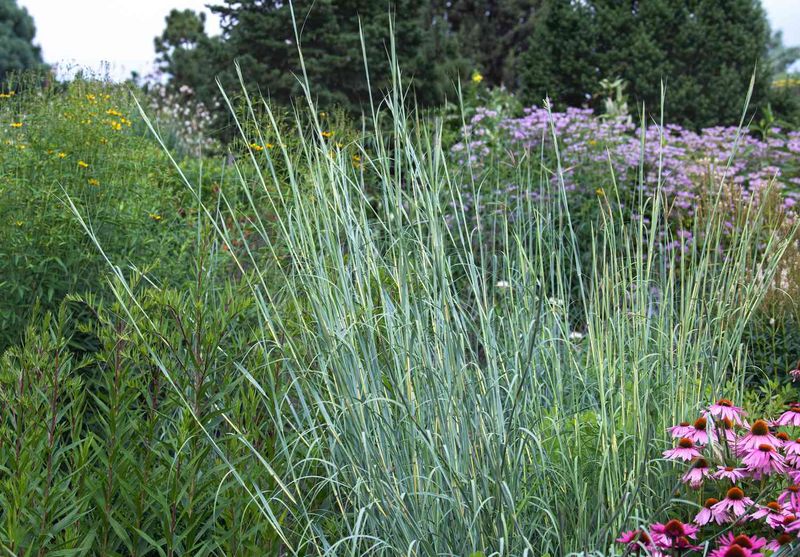
Starting small is the most practical advice for anyone curious about bringing native prairie grasses home. A sunny strip along a fence, an unused back corner, or a slope that is hard to mow can become a meaningful native planting without requiring a full yard overhaul.
Prairie restoration guidance and native landscaping sources consistently recommend beginning with a manageable area, getting the site right, and expanding from there.
Removing existing turf properly is the first real challenge. Smothering turf with cardboard and a thick layer of wood chips over a full growing season is one widely recommended approach that avoids herbicide use.
After the turf breaks down, the area can be planted with nursery-propagated native plants or native seed from reputable local sources.
Native plant societies, botanical garden plant sales, and native nurseries in this state are good places to find plants with verified regional origin.
Wild collection is not recommended and may be illegal in protected areas.
Weeding during the first two years is essential. Cutting the planting back in late winter or early spring, before new growth begins, helps remove deceased material and keeps the bed looking managed rather than neglected.
Big bluestem will not bring back the whole prairie on its own, but a well-tended patch of native grass and flowers in a sunny yard is a genuine contribution. It is one small yard remembering what the open land used to be, and what it still can become.