The Natural Fall Fertilizer That Makes Grass Thicker By Spring
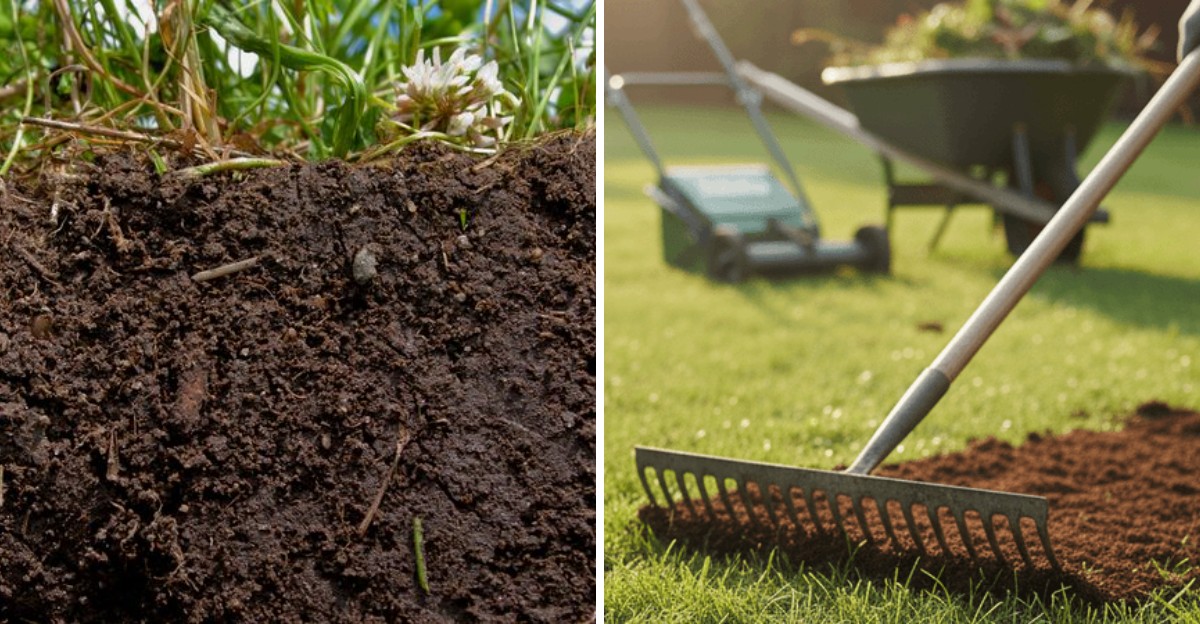
Grass roots keep growing in fall soil long after the blades slow down, often until the ground nears freezing. I had no clue my lawn was so busy underground while I raked leaves on top of it.
A little evidence from university turf researchers changed my whole autumn routine. Cool soil plus steady moisture creates prime time for roots to spread and store energy.
You might notice thin, patchy spots each spring and blame the winter. Often the real problem started months earlier, when the soil went hungry right as the roots needed a meal.
I tried one humble, earthy material last October instead of my usual bag of quick green-up pellets.
The difference showed up the following April, and my neighbors started asking questions. What was hiding in that wheelbarrow, and could it work for your yard too?
Your Grass Roots Are Busiest When the Fall Leaves Drop
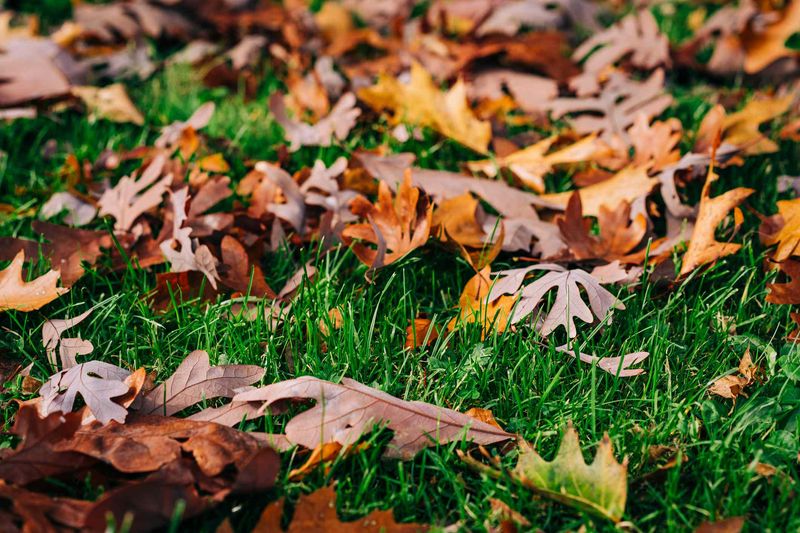
Most people put the mower away in October and assume the lawn is done for the year. Underground, the story is very different.
Cool-season grasses like Kentucky bluegrass, tall fescue, and perennial ryegrass slow their blade growth as air temperatures drop. Their roots, though, keep growing in soil that stays warmer than the air.
University extension turf specialists point out that fall is when these grasses recover from summer heat and build stored carbohydrates.
Those stored sugars act like a packed lunch for winter. When spring arrives, the grass uses them to push out new shoots and side stems called tillers. More tillers mean a denser, thicker lawn.
Here’s the catch. Roots can only build those reserves if the soil holds enough nutrients and has a healthy structure. Compacted, worn-out soil gives roots little to work with, no matter how much you water.
So the real secret to spring thickness is feeding the soil in fall, while roots are hungry and active. The right natural material does more than add a quick meal.
It also improves the ground those roots are trying to explore, which brings us straight to the hero of this story.
A Thin Layer of Dark Compost Is the Quiet Star
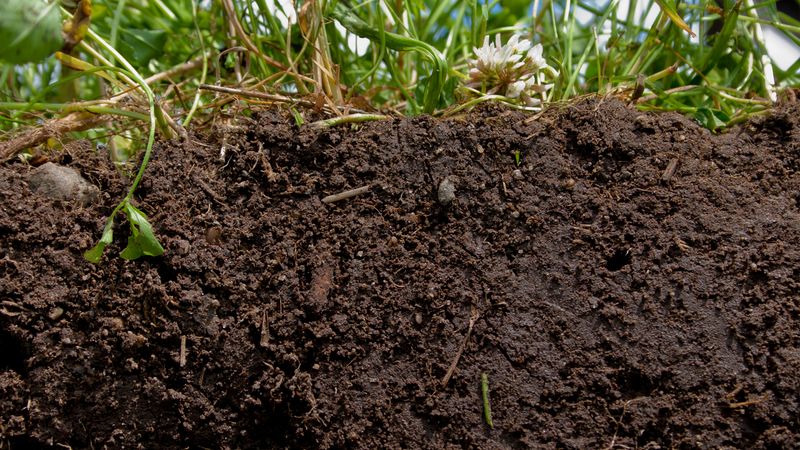
Finished compost looks a lot like rich chocolate cake crumbs, and your grass treats it like dessert. Topdressing with compost is the natural fall fertilizer I trust most for a thicker spring lawn.
Compost does two jobs at once. It slowly releases nitrogen, phosphorus, potassium, and trace nutrients as soil microbes break it down.
It also adds organic matter that improves soil structure, which helps clay drain better and helps sandy soil hold water.
That second job matters more than many people realize. Research from several land-grant universities shows compost topdressing can increase soil organic matter and microbial activity over time.
Healthier soil supports deeper roots, and deeper roots mean tougher turf. Compost is gentle too. It rarely burns grass the way a heavy dose of fast synthetic fertilizer can.
One honest note belongs here. Compost is lower in nitrogen than many bagged products, so results build over seasons rather than overnight.
Turf experts often suggest pairing it with a slow-release organic fertilizer if your soil test shows low nitrogen.
Look for mature compost that smells earthy, not sour. Screened compost spreads more easily and settles between blades without smothering them.
Spreading Compost Between Grass Blades Takes Less Effort Than You Expect
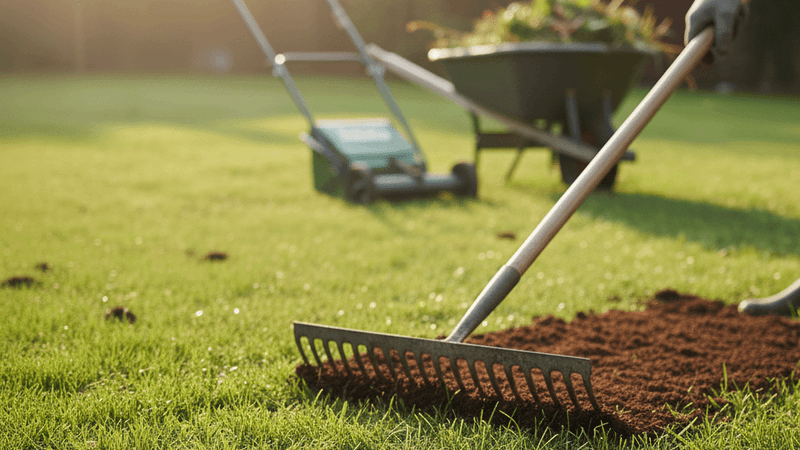
My first attempt involved a shovel, a tarp, and far too much compost in one corner. I learned fast that a light hand works best.
Start by mowing a little shorter than usual, but not scalped. Short grass lets the compost fall down to the soil instead of sitting on top of the leaves.
Core aeration first is a smart move. A core aerator pulls small plugs of soil out of the lawn, and compost can then drift into those holes where roots are waiting. Many extension services recommend aerating cool-season lawns in early fall.
Aim for a layer about one-quarter inch thick, and no more than one-half inch. Thicker piles can block sunlight and stress the grass. A cubic yard of compost covers roughly 1,300 square feet at about a quarter inch.
Spread small shovelfuls and then work them in with the back of a leaf rake. A rolling mesh compost spreader makes the job quicker on bigger lawns.
Finish with a light watering. That helps the compost settle, and you should barely see it a few days later. If the grass blades still look buried, rake again to thin things out.
Cool-Season Lawns Want Their Fall Feeding Before the Ground Freezes
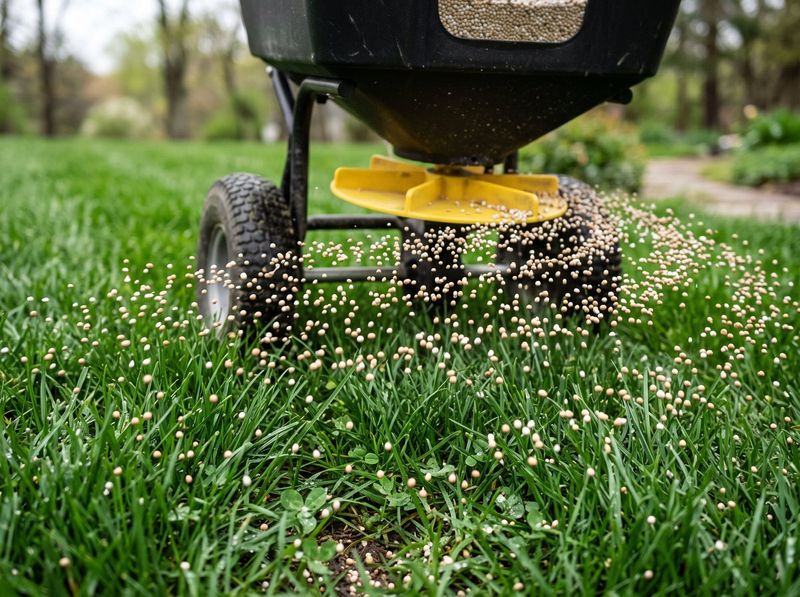
Timing can make a good plan great or turn it into wasted effort. Fall feeding works because roots are still active, so you want to show up while they are.
For cool-season grasses across northern and transition-zone states, the sweet spot usually falls from early September through October. Many extension turf guides call September the most valuable feeding month of the year for these lawns.
Natural materials need extra lead time. Soil microbes break down compost and plant-based meals, and those microbes slow down as soil cools. Applying several weeks before the ground freezes gives them time to start the work.
Some regional variety is worth keeping in mind. A lawn in Minnesota may wind down by mid-October, while one in Virginia or Tennessee can keep growing into November. Watch your soil, not just the calendar.
Pair fall feeding with overseeding if your lawn looks thin. Seed sown in late summer or early fall, with compost on top, gets a cozy bed and steady moisture.
Skip the heavy feeding during a drought, though. Stressed, dormant grass cannot use nutrients well, so water first and feed once growth picks up again.
Bermudagrass and Other Warm-Season Lawns Play by Different Rules
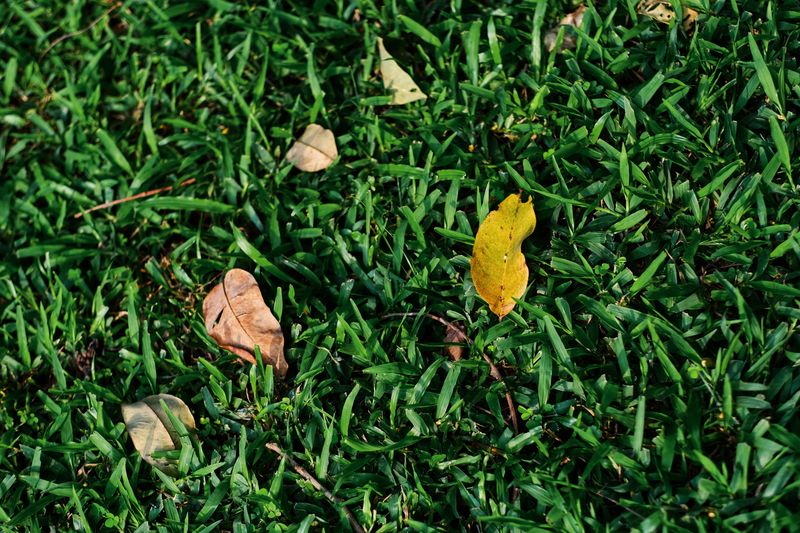
Southern lawns march to their own drumbeat. Bermudagrass, zoysia, centipede, and St. Augustine grow hardest in summer heat and head toward dormancy as nights cool.
That changes the fall game. Extension specialists in states like Georgia, Texas, and Florida often warn against heavy nitrogen in late fall for these grasses.
Lush new growth right before dormancy can raise the risk of winter injury and diseases such as large patch.
So what can a warm-season lawn owner do? A light compost topdressing in late summer or very early fall still helps build soil without pushing a big growth spurt.
Potassium deserves attention here too. Some southern turf guides suggest potassium in fall to support winter hardiness, but only when a soil test shows a need.
Your biggest feeding for warm-season grass comes after spring green-up, once the lawn is actively growing. Think of fall as tidying the pantry rather than serving a feast.
Not sure which grass you have? Your county extension office can identify it from a sample. Knowing your grass type keeps you from feeding at the wrong moment, which saves money and stress.
Shredded Fall Leaves and Alfalfa Meal Make Handy Sidekicks
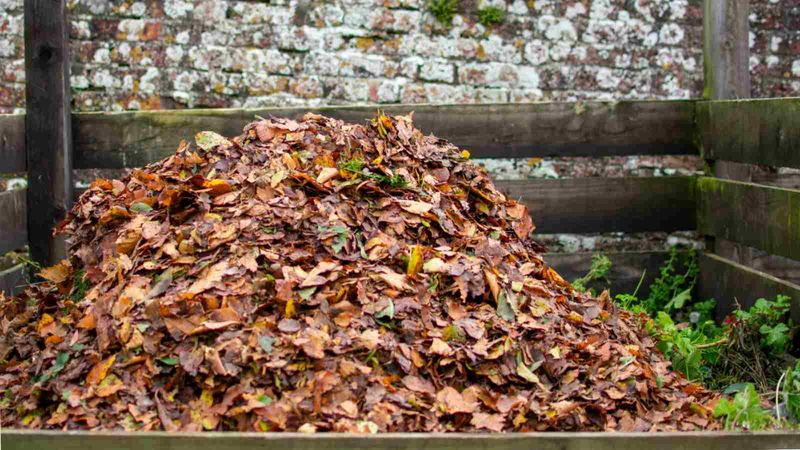
Free fertilizer drops from the sky every autumn, and most of us bag it up and haul it away. Those fallen leaves can feed your lawn instead.
Michigan State University research found that mowing leaves into small pieces and leaving them on the lawn did not harm turf. The shredded bits break down and add organic matter, and some studies even saw fewer dandelions.
The trick is chopping them finely enough that grass shows through. Alfalfa meal is another natural option. Made from ground alfalfa plants, it offers modest nitrogen, around 2 to 3 percent, plus potassium and trace minerals.
Soil microbes feast on it, which releases nutrients slowly. Spread alfalfa meal with a regular broadcast spreader and water it in lightly. Keep the bag sealed, since its smell can attract curious pets and wildlife.
Other natural choices include soybean meal and feather meal, which carry more nitrogen. Corn gluten meal often gets promoted for lawns too, but it can stop new grass seed from sprouting, so skip it if you plan to overseed.
Mixing these sidekicks with compost gives your soil both a slow meal and long-term structure.
A Simple Soil Test Kit Shows What Your Lawn Is Really Craving
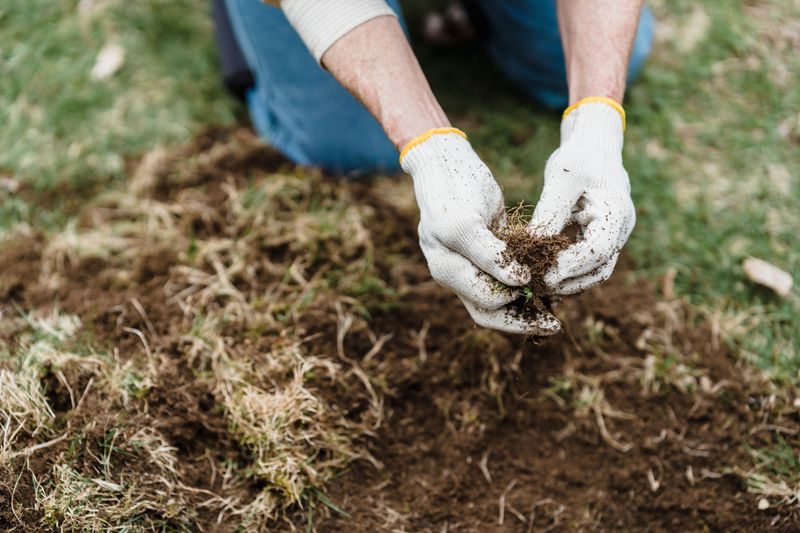
Guessing is fun for game night, but it rarely works for lawns. A soil test tells you exactly what your grass has and what it lacks.
Most state university extension offices offer affordable soil testing, often between 15 and 30 dollars. You collect small samples from several spots, mix them in a clean bucket, and mail a portion in.
Results usually cover pH, phosphorus, potassium, and organic matter. Why bother? Many lawns already have plenty of phosphorus, and extra can wash into streams and feed algae.
Some states, including Minnesota and New York, restrict phosphorus fertilizer on established lawns unless a test shows a need. Soil pH matters too. Grass prefers slightly acidic to neutral soil, roughly 6.0 to 7.0.
If your soil sits far outside that range, nutrients get locked up, and even the best compost struggles.
Testing every three to four years is plenty for most yards. Fall is a great time to sample, since you can plan corrections before spring.
Put it all together and the formula is simple. Test your soil, topdress with compost, recycle your leaves, and let the roots do their quiet winter work.