The Ohio Snakes You Might Find In Your Basement In Fall (And What To Do)
You flip on the basement light for a box of Christmas decorations and spot a coil near the water heater. Your heart does a little flip.
Ohio’s cooler nights send snakes hunting for warm, quiet corners, and your foundation has more doors than you realize. Most of the visitors are harmless.
A few look scarier than they are. The trick is knowing which is which before you grab a broom.
Panic makes people do silly things. Some swing at the snake.
Others slam the door and spend the night on the couch. A calmer plan beats both.
A short list of steps handles the situation, and it helps to read it before you ever need it.
Take five minutes tonight to learn who might be sharing your house. Future you will be glad you did.
1. Fall Sends Snakes Looking For A Winter Hideout
Picture yourself without a furnace, a coat, or a warm blanket. That is life for a snake when October rolls into the state.
Snakes are cold-blooded, so their body heat comes from the world around them. When nights cool down, they must find a safe spot before winter arrives.
In Ohio, snakes go through something called brumation. It works a lot like hibernation in bears, but for reptiles.
During brumation, a snake’s body slows way down. It moves less, rests more, and usually stops eating until spring.
Out in the wild, snakes tuck into rock crevices, old burrows, and caves. Those spots stay above freezing deep underground.
Basements and crawl spaces can feel just as inviting. They are quiet, often a bit damp, and may hold mice or insects to snack on.
So how does a snake get in? Cracks in the foundation, gaps in siding, and open ground-level windows are common doorways.
Sometimes people carry snakes inside by accident. A pile of firewood, a potted plant, or a stack of patio cushions can hide a tiny stowaway.
Before bringing outdoor items in for the season, give them a good shake. A quick check can save you a surprise later.
Knowing why snakes come inside makes the whole thing less scary. They want shelter, not trouble, and that is good news for you.
2. Garter Snakes Are Among Ohio’s Most Common Backyard Snakes
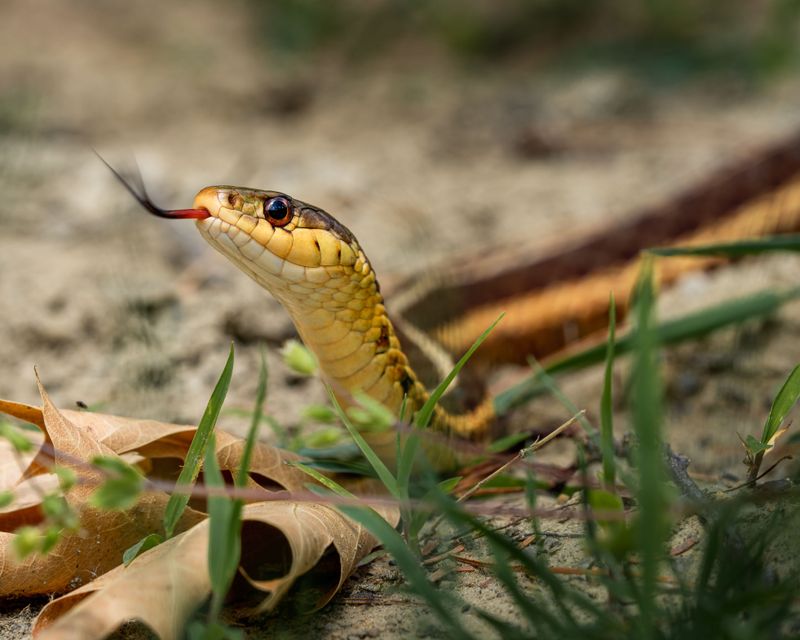
If you have ever spotted a skinny striped snake zipping through the grass, you have probably met a garter. The Eastern gartersnake is the most abundant snake in all of the state.
Ohio actually has three kinds of gartersnakes. You might see the Eastern, the Plains, or the rarer Butler’s gartersnake.
Look for long stripes running down the body. They can be yellow, orange, red, gray, green, or even turquoise on a black or brown background.
Most Eastern gartersnakes are 18 to 26 inches long. A few big ones stretch to about 36 inches.
Here is the relief part: garter snakes are not venomous. They have tiny teeth and may nip if grabbed, but they have no fangs.
Your Ohio Garden Changes Every Week. Your Plan Should Too.
Gardening in Ohio changes quickly throughout the season. Every Friday you’ll receive a simple weekly plan showing exactly what to plant, prune, fertilize, harvest, and protect so you never miss the right timing.
They might also release a stinky musk when handled. That smell is their way of saying, please put me down.
Garters love moist places like grassy spots near ponds or streams. Debris piles and leaf heaps give them great cover.
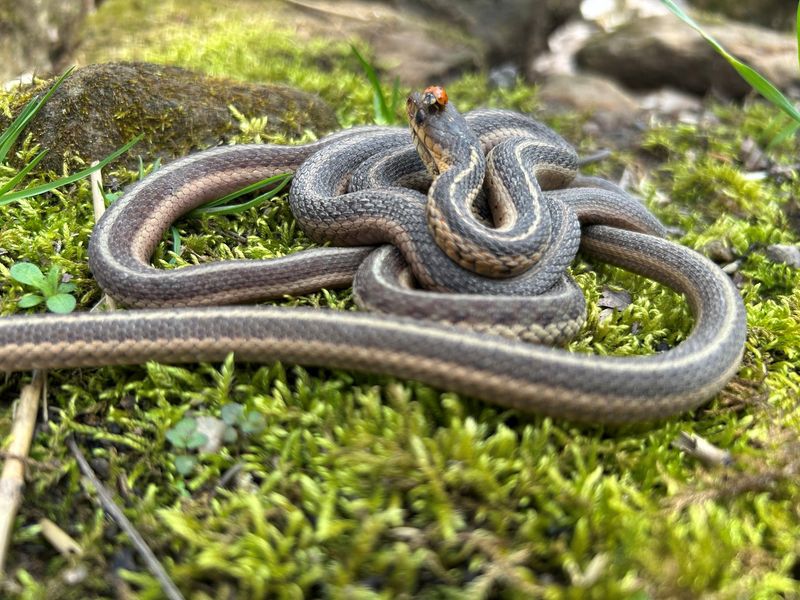
Fun fact: garter snakes sometimes spend winter in groups. If you find one in your basement, there could be a few friends nearby.
To move one outside, gently guide it into a bucket with a broom. Release it near brush or tall grass away from your house, and wash your hands afterward.
3. Brown Snakes Are Small Enough To Slip Through Tiny Gaps
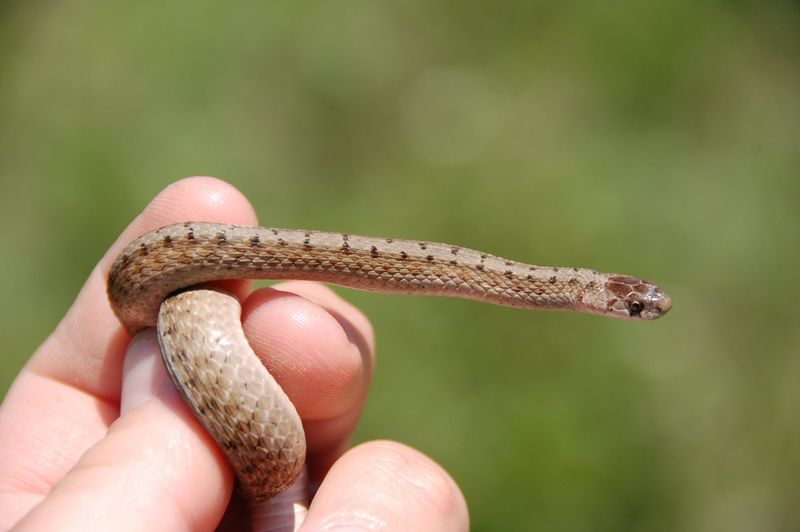
Blink and you might mistake one for a twig. Brown snakes are some of the smallest snakes Ohio homeowners stumble across.
Most are only about the length of a pencil or a ruler. They are brownish or grayish, often with two rows of faint dark spots down the back.
Their small size is their superpower. Most snakes can wiggle through a crack only half an inch wide, and little brown snakes have an easy time of it.
That means a gap under a door, a loose window screen, or a hole around a pipe can be wide open for them. You may not even notice the opening until a snake shows up.
Brown snakes are harmless to people. They mostly eat slugs, earthworms, and snails, so gardeners often consider them helpful.
You will usually find them under leaves, mulch, flat stones, or boards. In fall, they look for underground spaces that stay a little warmer.
If one turns up in your basement, try not to panic. Slide a piece of cardboard under it, cover it with a cup, and carry it outside.
Then go hunting for tiny gaps with a flashlight. If a pencil fits through a crack, a brown snake probably can too, so mark that spot for sealing.
4. Eastern Milksnakes Turn Up Around Homes Too
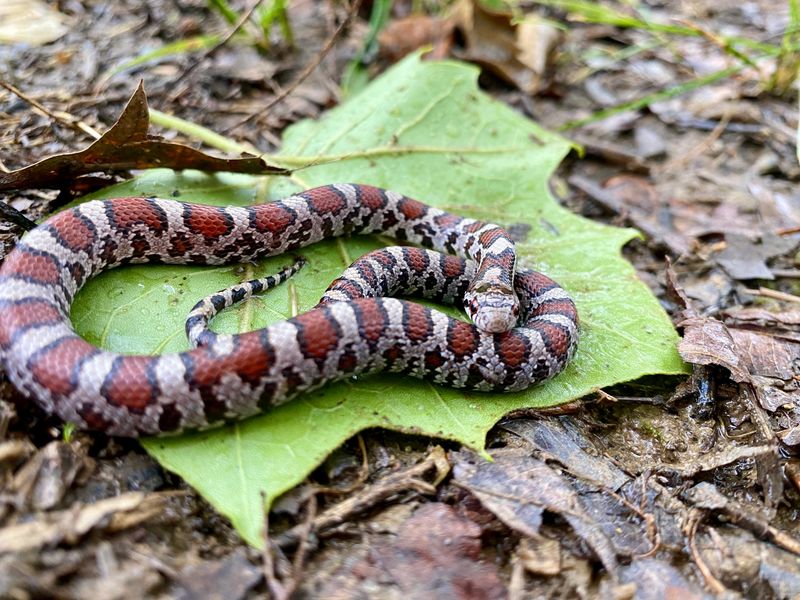
Long ago, farmers spotted these snakes in barns and decided they were sneaking milk from cows. The truth is far less spooky and a lot more useful.
Eastern Milksnakes hung around barns because barns were full of mice. They were there for the rodents, not the milk buckets.
You can find these snakes all over the state, even in towns and cities. They are known to slip into houses now and then.
Adults usually grow 24 to 36 inches long. Their smooth scales are gray to tan with reddish-brown or brown blotches outlined in black.
Milksnakes are non-venomous constrictors. They squeeze their prey, which includes mice, other small rodents, and sometimes smaller snakes.
Because they gobble up rodents, they are a big help on farms and around homes. A milksnake in your basement may be a sign you have a mouse problem worth checking.
Here is a quirky trick they pull. When scared, a milksnake may shake its tail fast against leaves, making a buzz that sounds like a rattlesnake.
Do not let the act fool you, because it is mostly bluff. Give it space, keep pets away, and use a long-handled broom to guide it toward an open door.
If you feel unsure, a local wildlife removal service can help safely.
5. Gray Ratsnakes Can Climb Walls And Ductwork
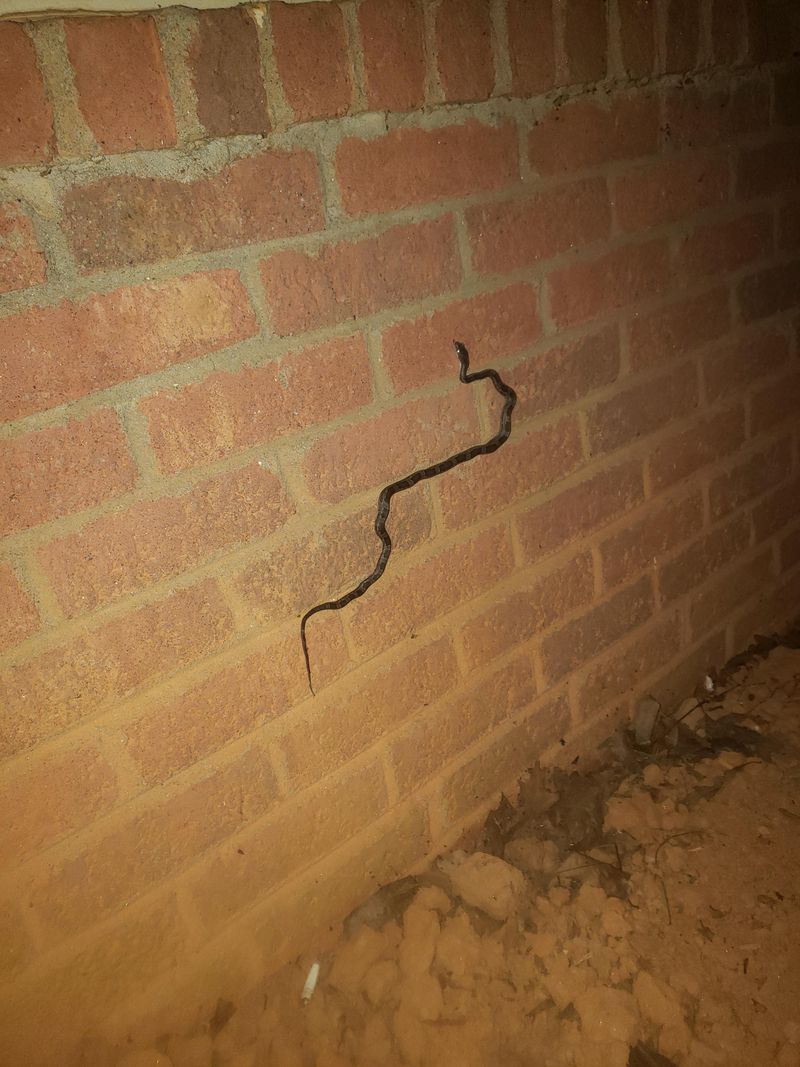
Imagine opening the attic hatch and seeing a snake longer than you are tall. For some families, a gray ratsnake has made that story real.
Despite the name, most adults in the state are glossy black, which is why many folks call it the black rat snake or chicken snake. It is one of the most common snakes that sneaks into Ohio homes.
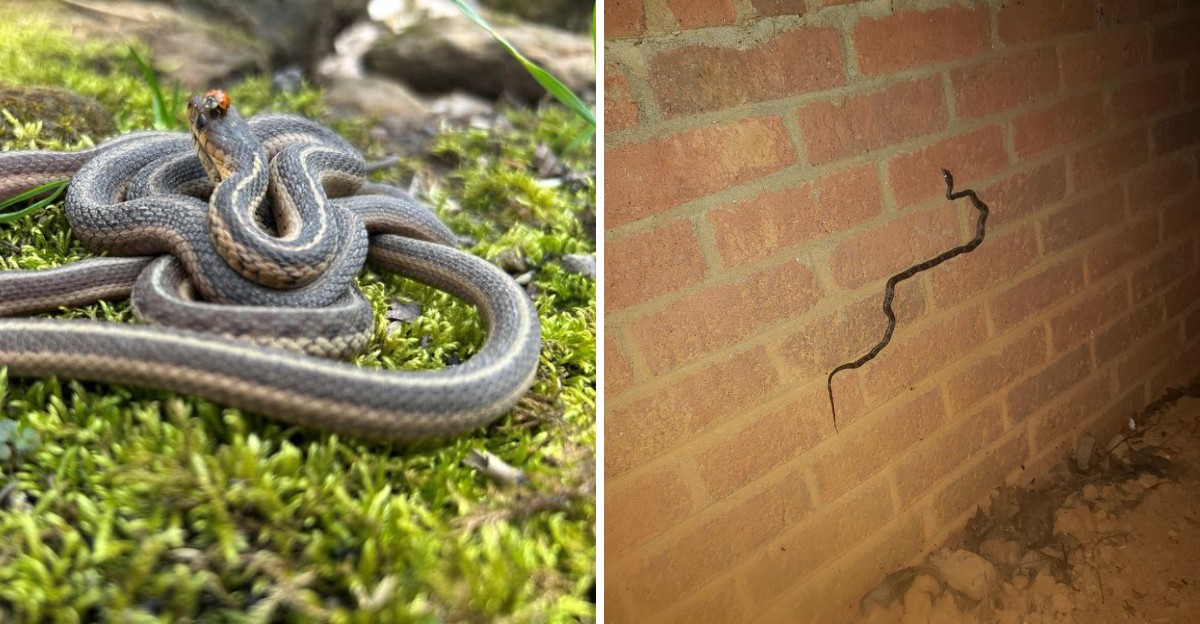
Gray ratsnakes are amazing climbers. They can grip the mortar lines between bricks and crawl right up the side of a house.
They also use tree branches that hang over the roof as a bridge. From there, an open vent or loose soffit becomes an easy entrance.
Inside, they may travel along ductwork, rafters, or pipes. Attics are a favorite spot because heat rises and birds or rodents may be nesting there.
These snakes are big, often 40 to 70 inches long. A few giants have been reported at close to 9 feet!
Good news, though: gray ratsnakes are not venomous. They help control rats, mice, and other small critters.
To keep them out, trim tree limbs away from your roof by several feet. Cover vents with sturdy screening and check attic openings each spring.
Because they are large and can be grumpy when cornered, calling a wildlife professional is often the smart move.
6. Young Ratsnakes Often Appear In Fall
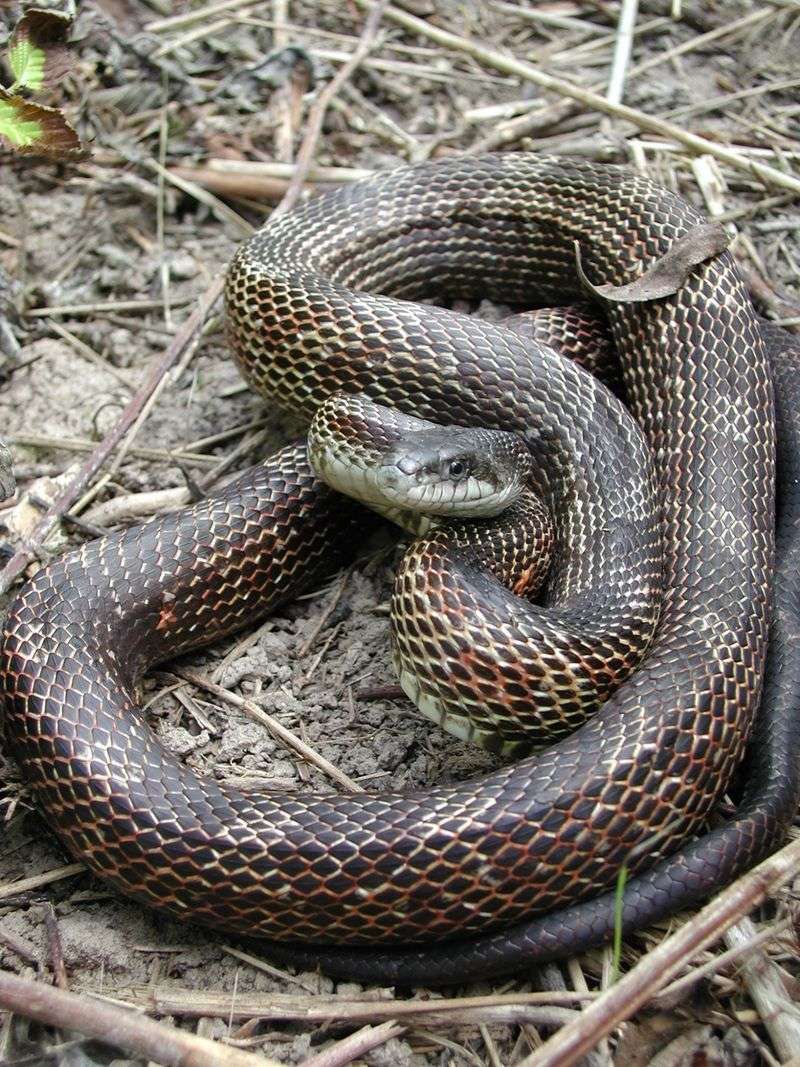
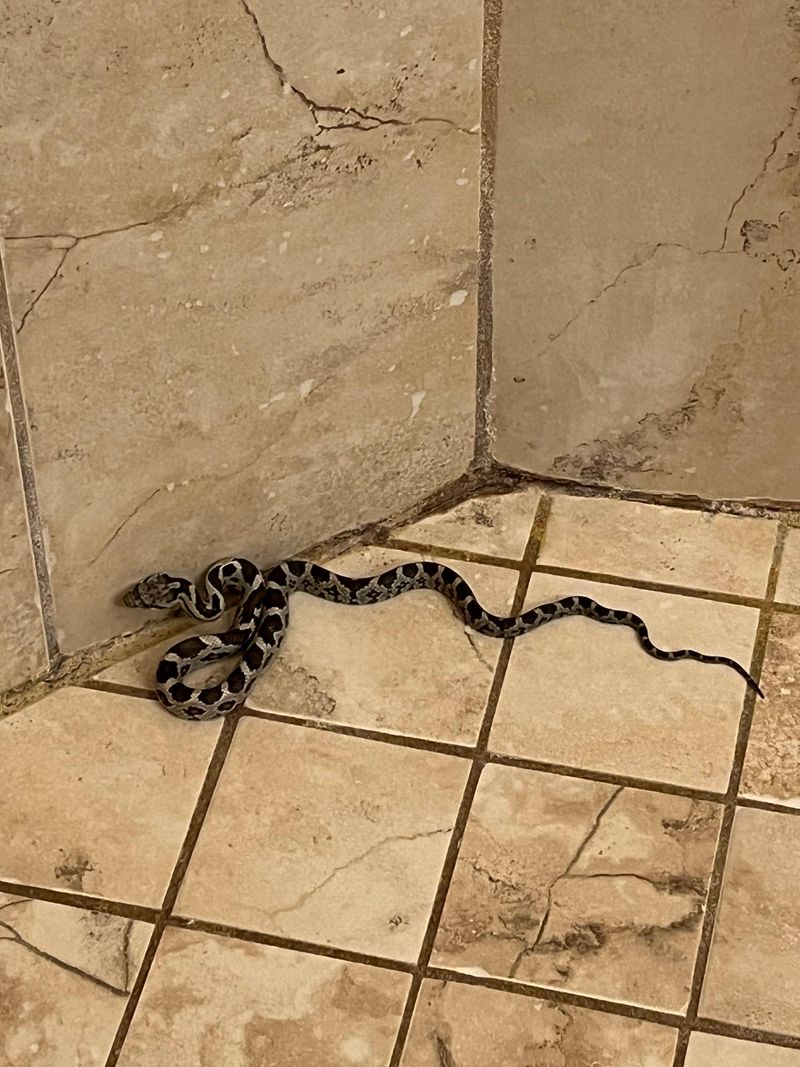
Here is a puzzle that trips up lots of homeowners. You find a small blotchy snake in the basement, and it looks nothing like the big, shiny black ones you have seen.
Chances are good it might be a young ratsnake. Baby ratsnakes are lighter gray with bold dark patches, so they can be mistaken for milksnakes or even something dangerous.
Ratsnake eggs often hatch in late summer. That means plenty of young snakes are out exploring just as the weather starts to cool.
Like all snakes in fall, these youngsters need a safe place to spend winter. Being new to the world, they may wander into spots older snakes would skip.
A basement with gaps near the ground can look like a perfect shelter. Window wells, dryer vents, and garage doors are common surprise entry points.
Young ratsnakes are harmless to people. They may puff up or strike when nervous, but they have no venom.
If you find one, stay calm and grab a pillowcase or bucket. Gently scoop it up with gloves or a broom and release it near woods or brush.
Spotting a baby can also be a clue. Larger ratsnakes may live close by, so it is worth checking your home for openings.
7. Snakes May Return To The Same Basement Year After Year
Ever feel like the same snake keeps showing up each October? You might not be imagining things.
Snakes rely on good winter spots, and a safe one is hard to find. Places under concrete steps, porches, and patios often stay above freezing all winter.
Snakes reach these hideouts through cracks or holes in the foundation. Once a site works well, it makes sense that snakes could come back again.
Experts have not proven that one single snake returns to the exact same basement. Still, the steady use of the same shelters suggests it can happen.
Here is a tricky part that surprises people. If you seal entry holes while snakes are still inside, they may push deeper into your house.
Worse, a trapped snake that does not make it out could leave a nasty smell inside your walls. Nobody wants that kind of mystery odor in January.
So timing matters a lot. Wait until late spring or summer, when snakes have left their winter shelter, before closing up gaps.
Meanwhile, keep notes on where and when you spot snakes. A simple list on your phone helps you find their favorite routes.
That little bit of detective work makes your repair plan much stronger next season.
8. Seal Foundation Cracks And Gaps
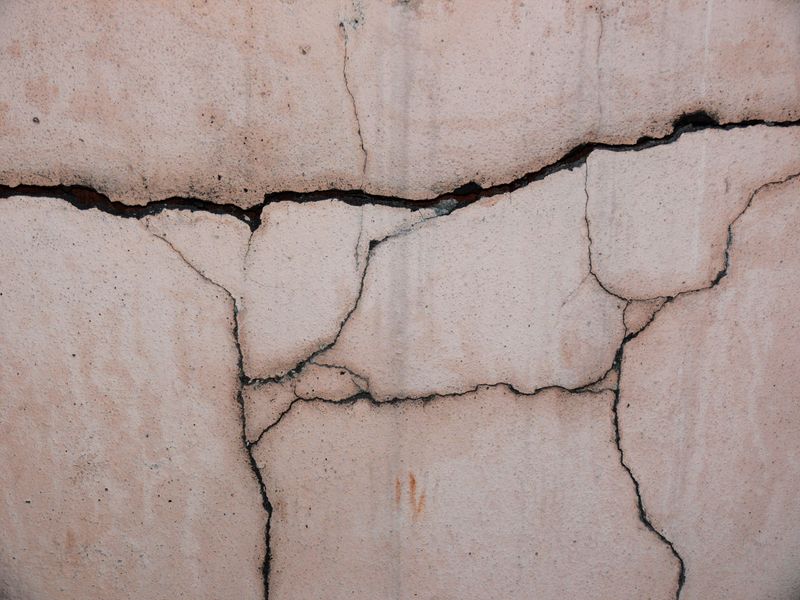
Think of your house like a castle, and every crack is a secret tunnel. Close the tunnels, and uninvited guests have a much harder time getting in.
Most snakes can squeeze through a gap just half an inch wide. Walk around your home and look closely at the foundation, siding, and ground-level windows.
Pay extra attention to holes around pipes, wires, and conduits. Also check where steps, stoops, or patios meet the house.
Fill cracks with concrete or a strong patching material. For larger openings, use quarter-inch galvanized mesh, often called hardware cloth, or sheet metal.
Screen your vents, louvers, exhaust fans, and chimney too. A steel plate along the bottom of exterior doors can shrink the gap to less than a quarter inch.
Do this work in summer when snakes are less likely to be inside. That way, nobody gets trapped in your walls.
Next, cut off the snack bar. Snakes follow rodents, so setting mouse traps and storing pet food in sealed bins helps a lot.
Your yard matters as well. Keep grass short, move gardens away from the foundation, and clear out piles of rocks, logs, and boards.
Fewer hiding places outside means fewer visitors knocking at your basement door.
9. Skip The Repellents, Since None Work
Walk down any hardware store aisle, and you will find bottles promising a snake-free home. Sadly, the science behind those promises is pretty thin.
Many repellents use strong smells to scare snakes away. Common ingredients include sulfur, naphthalene from mothballs, and oils like cinnamon, clove, and cedar.
These scents may bother a snake for a short time. The smell fades, though, and snakes often slither right back.
Mothballs come with extra problems. They are not meant for outdoor use, and their fumes can be harmful to kids, pets, and you.
Electronic gadgets do not do much better. Devices that buzz, vibrate, or send out high-pitched sounds might startle a snake for a moment, but they do not keep it away.
So what really helps? Physical barriers are your best bet, like sealed cracks, screened vents, and tight door sweeps.
Snake fencing can work around small areas such as a garden or play space. For a whole yard, it may be too costly or hard to install.
Save your money for caulk, mesh, and mouse traps instead. Those simple tools do far more than a spray bottle ever could.
And remember, most basement snakes are harmless helpers, just looking for a warm winter nap.