The One Thing North Carolina Gardeners Do In August To Get Panicle Hydrangeas That Stop Traffic
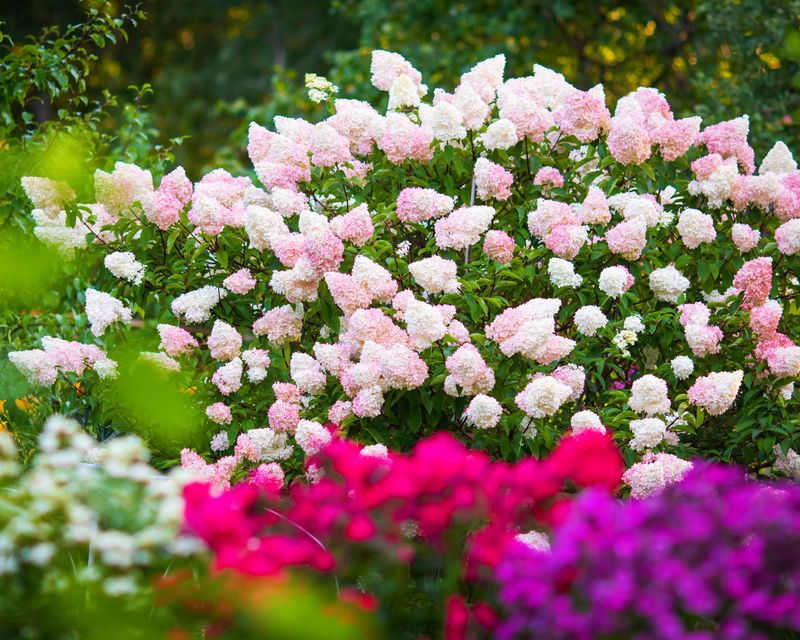
Panicle hydrangeas are putting on their best show right now, and the ones that genuinely stop you in your tracks belong to gardeners who made a few smart moves at the right time. The secret is not some dramatic August pruning trick. It is mostly about keeping the root zone moist through the heat and understanding that the pruning decision that actually shapes next year’s flower heads belongs in late winter, not late summer.
August Care Protects the Bloom Display
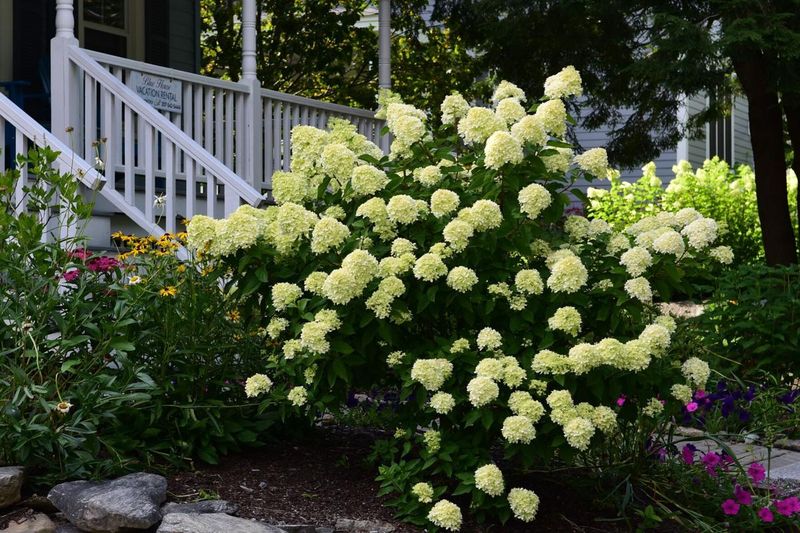
Somewhere around mid-August, a neighbor’s panicle hydrangea catches your eye from the road. The cones are fat, creamy white, and the plant looks like it has never missed a meal. You wonder what they did differently. The honest answer is that no single August pruning trick reliably produces unusually large or traffic-stopping flower heads on Hydrangea paniculata.
What those gardeners are probably doing is something quieter and more consistent: keeping the root zone moist and the mulch in good shape while the plant finishes its summer-into-fall bloom cycle.
Panicle hydrangea is a cone-flowered species that earns its reputation by blooming later than most shrubs, carrying its display well into fall across North Carolina’s Coastal, Piedmont, and Mountain regions. NC State Extension’s plant profile lists it as suitable statewide, preferring moist, well-drained soil and full sun to partial shade. The plant has shallow roots, large leaves, and real water demand during hot weather. August heat can put that demand into overdrive.
Consistent root-zone moisture and properly applied mulch are the timely August priorities. These practices protect the current flower display rather than guarantee unusual size. The pruning decision that most directly influences future flower-head size happens in late winter or early spring, before new growth begins, and
Missouri Botanical Garden guidance points to thinning as the structural move most likely to produce larger panicles. August’s job is simpler: keep the plant healthy enough to finish what it started.Heat Makes Soil Checks More Important
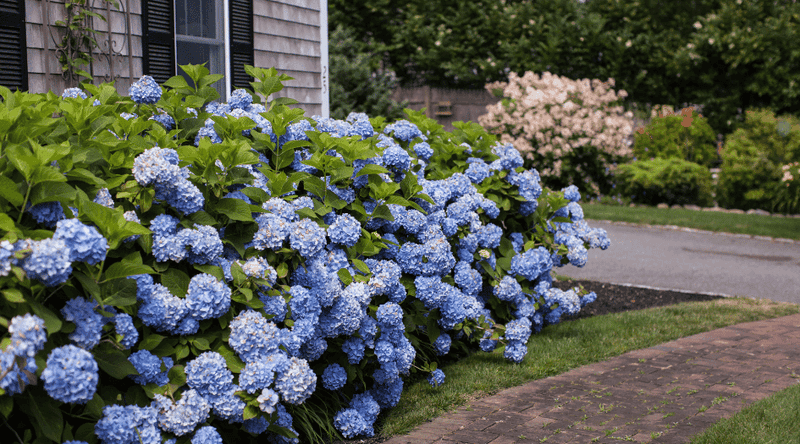
Pull back a corner of the mulch on a hot August afternoon and you may be surprised by what you find. Piedmont clay can look bone dry on the surface and still hold moisture several inches down. Sandy Coastal Plain or Sandhills soil can do the opposite, feeling cool at the top right after a thunderstorm and drying out again within a day. Panicle hydrangea has shallow roots that sit close to the surface, so what happens in the top few inches of soil matters more than you might expect.
The plant’s large leaves move a lot of water through transpiration during peak summer heat, which is why many North Carolina gardeners notice drooping leaves on the hottest afternoons. Here is where it gets tricky: that midday wilt does not always mean the soil is dry. University of Maryland Extension notes that panicle hydrangeas can wilt during high daytime temperatures even when soil moisture is adequate, then recover on their own by evening. Adding more water to a plant that is not actually thirsty, especially in poorly drained Piedmont clay, can deprive roots of oxygen.
Your North Carolina Garden Changes Every Week. Your Plan Should Too.
Gardening in North Carolina changes quickly throughout the season. Every Friday you’ll receive a simple weekly plan showing exactly what to plant, prune, fertilize, harvest, and protect so you never miss the right timing.
The right move is to check the soil before you reach for the hose. Push a finger or a hand trowel a few inches into the root zone beneath the mulch. NC State’s woody ornamentals guidance recommends accounting for soil type, drainage, shade, and weather before watering, because the same rule does not apply equally across the state. A plant sitting in well-drained sandy soil after three dry days genuinely needs water.
A plant in slow-draining clay after last night’s storm probably does not.
Water Slowly When the Root Zone Is Dry
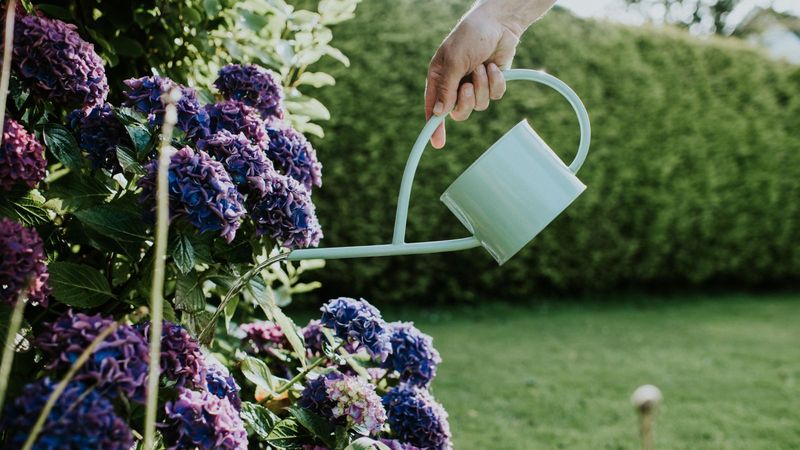
Once you have confirmed the soil is actually dry beneath the mulch, the approach matters as much as the timing. A quick splash of water at the base of the trunk does very little for a large-leafed shrub pushing through an August heat wave. Water needs to move down through the root zone, not just wet the surface and evaporate.
A practical routine for an established panicle hydrangea is to water at the base, slowly, using a soaker hose or a hose set to a low trickle. NC State’s woody ornamentals handbook offers roughly 12 inches of wetted soil as a useful depth target, while making clear that the amount of water required changes with soil type, compaction, slope, and drainage. That 12-inch figure is a flexible goal, not a fixed formula. Sandy Coastal Plain soil may reach that depth quickly.
Dense Piedmont clay may need more time and fewer gallons than you think, because water moves slowly through it and can pool rather than penetrate.
Watering automatically every afternoon is not the answer, especially after thunderstorms drop an inch of rain overnight. Check the soil first, every time. University of Maryland Extension cautions against repeatedly adding water to poorly drained ground, where saturated soil can harm roots just as effectively as drought. If your plant sits in a low spot that stays wet after rain, watering more is the last thing it needs.
The goal is consistent moisture, not constant moisture, and the difference is worth knowing before you turn on the hose.
Use Mulch Without Trapping Moisture Against the Plant
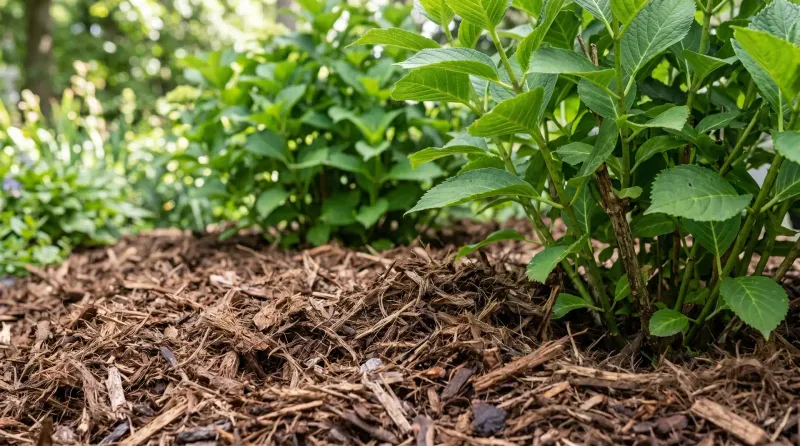
Organic mulch is one of the most useful tools in a North Carolina August, and it does two things at once for panicle hydrangeas. Spread across the root zone, it slows evaporation from the soil surface and keeps soil temperatures from spiking during the hottest part of the day. On a Piedmont afternoon that pushes into the mid-90s, that shade at soil level is genuinely helpful.
NC State’s extension gardener handbook identifies mulch as a practical tool for moisture conservation around woody ornamentals, and NC State’s perennial production guidance notes that mulch also suppresses weeds that compete for water. A 2-to-3-inch layer of shredded bark, wood chips, or pine straw spread out to the drip line of the plant covers the shallow root zone well. The one rule that cannot be skipped: keep the mulch away from direct contact with the stems and the crown of the plant. Piling it up against the base traps moisture and can contribute to rot at the crown, which University of Maryland Extension lists among common hydrangea problems in heavy or poorly drained soil.
Mulch also does not make a wet site safe. If your soil drains slowly and the ground stays soggy after rain, a thick layer of mulch will hold even more moisture against the roots. Make it a habit to check mulch depth, soil moisture underneath it, and how quickly the ground dries after a storm. Mulch is one layer of a broader approach, not a complete solution on its own.
Prune for Larger Heads Before Spring Growth
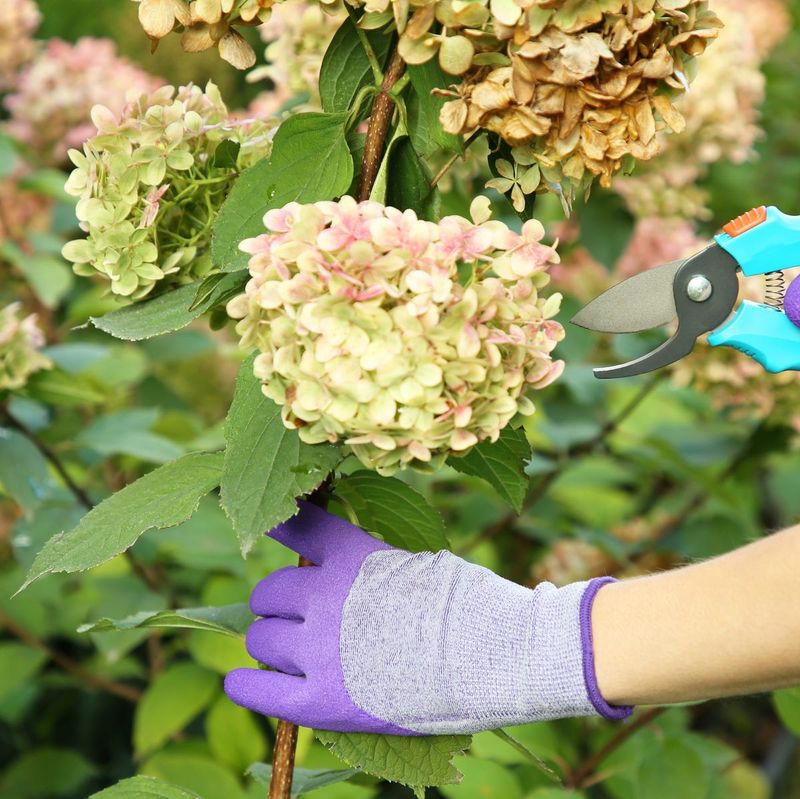
Panicle hydrangeas bloom on current-season wood, which means the plant grows new shoots each spring and then flowers on those same shoots later in the season. That growth pattern is actually good news for pruning, because it gives you a clear seasonal window to work with. Structural pruning belongs in late winter or early spring, before new growth begins, when you can shape the plant without removing any of this year’s developing flower buds.
NC State Extension confirms that panicle hydrangea blooms on new growth and can be pruned in late winter or spring. The practical options include removing dead or obviously weak stems, thinning crowded growth from the center of the plant, and selectively shortening stems to encourage stronger new shoots. Missouri Botanical Garden suggests thinning toward 5 to 10 primary shoots as an approach that may produce larger panicles, though this is guidance rather than a guarantee for every cultivar. Illinois Extension describes annual thinning and notes that cutting back by roughly one-third to one-half may be appropriate depending on cultivar size and the form you want.
Major pruning in August is a different matter. It can remove the flower display that is already open and developing on the plant right now, which is the opposite of what most gardeners want in peak bloom season. University of Maryland Extension places structural pruning in late winter or early spring for exactly this reason. Repeated or severe pruning at the wrong time can also weaken plant form over time or encourage thin, weak shoots, though the outcome depends on cultivar, pruning severity, and how consistently the practice is repeated.
University of Georgia Extension adds that knowing your species is the first step, because the pruning calendar that works for panicle hydrangeas is different from what other types need. Getting the timing right is more important than the technique itself.
Choose the Right Plant and Exposure
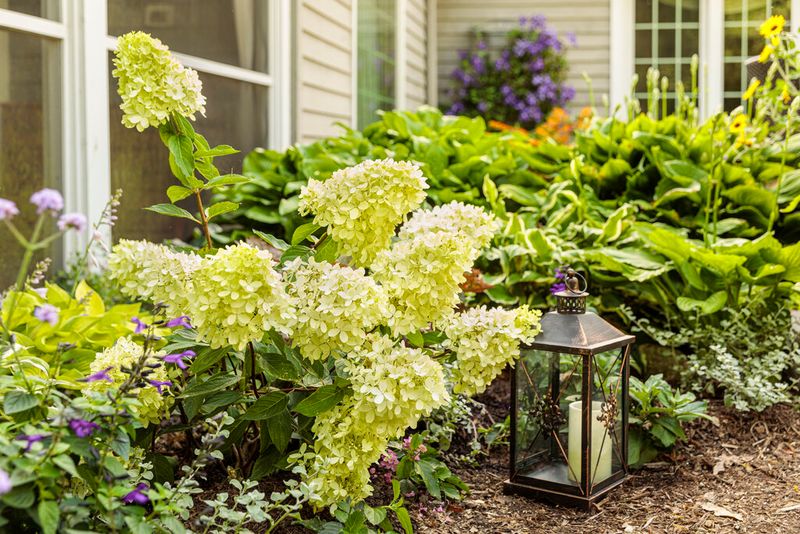
Some of the most common disappointments with panicle hydrangeas in North Carolina come down to site and plant selection, not technique. A full-size species can reach 8 to 15 feet tall and wide over time, which is a lot of plant for a narrow foundation bed or a spot near a walkway. NC State’s plant profile lists an available planting space of 6 to 12 feet, and compact cultivars such as ‘Little Lime’ or ‘Bobo’ are far better fits for tighter spaces than their full-size relatives. Choosing a cultivar that suits the space from the start saves years of corrective pruning.
Sun exposure is worth thinking through carefully, especially in the hotter parts of the state. Panicle hydrangea tolerates full sun, but University of Maryland Extension notes that afternoon shade can reduce heat and moisture stress. In the Piedmont, Sandhills, and Coastal Plain, where afternoon temperatures regularly climb past 90 degrees Fahrenheit in August, a spot with morning sun and afternoon shade may help the plant manage its water demand more easily, particularly when soil moisture is inconsistent.
Species identification also matters more than many gardeners realize. Panicle hydrangeas and bigleaf hydrangeas (Hydrangea macrophylla) look different and behave differently. NC State’s hydrangea garden detail page and University of Maryland Extension both note that many traditional bigleaf types bloom on old wood, meaning a late-winter pruning that works perfectly for panicle hydrangeas can remove next year’s flowers from a bigleaf. Knowing which plant you have changes everything about how you care for it.
One more thing worth clearing up: changing soil pH will not turn a panicle hydrangea blue or pink the way it can shift bigleaf flower color. Royal Horticultural Society trial results confirm that panicle flowers generally open white, cream, or lime-green and age toward pink, red, or beige according to cultivar and temperature, not soil chemistry.
Skip August Shortcuts That Add Problems
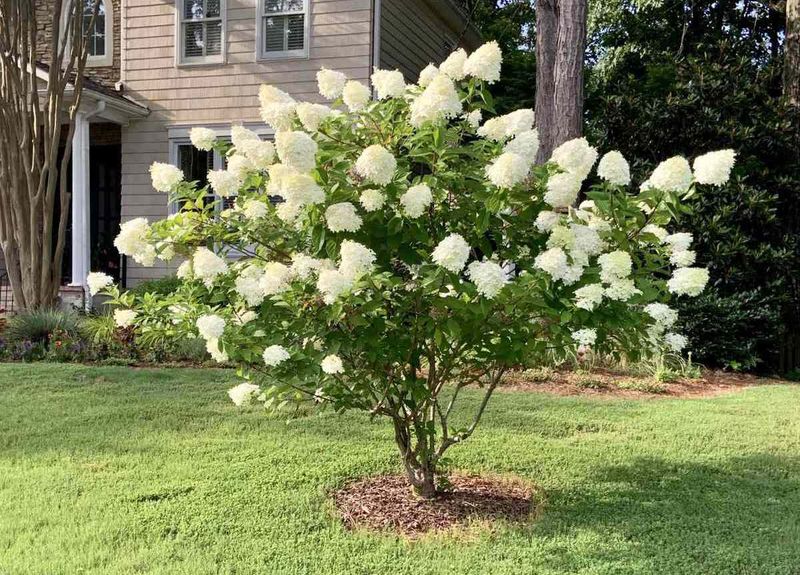
Two August shortcuts come up often, and both are worth skipping. The first is deadheading spent flower cones as a strategy for bigger blooms next year. University of Maryland Extension and Missouri Botanical Garden both treat deadheading as optional and mainly cosmetic for panicle hydrangeas. Removing spent cones can tidy up the plant’s appearance, and there is nothing wrong with that, but it is not the mechanism that determines next year’s flower size.
Do it if you like the look. Skip it if you are busy, the plant will be fine either way.
The second shortcut is heavy fertilizing in August to push larger cones before the season ends. NC State’s fertilizing guide for trees and shrubs warns that excessive nitrogen can encourage excessive, water-demanding shoot growth and actually reduce flowering rather than improve it. NC State’s woody ornamentals handbook recommends basing fertilizer decisions on a soil test or a clear deficiency diagnosis, not a calendar promise. If your plant is blooming well and the foliage looks healthy, it probably does not need additional feeding right now.
August’s actual job is simpler than any shortcut: protect the display that is already open by managing soil moisture and keeping the mulch in order. The pruning decision that may genuinely influence next year’s flower-head size waits until late winter or early spring, when the plant is dormant and every cut you make goes toward new growth rather than removing a bloom you worked all summer to see. A panicle hydrangea cared for at the right time, in the right season, tends to take care of the traffic-stopping part on its own.