The One Thing You Must Do To Ohio Forsythia After It Blooms Or It Won’t Flower Next Year
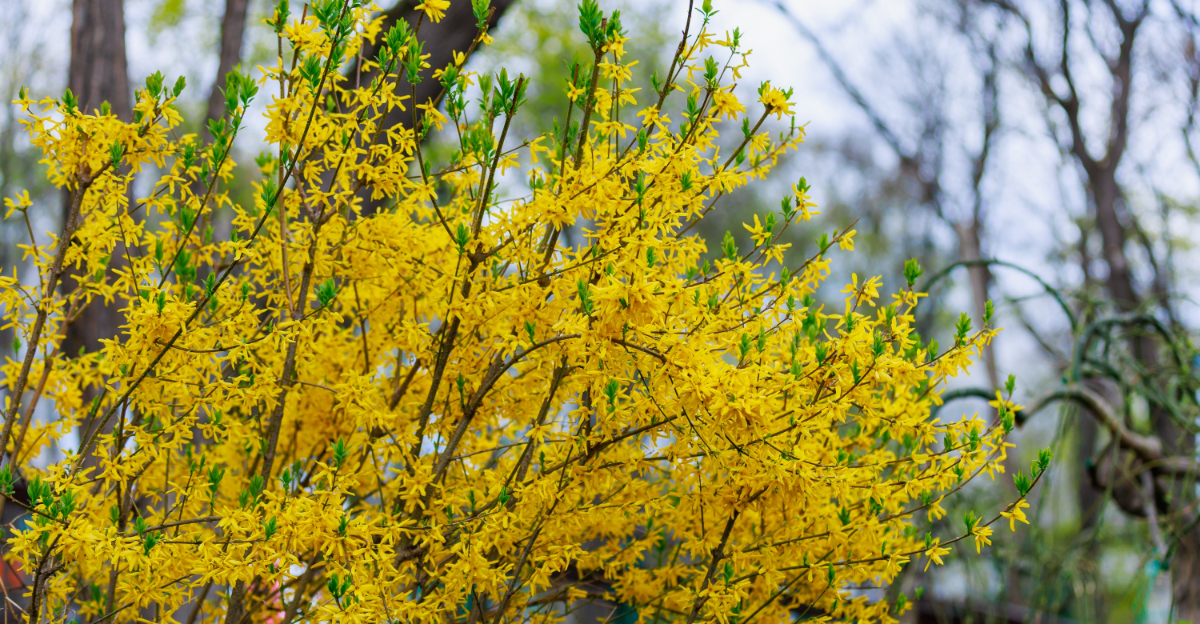
Forsythia is the first real color Ohio gets after a long winter, and most gardeners love it for exactly that reason. Those yellow blooms arrive before almost anything else and signal that the season has finally turned.
Then the flowers fade, attention moves to everything else coming up in the garden, and forsythia gets ignored for another year. That is the mistake.
What happens to forsythia in the weeks right after bloom determines whether next spring delivers the same show or a disappointing fraction of it. There is a narrow window that opens when the flowers finish and closes faster than most gardeners realize.
Miss it and the opportunity does not come back for twelve months. One task, done at the right moment after bloom, sets forsythia up for the following year.
It is not complicated. It is just consistently skipped by gardeners who did not know the window existed.
1. Prune Forsythia Right After The Yellow Flowers Fade
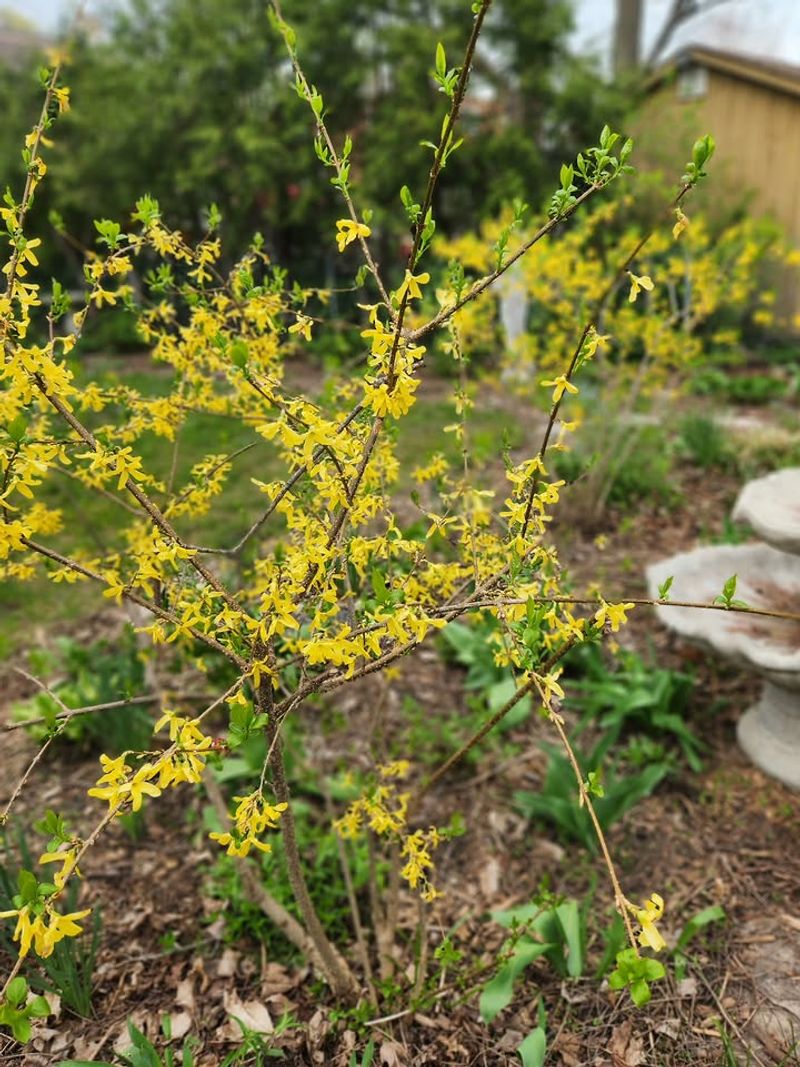
A shrub that looked golden in April can lose next year’s show from one badly timed trim. The most important habit for forsythia is simple: prune it right after the yellow flowers finish, while the season is still early spring.
Forsythia is a classic old-wood bloomer. That means it sets flower buds on the canes it grew the previous season, not on brand-new growth from this year.
Once the blooms drop, those same canes start preparing for next spring almost immediately.
The post-bloom window usually runs from late April into early May across most of this state. That gives you a few solid weeks to work before bud formation gets too far along.
Waiting until midsummer, late summer, or fall is where gardeners run into trouble. A trim in August feels harmless, but it can remove the exact wood that was loaded with next year’s buds.
The result shows up the following April as a shrub full of leaves and nearly empty of flowers.
Pruning right after bloom does not mean cutting everything back hard. It means making smart, timely cuts while the window is open.
Getting this timing right is the foundation every other step builds on.
2. Remove The Oldest Stems At Ground Level
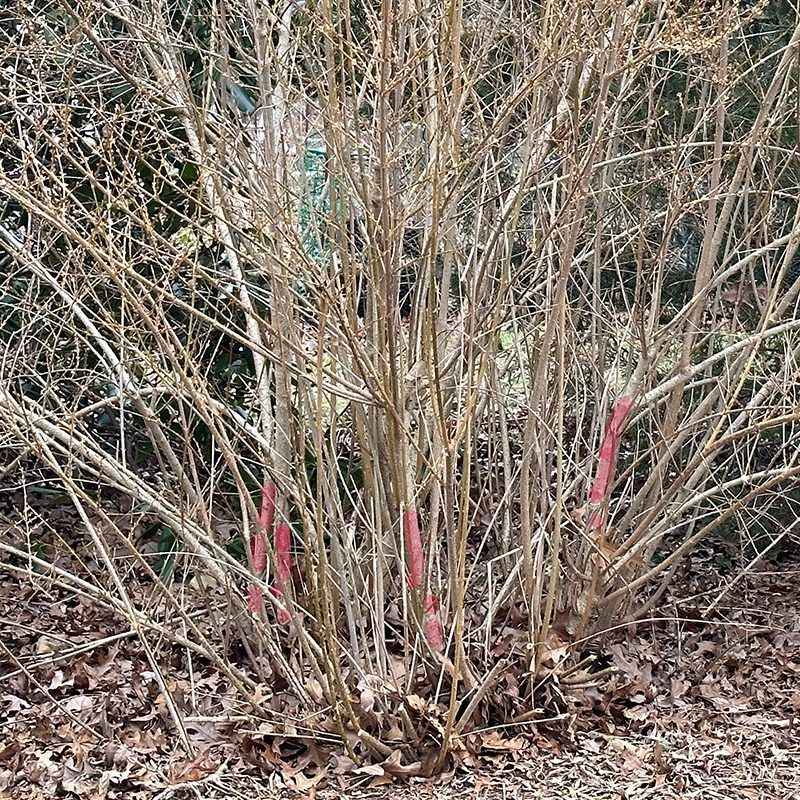
Old canes tell a clear story. When Ohio forsythia stems get thick, woody, and covered in rough bark, they are past their best flowering years.
Removing some of those oldest stems at ground level is one of the most effective renewal moves you can make.
This type of cut is called a renewal cut or a ground-level cut. Instead of trimming the tips of old branches, you remove the entire stem from the base.
That opens the shrub from the inside out and lets younger, more productive canes take over.
A good rule of thumb is to remove no more than one-third of the oldest stems in a single season. Taking out too many at once can stress the shrub and leave it looking sparse.
Gradual renewal over two or three seasons is gentler and gives new growth time to fill in.
Your Ohio Garden Changes Every Week. Your Plan Should Too.
Gardening in Ohio changes quickly throughout the season. Every Friday you’ll receive a simple weekly plan showing exactly what to plant, prune, fertilize, harvest, and protect so you never miss the right timing.
You can identify the oldest stems by their thickness and color. Stems that are an inch or more across and have dark, rough bark are good candidates.
Younger canes tend to be thinner, smoother, and more flexible.
After removing old stems, the shrub gets better airflow and more light reaches the younger wood. Both of those things support a stronger bloom the following spring.
3. Shape The Shrub Before Next Year’s Buds Form
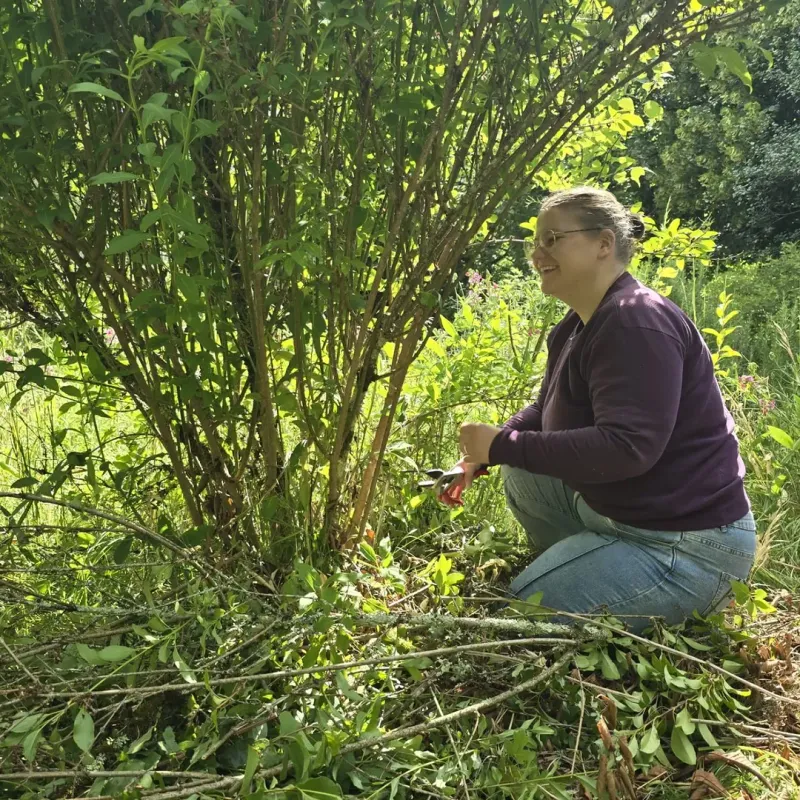
Timing a shape-up correctly is what separates a tidy shrub from one that costs you flowers. Right after bloom is the ideal moment to adjust the size and silhouette of your forsythia.
The buds for next spring have not formed yet, so any cuts you make now will not take flowers away from you later.
Wait until July or August to do the same shaping work, and the situation changes. By midsummer, forsythia has already started forming next year’s flower buds along its canes.
Cutting those canes back removes the buds along with them, which means fewer blooms the following spring.
The goal during post-bloom shaping is not to make the shrub perfectly symmetrical. Forsythia has a natural arching habit, and working with that shape looks better than fighting it.
Trim back any canes that have grown out too far, are crossing into a walkway, or are crowding nearby plants.
Keep cuts clean and angled slightly above a healthy bud or branch junction. Ragged cuts take longer to heal and can invite problems.
Sharp bypass pruners or loppers make cleaner cuts than anvil-style tools on live wood.
Shaping right after bloom keeps the shrub manageable without trading size control for next year’s flower show.
4. Skip Late-Summer Pruning That Removes Spring Flowers
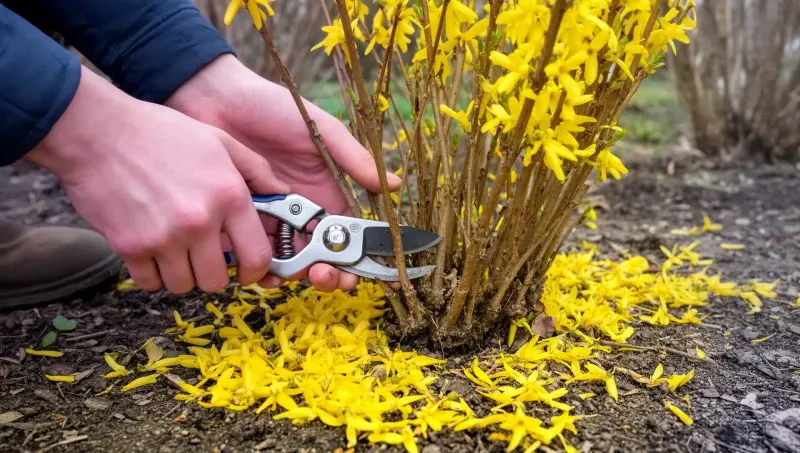
Late summer is the most common time Ohio gardeners accidentally trade next year’s flowers for a neater-looking shrub.
The plant looks overgrown by August, the urge to trim is real, and the connection between that August cut and a sparse April bloom is easy to miss.
Here is the problem. By late summer, forsythia has already set the buds that will open next spring.
Those buds sit along the canes that grew earlier in the season. A late-summer trim removes those canes and the buds attached to them.
The shrub does not have enough time to replace that bud-bearing wood before winter.
The result shows up months later. The following April, the shrub may push out some scattered blooms near the base or on a few untouched canes, but the full display will be noticeably reduced.
Some gardeners assume the shrub is struggling when the real cause is the timing of last year’s pruning.
Skipping late-summer pruning is not about ignoring the shrub. It is about protecting the investment already stored in those canes.
If the shrub looks too large in August, make a note and plan to tackle it right after next spring’s bloom instead.
One season of patience pays off with a full yellow show the following April.
5. Thin Crowded Branches Instead Of Shearing The Outside
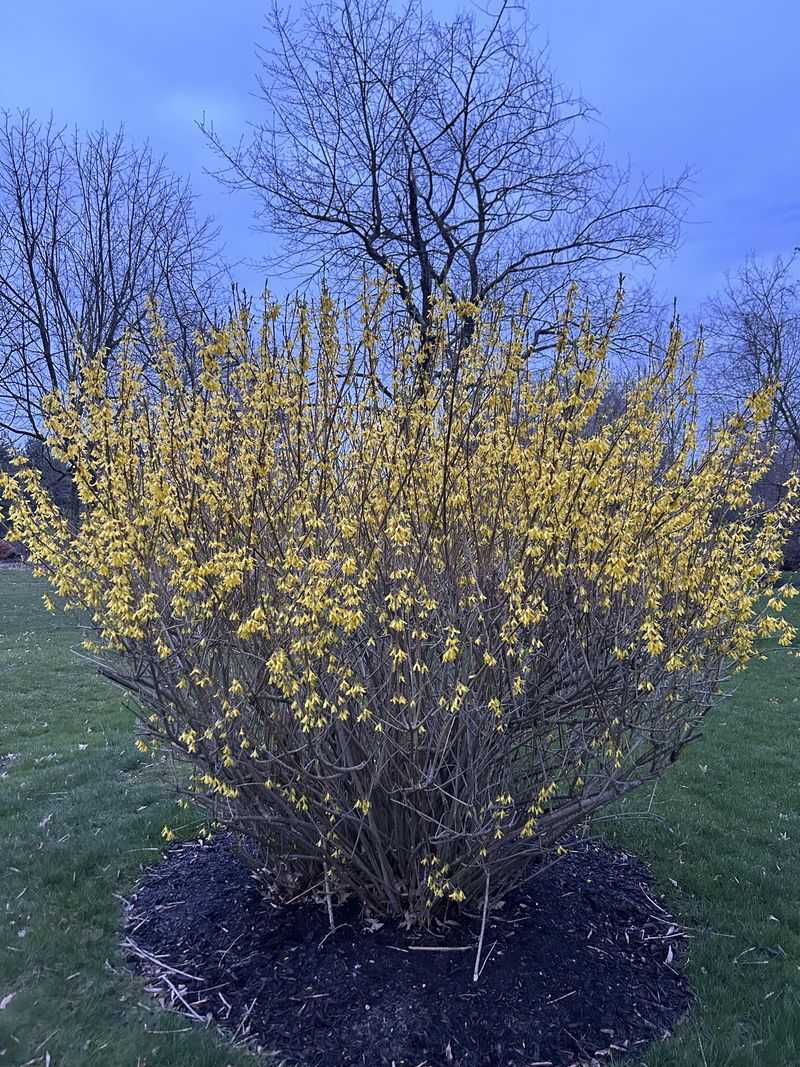
Reaching for hedge shears and trimming the outside of a forsythia into a neat globe is a common move, but it creates more problems than it solves.
Shearing removes the tips of every outward-facing branch and stimulates dense, twiggy regrowth right at the surface.
Over time, that outer shell gets thicker and the interior gets darker and more tangled.
Thinning works differently. Instead of cutting across the outside, you reach inside the shrub and remove entire stems or branches that are crowded, crossing, or no longer contributing.
Each thinning cut opens a little more space for air and light to move through the whole plant.
Better light penetration means more of the shrub’s canes can form healthy flower buds. A sheared forsythia often blooms only on the outermost layer because the interior is too shaded to support bud development.
A thinned forsythia blooms more evenly from the inside out.
Thinning also preserves the natural arching shape that makes forsythia look graceful rather than stiff. Those long, sweeping canes are part of what makes the shrub worth having in the first place.
Work through the shrub with bypass loppers and hand pruners. Step back often to check your progress.
Removing a few well-chosen stems does more good than shearing the whole surface.
6. Cut Out Weak Growth Before The Shrub Gets Tangled
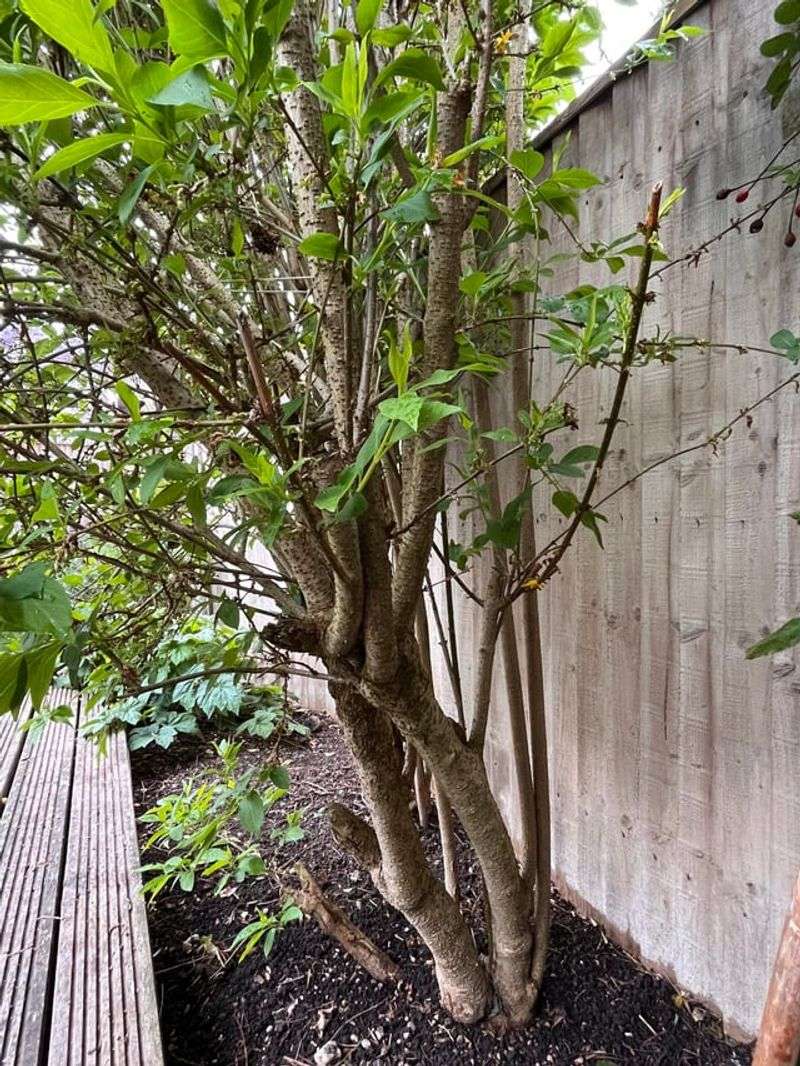
Right after bloom is a surprisingly good time to see what is actually going on inside a forsythia. The flowers are gone and the leaves are still small, which means you can spot weak, crossing, or badly placed stems before the shrub leafs out fully and hides them.
Weak growth includes thin stems that bend easily, stems that rub against stronger canes, and branches that angle back toward the center of the shrub instead of outward. None of those stems are likely to carry a strong bloom.
Removing them now keeps the shrub from becoming a crowded thicket later in the season.
Crossing branches are worth paying attention to. When two branches rub against each other repeatedly, the friction can damage the bark on both.
Damaged bark on a cane makes that cane a weaker link in the shrub’s structure over time.
The cleanup does not need to be exhaustive. Removing the most obvious problem stems takes only a few minutes on a well-maintained shrub.
The goal is a cleaner structure, not a stripped-down plant.
Think of it as housekeeping for the shrub. A little cleanup right after bloom keeps the interior open, reduces future crowding, and makes the bigger renewal cuts easier to see and plan for in coming seasons.
7. Let New Canes Replace The Oldest Wood
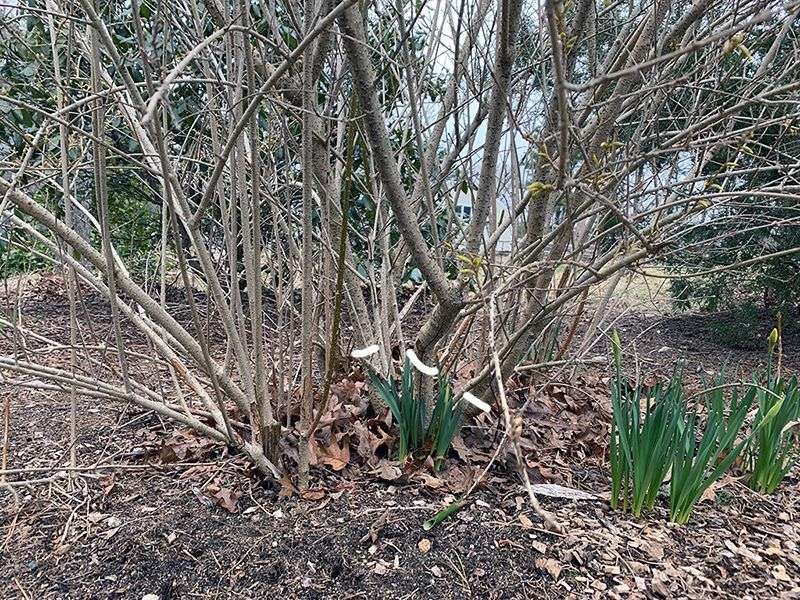
Young canes are the future of a forsythia shrub. The newest growth tends to be the most vigorous, the most flexible, and the most productive when it comes to setting flower buds.
Keeping a healthy mix of young and mid-aged canes is what keeps a forsythia blooming well year after year.
The oldest wood in a forsythia gradually becomes less productive. Thick, bark-covered stems that have been in place for many years may still bloom, but they often produce fewer flowers than younger canes of the same length.
Over time, a shrub dominated by old wood starts to look more like a woody thicket than a spring bloomer.
Gradual renewal is the answer. Each year after bloom, identify a few of the oldest, thickest stems and remove them at ground level.
This encourages the shrub to push up new canes from the base to fill the space. Those new canes will mature over one or two seasons and start carrying strong flower buds of their own.
The key word is gradual. Removing too much old wood at once can shock the shrub and set back its recovery.
Spreading renewal cuts over two or three seasons keeps the plant strong while steadily improving its structure.
A forsythia managed this way stays vigorous without needing dramatic intervention.
8. Keep The Shrub Open For A Better Bloom Show
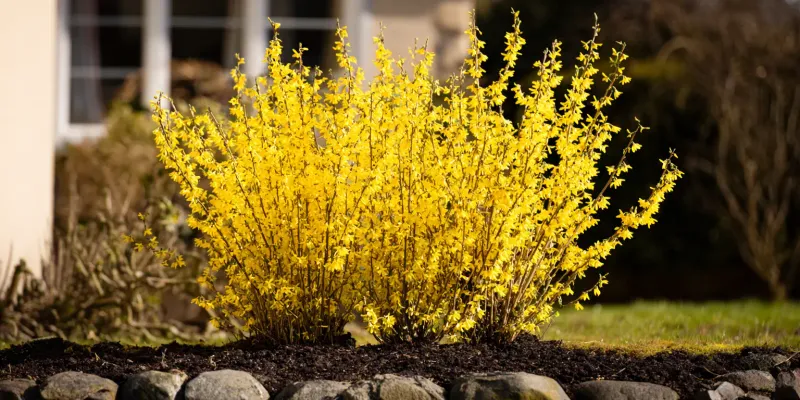
An open shrub is a blooming shrub. When forsythia canes have enough space, light, and airflow around them, they set more flower buds and carry them through winter in better condition.
The result the following April is a fuller, more consistent yellow display across the whole plant, not just the outer tips.
Everything covered in this article points toward the same outcome. In Ohio, pruning right after bloom and thinning instead of shearing both keep the shrub open.
Removing old wood gradually and skipping late-season cuts also help keep it productive.
Forsythia does not need dramatic intervention every year. Many seasons, the post-bloom work is light.
It may include a few ground-level cuts on old stems, cleanup of weak or crossing growth, and light shaping where needed. That kind of consistent, low-effort maintenance adds up over time.
For overgrown shrubs neglected for years, use a gradual renewal approach over two or three seasons. That is more realistic than trying to fix everything at once.
Start with the oldest stems, thin the interior, and let new canes build up before removing more old wood.
Forsythia is a resilient shrub. Work with its natural habit, respect its bloom timing, and it will reward you with that bright yellow show every spring for many years to come.