The Oregon Perennials That Look Better Every Week In Late Spring
Late spring in Oregon can change a garden in the nicest way. A border that looked sleepy weeks earlier starts filling out, colors deepen, and certain perennials seem to gain confidence every day.
That steady build is part of what makes this season so satisfying for gardeners who enjoy seeing the yard come into its own without a lot of fuss.
These are not plants that peak all at once and fade into the background. They keep improving as the weather settles, stretching taller, opening more blooms, and looking fuller with each passing week.
For homeowners who want beds that feel alive and generous, that kind of progress is hard to beat.
Oregon’s mild spring weather gives many perennials room to shine, but some truly stand out for the way they build momentum. The plants ahead are the ones that start strong and keep getting prettier as late spring rolls.
1. Oregon Iris Brings A Fresh Burst Of Late Spring Color
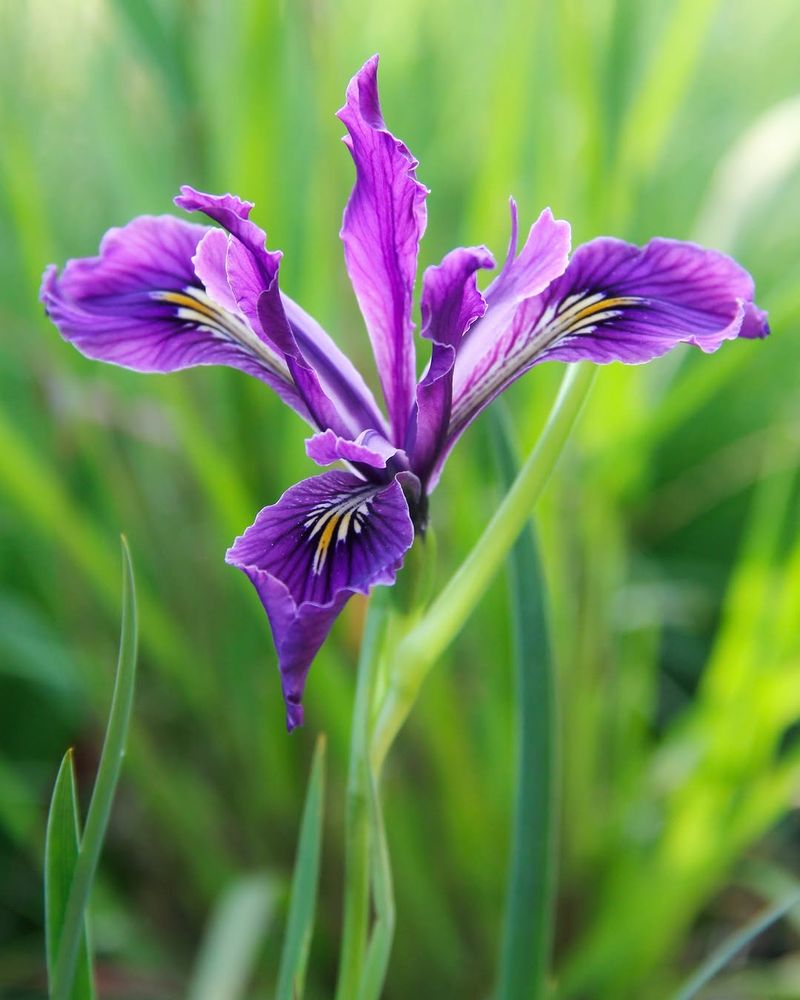
Known scientifically as Iris tenax, this native beauty grows wild across meadows and open woodlands throughout Oregon, and it brings that same wild elegance straight into your backyard garden.
What makes this plant so special is how it transforms week by week during late spring. Early in the season, you will notice slender, upright leaves pushing through the soil with quiet confidence.
Then, almost like magic, the buds begin to appear, and within days the blooms burst open in shades of deep purple, lavender, and sometimes soft white with yellow markings at the center.
Oregon Iris thrives in well-drained soil and handles Oregon’s rainy spring weather with ease. It actually prefers the kind of moisture that rolls through the Willamette Valley and coastal areas this time of year.
Plant it in a sunny to partly shaded spot, and it will reward you generously.
One of the best things about growing Oregon Iris is that it spreads naturally over time. Each year, the clumps get a little wider, the blooms a little more abundant.
You do not need to fuss over it much. Just give it decent soil, some sunlight, and occasional division every few years to keep the clumps healthy and blooming their best.
Beyond beauty, this iris supports native bees and other pollinators that are important to Oregon’s ecosystem. Watching bees land on those striking blooms is a satisfying bonus.
Whether you are a seasoned gardener or just starting out, Oregon Iris is a low-maintenance, high-reward plant that earns its place in any Pacific Northwest garden.
2. Blue Eyed Grass Adds Soft Color With Wild Charm
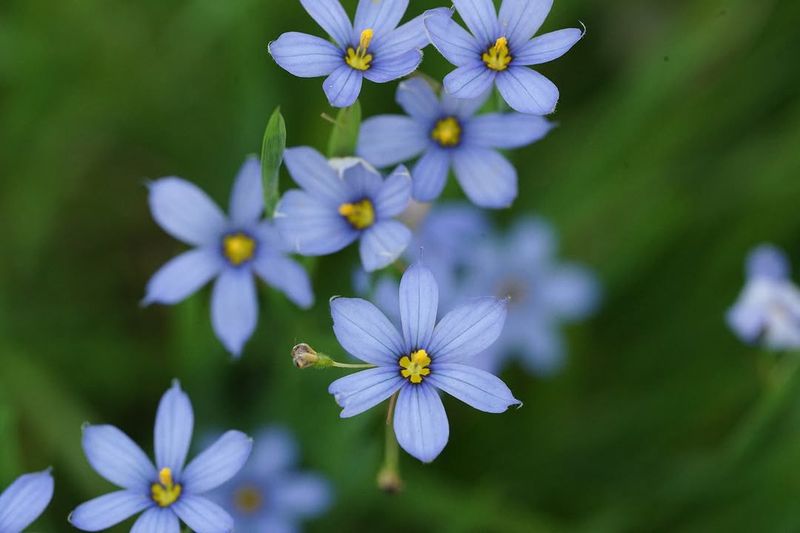
Do not let the name fool you. Blue Eyed Grass is not actually a grass at all.
It belongs to the iris family, and once you see it in bloom, you will understand why gardeners across Oregon absolutely love it. Those tiny star-shaped flowers, usually violet-blue with a cheerful yellow center, look like little bursts of sky scattered across the ground.
During late spring, Blue Eyed Grass earns its reputation as a plant that just keeps improving. The first blooms appear in mid-spring, but by late spring the plant is hitting its full stride.
Your Oregon Garden Changes Every Week. Your Plan Should Too.
Gardening in Oregon changes quickly throughout the season. Every Friday you’ll receive a simple weekly plan showing exactly what to plant, prune, fertilize, harvest, and protect so you never miss the right timing.
New flowers open every few days, keeping the display fresh and lively for weeks longer than many other perennials.
Sisyrinchium bellum, a blue eyed grass grown in Oregon gardens, is wonderfully adaptable. It grows well in full sun or light shade and tolerates both moist and somewhat dry conditions, which makes it a great fit for Oregon’s varied climates, from the wet coast to the drier eastern foothills.
Planting Blue Eyed Grass in clusters or drifts creates a naturalistic, meadow-like effect that looks stunning along pathways, at garden borders, or mixed into a native plant bed. It pairs beautifully with Oregon Iris and Camas for a wildflower-inspired look that feels right at home in a Pacific Northwest setting.
Maintenance is refreshingly simple. Deadhead spent flowers to encourage more blooms, and divide clumps every two to three years to keep the plants vigorous.
Blue Eyed Grass also self-seeds gently, so you may find charming little seedlings popping up nearby each spring. It is a small plant with a big personality, and it brings quiet magic to any Oregon garden.
3. Camas Steals The Show With Graceful Spring Color
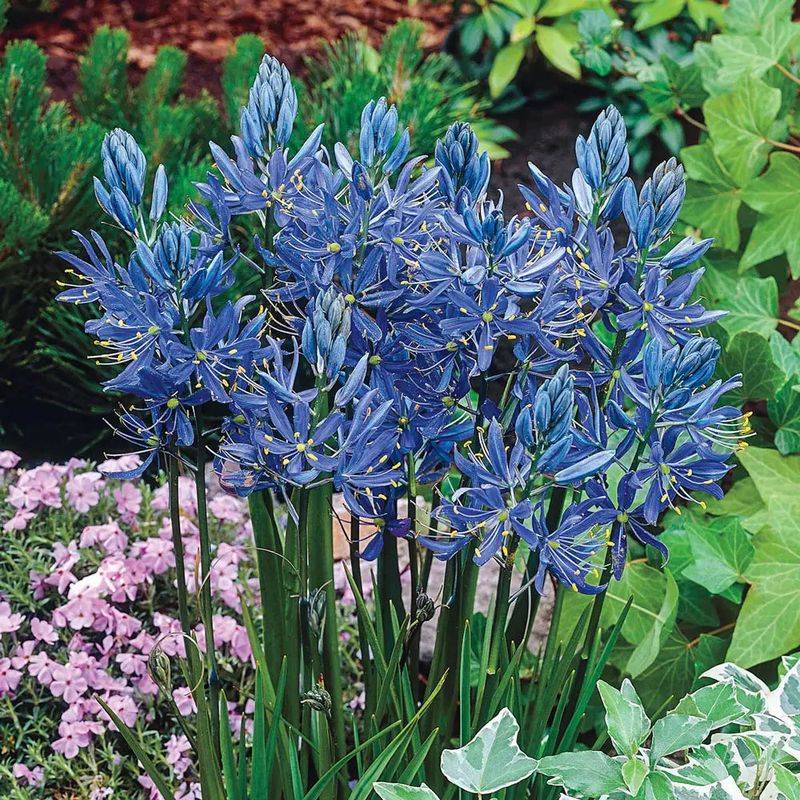
Long before Oregon had nurseries and garden centers, Camas was already one of the most celebrated plants in the Pacific Northwest. Native tribes relied on its bulbs as a vital food source for thousands of years, and today it remains a beloved part of Oregon’s natural heritage.
Growing it in your garden feels like a small act of honoring that history.
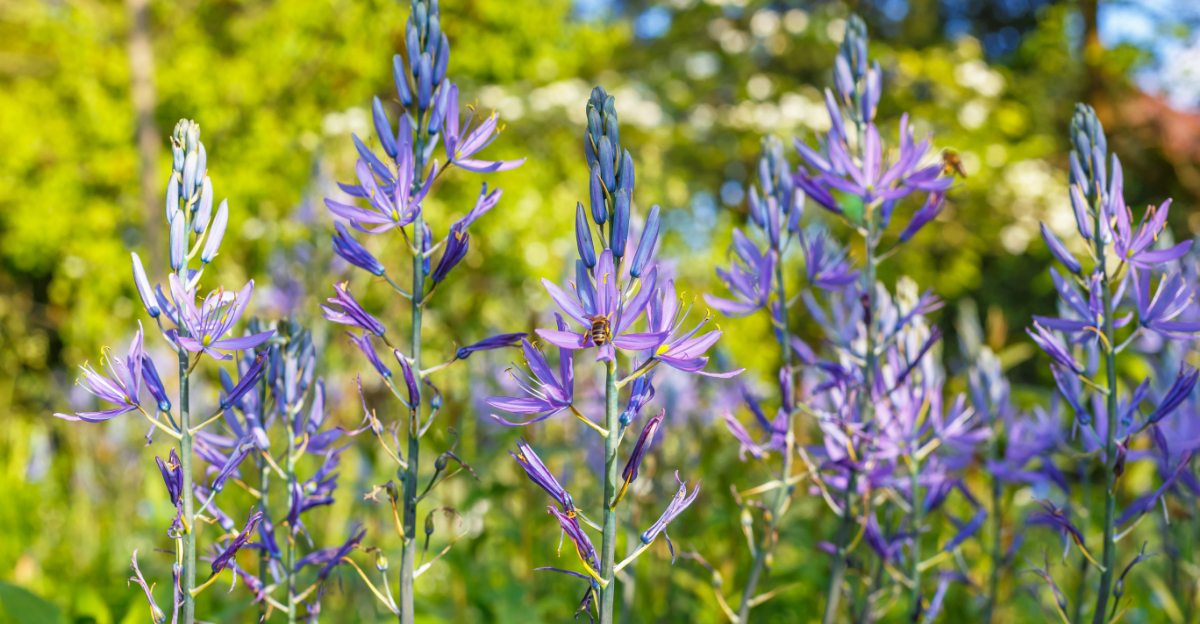
Camassia quamash produces tall, elegant flower spikes loaded with star-shaped blooms in shades of vivid blue-violet. In late spring, those spikes rise dramatically above grassy foliage, creating a breathtaking display.
Each week, more flowers open along the spike from the bottom up, so the show keeps building rather than fading all at once.
One of Camas’s greatest strengths is its tolerance of wet conditions. Oregon’s spring rains, which can overwhelm many plants, are exactly what Camas loves.
It thrives in moist meadows and other sites with spring moisture, especially where the soil stays moist through its growing season. Plant it where the soil stays moist in spring, and it should grow well.
For the most dramatic effect, plant Camas bulbs in large groups of fifteen or more. A sweeping mass of blue-violet blooms in late May is genuinely show-stopping, especially when combined with the golden tones of Oregon Sunshine or the delicate whites of other native wildflowers.
The contrast is stunning.
After blooming, the foliage fades back naturally, which makes Camas easy to combine with summer-blooming plants that fill the space once the bulbs go dormant. Pollinators, especially native bees, are wild about Camas flowers.
Planting it is one of the kindest things you can do for Oregon’s native bee populations while also creating a garden you will be proud to show off.
4. Oregon Sunshine Keeps The Garden Bright And Cheerful
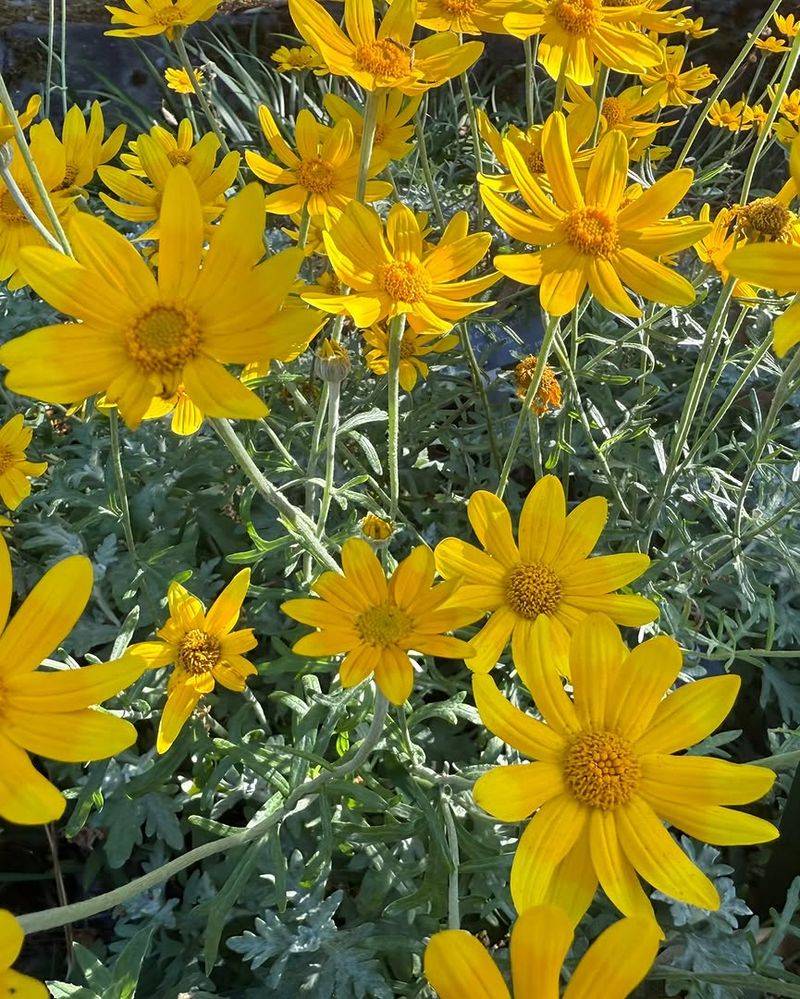
Sunny, tough, and endlessly cheerful, Oregon Sunshine is one of those plants that earns its name every single day it blooms. Eriophyllum lanatum is a native wildflower found growing naturally on rocky slopes and open meadows all across Oregon, and it brings that same sunny resilience into home gardens with zero fuss.
The flowers are bright golden yellow, daisy-like in shape, and they appear in generous clusters above silvery-gray woolly foliage. The contrast between the bold yellow blooms and the soft gray leaves is visually striking and works beautifully in mixed perennial borders.
During late spring, the plant moves from a few scattered flowers to a full-on golden display that gets more impressive with each passing week.
What sets Oregon Sunshine apart from other yellow-flowered perennials is its extraordinary toughness. It thrives in poor, rocky, well-drained soils and handles full sun and dry conditions without complaint.
If you have a hot, dry spot in your Oregon yard where other plants struggle, this is the plant for that space. It actually prefers lean soil over rich, amended garden beds.
Watering needs are minimal once the plant is established. Oregon Sunshine is highly drought-tolerant, which makes it an excellent choice for water-wise gardening in the drier parts of Oregon, including areas east of the Cascades where summer heat can be intense.
Bees, butterflies, and other beneficial insects visit the flowers regularly, making Oregon Sunshine a fantastic plant for supporting local pollinators. It also stays relatively compact, typically reaching twelve to eighteen inches tall, so it fits neatly into borders without overwhelming neighboring plants.
For a low-maintenance, high-impact perennial that truly belongs in Oregon, look no further.
5. Epimedium Slowly Turns Shady Spots Into Something Special
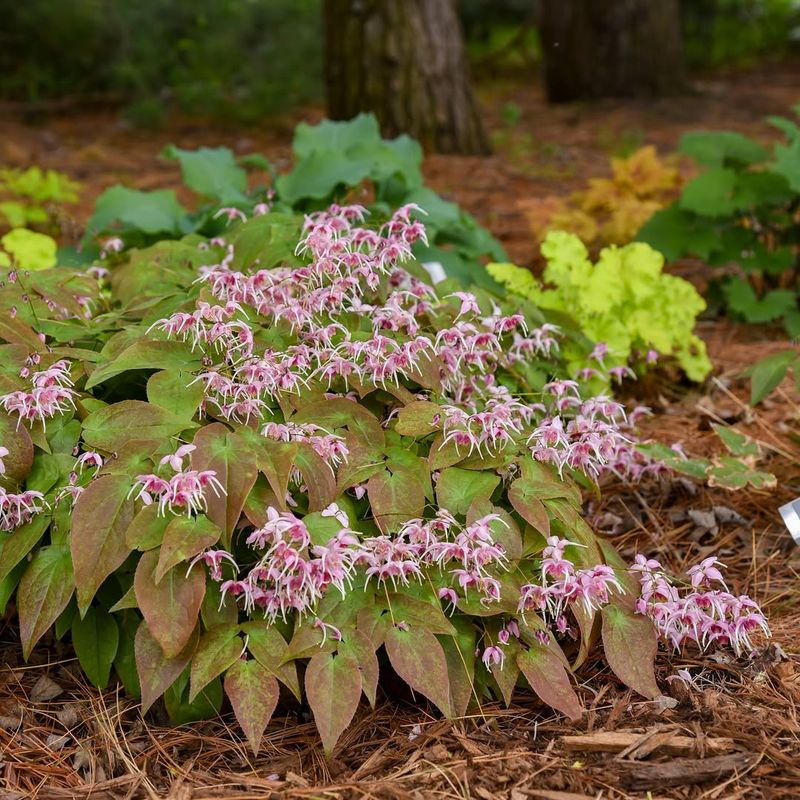
Walk through a shaded Oregon garden in late spring and you might spot a low, spreading plant with heart-shaped leaves and the most unexpectedly dainty flowers imaginable. That is Epimedium, sometimes called Barrenwort or Fairy Wings, and it is one of the best-kept secrets in Pacific Northwest gardening.
Epimedium is a slow-and-steady kind of plant. In the first year or two after planting, it builds a strong root system underground while staying relatively modest above ground.
But by the third spring, something wonderful happens. The clumps fill out, the foliage becomes lush and layered, and the flowers, which can be yellow, pink, purple, or white depending on the variety, appear in charming little clusters that dangle like tiny lanterns above the leaves.
During late spring in Oregon, Epimedium really hits its stride. The new foliage emerges with beautiful bronzy-red tints that gradually deepen to rich green as the weeks progress.
Meanwhile, the flowers keep blooming steadily, giving the plant a layered, complex look that improves noticeably from week to week throughout the season.
One of Epimedium’s most valuable qualities is its ability to thrive in dry shade, a notoriously difficult growing condition that stumps many gardeners. Under Oregon’s large trees, where soil can be dry and root competition is fierce, Epimedium holds its own with quiet determination.
It is also deer-resistant, which is a genuine bonus for Oregon gardeners dealing with frequent wildlife visitors.
Trim back the old foliage in late winter before new growth emerges to keep the plant looking fresh. Once established, Epimedium requires very little care and rewards patient gardeners with years of reliable beauty in some of the toughest garden spots.
6. Hellebore Keeps Looking Better As Spring Moves Along
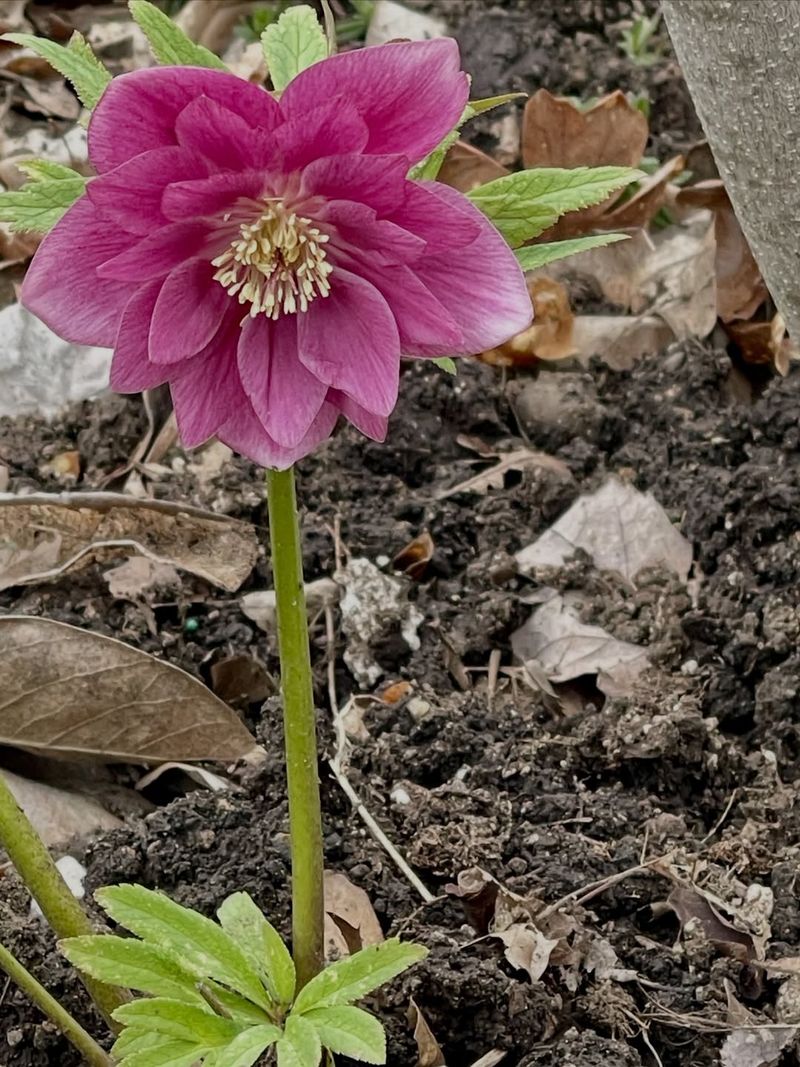
Hellebores have a reputation for blooming in winter, but here is something many gardeners do not realize: they actually look their absolute best in late spring. By this point in the season, the flowers have transitioned from fresh blooms into beautifully ornate seed heads, and the foliage has fully leafed out into a rich, glossy, evergreen canopy that anchors a shaded garden bed like nothing else.
Helleborus orientalis and its many hybrids are perfectly suited to Oregon’s climate. The wet winters and mild springs create ideal conditions for these woodland beauties.
They prefer dappled shade, such as the kind found under Oregon’s big-leaf maples and Douglas firs, and they thrive in the humus-rich, well-drained soil that builds up naturally in those settings.
The flowers themselves are genuinely gorgeous, nodding cup-shaped blooms in shades ranging from pure white and soft blush to deep plum, burgundy, and nearly black. Some varieties feature spotted or veined petals that look almost hand-painted.
In late spring, as the blooms mature and the seed pods develop, the colors often deepen and intensify, adding an extra layer of visual interest to the garden.
Hellebores are also remarkably long-lived perennials. A well-placed clump can persist and expand for decades, getting fuller and more impressive with each passing year.
They can also self-seed, meaning you may find little seedlings popping up around the parent plant over time.
For Oregon gardeners with shaded spots under trees or along north-facing fences, Hellebore is a true treasure. Pair it with ferns, hostas, and Epimedium for a layered woodland look that transforms a dark corner into a genuinely stunning garden feature worth admiring all season long.
7. Heuchera Brings Bold Leaves And A Longer Season Of Interest
Some plants bloom once and call it a season. Heuchera, better known as Coral Bells, plays a completely different game.
While other perennials are still warming up in early spring, Heuchera is already putting on a show with its richly colored foliage, and by late spring it adds tall, airy flower spikes that make the whole plant look like it is dancing in the breeze.
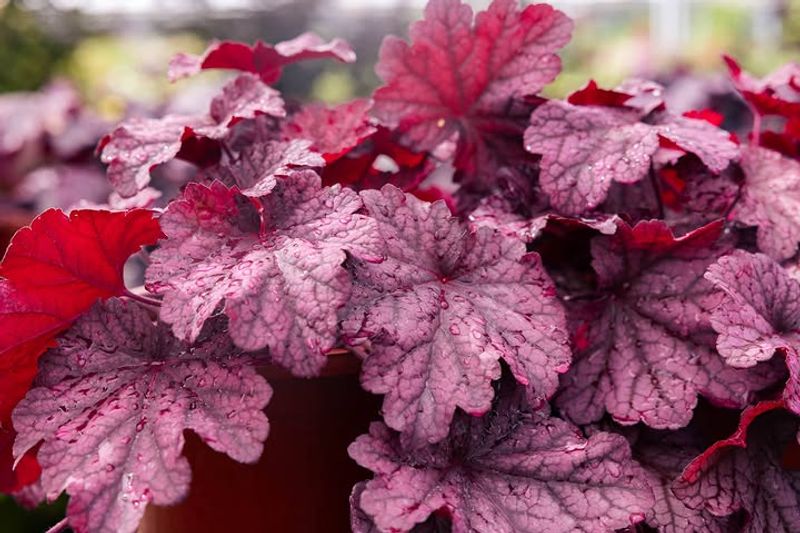
The foliage is the real star here. Modern Heuchera varieties come in an astonishing range of colors, from deep burgundy and chocolate to lime green, caramel orange, and silver-frosted purple.
In Oregon’s mild, moist spring climate, these colors intensify beautifully, and the texture of the leaves, which can be smooth, ruffled, or veined, adds depth to any garden bed or container planting.
Throughout late spring, the flower spikes emerge and stretch upward, bearing tiny bell-shaped blooms in shades of coral, white, pink, or red. Hummingbirds, which are regular visitors in many Oregon gardens, are particularly drawn to the red and coral varieties.
Watching a hummingbird hover over a patch of Heuchera is one of those simple garden joys that never gets old.
Heuchera grows well in partial shade to full shade, making it an ideal companion for Hellebore and Epimedium in woodland-style gardens. It also handles full sun reasonably well in Oregon’s cooler coastal areas, though some afternoon shade is appreciated during hot spells.
Planting a mix of Heuchera varieties with contrasting foliage colors creates a tapestry effect that looks intentional and sophisticated. Divide clumps every three to four years to keep the plants healthy and producing their best foliage.
For year-round color and texture in an Oregon garden, Heuchera is genuinely hard to beat.