The Plants Behind Every Florida Yard That Looks Good In The Middle Of Summer
Some Florida yards look defeated by July. Others look like summer is exactly what they were designed for.
The difference is rarely about irrigation systems or professional maintenance. It almost always comes down to what was planted and where.
The yards that hold up through Florida’s hardest months share a pattern. Certain plants show up in them again and again, not by accident.
Experienced gardeners have learned through trial and real error what actually performs when the heat stops being polite. These are not exotic choices or hard to find varieties.
Most are available at a decent Florida nursery right now. The gap between a July yard that impresses and one that apologizes is mostly a plant selection gap.
That gap gets made earlier in the season, before the pressure arrives. The right plants fix it.
This list is a good place to start.
1. Seaside Goldenrod Brings Late Summer Strength To Sunny Beds
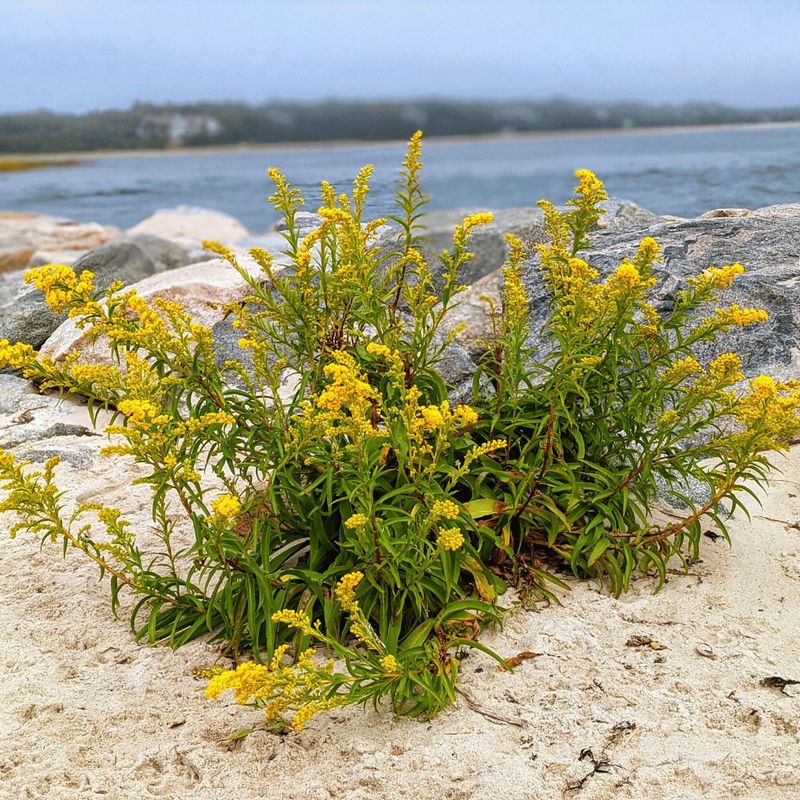
A tired July border needs structure, and seaside goldenrod (Solidago sempervirens) delivers it with confidence. This native plant rises to four or five feet tall in sunny beds, producing arching plumes of bright yellow flowers from late summer into fall.
That late-season timing is exactly what most sunny beds are missing when everything else has peaked and faded.
Pollinators go after it heavily. Bees, butterflies, and other beneficial insects work the flower clusters throughout the bloom period.
Along coastal and salt-influenced sites, seaside goldenrod holds up especially well. It tolerates salt spray and sandy, well-drained soils that would stress many other plants.
The Florida Wildflower Foundation notes it as a reliable native for coastal plantings in our state.
Height and movement are part of what makes it useful. Tall stems sway in summer breezes and add a vertical layer that low ground covers cannot provide.
It does spread by rhizomes and can expand over time, so give it space from the start. A naturalistic bed, a coastal strip, or a pollinator planting suits it far better than a small clipped formal front bed.
Full sun and good drainage are non-negotiable. Once established, it handles summer heat with steady, dependable energy that few plants can match in a sunny border.
2. Partridge Pea Adds Airy Color Where Heat Feels Relentless
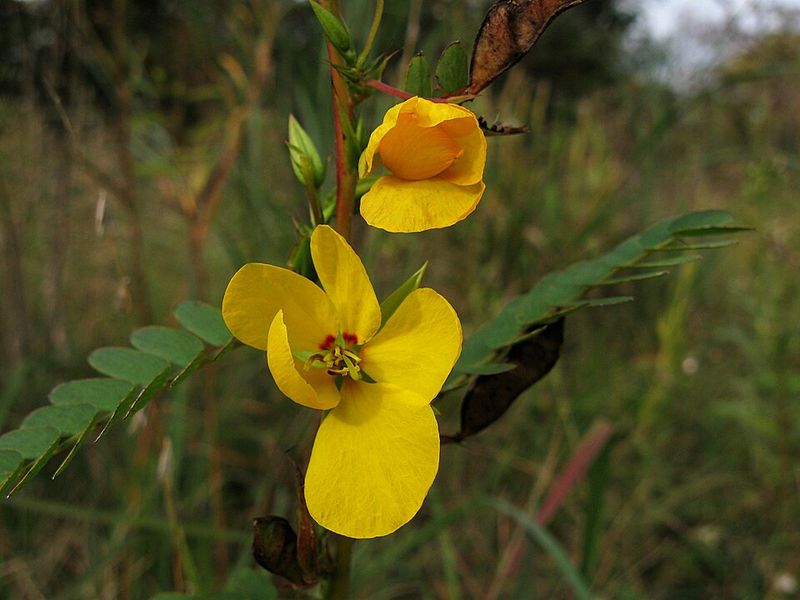
Hot sandy edges can feel impossible to plant by midsummer. Partridge pea (Chamaecrista fasciculata) is one of the few plants that looks like it belongs there.
It produces bright yellow flowers with reddish markings on airy, finely textured stems that move easily in summer heat. It blooms from summer into fall and fits naturally into meadow-style beds and pollinator plantings.
Wildlife value runs deep with this plant. It is a larval host for several native sulfur butterfly species, and its seeds feed bobwhite quail and other birds.
The Wildflower Foundation recognizes it as a strong native annual wildflower for sunny, well-drained sites across much of our state. It reseeds reliably, which means a planting can return year after year without replanting if the site stays sunny and open.
Your Florida Garden Changes Every Week. Your Plan Should Too.
Gardening in Florida changes quickly throughout the season. Every Friday you’ll receive a simple weekly plan showing exactly what to plant, prune, fertilize, harvest, and protect so you never miss the right timing.
That reseeding habit is worth understanding before planting. Partridge pea can move around a bed as seeds drop and sprout in new spots.
The look is informal and naturalistic rather than polished or tidy. It does not work as a bedding annual for tight, formal designs where clean edges matter.
Sandy soil, full sun, and an open, relaxed planting style are where it performs best. Pair it with other native wildflowers for a summer display that feels alive and genuinely connected to the local landscape.
3. Rouge Plant Keeps Shady Corners Lush Through Summer
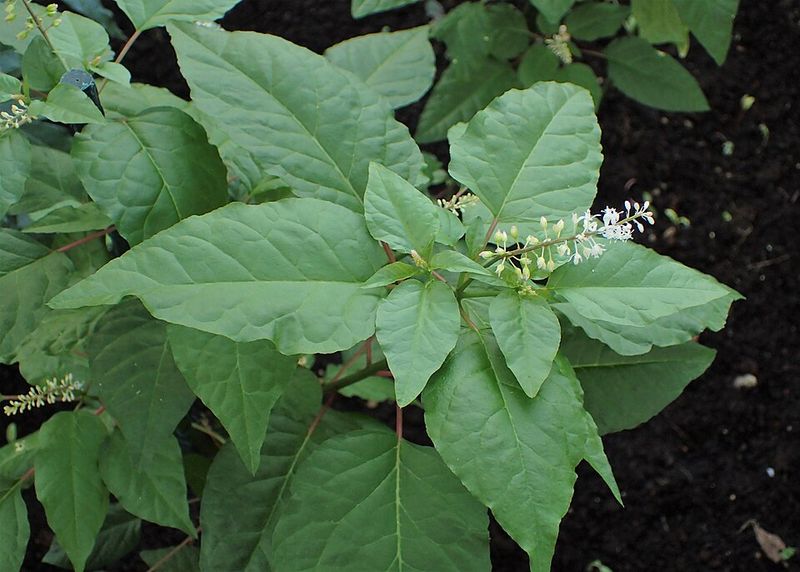
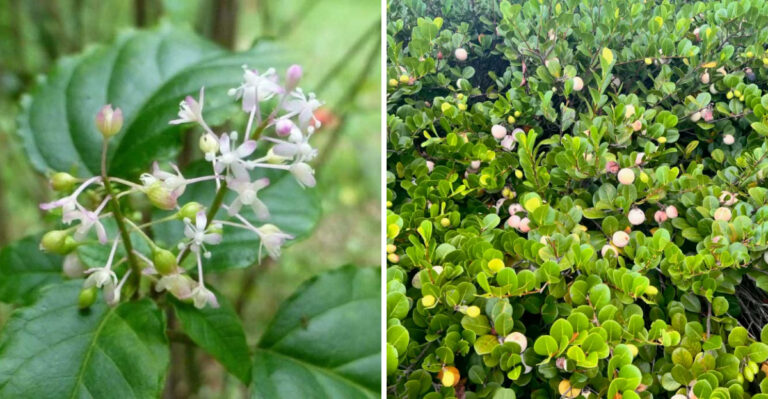
Shaded corners can be the hardest spots to keep looking alive through summer. Rouge plant (Rivina humilis) quietly solves that problem with soft white to pinkish flowers and vivid clusters of small red berries.
Those features appear at the same time, giving the plant a layered, textured look that stands out in low light. It stays relatively compact, typically reaching one to three feet tall, and fits naturally into warm, shaded understory plantings.
Birds are drawn to the red berries, which adds wildlife value to spots that might otherwise feel quiet and unused. According to UF/IFAS, rouge plant is native to our state and performs well in shaded or partly shaded beds in warm regions of the state.
It suits naturalistic plantings, shady side yards, and woodland-edge borders where the canopy filters summer sun.
Site selection matters with this plant. It is not a full-sun summer bedding plant, and placing it in an exposed, hot, sunny bed would stress it quickly.
It prefers moist to moderately dry shade and performs best where summer humidity and warm temperatures keep the soil from drying out completely.
Northern regions of the state may see cold damage in harsh winters, so it fits more reliably in central and southern areas.
Used correctly, it brings a genuine sense of lush, layered life to corners that would otherwise look bare and forgotten.
4. Tickseed Sunflower Brightens Moist Edges When Heat Peaks
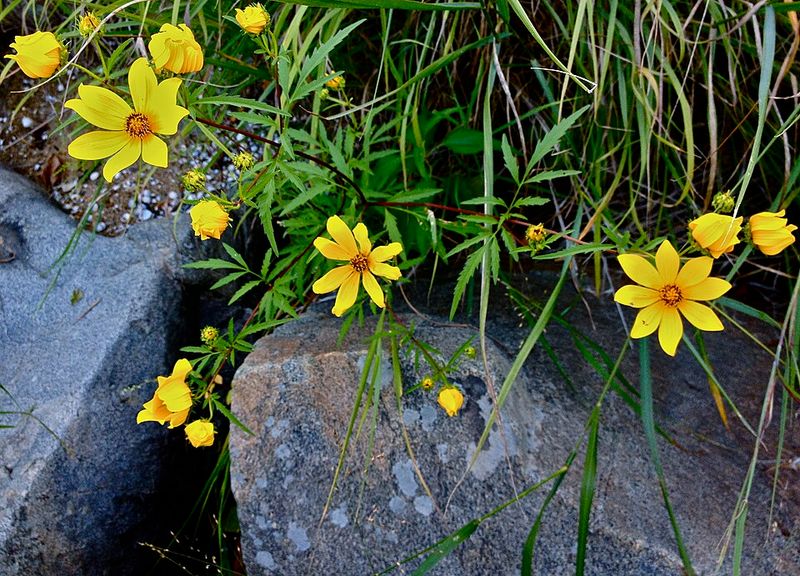
Low, wet, sunny spots along a yard edge can sit empty all summer because most plants cannot handle the combination of heat and standing water. Tickseed sunflower (Bidens aristosa) is built for exactly that kind of site.
It produces masses of bright yellow, daisy-like flowers that light up moist edges, rain-garden borders, and low areas where seasonal flooding is part of the routine.
Pollinator activity around it can be impressive. Native bees and butterflies visit the flowers consistently through the bloom period, which stretches from late summer into fall.
The Florida Wildflower Foundation lists it as a strong native wildflower for wet to moist, sunny sites. It fits naturally along drainage swales, pond margins, and low spots that collect rain during the wet season.
Species and site conditions both matter here. Not every Bidens species suits every site, and choosing one verified for Florida’s conditions ensures the best results.
Moisture is the key factor. Tickseed sunflower does not perform the same way in a dry, well-drained bed as it does along a consistently moist edge.
Sun is also non-negotiable. Shade reduces flowering significantly and weakens the plant’s overall presence.
When the site is right, an open and moist sunny edge can go from a soggy problem spot to a vibrant summer display. Pollinators and gardeners both appreciate it from mid-season onward.
5. Florida Rosemary Gives Dry Sandy Beds A Polished Scrub Look
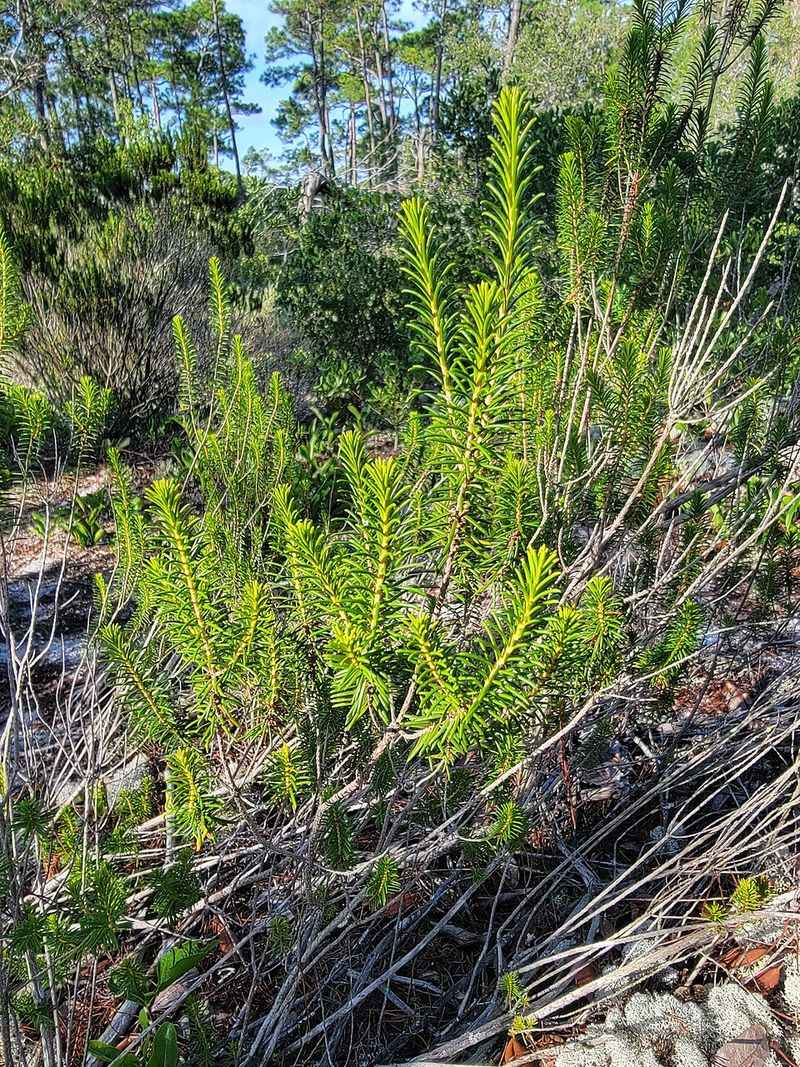
A dry, white-sand bed that bakes in full sun all summer needs a plant that was shaped by exactly those conditions. Florida rosemary (Ceratiola ericoides) is that plant.
It grows as a fine-textured, mounded evergreen shrub with needle-like leaves that give it a distinctive scrub character unlike anything else in a native plant palette. The look is clean, structural, and genuinely suited to the harshest dry sites this state produces.
One important point deserves emphasis up front: Florida rosemary is not culinary rosemary and is not edible. It is not related to Salvia rosmarinus.
Confusing the two is a common mistake, and the distinction matters for both safety and plant care. Florida rosemary is a native found in scrub habitats, and it requires conditions that match those habitats closely.
Sharp drainage and dry, nutrient-poor sandy soil are not optional for this shrub. Rich, moist, or heavily irrigated beds will stress it.
According to UF/IFAS, it performs best in dry scrub environments and should not be placed where irrigation or organic soil amendments are used regularly. It grows slowly, so give it time to establish without overwatering.
Once settled, it holds its shape and texture through summer heat with very little attention. For a dry, scrub-style bed that looks intentional rather than neglected, few native shrubs match its quiet, structural presence.
6. Scarlet Hibiscus Turns Wet Summer Spots Into A Showpiece
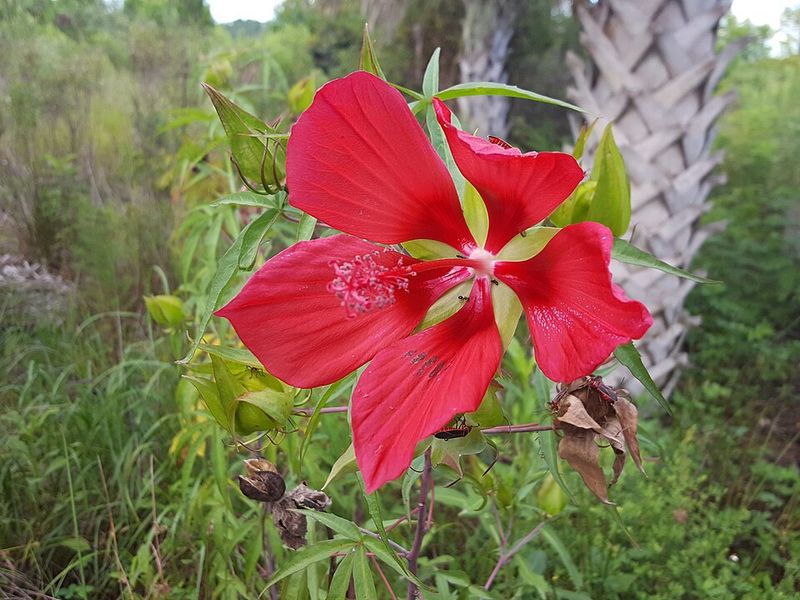
Few plants make a wet summer low spot look as dramatic as scarlet hibiscus (Hibiscus coccineus). Stems climb to six feet or more, and the flowers are a deep, saturated red that reads from across the yard.
Bloom time runs through the heart of summer, which is exactly when moist and wet areas need something strong enough to carry the space visually.
Hummingbirds seek out the flowers, and native bees and butterflies visit as well. UF/IFAS recognizes scarlet hibiscus as a native that thrives in moist to wet conditions.
It suits rain-garden edges, low spots that hold water after heavy rains, pond margins, and any site where summer moisture is reliable and consistent. The bold foliage, with its deeply cut leaf shape, adds texture even when the plant is not in bloom.
Space is part of the planning. A mature plant needs room to spread and show its full height without crowding neighboring plants.
Dry, sandy beds are the wrong site for this hibiscus unless reliable irrigation is in place. Moving it to a dry location and hoping for the best will produce a stressed, underperforming plant.
Wet and moist conditions are where it genuinely thrives. Used in the right spot, scarlet hibiscus turns a soggy problem area into one of the most striking features in a summer garden.
Once established, it requires almost no effort.
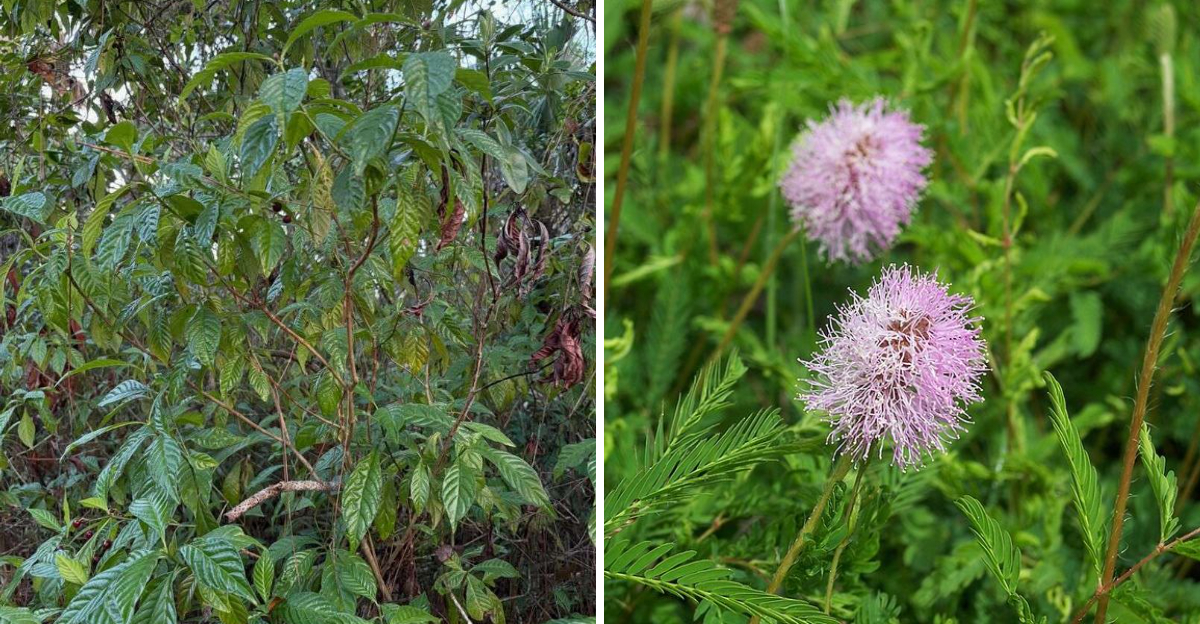
7. Wild Coffee Keeps Warm Shade Glossy And Green
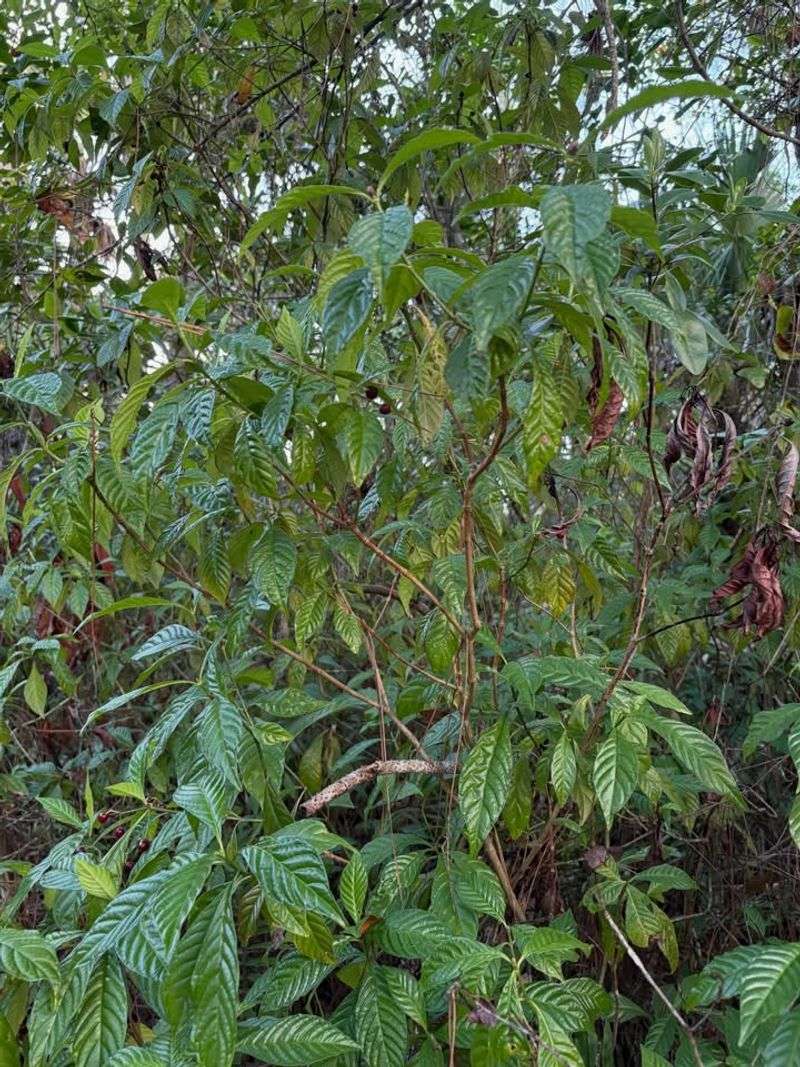
Walk into a shaded side yard in midsummer and you want to see something green, layered, and alive rather than thin, yellowed, and struggling. Wild coffee (Psychotria nervosa) is the kind of understory shrub that makes a shaded space look genuinely put together.
Its leaves are dark, deeply veined, and have a glossy surface that catches whatever filtered light reaches the understory. That gives the plant a rich, polished appearance even on overcast summer days.
Small white flowers appear and are followed by clusters of red berries that birds find attractive. According to UF/IFAS, wild coffee is a native that performs well in warm, shaded yards across central and southern regions.
It suits understory plantings, shaded side yards, and naturalistic beds where a layered, habitat-style design is the goal. Mature size typically ranges from three to eight feet tall depending on conditions and pruning.
Cold tolerance is a real consideration. Wild coffee suits warm, protected shade far better than cold, exposed sites.
Northern regions of the state can see cold damage during hard winters, so it fits most reliably in warmer areas of the state. It should not be planted in full sun, where leaf scorch becomes a problem.
Given the right shaded, warm site with reasonable moisture, it fills in steadily. It holds its glossy green presence through the full heat and humidity of a long summer season without complaint.
8. Sunshine Mimosa Covers Hot Lawn Edges With Summer Blooms
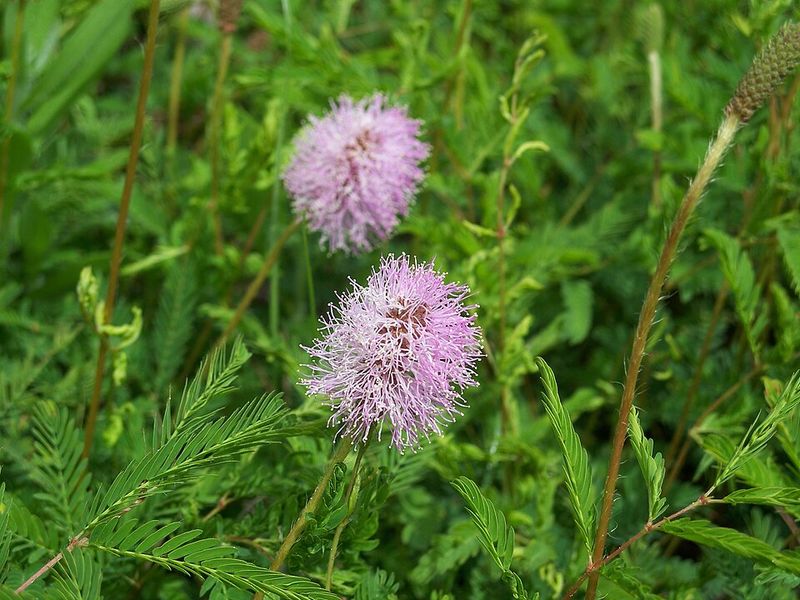
A lawn edge that stays bare and weedy through summer is one of the most frustrating spots to manage. Sunshine mimosa (Mimosa strigillosa) takes a different approach entirely.
It spreads low across the ground, filling sandy gaps and sunny edges with fine-textured foliage. Cheerful pink powderpuff blooms appear from spring well into summer.
The flowers are small but numerous, and bees visit them steadily.
Drought tolerance after establishment is one of its strongest qualities. UF/IFAS and the Wildflower Foundation both recognize it as a native ground cover well suited to sunny, dry, sandy sites across the state.
It handles summer heat without needing frequent irrigation once roots are settled. The spreading habit fills in open areas over time, which makes it useful along driveways, lawn edges, sandy paths, and low spots where turf struggles to stay green.
Patience is part of the process. Sunshine mimosa takes a full season or more to fill in and cover ground the way a mature planting does.
Sun is essential. Shade reduces flowering and slows spreading significantly.
The look is naturalistic and loose, not like manicured turf, so it suits relaxed, habitat-style designs rather than formal, clipped landscapes. Leaves fold when touched, which is a fun detail that often surprises first-time growers.
In the right sunny spot, it earns its place as a low, living layer that holds a summer edge with genuine color and pollinator value.