Stop Buying These Florida Plants At Big Box Stores (Here’s What The Label Isn’t Telling You)
The garden center display looks convincing. Healthy foliage, a care label with simple instructions, a price point that makes the decision easy.
Big box stores move a lot of plants in Florida, and most of those plants leave the parking lot with gardeners who have no reason to suspect anything is off. The label covers the basics.
Sun exposure, water needs, expected size. What it doesn’t cover is whether that particular variety was bred for these conditions.
That includes heat, humidity, alkaline soil, and a climate that operates by its own rules. It doesn’t mention whether the plant was treated with systemic pesticides that linger for months.
It won’t flag varieties that look perfect in the store and struggle badly once a Florida summer gets hold of them. That gap between what the label says and what actually happens in the ground is where a lot of gardening money quietly disappears.
1. Mexican Petunia Spreads Far Beyond The Pot
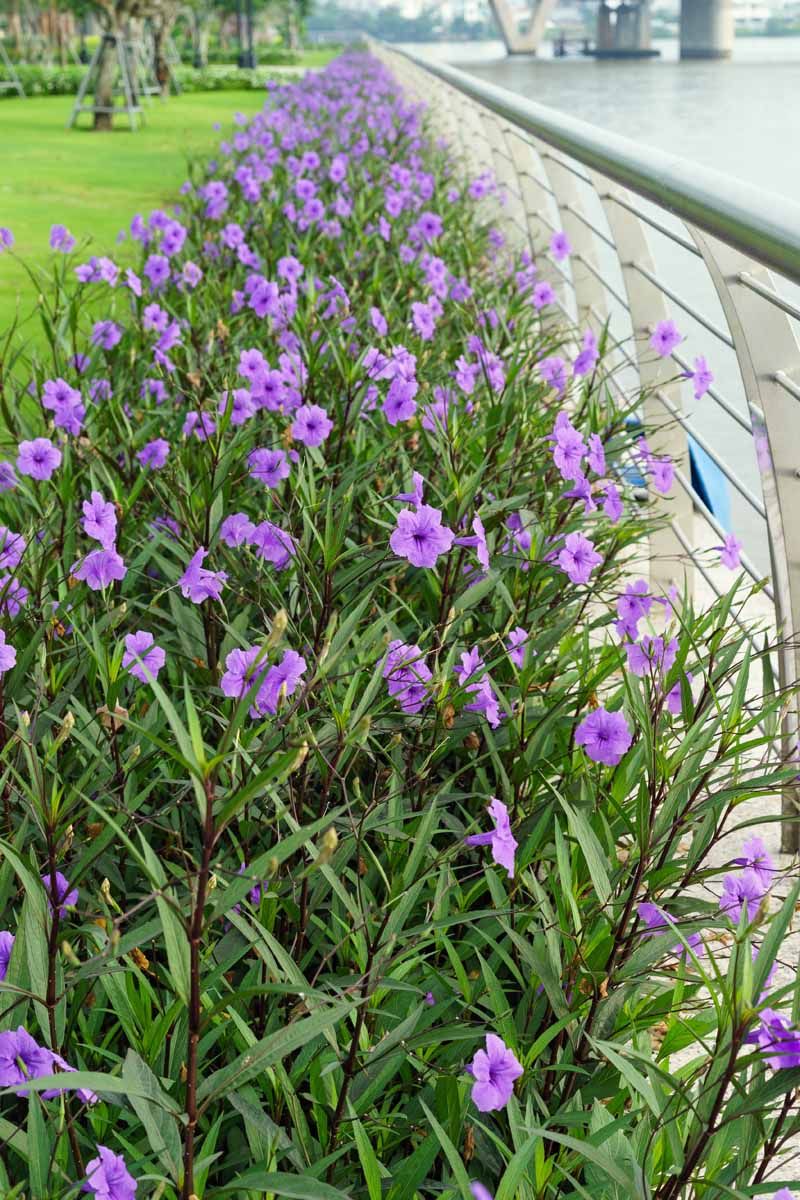
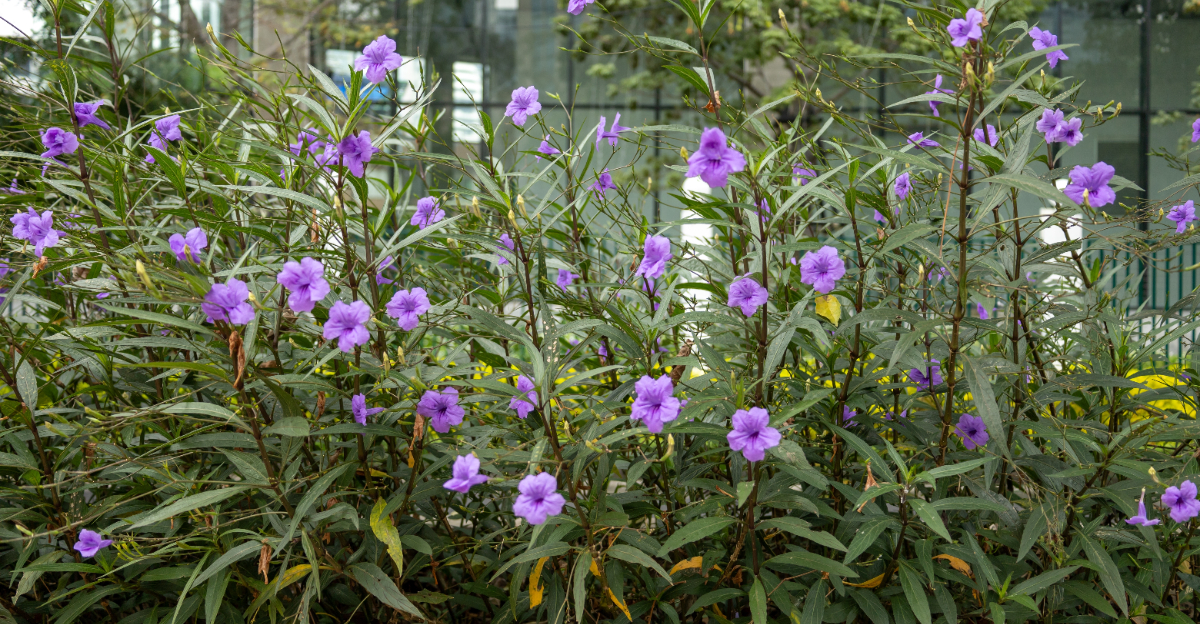
A purple flower tag can hide a spreading problem that takes years to fully understand. Mexican petunia is sold under the botanical name Ruellia simplex.
It is a frequent find at big box stores because it is tough, colorful, and blooms through heat without much fuss. The tag rarely mentions what happens once it settles in.
UF/IFAS Assessment lists Ruellia simplex as invasive in North, Central, and South Florida.
It spreads through both seeds and underground rhizomes, which means it can move into neighboring beds, edge into natural areas, and pop up in places you never planted it.
Removing it once it is established takes real effort because the root system runs deep and wide.
Some sterile cultivars, such as certain compact varieties, may be assessed differently because they do not produce viable seed.
But the key word is “certain.” Not every purple Mexican petunia on the shelf is a sterile variety, and the tag may not give you the cultivar name clearly enough to check.
Before buying any version of this plant, look up the exact cultivar name and cross-reference it with the current UF/IFAS Assessment.
A pretty bloom is not worth the long-term spreading risk, especially if your yard sits near a natural area, drainage swale, or preserve.
2. Wedelia Turns A Fast Groundcover Into A Long-Term Problem
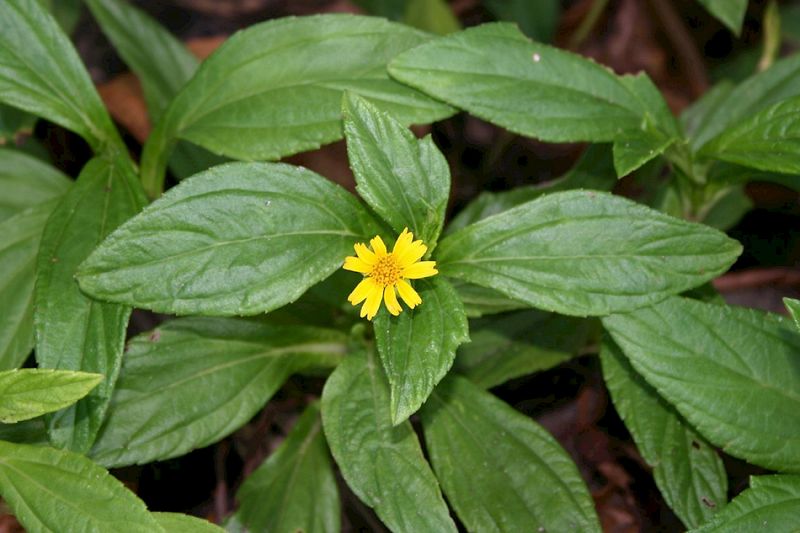
Fast coverage sounds like a good deal until you realize the plant has no plan to stop. Wedelia, known botanically as Sphagneticola trilobata, is often displayed at garden centers as a low-maintenance yellow-flowering groundcover that fills in quickly.
That speed is exactly what makes it a regional concern.
UF/IFAS Assessment lists wedelia as invasive in North, Central, and South Florida. It spreads by stems that root wherever they touch soil, which means it can push beyond the intended bed and move into adjacent lawns, natural edges, and areas near water.
Once it gets going, removal is a serious project. Stems break apart easily during pulling, and any piece left behind can re-root and start again.
Your Florida Garden Changes Every Week. Your Plan Should Too.
Gardening in Florida changes quickly throughout the season. Every Friday you’ll receive a simple weekly plan showing exactly what to plant, prune, fertilize, harvest, and protect so you never miss the right timing.
The erosion-control angle is a selling point that sometimes appears on nursery tags or in store signage. Wedelia does cover ground fast.
That same trait makes it risky near drainage areas, slopes that connect to natural lands, or any spot where it can creep past a defined border.
There are native groundcover options that hold soil without the spreading risk, including sunshine mimosa for sunny spots and native ferns for shadier areas.
If a tag promises fast coverage without mentioning regional warnings, that is a sign to pause and look up the botanical name before loading it into your cart.
3. Oyster Plant Is Not Recommended For South Florida Beds
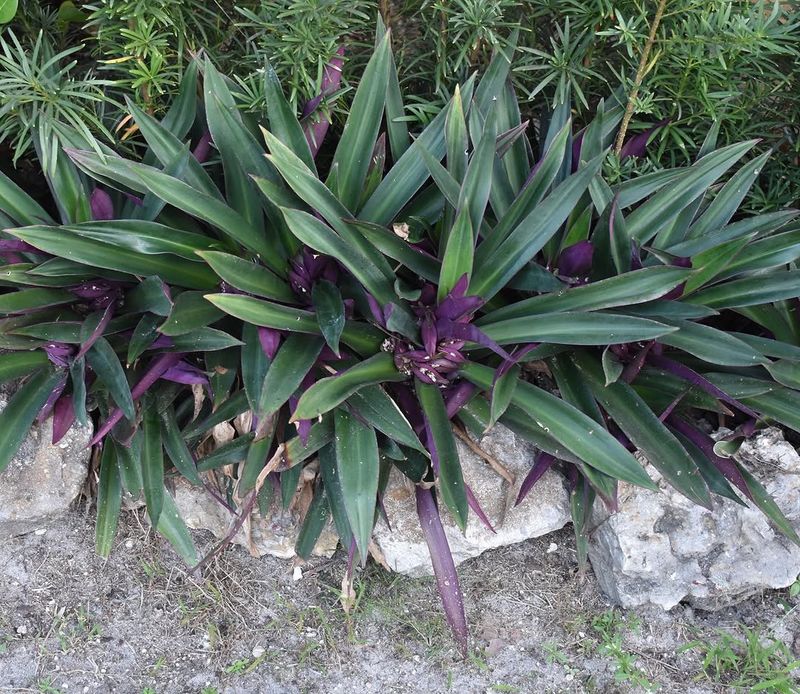
Colorful foliage can still come with regional warnings that never make it onto the label. Oyster plant, Tradescantia spathacea, is a common sight at garden centers because its purple and green sword-shaped leaves look bold and low-effort.
It handles heat, tolerates some shade, and fills a bed quickly, which makes it appealing on a busy Saturday morning shopping trip.
UF/IFAS Assessment lists oyster plant as invasive and not recommended in southern region. That regional detail is easy to miss in a store that sells the same inventory across multiple counties.
A shopper in Miami-Dade, Broward, or Collier County may have no idea that the plant they are loading into the trunk is flagged for their exact region.
The concern centers on its ability to spread beyond planted areas in warm, frost-free climates.
South Florida yards, especially those near hammocks, natural edges, or preserves, give oyster plant the conditions it needs to move and establish beyond the intended bed.
Central and Northern gardeners face less risk because occasional cold can check its spread. South Florida buyers should look for alternatives before grabbing this one off the shelf.
Native foliage plants like wild coffee, firebush, or beautyberry offer bold color and structure without the regional red flag. Checking the UF/IFAS Assessment for your specific county takes about two minutes and can change the decision entirely.
4. Non-Native Lantana Is Not The Butterfly Plant The Label Promises
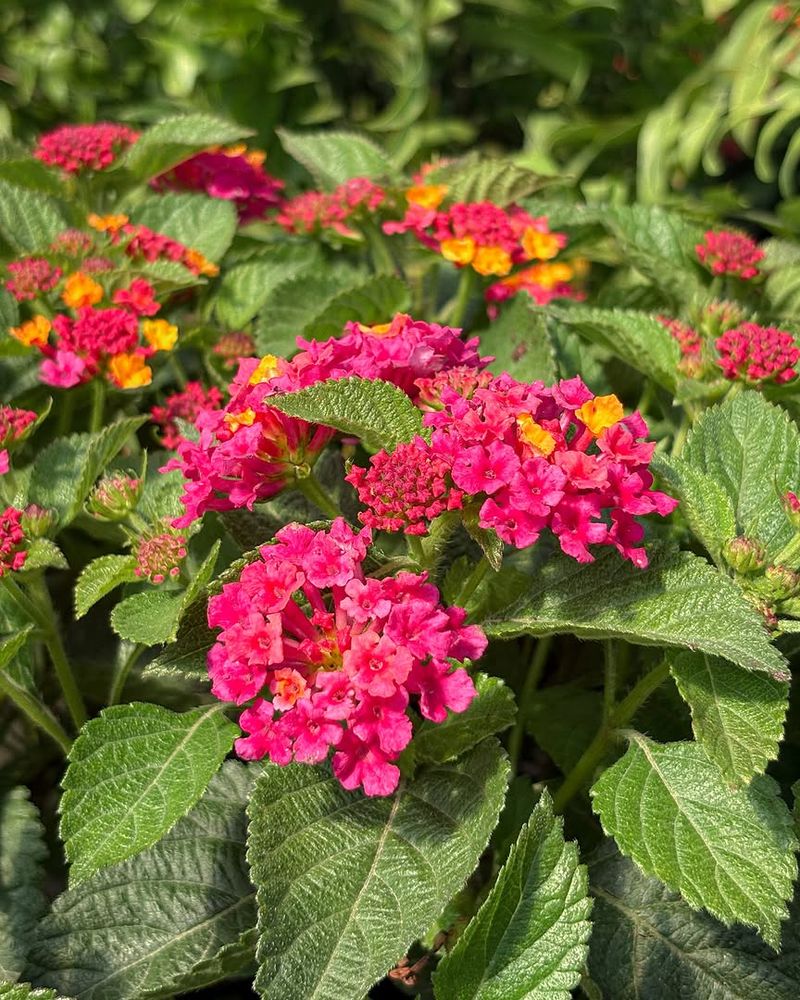
Butterfly-friendly does not always mean Florida-friendly, and lantana is one of the clearest examples of that gap. The tag looks great.
Clusters of orange, yellow, and pink blooms sit under a label that practically promises a yard full of wings. The problem starts when you look at the botanical name instead of the marketing copy.
Lantana strigocamara, the non-native species most commonly sold at big box stores, is listed as invasive in North, Central, and South Florida by UF/IFAS Assessment. Trailing lantana, Lantana montevidensis, carries a high invasion risk rating statewide.
Neither of those details tends to appear on the colorful nursery tag next to the butterfly graphic.
Non-native lantana produces berries that birds carry into natural areas, where new plants establish and crowd out native vegetation. The fact that butterflies visit the flowers does not change the spread risk.
Native lantana, Lantana involucrata, is a real alternative for gardeners who want that same pollinator energy without the invasive concern. It is less commonly stocked at big box stores, which is part of the issue.
Before buying any lantana, check the botanical name on the pot and not just the common name on the sign. A quick search of the exact species name against the UF/IFAS Assessment can tell you whether that particular plant belongs in your yard or not.
5. Nandina Looks Tidy But Can Escape By Seed
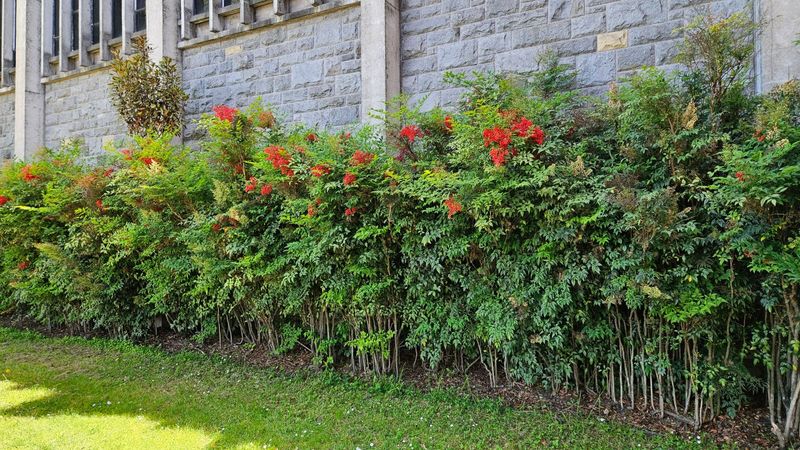
A tidy shrub can still move by seed, and nandina is a good example of why neat packaging does not equal low impact.
Nandina domestica, sometimes called heavenly bamboo, is a popular ornamental sold for its fine-textured leaves, seasonal color change, and clusters of bright red berries.
It looks contained in a pot, and that look can be misleading.
UF/IFAS Assessment lists nandina as invasive in North and Central parts and caution in South region. The regional difference matters.
Gardeners in Gainesville or Orlando face a different level of risk than someone planting in Naples. The same plant carries different weight depending on where you live.
Birds eat the red berries and carry seeds into natural areas, which is how nandina shows up far from any garden bed.
The berry concern is real enough that some wildlife groups have flagged it specifically. Nandina berries have been associated with bird health problems in some documented cases.
The level of risk depends on the bird species and the quantity consumed. That nuance rarely appears on a garden center tag.
If you live in North or Central Florida and want a similar look, consider native alternatives. Walter’s viburnum and yaupon holly offer structure and wildlife value without the seed-spread concern.
Checking your region against the current UF/IFAS Assessment before buying nandina is a straightforward way to avoid a problem that builds slowly over time.
6. Asparagus Fern Is Harder To Manage Than The Tag Suggests
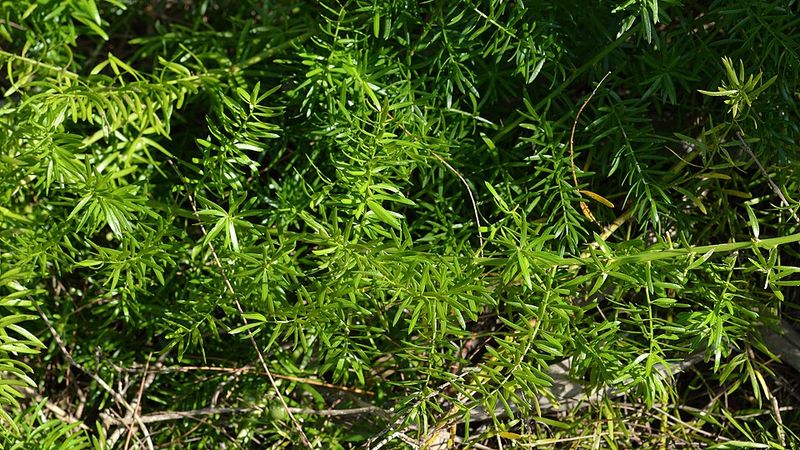
Soft nursery texture can become tougher than expected once a plant settles into soil. Asparagus fern, Asparagus aethiopicus, has an airy, delicate look that makes it a popular choice for containers, hanging baskets, and garden borders.
The tag usually focuses on its easy-care reputation and attractive fine foliage, which is not wrong, but it is not the whole picture either.
UF/IFAS Assessment lists asparagus fern as caution in North, Central, and South Florida. That status means it is not classified as invasive statewide, but it has characteristics that warrant careful placement.
It can spread by seed, often carried by birds that eat the small red berries. Once it roots in the ground, it can be difficult to remove because of its dense, tuberous root system.
The contrast between how it looks in the store and how it behaves in an established bed is the part that catches gardeners off guard.
A plant that seems soft and manageable in a four-inch pot can build a thick root mass that resists hand-pulling and bounces back after cutting.
Planting it away from natural areas, drainage edges, and open ground reduces the risk. Container use with regular monitoring is a lower-risk option if you enjoy the look.
Knowing the caution status ahead of time gives you a realistic picture of what ongoing management might involve. That is something the average nursery tag skips entirely.
7. Tropical Milkweed Comes With Monarch Concerns The Label May Skip
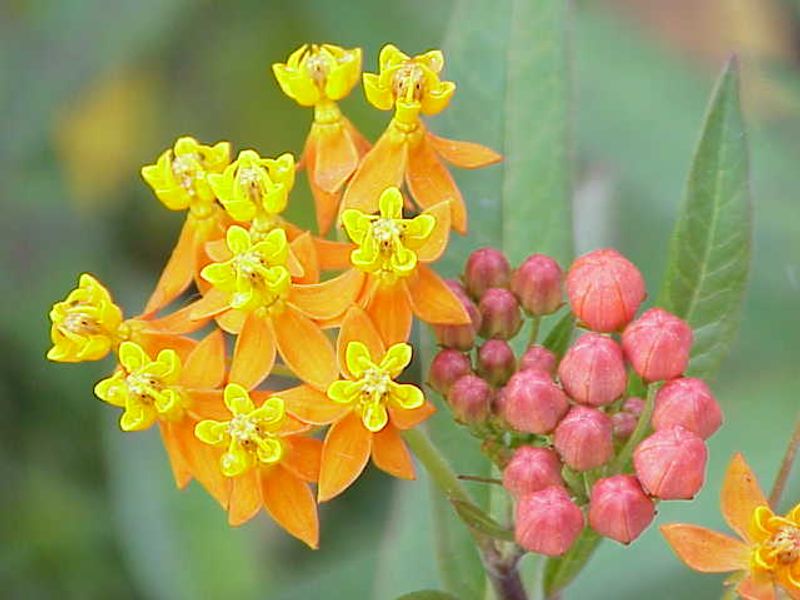
A monarch label does not tell the whole story, and tropical milkweed is the clearest example of good intentions meeting complicated outcomes.
Asclepias curassavica is widely sold as a monarch plant because it blooms heavily, handles heat, and monarchs do visit it.
The tag usually stops there, which leaves out some important Florida-specific concerns.
Tropical milkweed is not native to our state. In warm parts of the state, especially southern regions, it stays green year-round instead of going dormant the way native milkweeds do.
That extended availability can disrupt the natural cues that monarchs use during migration. There is also a parasite concern.
The protozoan Ophryocystis elektroscirrha, often called OE, can build up on plants that stay green and are visited repeatedly. Monarchs can pick up higher loads of this parasite from non-native milkweed that does not go through a natural dormancy cycle.
Native milkweed species are better matches for Florida sites when planted in the right conditions. Swamp milkweed, Asclepias incarnata, works well in moist sunny areas.
Butterfly weed, Asclepias tuberosa, suits sunny spots with fast-draining sandy soil. White swamp milkweed, Asclepias perennis, fits wetter low-lying sites.
These are not always easy to find at big box stores, but local native nurseries and plant sales through native plant societies usually carry them. Buying the right milkweed for your site does more for monarchs than a colorful tag ever could.
8. Air Potato Vine Is Not A Harmless Fast-Growing Climber
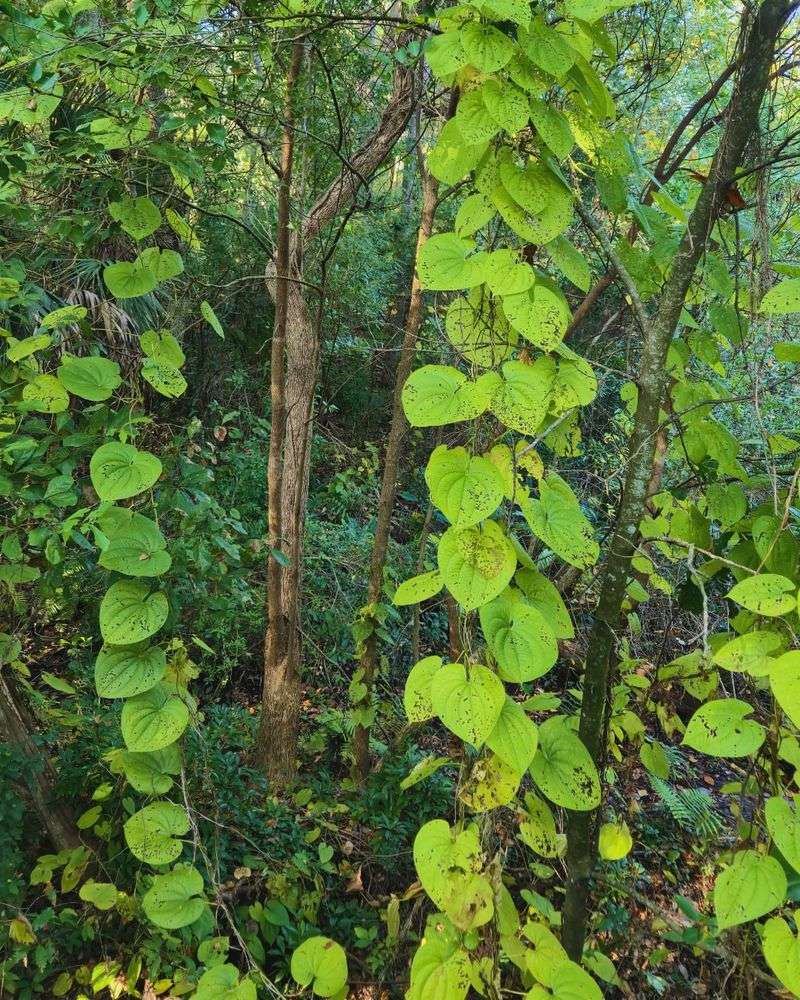
Fast-growing vines deserve extra suspicion in our state, and air potato vine is the reason that instinct exists. Dioscorea bulbifera is not a plant you want to bring home from a casual trade, a neighbor’s yard, or even a well-meaning swap.
It spreads by aerial bulbils, which are small potato-like structures that form along the vine, drop to the ground, and sprout into new plants wherever they land.
Air potato vine is invasive and is recognized as one of the more aggressive vines in the state. It climbs rapidly over existing vegetation, including trees and shrubs, and can smother native plants by blocking light.
A single season of growth can cover a surprising amount of ground. The bulbils make manual removal a multi-season commitment because any bulbil left behind can start the cycle again.
If you see this vine offered at a plant swap, passed along as a fast privacy screen, or listed casually in a neighborhood group, do not bring it home. Do not move it from one property to another.
If it is already growing in your yard, contact your local UF/IFAS Extension office for guidance on management. Some counties have organized air potato removal programs, which shows how seriously land managers take its spread.
A fence or trellis that needs coverage has better options, including native coral honeysuckle or passionvine, both of which support wildlife without the invasive risk.