The 10 Plants That Look Good In California Without Constant Pruning
Some plants in a California yard act like they are training for a topiary competition. Miss one trim, and suddenly everything looks a little wild, lopsided, or one growth spurt away from blocking the path.
Then there are the easygoing stars that somehow keep their shape, hold their beauty, and stay pulled together without begging for constant attention.
That kind of plant feels like a small miracle in a place where gardens can grow fast, sprawl wide, and turn simple maintenance into a regular chore. A great low-pruning plant does not make the yard feel boring.
It makes the whole space feel calmer, smarter, and a lot easier to enjoy. You still get color, texture, structure, and that polished look everybody wants, just without spending every other weekend chasing things back with clippers.
Once you start noticing which plants naturally stay handsome on their own, it gets a lot easier to build a California garden that looks good without feeling like a never-ending haircut.
1. Manzanita
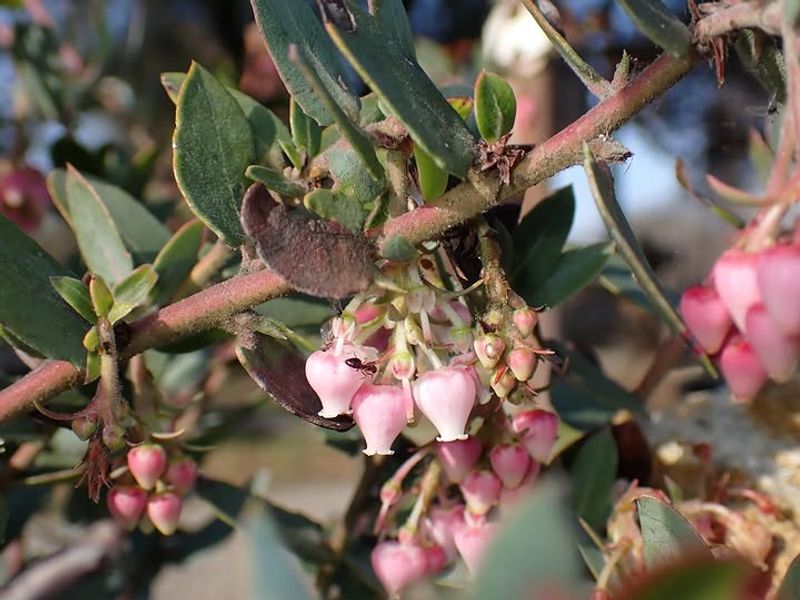
Few plants have as much personality as manzanita. Its smooth, reddish-brown bark almost looks like polished wood, making it a standout even when it is not in bloom.
Native to California, this shrub has been thriving in the state’s dry, rocky hillsides for centuries without any help from gardeners.
Manzanita grows at a slow and steady pace, which means it naturally stays compact and tidy. You rarely need to grab a pair of shears because it shapes itself beautifully over time.
It handles drought like a champ, making it a perfect fit for California’s long, dry summers.
In late winter and early spring, small clusters of bell-shaped pink or white flowers appear and attract hummingbirds and bees. After flowering, it produces small berry-like fruits that wildlife absolutely loves.
Plant it in full sun with well-draining soil and give it some space to spread. Once established, it needs very little water and almost no pruning, making it one of the easiest and most rewarding native shrubs you can grow in a California garden.
2. Bush Anemone
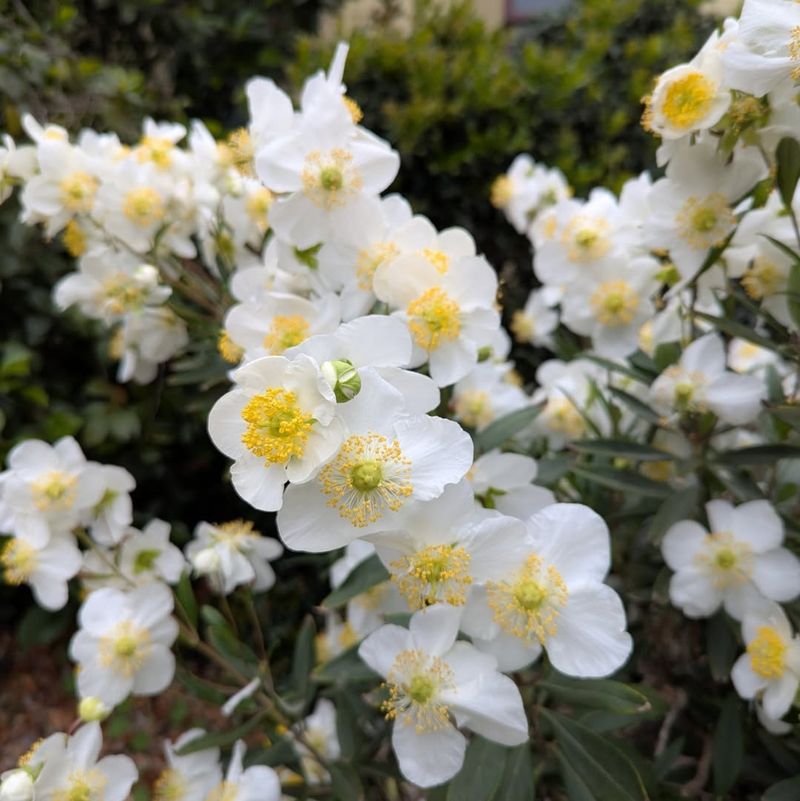
Not many people know about bush anemone, but those who do tend to fall in love with it fast. It is one of California’s rarest native shrubs, and it brings a quiet elegance to any garden space.
The large, white flowers look almost like tiny roses, and they smell wonderful in the warm California air.
Bush anemone blooms in late spring and early summer, putting on a show that lasts for weeks. It grows to about four to six feet tall and wide, forming a full, rounded shape without needing any trimming.
The glossy, dark green leaves stay attractive year-round, even when the plant is not flowering.
One of the best things about bush anemone is how well it handles dry conditions once it settles into your garden. It prefers partial shade, especially in warmer parts of California, and does well under the canopy of larger trees.
Plant it in well-draining soil and water it occasionally during the first year. After that, it pretty much takes care of itself.
Your California Garden Changes Every Week. Your Plan Should Too.
Gardening in California changes quickly throughout the season. Every Friday you’ll receive a simple weekly plan showing exactly what to plant, prune, fertilize, harvest, and protect so you never miss the right timing.
For a shady corner of your California yard that needs a little life, bush anemone is a wonderful choice.
3. Coffeeberry
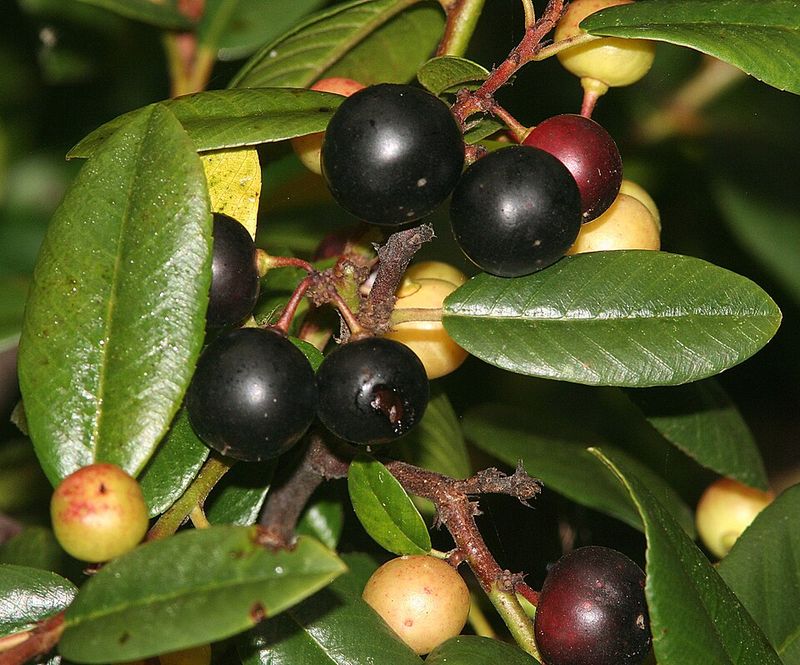
Coffeeberry is one of those plants that quietly earns its place in a California garden. It does not demand attention, but once you notice it, you appreciate everything it brings to the table.
The glossy, dark green leaves stay fresh-looking through most of the year, and the berries that follow the flowers are genuinely eye-catching.
The berries start out green, then turn red, and finally ripen to a deep purplish-black, almost like coffee beans. This color progression makes the plant interesting to look at for months at a time.
Birds love the berries too, so planting coffeeberry is a great way to bring more wildlife into your California yard.
Coffeeberry grows naturally across many parts of California, from coastal areas to inland foothills. It adapts well to different soil types and tolerates both sun and partial shade.
Once established, it is very drought-tolerant and does not need regular pruning to keep its shape. It grows to about four to eight feet tall, depending on the variety.
Compact varieties are also available if you have a smaller space. Either way, this native shrub is a reliable, low-effort choice that looks good all year long.
4. Silk Tassel
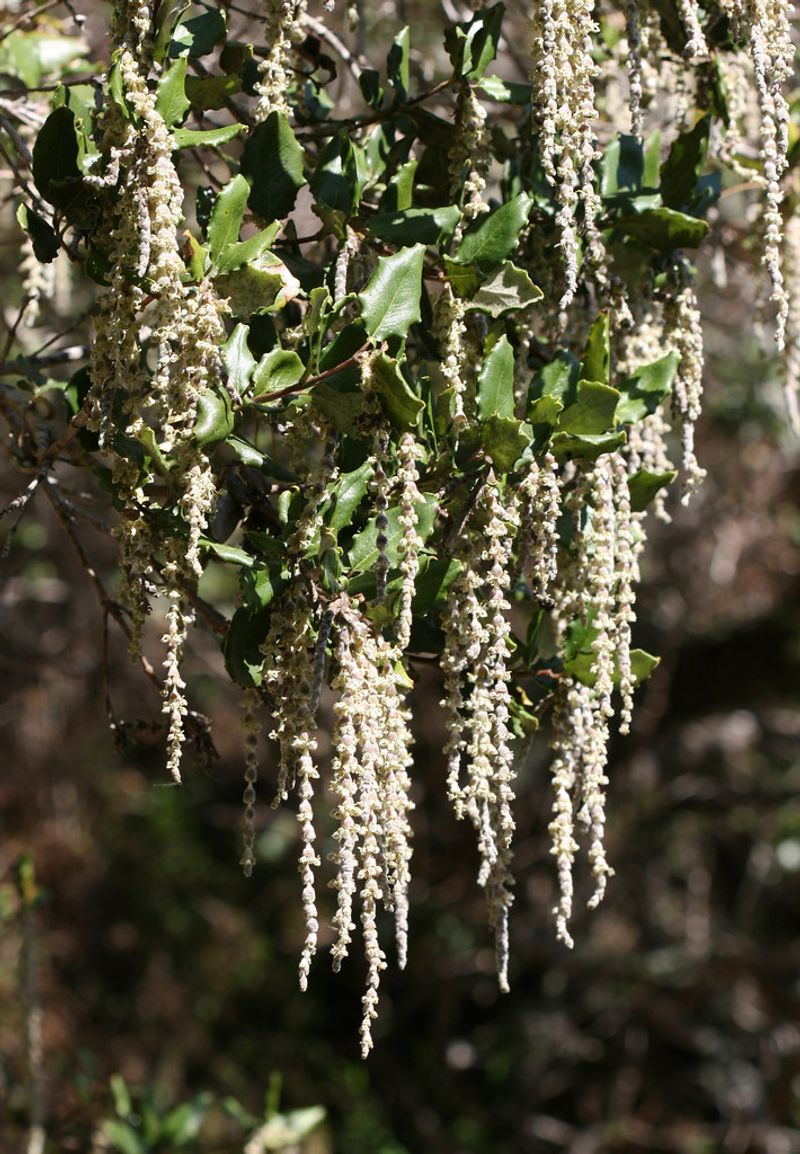
Silk tassel is one of the most dramatic-looking plants you can grow in a California garden, and it does all of that without needing a single haircut. In winter, long silvery-green catkins hang from the branches like natural garland.
It is the kind of plant that makes people stop and ask what it is.
Native to coastal mountains and chaparral regions of California, silk tassel is built for tough conditions. It handles dry summers, rocky soil, and even occasional frost without much complaint.
It grows slowly into a large, dense shrub or small tree, eventually reaching eight to fifteen feet tall. That slow growth is actually a bonus because it means you are not constantly managing its size.
The leathery, dark green leaves have wavy edges and stay on the plant year-round, giving it a sturdy, polished look even between bloom cycles. Silk tassel does best in full sun to partial shade and prefers well-draining soil.
Once settled into your California garden, it needs very little supplemental water. It is a bold, architectural plant that adds real structure and interest to the landscape without asking much in return.
Few shrubs can match its winter display.
5. Groundcover Ceanothus
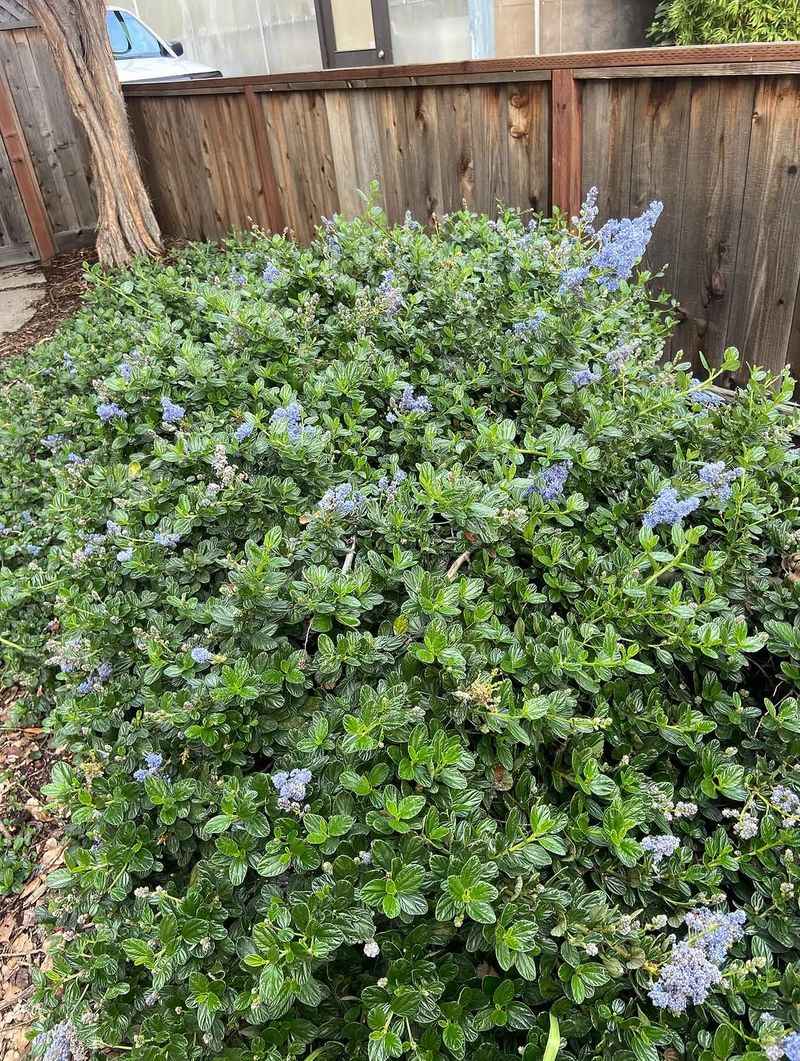
If you have a slope, a bare patch, or a stretch of yard that feels empty, groundcover ceanothus might be exactly what you need. This low-growing version of California lilac hugs the ground and spreads out wide, covering areas that other plants struggle to fill.
And when it blooms in spring, the vivid blue or purple flowers are absolutely stunning.
Groundcover ceanothus grows only a foot or two tall but can spread six to ten feet wide. That spreading habit means it fills in space naturally, crowding out weeds and reducing erosion on slopes.
It is a hard-working plant that looks great while doing all that heavy lifting. Pollinators, especially native bees, go absolutely wild for the flowers.
Once established in a California garden, groundcover ceanothus is remarkably drought-tolerant. It thrives in full sun and well-draining soil, and it rarely needs pruning since it stays low on its own.
Avoid overwatering, especially in summer, because too much moisture can cause problems. Give it room to spread and let it do its thing.
Over time, it creates a lush, colorful carpet that looks professionally maintained without any real effort on your part.
6. Hollyleaf Cherry
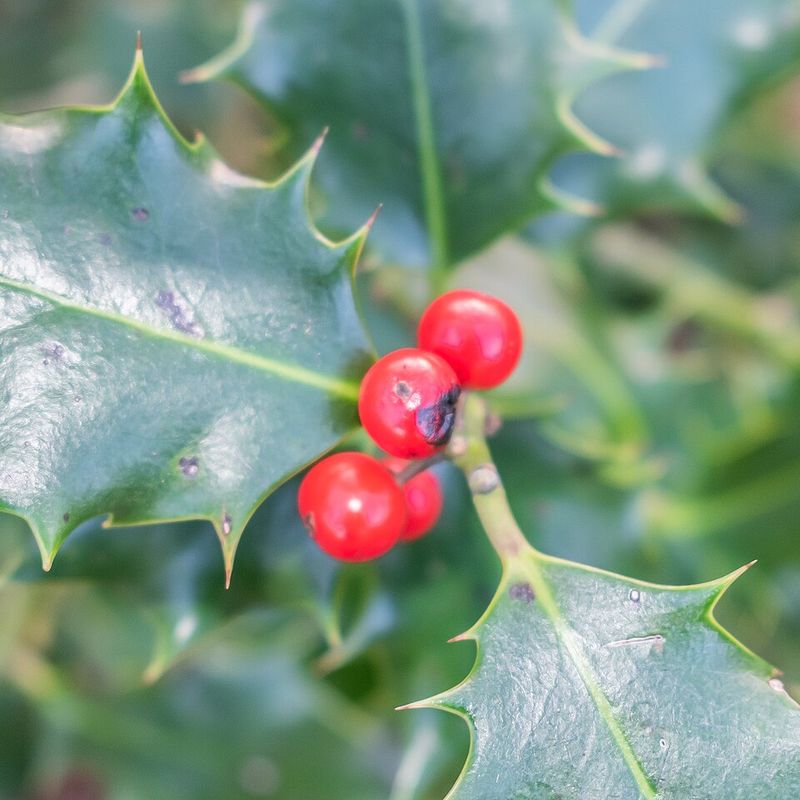
Hollyleaf cherry is a California native that earns serious respect in the garden world. Its shiny, spiky leaves look almost like holly, giving it a bold, evergreen texture that works in both formal and naturalistic garden styles.
It is tough, adaptable, and almost completely self-sufficient once it gets going.
In spring, clusters of small white flowers appear along the branches, attracting bees and butterflies. By late summer, dark reddish-purple fruits develop that birds and other wildlife eagerly snack on.
The plant serves as both a beautiful ornamental and a wildlife habitat, which makes it doubly valuable in any California yard.
Hollyleaf cherry grows naturally in coastal sage scrub and chaparral habitats across Southern and Central California. It handles heat, drought, and poor soil without skipping a beat.
Depending on growing conditions, it can reach anywhere from six to twenty feet tall. It can be used as a large shrub, a hedge, or even a small tree.
Pruning is rarely necessary because it naturally holds a tidy, rounded form. Plant it in full sun with good drainage and let California’s climate do the rest.
It is a genuinely effortless plant that rewards patience with lasting beauty.
7. Viburnum Tinus
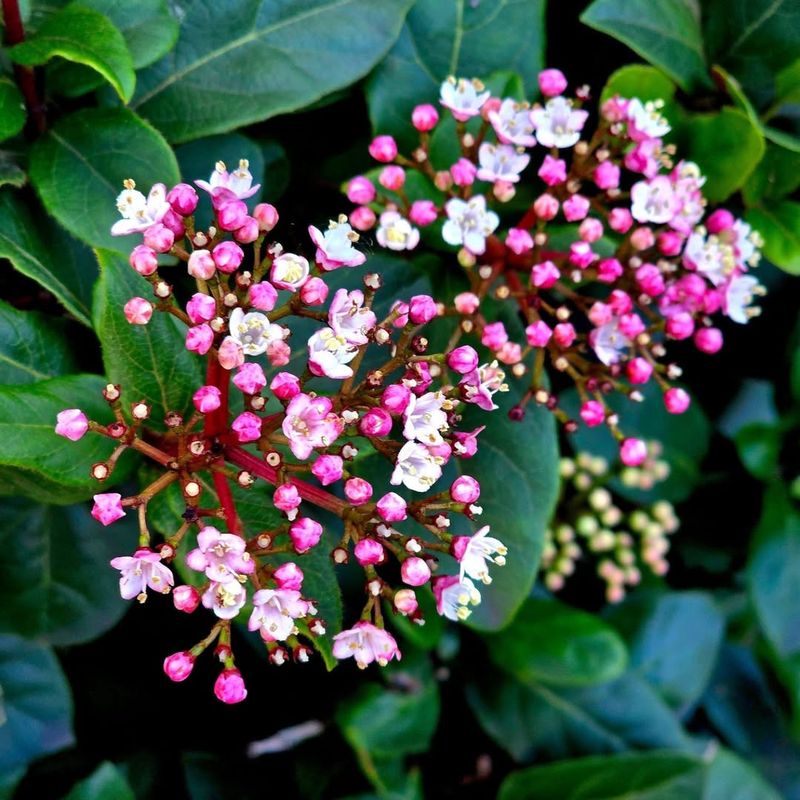
Viburnum tinus has been a garden favorite for a very long time, and it is easy to see why. It blooms from late fall all the way through early spring, which is exactly when most other plants are taking a break.
Those clusters of pink buds opening into white flowers are a welcome sight during California’s cooler months.
This Mediterranean native adapts beautifully to California’s climate because the two regions share similar conditions: warm, dry summers and mild, wetter winters. It grows into a dense, rounded shrub about six to twelve feet tall and wide.
The dark green leaves stay on year-round, making it a reliable backdrop for other plants in the garden.
Viburnum tinus is not picky about soil and handles both sun and partial shade pretty well. It tolerates some drought once established, though it appreciates occasional deep watering during dry stretches.
One of its best qualities is that it holds its natural shape without much intervention. A light trim every few years is all it really needs.
For California gardeners looking for a flowering evergreen that performs consistently through the cooler season, viburnum tinus is a dependable and lovely choice that rarely disappoints.
8. Crape Myrtle
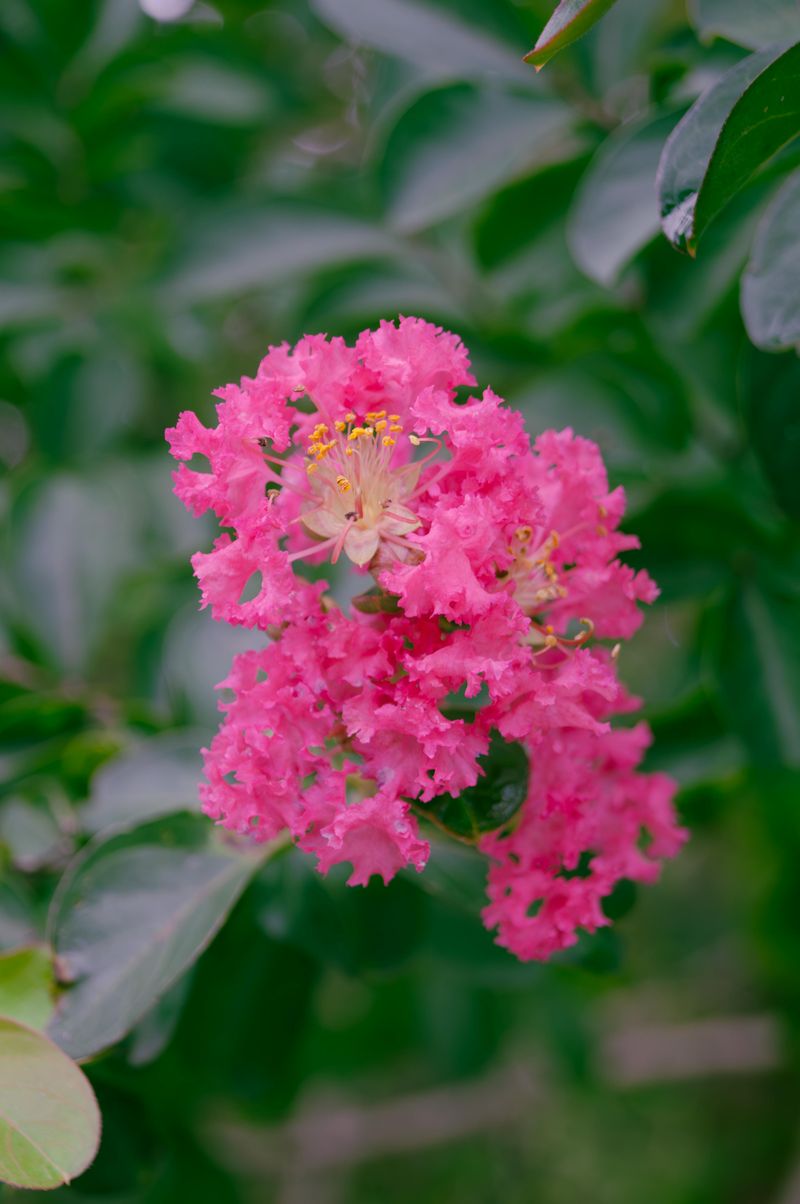
Walk through almost any California neighborhood in summer and you will likely spot a crape myrtle in full bloom. Those big, showy clusters of flowers in shades of pink, red, white, or purple are hard to miss.
Crape myrtle is one of the most popular flowering trees in California, and for good reason.
It blooms for a long time, often from early summer all the way into fall. Even after the flowers fade, the peeling, multicolored bark adds visual interest through winter.
In autumn, the leaves turn beautiful shades of orange and red before dropping. So really, crape myrtle offers something to look at in every season.
One important thing to know: crape myrtles do not need heavy pruning. In fact, a common mistake called “crape murder” involves cutting the branches down to ugly stubs every year.
Avoid that completely. Choose a variety sized right for your space and let it grow naturally.
Many compact varieties stay small without any cutting at all. Crape myrtle loves full sun and handles California’s hot, dry summers like a pro.
It is a tough, reliable, and genuinely beautiful tree that rewards a hands-off approach more than almost any other plant.
9. Myrtle
Common myrtle has a long and fascinating history. Ancient Greeks and Romans considered it sacred and used it in ceremonies and celebrations.
Today, it is simply a wonderful, easy-care shrub that thrives in California’s Mediterranean-like climate. That kind of track record says a lot about how reliable this plant really is.
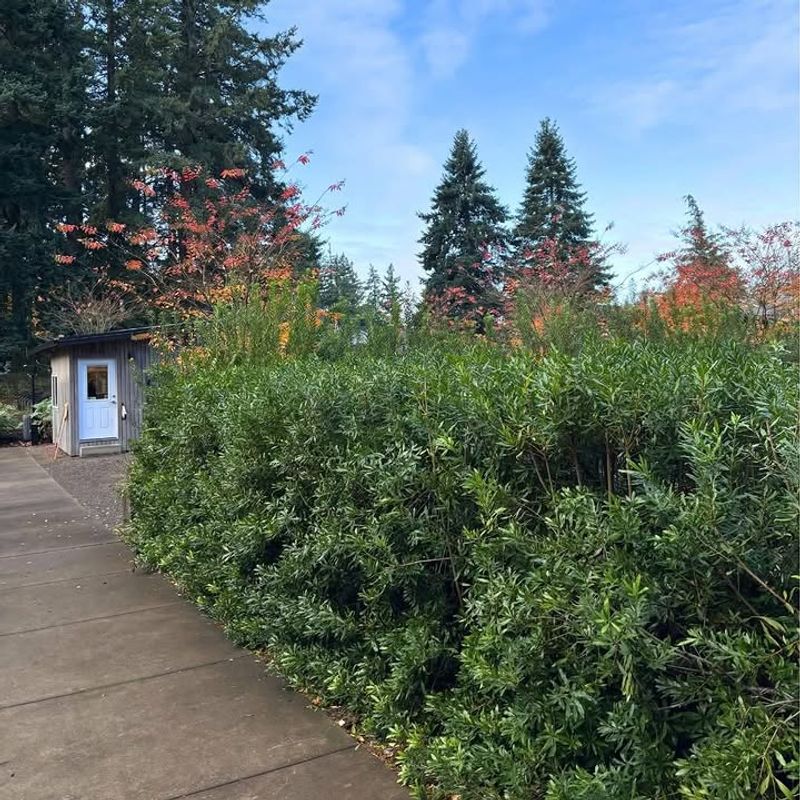
Myrtle grows into a dense, rounded shrub with small, glossy, dark green leaves that release a pleasant fragrance when brushed. In summer, it produces delicate white flowers with fluffy stamens that pollinators love.
Dark bluish-black berries follow the flowers and add another layer of seasonal interest to the plant.
In California, myrtle does extremely well in coastal and inland areas alike. It loves full sun but tolerates partial shade and is not fussy about soil type.
Once established, it handles dry conditions well and rarely needs supplemental watering. Its natural growth habit is compact and rounded, so it stays attractive without regular pruning.
A very light shaping once in a while is all you might ever need. For hedges, borders, or standalone specimens, myrtle is a versatile, low-maintenance option that brings Mediterranean charm to any California garden throughout the entire year.
10. Loquat
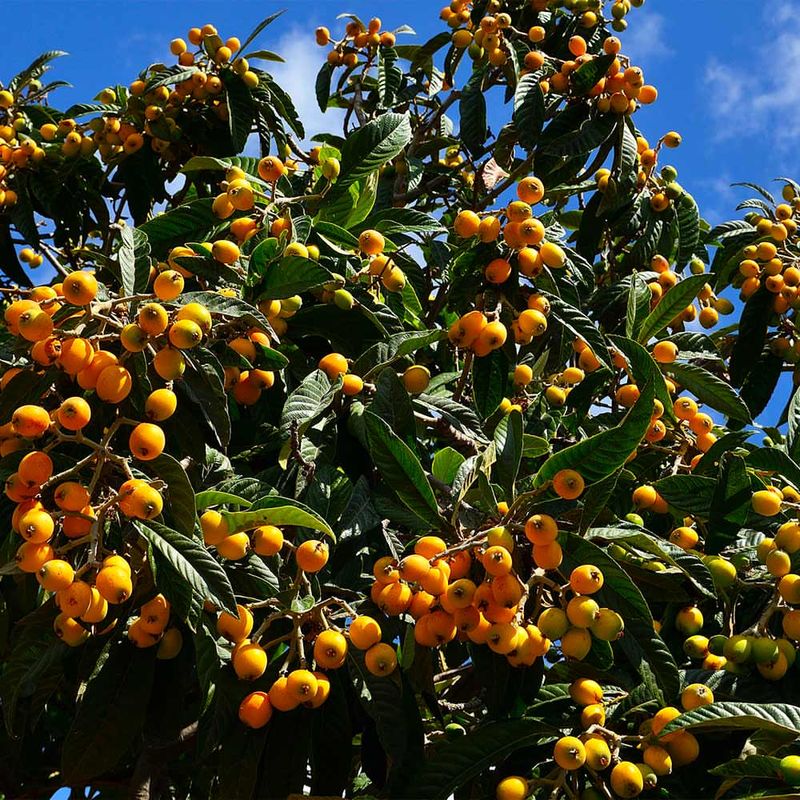
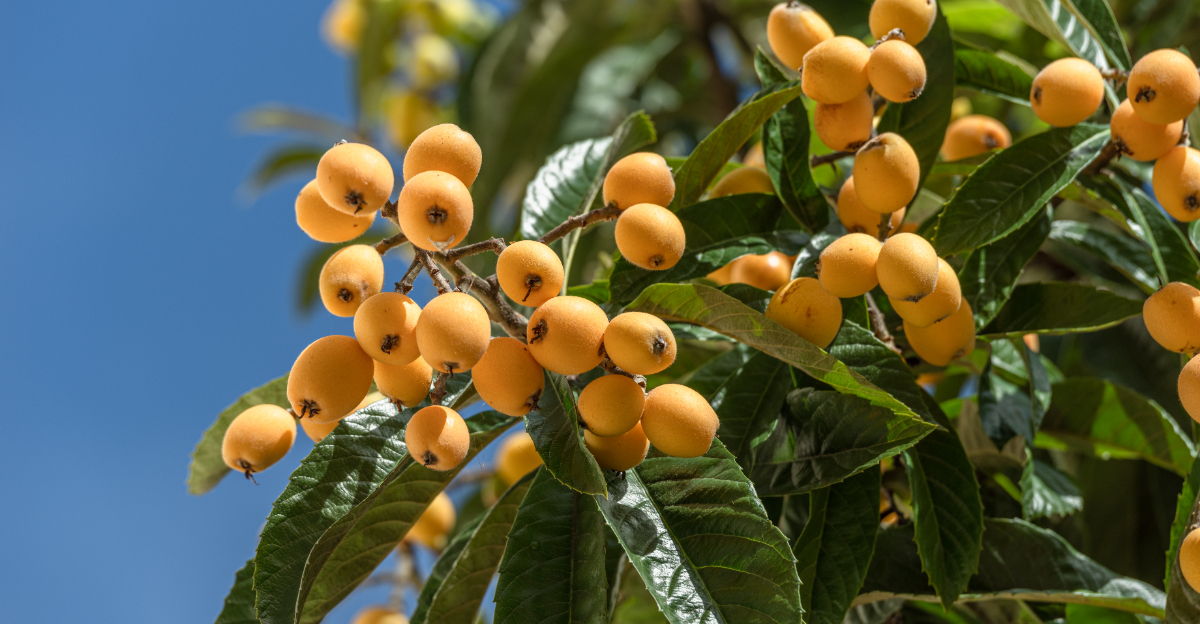
Loquat is one of those plants that looks like it belongs in a tropical paradise, yet it grows happily all over California with almost no fuss. The large, dark green leaves have a bold, textured look that immediately gives a garden a lush, full feel.
And then there is the fruit, which is a sweet, juicy bonus that many gardeners absolutely love.
The small, orange fruits ripen in late winter to early spring, which is a time of year when fresh fruit from the garden is especially exciting. They taste a bit like a mix between a peach and a mango, and they are great eaten fresh or made into jams and jellies.
Birds are big fans too, so expect some competition for the harvest.
Loquat grows into a small to medium-sized tree, usually reaching ten to twenty-five feet tall, but it can be kept smaller with occasional shaping. In California, it does well in coastal, inland, and even slightly cooler areas.
It handles drought reasonably well once established and rarely needs serious pruning. Its naturally rounded canopy stays attractive on its own.
If you want a tree that feeds your eyes and your taste buds without demanding constant attention, loquat is a fantastic choice for any California yard.