The Purple Boxes Hanging In Connecticut Trees Are There For A Reason
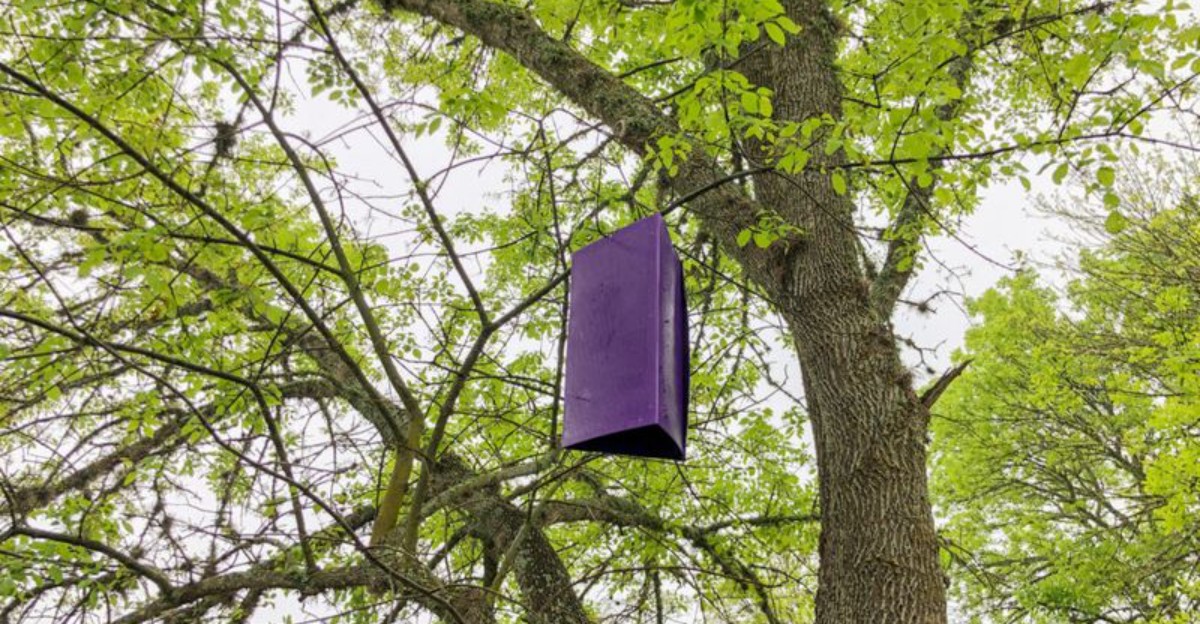
Drive almost any winding back road in Connecticut in the warmer months, and something strange keeps catching your eye. A bright purple shape dangles from a branch like leftover party decorations nobody bothered to take down.
It is not a kite, a birdhouse, or some kid’s balloon that escaped at a birthday party. Someone hauled a pole into the woods and hung that odd little box on purpose.
Neighbors argue about it at backyard cookouts, and joggers slow down for a puzzled second look. Most people guess wrong, which honestly makes the real explanation a whole lot more interesting than expected.
State workers have been quietly walking these roads and hanging these things for years, one pole reach at a time. Purple, it turns out, is a color with surprisingly strong opinions attached to it.
The Emerald Ash Borer Behind Those Sticky Panels
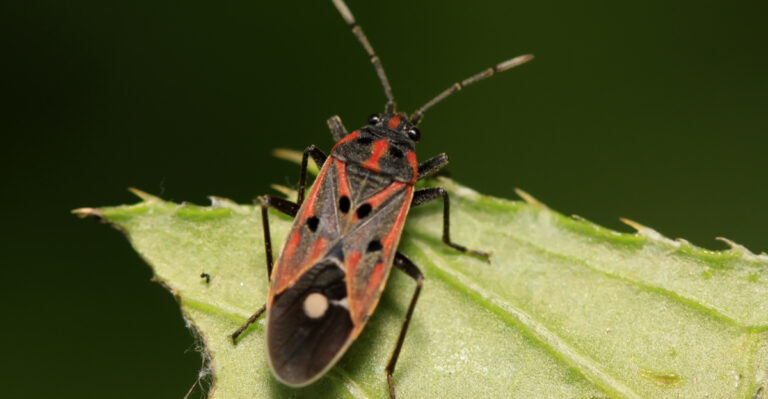
A shiny green beetle barely bigger than a grain of rice started all this fuss. The emerald ash borer arrived from Asia and found Connecticut’s ash trees wonderfully easy to settle into.
Adults nibble leaves, which barely matters, but their larvae are the real problem underneath the bark. Those grubs carve winding tunnels that cut off the water and food a tree needs.
Connecticut confirmed its first infestation in Prospect back in July 2012, and officials moved fast. Purple boxes went up soon after, giving surveyors a way to track where beetles were spreading.
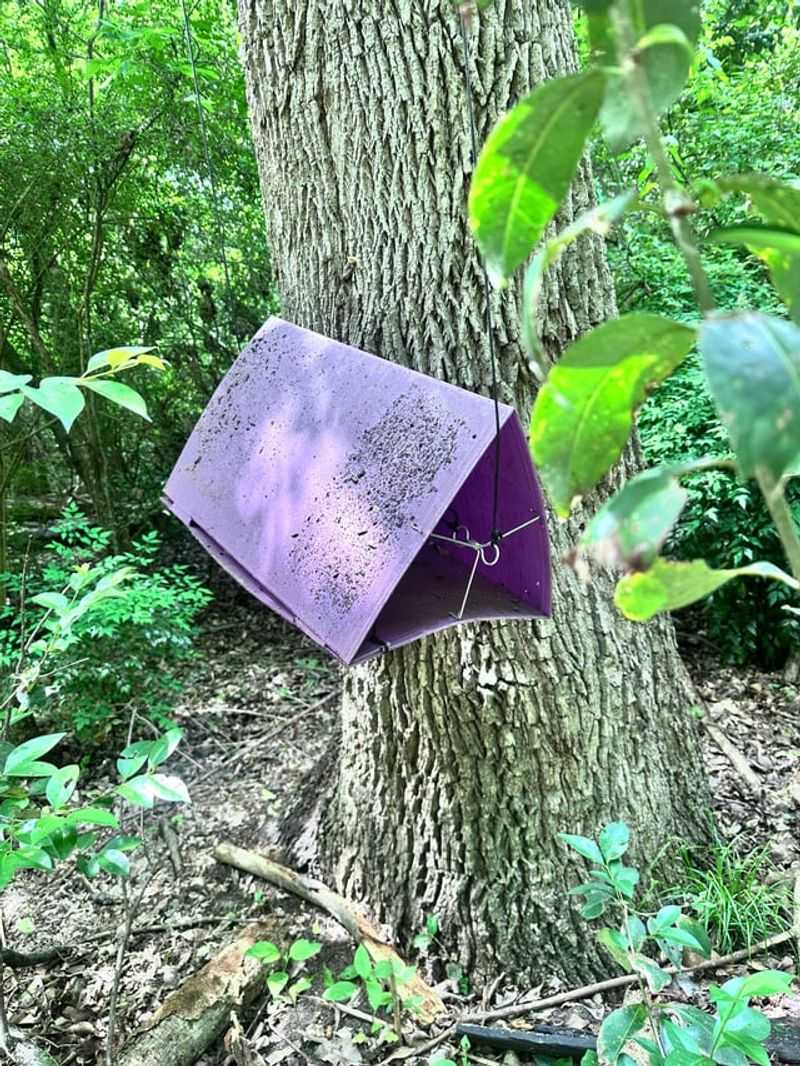
Each trap is a three-sided panel coated in glue and hung high enough to catch beetles flying near the canopy edge. Scientists add a lure that smells like stressed ash bark, which beetles find irresistible.
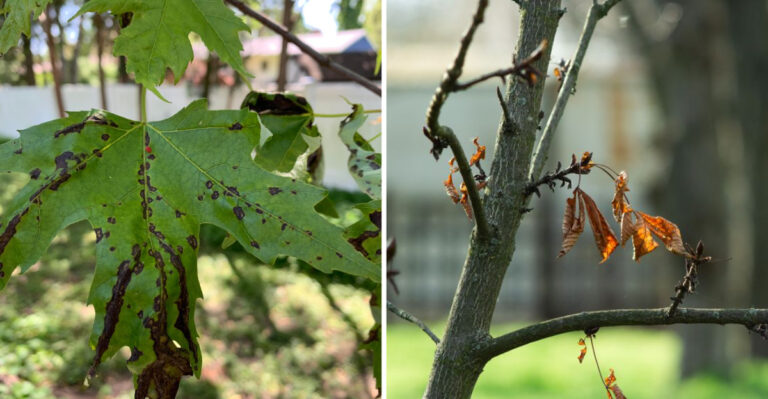
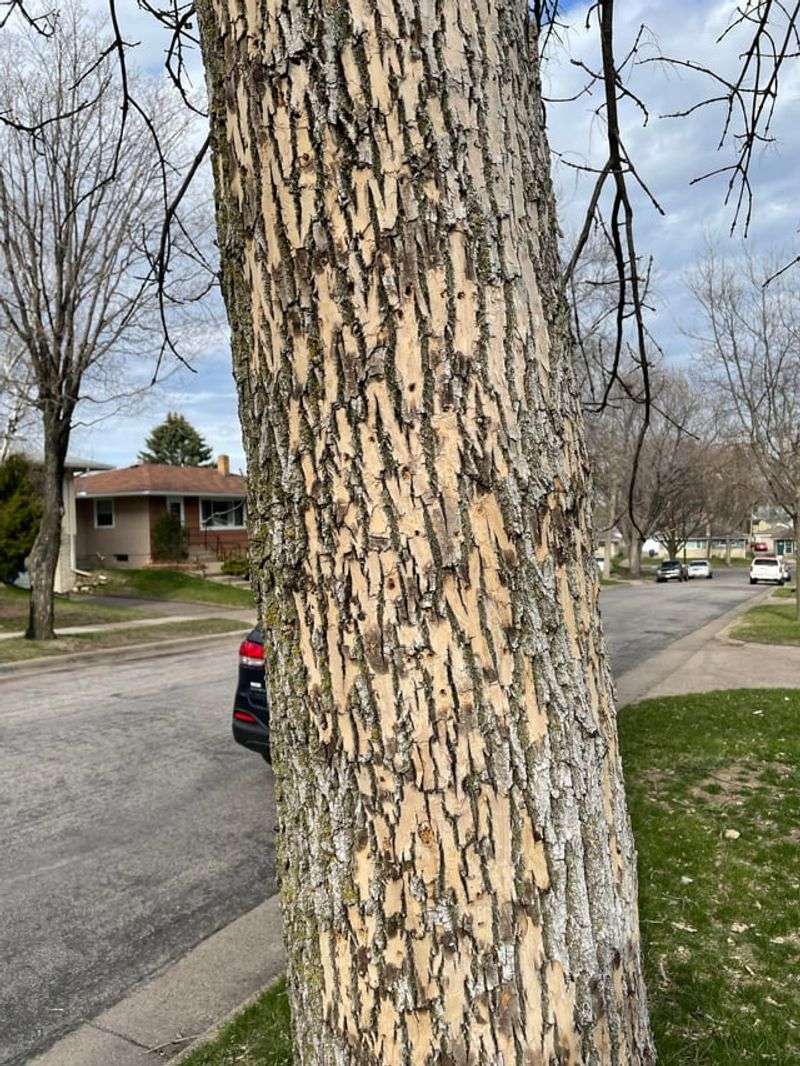
Homeowners sometimes spot the damage before any trap does, noticing thinning crowns or woodpeckers going wild. Bark that splits open in shallow S-shaped grooves is another strong clue.
Nobody expects a trap to solve the problem by catching every beetle in the county. The goal is information, telling foresters which towns need attention and which ones are still clear.
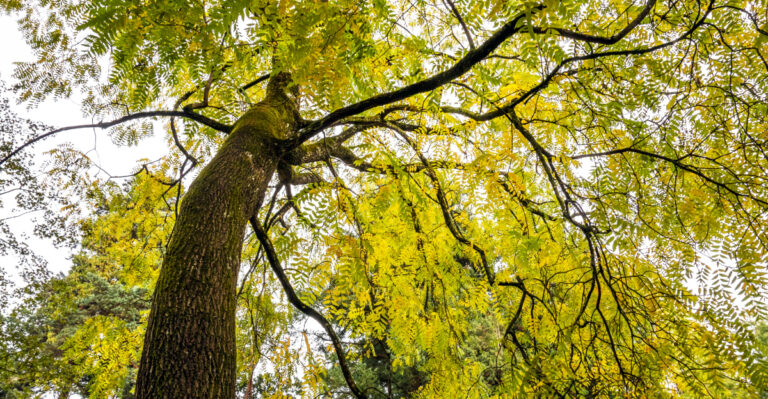
Ash trees once lined streets across New England, valued for baseball bats, furniture, and firewood. Losing them changes how neighborhoods look and costs towns real money in removals.
Next time a purple rectangle catches your eye, know that it is basically a beetle census. Small effort, big payoff, and no one has to guess where the trouble is headed.
Late Spring Through Midsummer Trapping Season
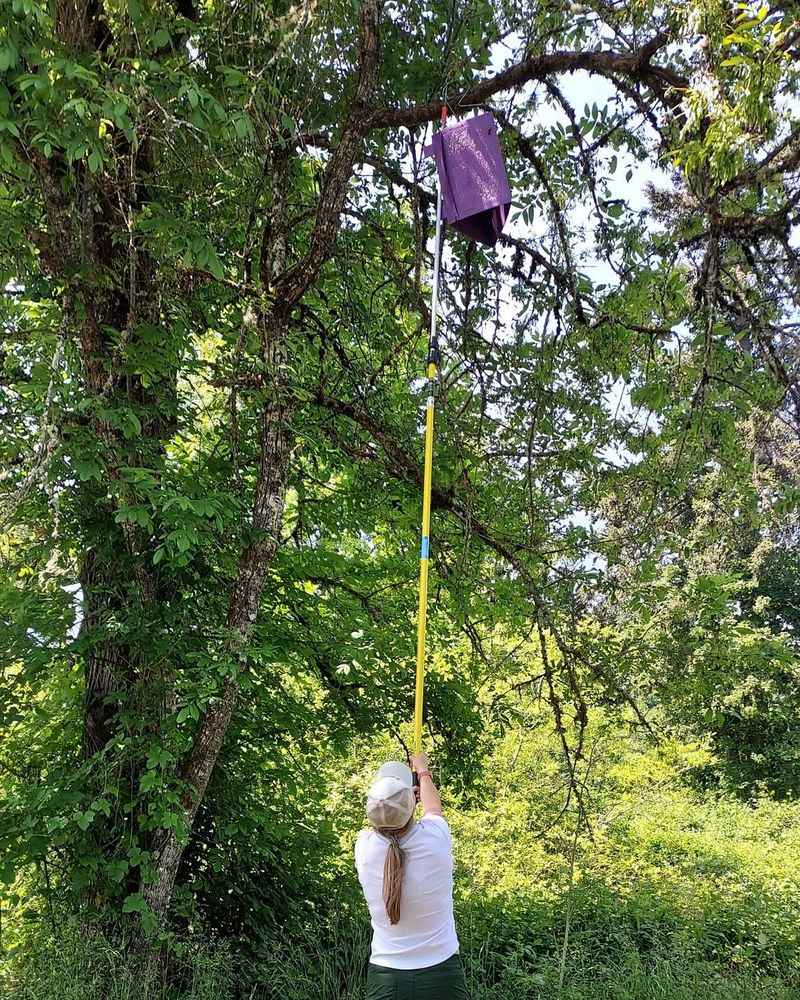
Purple boxes do not stay up year round, which is why some drivers swear they appear overnight. Crews hang them in spring, usually during April or May, before beetles begin flying.
Adult emergence lines up with lilac and black locust blooms, nature’s own calendar for pest watchers. Warm soil and rising temperatures pull the insects out from under the bark.
June and July bring peak flight, when beetles wander looking for mates and fresh ash bark. Traps catch the most visitors during those weeks, so surveyors check them regularly.
By late August or September, the season winds down and the panels come off the branches. Technicians bag them, count whatever stuck to the glue, and log every location carefully.
Your Connecticut Garden Changes Every Week. Your Plan Should Too.
Gardening in Connecticut changes quickly throughout the season. Every Friday you’ll receive a simple weekly plan showing exactly what to plant, prune, fertilize, harvest, and protect so you never miss the right timing.
A trap hung too late misses the entire flight window and tells researchers almost nothing useful. Hanging one too early just means weeks of collecting dust, pollen, and random moths.
Weather shifts the schedule from year to year, so entomologists track accumulated heat instead of dates. Degree day models predict emergence far better than any calendar hanging in an office.
Homeowners curious about local timing can call their town tree warden or the state experiment station. Both keep records showing when beetles first turned up nearby and what happened afterward.
Spotting a purple panel in July is perfectly normal, not a sign your street is in trouble. Spotting one in December would be genuinely odd, and probably means somebody forgot a ladder trip.
Common Mixups With Bird Feeders And Bug Zappers
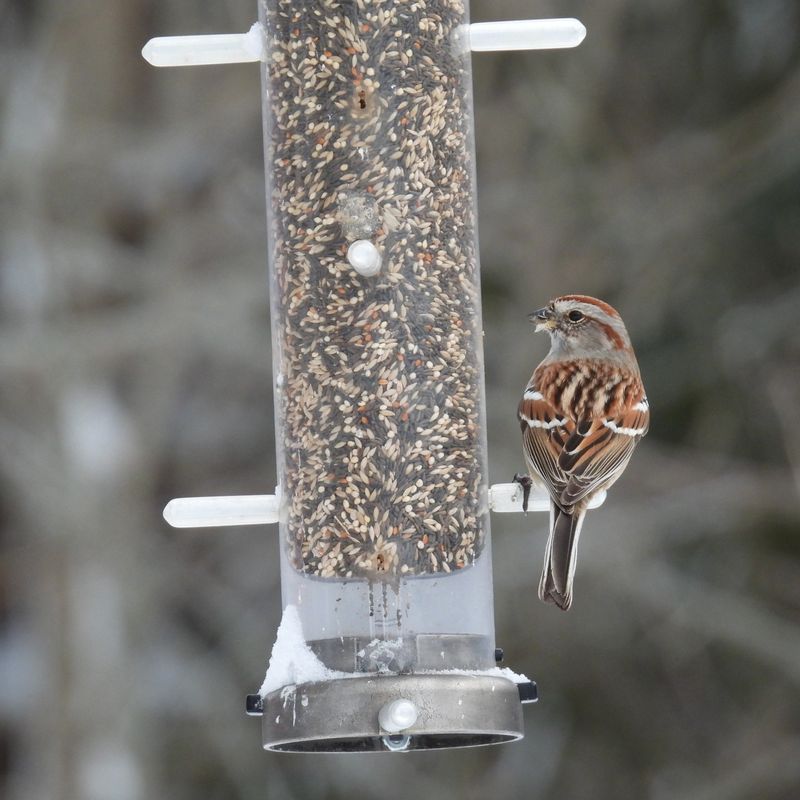
Plenty of Connecticut residents assume the boxes are bird feeders gone rogue or fancy bug zappers. Neither guess is close, since nothing inside glows, buzzes, hums, or dispenses a single sunflower seed.
Others think the panels attract pests toward their property, which understandably makes people nervous. The lure only works over a short distance and pulls in insects already living nearby.
A few folks try to take them down, thinking they are litter or someone’s abandoned art project. Removing a trap erases survey data and leaves crews hunting for equipment that mysteriously vanished.
The glue deserves respect, because it clings to skin, hair, clothing, and car paint stubbornly. Soap barely touches it, and cooking oil works better than most cleaners in your kitchen cabinet.
Children find the color irresistible, so parents should explain the boxes quickly during walks. Look, point, talk about beetles for a minute, then keep walking without poking or climbing.
Mosquito traps are a separate product entirely, usually battery powered and hung somewhere near a patio. Purple prisms need no batteries, no wires, and no attention beyond a periodic field inspection.
Some people report the panels as vandalism or illegal dumping, which ties up local officials unnecessarily. A quick call to the tree warden clears things up faster than a complaint form.
Treat a purple box like a mailbox that belongs to the state, oddly placed but official. Curiosity is welcome, but scissors, ladders, and well-meaning rescue attempts are definitely not.
Sticky Panels And The Science Of Color Choice
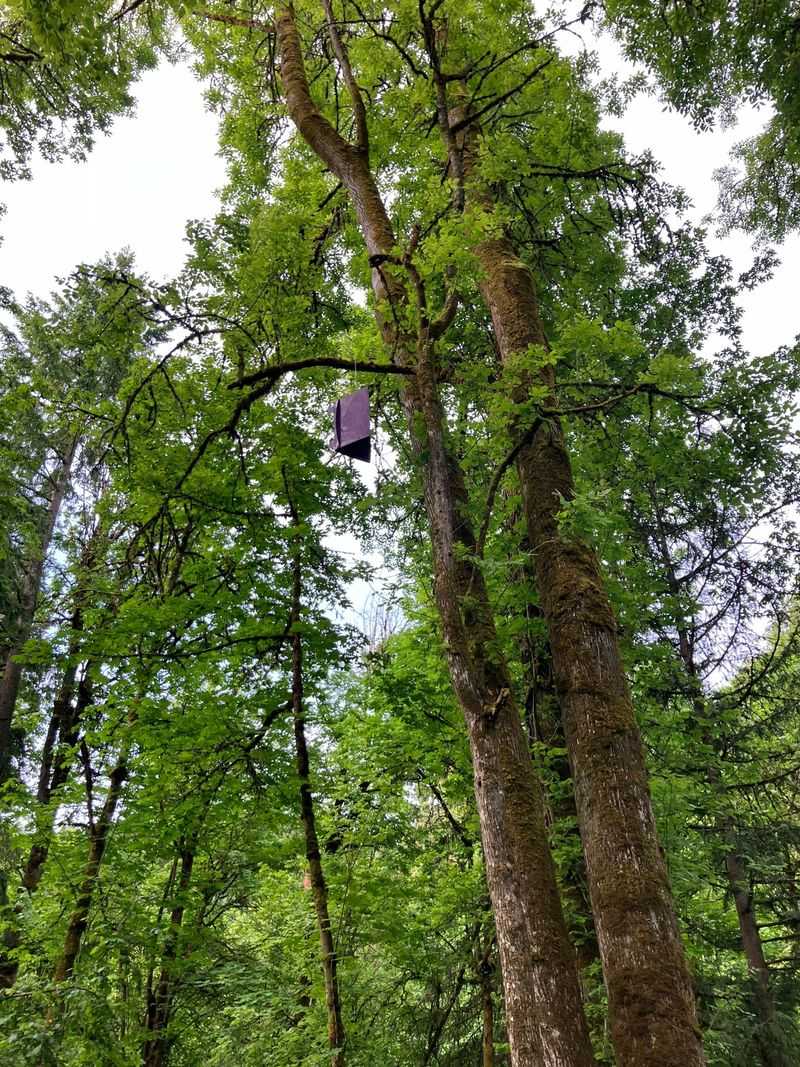
Color choice was not a design fad or somebody’s favorite shade from a paint store. Laboratory tests showed the beetles respond strongly to certain violet and purple wavelengths.
Researchers compared dozens of shades, watching which panels drew the most curious insects. Purple won repeatedly, likely because it mimics light bouncing off stressed ash bark and foliage.
The three-sided prism shape matters too, since beetles approaching from any direction see a target. Flat panels miss visitors arriving from the wrong angle, which weakens the whole survey.
Sticky coating covers every surface, thick enough to hold an insect that lands only briefly. Manufacturers call it a spreadable adhesive, and field crews call it a laundry nightmare.
Inside or nearby hangs a small lure releasing manuka oil or a green leaf compound. Both smells mimic wounded ash, essentially advertising a vacancy the beetles cannot ignore.
Height affects results, so traps usually hang in sunny spots along open woodland edges. Beetles favor warm light and gaps in the canopy, not shady interiors deep in the forest.
Green traps exist as well, used high in the canopy where different research questions apply. Purple simply works best at the heights a technician can reach with a long pole.
So the roadside decoration is really applied science, tested and retested before anybody deployed it. Not bad for something that looks like a leftover gift box stuck in a tree.
Results From Connecticut’s Statewide Monitoring Effort
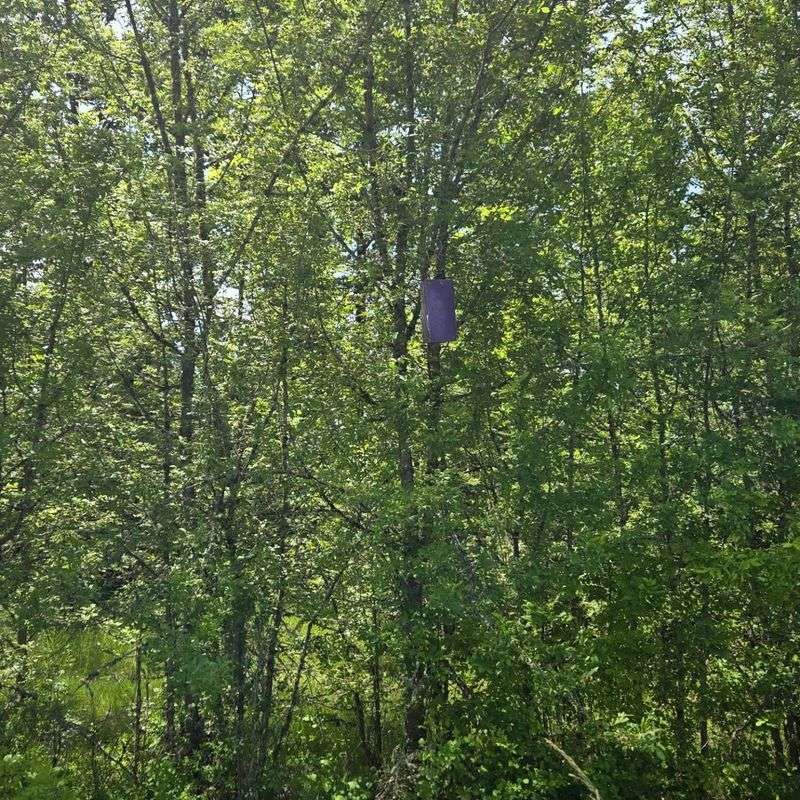
Connecticut’s first confirmed find came in Prospect during July 2012, and the news traveled quickly. Trap data soon showed the insect had spread beyond one quiet New Haven County town.
Within a few years, detections stretched from Fairfield County toward the Rhode Island line. Surveys mapped that march, town by town, using thousands of purple panels in roadside trees.
Numbers guided decisions about quarantines, wood movement rules, and where to focus tree inventories. Federal regulators eventually stepped back in 2021, shifting effort toward biological control instead.
Tiny parasitoid wasps, natural enemies from the beetle’s homeland, were released at carefully chosen sites. Trap records helped scientists pick locations where those wasps stood the best chance.
Municipal crews used the same maps to plan pruning, removals, and replacement plantings. Knowing a problem is arriving three years early saves budgets and prevents messy emergencies.
Homeowners benefited without realizing it, because arborists knew when protective treatments made real sense. Timing a treatment before infestation begins produces far better results than reacting late.
Not every trap catches something, and empty panels still count as valuable information. A blank survey in one district can confirm the beetle has not settled there yet.
Connecticut’s ash population changed permanently, yet the monitoring program did its job honestly. Purple boxes turned a guessing game into a spreadsheet, which foresters find oddly comforting.
Ash Tree Protection And Slower Beetle Spread
Firewood is the beetle’s favorite ride, hitchhiking inside logs stacked in the back of a pickup. Buying wood near where you burn it remains the simplest protection anyone can offer.
Campers hauling a trunk full of oak and ash across state lines spread pests unknowingly. Most states, Connecticut included, urge people to source fuel within about ten miles of camp.
Valuable yard ash can be protected with trunk injections handled by a licensed arborist. Emamectin benzoate treatments last roughly two to three years and work best on healthy trees.
Inspect ash regularly for thinning upper branches, sprouts along the trunk, and heavy woodpecker activity. Catching trouble early keeps your options open and lowers removal costs considerably.
Declining ash grows brittle fast, which makes hazardous limbs a serious concern near driveways. Professional removal beats waiting for a storm to make that decision for you.
Replanting with variety protects the next generation of shade, so skip single species street plantings. Oaks, hophornbeam, tupelo, and hackberry all handle Connecticut soils and winters nicely.
Reporting suspicious damage to the state experiment station helps surveyors aim their next round of traps. Photos of bark grooves and small exit holes speed up identification enormously.
Nobody can uninvite an insect that already bought property here, but slowing it still matters. Every summer bought is another summer of shade, and shade is worth a phone call.