Why New Fire Ant Mounds Suddenly Start Appearing Around Florida Yards As Fall Approaches
Mowed the yard Saturday. Nothing unusual.
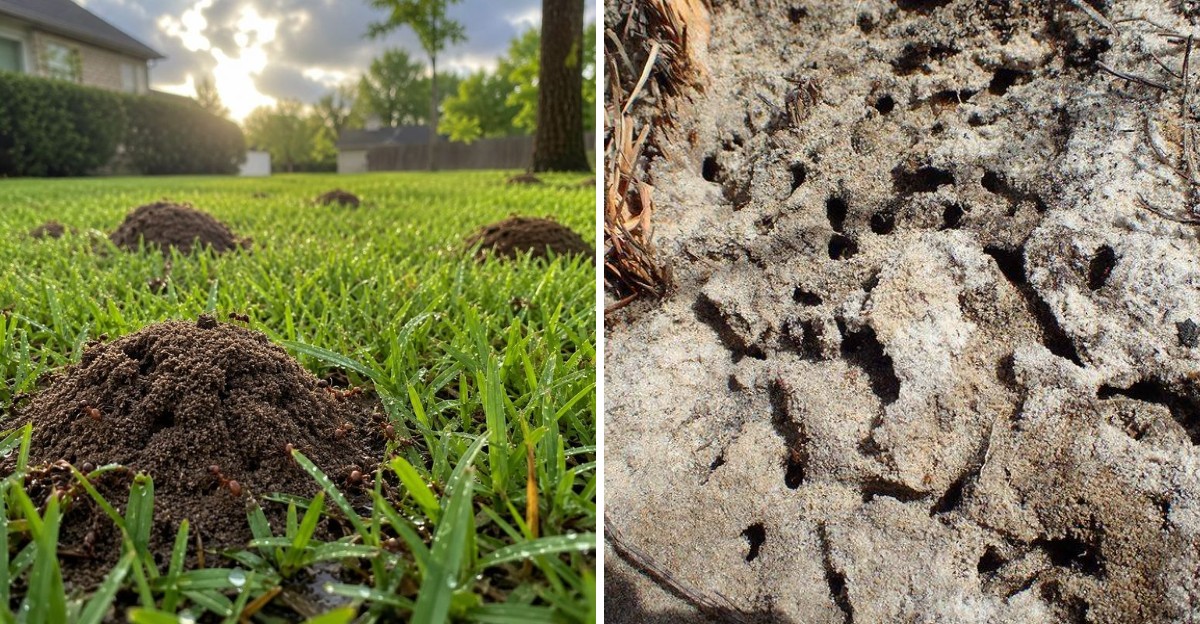
By Wednesday there were four new mounds that weren’t there before, like the ground changed its mind overnight about what to grow.
It’s not random timing. Fall shifts conditions underground, and that shift pushes fire ant colonies to build new mounds and spread out right as the worst of summer heat eases off.
What looks like a sudden invasion is usually a colony that’s been there for a while. It’s just reacting to something most Florida homeowners never notice until mounds show up in the middle of the lawn.
The timing repeats every year for a reason. Knowing what’s driving it changes how the problem gets handled, instead of just knocking down mounds one at a time as they appear.
1. Cooler Fall Weather Brings Fire Ant Activity Back Into View
Ask anyone who mows a Florida lawn in September, and they will tell you the yard feels different. The air loosens its grip, and the ground finally stops baking under midday sun.
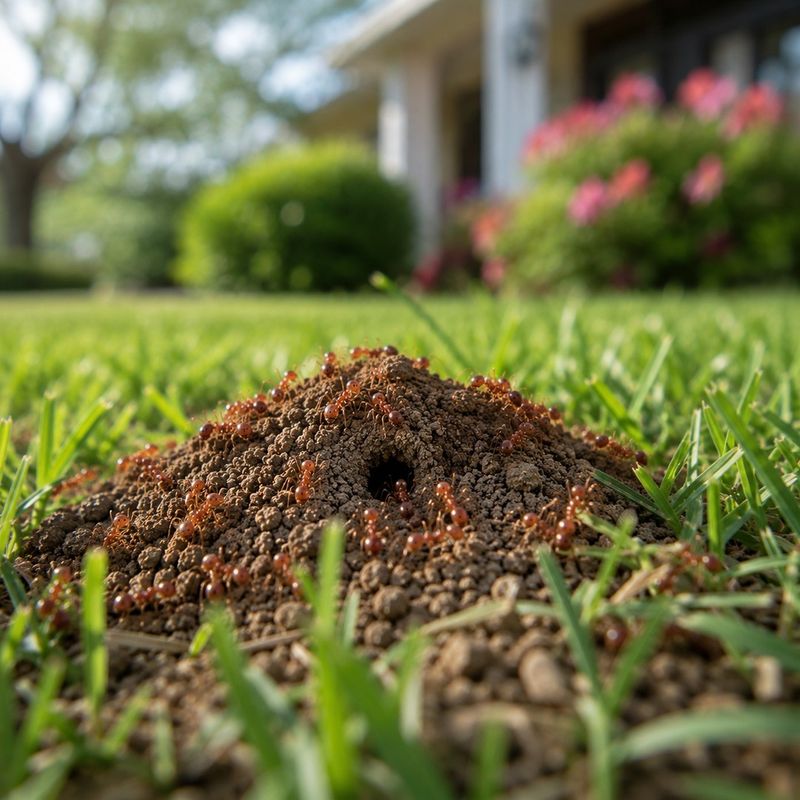
Fire ants stay busy year round in Florida, though summer heat pushes much of their work deeper underground. As temperatures moderate after the hottest part of summer, workers may become more active near the surface.
That shift alone can make a yard look newly infested when the colonies were there the whole time. Warm afternoons following rain tend to bring the heaviest surface traffic.
You may notice trails crossing sidewalks, tiny piles of loose soil near sprinkler heads, or ants swarming a fallen piece of pet food. Soil moisture changes also nudge them upward, since damp ground is easier to tunnel through.
Take a slow walk around your property on a mild morning and mark what you see with a golf tee or small flag. Mapping activity early gives you a head start before the mounds multiply.
Kids and pets tend to spend more time outside once the humidity eases, which raises the odds of an unhappy surprise. A quick scan before playtime is worth the two minutes.
Fun fact: fire ants adjust their tunnel depth like a thermostat, moving up or down to find comfortable soil. Fall simply happens to place that comfort zone right under your feet.
2. Fall Rains Give New Fire Ant Colonies A Fresh Start
Warm, sunny afternoons that follow a rainy morning set the stage for something most homeowners miss entirely. Winged fire ants leave their nests by the thousands for mating flights.
These flights can happen from spring through fall in Florida, and late-season storms create ideal launch conditions. Newly mated queens land, shed their wings, and start scratching out a chamber in soft soil.
Each founding queen lays a small batch of eggs and tends the larvae herself until they mature. Roughly a month later, the first sterile workers appear and begin building outward.
Since a single flight can scatter queens across an entire neighborhood, your yard may collect dozens of tiny starter nests at once. Most stay invisible for weeks, hidden under thatch or beside a stepping stone.
Your Florida Garden Changes Every Week. Your Plan Should Too.
Gardening in Florida changes quickly throughout the season. Every Friday you’ll receive a simple weekly plan showing exactly what to plant, prune, fertilize, harvest, and protect so you never miss the right timing.
By the time a fresh mound catches your eye, that colony has been quietly organizing since the last big downpour. Checking your lawn a few days after each rain helps you spot the newcomers while they are still small.
Mark suspicious spots with a flag and revisit them in a week to see whether the soil pile grows. Patient observation tells you more than a single glance ever will.
A hand trowel and a careful eye go a long way here. Young colonies are far easier to handle than sprawling ones with thousands of defenders.
3. Saturated Soil Sends Established Colonies Toward Higher Ground
Picture a sponge holding a summer storm. That is essentially what your lawn becomes after a heavy Florida downpour.
Fire ant tunnels can reach several feet below the surface, and those passages hold pockets of air the colony depends on. When rain fills them, the whole household has to move up within hours.
The mound you were watching may flatten or vanish, yet the colony usually rides out the flood just fine. Workers, brood, and queens shift toward drier layers of soil or head for higher ground nearby.
Edges of sidewalks, driveway seams, raised turf, and the sunny slope of a berm all become popular real estate. Concrete holds warmth and sheds water, which makes those margins especially appealing after a storm.
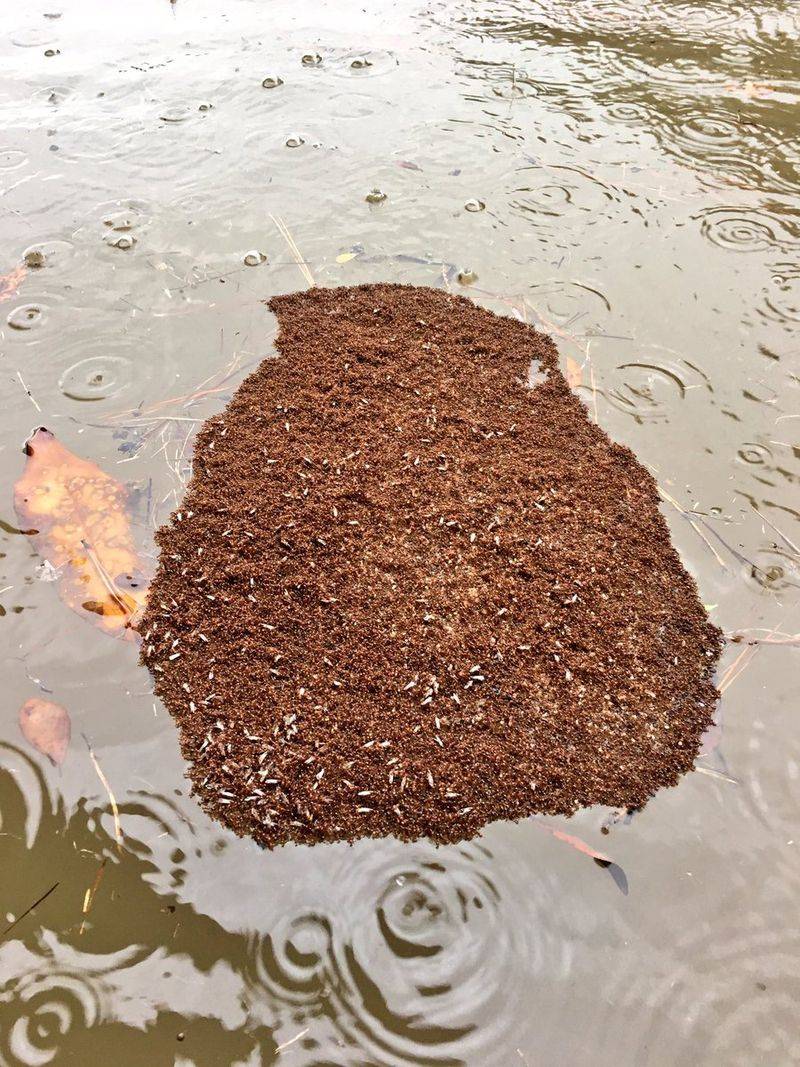
Fire ants also pull off a remarkable trick when water rises fast, linking their bodies into a floating raft that carries the colony to dry land. Rafts can drift across flooded yards and ditches before the ants climb out and rebuild.
Knowing that, it makes sense to inspect hard edges and high spots first after a wet week. Those areas tell you where the colonies went, not whether they left.
Stay clear of any raft you spot floating in standing water, since disturbed ants defend themselves quickly. Boots and long pants are smart gear for post-storm yard checks.
4. Colony Moves Can Produce A New Mound Almost Overnight
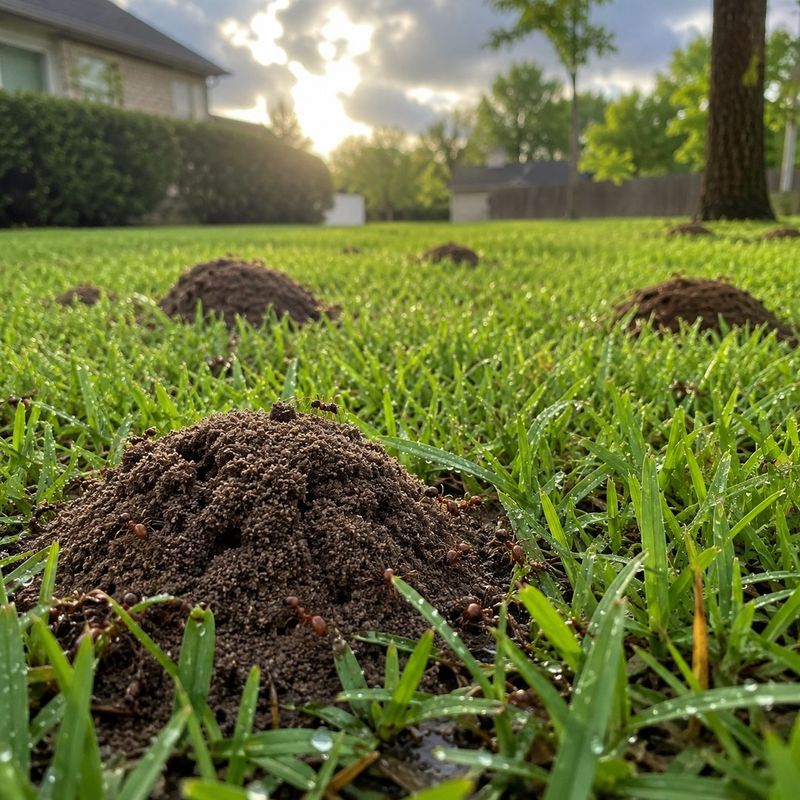
Friday evening the lawn looks tidy. Saturday afternoon three fresh soil piles sit near the fence line.
Sudden appearances can mean an existing colony has shifted its activity or rebuilt a mound after weather or soil disturbance. Workers can rebuild a surprising distance from their old site in a single night.
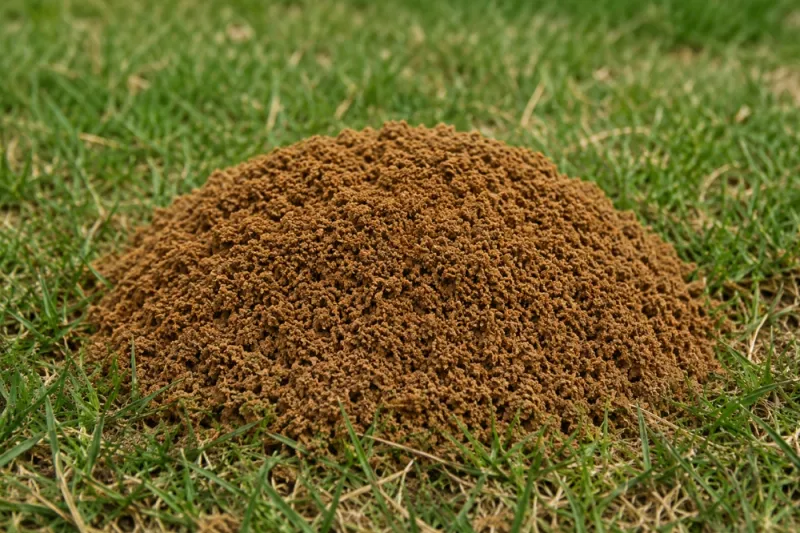
Freshly built mounds have a telltale look: loose, crumbly soil with sharp granules that have not settled yet. Older mounds feel firmer, often crusted over and stitched together by grass roots.
Learning that difference helps you read your yard like a tracker. A cluster of fluffy new piles after a storm points to a colony on the move.
Neighbors sometimes blame each other for shared mound problems, though the culprits are frequently the same colonies shuffling between properties. Fire ants pay no attention to property lines.
Resist the urge to stomp or rake a fresh mound flat, since scattering the soil often pushes the colony to split off and rebuild in two new places. Treatment works better than demolition.
Instead, note the location, keep foot traffic away, and plan your approach for a calm, dry day. Ants sit closest to the surface during mild mornings, which makes timing your treatment worthwhile.
One more tip: check the same spot a week later. Colonies that relocate once will often relocate again.
5. Multi-Queen Colonies Can Turn One Trouble Spot Into Many Mounds
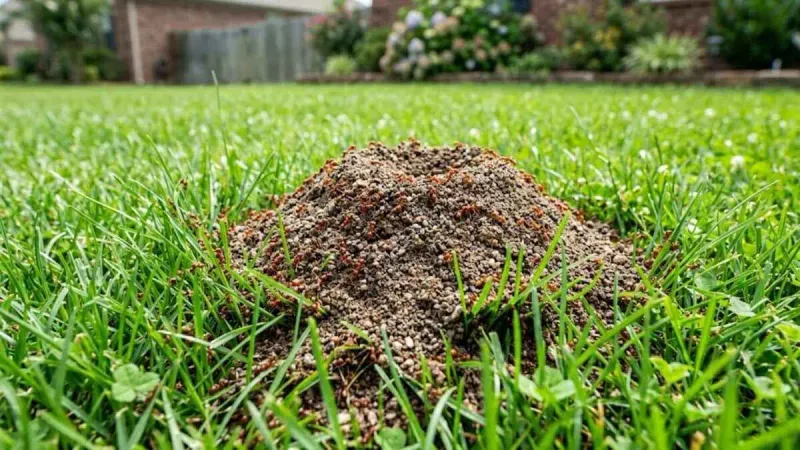
Some Florida fire ant colonies have multiple queens, a colony structure known as a polygyne colony. Instead of maintaining one tightly defended nest with a single queen, these colonies can support several queens and maintain multiple nearby mounds.
That difference matters in a yard because several mounds close together may actually be connected. What looks like a handful of separate ant problems can sometimes be part of one larger colony spread across the same area.
Polygyne colonies can also expand through a process called budding. A group of workers and queens separates from the main colony and establishes another nest nearby.
That helps explain why new mounds sometimes appear in clusters rather than randomly scattered across the lawn.
Seeing several mounds within a short distance of one another does not prove that they are all part of the same colony, but it is a good reason to think beyond the individual mound.
Treating only the mound you can see may leave nearby colonies or connected nests untouched. For larger infestations, a broadcast fire-ant bait labeled for residential lawns can reach foraging workers from multiple mounds.
Follow the product label carefully, especially around children, pets, edible gardens, and other sensitive areas.
Think of a cluster as a neighborhood rather than one house. Looking at the whole affected area gives you a much better chance of reducing the population instead of simply knocking down one mound and waiting for another to appear nearby.
6. Sunny Open Lawns Give Fire Ants Prime Nesting Ground
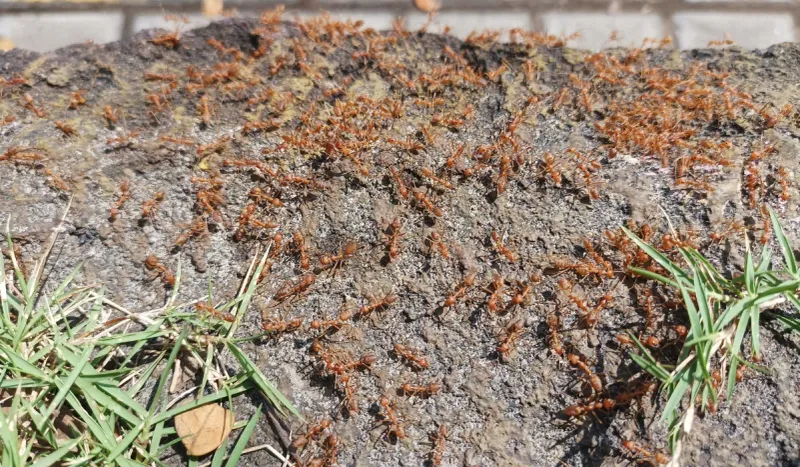
If fire ants filled out a real estate wish list, the top item would read sunny with warm soil. Open turf checks that box perfectly.
Lawns, pastures, parks, ballfields, and roadside strips all rank among their favorite construction sites. Sunlight heats the upper layers of soil quickly, which speeds up brood development and colony growth.
Shaded corners under dense oaks or thick shrubs tend to see fewer mounds, since cooler ground slows everything down. That is why the middle of a bright St. Augustine lawn often takes the biggest hit.
Disturbed ground appeals to them too, so freshly graded areas, new sod, and construction edges frequently host early colonies. Any place where soil has been turned over is an open invitation.
Thick, healthy turf will not fence them out, though it does make mounds easier to spot and gives you a fighting chance at early detection. Mowing on a regular schedule keeps the lawn low enough to see fresh soil piles.
Play areas, dog runs, and the strip between the sidewalk and street deserve extra attention, because they combine sun with regular foot traffic. Those are also the spots where a surprise encounter stings the most.
Walk the sunniest strip of your yard once a week during fall. Those bright, warm patches are where new activity tends to show up first.
7. Irrigated Beds And Drip Lines Create Attractive Mound Sites
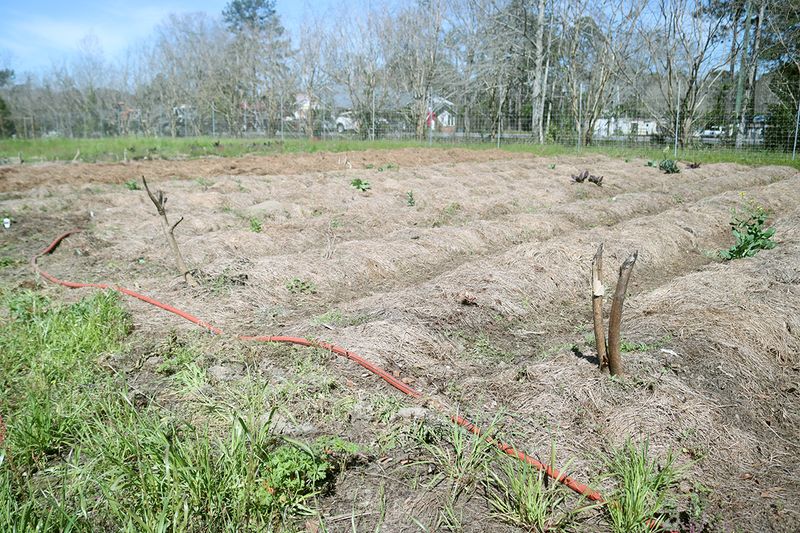
Sprinklers do more than green up the grass. They also hand fire ants a reliable water source during the driest stretch of the week.
Moisture draws colonies in, and activity often picks up right after irrigation runs or a rain shower passes. Flower beds on drip lines end up being some of the most comfortable ground on the property.
Loose mulch, steady dampness, and soil that stays easy to dig make bed edges prime territory. Add the warmth stored by landscape stones and you have a setup fire ants seem to love.
Sprinkler heads, valve boxes, and utility housings deserve a close look during fall inspections. Digging and drainage changes around those fixtures create pockets of soft, moist soil that colonies move right into.
Electrical equipment attracts them for reasons researchers still study, so pump housings, well boxes, and irrigation controllers are worth checking before you reach in blindly. Lift lids with a stick rather than bare hands.
Gardeners kneeling to plant fall annuals are especially likely to find a hidden nest the hard way. A quick poke with a trowel before settling in saves a lot of discomfort.
Simple fixes help: repair leaking heads, water deeply but less often, and pull mulch back a few inches from bed edges. Drier surface soil makes those beds a little less inviting.
8. Florida’s Sandy Soil Can Make Fire Ant Mounds Easy To Underestimate
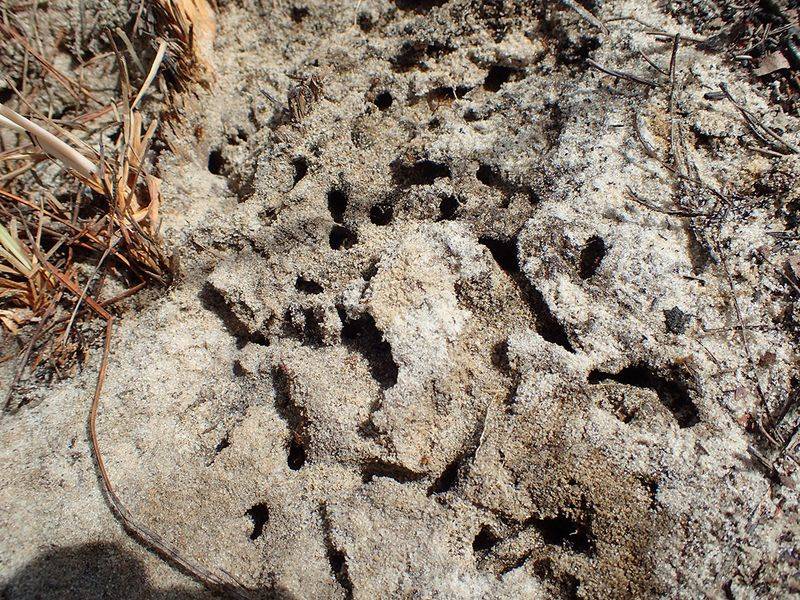
Anyone who has seen photos of towering red clay mounds in Texas may look at a Florida lawn and shrug. Sandy soil rarely builds that classic dome.
Mounds here often spread low and wide, tucked under thatch or flattened into an irregular patch of loose dirt. Sand shifts and settles, so the structure looks less dramatic than it really is.
Underestimating a flat mound is a common mistake, because size on the surface says little about the population below. A modest pile can shelter thousands of workers ready to defend their home.
Run your foot lightly across a suspicious patch and watch for a sudden rush of ants. Better yet, use a long stick from a step back, then step away and observe.
Bare sandy areas near fence lines, mailboxes, and sandy playgrounds hide colonies especially well. Grass clippings and leaf litter can cover a low mound within days.
Sandals and flip flops are the unofficial Florida uniform, which raises the stakes on a misread patch of sand. Closed shoes during yard work are a small, sensible trade.
Get in the habit of scanning for texture instead of height: fresh granular soil, tiny tunnel openings, and thin trails of ants heading toward food. Those clues reveal more than a mound profile ever will in Florida sand.
9. Fall Yard Projects And Mowing Stir Colonies Into Rebuilding
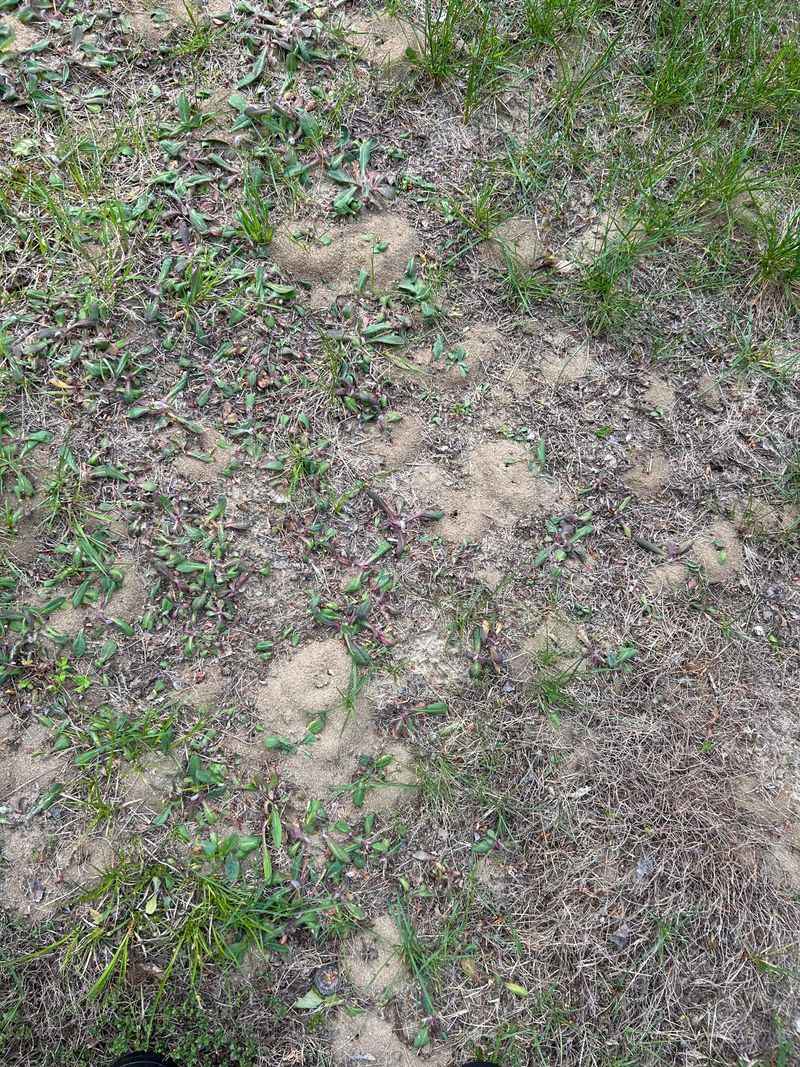
Raking, aerating, laying sod, edging beds, digging a new post hole: fall is project season for Florida homeowners. Every one of those jobs shakes up soil that colonies were quietly using.
Disturbed ground ranks high on the list of places fire ants settle, partly because loosened soil is easy to tunnel and holds moisture differently. A weekend of landscaping can look like an invitation.
Mowing, digging, tilling, and other soil disturbance can disrupt colonies and change where workers rebuild or forage. Relocation follows, and a fresh mound shows up along the quiet edge of the yard.
Notice how many mounds sit near fence corners, shed skirts, and the strip behind the compost pile. Those low-traffic zones are where colonies retreat after the noise stops.
New sod deserves a check before it goes down, since pallets stacked at a nursery sometimes carry passengers. A quick look at the underside of a few pieces takes almost no time.
Timing your treatment before big projects, rather than after, tends to work better. Bait applied a couple of weeks ahead gives foragers time to carry it through the colony while the ground is still calm.
Keep gloves, closed shoes, and a bottle of water nearby whenever you dig. Discovering a nest with your hands is a memory nobody wants to collect twice.
10. Use The Fall Foraging Window Before Mounds Spread Across The Yard
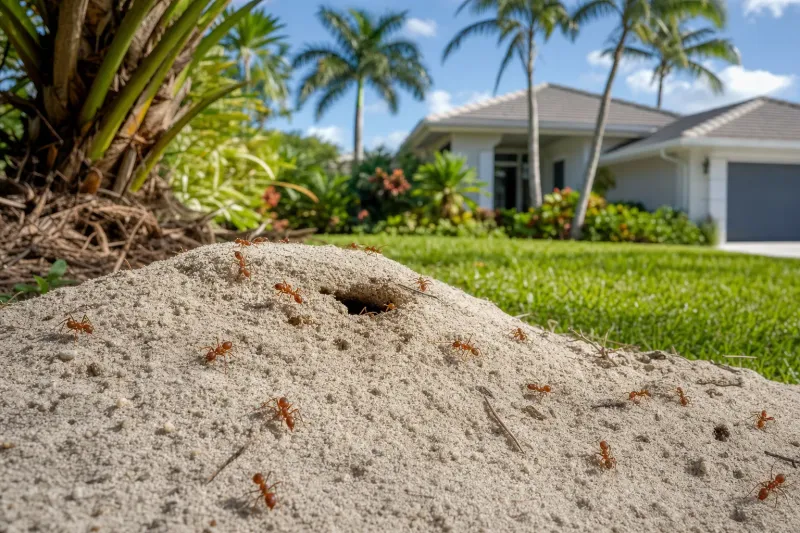
Timing beats effort when it comes to fire ants, and fall hands you one of the best windows of the year. Cooler days between 70 and 85 degrees put workers on the hunt.
As temperatures dip toward that lower end, colonies ramp up foraging to stock the pantry for winter. Protein-rich foods become especially appealing during this stretch.
Hungry foragers are exactly what makes bait products so effective right now. Workers gather the bait, haul it home, and share it throughout the colony, including with the queens.
Broadcast bait across the whole lawn on a dry day when the grass is not wet and rain is not expected for a day or so. Scatter it lightly, follow the label rate, and resist the temptation to pile it on mounds.
Place a tiny piece of food near the mound and observe from a distance to see whether workers are actively foraging. Ants covering the bait mean conditions are right.
Mark your calendar for a follow-up look four to six weeks later, since stragglers and new arrivals show up in waves. Two well-timed rounds usually outperform a dozen scattered attempts.
Handling the population now means fewer colonies waking up hungry in spring. A little fall attention saves a lot of March frustration.