The Real Reason Carpenter Bees Are Drawn To Illinois Porches
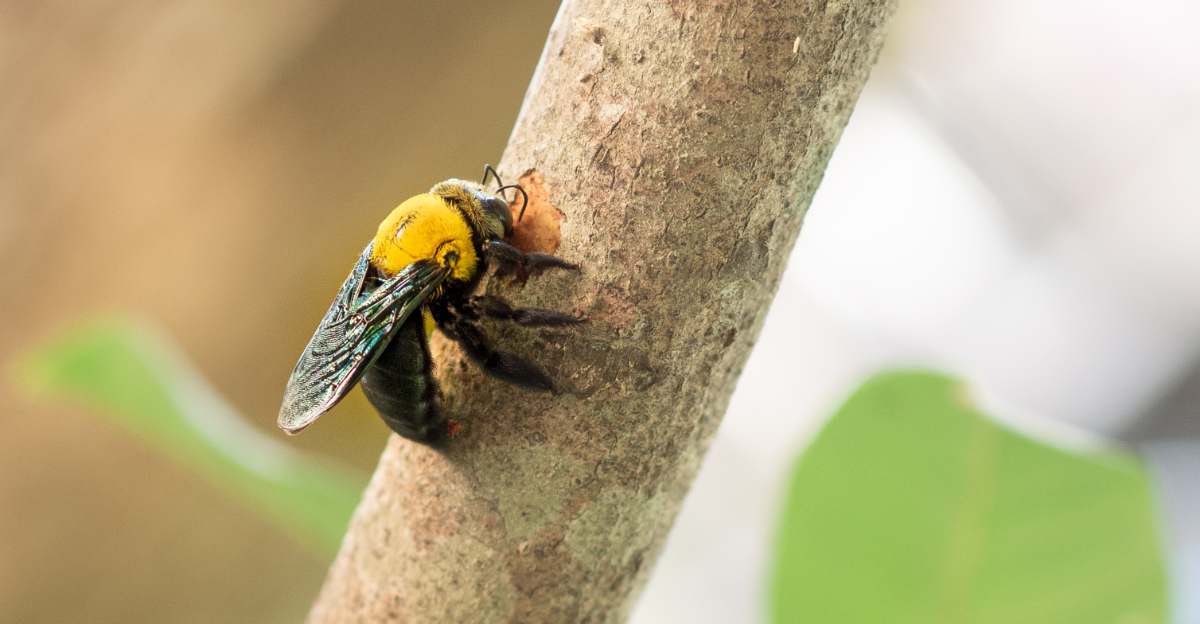
If you have been noticing large, buzzing bees circling your porch like they own the place, they kind of think they do.
Carpenter bees are not random visitors. They are on a mission, and your Illinois porch might be exactly what they have been looking for.
Every spring, carpenter bees get to work fast. They drill clean holes into unprotected wood, set up their nurseries inside your railings, and disappear before you notice.
The damage they leave behind is quiet at first, then suddenly very expensive. Illinois homeowners deal with this every single year, and most of them catch it too late.
Knowing what pulls them in changes everything. Once you understand what they are after, keeping them off your porch gets a whole lot easier.
Exposed Or Unpainted Wood Is What Attracts Them In The First Place
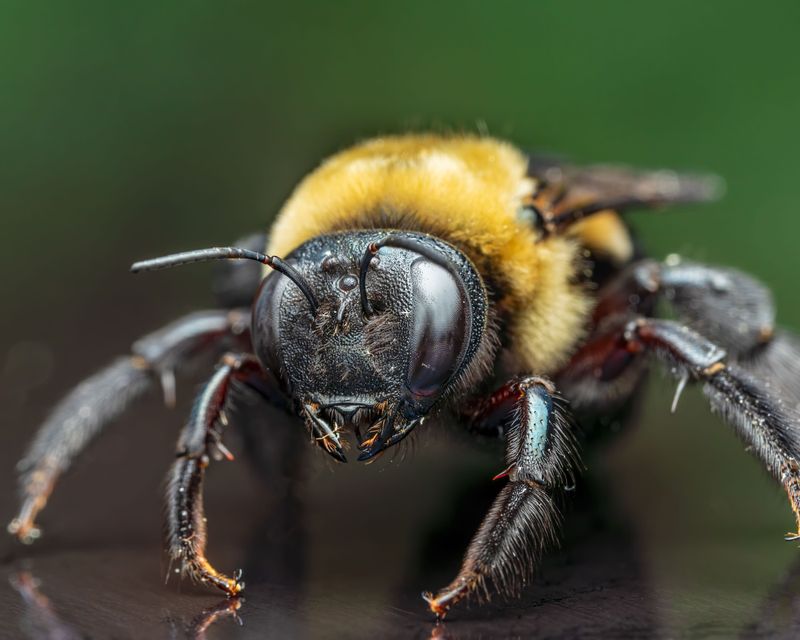
Bare wood is one of the strongest signals that draws carpenter bees in during nesting season. If your porch has any exposed, unpainted, or weathered wood, you have already rolled out the welcome mat.
Carpenter bees do not eat wood the way termites do. They tunnel through it to build nesting chambers for their eggs.
Softwoods like pine, cedar, and redwood are their favorites. These are also the most common materials used in Midwest porch construction, which explains a lot.
Paint acts as a physical barrier that makes drilling harder and less appealing. Stain alone does not offer the same level of protection that a solid coat of paint provides.
When wood weathers over time, the outer surface breaks down and becomes softer. That soft, dried-out texture is exactly what a carpenter bee looks for before choosing a nesting spot.
Fascia boards, porch overhangs, and deck railings are often the first places where paint peels or fades. Those exposed patches become prime real estate for a bee looking to set up a home.
The real reason carpenter bees are drawn to Illinois porches comes down to one simple fact. Older homes with aging wood give these bees exactly what they need without any resistance.
If you can run your hand along a board and feel rough, dry, or flaking texture, a carpenter bee has probably already noticed it. Sealing and painting exposed wood as soon as possible is one of the most effective steps you can take to protect your porch.
Where On Your Porch They Are Most Likely To Drill
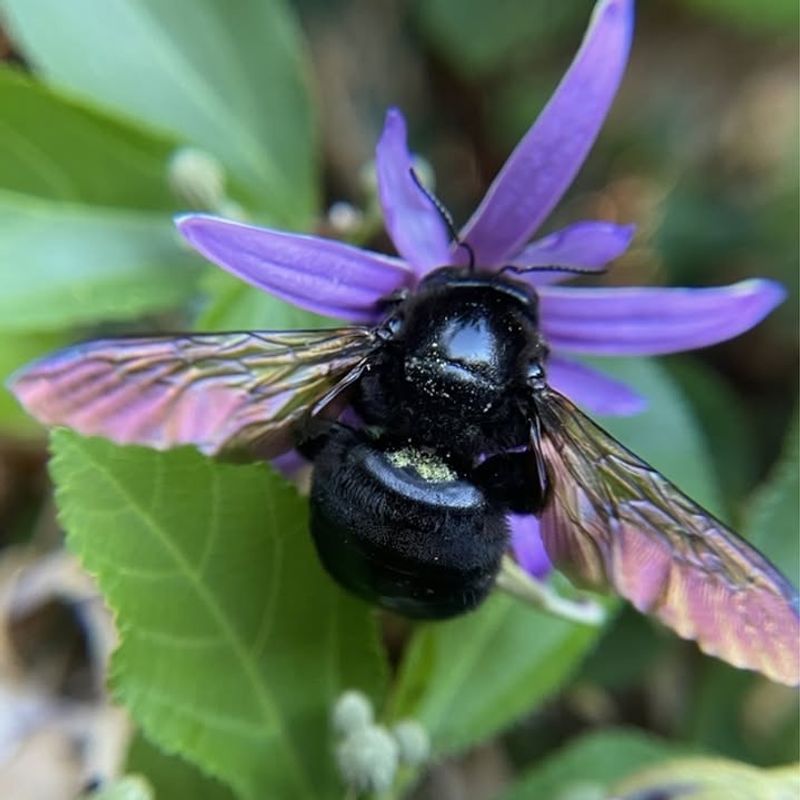
Spotting a carpenter bee hovering near your porch can feel random, but their drilling choices are surprisingly strategic. These insects are not just poking holes wherever they please.
They strongly prefer wood that is horizontal or angled slightly downward. That positioning helps rainwater drain out of the nest, keeping their eggs safe and dry.
Porch fascia boards sit right at the roofline and are often overlooked during routine maintenance. That makes them one of the top targets for early-season drilling activity.
Deck joists underneath the walking surface are another hot spot. Most homeowners never look under their deck, which gives carpenter bees a quiet, undisturbed place to work.
Your Illinois Garden Changes Every Week. Your Plan Should Too.
Gardening in Illinois changes quickly throughout the season. Every Friday you’ll receive a simple weekly plan showing exactly what to plant, prune, fertilize, harvest, and protect so you never miss the right timing.
Window frames, door frames, and wooden shutters also attract attention when the paint starts to fade. Any corner where two boards meet creates a sheltered entry point that bees find especially appealing.
Porch ceilings made from tongue-and-groove wood are a surprisingly common target too. The grooves give bees a natural starting point for drilling, almost like a built-in guide.
Overhangs and soffits offer shade and protection from predators, which makes them ideal nesting zones in the bee’s mind. A protected location is always more attractive than an exposed one.
The real reason carpenter bees are drawn to Illinois porches is that most porches have multiple vulnerable spots all in one place. Knowing where to look means you can catch new holes early and respond before the damage spreads further.
What Carpenter Bee Damage Actually Looks Like
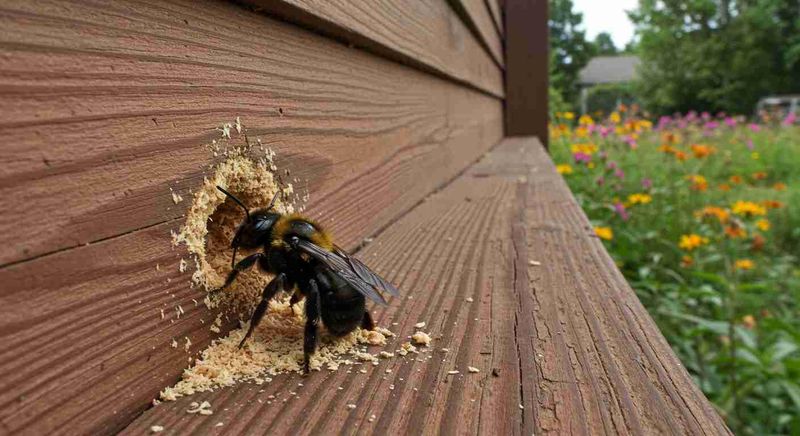
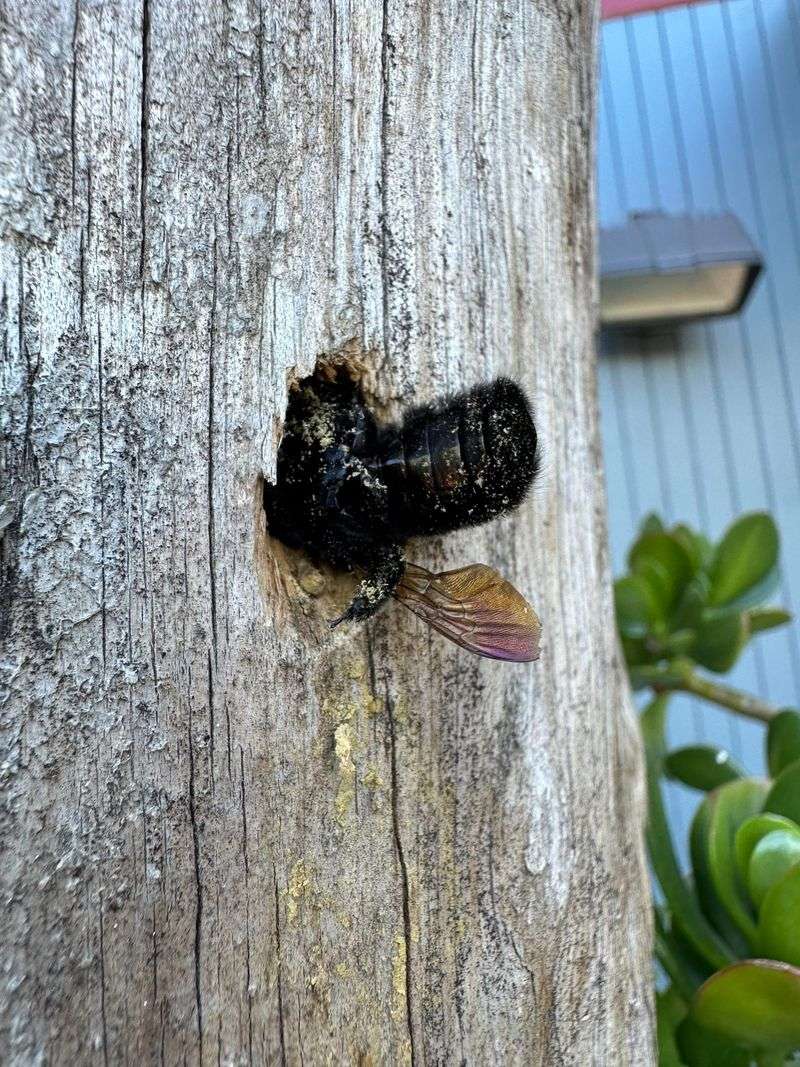
Carpenter bee damage has a very specific look, and once you know it, you will never miss it again. The entry hole is almost perfectly round, about the size of a standard pencil eraser.
Unlike a ragged, splintered hole from rot or impact, a carpenter bee hole looks clean and precise. It almost seems like someone used a drill bit to make it.
Just below the hole, you will often see a small pile of fine sawdust called frass. That yellowish-brown dust is the wood the bee excavated while tunneling inside.
The hole typically goes straight in about half an inch, then turns sharply at a ninety-degree angle. From there, the tunnel can extend six to ten inches along the wood grain.
Yellow staining near the hole entrance is another telltale sign. That discoloration comes from bee waste and pollen being carried in and out of the nest over time.
A single hole might seem minor, but one tunnel can branch into multiple chambers. Each chamber holds a single egg packed with pollen as a food source for the larva.
Over several seasons, a porch can develop dozens of tunnels running through the same boards. That hidden network weakens the structural integrity of the wood from the inside out.
Recognizing what carpenter bee damage looks like puts you ahead of the problem. Early identification means you can seal holes, treat the wood, and stop the cycle before the next generation returns.
What Happens If You Leave The Holes Untreated
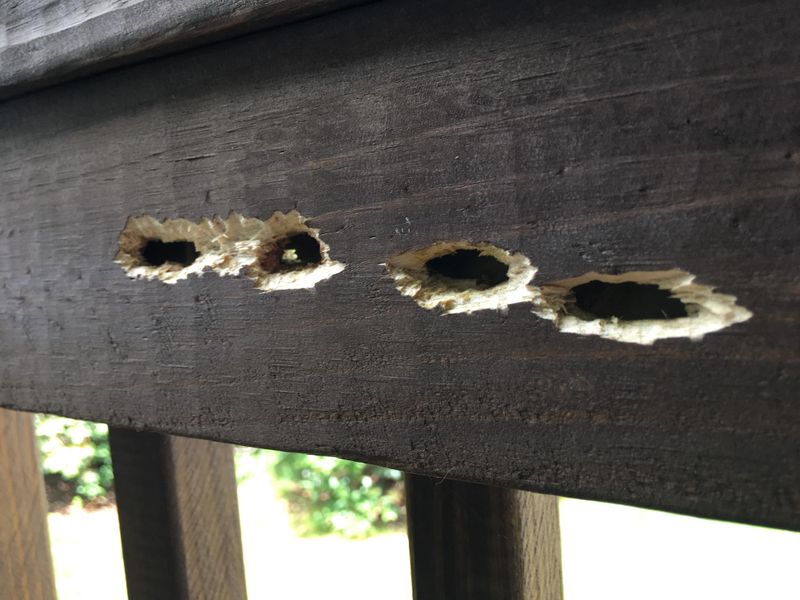
Leaving carpenter bee holes open is one of those decisions that seems harmless at first. Within a season or two, the consequences become very hard to ignore.
Rain and moisture seep into unsealed tunnels quickly. Wood that stays wet begins to soften, warp, and eventually rot from the inside.
Woodpeckers have an impressive ability to detect carpenter bee larvae inside wood. Once they locate a tunnel, they will hammer aggressively into your porch boards to get to the grubs inside.
That woodpecker damage is often far more destructive than the original bee tunnels. Woodpeckers can cause significant damage in a short amount of time, often leaving jagged holes far larger than the original bee entry points.
New carpenter bees returning in spring will often reuse and expand existing tunnels. Each new generation makes the tunnel longer, wider, and more damaging than the season before.
Structural boards that accumulate multiple tunnels over the years lose their load-bearing strength. Railings, overhangs, and ceiling supports can become genuinely unsafe if the damage goes unaddressed long enough.
Carpenter ants are also attracted to wood that has been softened by moisture inside old bee tunnels. An untreated hole can become an entry point for a whole second pest problem.
Protecting your porch from carpenter bees is not just about aesthetics. Untreated holes invite a chain reaction of damage that costs far more to repair than a can of wood filler and a coat of paint ever would.
How To Make Your Porch Less Appealing To Carpenter Bees
Making your porch less attractive to carpenter bees does not require expensive treatments or complicated tools. A few targeted steps can dramatically reduce their interest in your space.
Start by painting or sealing every exposed wood surface on your porch. Solid exterior paint is the most effective deterrent because it creates a hard surface bees struggle to penetrate.
Pay close attention to the undersides of boards and railings where paint tends to peel first. Bees scout those overlooked spots precisely because they are easier to access and rarely maintained.
Citrus-based sprays and almond oil are natural options that carpenter bees strongly dislike. Applying either to bare wood surfaces can discourage scouting bees before they commit to a location.
Hanging decoy wasp nests near your porch is a surprisingly effective trick. Carpenter bees are territorial and tend to avoid areas where they sense other stinging insects have already settled.
Replacing soft woods like pine with composite decking or natural hardwoods removes the problem at the source. Harder materials simply do not offer the soft texture bees prefer for tunneling.
Some homeowners report that keeping a source of consistent noise or vibration near the porch discourages carpenter bees from settling, though results can vary.
The real reason carpenter bees are drawn to Illinois porches is opportunity. Remove the opportunity and you remove the problem before it ever gets started this season.
When To Call A Professional And When You Can Handle It Yourself
Not every carpenter bee situation calls for a professional, but knowing the difference can save you time, money, and a lot of frustration. Small infestations caught early are almost always a solid DIY job.
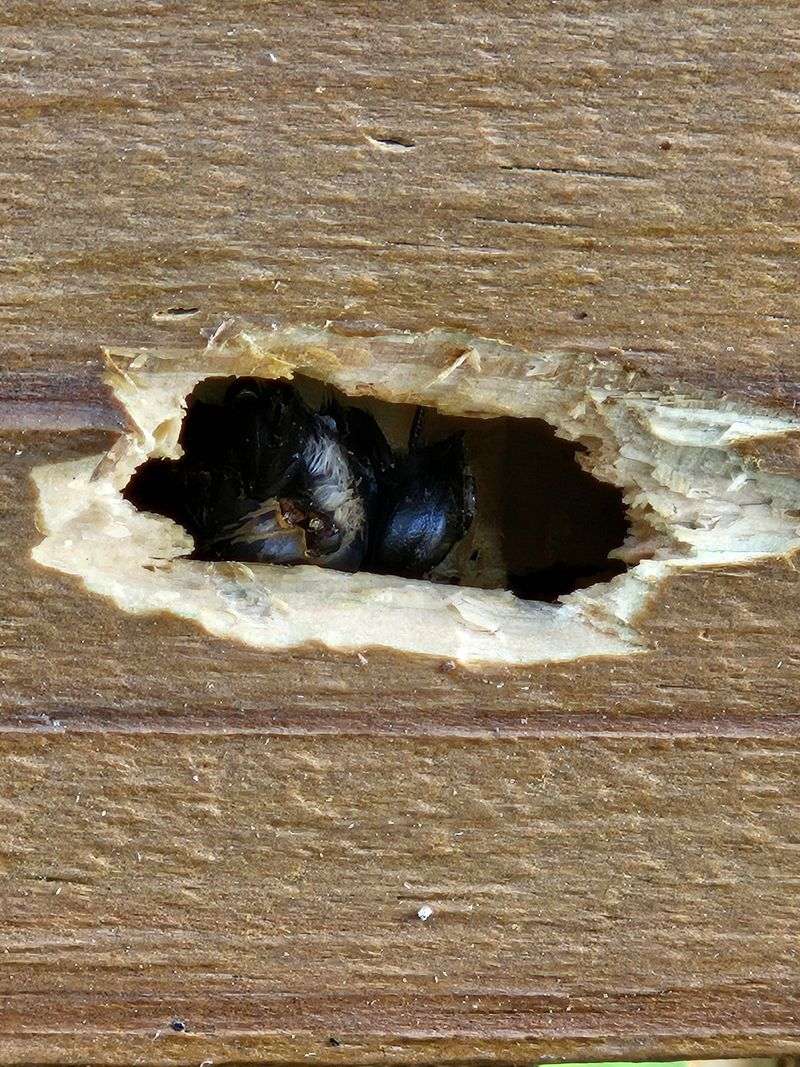
If you find one or two fresh holes with no signs of tunneling deeper than an inch, you can handle it. Fill the holes with steel wool, then seal over them with wood filler and paint.
Dust insecticides labeled for wood-boring insects can be applied directly into active holes. Leave the hole open for a day or two after treatment so returning bees carry the dust deeper into the tunnel.
When you start counting more than five or six holes in a single board, the situation has moved beyond a quick fix. Multiple active tunnels often signal a multi-year infestation that has already spread further than it appears.
Structural damage to load-bearing porch components is a clear sign that professional assessment is needed. Weakened joists or support beams are a safety concern, not just a cosmetic one.
If woodpeckers have already torn into your wood following the bee tunnels, a pro can evaluate how deep the combined damage goes. Surface patching will not solve a problem that has compromised the wood beneath.
A licensed pest control specialist can apply residual treatments that protect wood through an entire season. That kind of long-term coverage is hard to replicate with store-bought products alone.
Trust your gut when assessing the scope of the problem. When the damage feels bigger than a weekend project, calling in help is the smartest move you can make.