The Real Reason This Winged Pest Is Showing Up On Massachusetts Maples
Picture a beetle so bold it barely looks real, yet somehow it’s still a serious concern. Homeowners across Massachusetts are now reporting declining maples on their properties.
Black and white markings disguise a pest affecting local neighborhoods. Damage spreads quietly, then canopies thin while branches slowly weaken around you.
This insect’s continued presence across New England has drawn renewed attention. Trunks weaken from within while surfaces mask what’s happening inside.
An affected maple can noticeably change a local street’s look. Crews across Massachusetts are removing trees before the pest spreads further. Reports have continued at a fairly steady pace this season.
Removal remains the only real solution once infestation takes hold. Waiting reduces your time, options, and eventually the tree itself. Nothing about this problem moves slowly once it settles in.
Questions are piling up faster than you can find answers. You won’t want to miss what happens next to your maples.
The Asian Longhorned Beetle Returns To Massachusetts Maples
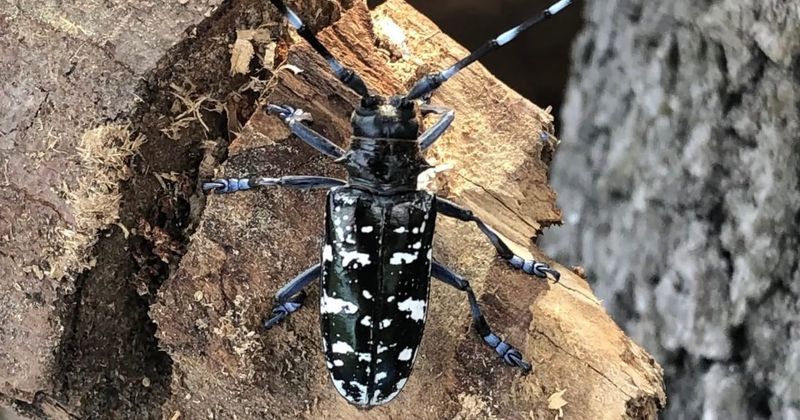
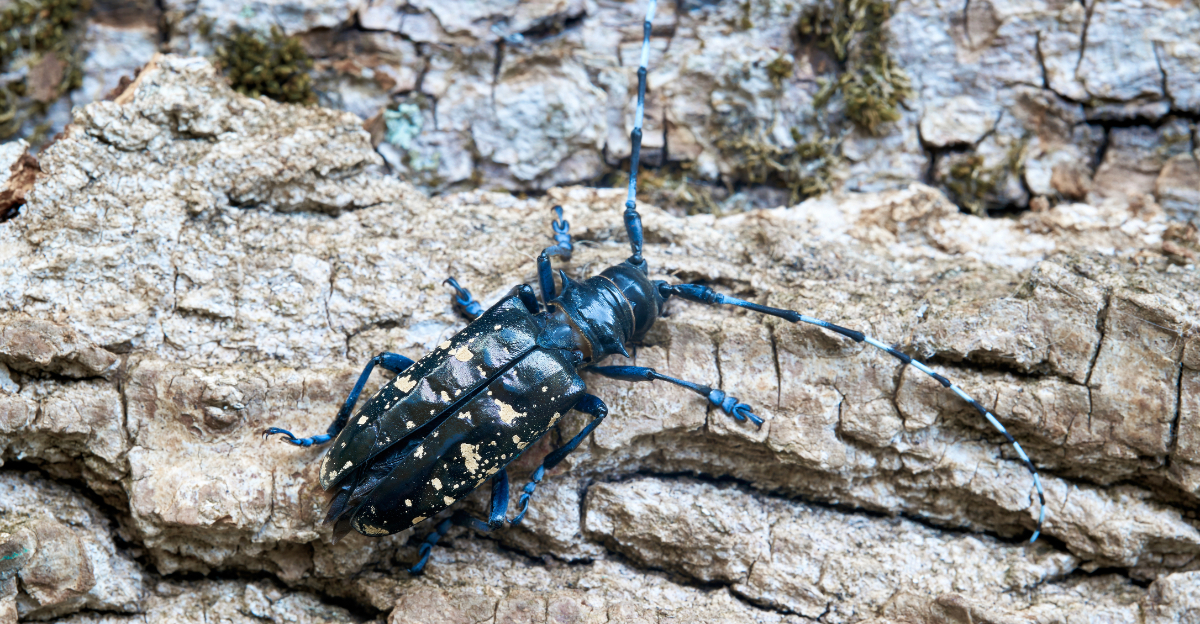
Jet black with crisp white polka dots, this beetle carries antennae longer than its entire body. Its appearance is bold enough that most people notice immediately, yet by then the real damage is already underway.
The Asian Longhorned Beetle, often shortened to ALB, ranks among the most destructive invasive insects found anywhere in North America.
This pest did not originate here at all. It traveled from China and Korea, arriving inside wooden packing crates sometime during the 1990s.
Since that initial arrival, it has expanded steadily across the Northeast, and Massachusetts has become one of the states hit hardest by its presence. Maple trees remain its preferred target, although birch, elm, and willow are also vulnerable to infestation.
The beetle tunnels deep into wood, disrupting a tree’s ability to transport water and essential nutrients throughout its system. Once infestation takes hold, there is no realistic path to saving the tree.
Damage occurs internally, progressing silently while outward symptoms remain hidden for a surprisingly long stretch of time.
Worcester County became the epicenter for one of the most severe outbreaks recorded nationwide, prompting federal agencies to spend years working toward containment.
This pest affecting Massachusetts maples poses risks that extend beyond a single backyard. It represents a significant ecological concern with consequences reaching well beyond individual properties alone.
Understanding exactly what you are facing marks the first real step toward protecting your trees. Knowledge of this beetle’s origin, behavior, and history gives you the awareness needed to act quickly and decisively before conditions worsen further around your home.
How To Identify This Invasive Beetle And Its Telltale Signs
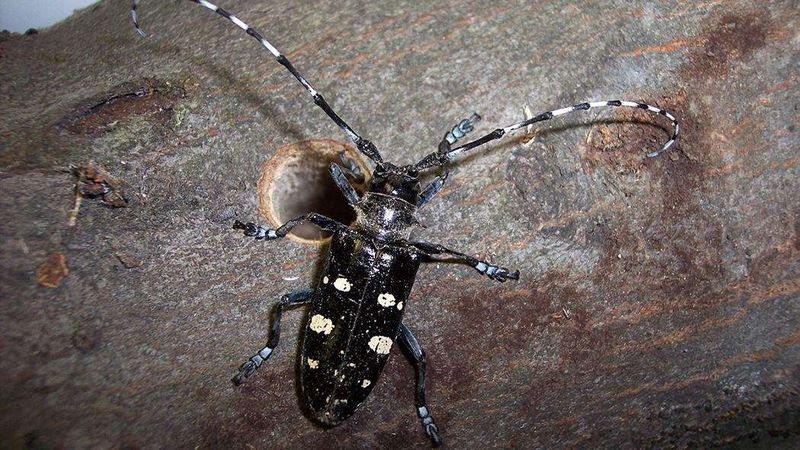
Spotting this beetle early can mean the difference between saving a neighborhood and losing dozens of trees entirely. Adult ALBs measure roughly one to one and a half inches long, shiny black, and covered in irregular white spots.
Their antennae display bold black and white bands and can stretch twice the length of their bodies. That single feature makes them look unlike any native beetle most homeowners have encountered before.
Your Massachusetts Garden Changes Every Week. Your Plan Should Too.
Gardening in Massachusetts changes quickly throughout the season. Every Friday you’ll receive a simple weekly plan showing exactly what to plant, prune, fertilize, harvest, and protect so you never miss the right timing.
Beyond the insect itself, the tree often tells its own quiet story. Look closely for perfectly round exit holes, roughly the size of a dime, punched straight into the bark.
You may also notice shallow, oval shaped scars where a female chewed into the surface to lay her eggs. These scars resemble something pressed firmly into the wood, almost like a small spoon.
Sawdust like material called frass frequently collects near the base of the tree or inside branch crevices. This powdery debris strongly suggests that something is actively tunneling through the trunk.
Sap oozing from the surface during late summer is another warning sign worth taking seriously. Any single one of these clues appearing on your Massachusetts maples should prompt an immediate call for professional help.
Waiting even a few days can allow the infestation to spread further into surrounding trees. Acting quickly gives arborists the best possible chance to assess, contain, and address the problem before it worsens across your entire property and neighborhood.
Why Maple Trees Are A Prime Target For Infestation
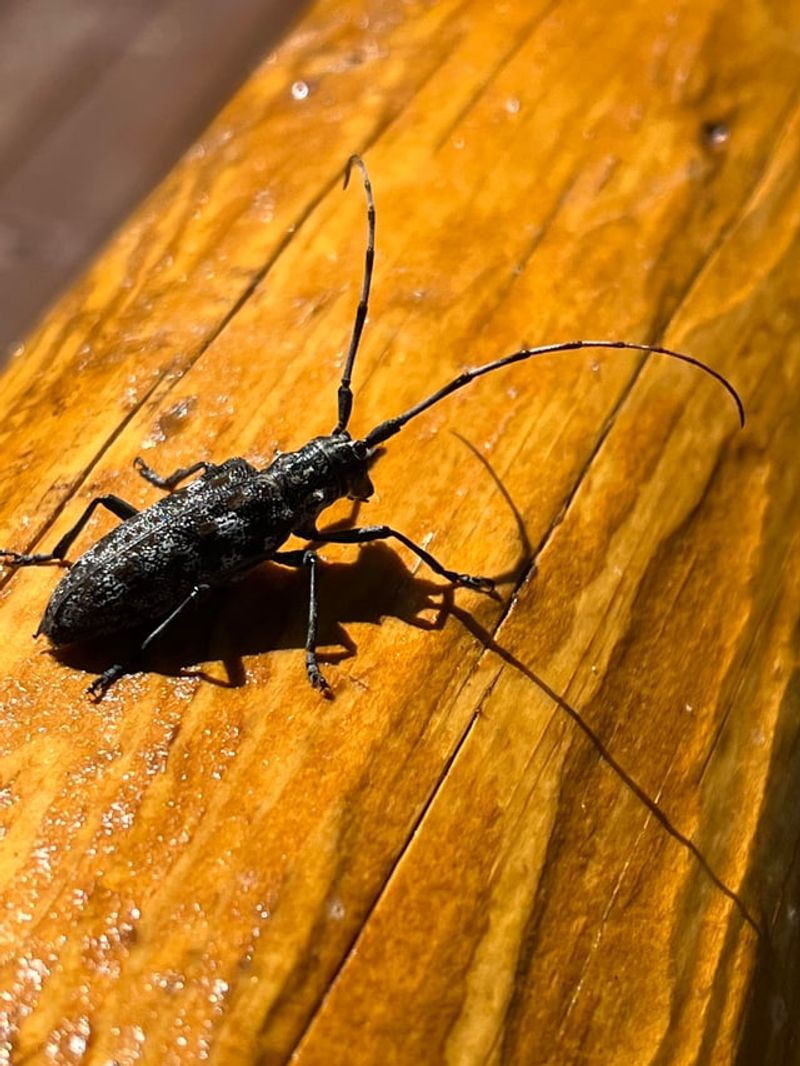
Maples provide an ideal environment for the Asian Longhorned Beetle, and the insect has adapted to exploit it fully. These trees are hardwoods with dense, starchy wood that offers the perfect food source for developing larvae.
The beetle’s life cycle depends entirely on burrowing through hardwood tissue to grow and mature properly. Maples offer exactly the right texture, moisture content, and nutrients for that process to succeed.
Sugar maples are especially vulnerable because they remain so widespread across New England landscapes and neighborhoods.
A single street can have dozens of mature sugar maples lining it, giving the beetle an easy path to spread. Red maples and Norway maples are also high on the beetle’s preferred list of hosts.
Properties with multiple mature hardwoods face a noticeably higher risk of infestation over time. The beetle’s preference for maples is not random at all; it comes down to biology.
Larvae feed on the inner wood for months before emerging as adults, leaving trees structurally compromised from within.
A heavily infested maple can snap during a storm without warning, creating serious safety hazards for nearby homes.
The relationship between this pest and Massachusetts maples remains one of the more costly ecological challenges seen in recent memory.
Understanding why maples attract this beetle helps homeowners recognize just how much is truly at stake for their landscape.
Worcester County And The History Of Massachusetts Outbreaks
Worcester County became widely known in 2008 when federal officials confirmed a massive Asian Longhorned Beetle infestation right in the heart of the city. It was among the largest outbreaks ever recorded in the United States at that time.
The USDA and state agencies launched an aggressive response, eventually removing over 35,000 trees from the Worcester area. That number alone shows how serious the situation had become.
A strict quarantine zone was established, covering several towns and limiting the movement of wood material out of the area. Residents saw crews remove trees that had stood for generations.
The cleanup effort cost hundreds of millions of dollars and took years to complete. Entire streets that were once shaded by canopies of green were left bare and exposed.
New trees were planted as part of the recovery effort, but young saplings take decades to replace a mature maple. Many residents described the tree loss as difficult to witness.
Outbreaks have since been detected in other parts of the state, reminding officials that the threat never fully disappeared. The history of Worcester County is a cautionary tale that every Massachusetts homeowner should carry in the back of their mind.
Signs Your Tree May Already Be Infested
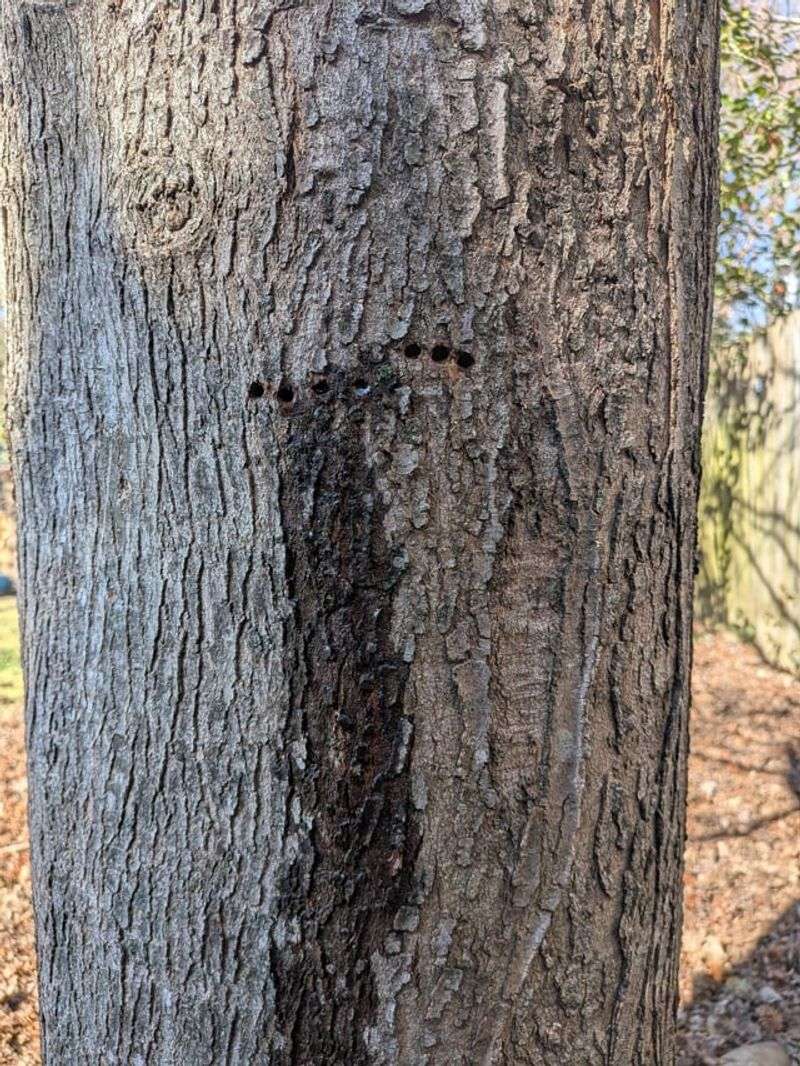
Your maple could already be infested without any obvious warning signs. The signs are subtle at first, which is exactly what makes this pest so difficult to catch early.
Start by walking slowly around the base of your tree and scanning the bark from the ground up.
You are looking for round holes, roughly the width of a pencil eraser, punched cleanly into the wood. Next, check the upper branches for thinning foliage or sections that look lifeless while the rest of the tree seems healthy.
This patchy decline is called flagging, and it is a classic early warning sign. Run your hand along the bark and feel for shallow depressions or rough patches where egg-laying scars have formed.
These spots are easy to overlook unless you know what to touch for. Piles of coarse sawdust at the base of the trunk are another clue that larvae are actively feeding inside.
Fresh frass is a sign that the infestation is ongoing, not old. Branches that snap unexpectedly during calm weather signal that internal wood has been seriously weakened.
If your Massachusetts maples show even two or three of these symptoms, contact a certified arborist before the next season begins.
What To Do If You Spot This Pest And Who To Contact
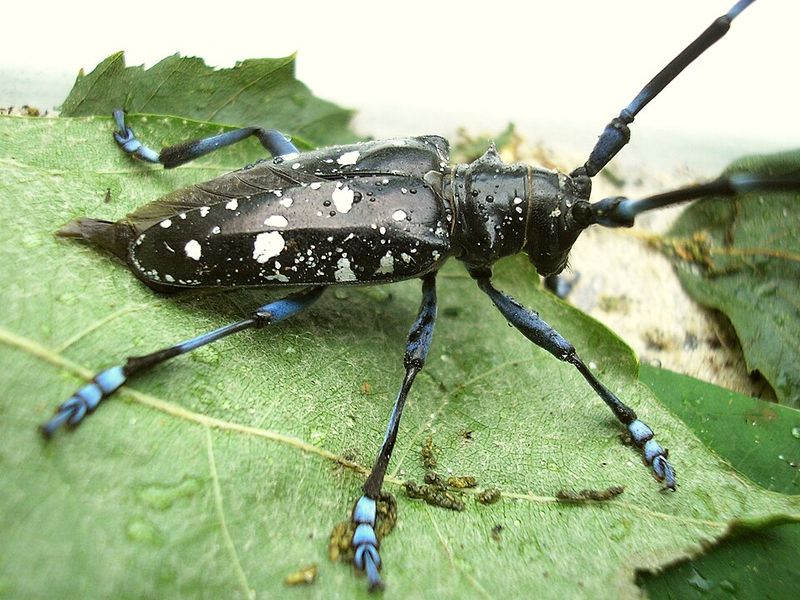
Staying calm is step one, but moving fast is step two. If you spot what looks like an Asian Longhorned Beetle, do not swat it away or let it go.
Try to capture the insect in a sealed container or take a clear photo that shows its markings and antennae.
Good documentation helps officials confirm the species quickly and accurately. Report your sighting immediately to the Massachusetts Department of Agricultural Resources or the USDA Animal and Plant Health Inspection Service.
Both agencies have dedicated hotlines and online reporting tools built specifically for this purpose. You can also use official identification guides from the USDA or Mass.gov, which walk you through the process step by step.
The more details you provide, the faster officials can respond to your location. Do not move any wood, branches, or debris from a suspected infested tree.
Transporting material spreads the beetle to new areas, which is exactly how outbreaks jump from one town to the next.
Certified arborists trained in ALB identification can inspect your Massachusetts maples and recommend next steps if a report is confirmed.
Acting quickly is the single most powerful thing a homeowner can do to protect their yard and their neighbors’ trees from this pest.