The Red-Berried “Florida Holly” Floridians Should Remove This Fall
Fall has a way of making a yard feel a little magical. The air cools, the light turns golden, and bright red berries start showing up like tiny holiday ornaments.
Those glossy clusters look so cheerful that birds flock in, neighbors stop to admire them, and you might even be tempted to snip a few for the dinner table. Here is the catch, though.
Not every pretty berry is a friendly guest. One popular shrub with a festive nickname has a sneaky habit of taking over yards, woods, and wild spaces across Florida, and it has fooled plenty of homeowners.
So before you hang a wreath made from that cheerful bush, take a closer look. The plant you love might be the one worth pulling out this season.
1. This “Florida Holly” Is Not A True Holly
Names can fool you, and this shrub has fooled plenty of folks. People across the state call it Florida holly, yet it belongs to a totally different plant family.
True hollies sit in the Ilex group, like yaupon holly and American holly. Brazilian peppertree belongs to the cashew family, which also includes mango and poison ivy.
That family tie matters more than you might think. Plants in the cashew family often carry oils that can bother skin, and this one is no exception.
So why the holly nickname? The plant was brought to Florida in the mid-1800s and was widely planted as a pretty ornamental with red berries by the early 1900s.
Gardeners loved the look, so the nickname stuck around. Nursery shoppers bought it for color, and nobody guessed how fast it would spread.
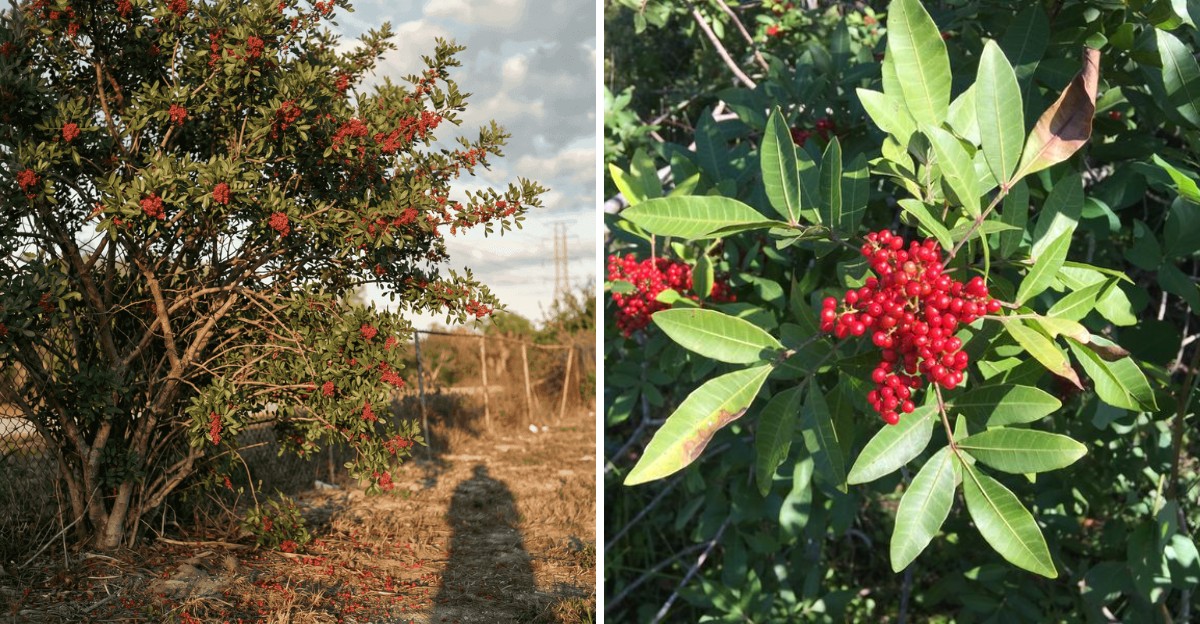
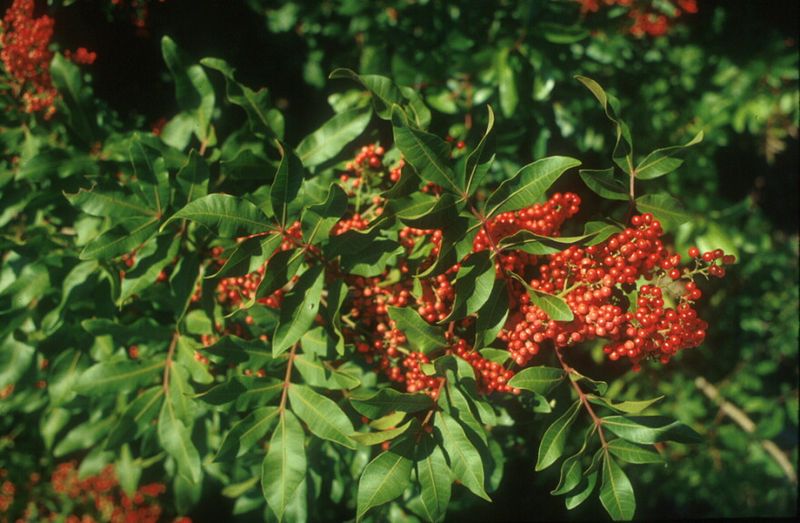
Here is a quick way to tell them apart in your yard. Real hollies usually have single, simple leaves, while Brazilian peppertree has leaves split into several leaflets.
Crush a leaf, and you will notice another clue right away. Brazilian peppertree gives off a sharp, peppery smell, a bit like turpentine.
Knowing the true identity helps you make smarter choices. Once you stop thinking of it as a holly, it gets easier to see it as a problem plant worth removing.
2. Brazilian Peppertree Is Easy To Identify By Its Leaves And Berries
Spotting this shrub takes about ten seconds once you know the signs. Start with the leaves, which are the biggest giveaway.
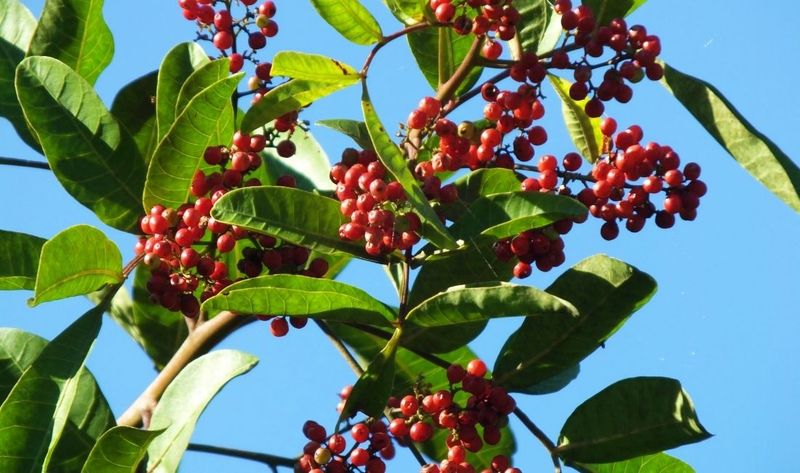
Each leaf has three to thirteen leaflets, most often seven or nine. The leaflets line up in pairs, with one at the tip, and the edges look slightly toothed.
Look at the center vein, too. On many plants, that midrib and the leaf stem have a reddish tint that stands out in the sun.
Next, check the berries. From fall into winter, female plants in Florida load up with clusters of small, round, bright red fruits.
The berries feel papery on the outside, kind of like a dried pepper. Some cooks even sell them as pink peppercorns, which is how the plant got part of its name.
Growth habit is another clue to watch. Brazilian peppertree forms a tangled shrub or small tree, often with several trunks leaning in different directions.
Your Florida Garden Changes Every Week. Your Plan Should Too.
Gardening in Florida changes quickly throughout the season. Every Friday you’ll receive a simple weekly plan showing exactly what to plant, prune, fertilize, harvest, and protect so you never miss the right timing.
It loves road edges, fence lines, canal banks, and empty lots. If you see a thick red-dotted wall of green in those spots, you are probably looking at it.
Snap a photo and compare it with an extension guide. The UF IFAS website has clear pictures that make checking your plant simple and quick.
3. Fall Is A Smart Time To Remove It
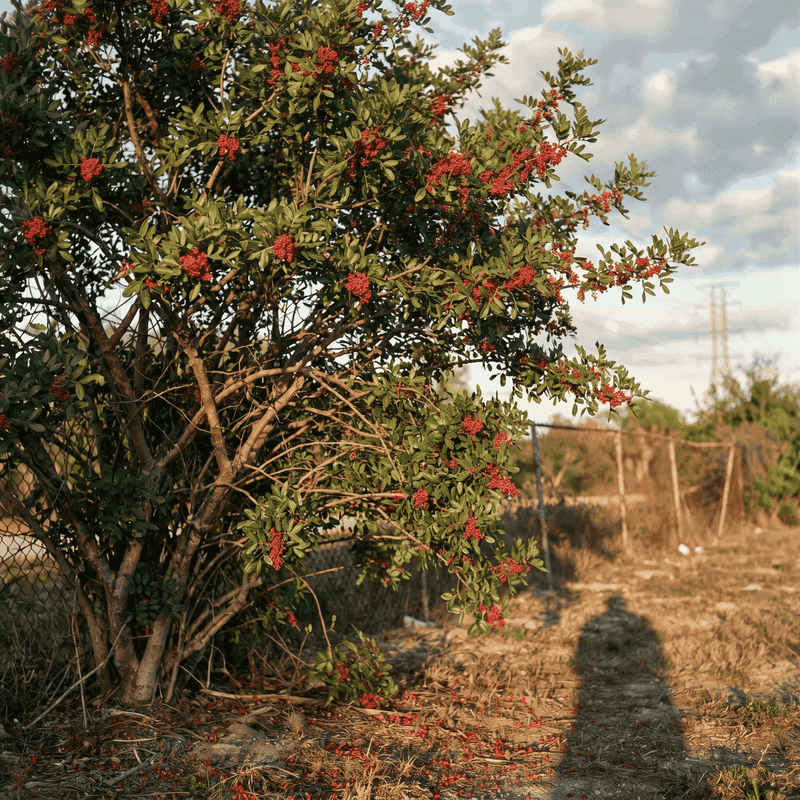
Timing can make a big chore feel a lot easier. Fall gives Florida homeowners a few real advantages when tackling this plant.
For starters, the red berries make plants easier to find as they ripen from late fall into winter. Shrubs that blended in all summer start waving a bright flag that says here I am.
Removing plants before birds finish eating the fruit also helps your whole area. Robins, mockingbirds, and other birds carry the seeds far away and drop them in new places.
Every berry you bag is one less seedling down the road. Cut the fruit clusters first, then seal them in a trash bag instead of tossing them in compost.
The weather is kinder, too. Cooler temperatures mean you can work longer without overheating.
Cut-stump herbicide treatments can be done at most times of year, so fall is not the only option. Still, a cooler season makes the work more comfortable and the plants easier to spot.
Plan your project over a few weekends instead of one huge push. Start with the biggest plants, then clean up smaller ones as you go.
Check with your city about yard waste pickup days. Some areas have special rules for bulky branches, so a quick call saves you a headache later.
4. Brazilian Peppertree Is A Listed Invasive Plant
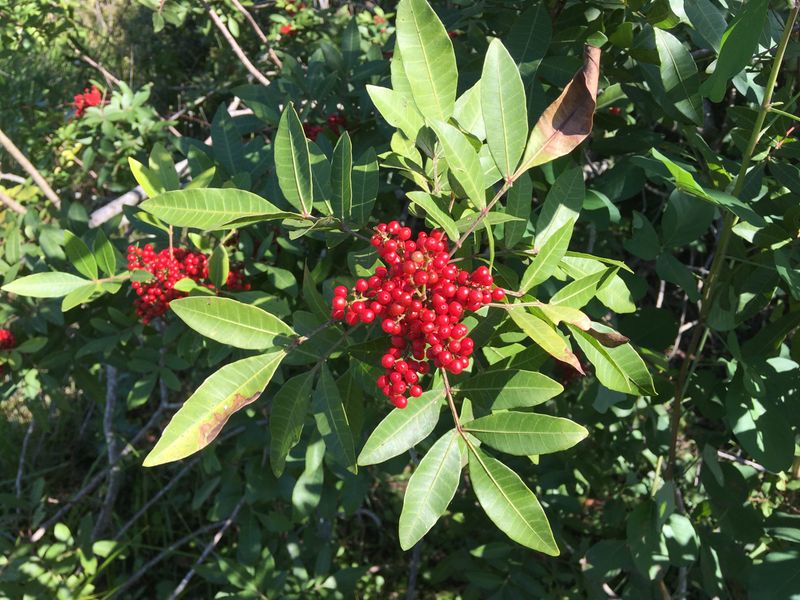
Few plants have earned a worse reputation in the Sunshine State. Brazilian peppertree sits on the Florida Invasive Plant Council (FLEPPC) list as a Category I invasive, the highest level of concern.
That label means it is changing natural areas and pushing out native plants. It has spread over hundreds of thousands of acres, from coastal mangroves to inland pinelands.
The state also lists it as a noxious weed. In plain words, selling, moving, or planting it is against the rules in Florida.
Why so much worry? A single shrub can form thick shade that native plants cannot grow under, which leaves wildlife with fewer food and shelter choices.
The plant may also release chemicals that slow down other plants nearby. Scientists call that allelopathy, and it gives the peppertree an unfair head start.
Some places, like the Everglades, have spent millions of dollars fighting it. Islands and wetlands there have been taken over by thick peppertree forests.
Your yard plays a part in this bigger picture. A berry-covered shrub near your fence can feed seeds into nearby parks and preserves.
Removing one plant may feel small. Still, when many neighbors pitch in, the change adds up and gives native plants room to bounce back.
5. Protect Your Skin Before You Start Cutting
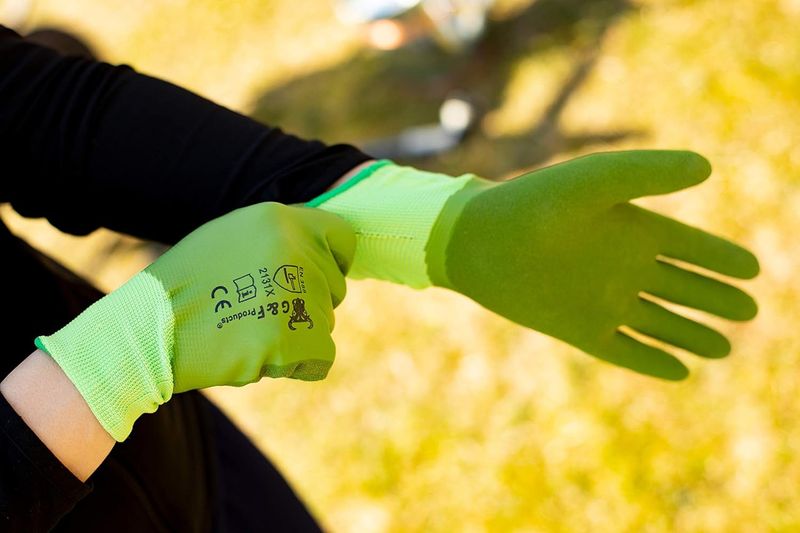
Remember that cashew family connection? Here is where it really counts, so suit up before you grab the loppers.
Brazilian peppertree sap contains compounds related to the ones in poison ivy. Some people get itchy rashes, red bumps, or swelling after touching the sap or crushed leaves.
Not everyone reacts, but there is no easy way to know ahead of time. Treat the job like you would handle poison ivy, and you will stay safe.
Wear long sleeves, long pants, and sturdy gloves. Waterproof gloves work best because the sticky sap can soak through cloth ones.
Safety glasses are a smart pick, too. Branches snap back, and sap can splash when you cut thick stems.
Some folks in Florida also report sneezing or a stuffy nose when the plant blooms. If you have allergies, a simple dust mask can make the work more comfortable.
Skip burning the branches. Smoke from burning plants in this family can bother your lungs and eyes.
When you finish, wash your tools with soapy water. Toss your clothes straight into the washer, and take a shower with plenty of soap.
If a rash shows up, an over-the-counter itch cream often helps. Call a doctor if it spreads or swells a lot.
6. Cut Stumps And Resprouts Need Follow-Up Care
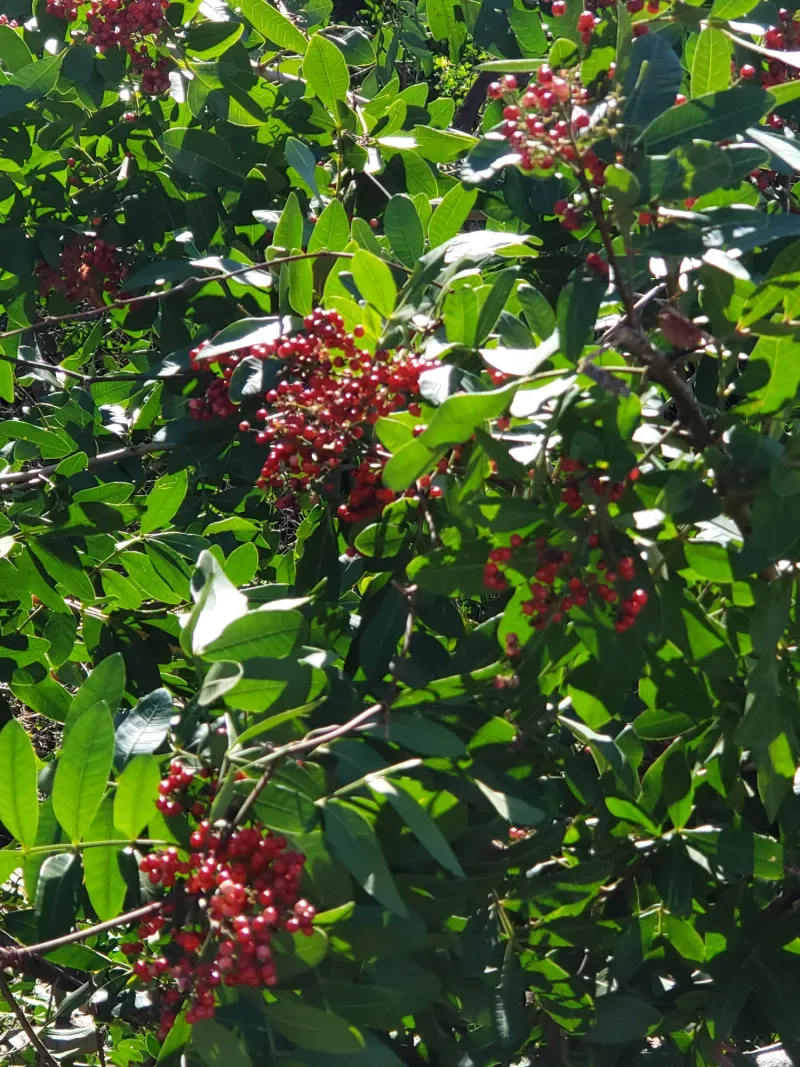
Cutting the shrub down feels great, until it shoots back up a month later. Brazilian peppertree is famous for its comeback skills.
A plain cut stump often sends out dozens of new shoots. Roots can sprout new plants too, so a quick chop is only step one.
The cut stump method is the go-to approach for many Florida homeowners. Cut the trunk close to the ground, then paint the fresh cut with a labeled herbicide within a few minutes.
Products with triclopyr or glyphosate are common choices. Read the label closely, since it is the law and tells you how much to use.
Adding a blue marker dye helps you see which stumps you already treated. It saves you from missing one in a crowded thicket.
Small seedlings are easier. Pull them by hand when the soil is moist, and try to get the whole root.
Now comes the patient part. Walk the area every few weeks for at least a year, looking for fresh shoots.
Spot-treat any sprouts while they are small and tender. Waiting lets them build strength again.
Keep a simple notebook or phone note of treatment dates. Over time, the sprouts slow down and finally fade away.
7. Nandina Is Another Red-Berried Plant To Reconsider
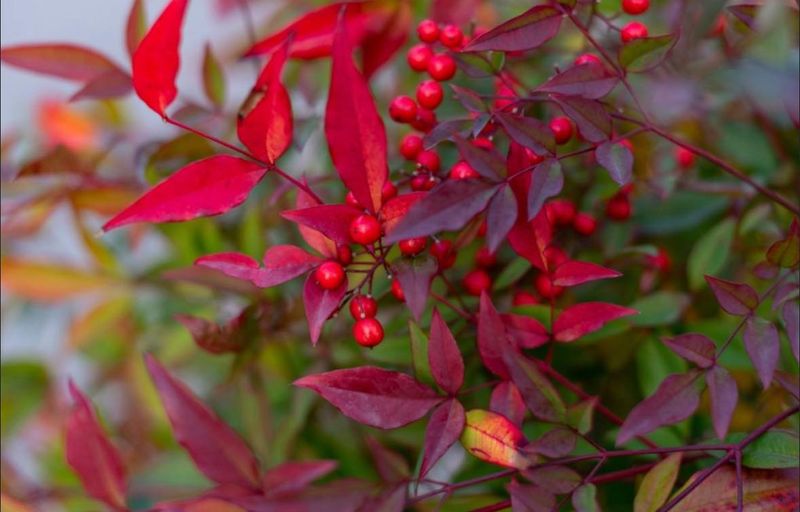
Walk through almost any suburb, and you will spot nandina by the front steps. Its nickname, heavenly bamboo, sounds lovely, but it is not bamboo at all.
Gardeners love its lacy leaves that turn red and purple in cooler weather. In fall, it hangs heavy clusters of shiny red berries that look great in photos.
The trouble is that nandina escapes into the woods in north and central Florida. It is listed as a Category I invasive there, just like Brazilian peppertree.
Birds eat the berries and drop seeds far from home. New plants pop up in shady forests where they crowd out native shrubs.
The berries also contain compounds that can turn into cyanide. Cedar waxwings that gorge on large amounts have gotten very sick, which is a sad thing to learn.
Pets and kids should stay away from the fruit as well. That alone gives many families a reason to rethink this shrub.
If you want to keep a nandina for now, at least snip off the berries each fall. Some newer dwarf types make little or no fruit, which lowers the risk.
For a fresh start, dig out the whole clump, roots and all. It comes out easier than peppertree and leaves room for better choices.
8. Coral Ardisia Spreads Quietly In Shady Spots
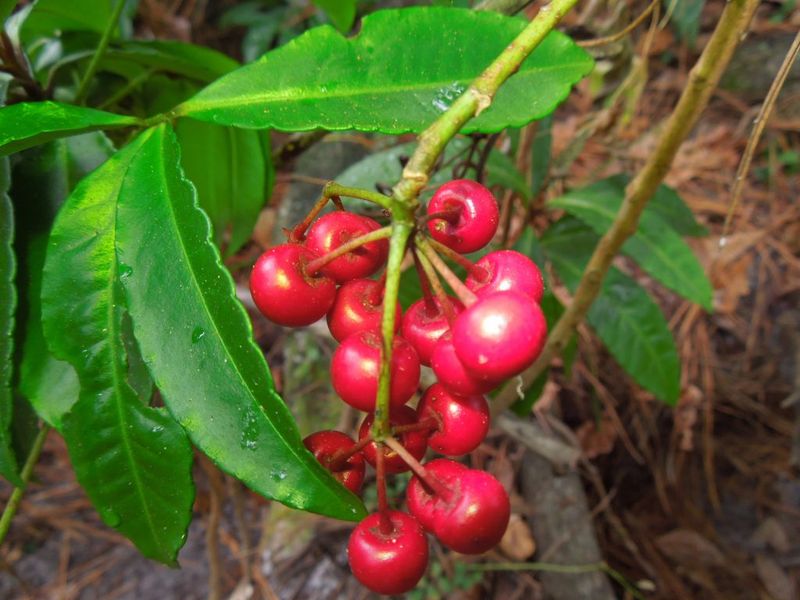
Some troublemakers shout, and others whisper. Coral ardisia is the whisperer, slipping into shady corners while nobody pays attention.
The plant is a small shrub, usually knee to waist high. It has dark, glossy leaves with wavy edges and little bumps along the rim.
Under the leaves, bright red berries dangle like tiny Christmas lights. A single plant can hold berries for many months.
Those berries drop right below the parent or get carried off by birds and raccoons. Soon, a thick carpet of seedlings covers the forest floor.
Coral ardisia is a Category I invasive in Florida too. It thrives in the shade of oak hammocks, where it pushes out native wildflowers and ferns.
Check under big trees, along shady fences, and near the north side of your home. Those are the hiding places it loves most.
Hand pulling works well for small plants. Grab low on the stem and pull slowly so the root comes up with it.
Bigger patches may need a labeled herbicide, applied carefully on the leaves. Bag all berries before you start so they do not scatter.
Plan to recheck the area for a few years. New seedlings can keep appearing as leftover berries sprout or birds bring in fresh seed.
9. Native Red-Berried Plants To Plant Instead
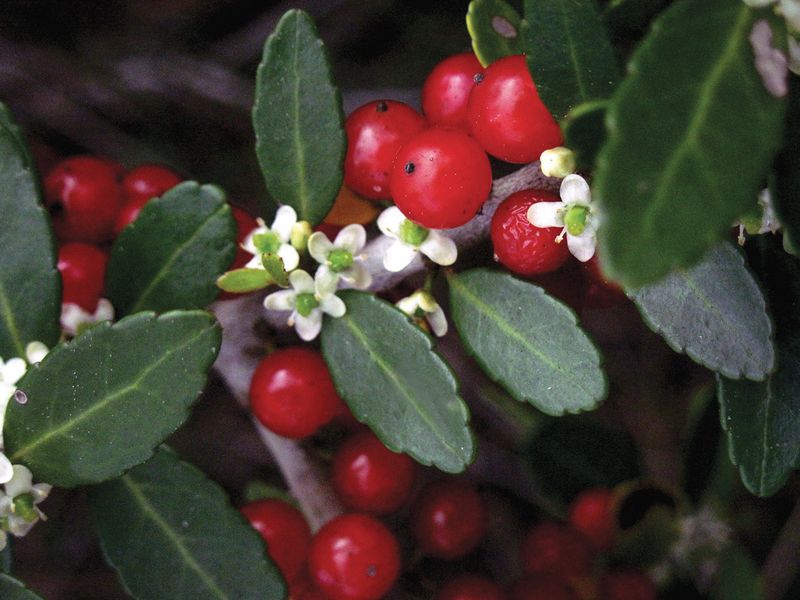
Good news, you do not have to give up red berries to do the right thing. Florida has plenty of native plants that bring the same holiday cheer.
Yaupon holly is a top pick. It handles heat, salt, and sandy soil, and female plants glow with small red berries all winter.
Dahoon holly works well in wetter yards. It grows into a small tree with glossy leaves and bright fruit that birds adore.
Want something for shade? Wild coffee is a favorite.
Its shiny leaves look tropical, and the berries turn deep red as they ripen.
Coral bean is a good choice for a sunny to partly shaded spot. It puts out tall red flower spikes in spring and bright red seeds later, though the seeds should not be eaten.
American beautyberry is not red, but its purple berry clusters are stunning. Mockingbirds and catbirds line up to eat them in fall.
These natives feed local birds without starting new problems in nearby woods. They also tend to need less water and fertilizer once settled in.
Visit a native plant nursery or a Florida Native Plant Society sale. Staff there can match plants to your soil, sun, and space.
Swapping one invasive shrub for one native is a simple win. Your yard keeps its color, and wildlife gets a better meal.