Callery Pear Trees Are Easy To Spot Along Indiana Roadsides In Late Fall
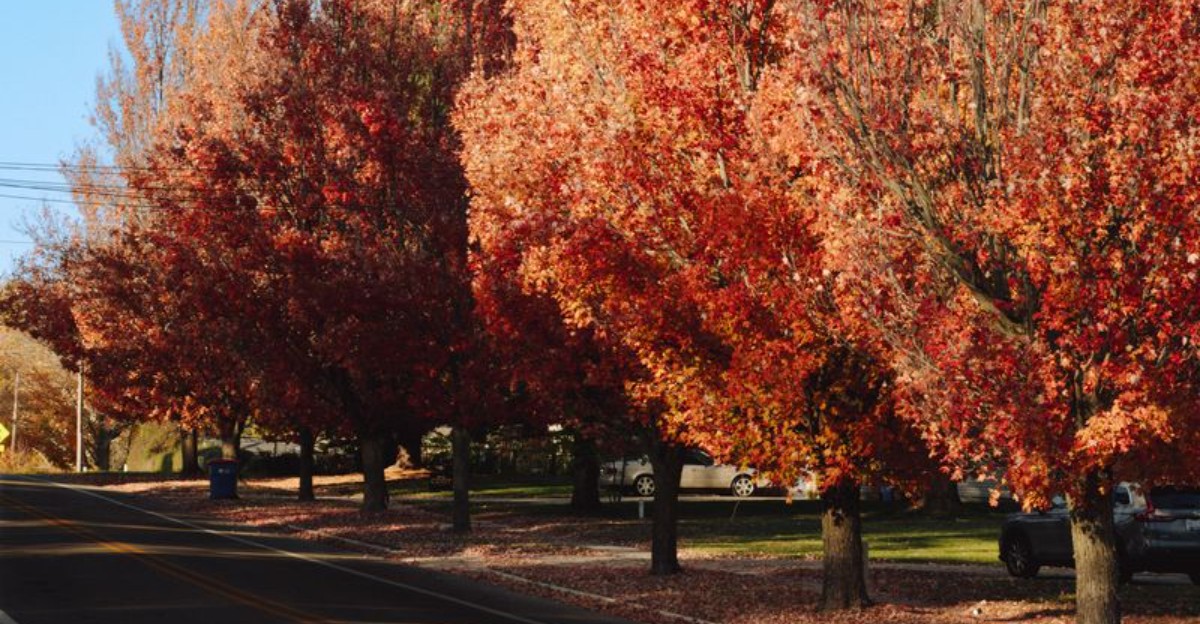
A tree sold for decades as a tidy, fruitless street ornament is now popping up by the thousands in fields and ditches where nobody planted it. Late in the year, its leaves turn deep burgundy and hang on long after the oaks and maples have gone bare.
I noticed them first on a gray November drive across Indiana. Whole fence lines glowed like embers, and I honestly thought someone had planted a new hedge. Nobody had. Birds did the planting, one small fruit at a time.
You have probably driven past hundreds of them without a second thought. Once you learn the trick, you will start counting them on every trip to the grocery store.
So how did a polite little landscape tree turn into one of the most talked-about plant problems in the Midwest? And what should you do if one is growing in your own yard?
Those Burgundy Roadside Trees Are Telling A Bigger Story
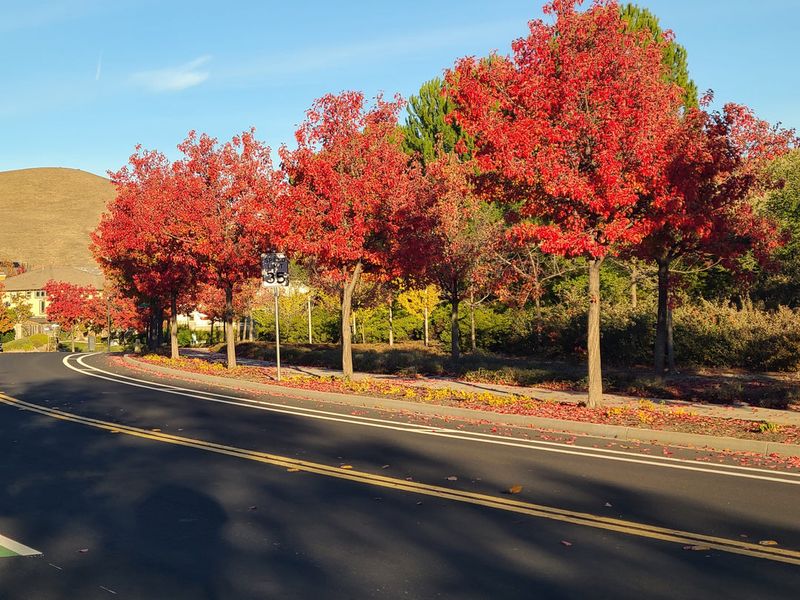
Late fall drives across the Midwest feel pretty brown and gray, so a burst of wine-red leaves really grabs your attention. Many of those glowing trees along roadsides are Callery pears, known to botanists as Pyrus calleryana.
Their timing gives them away. Native trees like maples and hickories usually drop their leaves by early November, while Callery pears often hold their foliage into late November or even December. That makes them stand out like a lit sign in a dark parking lot.
Colors can range from glossy dark red to purple, with some trees showing orange and yellow patches mixed in. The leaves are oval, shiny, and finely toothed along the edges. Trees often grow in tight clumps, and young ones may look more like a shrub than a tree.
Purdue experts and state conservation groups point to this late color as one of the easiest ways to find the species. Land managers even use fall to map where it has spread, because the trees are so easy to see from the road.
Once you spot that pattern, you will notice how many of them line highway ramps, old pastures, and vacant lots. That sheer number is the real headline.
Birds Spread Callery Pear Seeds Faster Than You Would Guess
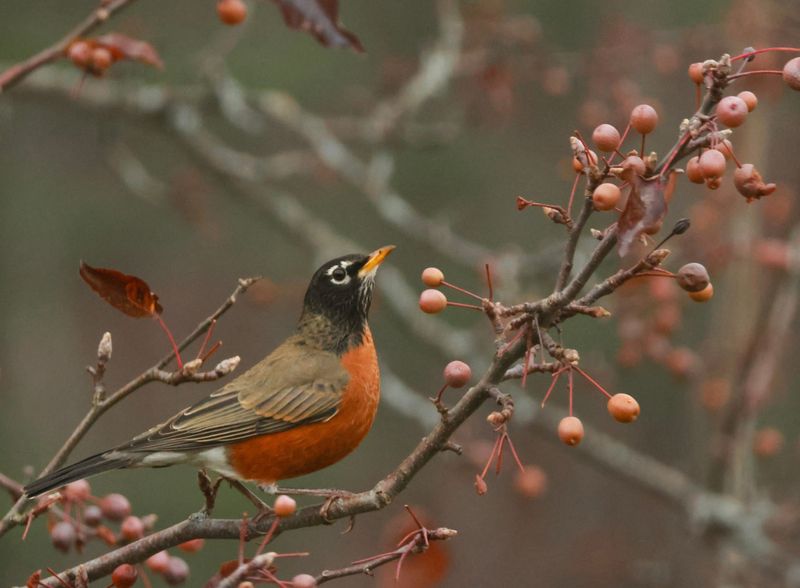
Here is the twist most people miss. The popular Bradford pear was sold as a sterile tree that would not make fruit, and on its own it mostly could not.
Trouble started when many different cultivars were planted near each other, such as Bradford, Cleveland Select, Aristocrat, and Chanticleer. These varieties can cross-pollinate. The result is lots of tiny, hard fruits about the size of a pea, usually brown and speckled.
Birds like starlings and robins eat those fruits through fall and winter. They then drop the seeds in fence rows, ditches, and open fields, often far from the parent tree. Seedlings grow quickly in sunny spots and can form thick stands within a few years.
Purdue Extension and the Indiana Invasive Species Council list Callery pear as invasive for this reason. The wild offspring push out native shrubs and wildflowers that insects and birds rely on for food and shelter.
Your Indiana Garden Changes Every Week. Your Plan Should Too.
Gardening in Indiana changes quickly throughout the season. Every Friday you’ll receive a simple weekly plan showing exactly what to plant, prune, fertilize, harvest, and protect so you never miss the right timing.
So when you see a red glow stretching across an old pasture, you are often looking at a family tree. One planted street tree in town may have started a whole thicket miles away. Pretty wild for a tree that was supposed to stay put.
White Spring Blossoms Make Callery Pears Easy To Find Twice A Year
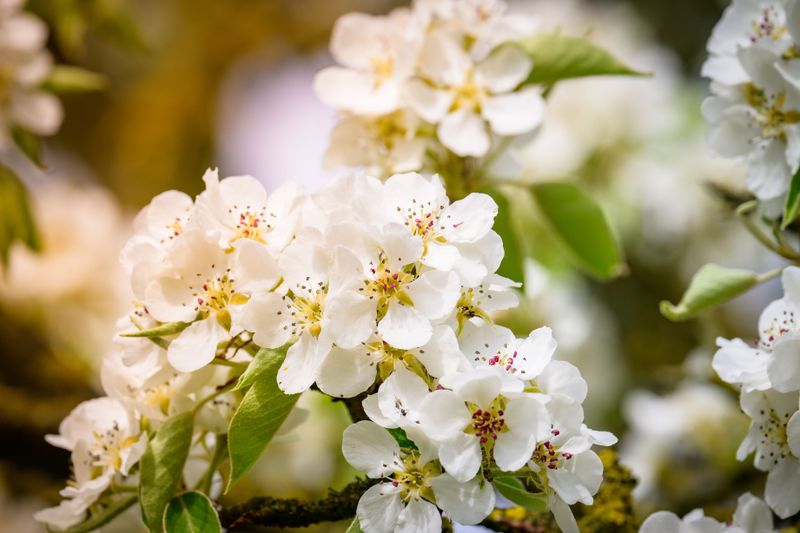
Fall is not the only season these trees show off. In early spring, usually late March to mid-April, Callery pears burst into clouds of white flowers before most other trees have leaves.
You might also notice the smell. Many people describe it as unpleasant, a bit like rotting fish, and it can be strong near large groups of trees. Not exactly the perfume you want by the patio.
That gives you two easy windows to scout your area. Spring blooms and fall color both make the trees pop against a mostly bare landscape. I like to note locations in fall, then check again in spring to see how far the white patches reach.
A few quick ID tips help year-round: Leaves are shiny, oval, and finely toothed, often with slightly wavy edges. Wild seedlings often carry sharp thorns on their branches.
Native serviceberry and wild plum also bloom white in spring, so check leaves and thorns before you decide. A little detective work keeps you from removing a helpful native by mistake. Fall color plus spring bloom is your best double check.
Thorny Wild Pear Thickets Are Tough On Fields And Boots
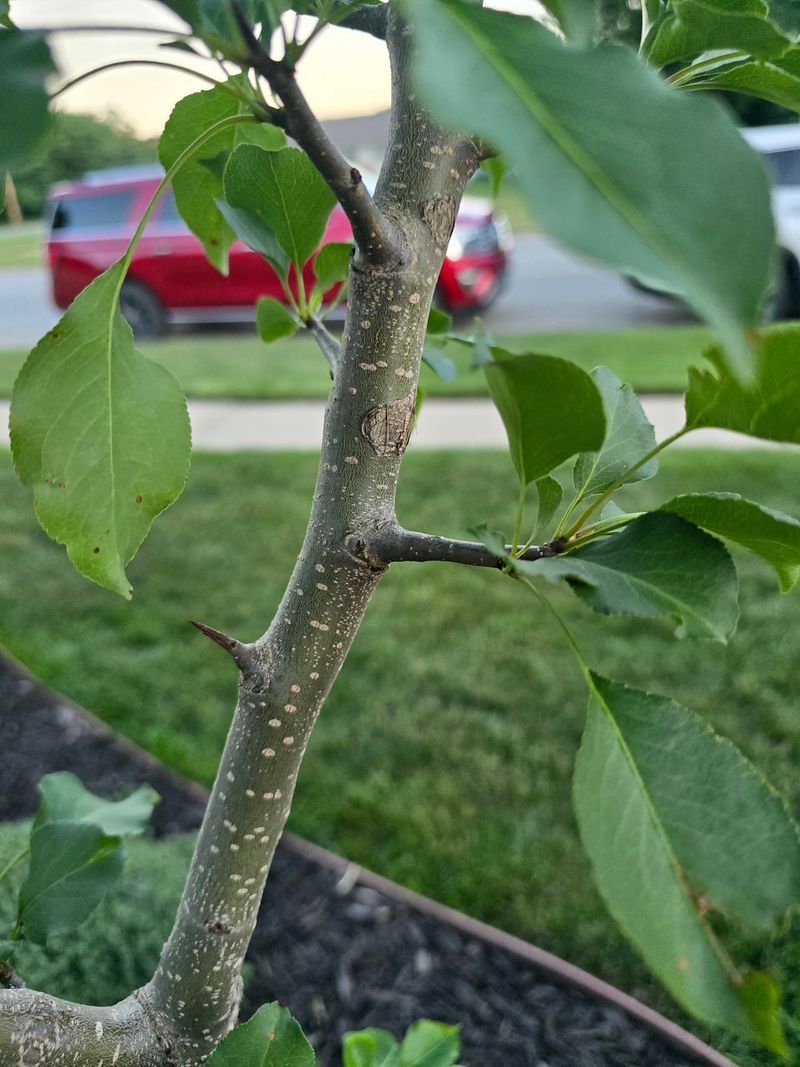
Anyone who has tried to walk through a wild Callery pear patch knows it is no stroll. Those escaped seedlings often grow long, sharp thorns that can poke through boots and scratch skin.
Nursery cultivars were bred to be thornless. Wild offspring tend to bring the thorns back, along with dense, tangled growth. Farmers report the spines can even puncture tractor tires when they clear old fields.
These thickets crowd out the native plants that wildlife needs. Many native caterpillars rely on oaks, cherries, and other local trees, and they rarely feed on Callery pear leaves. Fewer caterpillars mean less food for nesting songbirds in spring.
Thickets also shade out prairie plants and young native trees. Over time, an open meadow full of goldenrod and milkweed can shift into a solid wall of pear.
If you work around these trees, wear thick gloves, long sleeves, and sturdy boots. Eye protection helps too, since branches snap back.
Small seedlings pull easily from moist soil, so spring rain is a smart time to grab them by hand. Larger stems need tools, and we will cover safe removal later in this article.
Bradford Pear Branches Split Easily In Storms
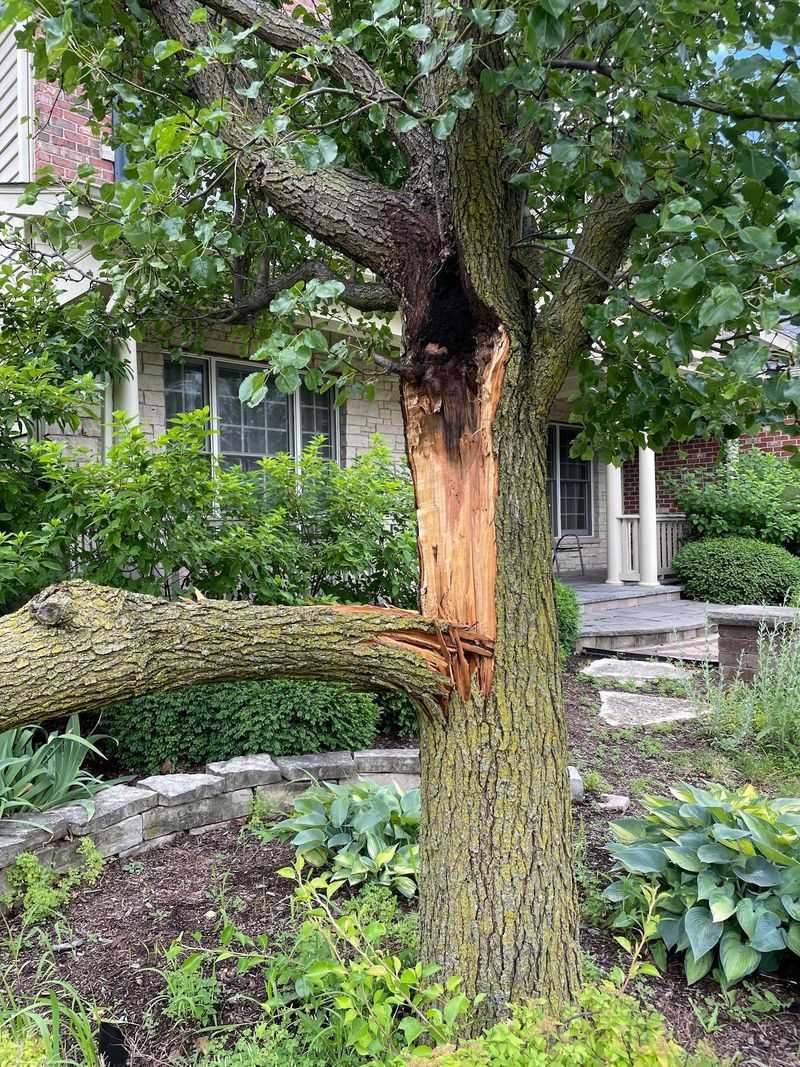
Ask any arborist about Bradford pears and you will likely get a sigh. The tree grows fast with many branches rising from one point on the trunk, and those narrow angles create weak joints.
As the tree reaches about 15 to 20 years old, the crown gets heavy. Strong winds, wet snow, or ice can then split it right down the middle. Broken limbs land on cars, roofs, and power lines, which turns a pretty yard tree into a costly cleanup.
Watch for these warning signs in your own tree: Cracks where big limbs meet the trunk. Branches packed tightly together at one spot. Sections that already broke in a past storm.
Pruning can help a little on young trees, but it rarely fixes the basic shape. Many cities across the state stopped planting them on streets for exactly this reason.
If a large pear hangs over your house or driveway, call a certified arborist to take a look. They can judge risk and remove it safely. Honestly, the peace of mind during the next ice storm is worth the call alone.
Indiana Rules On Callery Pear Are Still Catching Up
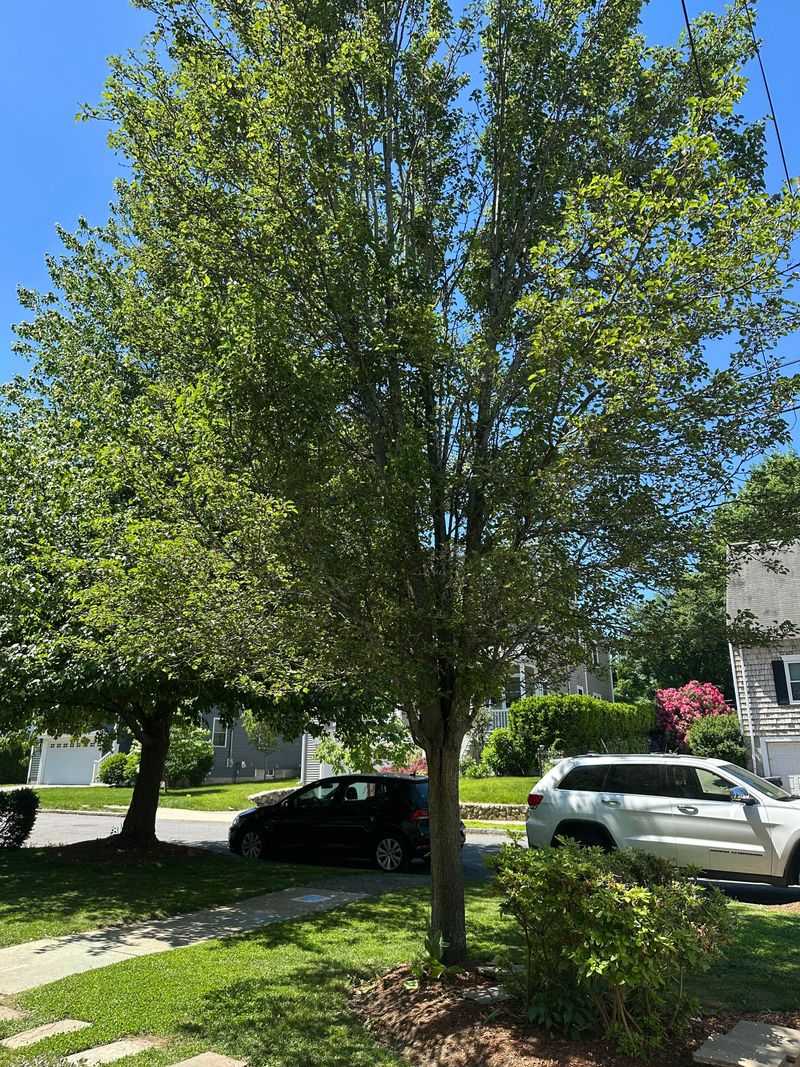
You might expect a tree with this reputation to be banned. In Indiana, it is not, at least not yet statewide.
The state Terrestrial Plant Rule, adopted in 2019, began banning the sale, gifting, and moving of 44 invasive plants in 2020. Callery pear was left off the list over concerns about nursery businesses.
Conservation groups and Purdue experts have pushed to add it, but no statewide rule has been finalized as of recent reports.
Some local governments have stepped in. Monroe County and the City of Bloomington limit Callery pear in new landscaping plans for certain developments. Other states have gone further, with Ohio banning the sale of Callery pear starting in 2023.
Rules can change, so check with your county or city planning office before you plant anything new for a business or subdivision. Indiana DNR and the Indiana Invasive Species Council websites also post updates.
Even without a law, you can choose not to buy one. Nurseries respond to what customers ask for. Every time someone requests a native tree instead, it sends a clear message about what Hoosier gardeners actually want.
Cutting A Callery Pear Stump Takes One Extra Step
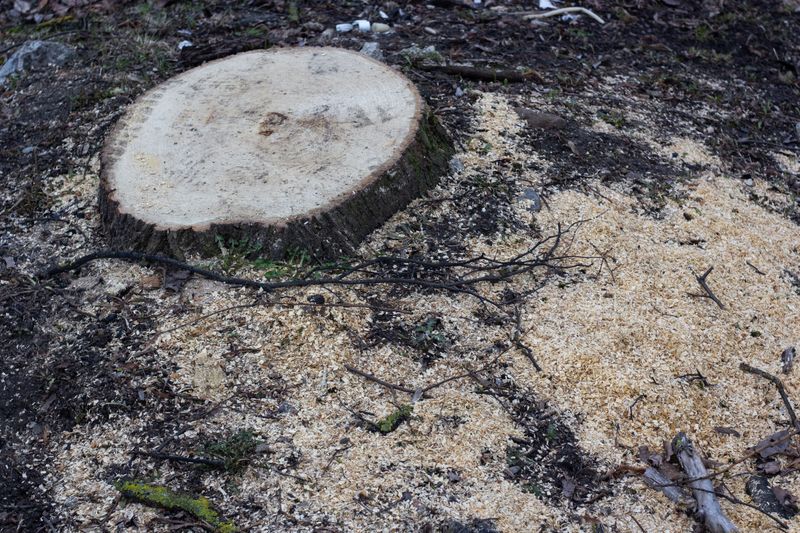
Grab your saw, but do not stop there. Callery pears resprout eagerly from the stump and roots, so a simple cut often leaves you with a bushy clump of new shoots next year.
Purdue Extension and many invasive species groups recommend the cut-stump method. Cut the tree near the ground, then quickly paint the fresh cut with an herbicide labeled for stump treatment, such as products with glyphosate or triclopyr. Treat the outer ring just inside the bark, since that living layer moves the product down to the roots.
Late summer through fall is a great window. Trees are sending energy down to their roots then, which helps the treatment work. Follow every label direction and wear gloves and eye protection.
For small saplings, hand pulling works when the soil is moist. Make sure you get the root, not just the stem.
Big trees near buildings or lines belong to a professional crew. Afterward, check the spot each spring and fall for new sprouts or seedlings. One season of follow-up usually pays off, and some Indiana groups even run bounty events that trade a removed pear for a free native tree.
Black Gum And Red Maple Bring Native Red Color To Your Yard
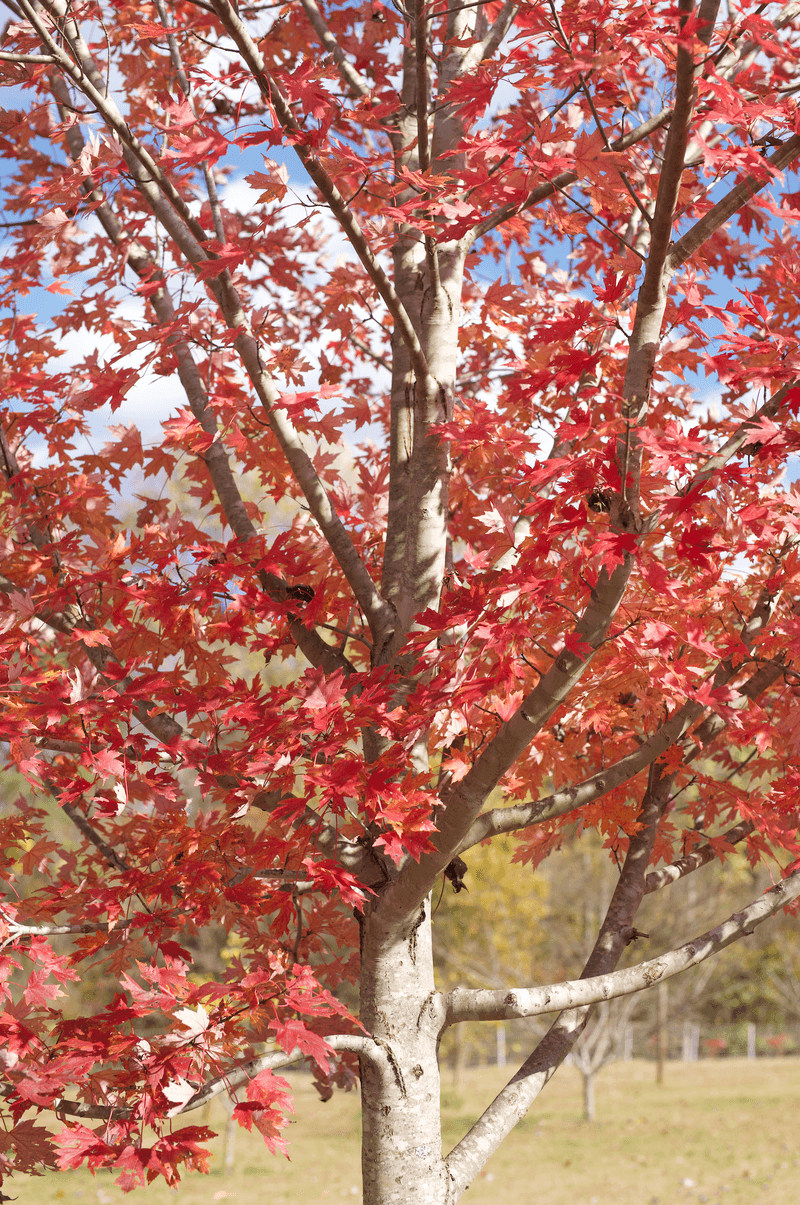
Love that fiery fall look? You can keep it and help local wildlife at the same time.
Black gum, or Nyssa sylvatica, is my personal favorite. Its glossy leaves turn bright scarlet in fall, and its small blue fruits feed migrating birds. It handles wet or average soil and grows into a sturdy, handsome shade tree.
Red maple offers early spring flowers for bees and reliable red or orange fall color. Look for local seed sources when you can, since they suit regional weather best.
For smaller yards, try these: Serviceberry gives white spring blooms, summer berries, and orange-red fall leaves. Flowering dogwood has red fall color and bright fruit for birds. Eastern redbud adds pink spring flowers and golden fall leaves.
Want long-term value? White oak and scarlet oak support hundreds of caterpillar species, which feed baby birds. Their fall shades run from burgundy to bright red.
Fall is a smart planting season in Indiana, as long as the ground is not frozen. Water new trees weekly until the soil freezes. Next autumn, your yard could glow red for all the right reasons.