The Right Way To Repot Christmas Cactus In Your Pennsylvania Home
Repotting a houseplant usually sounds simple. Grab a bigger pot, add fresh soil, and you’re done. With a Christmas cactus, that approach can backfire.
These popular holiday bloomers are a little different from most houseplants. They actually prefer snug pots and flower best when their roots are slightly crowded.
They also need a loose, fast-draining mix. In the wild, they grow on tree branches, not in heavy soil.
Timing matters just as much. Repot at the wrong time, and you could lose a whole season of flowers. Use the wrong soil, and the roots may start to rot.
In a Pennsylvania home, where dry winter heat adds its own stress, those mistakes are even easier to make. A few simple steps can help your plant settle into its new pot and keep blooming for years.
The Best Time To Repot
Timing is everything with a Christmas cactus. Pick the wrong month, and your plant may toss its buds on the floor like confetti. Pick the right one, and it barely notices the move.
The sweet spot is late winter to spring, right after the plant finishes blooming. In Pennsylvania, that usually means somewhere between February and May. By then, the last flowers have faded, and the plant is ready to rest and grow new stems.
Why does this matter so much? During fall, your cactus is busy setting buds. Cooler nights and longer darkness tell it to get ready for the holiday show.
Disturbing the roots during that time sends a stress signal, and the plant may drop its buds to save energy.
Winter is just as risky. While the plant is flowering, it puts most of its strength into those blooms. Pulling it from its pot can make flowers wilt or fall off early. Nobody wants a bare cactus on Christmas morning.
Spring gives the roots the best chance to settle in. Days get longer, light gets stronger, and the plant naturally starts a growth spurt. New roots spread quickly into fresh soil, and the plant has all summer to get comfortable.
Here is a handy tip for Pennsylvania growers. Wait until the worst cold snaps pass before repotting near a window. A sudden March freeze can make glass very chilly, and freshly repotted plants dislike cold air.
Mark your calendar for a mild spring weekend. A little planning now means a stronger plant and a better bloom season next winter.
Don’t Repot Too Often
Surprise! Your Christmas cactus actually likes feeling a bit snug. Many plant lovers think a bigger, roomier home is always better. With this plant, too much freedom can mean fewer flowers.
Christmas cactus blooms best when it is slightly root-bound. That means the roots fill most of the pot without being totally crammed.
A little crowding seems to encourage the plant to focus on flowers instead of making endless roots.
Because of that, you only need to repot every two to three years. Some older plants can go even longer with just a top layer of fresh soil each spring. Grandma may have kept hers in the same pot for ages, and it still bloomed like crazy.
Your Pennsylvania Garden Changes Every Week. Your Plan Should Too.
Gardening in Pennsylvania changes quickly throughout the season. Every Friday you’ll receive a simple weekly plan showing exactly what to plant, prune, fertilize, harvest, and protect so you never miss the right timing.
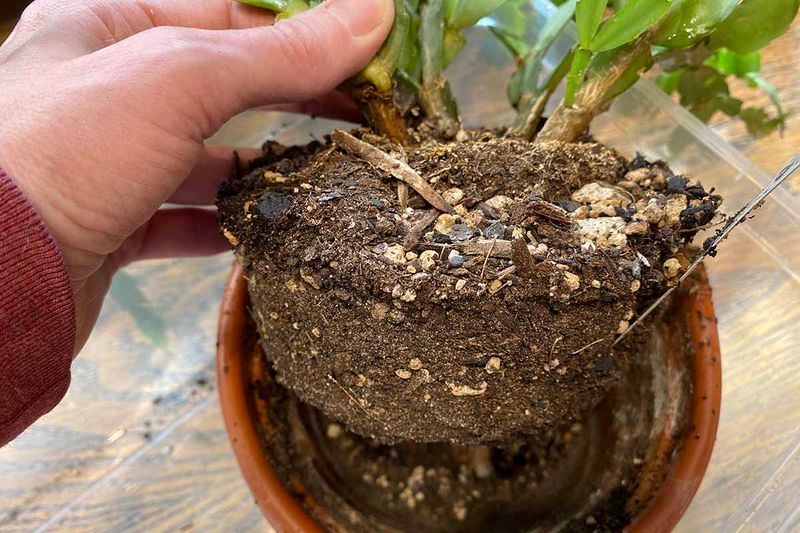
So how do you know it is truly time? Watch for a few clear clues. Roots growing out of the drainage holes are a big hint. If you lift the pot and see a tangle of roots underneath, your plant is asking for more space.
Another sign is soil that dries out very fast. If you water on Monday and the pot feels bone dry by Wednesday, the roots have probably taken over. There is not much soil left to hold moisture.
Also look at the overall shape. A plant that looks top-heavy, tips over easily, or seems way too big for its container needs an upgrade.
Pennsylvania furnaces dry out indoor air in winter, which can make soil dry faster too. Do not mistake that for crowded roots. Check the drainage holes first before deciding to repot.
Choose A Pot Just One Size Larger
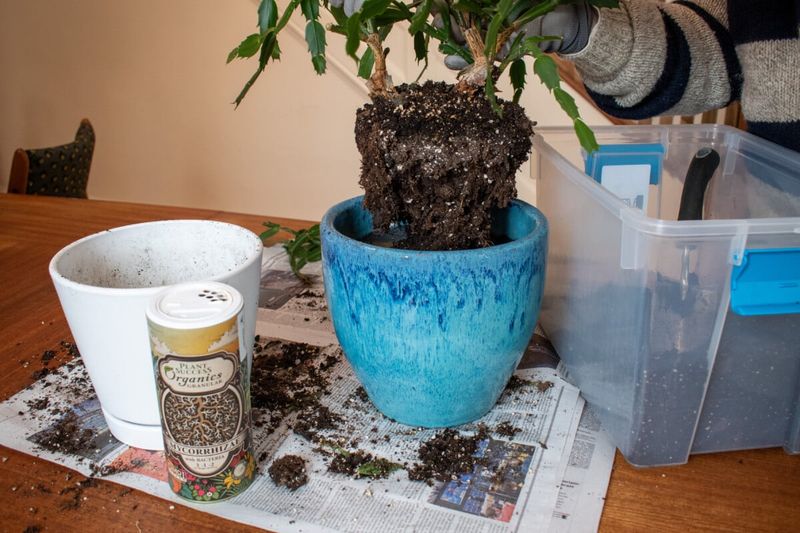
Bigger is not always better. That old saying fits perfectly when you shop for a new pot. A giant container might look generous, but it can quietly cause trouble.
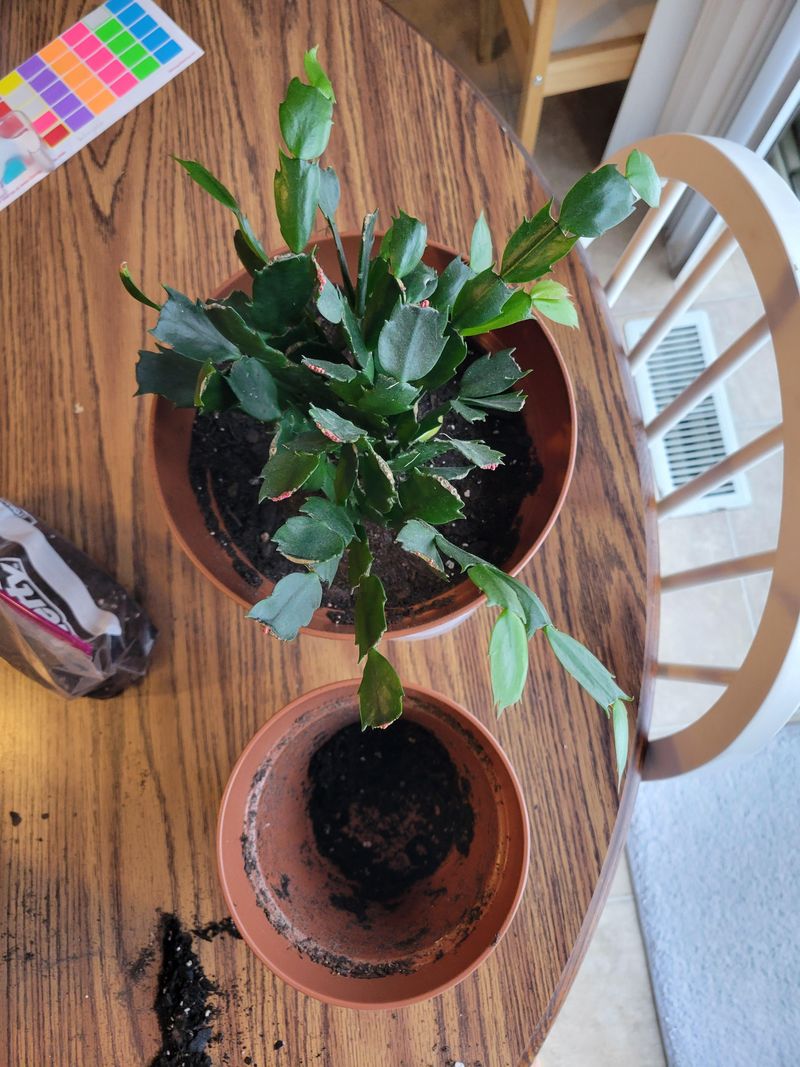
Pick a pot that is only about 1 to 2 inches wider than the current one. If your cactus lives in a 6-inch pot now, move it to a 7-inch or 8-inch pot. That small step up gives roots room to grow without leaving too much empty space.
Here is the problem with oversized pots. Extra soil holds extra water. The roots cannot reach all of it, so that soggy soil just sits there. Over time, wet soil leads to root rot, which is one of the most common problems with Christmas cactus.
Drainage holes are a must. No hole means water pools at the bottom with nowhere to go. Even a pretty decorative pot should have a hole, or you can use it as a cover with a plastic pot inside.
What material works best? Terracotta is a great choice because it breathes and helps soil dry evenly.
Plastic pots hold moisture longer, which can help in very dry Pennsylvania winters. Glazed ceramic sits somewhere in between.
A fun fact for history buffs is that Christmas cactus became a popular houseplant in the 1800s. Back then, many people grew them in simple clay pots, and plenty of those plants are still alive today.
Before planting, scrub any used pot with warm soapy water. Clean pots help keep pests and disease away from your plant.
Use A Light, Well-Draining Mix
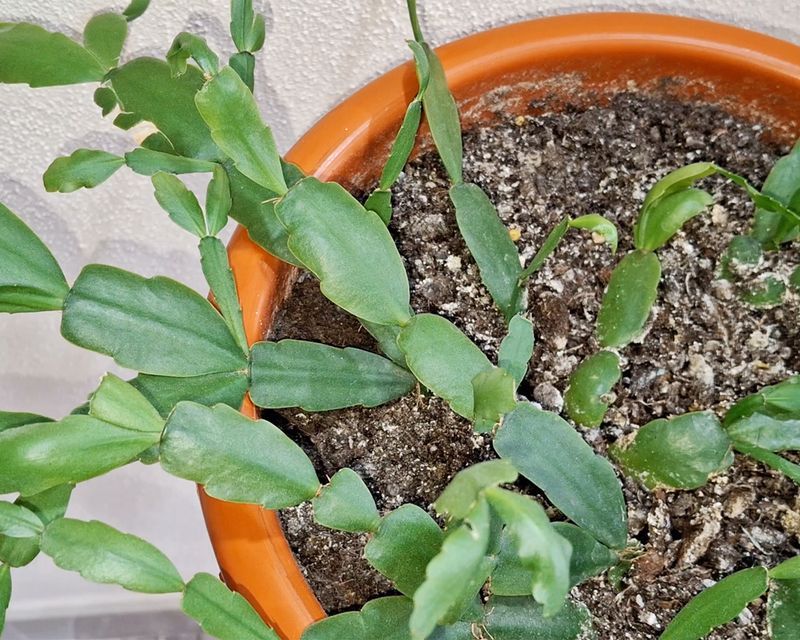
Deep in the forests of Brazil, Christmas cactus does not grow in sandy desert soil at all. It grows on tree branches and in rocky cracks, soaking up rain and drying quickly afterward. Knowing that helps you pick the perfect soil.
Because it is a tropical forest plant, it needs a loose mix that drains well. Plants that grow on trees are called epiphytes. Their roots love air just as much as water.
Plain bagged potting soil is usually too heavy by itself. It packs down and stays wet. That is a quick way to end up with mushy roots.
One easy recipe works for most homes. Mix about two parts regular potting soil with one part perlite or orchid bark. The perlite adds air pockets, and the bark gives it that chunky, forest-floor feel.
Another option is cactus mix with some added organic matter. Cactus mix alone can be a little too sandy and fast-draining. Blending in some compost or regular potting soil helps it hold just enough moisture.
You can find these supplies at most garden centers across Pennsylvania. Look for bags that say perlite, orchid bark, or succulent mix.
Want a quick test? Water your new mix in a pot and watch. Water should flow through within a few seconds, not puddle on top. If it sits there, add more perlite.
Always use fresh mix when repotting. Old soil breaks down and loses its structure. Fresh soil gives your plant a clean start.
Handle The Roots Gently
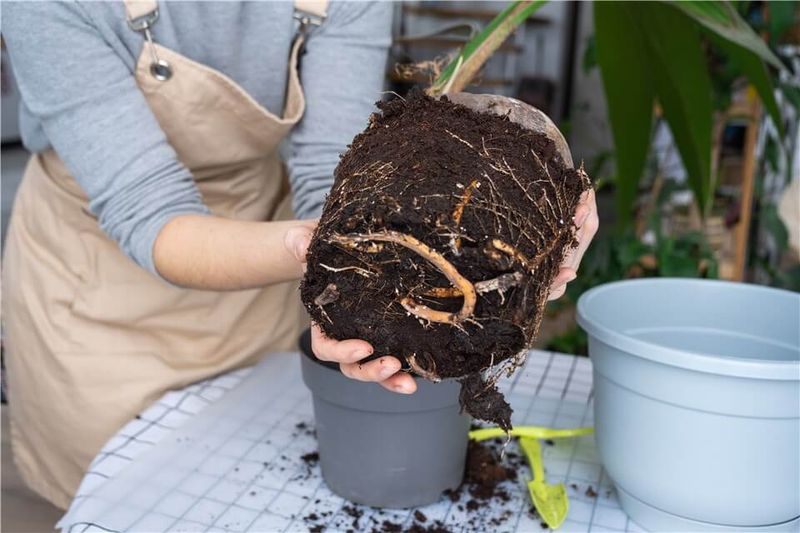
Think of this step like helping a friend move. You would not toss their boxes around, right? Your plant deserves the same care when it leaves its old pot.
Start by watering lightly a day before. Slightly moist soil slides out more easily and holds the roots together.
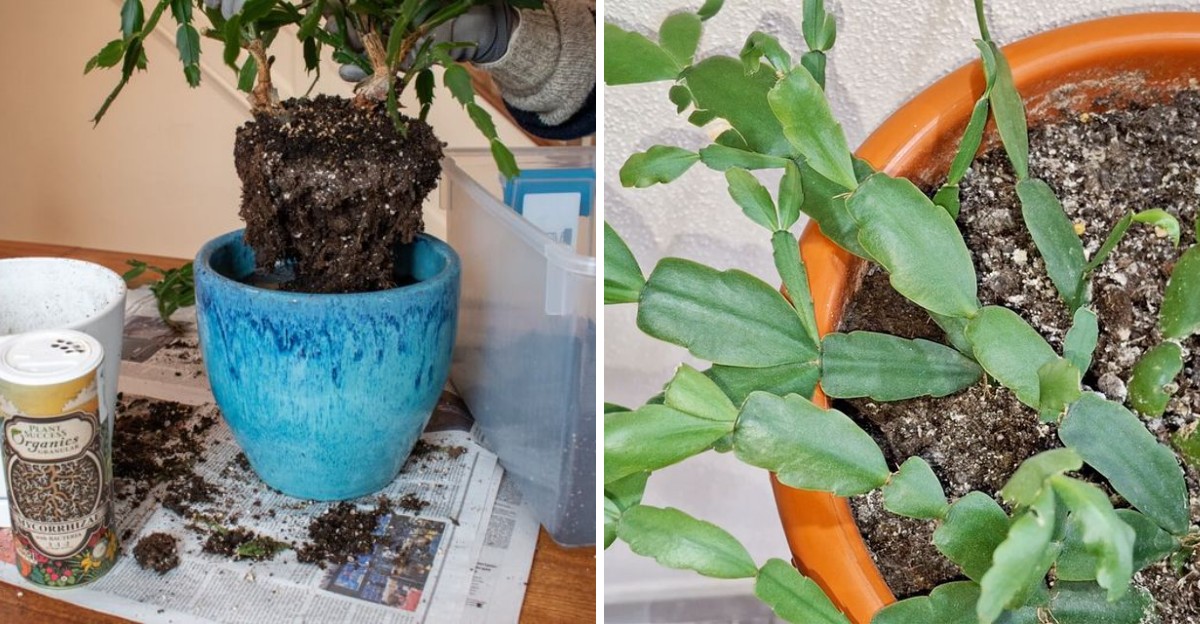
Then tip the pot on its side and ease the plant out. If it feels stuck, squeeze a plastic pot or run a butter knife around the inside edge.
Once it is out, take a good look. Gently loosen the root ball with your fingers. You only need to tease the outer roots a little so they can spread into new soil.
Healthy roots look white or light tan and feel firm. Trouble roots are dark, mushy, or smell bad. Snip those away with clean scissors. Wiping the blades with rubbing alcohol first helps prevent spreading germs.
Next, add a layer of fresh mix to the bottom of the new pot. Set the plant in at the same depth it was growing before. Burying stems deeper can cause them to rot, so keep the soil line in the same spot.
Fill in around the sides with more mix. Press it down lightly with your fingers to remove big air pockets. Do not pack it hard, since roots need air.
Leave about half an inch of space below the rim. That gap makes watering easier and keeps soil from spilling. Lay down newspaper first for an easy cleanup.
Give It Time To Settle In
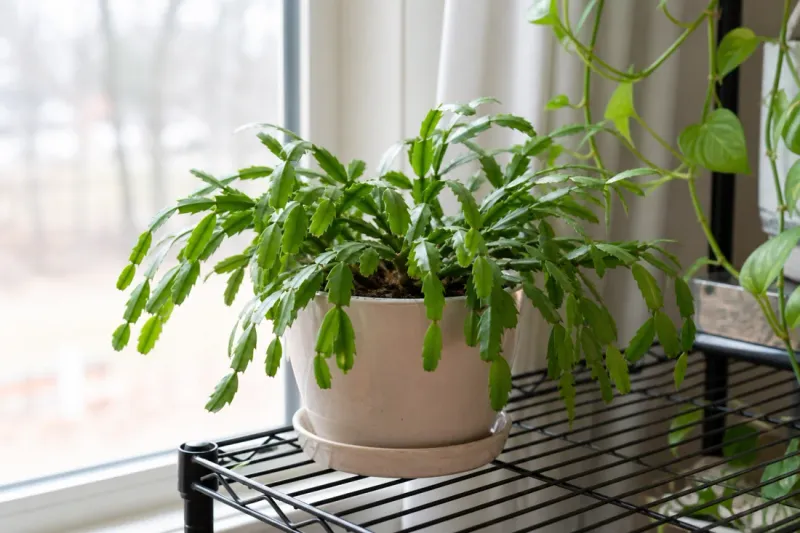
Patience pays off big time after repotting. Your cactus just went through a major change, and it needs a quiet recovery period. Think of it as a cozy rest after a busy day.
Water lightly right after repotting. You want the soil to settle around the roots, not turn into a swamp. After that, let the top inch of soil dry before watering again. Poke your finger in to check.
Light matters a lot too. Place the plant in bright, indirect light. An east-facing window is often perfect. Strong afternoon sun can scorch the stems, especially when the plant is tender after a move.
Pennsylvania homes bring a few extra challenges. Cold drafts from old windows or doors can shock the plant. Heating vents blow hot, dry air that pulls moisture from the leaves. Keep your cactus away from both.
If your air feels very dry, set the pot on a tray of pebbles with a little water. The water evaporates around the plant and adds some humidity. Just make sure the pot sits on the pebbles, not in the water.
Hold off on fertilizer for about a month. Fresh roots are delicate, and plant food can burn them. After four weeks, start feeding with a balanced houseplant fertilizer mixed at half strength.
Do not panic if a few segments look limp at first. That is normal. Within a few weeks, you should see new growth, a sure sign your plant feels right at home.