The Sky-Blue Winter Bird That Brightens The Texas Panhandle
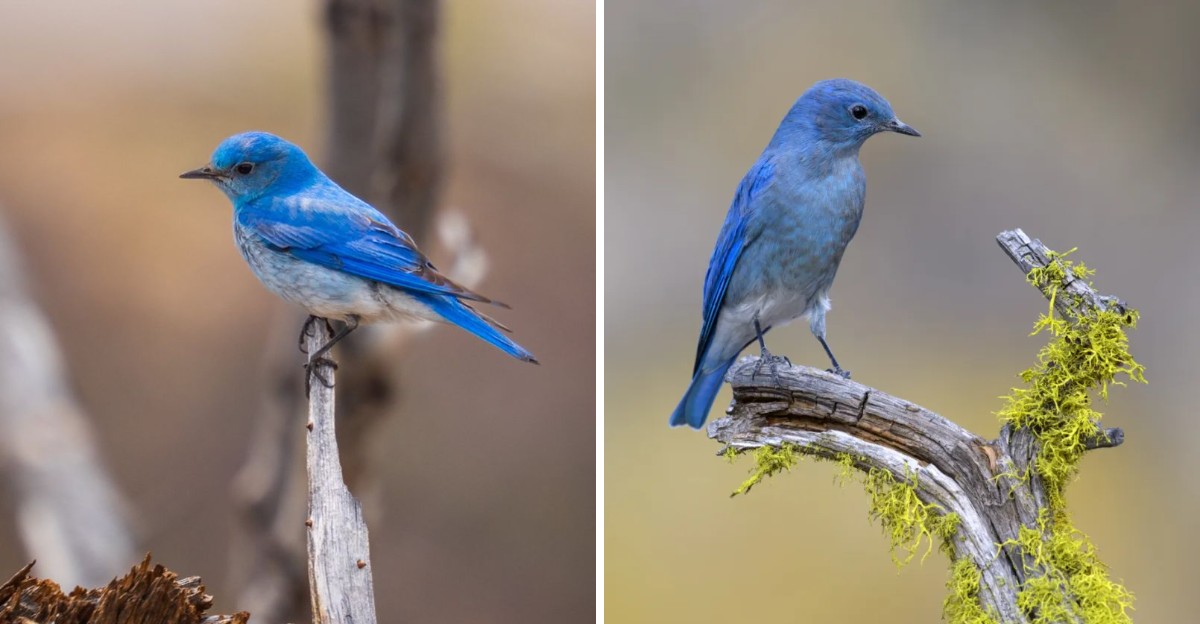
On a gray winter day in the Texas Panhandle, a flash of brilliant sky blue can stop you in your tracks. It’s as if a tiny piece of a clear summer sky has drifted down to land on a fence post.
That vivid color belongs to a small songbird that’s so admired out West, both Idaho and Nevada chose it as their state bird.
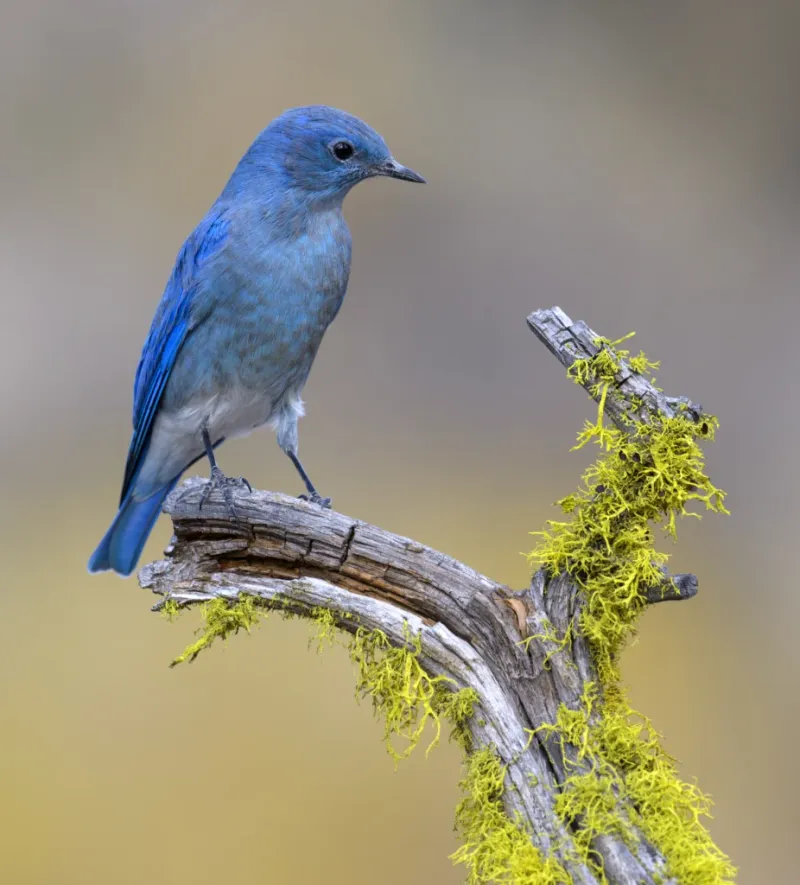
The males are covered head to tail in soft turquoise blue, without the rusty orange chest many people expect. Females wear gentler shades of gray with hints of blue on their wings and tail.
They spend summers in the high meadows of the Rockies, then drift south to open grasslands when winter arrives.
In the Panhandle, they often travel in small flocks, hovering over fields to catch insects or stopping to feast on juniper berries. For many Texans, spotting one is a rare and memorable winter treat.
A Winter Visitor To West Texas
Every fall, a tiny traveler packs up and heads south without a suitcase. The mountain bluebird spends its summers in the mountains and high plains of the western United States and Canada.
Places like Montana, Wyoming, and Alberta are some of its favorite nesting spots. Summer in those areas is short but full of insects.
That gives the birds plenty of food to raise their young. Mountain bluebirds usually build nests in tree holes, old woodpecker cavities, or birdhouses that people put up for them.
Once cold weather arrives up north, snow covers the ground and bugs disappear. The birds need a better place to spend the winter. So they fly south, and many of them land in Texas.
In the Lone Star State, they show up most often in the Panhandle and other parts of West Texas. The open land there feels a lot like home to them. Wide grasslands, ranches, and farm fields give them room to search for food.
Most mountain bluebirds arrive in Texas around November. They usually stick around until February or March. Then they head back north to start a new nesting season.
Some winters bring more of them than others. Birders call these big years irruptions. During those seasons, flocks may even reach farther east and south than usual.
Here is a fun fact. The mountain bluebird is the state bird of both Idaho and Nevada. Texans get to borrow it for the winter, which feels like a pretty good deal.
So when you see one in the Panhandle, remember it may have flown more than a thousand miles. That is a long trip for a bird that weighs about as much as a few quarters.
How To Recognize It
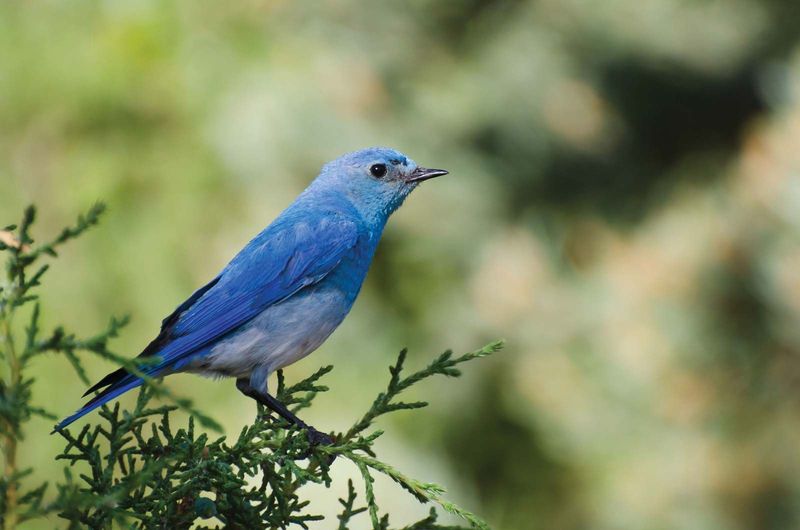
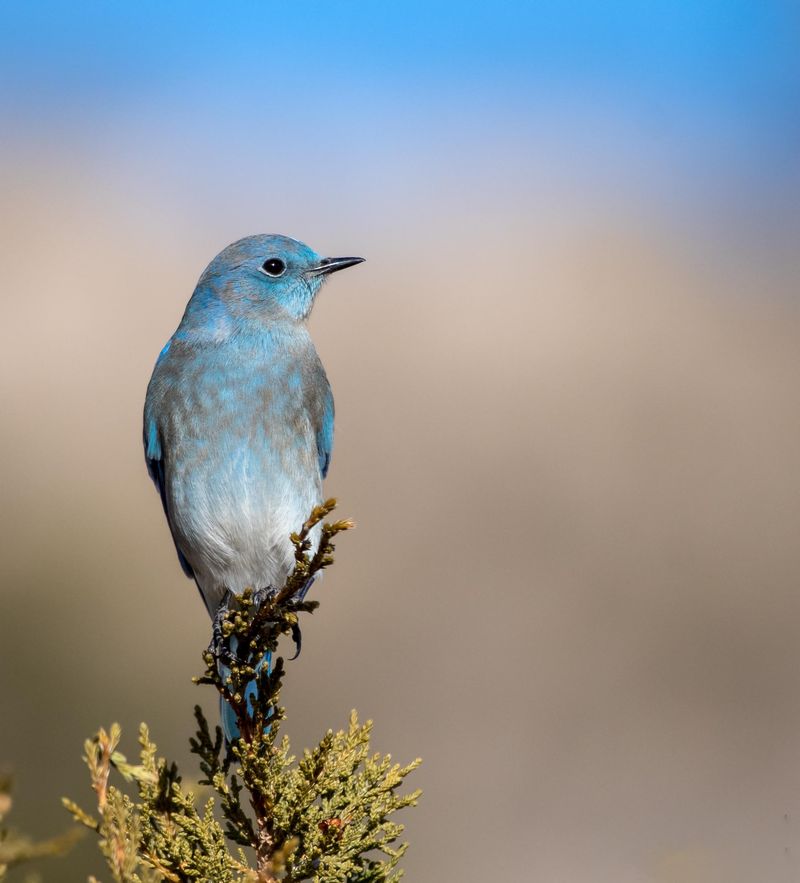
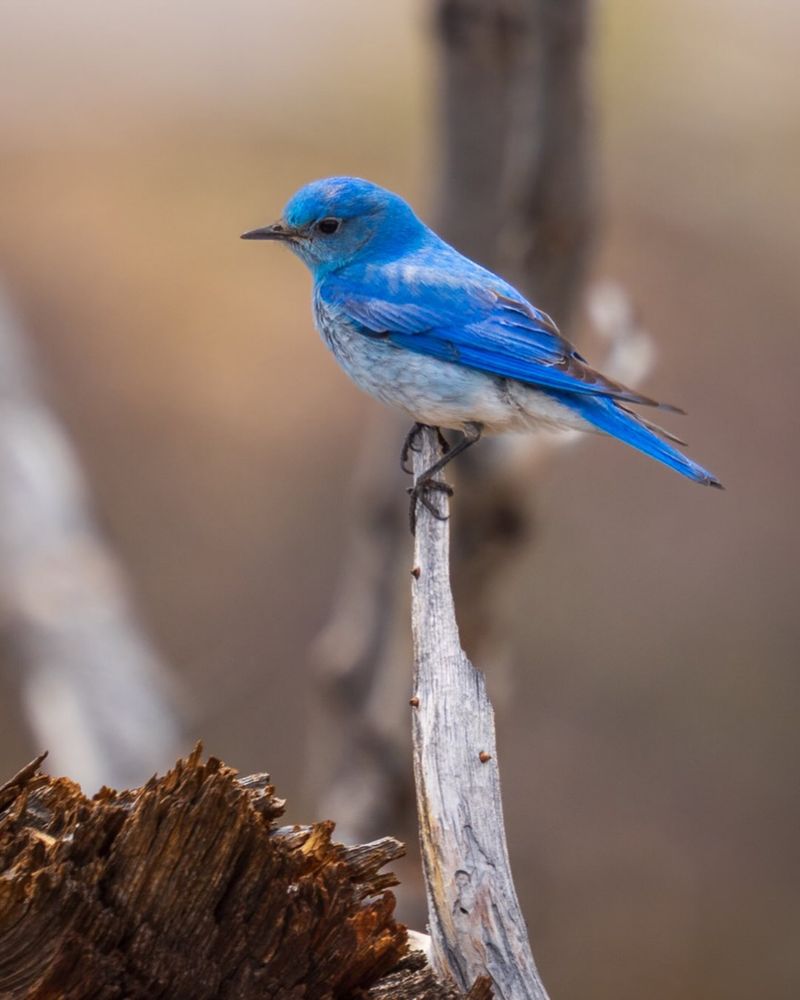
Spotting a mountain bluebird is a little like finding a piece of the sky that fell to earth. The males are a brilliant sky blue from head to tail. Their bellies are a paler blue, almost like faded denim.
Females look quite different. They are mostly gray-brown with soft blue tints on their wings and tails. When a female opens her wings, those blue feathers really pop.
Your Texas Garden Changes Every Week. Your Plan Should Too.
Gardening in Texas changes quickly throughout the season. Every Friday you’ll receive a simple weekly plan showing exactly what to plant, prune, fertilize, harvest, and protect so you never miss the right timing.
Now for the trick that helps you name the bird for sure. Eastern and western bluebirds both have orange or rusty-colored chests.
Male mountain bluebirds never do. Females usually show a gray or grayish-buff chest rather than the stronger orange of other bluebirds.
So if you see a blue bird with a reddish chest, it is probably one of the other two kinds. If the chest is pale blue or gray, you are likely looking at a mountain bluebird. That one clue can save you a lot of guessing.
Size and shape help too. Mountain bluebirds are about seven inches long, a bit bigger than a sparrow. They have longer wings and a slimmer look than their bluebird cousins.
Some people mix them up with blue jays or indigo buntings. Blue jays are bigger and have crests on their heads, plus black and white markings. Indigo buntings are a deeper blue and usually are not around in winter.
Want a handy tip? Snap a quick photo with your phone, even if it is blurry. Later, you can zoom in and check the chest color at home.
A free app like Merlin Bird ID can also help. It lets you compare your sighting with real photos. Before long, you will recognize these birds in a heartbeat.
They Travel In Winter Flocks
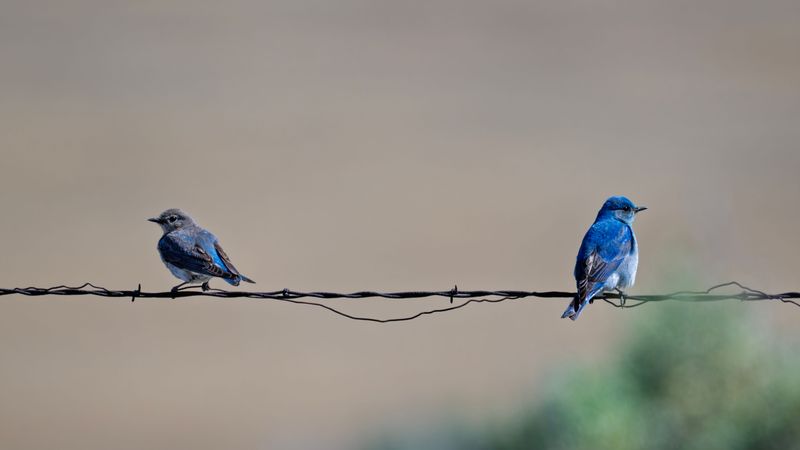
One bluebird is lovely, but a whole crowd of them is unforgettable. During winter, mountain bluebirds often move around in flocks. Some groups have a dozen birds, while others can have a hundred or more.
Why stick together? Being in a group helps them stay safe. More eyes mean a better chance of spotting a hawk before it gets too close.
Flocks also make finding food easier. When one bird discovers a bush loaded with berries, the others quickly notice. Soon the whole gang is sharing the meal.
Watching a flock land is a real treat. They might drop into an open field or line up along a fence. From a distance, it can look like someone sprinkled bits of blue sky across the ground.
Sometimes these flocks mix with other birds. You may spot them traveling near western bluebirds, robins, or Townsend’s solitaires. Each of those birds also enjoys winter berries.
Flocks tend to wander quite a bit. They move from place to place depending on where food is easiest to find. A field packed with birds one day might be empty the next.
That means you should not give up if you miss them. Check the same area again in a few days. The flock could circle back once it eats through other spots.
When you do find a group, try to keep your distance. Stay in your car or move slowly if you are on foot. Quick movements can send the whole flock flying.
Counting them can be a fun challenge for families. Try guessing the number, then count carefully. You might be surprised how many blue birds fit on one fence line.
A Unique Way Of Hunting
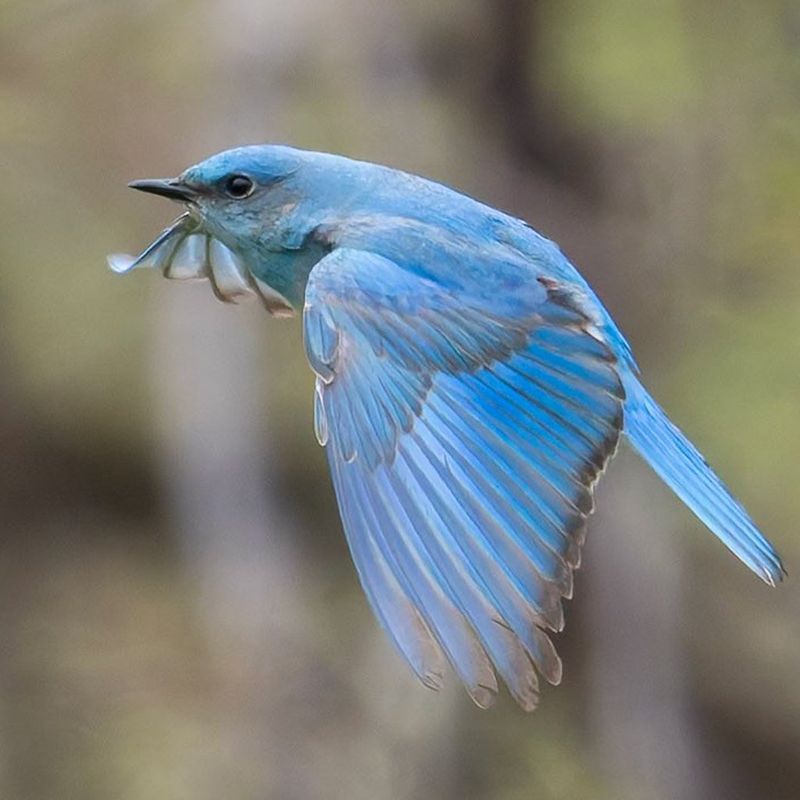
Ever seen a bird act like a tiny helicopter? Mountain bluebirds are famous for a cool hunting move called hovering. They flap their wings fast and stay in one spot in the air.
Usually they hover just a few feet above the ground. From up there, they scan the grass below for a meal. When they spot a bug, they drop straight down and grab it.
Other bluebirds tend to hunt differently. They often sit on a perch and wait, then swoop down when they see something. Mountain bluebirds do that too, but they hover much more often.
Scientists think hovering helps them hunt in wide open places. Out on the plains, there are not always handy branches or posts to sit on. Hovering lets the bird create its own lookout spot anywhere.
It does take a lot of energy, though. Flapping hard to stay still is tiring work. That is why you usually see them hover for only a few seconds at a time.
In warmer winter weather, you might catch them doing it in Texas. Grasshoppers, beetles, and caterpillars sometimes come out on sunny afternoons. The bluebirds are quick to take advantage of those snacks.
Watching this behavior is pure fun. Look for a small blue shape fluttering in place over a field. It almost looks like the bird is hanging on an invisible string.
Here is a helpful idea. Use binoculars and follow the bird as it drops down. You may even see it come back up with a bug in its beak.
Kestrels, a kind of small falcon, hover in a similar way. Seeing both birds do it can make a great nature lesson.
What They Eat In Winter
Summer menus and winter menus look very different for a mountain bluebird. In warm months, these birds eat mostly insects. Bugs give them lots of protein to stay strong and raise their chicks.
Winter changes everything. Cold weather sends most insects into hiding. So the bluebirds switch to a diet full of berries and small fruits.
Juniper berries are their top pick. Junipers grow all over parts of West Texas, including the Panhandle canyons. Their small, dusty blue berries hang on the branches through the cold months.
Other fruits help fill their bellies too. Mountain bluebirds will snack on hackberries, mistletoe berries, sumac, and wild grapes. Any plant that holds fruit into winter can become a food stop.
Fruit gives them quick energy. That energy helps them stay warm on chilly nights. A bird that eats well has a much better chance of getting through a hard winter.
Want to help these birds near your home? Planting native fruiting shrubs is one of the best things you can do. Junipers, hackberries, and possumhaw holly are good choices for Texas yards.
Some people also offer mealworms in a shallow dish. Bluebirds usually ignore regular seed feeders. Mealworms, though, can tempt them to visit.
Water matters just as much as food. A birdbath with fresh water can be a big draw, especially when ponds freeze. A heated birdbath works even better on cold mornings.
Fun fact time. Birds that eat juniper berries help spread new junipers. The seeds pass through their bodies and get dropped in new places, where they can grow into fresh trees.
Where And How To Spot One
Grab your coat, a thermos of hot cocoa, and a pair of binoculars. Finding a mountain bluebird in the Panhandle is easier than many people think. You just need to know where to look.
Open land is the key. These birds love grasslands, farm fields, and pastures. Thick forests and busy city streets are not their style.
Watch for them on perches. Fences, utility wires, and low shrubs are favorite resting spots. Their blue color often stands out against brown grass and gray skies.
Driving quiet country roads is one of the best methods. Go slowly and scan the fence lines as you pass. Your car can work like a hidden blind, since birds often stay calm around vehicles.
Pay extra attention near junipers or water sources. Stock ponds, creeks, and windmill tanks attract thirsty birds. Places with berry bushes can bring in hungry flocks.
Some great spots to try include Palo Duro Canyon State Park and Caprock Canyons State Park. Buffalo Lake National Wildlife Refuge near Umbarger is another good choice. Rural roads around Amarillo and Lubbock can also be rewarding.
Timing helps too. Mornings are usually busiest, when birds are out hunting for breakfast. Sunny days after a cold snap can be especially active.
Keep safety in mind on country roads. Pull fully off the road before stopping, and never cross onto private property without permission. Many ranchers are friendly, but always respect their land.
Bring a notebook to jot down what you see. Writing the date, place, and number of birds turns a simple drive into a fun project. You might even share your sightings on eBird to help scientists.