The Strange Spotted Insect That Showed Up In New Jersey Years Ago And Never Really Left
It hitched a ride into the United States on a shipment of stone, and nobody noticed until 2014.
That first sighting happened in a small township, and back then almost no one had heard of it. Now kids across New Jersey learn to spot it before they learn to ride bikes.
I still remember the first one I saw on my porch railing. Gray wings with black dots made it look like a polite little moth.
Then it jumped, flashed bright red underwings, and I nearly dropped my coffee. You might notice the clues before the culprit. Sticky patches show up on patio chairs.
Black film coats the hostas under the maple. Ants and wasps suddenly crowd the trunk of a tree they used to ignore. How did one tiny stowaway turn into a yearly guest that refuses to pack its bags?
Those Red Flashing Wings Belong to a Planthopper, Not a Moth
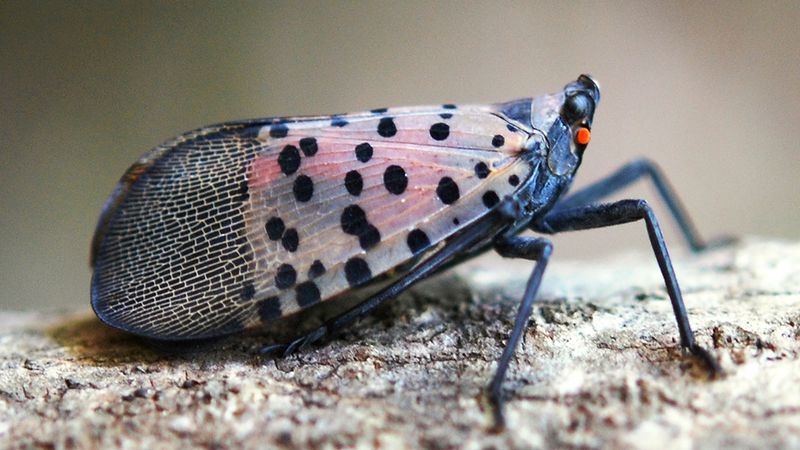
Despite the butterfly-like flair, the spotted lanternfly is actually a planthopper. It belongs to the same broad insect group as cicadas and leafhoppers, and it feeds by sipping plant sap instead of chewing leaves, which is why it worries so many New Jersey gardeners.
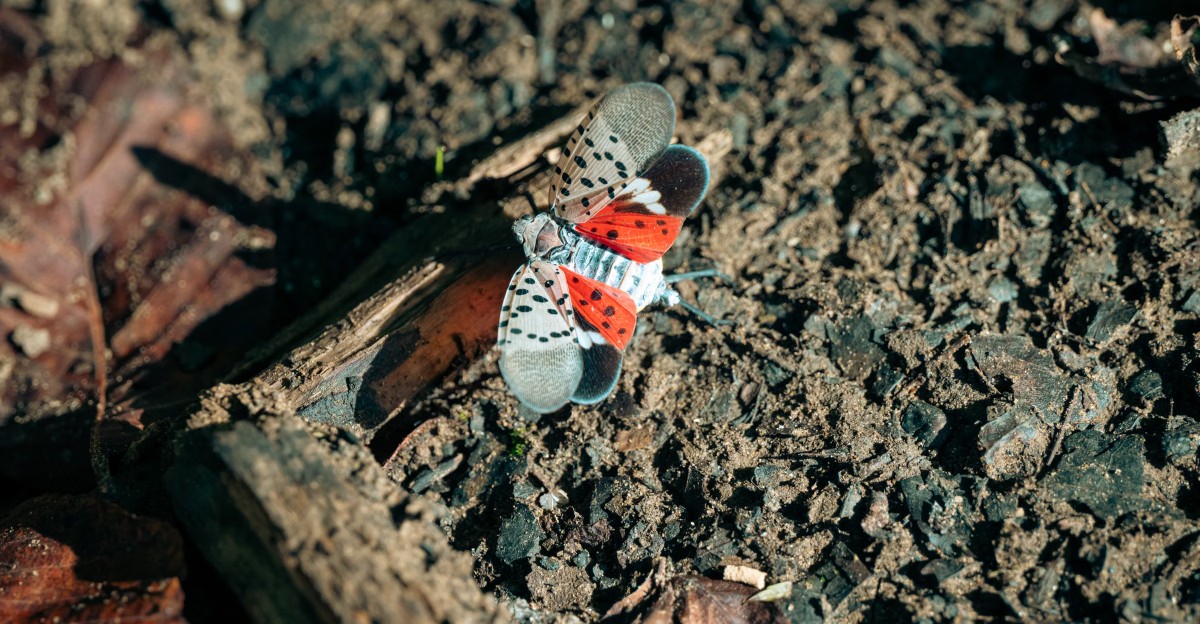
Adults stretch about one inch long. Their forewings are tan to gray with black spots and a netted pattern near the tips.
When they open up, you see red hind wings with black patches and a white band. The abdomen is yellow with bold black stripes.
Scientists know it as Lycorma delicatula. It comes from parts of China and nearby regions in Asia, and it showed up in South Korea and Japan before reaching the United States.
The first U.S. detection likely followed egg masses arriving on imported stone, and it has since become a familiar sight across New Jersey. Here is a fun bit of trivia. Even with wings, adults are fairly weak fliers.
They mostly hop, glide, and climb, which explains why so many spread by riding on cars, trucks, and trains.
Knowing the identity helps you skip confusion. Lots of New Jersey gardeners mistake it for a tiger moth or a ladybug cousin, so take a close look at those spots and the leaping habit before you act.
Mud-Like Egg Masses Explain Why the Lanternfly Keeps Coming Back
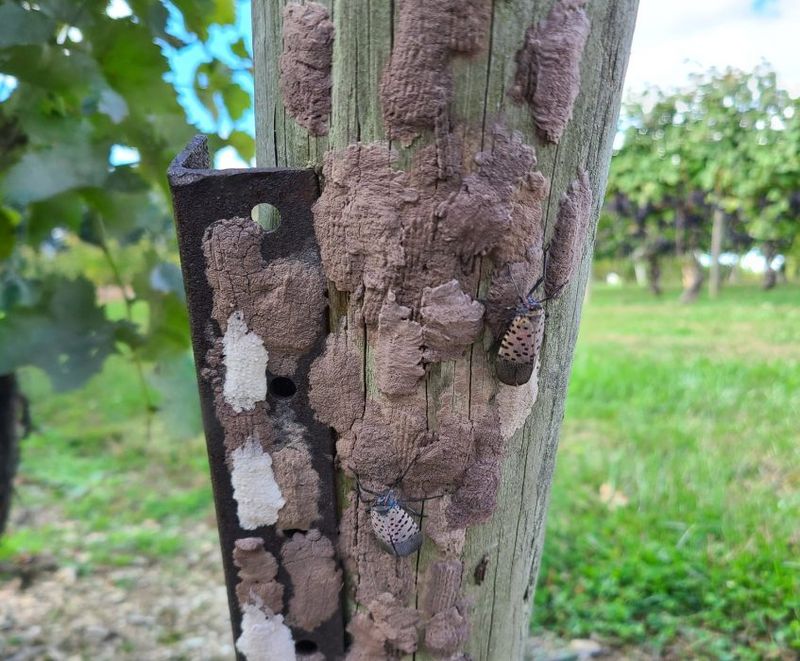
Persistence starts with a smear of gray goo. From late September into early winter, female lanternflies lay egg masses holding roughly 30 to 50 eggs each, then cover them with a putty-like coating.
That coating dries, cracks, and looks a lot like dried mud or a patch of lichen. I have walked past dozens on my own trees without a second glance.
Once you train your eyes, though, you start seeing them on bark, stones, fence posts, grills, and even trailer hitches.
The eggs sit through the cold months and hatch in spring, usually late April through June. That timing lets the next generation start fresh as new leaves appear.
These insects are not picky about surfaces. Females will lay on almost anything smooth, including vehicles and outdoor gear. That habit is the main reason the pest has jumped across state lines.
Penn State Extension and state agriculture officials point to winter egg hunts as one of the most useful things a homeowner can do.
Grab a plastic card, scrape the mass into a bag or jar of rubbing alcohol or hand sanitizer, and seal it. Each scraped mass means dozens fewer hoppers next summer.
Black-and-White Nymphs Turn Red Before Summer Ends
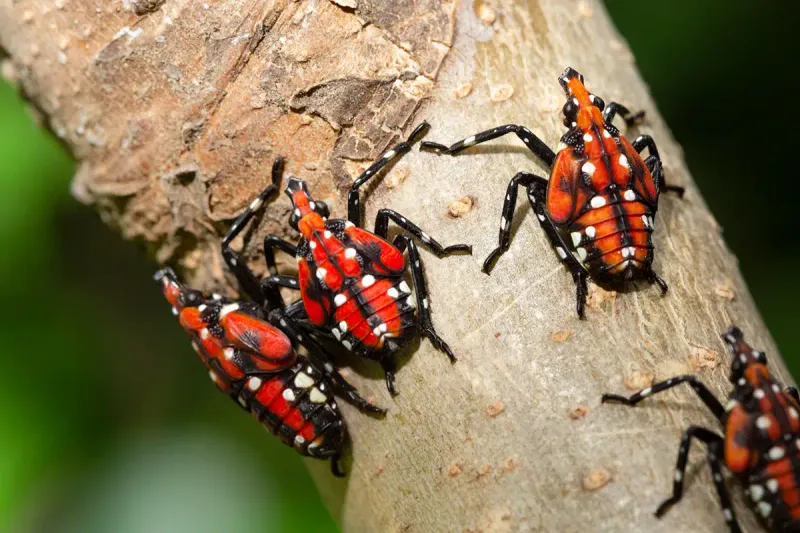
Tiny polka-dotted specks on your rose leaves in May might be babies of the same insect. Early lanternfly nymphs are black with bright white spots and measure only about the size of a pencil tip.
They go through four growth stages called instars. The first three stay black and white while slowly getting bigger.
By July, the fourth stage shows off bright red patches plus those same white spots, and it grows close to half an inch long.
Young nymphs are not as picky as adults. They feed on a wide range of plants, including garden perennials, young trees, and weeds.
As they mature, they shift toward favorite hosts like tree-of-heaven, grapevines, and maples.
Spotting them early gives you a head start. Nymphs climb tree trunks every day, then often fall off and crawl back up. That repeated climb is what makes trunk traps work so well.
A simple tip from my own yard helps a lot. Hold a container under a cluster and gently brush them in, or swat them with a flat hand.
Nymphs jump less far than adults, so summer mornings can be a surprisingly productive time to thin their numbers.
Sticky Honeydew and Sooty Mold Give Away Lanternfly Feeding
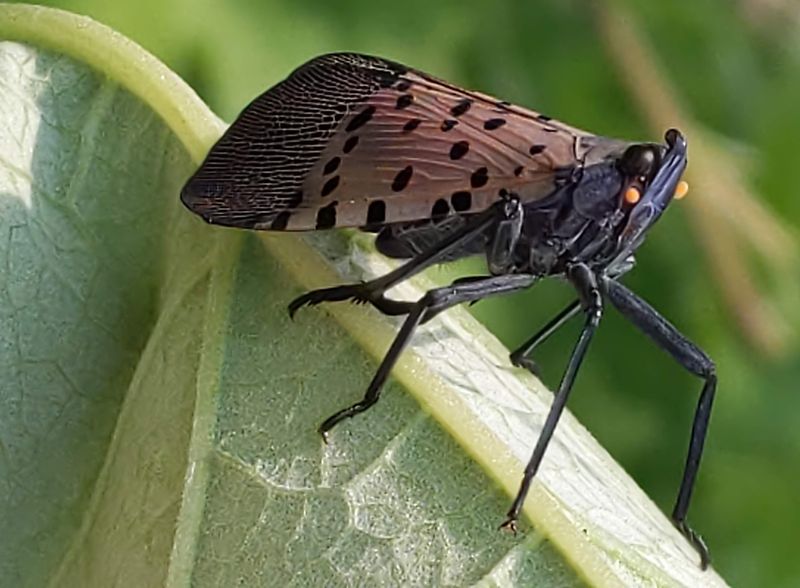
Shiny spots on your deck in August rarely come from tree sap alone. Lanternflies pierce bark and stems with straw-like mouthparts, sip large amounts of sap, and release the excess as a sugary liquid called honeydew.
Honeydew drips onto everything below. Patio furniture, cars, and low plants get sticky, and bees, wasps, and ants show up for a sweet snack. Before long, a black fungus known as sooty mold grows on that sugary layer.
Sooty mold does not infect plants directly. It can coat leaves heavily enough to block sunlight, which slows photosynthesis and adds stress to already busy plants. Some trees also show weeping wounds on their trunks where many insects feed.
Not every tree is affected in the same way. Research from Penn State suggests healthy shade trees often handle feeding with limited long-term harm.
Grapevines are a different story, and vineyards in the region have reported serious losses after heavy feeding.
For home gardeners, a hose and some patience go a long way. Rinsing honeydew off decks and favorite plants helps, and keeping trees well watered in dry spells gives them better odds of shrugging off feeding stress.
Squishing Adults and Scraping Eggs Actually Makes a Difference
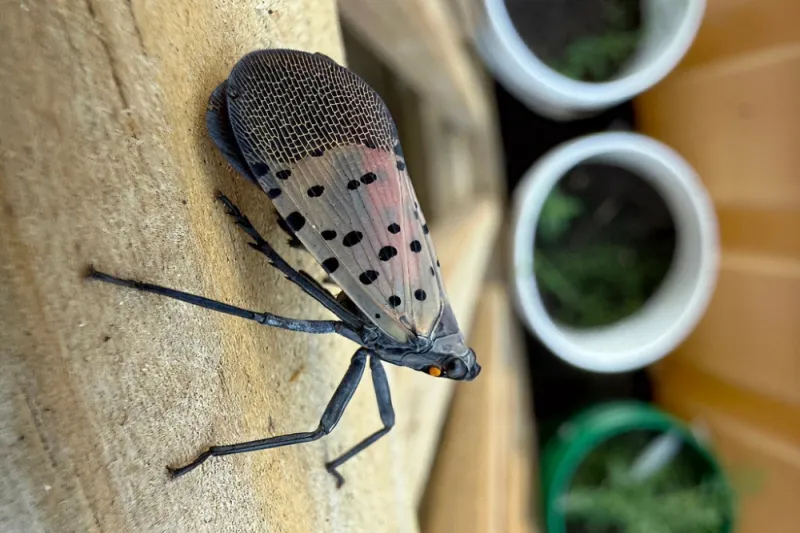
Plenty of New Jersey folks wonder if stomping one bug matters. Honestly, it does, especially when you combine squishing with egg scraping on your own property.
Adult lanternflies tend to leap forward when startled. I have better luck coming at them from the front with a flat hand or a shoe, so they jump right into the swat. A handheld shop vacuum works nicely for clusters on walls and fences.
Egg scraping matters even more during the dormant season, roughly November through early spring. A putty knife or old gift card lifts the mass right off. Drop it into a bag or jar with rubbing alcohol or hand sanitizer, seal it, and toss it.
Check spots people often miss. Look under picnic tables, inside wheelbarrows, behind downspouts, and on the undersides of branches. Firewood stacks and patio stones hide egg masses surprisingly well.
None of this will clear an entire neighborhood alone. Still, fewer egg masses in your yard usually means fewer sticky decks and stressed plants across New Jersey next summer.
Think of it as a neighborly chore, one that pays off when the whole street pitches in, from one New Jersey town to the next.
Circle Traps Beat Sticky Bands on Your Backyard Trees
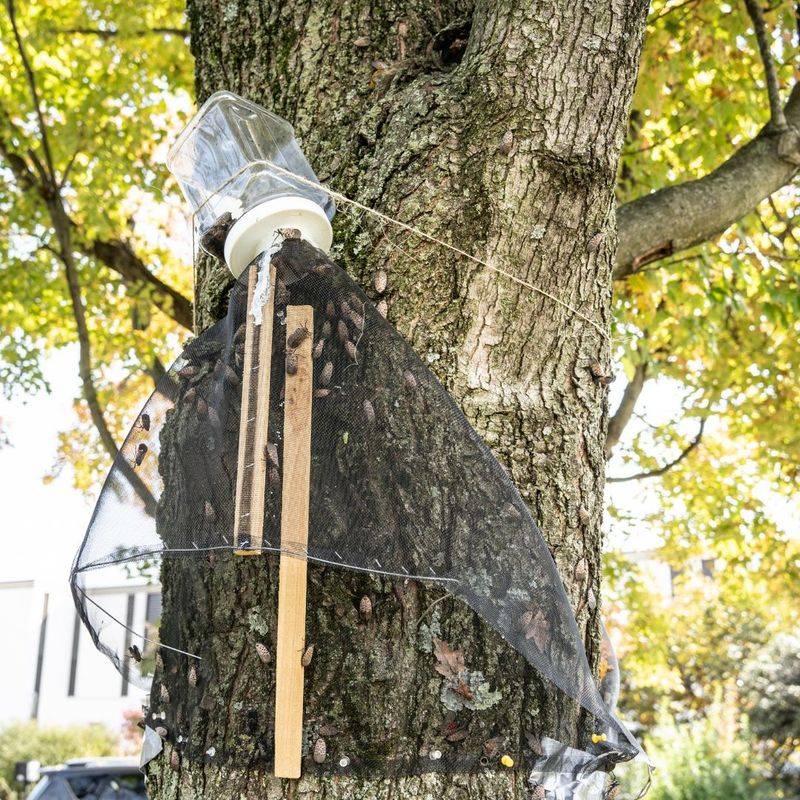
Sticky tape around a trunk sounds clever, yet experts now steer people away from it. Bands have caught songbirds, small mammals, and helpful insects, which is a heartbreaking trade for a few lanternflies.
Circle traps work smarter. These mesh funnel devices wrap around the trunk and guide climbing nymphs and adults up into a collection bag or jar.
Penn State Extension offers free instructions to build your own from window screen and a plastic bottle.
Place traps on trees with lots of activity, especially from late spring through fall. Empty them often, since a full trap stops catching much. I check mine every few days in July.
Tree-of-heaven deserves special attention, too. This invasive tree, Ailanthus altissima, is a favorite host for lanternflies.
Removing it reduces food and resting spots, although cut trees often resprout from roots, so stump or herbicide treatment may be needed.
Some land managers leave a few male tree-of-heaven trees as trap trees and treat them with a systemic insecticide. That approach works best with professional guidance.
For most backyards, pulling tree-of-heaven seedlings and setting up a circle trap offers a safe, effective combination.
Checking Your Car Helps Keep Lanternflies From Spreading Further
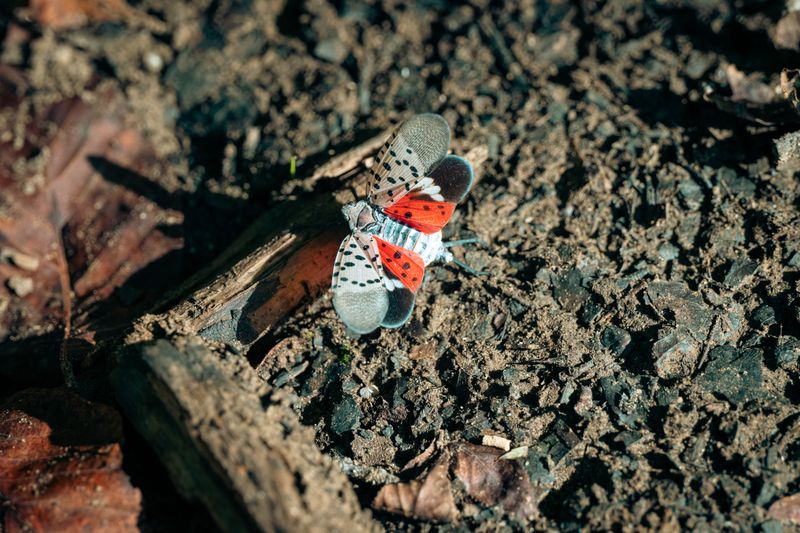
A road trip can turn you into an accidental lanternfly taxi. These insects love to hitch rides on bumpers, roof racks, firewood, and outdoor gear, which is how they have reached more than a dozen states.
Pennsylvania has a spotted lanternfly quarantine covering many counties. Businesses moving goods out of those areas need a permit, and residents are asked to inspect vehicles and items before traveling.
A quick walk around your car takes less than a minute. Seasons shape your plan. Scrape eggs in late fall and winter.
Watch for nymphs and set traps from spring into summer. Then squish adults and inspect vehicles from late summer until a hard freeze ends their run.
Insecticides can help with heavy infestations, but read labels carefully and avoid spraying blooming plants. Homemade mixtures sometimes harm plants more than pests, so skip anything that sounds too clever.
Reporting matters most in newer areas. If you find lanternflies outside known zones, send a photo to your state agriculture department.
This guest may have settled in for good, but steady, shared effort keeps its impact much smaller than it could be.