The Tiny Pest Silently Damaging California Fruit Trees This Summer
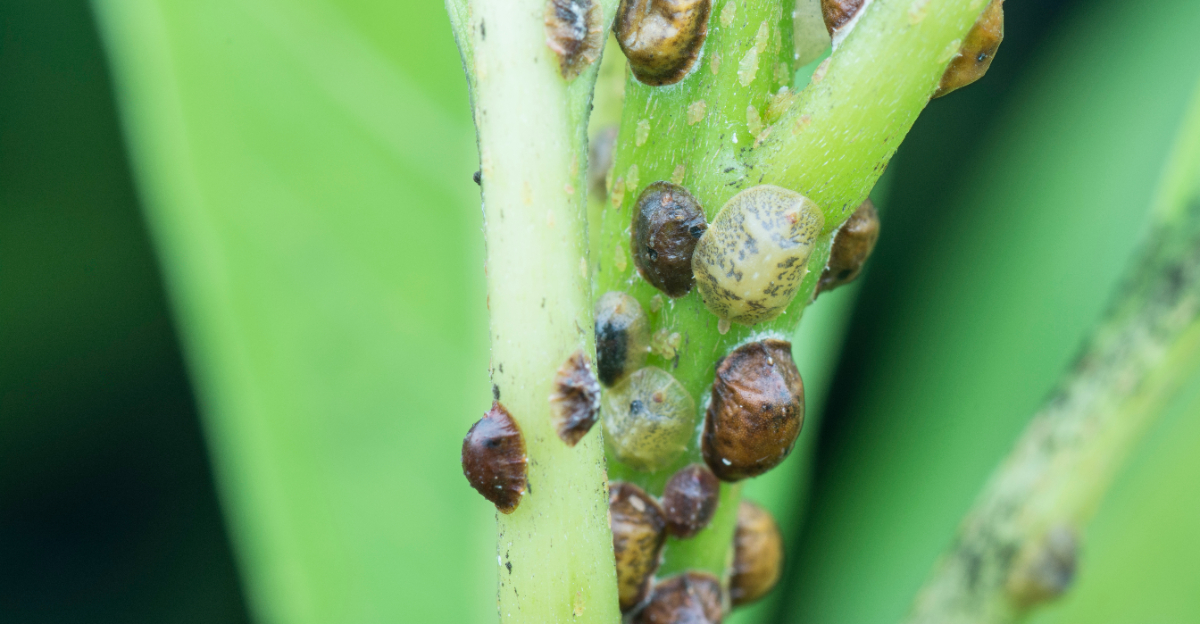
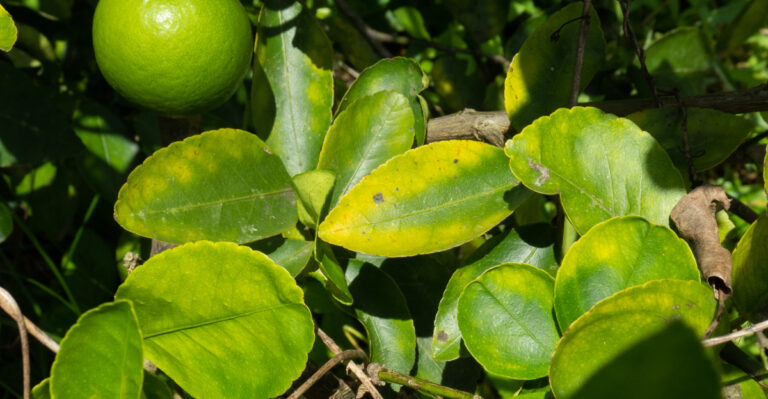
Fruit trees can look fine at a glance while a tiny pest is quietly causing trouble. Leaves may lose their shine, twigs may look weak, and sticky residue can show up before you ever spot the insect itself.
That is what makes scale so frustrating in California gardens. It does not rush around like other pests.
It clings to stems, branches, and leaves, often blending in like a small bump or shell. By the time many gardeners notice, the tree may already be stressed during the hottest part of summer.
Citrus, peaches, plums, figs, and other backyard favorites can all be affected. The key is learning to look closer before the damage becomes obvious.
Once you know the signs of scale insects, your fruit trees become much easier to protect.
1. Scale Insects Hide In Plain Sight
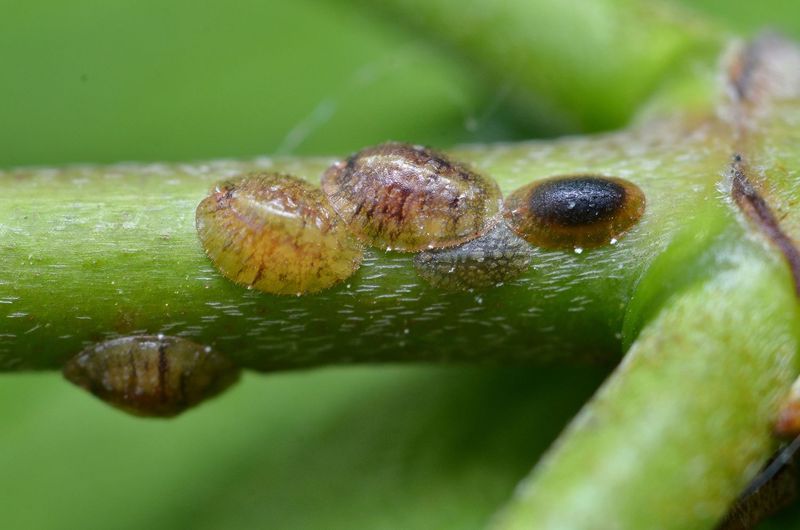
Most people walk right past a scale insect infestation without ever knowing it. These pests are masters of disguise.
They look so much like tiny bumps on bark that even experienced gardeners mistake them for a natural part of the tree.
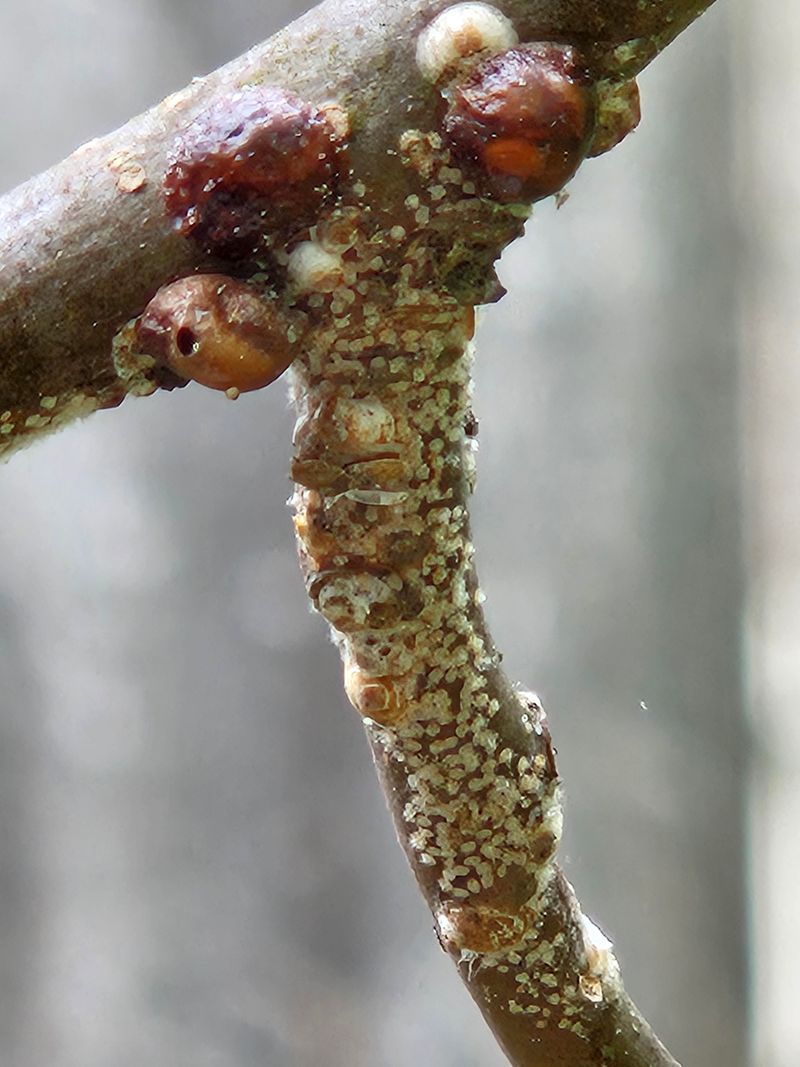
Scale insects cover themselves with a hard or waxy shell that acts like a shield. This shell protects them from rain, wind, and even some sprays.
Once they attach to a branch, they barely move at all. That stillness makes them even harder to spot.
There are two main types you will find on fruit trees. Hard scale insects have a firm, armor-like covering.
Soft scale insects have a waxier, more flexible coating. Both types blend into bark and stems with ease, especially on older trees with rough or textured surfaces.
Checking your trees regularly is the best habit you can build. Run your fingers along branches and look for anything that feels bumpy or raised where it should not be.
If those bumps do not brush off easily, you may be looking at scale.
A magnifying glass can help a lot. Up close, you might see tiny legs or a yellowish body underneath the shell.
Some scale insects look like small oyster shells, while others are round and brown.
Learning what they look like in your area gives you a real head start in catching them early before they spread to more branches or nearby trees.
2. Those Tiny Bumps Are Feeding On The Tree
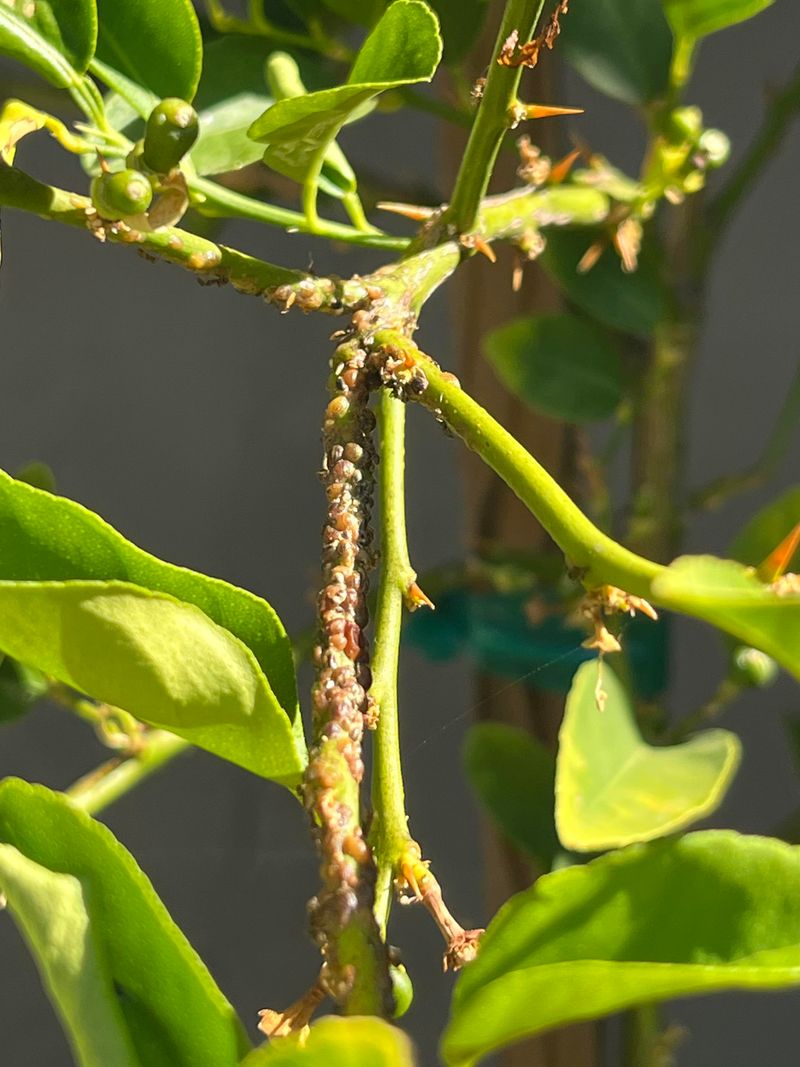
Here is something that surprises most gardeners: those small, harmless-looking bumps are actually eating your tree right now.
Scale insects feed by pushing a needle-like mouthpart into the bark or leaf tissue and sucking out the plant’s fluids.
Think of it like a slow leak in a water pipe. One scale insect on its own does not cause much damage.
But a full colony of hundreds or thousands of them feeding at once puts enormous stress on a tree. Over time, branches weaken, leaves yellow, and fruit production drops.
Scale insects target the phloem, which is the layer of tissue that carries sugars and nutrients through the tree. By tapping into this system, they steal the food the tree made through photosynthesis.
Your California Garden Changes Every Week. Your Plan Should Too.
Gardening in California changes quickly throughout the season. Every Friday you’ll receive a simple weekly plan showing exactly what to plant, prune, fertilize, harvest, and protect so you never miss the right timing.
The tree gets less of what it needs while the insects get more than enough to survive and reproduce.
Young trees and newly planted fruit trees are especially vulnerable. They do not have the deep root systems or stored energy that older trees rely on when stressed.
A heavy infestation on a young tree can set it back by an entire growing season.
Mature trees can handle more pressure, but they are not immune. Repeated infestations year after year gradually wear down even a healthy, well-established tree.
Watching for early signs of feeding damage, like pale or yellowing patches on bark, helps you catch the problem before it grows into something much harder to manage.
3. Sticky Leaves Are One Of The Biggest Warning Signs
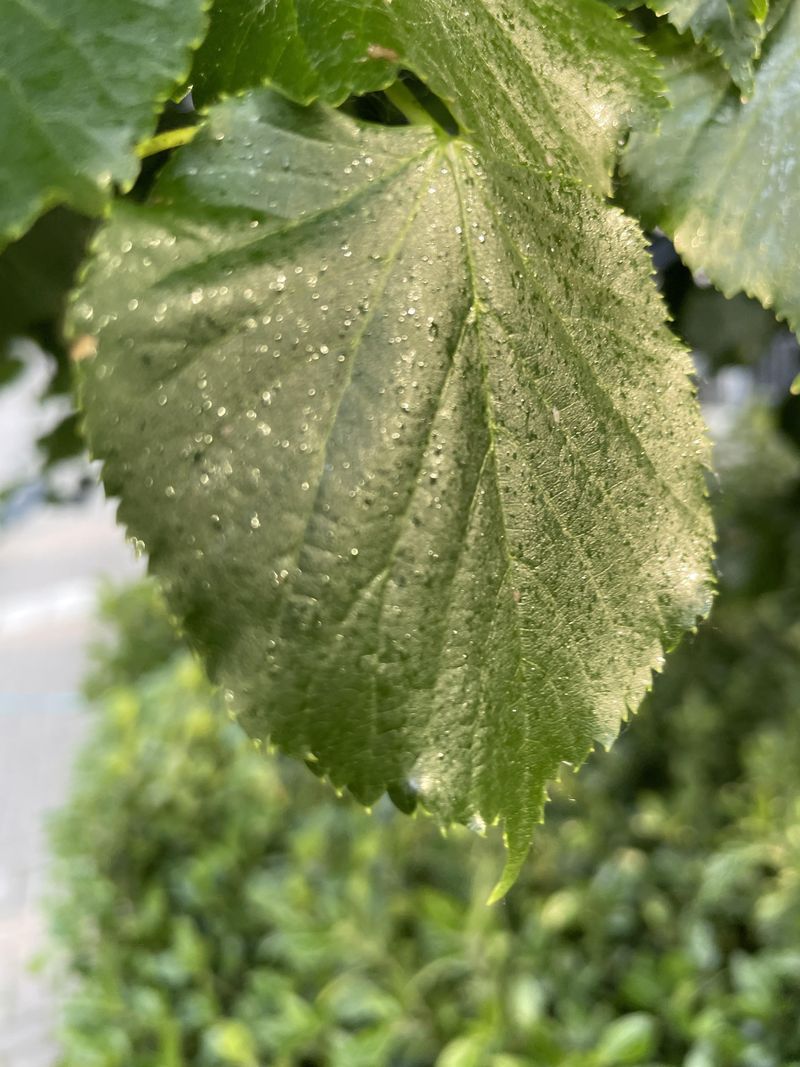
If you reach out to touch a leaf on your fruit tree and it feels sticky, that is not just dirt or sap. That stickiness is called honeydew, and it is a clear signal that scale insects are feeding nearby.
Honeydew is a sugary waste product that scale insects excrete as they feed on the tree’s fluids.
It drips down from the insects onto the leaves, branches, and sometimes even the ground below the tree.
Surfaces coated in honeydew feel tacky, almost like someone poured diluted syrup over the plant.
Leaves may also look extra shiny or glossy in a way that seems unusual.
Beyond being unpleasant to touch, honeydew creates real problems for the tree. It clogs the tiny pores on leaf surfaces called stomata, which the tree uses to breathe and release moisture.
When those pores get blocked, the tree cannot function as efficiently as it should.
Honeydew also attracts other insects. Bees, wasps, and flies are drawn to the sweet residue.
This extra activity around a tree can sometimes be a clue that something is wrong, even before you spot the scale insects themselves.
Checking the undersides of leaves is a smart move when you notice stickiness. Scale insects often cluster there, away from direct sunlight.
If you see waxy bumps or crusty patches on leaf undersides along with the sticky coating on top, you are almost certainly dealing with a scale infestation that needs attention soon.
4. Black Sooty Mold Usually Follows A Scale Infestation
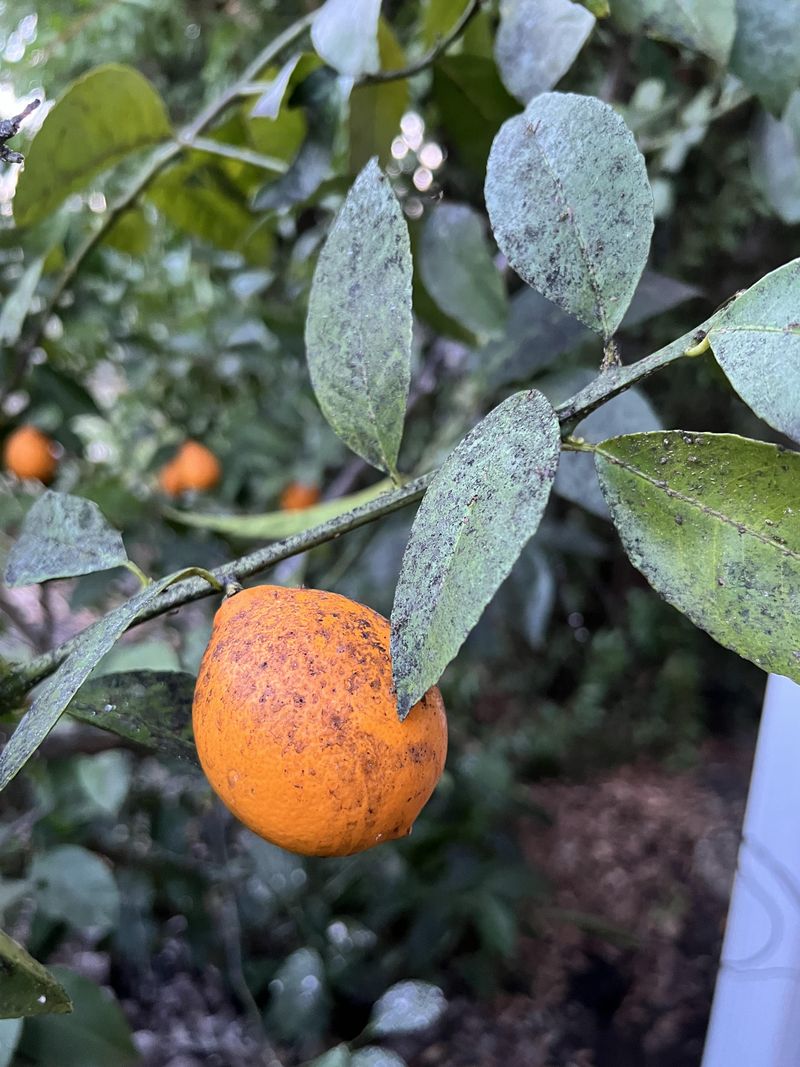
After honeydew coats the leaves and branches, something else shows up quickly: a dark, powdery coating that looks like soot from a chimney. Sooty mold is a fungus that grows on top of the honeydew left behind by scale insects.
It spreads fast and covers large areas of the tree in a matter of weeks.
At first glance, sooty mold might look like the tree is dirty or scorched. The black coating can be alarming, especially if you have never seen it before.
But sooty mold itself does not attack the tree directly. The real problem is what it does to sunlight.
Leaves covered in black mold cannot absorb sunlight the way they normally would. Photosynthesis slows down.
The tree produces less energy, which means less growth, fewer flowers, and smaller fruit. On heavily affected trees, entire branches can look black and lifeless even though the wood underneath is still alive.
Getting rid of sooty mold starts with controlling the scale insects that are producing the honeydew. Once feeding stops, no new honeydew forms, and the mold eventually dries up and flakes away.
Wiping leaves with a damp cloth or spraying with water can help speed up the process.
Neem oil sprays can also help by treating both the scale insects and the mold at the same time. Always follow product directions carefully.
Addressing sooty mold quickly protects the tree’s ability to produce energy and keeps fruit quality from dropping further during the summer months.
5. Ants Often Protect Scale Insects From Predators
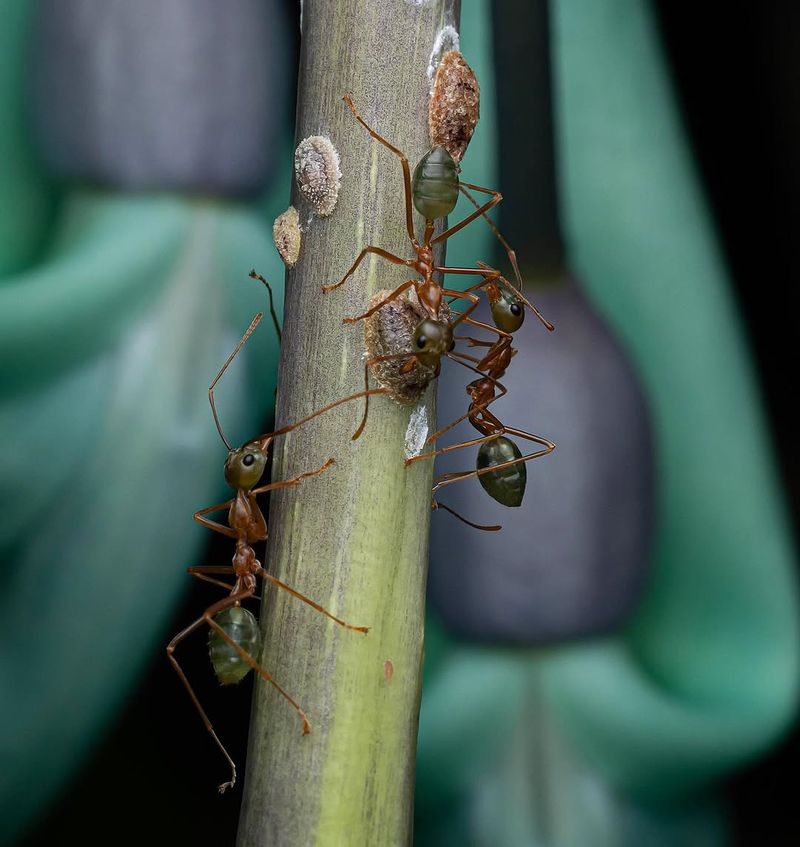
You might not expect ants to be part of a scale insect problem, but they play a bigger role than most people realize. Ants are attracted to the honeydew that scale insects produce.
Once they discover that a tree is producing this sugary substance, they start protecting the insects that make it.
Ants actively chase away or attack the natural enemies of scale insects. Ladybugs, parasitic wasps, and lacewings are all predators that would normally help keep scale populations under control.
When ants guard the scale insects from these helpful bugs, the pest population grows much faster than it would on its own.
Watching for ants marching up and down your fruit tree trunks is a smart early warning habit.
A steady trail of ants on a tree trunk, especially one heading up into the canopy, often points to a honeydew-producing pest problem somewhere above. Scale insects are one of the most common causes.
Controlling ants is an important part of managing scale infestations. Wrapping tree trunks with sticky tape or applying a non-toxic sticky barrier around the base can stop ants from climbing up.
This gives natural predators a better chance to move in and reduce the scale population on their own.
Keeping mulch and soil away from direct contact with the tree trunk also helps. Ants build pathways through loose material.
Removing easy access routes from the ground up forces ants to find other food sources and leaves your tree’s natural defense system free to do its job.
6. Heat-Stressed Trees Get Hit Harder In Summer
Summer heat in our state is no joke, especially in inland valleys and southern regions where temperatures regularly climb above 100 degrees. Fruit trees under heat stress are already working overtime just to survive.
Adding a scale insect infestation on top of that creates a serious double threat.
When a tree is heat-stressed, it loses water faster than usual through its leaves. The root system works harder to pull moisture from the soil.
At the same time, scale insects are draining fluids directly from inside the tree. Both pressures happening at once can push a tree into rapid decline.
Heat also affects how well trees can defend themselves. Healthy trees produce chemicals that make them less appealing to pests.
Stressed trees lose that ability. Their natural defenses weaken, making it easier for scale insects to establish and spread without much resistance from the tree itself.
Proper watering during hot months gives trees the strength to cope with pest pressure. Deep watering once or twice a week is far more effective than light daily watering.
Deep watering encourages roots to grow further down into cooler, moister soil layers where they can access more water during heat waves.
Mulching around the base of the tree helps too. A three to four inch layer of wood chip mulch keeps soil moisture in and soil temperature down.
Combining good watering habits with regular pest monitoring during summer gives your fruit trees the best chance of staying healthy even when conditions outside are working against them.
7. Spraying Too Late Often Misses The Crawlers
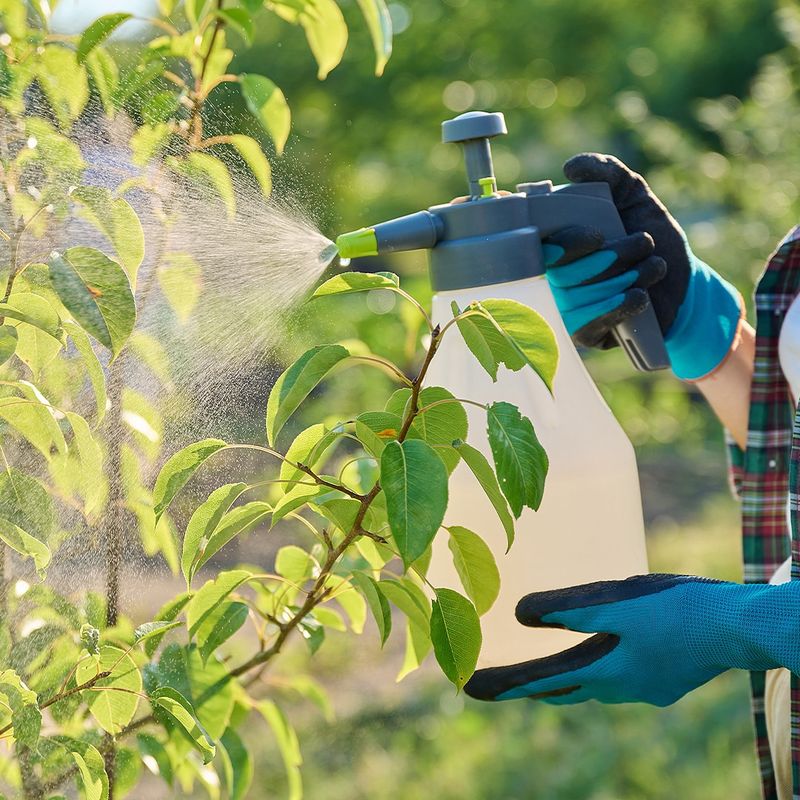
Timing is everything when it comes to treating scale insects. Most sprays work best during a very specific window in the scale insect life cycle called the crawler stage.
Crawlers are the newly hatched, mobile young that have not yet formed their protective shell. At this stage, they are soft, exposed, and vulnerable.
Once crawlers find a spot on the tree and settle down, they begin forming their hard or waxy covering. After that shell forms, most contact sprays cannot reach them effectively.
Spraying at that point often wastes product and gives gardeners a false sense of security while the infestation continues underneath.
Crawlers are so tiny that you cannot see them easily with the naked eye. One helpful trick is to wrap a piece of double-sided tape around a branch.
Crawlers that wander across it will stick, and you can check the tape with a magnifying glass every few days to see if they are active.
In our state, many scale species produce crawlers in late spring through midsummer. That window lines up with some of the hottest and busiest months of the year, which is why so many gardeners miss it.
Marking reminder dates on a calendar helps you stay ahead of the timing.
Horticultural oil and insecticidal soap are both effective options during the crawler stage. Both are relatively low-risk for people, pets, and beneficial insects when used correctly.
Always spray in the early morning or evening to avoid leaf burn and to protect pollinators that visit during the day.