The Tough Native Evergreen Ohio Gardeners Can Grow Instead Of Arborvitae
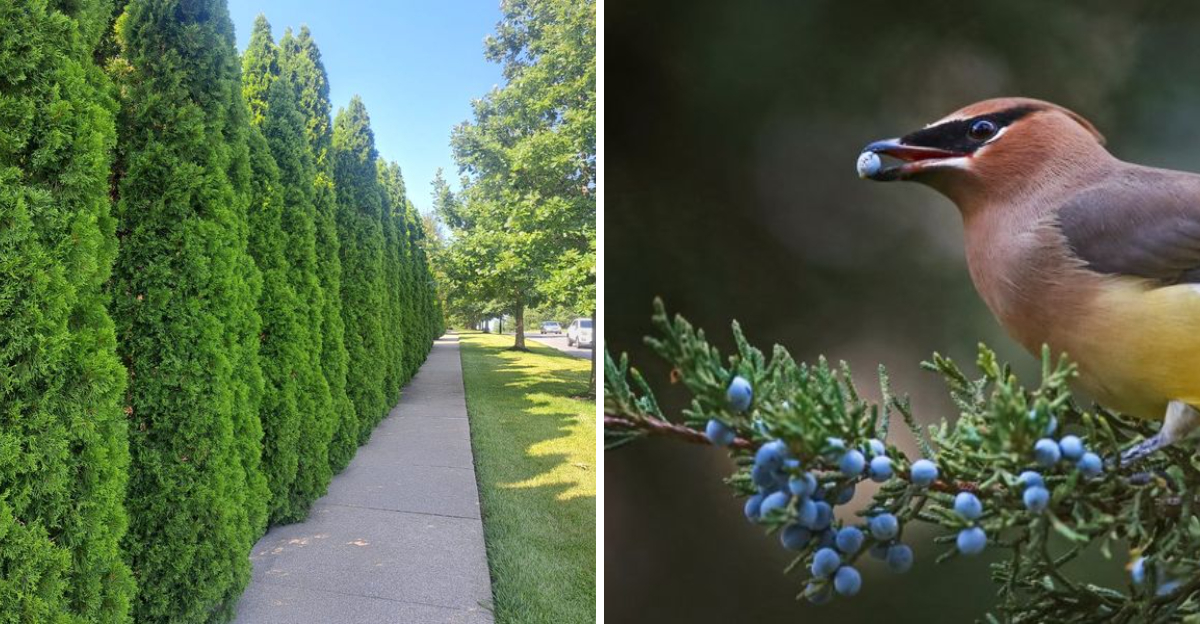
Arborvitae lines more Ohio property borders than almost any other plant, and the appeal is easy to understand. It grows tall, stays narrow, and creates a reliable screen without much fuss in the early years.
The long term picture is where things get complicated. Bagworms move through arborvitae plantings with remarkable speed, deer treat them as a reliable food source, and winter burn can undo years of growth in a single season.
Eastern redcedar has been growing in Ohio landscapes and wild spaces for centuries and quietly sidesteps many of those problems. It handles drought, poor soil, and full sun without complaint.
Birds rely on it heavily for both food and shelter. It provides the same privacy and structure that arborvitae promises, but with a toughness that holds up over time in ways that make the comparison hard to ignore.
For a screen that actually earns its place, Redcedar makes a strong case.
1. Meet Eastern Redcedar, Ohio’s Native Arborvitae Alternative
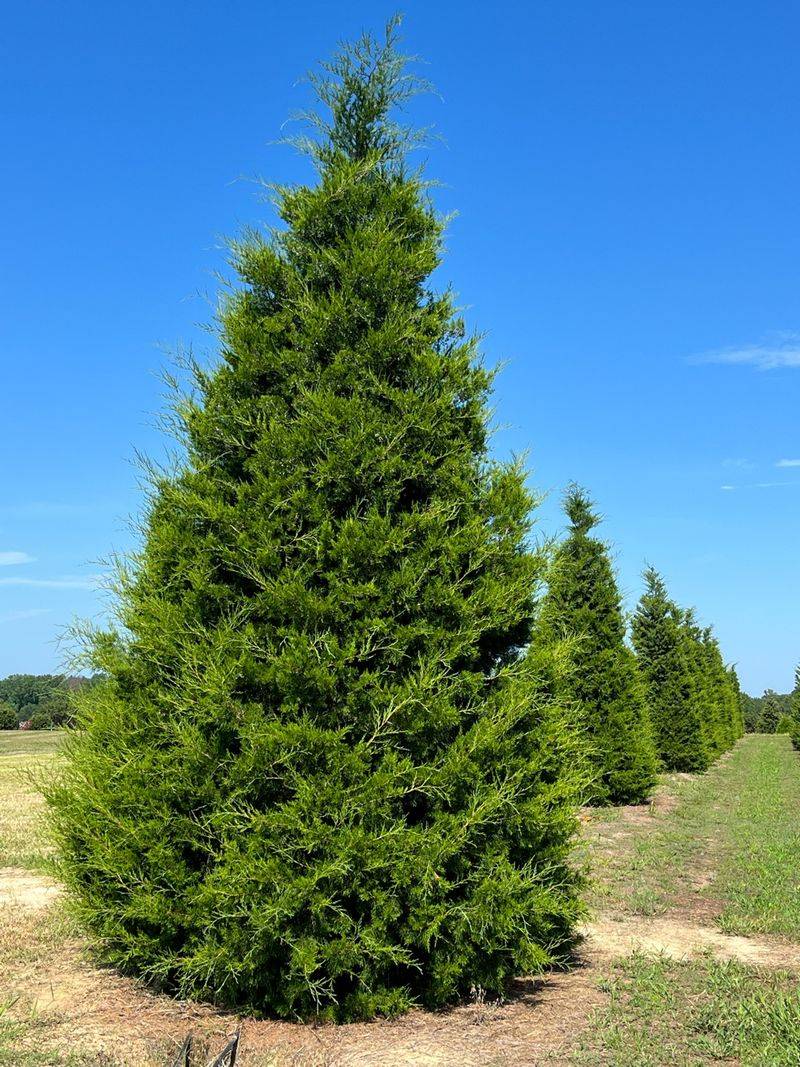
Eastern redcedar is the plant people often overlook because it feels so familiar. It shows up along old fence lines, sunny roadsides, field edges, and forgotten corners of the landscape, quietly doing what many planted evergreens struggle to do.
Botanically, it is Juniperus virginiana, which means it is not a true cedar at all. It is a native juniper with a long history in Ohio’s natural and working landscapes.
That matters when you are choosing an alternative to arborvitae. American arborvitae is native too, so this is not a simple case of native versus non-native.
The better comparison is about habit, site fit, and long-term toughness. Arborvitae often gives gardeners a softer, more formal screen.
Eastern redcedar brings a rougher, more natural character, with dense evergreen foliage, sturdy branching, and a shape that becomes more distinctive with age.
Young trees can look fairly narrow and upright, but mature trees develop more presence and individuality than a row of identical arborvitae ever will. For gardeners who want a perfectly clipped green wall, that difference may take some getting used to.
For gardeners who want privacy, structure, wildlife value, and a tree that looks rooted in Ohio’s open, sunny landscapes, it is exactly the point.
Eastern redcedar can do much of what people ask arborvitae to do, but with a wilder shape and a tougher personality in the right site.
It is not a perfect plant, and it is not one to drop into the ground without thinking. The biggest caution comes before the planting hole is ever dug.
2. But First, Read This Warning Before You Plant It
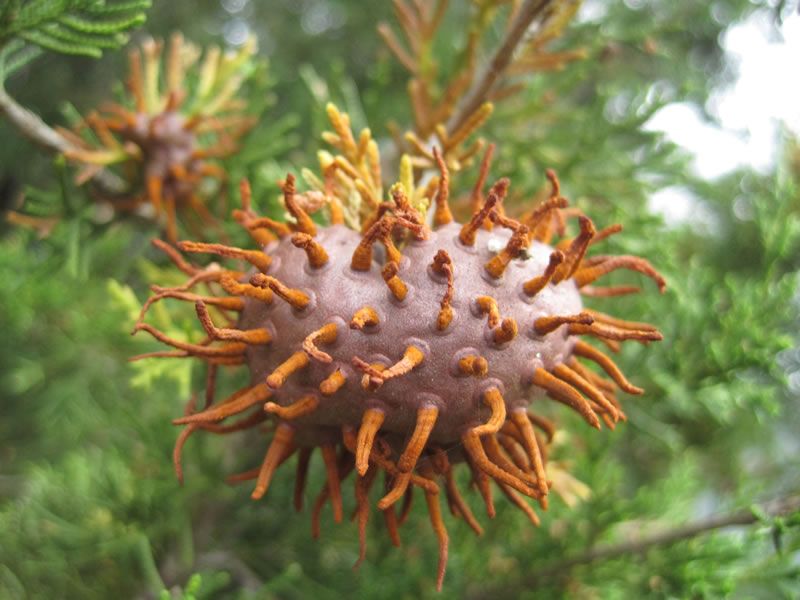
Cedar-apple rust is a real concern, and it needs to be addressed before anything else. Eastern redcedar and other junipers can serve as one of the two hosts in the cedar-apple rust disease cycle.
The fungus that causes cedar-apple rust requires both a juniper host and a rose-family host to complete its life cycle. When both plants grow near each other, the disease can spread back and forth between them.
Your Ohio Garden Changes Every Week. Your Plan Should Too.
Gardening in Ohio changes quickly throughout the season. Every Friday you’ll receive a simple weekly plan showing exactly what to plant, prune, fertilize, harvest, and protect so you never miss the right timing.
Rose-family plants that can be affected include apples, crabapples, hawthorns, quince, serviceberries, and related ornamentals.
If your yard has any of these plants, or if your neighbors grow apples or ornamental crabapples nearby, planting Eastern redcedar close to them is not a good idea.
This warning is especially important for anyone with a home orchard or an edible garden that includes apples or quince. It also matters for landscapes that feature ornamental crabapples as a focal point.
Cedar-apple rust will not necessarily ruin every tree in every yard, and many landscapes handle the combination without serious problems. However, the risk is real enough to take seriously.
Extension sources and plant pathologists consistently recommend keeping junipers and rust-prone rose-family plants separated where possible. The orange, gelatinous galls that appear on juniper branches in spring are a sign the disease cycle is active.
If cedar-apple rust has already shown up in your area, adding more juniper hosts close to susceptible plants can make the problem worse. This is not a reason to avoid Eastern redcedar entirely, but it is a reason to think carefully about placement before you plant.
3. Use It For Evergreen Privacy And Year-Round Structure
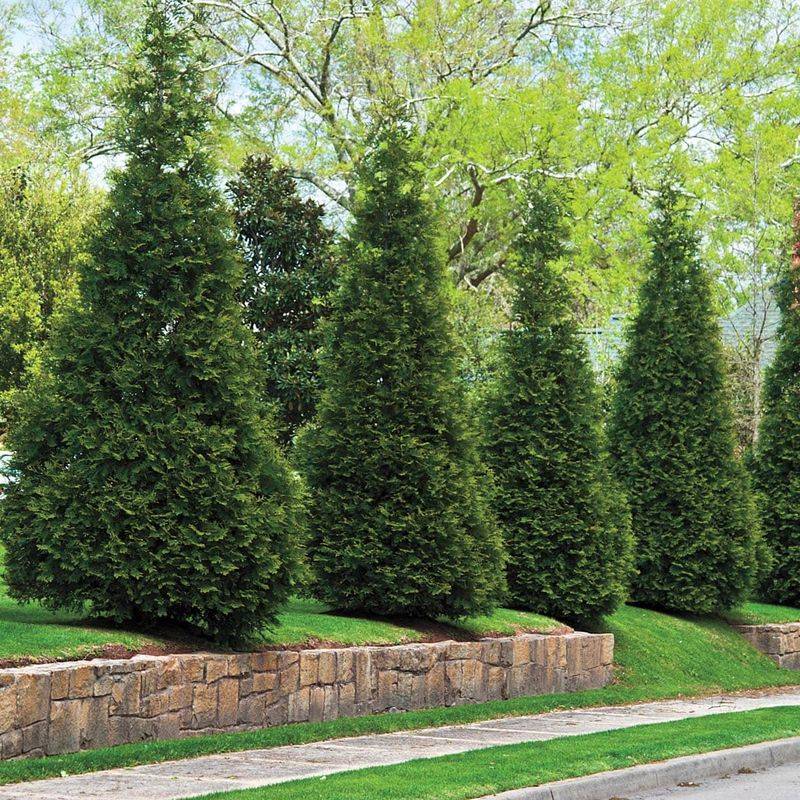
Year-round privacy is one of the main reasons homeowners reach for arborvitae. Eastern redcedar can deliver that same evergreen coverage with a more rugged, natural form.
Its dense foliage stays green through every month of the year, making it a reliable screen even when everything else in the landscape has gone bare. Planted in a row or staggered grouping along a property line, it can block views and soften a fence line.
It can also create a green backdrop that holds visual interest in every season.
The look is different from arborvitae, and that is worth being honest about. Eastern redcedar has a more irregular, windswept silhouette as it matures.
It will not give you the tight, clipped, formal hedge wall that arborvitae can create when planted closely together.
What it will give you is a stronger, more naturalized evergreen screen that blends into the surrounding landscape and offers real habitat value at the same time.
For blocking wind, Eastern redcedar is actually quite capable. Its dense branching and year-round foliage make it a practical windbreak choice.
It works well for open, exposed properties, rural edges, and sunny borders where wind protection matters in winter. Many native plant gardeners and rural landowners across the state already use it for exactly this purpose.
If your goal is a privacy planting that looks like it belongs in the landscape rather than a nursery catalog, Eastern redcedar delivers that with character. It pairs well with other native shrubs and trees along natural borders.
Together, they create a layered screen that supports birds and insects far better than a single-species arborvitae row.
4. Give It Full Sun And Well-Drained Soil
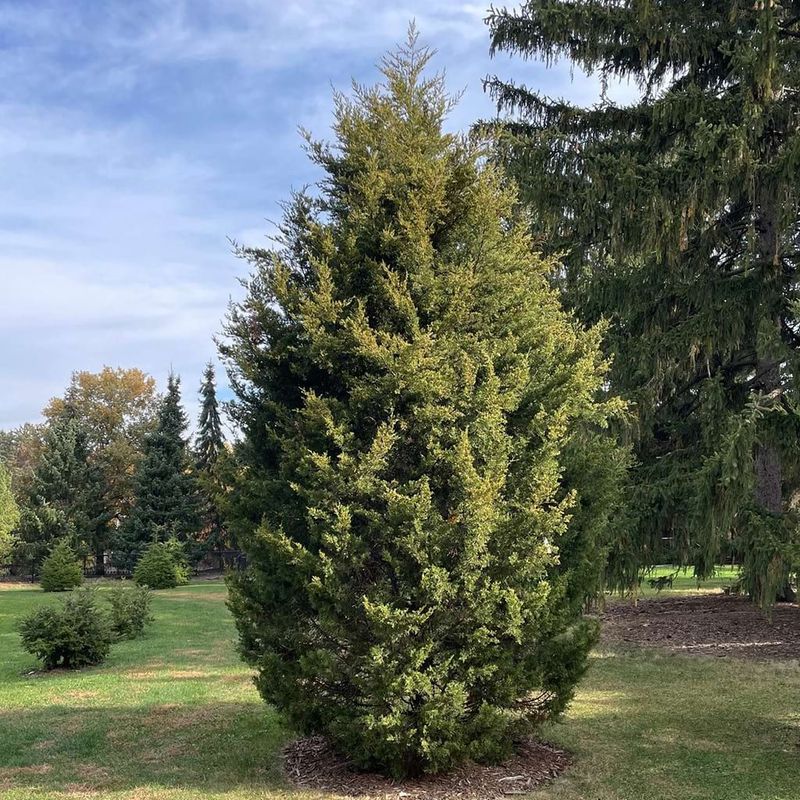
Sunny, open spots are where Eastern redcedar truly thrives. It is a full-sun plant, which means it needs at least six hours of direct sunlight each day to perform well.
In shadier conditions, the foliage can thin out, the natural upright form can become loose and irregular, and the tree generally struggles to reach its potential.
Place it where the sun hits it fully and consistently, and it will reward you with dense, healthy growth year after year.
Soil drainage matters just as much as sunlight. Eastern redcedar does best in well-drained soil and handles a wide range of soil types.
That includes sandy, rocky, and even poor soils that would stress many other landscape plants. What it does not handle well is standing water or consistently soggy ground.
Roots sitting in wet soil can lead to root problems that weaken the tree over time.
Local clay soil is common across much of the state, and it can hold water longer than Eastern redcedar prefers. If your yard has heavy clay, avoid planting in low spots, depressions, or areas where water pools after a rain.
A slight rise, a slope, or a spot with naturally faster drainage will serve the tree much better. Raised planting with amended backfill can help in borderline situations, but the best approach is simply choosing a site where drainage is already reliable.
Once established in a good spot, Eastern redcedar is impressively tough. It handles summer heat, dry spells, and cold winters without much fuss, making it one of the more low-maintenance native trees available to local gardeners.
5. Plant It Where Its Mature Size Has Room
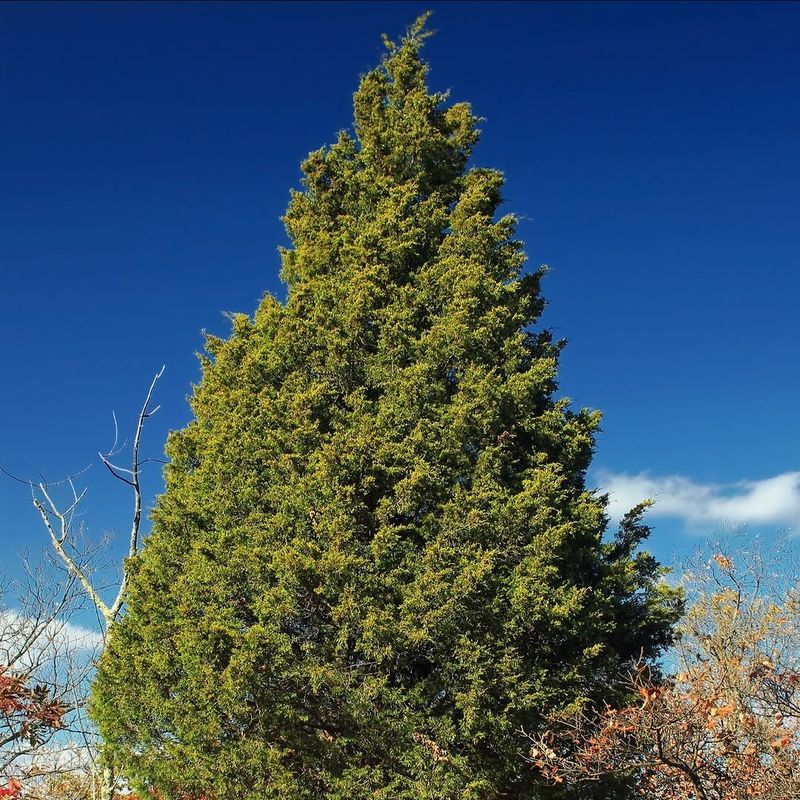
Underestimating how large Eastern redcedar can grow is one of the most common planting mistakes. This is a real tree, not a tidy foundation shrub.
Depending on the site and the cultivar, Eastern redcedar can reach heights of 40 to 50 feet or more over time, with a spread that may reach 15 to 20 feet wide. Some trees grown in ideal open conditions can grow even larger.
Planting one too close to a house, patio, driveway, or sidewalk creates problems that only get harder to solve as the tree matures.
Root spread, canopy width, and overall scale all need to be part of your planning before you put a young tree in the ground. Give it genuine distance from buildings and structures.
Allow enough space between trees in a row so that airflow remains good as they fill in. Poor airflow in a crowded planting can increase humidity around the foliage and create conditions that favor disease and pest pressure over time.
Utility lines overhead are another concern worth checking before you plant. A tree that reaches 40 or more feet will eventually conflict with power lines if it is placed directly beneath them.
Spacing from fences also matters because the canopy can lean into and over fence lines as the tree matures. Planning for mature size upfront saves a lot of frustration later.
Columnar cultivars of Eastern redcedar can offer a narrower footprint if space is genuinely limited. Even named selections available at native plant nurseries need thoughtful placement and honest size expectations from the start.
6. Let Its Berries Feed Birds Through The Cold Months
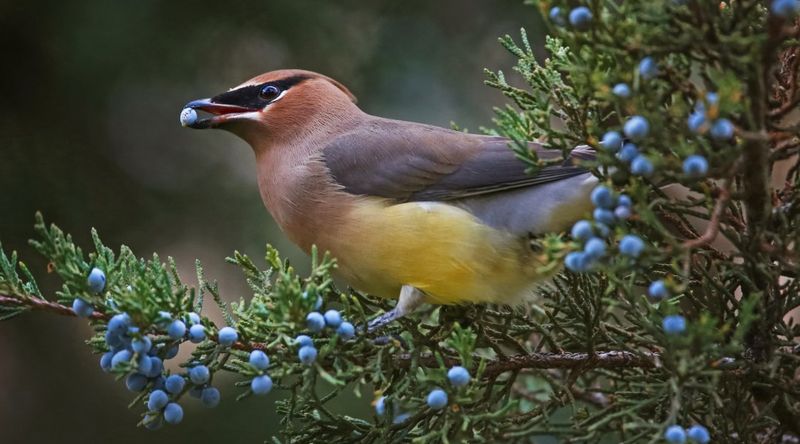
Few native trees offer winter bird food as reliably as a female Eastern redcedar. The small, bluish-gray, berry-like structures that appear on female trees are technically seed cones, but birds treat them like fruit.
Cedar waxwings are probably the most well-known fan of these cones, and flocks of them can descend on a fruiting tree in winter and strip it bare in a matter of days.
Robins, mockingbirds, bluebirds, yellow-rumped warblers, and other species also eat them regularly through the colder months.
Beyond food, the dense evergreen branching of Eastern redcedar provides shelter and cover that birds rely on when temperatures drop and wind picks up.
Smaller songbirds use the thick interior branches for roosting and protection from hawks and harsh weather.
In a landscape that offers very little cover in winter, a well-placed Eastern redcedar can become one of the most active spots for bird activity on the entire property.
It is worth being straightforward about one thing: a single tree will not turn your yard into a wildlife sanctuary overnight. The benefits build over time as the tree matures and as more birds learn it is there.
Planting it alongside other native shrubs and trees that offer complementary food and shelter creates a much richer habitat than any single plant can provide alone.
If you already have native berry-producing shrubs like native viburnums or native hollies nearby, Eastern redcedar fits naturally into that kind of layered planting.
The wildlife value is real and well-documented, but it works best as part of a broader native planting strategy rather than a standalone solution.
7. Choose It For Tough Spots, Not Wet Shade
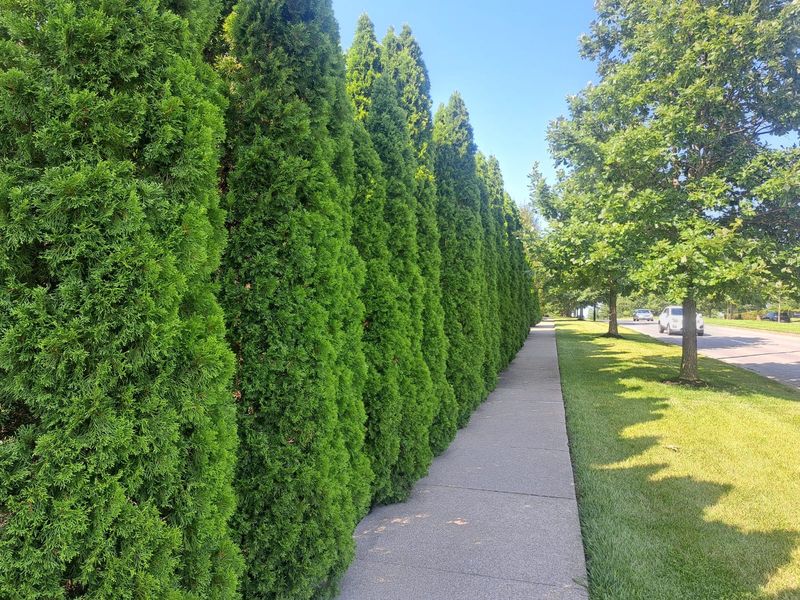
Sunny, open, and dry describes the kind of spot where Eastern redcedar genuinely earns its reputation. Slopes with fast drainage, rural field edges, and open windbreak rows are all excellent placements for this tree.
Naturalized borders along fence lines and exposed sunny corners of larger properties also work well. It handles heat, drought, poor soil, and cold wind better than most landscape plants, native or otherwise.
In the right spot, it asks for very little once established.
The wrong spots are just as worth knowing. Wet, shady areas are a poor match for Eastern redcedar.
Placing it under a heavy tree canopy or in a low spot that stays damp after rain will stress the tree and limit its growth.
It is also a poor choice for cramped foundation beds close to the house, where mature size, root spread, and proximity to the structure will create ongoing conflicts.
Small city lots with tight planting spaces may not be the best fit unless you are committed to a narrower cultivar and careful long-term management.
Yards with apples, crabapples, hawthorns, or serviceberries growing nearby also remain a concern, as covered earlier in this article. That placement issue does not go away, and it is worth revisiting before you finalize where to plant.
For the right property, though, Eastern redcedar is a genuinely strong native choice. It offers evergreen structure, wildlife value, toughness, and a rugged connection to Ohio’s natural landscape that many formal arborvitae plantings struggle to match.
If your site fits, it is well worth the planting. If it does not, knowing that upfront saves everyone time and frustration.