These 8 Florida Shrubs Keep Blooming Almost All Year Long
A few ruby-throated hummingbirds skip the long flight south and spend the winter sipping nectar in Florida instead.
Part of the reason they stay is that certain backyard shrubs keep offering flowers long after most northern gardens have gone bare and brown.
It’s fascinating that a single shrub can push out new buds in nearly every month of the year here. With mild winters and long, warm summers, these plants have very few reasons to take a real break.
Even better, several of them need less fuss than a bed of annuals. Many shrug off heat and drought once their roots settle into sandy Florida soil for a season or two.
One planting can bring butterflies and hummingbirds to your yard for months. Which colorful shrubs made the list, and which one might suit your sunny corner?
1. Firebush
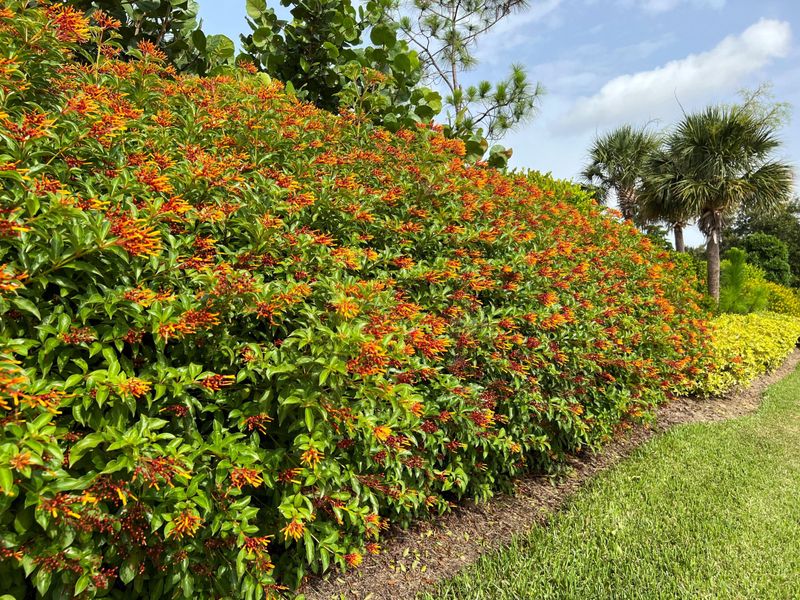
Hummingbirds treat a blooming firebush like a busy roadside snack stand, zipping in for those fiery tubular flowers all day. I love watching them hover at the orange-red clusters while butterflies wait their turn on nearby branches.
Firebush, known to botanists as Hamelia patens, is a native shrub that can reach eight to ten feet tall. Give it room to spread, and it fills a sunny border with soft green leaves and steady color.
Flowers keep coming through the warm months and often well beyond them in frost-free southern yards. Small berries form later in the year, and songbirds happily pick them off the stems in fall.
Plant it in full sun with well-drained soil, because shade means fewer blooms and a leggier shape. Once established, firebush handles heat and drought with ease, so you can mostly forget the hose.
North of the warmest zones, a hard freeze may knock the top growth back to the ground. Stay patient, since plants usually sprout again from the roots when spring warmth returns to the garden.
When shopping, look for the native variety, Hamelia patens var. patens, which local experts recommend for home landscapes. Some nursery plants labeled firebush are different types, so reading the tag carefully really pays off here.
I think every pollinator garden deserves at least one firebush tucked near a window for easy viewing. You will catch flashes of wings almost every morning, and that small show rarely gets old.
2. Thryallis
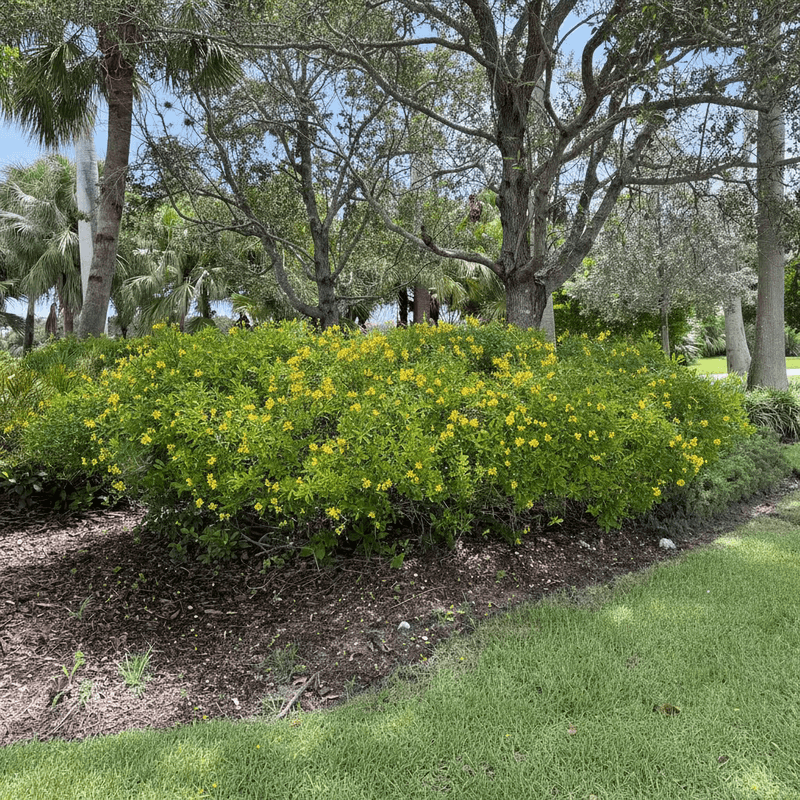
Rain of gold is one nickname for thryallis, and the name fits once those starry yellow clusters open. Walk past a mature plant in late summer, and it looks like someone sprinkled sunshine over the leaves.
Galphimia glauca forms an airy, rounded shrub that usually grows five to nine feet tall in time. Its width stays around four to six feet, so it fits nicely along fences or beside driveways.
Blooms pour out through summer and fall, and the warmest southern areas can see flowers year-round. Butterflies drop by for nectar, which makes this cheerful shrub a handy partner for any pollinator bed.
Cooler winter nights sometimes tint the leaves a reddish bronze, giving the plant a second color trick. I find that small seasonal change charming, because it keeps the shrub interesting between flushes of flowers.
Full sun brings the heaviest flowering, and well-drained soil of almost any type keeps roots content. Once settled, thryallis tolerates drought well and asks for only occasional water during long dry spells.
Pruning needs are light, so you can let the natural shape do the work in most yards. A quick trim after a freeze removes damaged tips, and new shoots often push out from the roots.
Deer tend to leave this shrub alone, which is a welcome break for gardeners near wooded areas. If browsing animals frustrate you, thryallis might be the bright, low-stress answer your yard has been missing.
3. Ixora
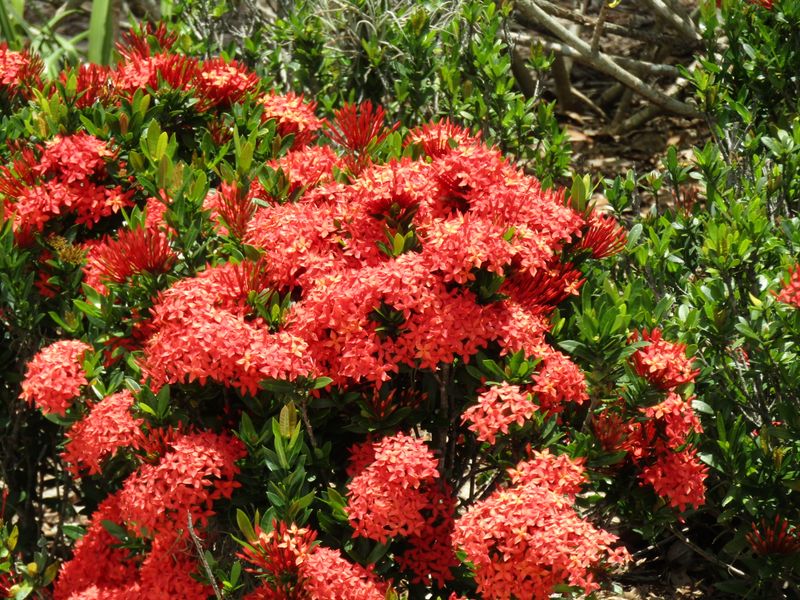
Each ixora flower ball can measure four to six inches across, packed with dozens of tiny tubular blooms. Up close, those tight clusters look like a ready-made bouquet waiting for a vase or a hummingbird.
Ixora coccinea goes by fun nicknames like flame of the woods and jungle geranium in many garden centers. Colors include red, orange, yellow, pink, and white, so matching your house paint is surprisingly easy.
Most plants stay rounded at four to six feet tall, though some selections can grow much taller. Glossy, leathery leaves stay dark green, making a handsome backdrop even when blooms take a short pause.
Summer brings the biggest show, yet flowers appear on and off through the rest of the year. Hummingbirds and butterflies both visit those clusters, so expect regular company once the buds start opening.
I would not call ixora a fuss-free shrub, because soil chemistry matters a great deal here. It prefers moist, acidic, organically rich ground, and alkaline spots often cause yellow leaves with green veins.
A fertilizer containing micronutrients like manganese can help, along with mulch that keeps roots cool and damp. Water regularly during establishment, then keep moisture steady instead of letting the soil swing between extremes for months.
Frost sensitivity is the other catch, since freezing temperatures can badly damage this tropical shrub in winter. Gardeners in cooler regions can grow ixora in pots and move them somewhere sheltered on chilly nights.
4. Plumbago
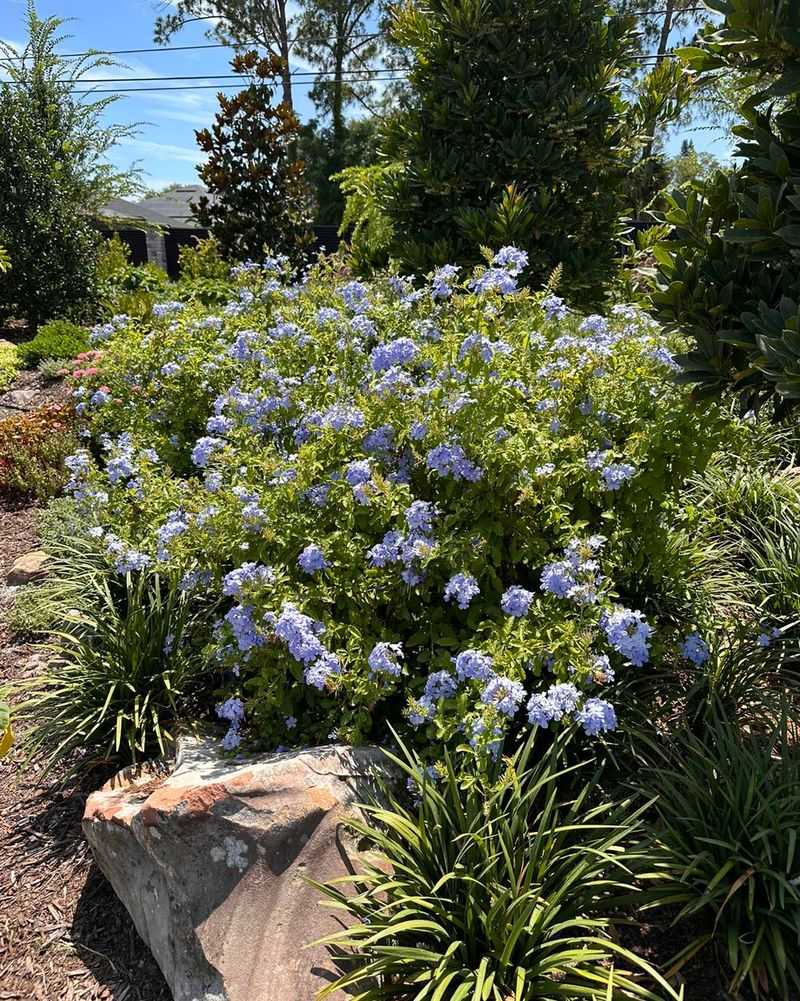
Few shrubs offer true sky blue flowers, and plumbago pulls off that soft shade almost effortlessly. Its phlox-like clusters look cool and calm, like a splash of water on a hot afternoon.
Plumbago auriculata, also called Cape plumbago or sky flower, comes from southern Africa rather than local woods. UF/IFAS lists it as a recommended shrub and does not consider it a problem species in the state.
Flowers cover the mounding branches for most of the year, especially through the long growing season. Butterflies visit often, and I enjoy seeing them flutter against that pale blue like tiny kites.
Left alone, plumbago sprawls six to seven feet tall and up to ten feet wide. Its loose, slightly vine-like stems can lean on a fence or spill gracefully over a low wall.
Light pruning keeps it tidy if space is tight, and blooms appear on new growth afterward. I prefer a relaxed shape, though, since heavy shearing removes that easy cottage-garden charm it does best.
Plant it in full sun to partial shade with well-drained, slightly acidic soil for steady growth. Once established, plumbago tolerates drought and needs only occasional watering during dry stretches in most yards.
A white-flowered form exists too, which pairs nicely with the blue type in a mixed border. Parts of the plant may be toxic to people and pets, so place it away from curious nibblers.
5. Tropical Hibiscus
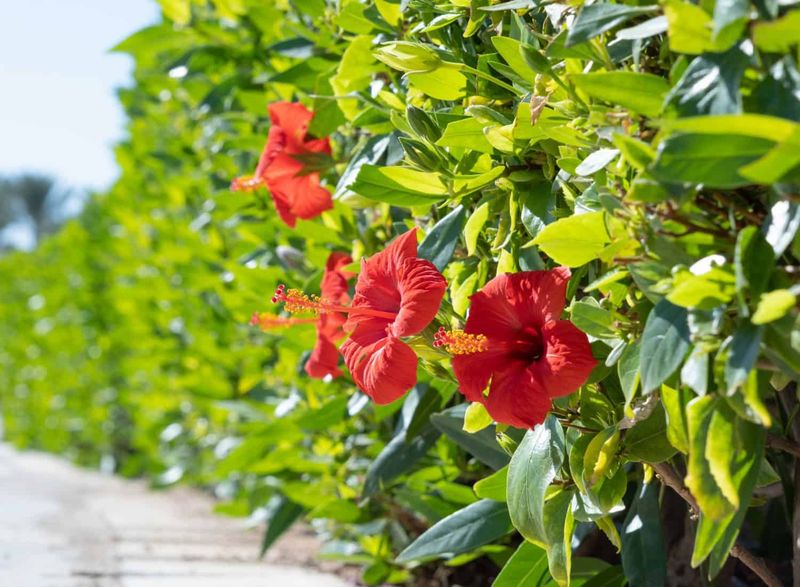
A single tropical hibiscus bloom can stretch as wide as a dinner plate on some varieties. Most flowers last only about a day, yet healthy shrubs keep replacing them with fresh buds.
Hibiscus rosa-sinensis, sometimes called Chinese hibiscus, is the classic tropical shrub seen around pools and patios. It can grow six to ten feet tall, making a colorful hedge or a striking focal point.
Shades range across red, pink, yellow, orange, and white, plus many blends bred by hobby growers. I am often surprised by how many patterns exist, from bold eyes to ruffled double petals.
In warm South Florida yards, it can bloom year-round, with the strongest color arriving during summer. Butterflies and hummingbirds both stop by, adding movement around those big, glowing flowers each morning.
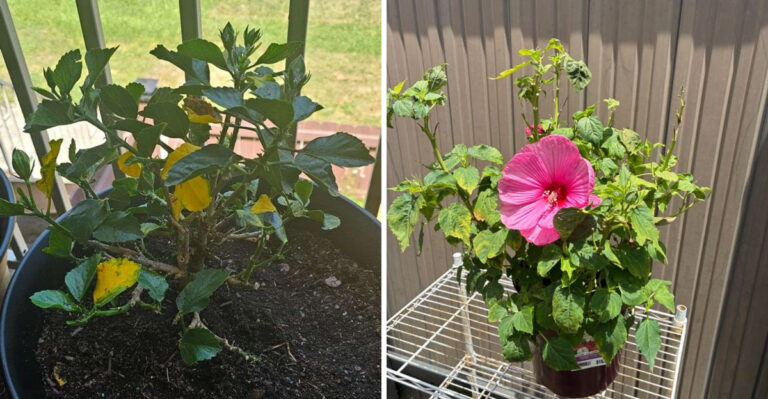
Full sun is the secret to heavy flowering, so skip shady corners when choosing a planting spot. Keep the soil evenly moist but well-drained, since soggy roots and long dry spells both cause stress.
It is hardy only in zones 9B through 11, so a hard freeze can damage tender growth. Farther north, many gardeners keep hibiscus in large containers and roll them under cover on cold nights.
Regular feeding during the growing season helps support steady bud production on these hungry, fast-growing shrubs. Check leaf undersides now and then for small pests, because catching problems early keeps plants looking fresh.
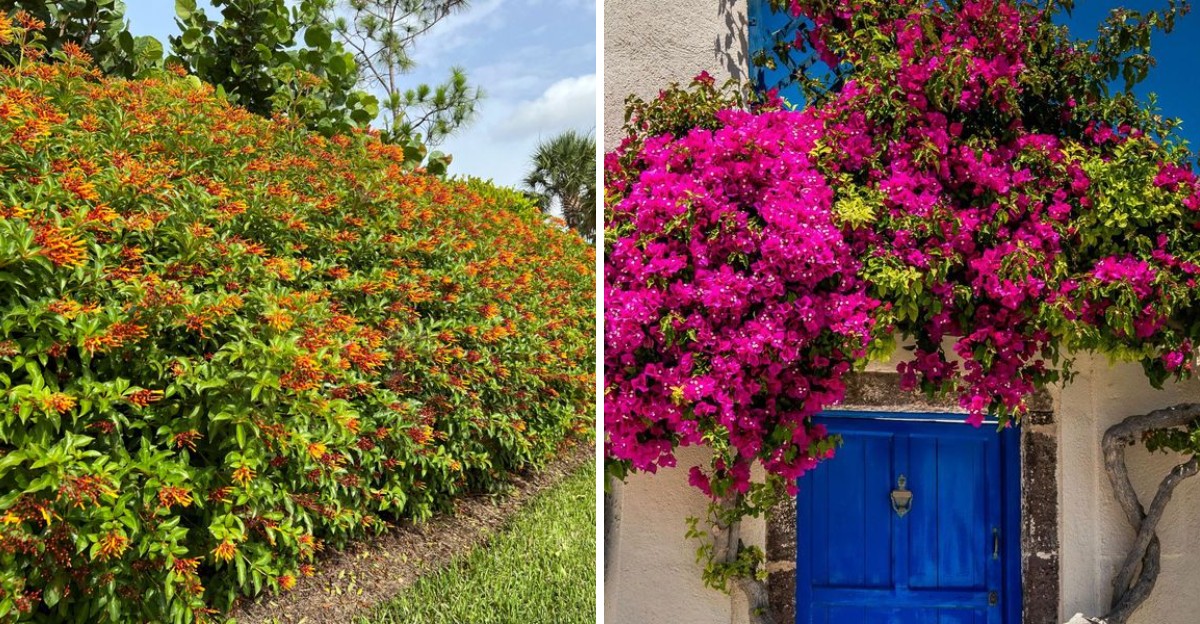
6. Bougainvillea
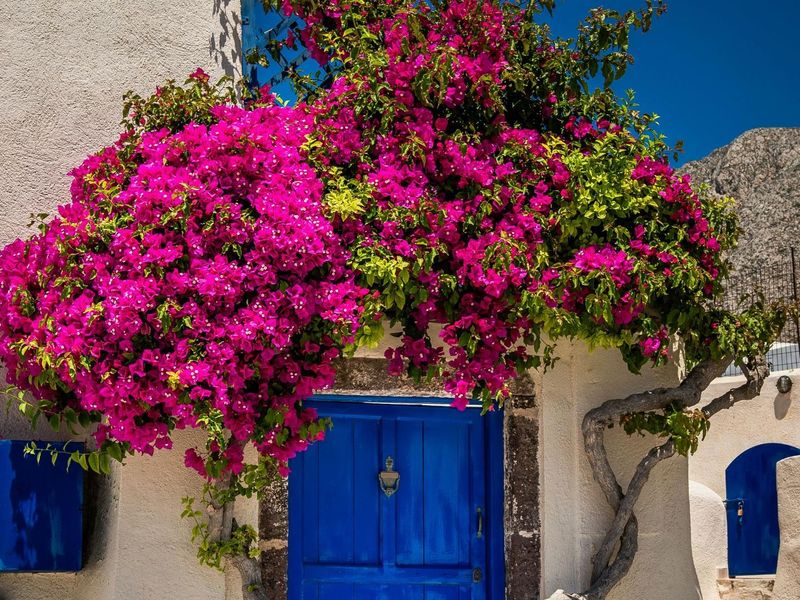
Those dazzling purple and pink petals on bougainvillea are not petals at all, but colorful modified leaves called bracts. The true flowers are tiny and creamy white, tucked right in the center of each papery cluster.
Bracts come in purple, white, red, pink, and yellow, depending on which cultivar you bring home. Sizes vary wildly too, from compact three-foot shrubs to sprawling vines topping thirty feet in length.
In Central and South Florida, plants flower on and off all year, with big flushes in summer. Hardiness runs from zones 9B through 11, so northern gardeners often grow them in containers instead.
Bright light matters more than anything else, because shade leads to lots of leaves and few bracts. Plant in well-drained soil, then water sparingly once established, since this tough plant handles drought well.
Coastal homeowners will appreciate its tolerance for salt spray, which many tropical shrubs simply cannot handle. It can brighten seaside walls where fussier plants often look tired and windburned by midsummer.
Thorns line the stems, so wear sturdy gloves and long sleeves whenever you prune or plant. Those same prickly branches make a dense privacy screen that discourages visitors from cutting through your yard.
Prune lightly after a bloom flush to shape the plant and encourage fresh growth for the next round. Go easy on fertilizer, because too much nitrogen often pushes leafy growth at the expense of color.
7. Peregrina
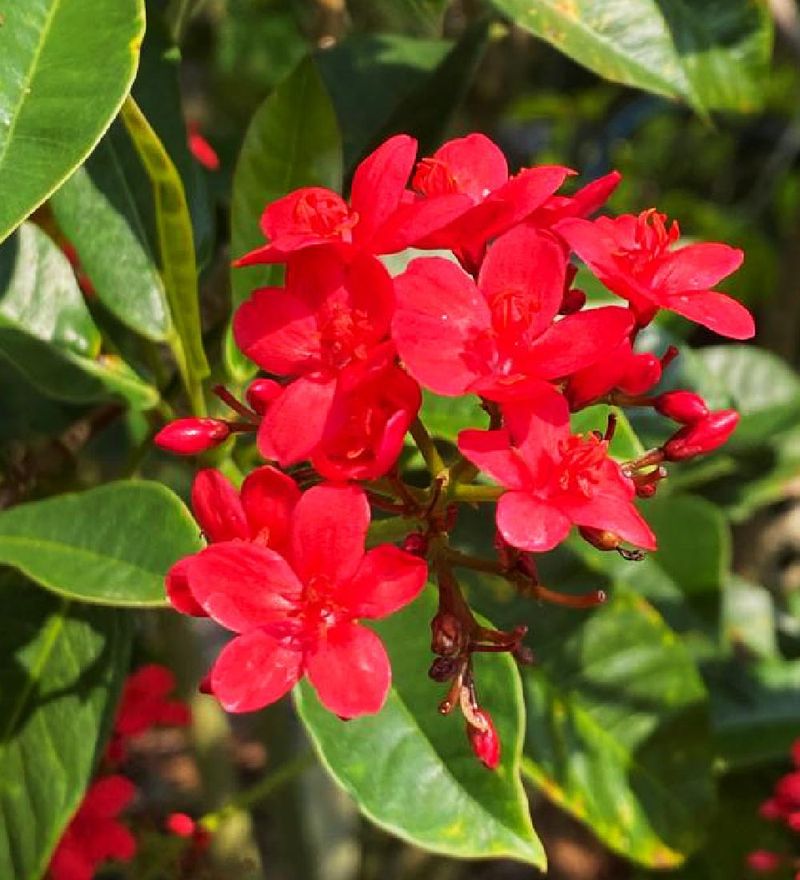
Peregrina has a playful nickname, firecracker jatropha, and its bright red starbursts definitely earn that title. Small clusters of one-inch flowers stand upright above the leaves, practically begging hummingbirds to come closer.
Jatropha integerrima grows as a large shrub or small tree with slender stems and several trunks. It can reach fifteen feet tall and wide, though most gardeners keep it smaller with simple pruning.
Leaves are three to six inches long, and their shapes vary from oblong to fiddle-like or lobed. I find that variety fun, because no two branches seem to look quite the same up close.
Flowers appear year-round in warm conditions, which makes peregrina a lovely specimen plant near entryways. Both hummingbirds and butterflies visit regularly, so a spot near a patio offers great viewing all season.
Cold is its weakness, since it is rated hardy for zones 10B through 11 only. Gardeners in cooler areas should choose a protected spot or grow it in a container that moves indoors.
Plant in full sun for the best blooms, although partial shade is tolerated in hot southern yards. Well-drained soil is a must, and this shrub dislikes salt, so keep it away from beachfront exposure.
Its smooth, speckled seeds are toxic if swallowed, so families with young kids should plant thoughtfully. Picking up fallen seed pods and placing the shrub away from play areas makes enjoying it much safer.
8. Firespike
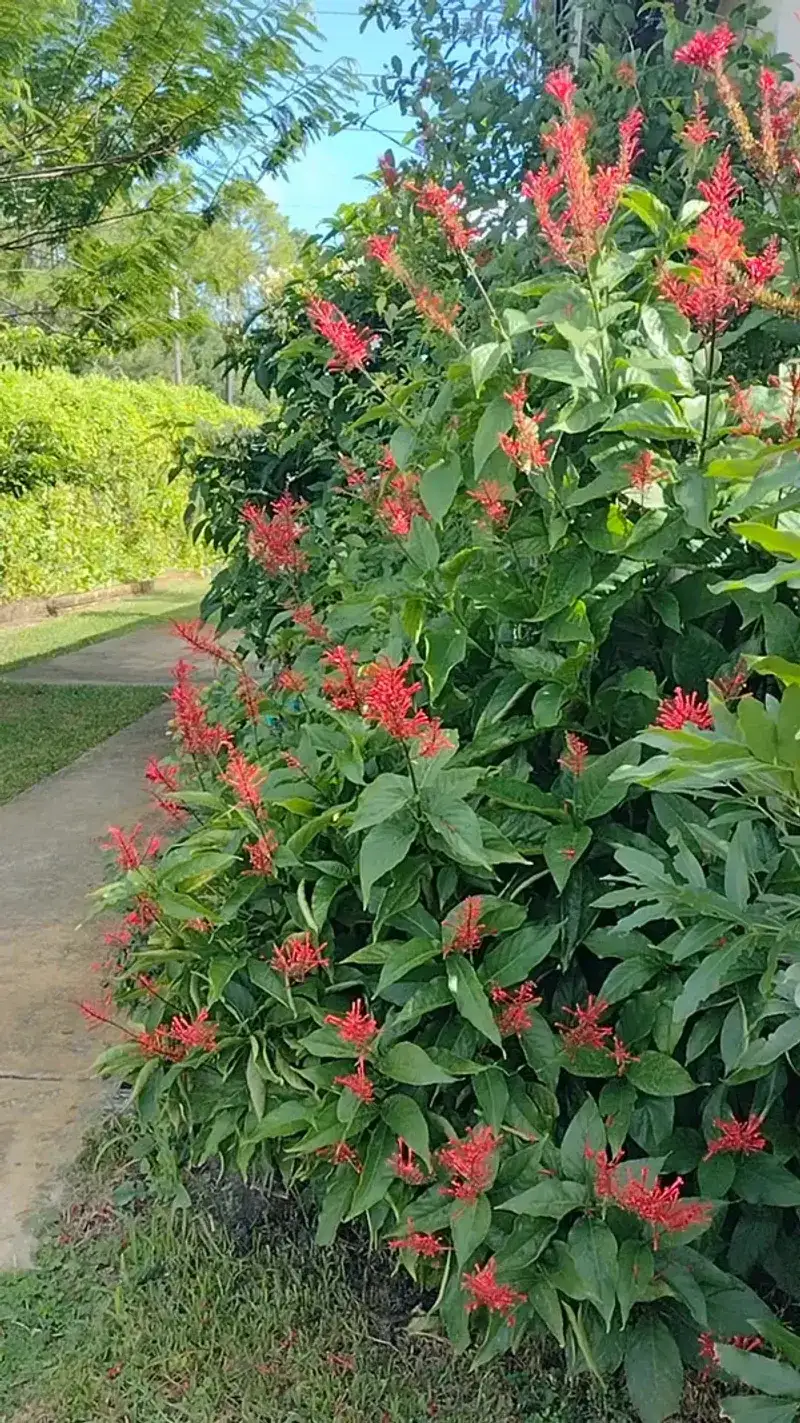
Foot-long spikes of scarlet tubes rise above the leaves of firespike, and hummingbirds spot them from surprising distances. I can see why gardeners call it cardinal guard, since the color is as loud as a cardinal’s feathers.
Odontonema strictum is an upright, clumping plant that behaves like a true shrub in warmer zones. It usually grows two to six feet tall and two to three feet wide, fitting smaller beds nicely.
Glossy, dark green leaves with wavy edges can reach seven or eight inches, giving a lush tropical feel. Even without flowers, that shiny foliage brightens shady spots where many bloomers sulk and stretch.
Bloom time runs from late summer into winter, continuing nearly year-round in frost-free southern locations. That cool-season color matters, because wintering hummingbirds need nectar when many other flowers fade.
Full sun creates a more compact plant with heavier blooms, while partial shade still delivers rich red color. It adapts to sandy, moderately fertile soils and handles drought fairly well once roots are established.
Hardiness covers zones 8B through 11, though freezes in North Florida can knock stems back to the ground. Cut those damaged stems low in late winter, and fresh shoots usually return quickly as temperatures warm.
Firespike is not native and has naturalized in parts of the state, partly because it can self-seed. Keep an eye on stray seedlings and pull extras, so your planting stays neatly where you want it.