These Are The Pennsylvania Native Plants That Thrive In Rain Gardens And Handle Wet Soil
Rain has a funny way of exposing every awkward spot in a Pennsylvania yard. One heavy storm and suddenly that low corner by the downspout is looking less like a flower bed and more like a small experiment in standing water.
A lot of gardeners see soggy ground and assume it is a lost cause. Thankfully, that is not the case at all.
Pennsylvania has plenty of native plants that handle wet soil beautifully and make those tricky areas look a whole lot more intentional. That is where rain gardens start to feel less like a fix and more like a really smart upgrade.
They soak up runoff, add color and texture, and bring in birds, bees, and butterflies like the yard suddenly got more interesting overnight. Not bad for a spot that used to feel impossible.
1. Winterberry Brings Bright Berries To Rain Gardens
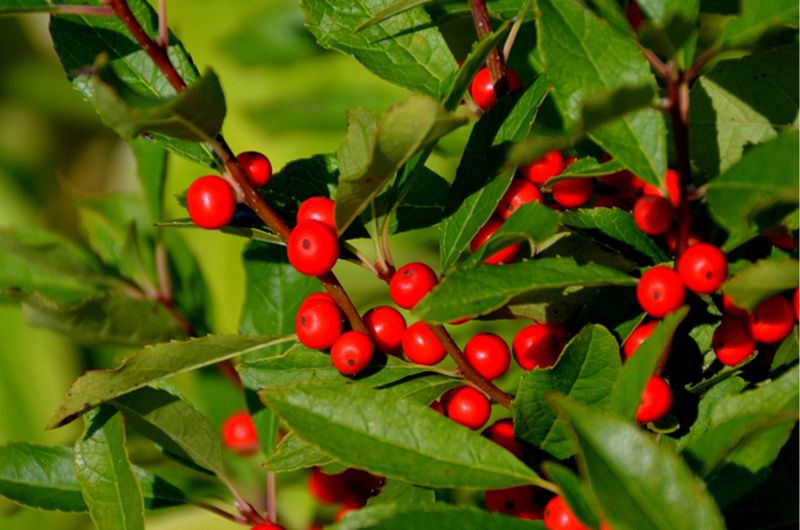
Few sights in winter landscape stop people in their tracks quite like a winterberry shrub loaded with bright red berries after the leaves have dropped.
This native holly, known botanically as Ilex verticillata, is one of the most reliable shrubs for rain gardens and wet-soil areas across the state.
It thrives in spots that collect moisture after heavy rains, making it a natural fit for low-lying areas that other plants tend to struggle in.
Winterberry grows best in full sun to partial shade and tends to perform especially well in Pennsylvania’s heavier, clay-based soils that hold moisture longer after storms.
It typically reaches six to ten feet tall and wide, though compact cultivars are available for smaller rain gardens.
Both male and female plants are needed for berry production, so planting at least one male nearby is something to keep in mind when planning the garden.
The berries that appear in late summer and persist through winter provide an important food source for cedar waxwings, robins, and other birds that move through Pennsylvania during colder months.
The dense branching also offers cover for wildlife during harsh weather.
In terms of seasonal interest, few native shrubs can match the visual punch winterberry delivers when planted in groups along the edges of a rain garden or wet swale.
2. Red Osier Dogwood Adds Color Beyond Bloom Time
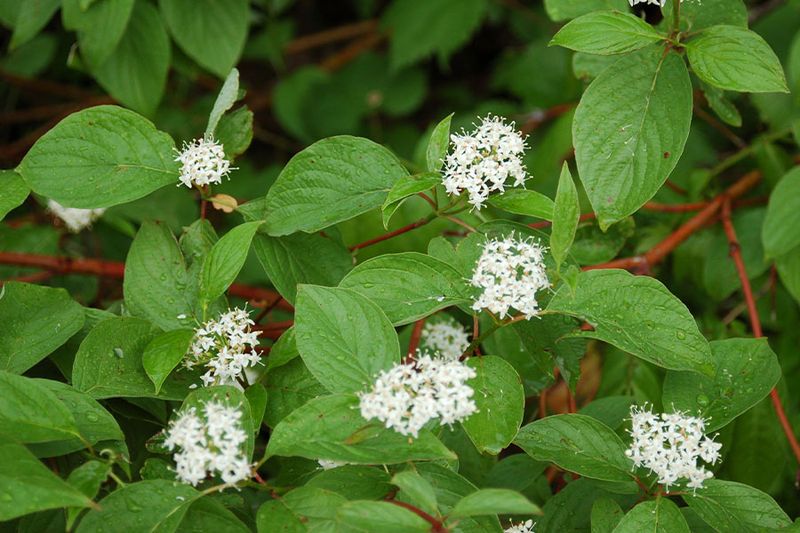
Soggy corners of the yard that flood after every major rainstorm are exactly where red osier dogwood tends to feel most at home.
This native shrub, Cornus sericea, is one of the most adaptable and visually interesting plants available for Pennsylvania rain gardens and moisture-prone planting areas.
Its ability to tolerate both wet and moderately dry conditions between storms makes it well suited to the fluctuating moisture levels that are typical of a functioning rain garden.
What makes red osier dogwood especially appealing is that its interest does not end when the flowers fade. The flat-topped clusters of small white blooms appear in late spring and attract a variety of native pollinators.
After flowering, the shrub produces white berries that birds find attractive. But the real showstopper arrives in late fall and carries through winter, when the bark turns a striking red that glows against snow or dormant grasses.
Your Pennsylvania Garden Changes Every Week. Your Plan Should Too.
Gardening in Pennsylvania changes quickly throughout the season. Every Friday you’ll receive a simple weekly plan showing exactly what to plant, prune, fertilize, harvest, and protect so you never miss the right timing.
Red osier dogwood spreads by suckering over time, which can be a benefit in larger rain gardens where erosion control and bank stabilization matter. In smaller spaces, occasional pruning keeps it manageable.
Cutting a portion of the oldest stems back close to the ground every few years encourages fresh growth with the brightest stem color.
Across Pennsylvania, this shrub works well in full sun to partial shade and performs reliably in both northern and southern parts of the state.
3. Black Chokeberry Brings Beauty Through Several Seasons
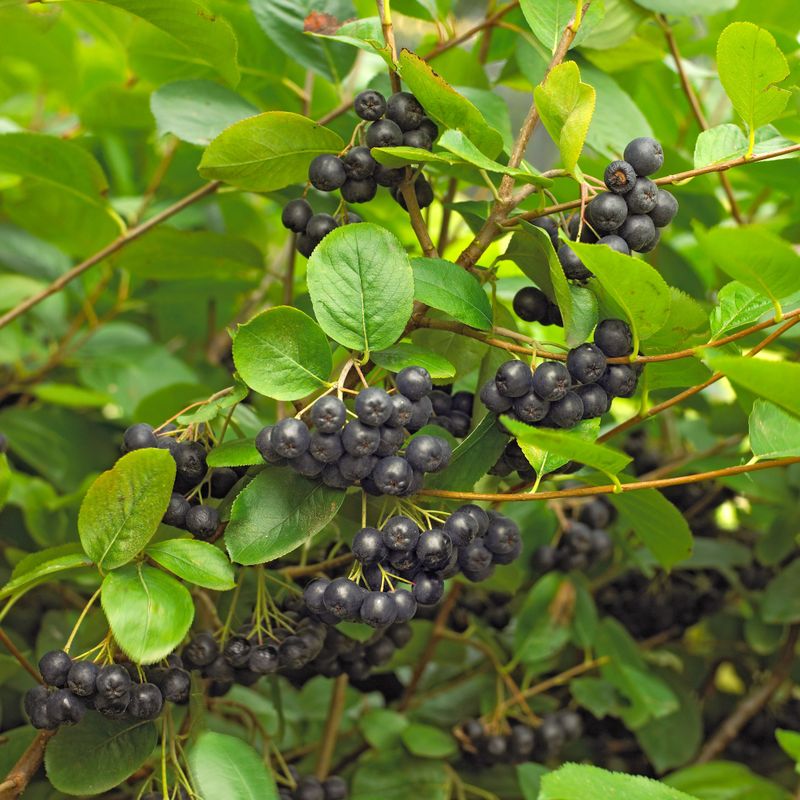
Aronia melanocarpa, commonly called black chokeberry, earns its place in rain gardens by delivering something appealing in nearly every season. Spring brings clusters of white flowers that attract early pollinators.
Summer transitions into glossy, dark berries that ripen by late summer. Fall puts on a strong show with leaves that shift to brilliant shades of red and orange before dropping for winter.
Not many native shrubs pack that much seasonal interest into a single planting.
Black chokeberry handles wet soil with ease and adapts well to the wet-then-dry cycle that rain gardens naturally experience. It grows in full sun to partial shade and tends to stay between three and six feet tall, though conditions and cultivar can influence its final size.
In heavier Pennsylvania soils with slower drainage, it often outperforms shrubs that prefer drier conditions.
The berries are technically edible for people but are quite astringent when eaten fresh, which is how the plant got its common name.
Birds, however, find them appealing, and the berries often attract cedar waxwings, mockingbirds, and thrushes as other food sources become scarce in late summer and fall.
Black chokeberry also tends to spread slowly by suckering, which can help fill in rain garden edges naturally over time.
For gardeners looking for a low-maintenance native shrub that handles wet conditions without much fuss, black chokeberry is a strong candidate worth considering.
4. Spicebush Adds Native Charm To Moist Spaces
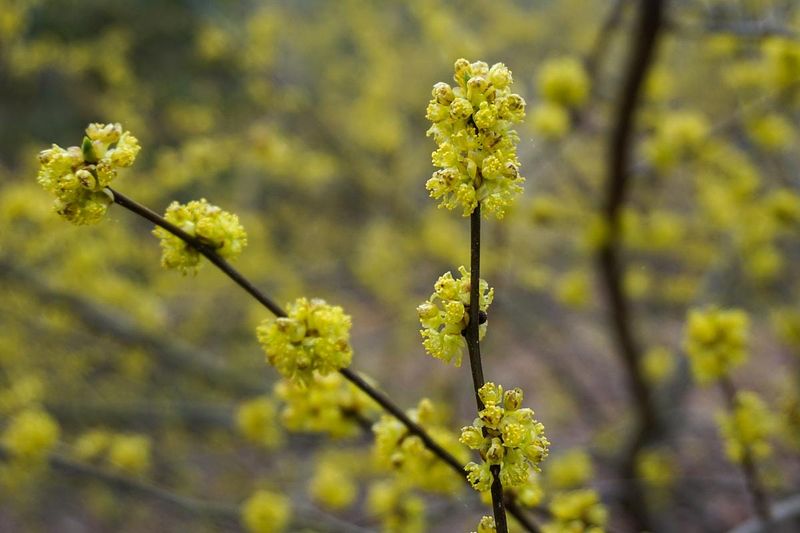
Before most plants even think about blooming, spicebush is already lighting up shaded corners of Pennsylvania woodlands and garden borders with tiny clusters of bright yellow flowers.
Lindera benzoin is one of the earliest native shrubs to bloom each spring, often flowering in March or early April when the branches are still bare.
That early bloom is a genuine gift for native bees and other pollinators that emerge on warm late-winter days looking for any available nectar source.
Spicebush is naturally found along stream banks and in moist woodland edges throughout Pennsylvania, which tells you a lot about where it tends to feel most comfortable.
It thrives in partial to full shade and prefers consistently moist, well-drained soil, though it handles the temporarily wet conditions of a rain garden reasonably well.
In sunnier spots, it may need more moisture to stay healthy, so placement matters when incorporating it into a rain garden design.
The shrub grows to about six to twelve feet tall and has a loose, open form that fits naturally into informal garden settings.
Female plants produce small, glossy red berries in fall that are highly attractive to birds, including the spicebush swallowtail butterfly, which uses the plant as a host for its caterpillars.
Crushing a leaf releases a spicy, aromatic scent that is instantly recognizable to anyone familiar with Pennsylvania’s native understory plants.
For shaded rain garden edges or moist woodland borders, spicebush brings quiet, layered beauty that rewards close attention.
5. Buttonbush Brings Unusual Flowers And Backyard Life
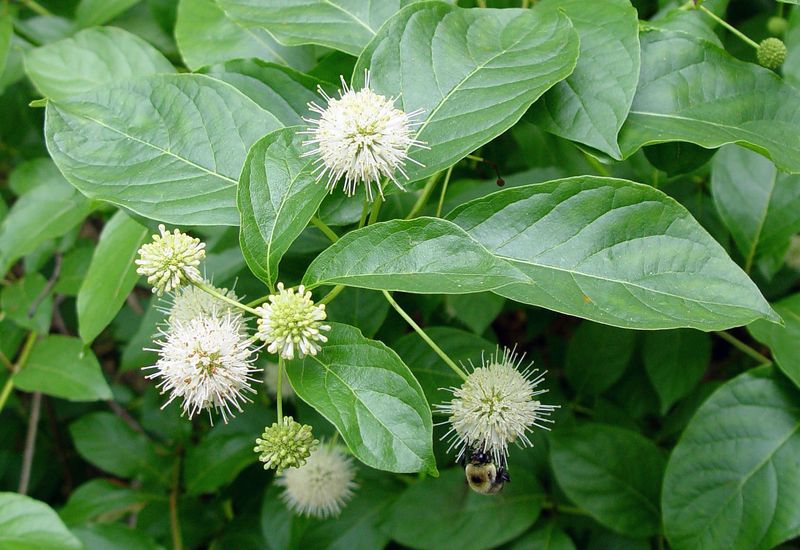
There is nothing quite like buttonbush in bloom to draw curious eyes toward a wet corner of the yard. Cephalanthus occidentalis produces round, spiky white flower heads in mid to late summer that look almost otherworldly compared to more familiar garden blooms.
Those unusual flowers are magnets for bees, butterflies, and hummingbirds, making buttonbush one of the most wildlife-friendly native shrubs available for wet gardens.
Buttonbush is native to wetland edges, stream banks, and pond margins across Pennsylvania, so it handles saturated soil better than most shrubs on this list.
In a rain garden, it works especially well in the lowest zone where water tends to collect longest after a storm.
It grows in full sun to partial shade and can reach anywhere from five to twelve feet tall depending on conditions, so it tends to work better in medium to large rain gardens where there is space for it to develop.
Beyond the flowers, buttonbush produces small, round seed clusters that persist into winter and attract waterfowl and shorebirds where water is nearby. The dense branching also provides nesting habitat for small birds.
In Pennsylvania rain gardens that receive significant runoff from driveways, rooftops, or compacted lawn areas, buttonbush handles the surge and slow drain cycle with notable resilience.
Pairing it with shorter moisture-loving perennials at its base creates a layered look that fills the rain garden with structure and movement from spring through fall.
6. White Turtlehead Adds Soft Blooms To Wet Soil
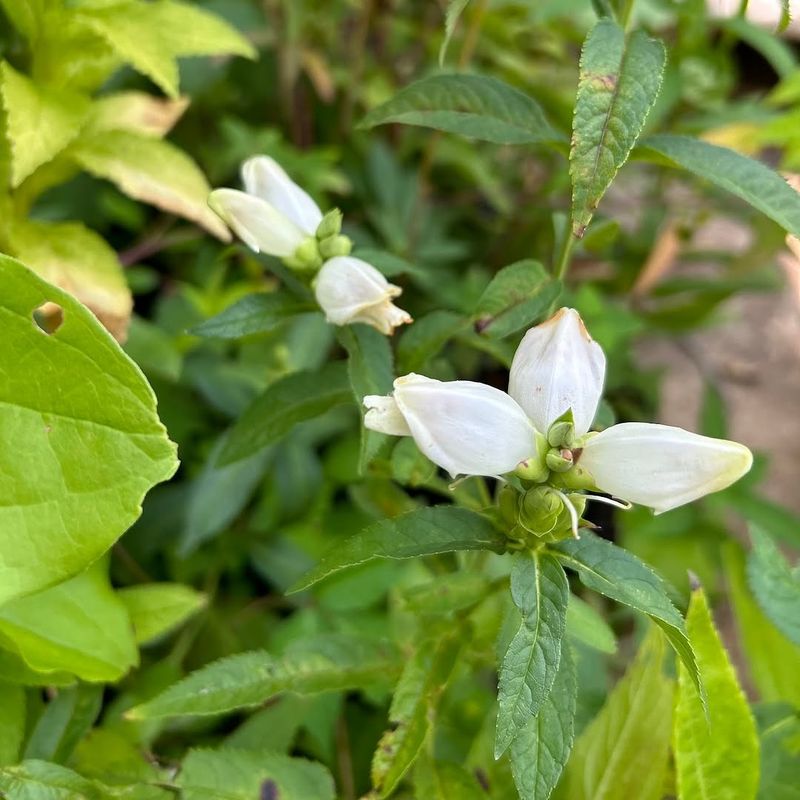
Late summer in a Pennsylvania rain garden can sometimes feel like the growing season is winding down, but white turtlehead has other ideas.
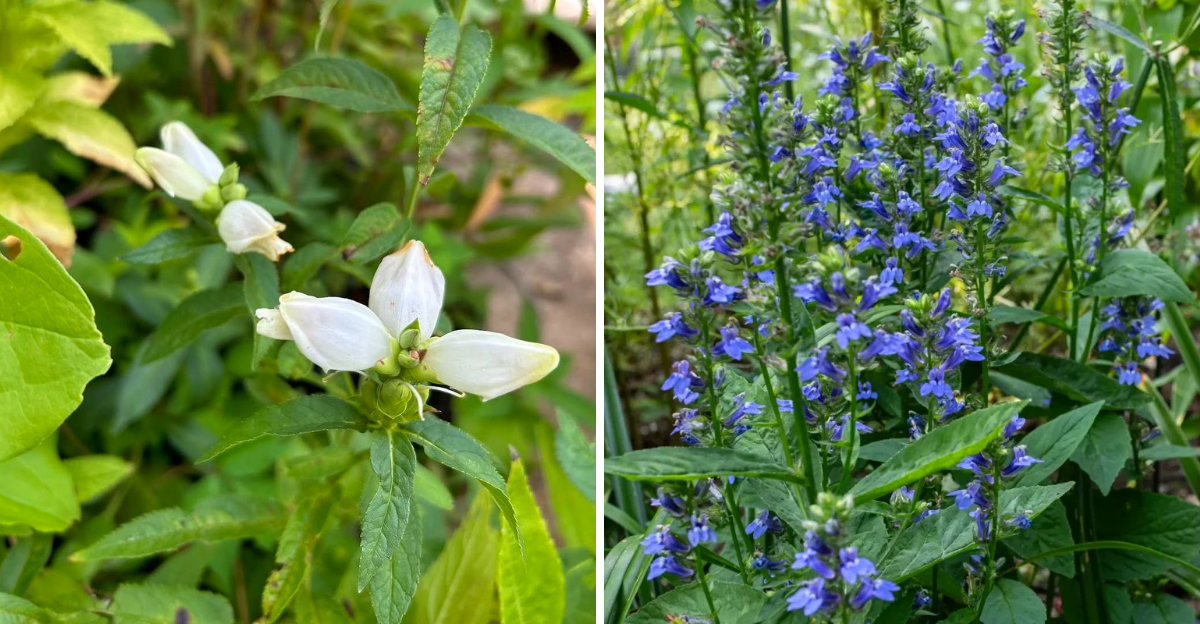
Chelone glabra pushes out its distinctive tubular white flowers from late summer into fall, filling a gap in the bloom calendar that many other native plants leave open.
The flowers get their common name from the way the petals close together at the tip, resembling a turtle’s head poking out of its shell.
White turtlehead grows naturally in moist meadows, streambanks, and woodland edges across Pennsylvania, which makes it a reliable choice for rain gardens that stay consistently moist or drain slowly after heavy rains.
It prefers partial shade to full sun and tends to reach two to three feet tall, forming upright clumps that look tidy in a naturalistic garden setting.
In heavier soils with steady moisture, it tends to spread gradually over time, slowly filling in open areas.
One of the most compelling reasons to include white turtlehead in a rain garden is its role as the sole host plant for the Baltimore checkerspot butterfly, a striking native species that lays its eggs on turtlehead leaves in late summer.
Supporting that butterfly’s life cycle while also adding late-season bloom color to a wet garden bed is a combination that is hard to beat.
Planted alongside other moisture-tolerant natives, white turtlehead contributes both ecological value and quiet visual elegance through the tail end of the growing season.
7. Swamp Milkweed Brings Pollinator Value And Summer Color
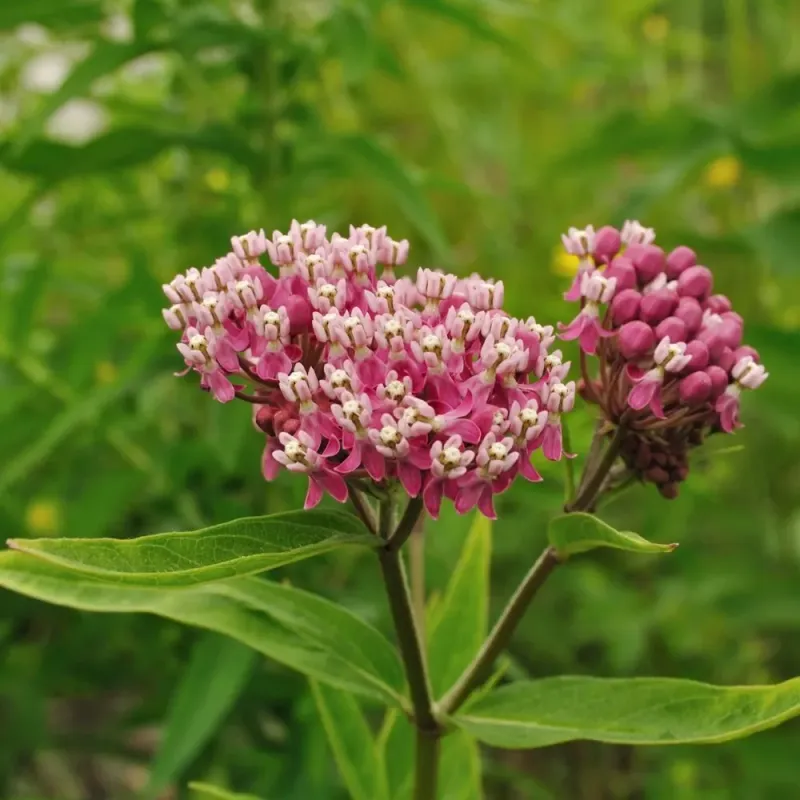
Anyone who has watched a monarch butterfly drift across a Pennsylvania meadow in late summer knows the kind of quiet wonder that moment carries.
Swamp milkweed, Asclepias incarnata, plays a meaningful role in supporting that experience by providing one of the most important host and nectar plants for monarchs and other native pollinators in the state.
Unlike common milkweed, swamp milkweed has a more refined, upright form that fits comfortably into rain gardens and moist border plantings without spreading aggressively.
This native perennial grows naturally along streambanks and in wet meadows throughout Pennsylvania, which means it handles the temporarily saturated conditions of a rain garden very well.
It prefers full sun and consistently moist soil, though it can manage brief dry spells between storms once it is established.
Plants typically reach three to four feet tall and produce clusters of rosy-pink flowers from mid to late summer that attract an impressive range of pollinators, including bumblebees, fritillary butterflies, and native wasps.
After flowering, swamp milkweed develops slender seed pods that split open in fall to release silky-tufted seeds that drift on the breeze.
Leaving the seed pods in place through winter adds subtle texture to the rain garden and provides some overwintering habitat for beneficial insects.
In landscapes where supporting pollinators is a priority alongside managing stormwater runoff, swamp milkweed delivers on both fronts with consistent, season-long performance in sunny, moist planting areas.
8. Great Blue Lobelia Adds Bold Late-Season Color
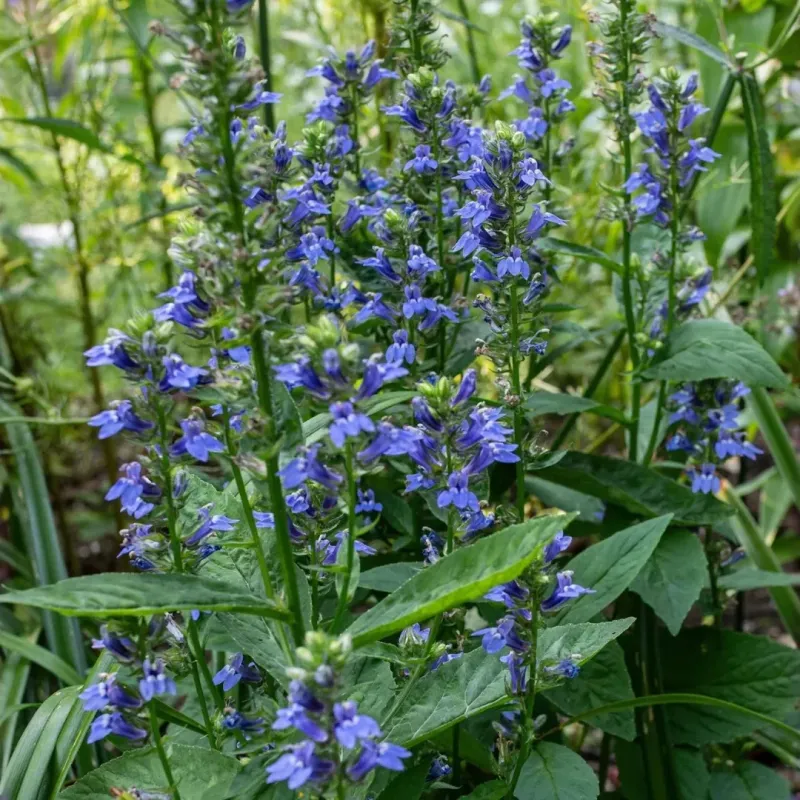
By the time late summer rolls around in Pennsylvania, many flowering perennials have already peaked and are starting to fade.
Great blue lobelia, Lobelia siphilitica, arrives just in time to pick up the slack with tall spikes of vivid blue to violet flowers that bloom from late summer into early fall.
That deep, saturated blue color is relatively uncommon in native plant palettes, which makes great blue lobelia a standout in rain gardens and moist borders where it can be planted in groups for visual impact.
Great blue lobelia grows naturally along streambanks, wet meadow edges, and moist woodland openings throughout Pennsylvania. In rain gardens, it tends to perform well in areas that receive partial shade to full sun and stay consistently moist.
It grows two to four feet tall and has a naturally upright habit that works well when planted toward the middle or back of a rain garden bed. It is not particularly aggressive, but it does self-seed modestly in conditions it finds comfortable.
Hummingbirds are strongly attracted to the tubular flowers, and the plant also draws bumblebees that are among the few native pollinators with the body strength to access the nectar inside.
For gardeners who want to extend the bloom season in a wet-soil area while also supporting late-season pollinators and hummingbird activity, great blue lobelia is one of the most rewarding native perennials to include.
Its color alone makes it worth planting near the front of a rain garden where visitors can appreciate it up close.