These Are The Vines That Are Illegal To Grow In Pennsylvania
Most gardeners pick vines for how they look, a fast growing plant that fills a fence, covers an ugly wall, or adds some green to a bare structure.
What a lot of Pennsylvania gardeners do not realize is that some of the most popular and widely sold vines are actually on the state’s invasive species list, and growing them can come with real consequences beyond just a struggling garden.
These plants do not stay where you put them. They spread into natural areas, push out native species, and cause the kind of environmental damage that takes years and serious effort to undo.
Pennsylvania has cracked down on several of them, and the list might include some vines you have growing right now or have been thinking about planting this season.
Knowing what is off the table is just as important as knowing what to plant, and a few of these will genuinely catch you off guard.
1. Kudzu
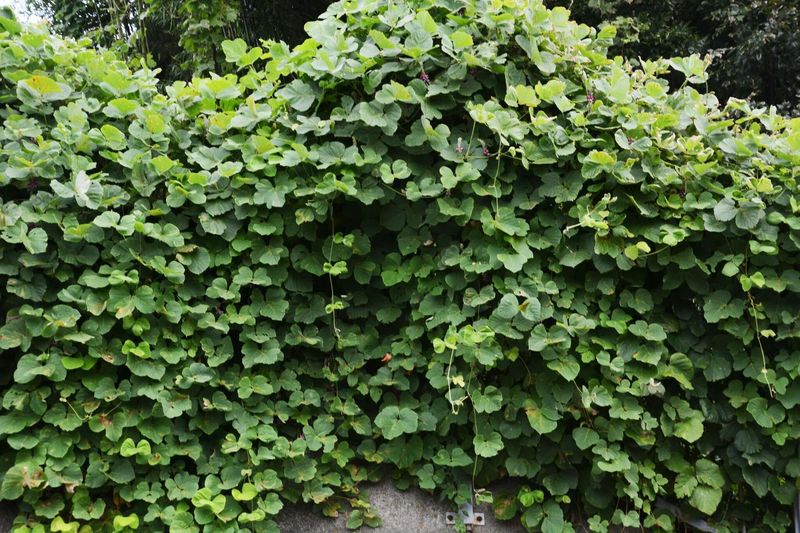
Back in the 1800s, kudzu was actually promoted as a useful plant. Farmers were encouraged to plant it to stop soil erosion, and it was even featured at garden shows. Nobody realized at the time just how aggressively it would spread across the landscape.
Kudzu is now officially listed as a noxious weed in Pennsylvania, and it is illegal to grow, sell, or transport it within the state. The plant can grow up to one foot per day during warm months. That is not a typo. One foot every single day.
Because it grows so fast, kudzu smothers everything in its path. It climbs over trees, shrubs, fences, and even buildings.
Once it covers a tree, sunlight cannot reach the leaves below, and the tree slowly weakens. Native plants underneath have no chance of surviving.
Kudzu also adds a lot of weight to whatever it climbs on. Tree branches can snap under the pressure.
Entire forest edges can be transformed into a wall of green leaves with nothing living underneath.
Removing kudzu is extremely difficult and expensive. It takes repeated efforts over many years to get rid of it completely. Even a small piece of root left in the soil can regrow into a full plant.
If you spot kudzu growing near your home or neighborhood, contact your local Pennsylvania Department of Agriculture office.
Do not try to compost it, since pieces can root and spread even further. Reporting it early gives professionals the best chance to manage it before it takes over.
2. Mile-A-Minute Vine
The name says it all. Mile-a-minute vine, also known as Asiatic tearthumb, earned its nickname honestly.
This plant is one of the fastest-spreading invasive vines ever recorded in the eastern United States, and Pennsylvania has made it illegal to grow, propagate, or sell for good reason.
Originally from Asia, this vine arrived in the United States accidentally through contaminated nursery stock in the 1930s. It was first spotted in Pennsylvania in York County and has been spreading aggressively ever since.
Today, it shows up along roadsides, stream banks, forest edges, and disturbed areas across much of the state.
Your Pennsylvania Garden Changes Every Week. Your Plan Should Too.
Gardening in Pennsylvania changes quickly throughout the season. Every Friday you’ll receive a simple weekly plan showing exactly what to plant, prune, fertilize, harvest, and protect so you never miss the right timing.
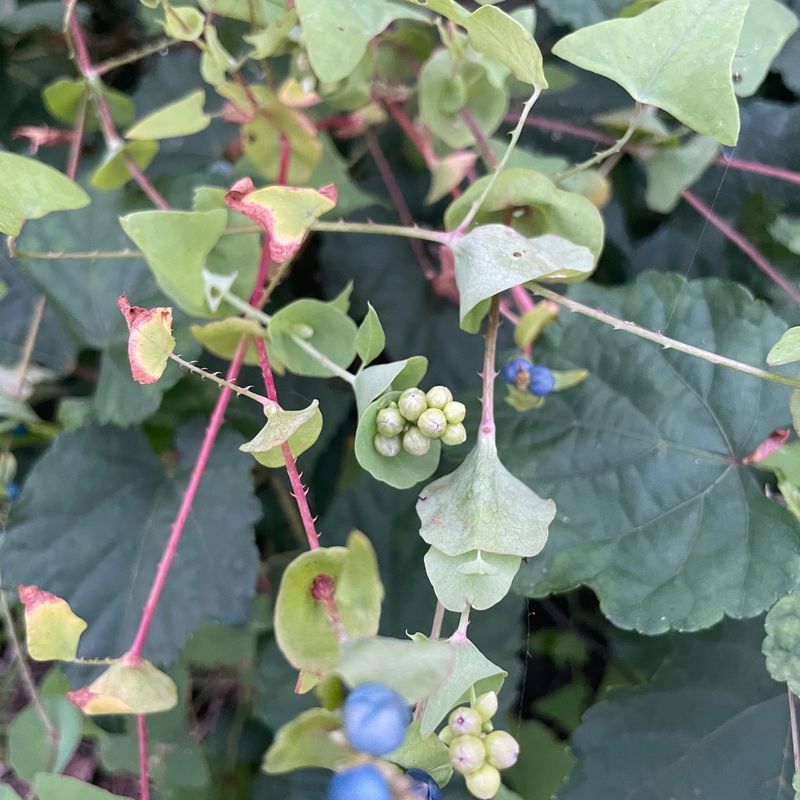
Mile-a-minute vine is easy to recognize once you know what to look for. Its leaves are shaped like perfect triangles, which is pretty unusual for a vine.
The stem is covered in tiny curved barbs that can scratch skin, which is where the name tearthumb comes from.
The plant produces small, round, bright blue berries that birds love to eat. While that might sound harmless, it is actually a big problem. Birds carry the seeds far and wide, allowing the vine to spread into new areas very quickly.
During peak growing season, mile-a-minute vine can grow up to six inches in a single day. It grows over native plants and blocks sunlight, weakening everything below it. Young trees and shrubs are especially vulnerable.
If you find this vine on your property, wear gloves before handling it. Pull it out before it produces berries to prevent further spreading.
Contact your county conservation district for guidance on the best removal methods available in your area.
3. Japanese Honeysuckle
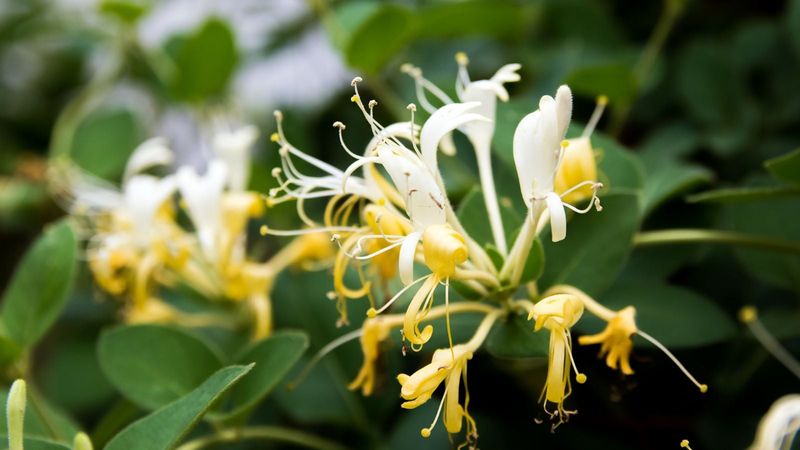
There is something almost nostalgic about the sweet smell of honeysuckle on a warm summer evening.
Many people have fond childhood memories of pulling the tiny flowers apart to taste a drop of nectar. But Japanese honeysuckle is not the friendly backyard plant it appears to be.
Japanese honeysuckle was introduced to the United States from Asia in the early 1800s as an ornamental plant. It was also planted to help control erosion along roadsides and hillsides.
For a while, it seemed like a great idea. Then it started spreading far beyond where anyone intended.
In Pennsylvania, Japanese honeysuckle is classified as an invasive species and has been targeted for restrictions because of the damage it causes to forests and roadsides. Unlike native honeysuckle varieties, the Japanese version does not lose its leaves in winter.
That means it can keep growing and blocking sunlight even during colder months when native plants are dormant.
The vine twists tightly around young trees and shrubs, cutting off the flow of water and nutrients through the bark. Over time, the affected plants weaken and struggle to survive.
Entire forest understories can be taken over, leaving little room for native wildflowers, ferns, and tree seedlings.
Birds spread the seeds widely, making it very hard to contain once it establishes itself in an area. A single mature plant can produce thousands of berries in one season.
You can help by removing any Japanese honeysuckle from your yard before it goes to seed. Bag the cuttings securely and dispose of them in the trash, not in compost piles or near natural areas.
4. English Ivy
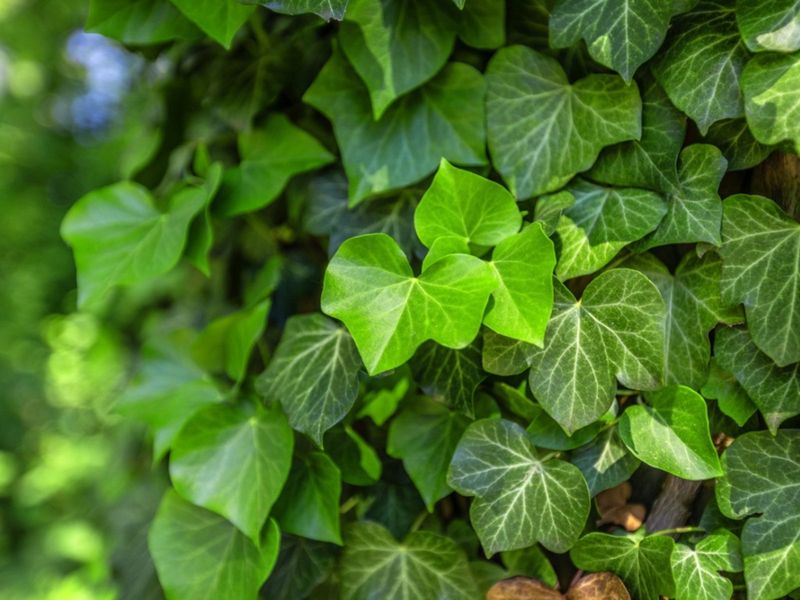
Walk through almost any older neighborhood in Pennsylvania and you will probably spot English ivy climbing up brick walls, fences, or tree trunks. It looks tidy and classic, almost like something out of a fairy tale.
Many homeowners plant it on purpose because it stays green year-round and covers bare ground quickly.
Here is the problem. English ivy is widely recognized as invasive in Pennsylvania, and for very good reasons.
Once it gets established, it is incredibly difficult to remove. The plant clings to surfaces using tiny rootlike structures that can actually damage brick, wood, and tree bark over time.
When English ivy climbs trees, it creates what experts call a green wall of ivy on the trunk and branches. This added weight makes trees more likely to fall during storms.
The thick ivy coverage also hides damage, decay, and pests inside the tree, making problems hard to spot until it is too late.
On the ground, English ivy forms a dense mat that smothers native wildflowers, ferns, and tree seedlings. Nothing else can grow through it. Native insects and animals that depend on those plants lose their food sources and shelter.
English ivy also acts as a highway for rats and other pests, giving them a hidden pathway along fences and through gardens. It can harbor ticks as well, which is a real concern for families and pets spending time outdoors.
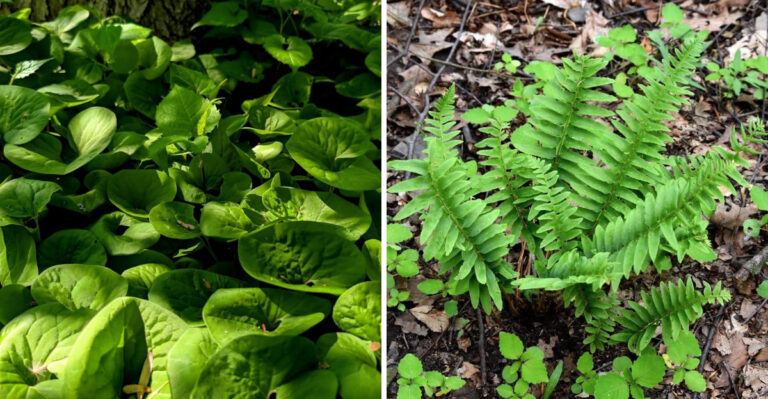
Switching to native ground covers like wild ginger or Pennsylvania sedge is a smart alternative. These plants support local wildlife, require less maintenance, and will not take over your yard or your neighbors’ properties.
5. Oriental Bittersweet
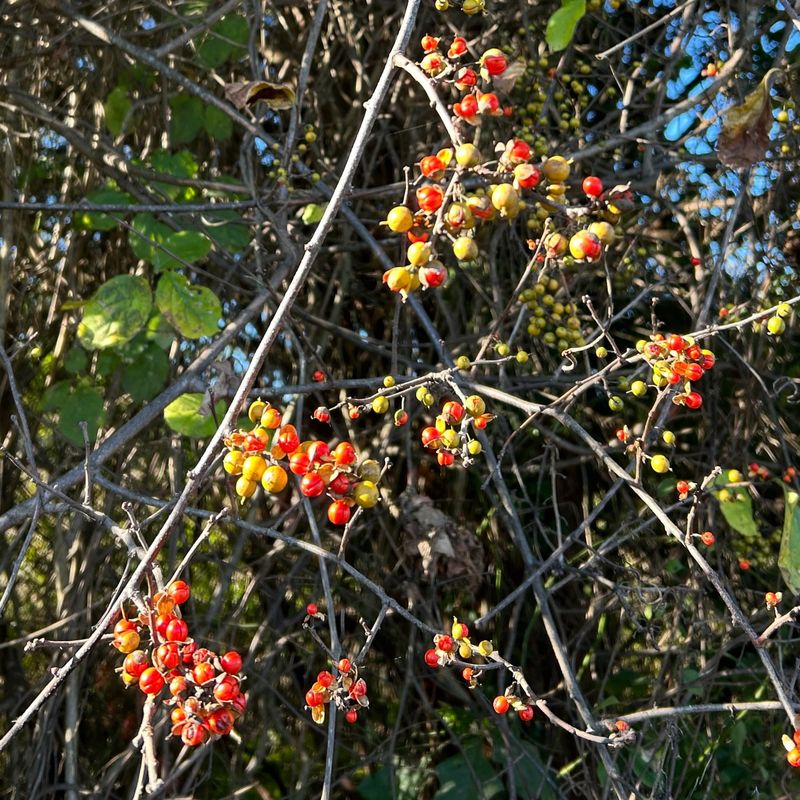
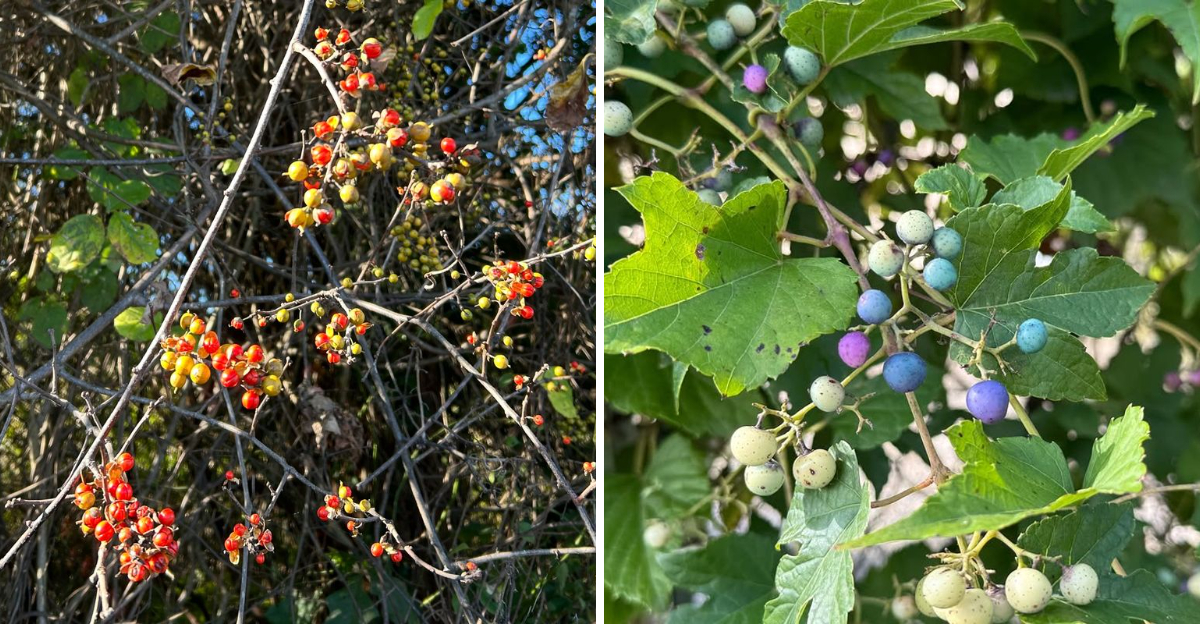
Every fall, craft stores and farmer’s markets fill up with beautiful wreaths decorated with colorful orange and yellow berries. Many of those berries come from Oriental bittersweet, a vine that looks stunning in autumn arrangements but causes serious damage in the wild.
In Pennsylvania, this plant is illegal to grow because of the harm it does to mature trees and natural areas.
Oriental bittersweet was brought to the United States from Asia in the mid-1800s as a decorative plant.
It was widely sold in nurseries for decades before people understood how invasive it truly was. By then, it had already spread through forests across the northeastern United States.
What makes Oriental bittersweet so destructive is the way it wraps around trees. The vine coils tightly around trunks and branches, cutting off the flow of nutrients and water beneath the bark.
Over time, mature trees can be completely girdled, meaning the vine squeezes so tightly that the tree cannot function properly anymore.
The plant also grows extremely fast and can reach the tops of tall trees, adding enormous weight to branches. During ice storms or heavy snow, this extra weight causes branches to snap. Entire trees can topple as a result.
Birds eat the berries eagerly and spread the seeds across wide areas, making it nearly impossible to contain naturally. One mature plant can produce thousands of seeds in a single season.
If you have wreaths or decorations made with bittersweet berries, be careful not to leave them outdoors where birds can eat the seeds. Dispose of them in sealed trash bags to avoid accidentally spreading this invasive vine further.
6. Porcelain Berry
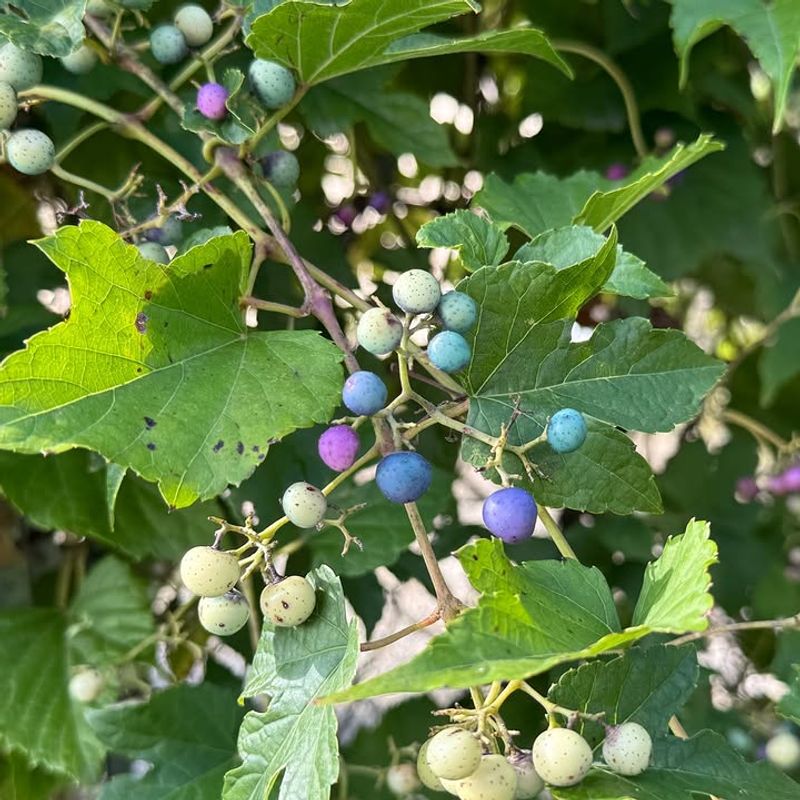
Few invasive plants are as visually striking as porcelain berry. The clusters of berries shift through shades of white, pink, lilac, turquoise, and deep purple as they ripen, almost like tiny jewels hanging from the vine.
It is easy to understand why homeowners once rushed to plant it in their gardens. Porcelain berry was introduced from Asia and sold widely in American nurseries throughout the 1900s as an ornamental vine.
It looked beautiful growing over fences and trellises. Over time, though, it escaped from gardens and began spreading into natural areas across the eastern United States, including Pennsylvania, where it is now illegal to grow or sell.
The vine grows aggressively and can overtake native vegetation with surprising speed. It thrives in disturbed areas like roadsides, riverbanks, and forest edges, but it also moves into healthy natural areas once it gets a foothold.
Native shrubs and young trees are especially vulnerable because porcelain berry grows over them and blocks sunlight.
Birds are the main reason it spreads so effectively. They are drawn to the colorful berries and carry seeds far from the original plant. A single bird can deposit seeds miles away from where the parent vine is growing.
Porcelain berry looks very similar to native wild grape, which can make identification tricky. One key difference is the leaf shape.
Porcelain berry leaves have deeper, more defined lobes than wild grape leaves. If you are unsure, your local Penn State Extension office can help you identify what is growing in your yard.
Removing it early, before berries form, is the most effective strategy. Pull young vines by hand and follow up regularly to catch any regrowth before it gets out of control.