These Arizona Plants Keep Bees And Butterflies Busy Long After Summer Flowers Quit
When the summer heat finally breaks in Phoenix and Tucson, a lot of gardens go quiet. But the right desert plants can keep bees, butterflies, and moths buzzing around your yard well into November.
A busy pollinator yard is more than pretty, because it brings in helpful insects and needs very little water. Here are ten tough Arizona bloomers that refuse to quit when summer does.
1. Desert Marigold
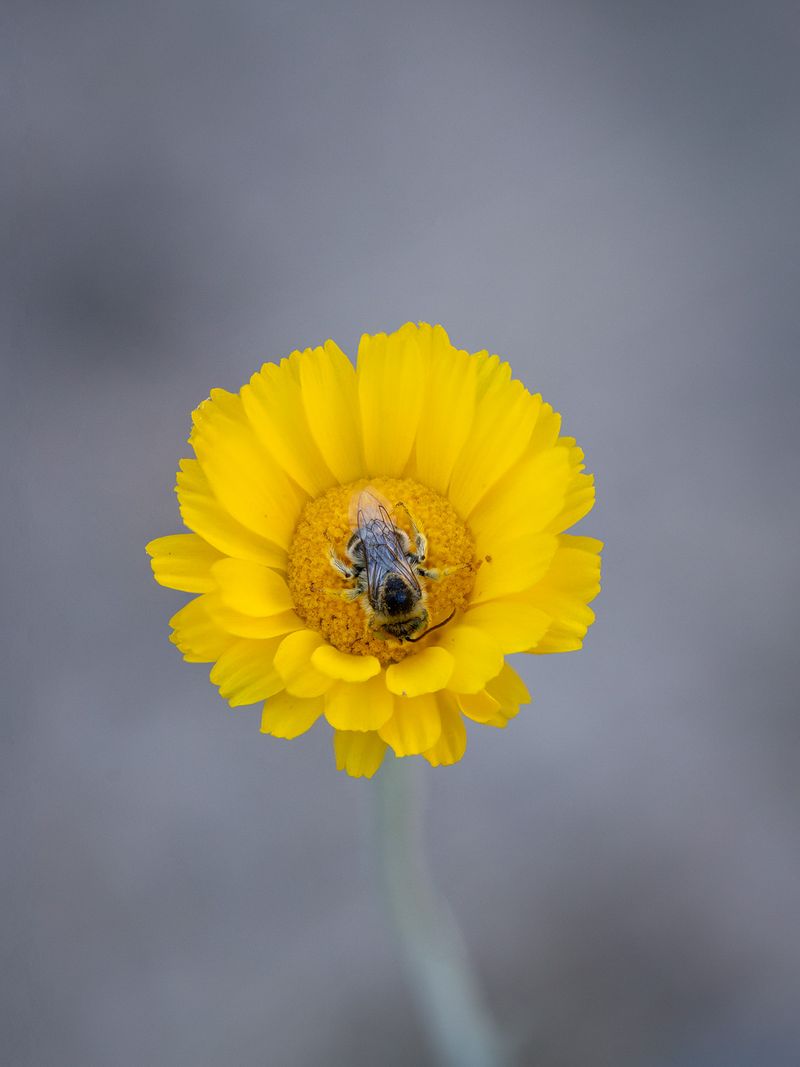
Some plants bloom like they forgot to check the calendar, and desert marigold is the champion of that habit. Its sunny yellow daisies pop up in spring, keep going through much of summer, and often surge again once fall temperatures ease.
Native bees love the flat, open flower heads because landing is easy and pollen is right on the surface. Butterflies stop by too, especially on calm October mornings.
The soft, woolly gray leaves help the plant reflect harsh sun and hold onto moisture, which is why it handles low-desert heat so well.
Plant it in full sun with gritty, fast-draining soil. Caliche and rocky ground are fine as long as water does not sit around the roots.
Once settled, it needs only an occasional deep drink during long dry spells.
Here is a bonus many homeowners enjoy: desert marigold reseeds freely. Leave a few spent flower heads in place and new seedlings tend to appear after winter rains.
That means a patch can slowly fill in bare gravel without you buying more plants.
For the best results, start seeds or transplants in fall, when cooler soil gives roots a head start before the next round of heat arrives.
2. Globe Mallow
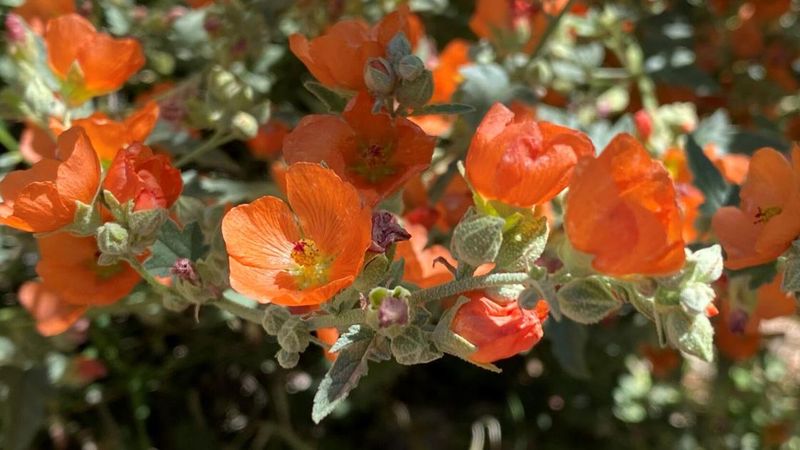
Picture a small shrub covered in glowing orange cups, each one about the size of a nickel. That is globe mallow on a good day, and in Arizona it has plenty of good days.
Flowering usually kicks off in early spring, but a light trim after the first flush can encourage more blooms into fall. Bees practically dive headfirst into the papery petals, and you may spot specialist mallow bees that rely on this plant family.
Butterflies and small skippers also make regular visits.
Globe mallow is about as tough as desert natives get. It shrugs off 110-degree afternoons, grows happily in sandy or rocky soil, and needs very little supplemental water once roots are established.
Too much irrigation can actually make it floppy, so restraint pays off.
Colors range from classic apricot to pink, red, and even white, so you can match it to your house or mix shades for a wildflower look. It fits nicely along driveways, slopes, and dry washes where few other plants want to live.
Fun fact: the fuzzy hairs on the leaves can irritate sensitive eyes, which earned it the old nickname sore-eye poppy. Wear gloves when pruning and you will be fine.
3. Autumn Sage and Heat-Tolerant Salvias
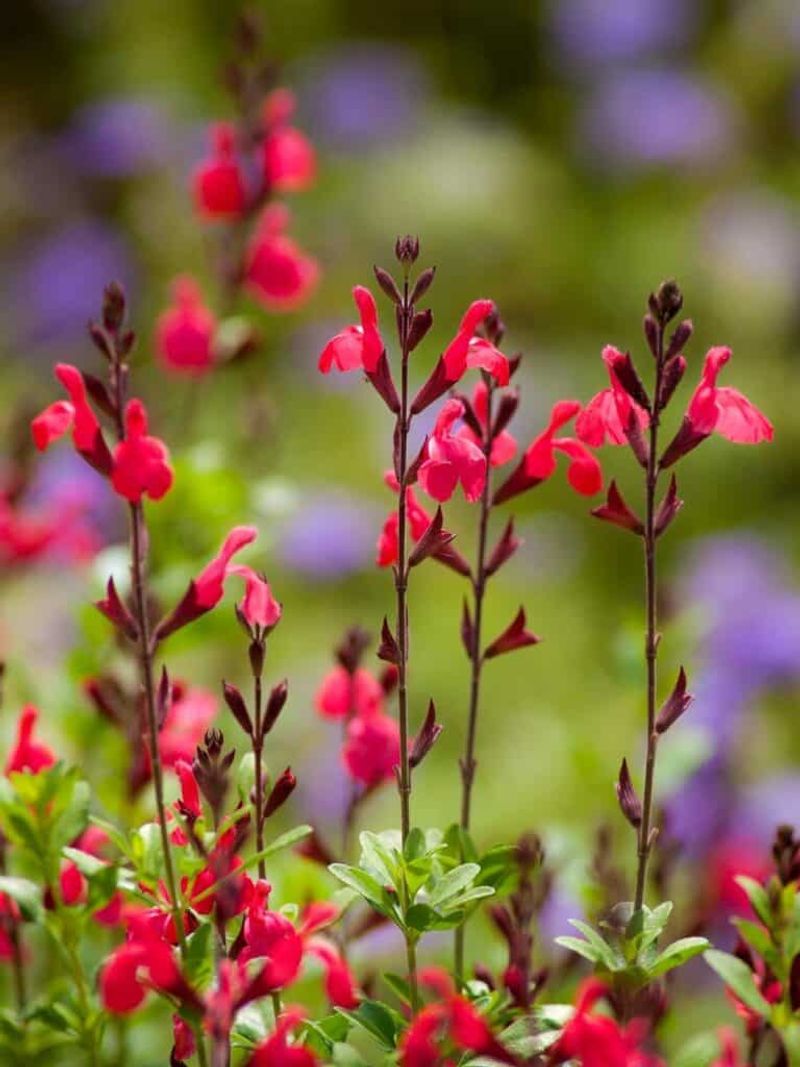
Ask any seasoned Phoenix gardener which plant earns its keep in October, and salvia will probably come up within the first minute. Autumn sage, along with tough hybrids like Heatwave varieties, saves some of its best color for the cooler months.
Your Arizona Garden Changes Every Week. Your Plan Should Too.
Gardening in Arizona changes quickly throughout the season. Every Friday you’ll receive a simple weekly plan showing exactly what to plant, prune, fertilize, harvest, and protect so you never miss the right timing.
The tubular blooms come in red, coral, pink, purple, and blue. Butterflies sip from them, bumblebees push inside for nectar, and hummingbirds treat a row of salvias like a fast-food drive-through.
Having all three visitors in one plant makes it a strong anchor for any habitat bed.
Most salvias for the low desert appreciate a little afternoon shade during the hottest stretch of summer, especially near west-facing walls. Give them well-drained soil and water deeply but not daily.
Overwatering is a far more common problem than drought.
Shape plants with a light trim in late winter, after frost danger passes. Cutting back by about a third keeps them compact and full instead of woody and sparse.
Avoid heavy shearing in summer, which can stress them.
Plant in fall for the strongest start. By the following autumn, you can expect a mounded shrub buzzing with activity on mild mornings when many summer bloomers have already called it a season.
4. Lantana
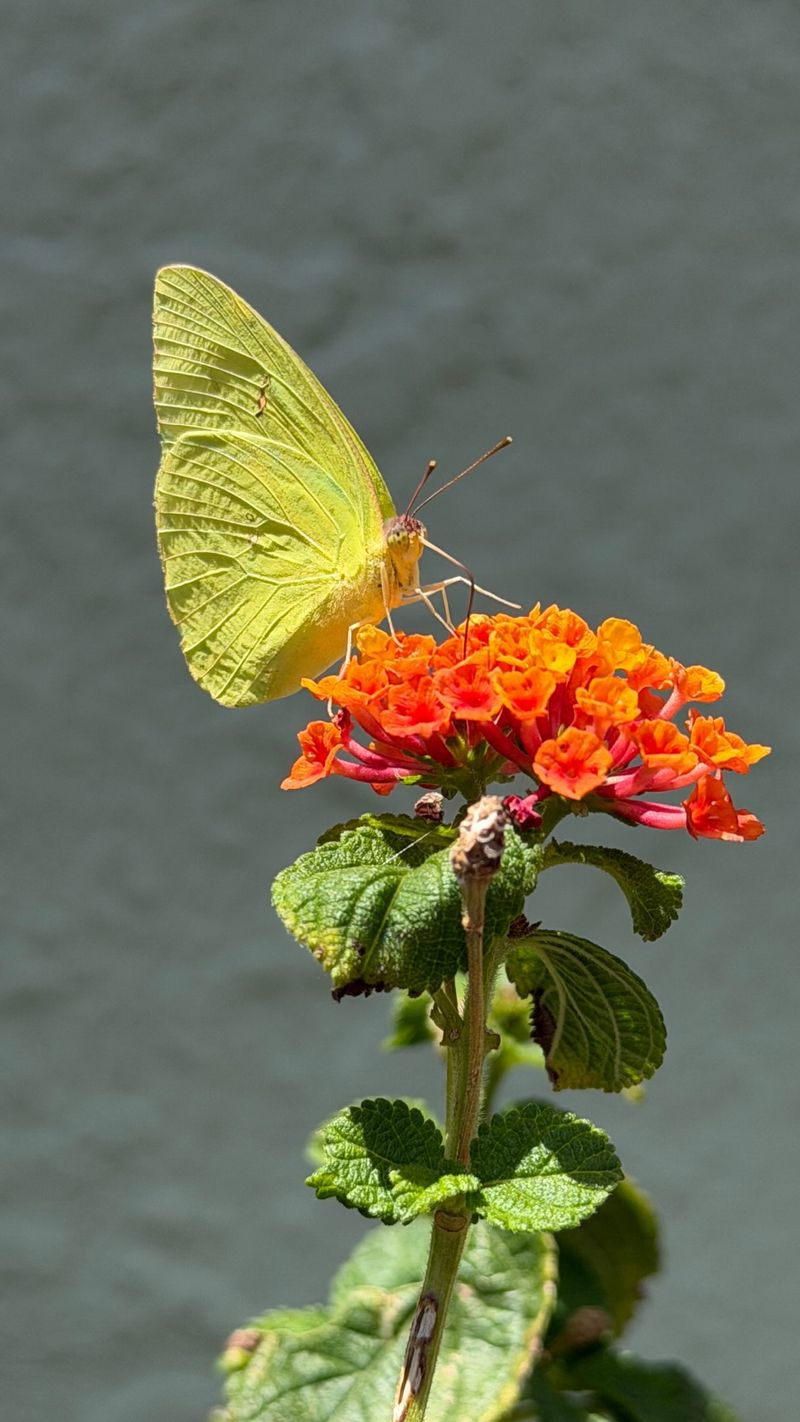
Butterflies seem to have a radar for lantana. Plant one along a sunny wall and, sooner or later, you will catch yourself counting wings on a single shrub.
Lantana thrives on the kind of heat that wilts most flowers. Varieties like Miss Huff, New Gold, and purple or white trailing types bloom from late spring right through fall, often until the first real cold snap.
The rounded flower clusters act like landing pads, giving butterflies a comfortable place to feed from many tiny blossoms at once.
Poor soil does not bother it much, and once established, it gets by on modest irrigation. Trailing forms make an excellent groundcover for hot slopes, while mounding types work well in borders.
Frost may brown the foliage in winter, but roots usually push fresh growth in spring.
Wait until new leaves appear in late winter or early spring before cutting back frost-damaged stems. Trimming too early can expose tender growth to another cold night.
One caution worth sharing: lantana berries and leaves are not safe for pets or kids to eat, so place it thoughtfully. Many homeowners grow it along front walkways or street edges, where it adds color and keeps butterflies close without tempting curious dogs.
5. Desert Milkweed
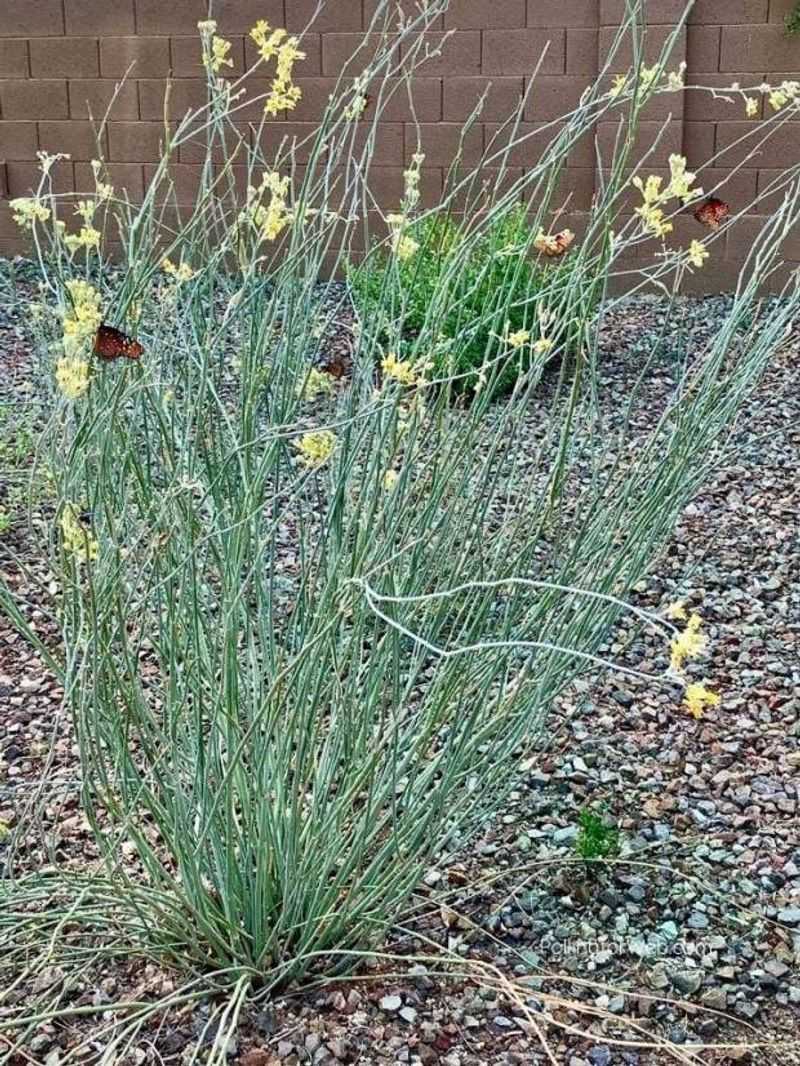
Monarchs passing through Arizona each fall are hungry travelers, and desert milkweed is one of the few native plants that feeds them at every life stage.
At first glance, it looks almost like a bundle of gray-green reeds. The nearly leafless stems are a clever water-saving trick, letting the plant handle reflected heat from walls and pavement.
Clusters of creamy yellow flowers appear in spring and often again in fall, offering nectar to butterflies, bees, and even hummingbirds.
The real magic happens on the stems. Monarch and queen butterflies lay eggs there, and the caterpillars munch away until they are ready to form a chrysalis.
Seeing those striped caterpillars is a sign your yard is working as true habitat. Milkweed also tends to attract predatory insects, which may help keep aphids and other pests in check.
Plant desert milkweed in full sun with excellent drainage. Water regularly the first season, then taper off.
Resist spraying aphids with chemicals, because whatever touches them can harm caterpillars too. A strong blast from the hose usually does the job.
Fall planting works best. Pair it with nectar plants nearby so adult butterflies have a reason to stay and visit.
6. Desert Four O’Clock
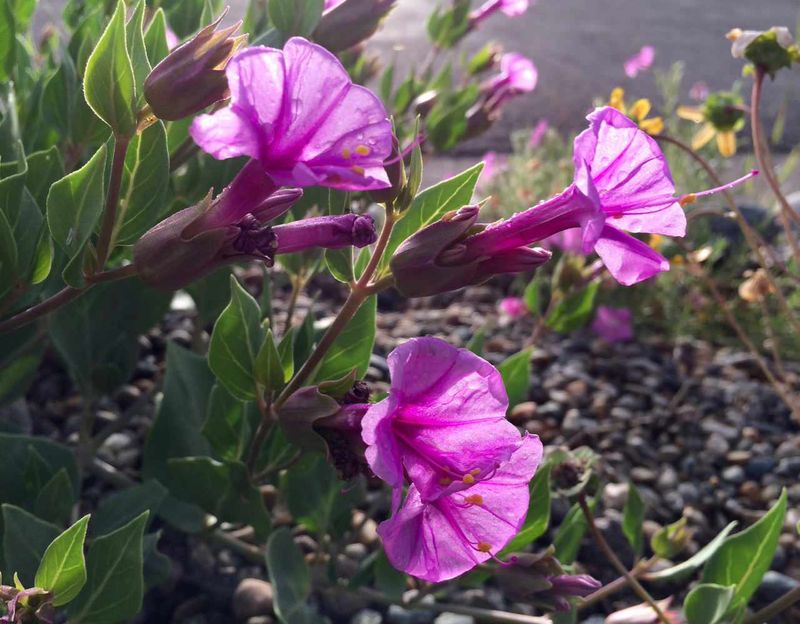
Most flowers punch out at sunset. Desert four o’clock is just clocking in.
Its bright magenta trumpets unfold in the late afternoon and stay open through the night, closing again by mid-morning.
That night-shift schedule makes it a favorite of sphinx moths, those big hovering pollinators that people often mistake for hummingbirds. Watching them work the flowers on a warm September evening is one of the quiet joys of desert gardening.
Butterflies and bees also grab a quick visit during the cooler morning hours.
Blooming typically runs from spring into October, and the plant spreads into a wide, low mound that can cover several feet. Underground, it grows a thick tuberous root that stores water, which is why it handles drought and heat so gracefully.
In winter, the top dies back to the ground, then returns with fresh growth in spring.
Give it full sun or light afternoon shade and nearly any well-drained soil. Skip heavy watering, which can cause root rot.
Plant it near a patio, back porch, or anywhere you relax after work. Pair it with outdoor seating and you get a front-row seat to nature’s evening show without lifting a finger.
7. Blackfoot Daisy
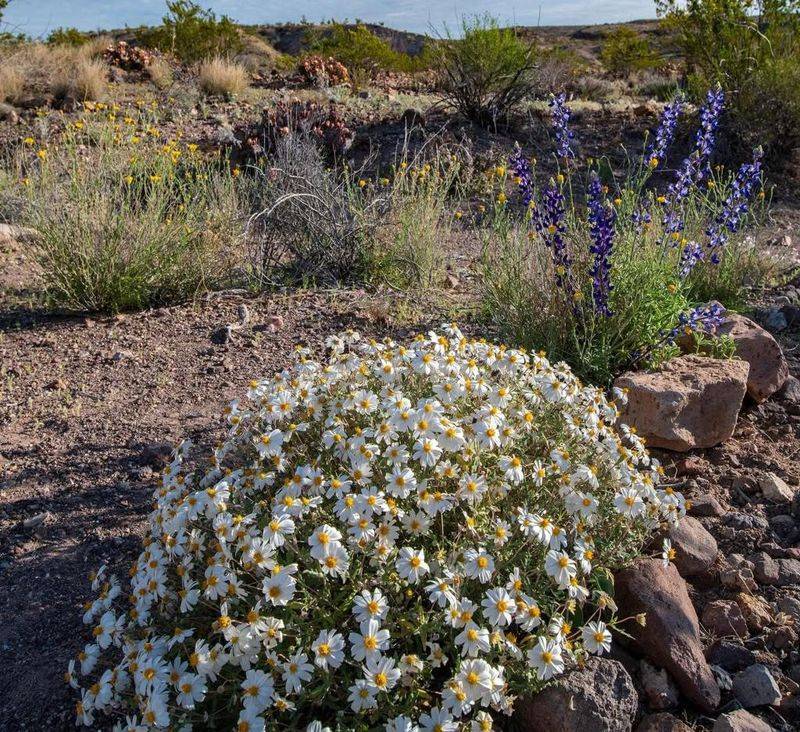
Small, tidy, and stubborn in the best way, blackfoot daisy proves that a pollinator plant does not need to be big to matter.
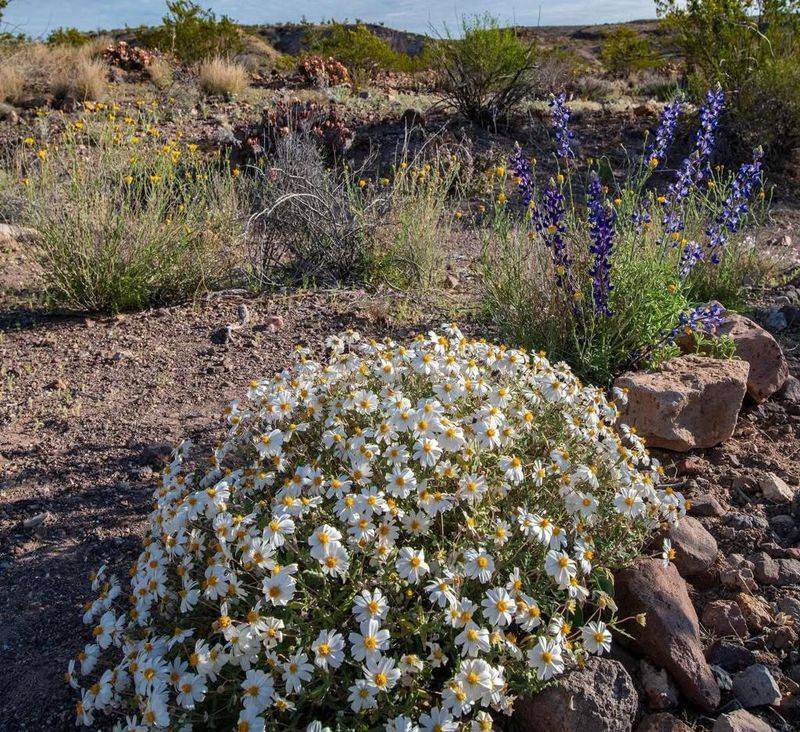
The mound rarely grows taller than a foot, yet it can stay covered in honey-scented white daisies from March all the way to November. That long stretch makes it a dependable snack bar for tiny native bees, which are some of the most important pollinators in the Sonoran Desert.
Butterflies stop by too, especially in spring and fall.
Drainage is the one thing this plant insists on. It loves rocky slopes, gravel beds, and spots between boulders where water slips away fast.
In fact, giving it too much water or rich soil is the quickest way to lose it. Once rooted, occasional summer watering is usually enough.
Because it stays compact, blackfoot daisy fits nicely along paths, in front of taller shrubs, or tucked into small courtyard beds. It also pairs well with agave and cacti, softening their sharp edges with a cloud of white.
A light shearing in late winter keeps it from looking leggy. Plant in fall or early spring and you will likely see your first blooms within weeks.
8. Goodding Verbena
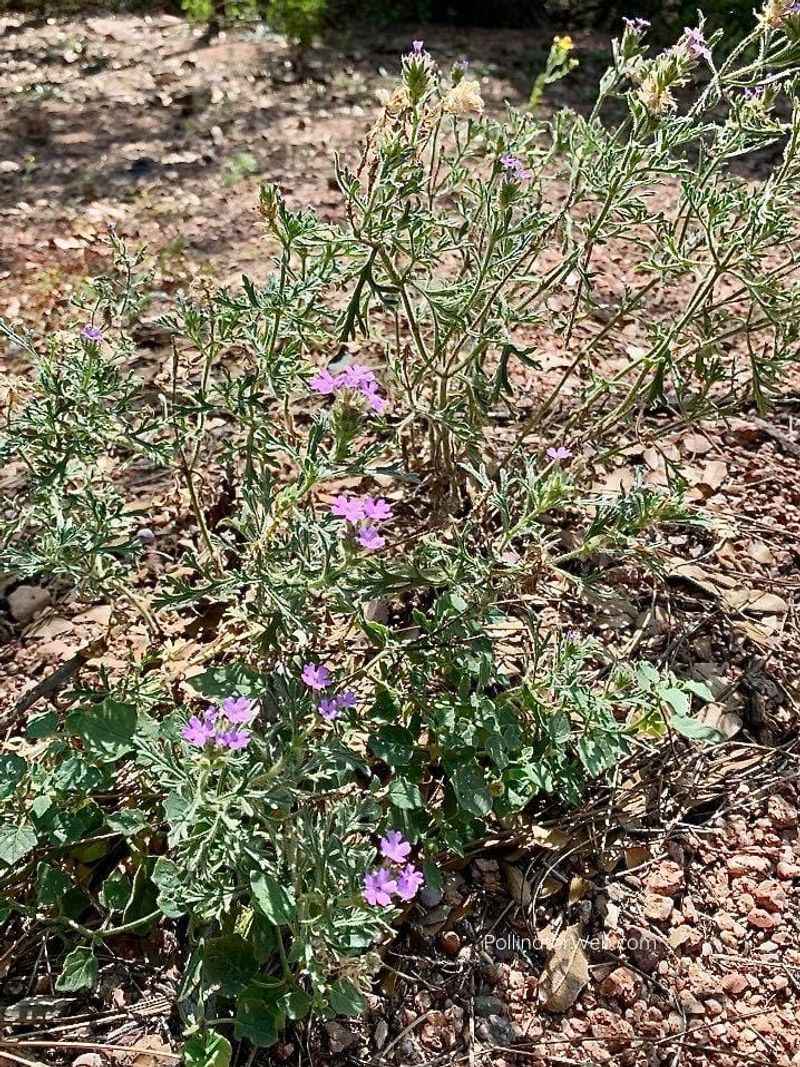
Walk past a patch of Goodding verbena on a mild fall day and you might notice the sweet scent before you see the flowers. Clusters of lilac to lavender blooms cover the low, spreading stems, and the fragrance is a big part of its pull on pollinators.
Bees, butterflies, moths, and hummingbirds all work these blooms. The heaviest flowering comes in spring and again in fall, often without any extra irrigation once plants are established.
Summer may bring a lighter show during the hottest weeks, but a little water during long dry spells usually keeps color coming.
As a native of Arizona’s rocky slopes and washes, it knows how to handle heat and poor soil. Good drainage is the main requirement.
It also works beautifully in large pots, where its trailing habit can spill over the edges.
Goodding verbena is often short-lived, around two or three years, but it reseeds on its own in many yards. Letting a few seedlings grow keeps the patch going without replanting.
Trim back spent flower stems now and then to encourage another flush. Then sit back and enjoy a front bed that smells as good as it looks.
9. Gregg’s Mistflower
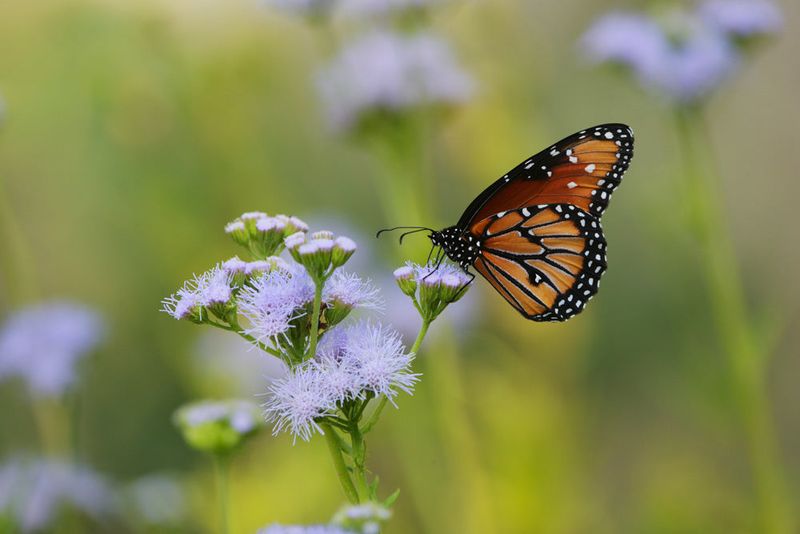
If you want to see butterflies stacked up like customers at a lemonade stand, plant Gregg’s mistflower. Gardeners across the valley rave about the crowds of queen butterflies it draws in fall.
The fluffy blue-purple blooms look a bit like tiny pom-poms or thistles, though they are soft to the touch. Flowering stretches from March to November, with a big burst when temperatures cool.
Queens, monarchs, painted ladies, and many smaller butterflies feed here, sometimes dozens at a time.
Unlike some desert plants, mistflower appreciates a bit of afternoon shade, making it handy for spots under a mesquite or palo verde canopy. It also tolerates full sun with slightly more water.
It spreads by underground runners, so give it room or plant it where a wider patch is welcome.
Winter frost may brown the stems. Cut them back once spring growth appears and the plant bounces back quickly.
Here is a fun detail: queen butterflies are related to monarchs and share their bold orange color, so many people mistake them for monarchs at first. Watching both on the same plant makes Gregg’s mistflower one of the most rewarding additions to any habitat yard.
10. Desert Willow
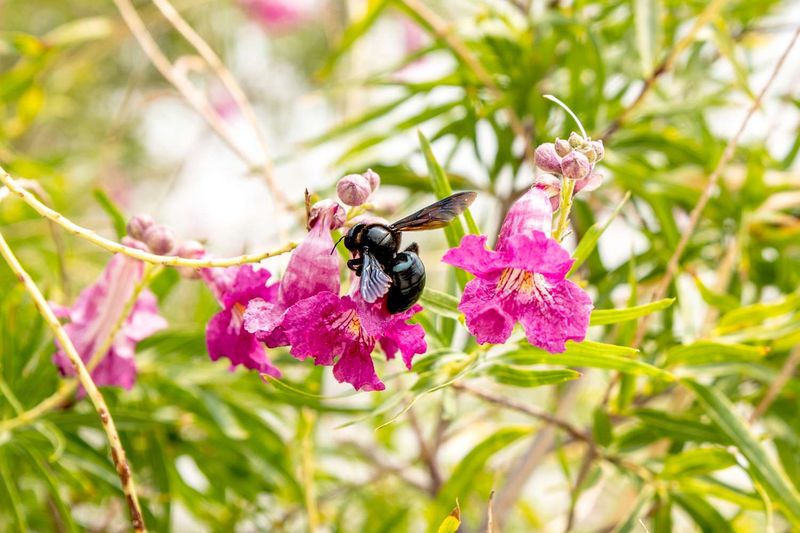
Every list needs a backbone, and desert willow brings both flowers and shade. This native small tree, which is not a true willow at all, produces orchid-like trumpet blooms in pink, lavender, burgundy, or white.
Flowering starts in late spring and often keeps going through summer into early fall, especially with an occasional deep soak. Big carpenter bees and bumblebees crawl right into the blossoms, while hummingbirds hover nearby.
Having a pollinator plant at tree height adds a whole new layer of habitat above your shrubs and groundcovers.
The airy canopy also casts light, filtered shade, which can help cool a patio or protect more tender plants beneath it on 110-degree days. Because it drops its leaves in winter, it lets warm sun through when you actually want it.
Desert willow grows quickly, handles alkaline soil, and needs little water once established. Plant it in fall to give roots time to settle before summer.
Seedless varieties like Bubba or Timeless Beauty reduce messy pods if you prefer a tidier look.
Pair it with salvias, globe mallow, and mistflower underneath, and you will have a layered pollinator garden that stays busy long after summer fades.