Bougainvillea In Arizona: The Full-Sun, Drought-Loving Climber That Thrives On Neglect
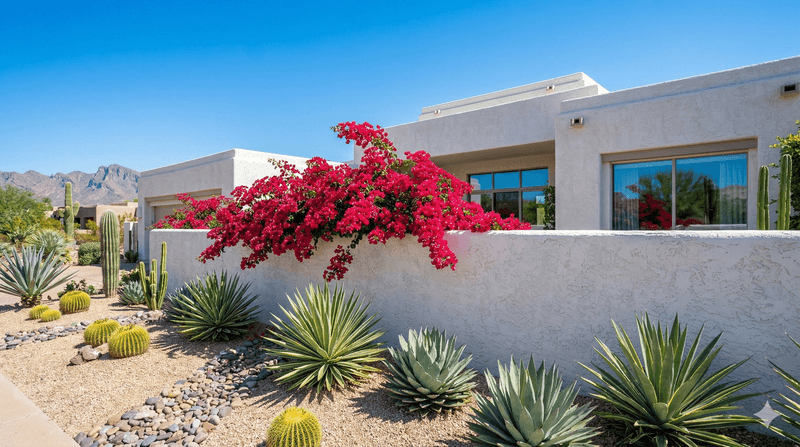
Few plants put on a show quite like bougainvillea blazing against a stucco wall in a Phoenix or Tucson yard. With its bold color and reputation for toughness, it sounds like the perfect set-it-and-forget-it plant for low-desert Arizona.
The truth is a bit more layered: once established, bougainvillea genuinely tolerates dry spells better than most ornamental vines, but it still needs real care during planting, summer heat, and cold snaps. Understanding exactly what this sprawling, support-trained vine requires will help you place it well and keep it thriving.
A low-water vine for the right low-desert site
The Arizona Department of Water Resources Phoenix Active Management Area plant list classifies Bougainvillea spectabilis as a low-water-use vine, giving it a relative water-use rating of 2 on a scale where lower numbers mean less water demand. That official classification is a genuine asset for a water-conscious Phoenix yard.
Tucson homeowners can also use bougainvillea successfully, but suitability there depends more on individual cultivar selection, soil type, sun exposure, elevation, and local frost conditions rather than a direct equivalent classification.
Bougainvillea originated in Brazil and arrived in Arizona landscapes as a desert-adapted ornamental, not as a plant native to the Sonoran Desert. That distinction matters because desert-adapted does not mean care-free.
The plant performs best in full sun and well-drained soil, and it never fully graduates from needing occasional attention, even after it settles in.
One detail worth knowing before you plant: the eye-catching color you see on bougainvillea is produced mainly by papery bracts surrounding the small true flowers, as the Royal Horticultural Society describes. The bracts hold their color for weeks, which is part of what makes the plant so striking in a low-desert landscape.
Established plants can tolerate neglect-like dry intervals between waterings, but that tolerance only kicks in after a deliberate establishment period, and the plant never becomes completely maintenance-free.
Water deeply without treating drought tolerance as permission to abandon the plant
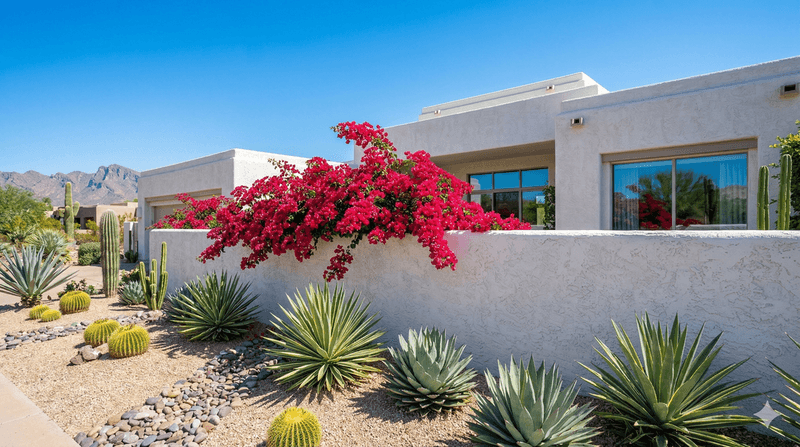
Low-water-use does not mean no-water-use, and that distinction is especially important during the first two to three years after planting. Newly established bougainvillea needs regular, consistent irrigation so its root system can expand into the surrounding soil.
Skipping waterings too early can cause wilting, dieback, or plant loss before the vine ever gets a chance to show its drought tolerance.
Once established in well-drained soil, bougainvillea can handle longer dry intervals between waterings. The goal is to wet the active root zone thoroughly each time you irrigate, then allow the soil to dry before watering again.
University of Arizona guidance on watering trees and shrubs recommends checking soil moisture with a probe rather than relying on a fixed number of irrigation minutes, because plant size, soil type, sun exposure, and container versus in-ground conditions all affect how quickly the root zone dries out.
Summer monitoring deserves special attention. When low-desert temperatures climb past 105 degrees Fahrenheit, recently transplanted bougainvillea faces serious stress, and even established plants may need a deep watering to prevent damaging dehydration.
The right approach is to avoid constantly wet soil while also preventing the plant from reaching the point of severe drought stress. Both extremes cause harm, so checking the root zone regularly through summer rather than setting a timer and walking away is the practical move.
Your Arizona Garden Changes Every Week. Your Plan Should Too.
Gardening in Arizona changes quickly throughout the season. Every Friday you’ll receive a simple weekly plan showing exactly what to plant, prune, fertilize, harvest, and protect so you never miss the right timing.
Choose full sun and verify drainage before planting
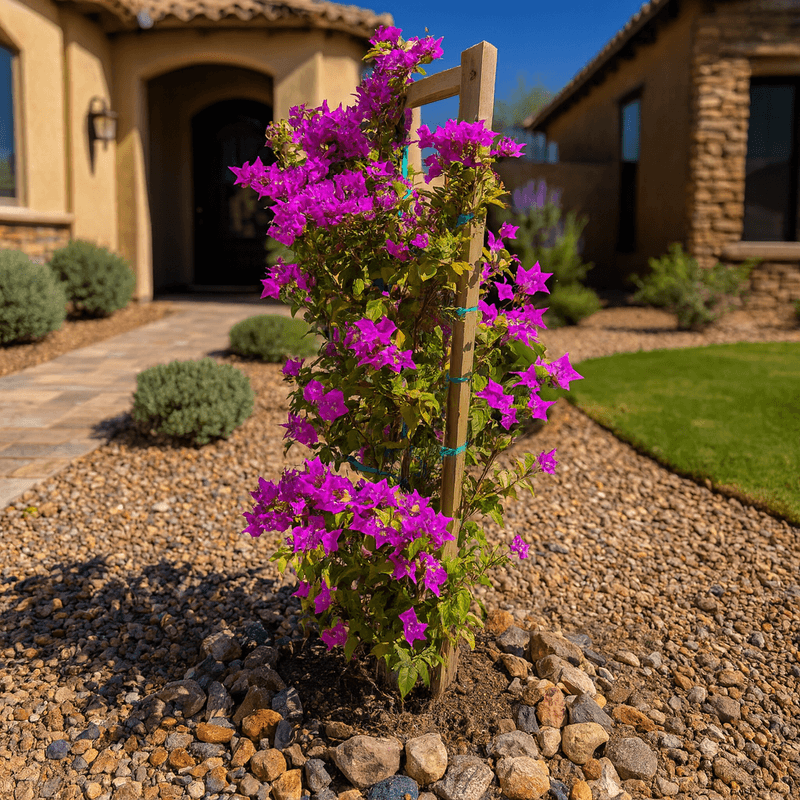
Bougainvillea blooms most reliably in full sun. Partial shade reduces flowering intensity, and excessive irrigation compounds the problem by encouraging leafy growth at the expense of the colorful bracts.
The University of Arizona Campus Arboretum confirms full sun as the correct placement for this vine, and choosing a spot that gets direct sun for the majority of the day is one of the most reliable things you can do to support a strong display.
Drainage is the other non-negotiable site requirement, and you should never assume your Phoenix or Tucson yard has it automatically. Caliche, a hardened calcium carbonate layer common across Arizona, can restrict root growth, reduce water movement through the soil profile, cause poor aeration, and create perched water that sits around the roots after irrigation.
Clay, compacted soil, and bedrock create similar problems. The University of Arizona caliche quick guide recommends a straightforward test: fill the planting hole with water and check how much it drops in four hours.
A drop of at least four inches signals adequate drainage. If the hole drains slowly, you may need to choose a different location, break through the restrictive layer, or amend the planting area before putting a bougainvillea in the ground.
Skipping this test and planting anyway is one of the most common reasons bougainvillea struggles in Arizona yards. A vine sitting in poorly drained soil will develop root problems even if you water correctly, so the few minutes spent testing the hole before planting can save a season of troubleshooting later.
Build support for a sprawling, thorny vine
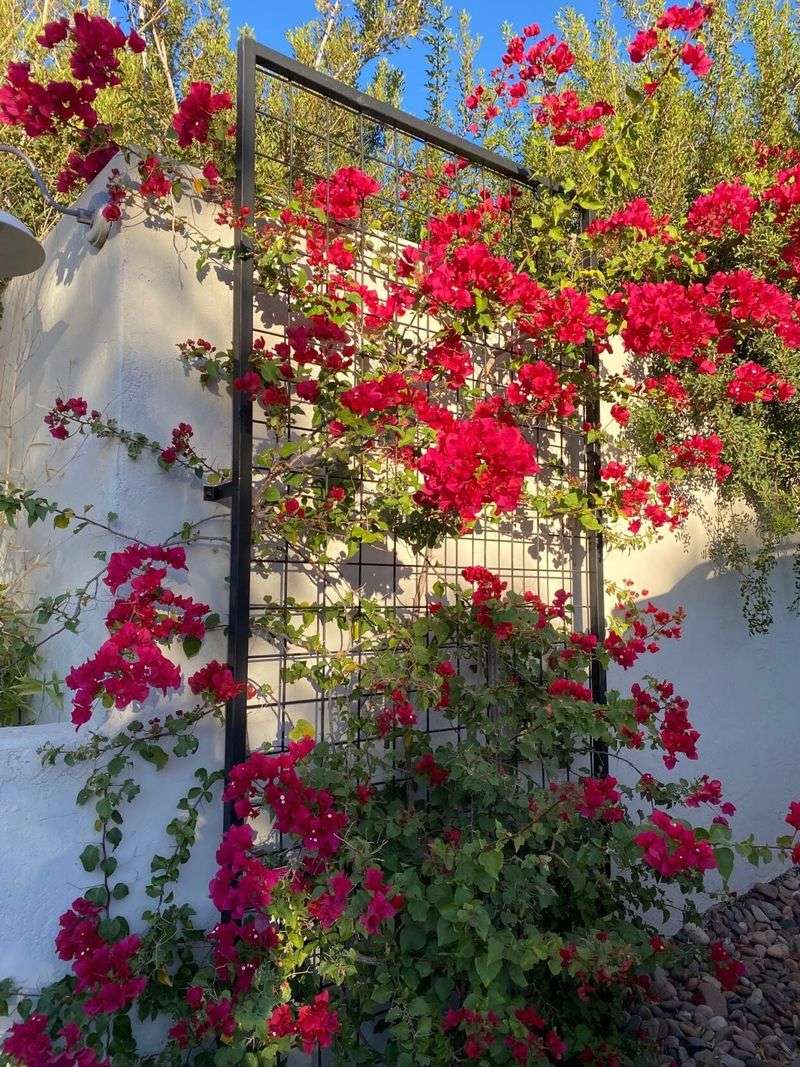
Bougainvillea is often described as a climbing vine, but that label can mislead. Unlike ivy or climbing hydrangea, it does not produce aerial rootlets that grip a wall, and unlike wisteria or clematis, it does not twine its stems around a support automatically.
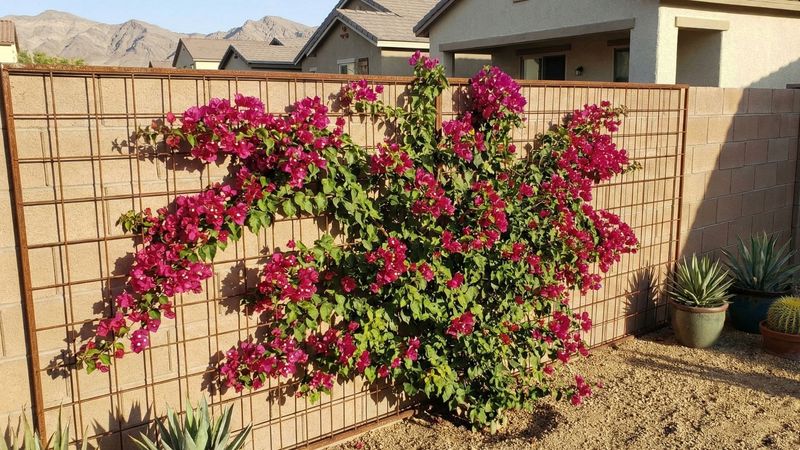
Bougainvillea is a sprawling vine, which means the gardener has to provide a sturdy trellis, fence, or other structure and then actively train and tie the stems to it as the plant grows.
Support selection matters because a mature bougainvillea can spread widely and carry significant weight when stems are long and full of foliage. A flimsy trellis that works for a young plant may fail after a few seasons of growth, and collapsed support means tangled, thorny stems that are difficult and painful to reorganize.
Choose a structure rated for the long term from the start, and plan the spacing so you can reach the stems for tying and pruning without pressing through a wall of thorns.
Training is an ongoing task rather than a one-time setup. As new growth extends beyond the support, it needs to be redirected and secured before it becomes a sprawling hazard.
Vertical coverage on a fence or wall develops gradually through consistent training, not through the plant finding its own way. Building that structure early makes every future pruning session and irrigation check easier and safer.
Prune for access, structure, and recovery after frost
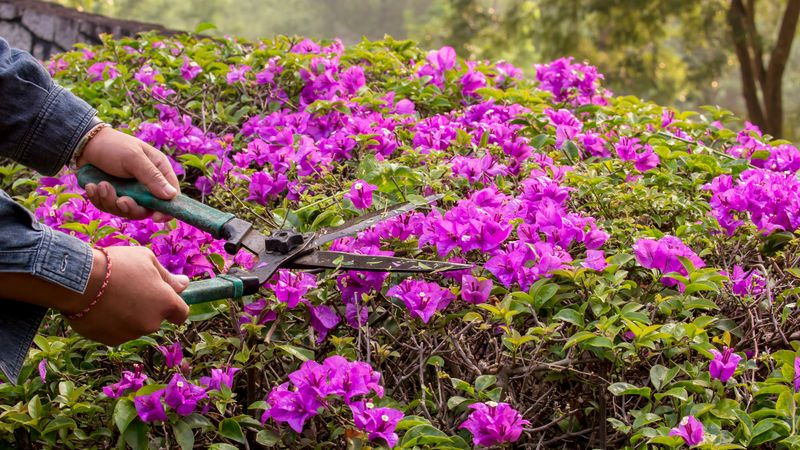
Regular pruning is part of owning a bougainvillea, not a sign that something has gone wrong. Vigorous shoots can extend well beyond the support structure in a single growing season, and removing them as needed keeps the vine manageable, maintains access to the support for tying, and prevents the plant from becoming an impenetrable thorn thicket along a walkway or fence line.
Frost recovery requires a specific approach. After a freeze, bougainvillea stems may appear dead, but the root system often survives and pushes new growth from the base or from lower on the stems.
University of Arizona guidance on pruning shrubs in low and mid-elevation deserts recommends waiting until frost danger has passed or until new regrowth makes it clear which wood is alive before cutting back frost-damaged stems. Cutting too early risks removing tissue that might still recover, and cutting into healthy wood can expose the plant to additional stress.
Pruning alone does not guarantee a specific bloom cycle or eliminate the plant’s maintenance requirements. Thorny stems still need to be handled carefully during every pruning session, which means thick gloves and long sleeves are practical gear rather than optional.
Approach each pruning job with a plan for where cut stems will land, since a thorny branch falling across a path or into a neighboring plant creates its own set of problems.
Plant during a safer window and prepare for freezes
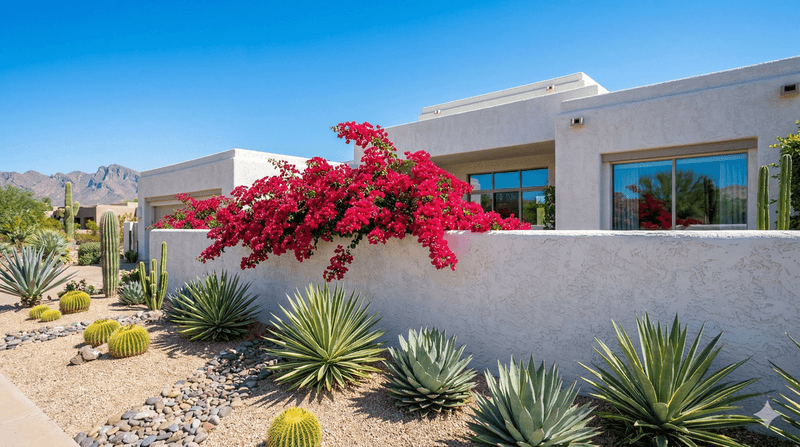
Fall and early spring are the most forgiving planting windows for bougainvillea in low-desert Arizona. Cooler air temperatures reduce transplant stress, and the plant has time to establish some root growth before it faces either summer heat or winter cold.
The University of Arizona November gardening guide for Pima County identifies fall as an active planting period for the Tucson area, and similar timing applies across the Phoenix metro. Summer transplants are possible but demand close irrigation monitoring and shade protection during the hottest part of the day, especially when temperatures exceed 105 degrees Fahrenheit.
Heat tolerance and freeze tolerance are two completely different things, and bougainvillea has plenty of the first but limited amounts of the second. The Arizona Department of Water Resources Phoenix plant list notes a cold-tolerance value of 28 degrees Fahrenheit for Bougainvillea spectabilis, but other cultivars may differ, and that single number does not apply uniformly to every yard.
University of Arizona frost protection guidance documents that first-frost dates in Maricopa County alone range from late November in Buckeye to mid-December in central Phoenix, and Tucson-area sites carry their own range of cold exposure depending on elevation and neighborhood.
A south- or west-facing location near a masonry wall can help by storing daytime heat and releasing it overnight, which raises the microclimate temperature during a cold snap. That advantage reduces freeze risk but does not eliminate it.
If a hard freeze is forecast, covering the plant with frost cloth is a straightforward step that protects the current season’s growth and makes recovery faster if temperatures do drop below the plant’s threshold.
Match the plant to the way people use the yard
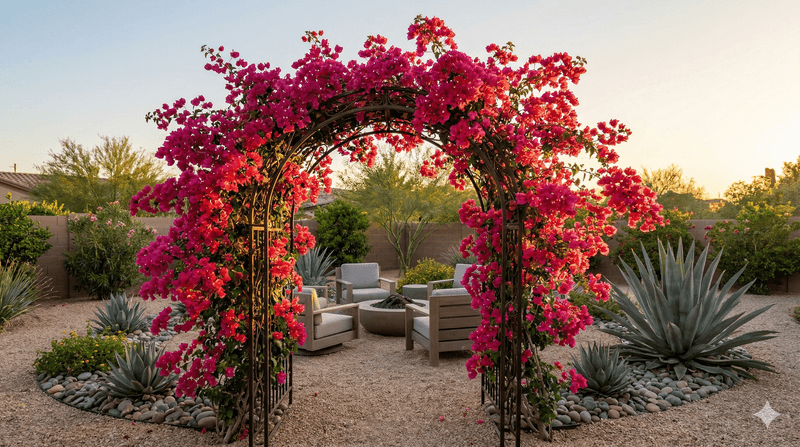
Placement decisions for bougainvillea should start with an honest look at how the yard actually gets used. Along a fence bordering a seldom-traveled side yard or framing a driveway entry, the plant can deliver vivid color with manageable thorn exposure.
Near a narrow walkway, a children’s play area, or any spot with regular foot traffic, the thorny stems create a real hazard that requires either extra setback, a physical barrier, or a different plant choice altogether.
The thorn concern goes beyond scratches. UC Agriculture and Natural Resources notes that bougainvillea punctures can cause dermatitis, and the plant’s sap carries a mild irritant that poses a risk if handled without gloves or if ingested in quantity.
That information is worth factoring in when pets or young children use the same spaces where the vine grows. Calling the plant unqualifiedly safe around kids or animals is not accurate.
Some gardeners ask whether bougainvillea deters scorpions, mosquitoes, or ticks, or whether it reliably attracts pollinators or other beneficial wildlife. The reviewed evidence does not support promising any of those outcomes.
The small true flowers inside the bracts can draw insects, but no reliable data establishes that planting bougainvillea makes a low-desert yard less inviting to scorpions or other pests. The plant earns its place in a Phoenix or Tucson landscape based on its genuine strengths: exceptional heat tolerance, low water demand once established, and long-lasting color in full sun.
Choose it for a warm, sunny, well-drained site where you can commit to establishment irrigation, ongoing support, regular pruning, and cold-weather monitoring. That combination is where bougainvillea genuinely earns its reputation.