These California Pool Plants Look Lush Without Dropping Leaves Everywhere
A pool area should feel like a relaxing escape, not another cleanup zone. In California yards, the challenge is finding plants that look full and tropical without sending leaves into the water every time the wind picks up.
The right choices can soften hard edges and make the space feel cooler. They can also give the pool a polished look without creating constant skimming work.
This is where plant habits matter as much as beauty. A messy grower near the water can become annoying fast.
A cleaner plant with steady structure can make the whole area easier to enjoy. Heat tolerance matters too, especially around paving that warms up quickly.
Choose poolside plants with care, and your backyard can feel lush without turning maintenance into the main event.
1. Kangaroo Paw
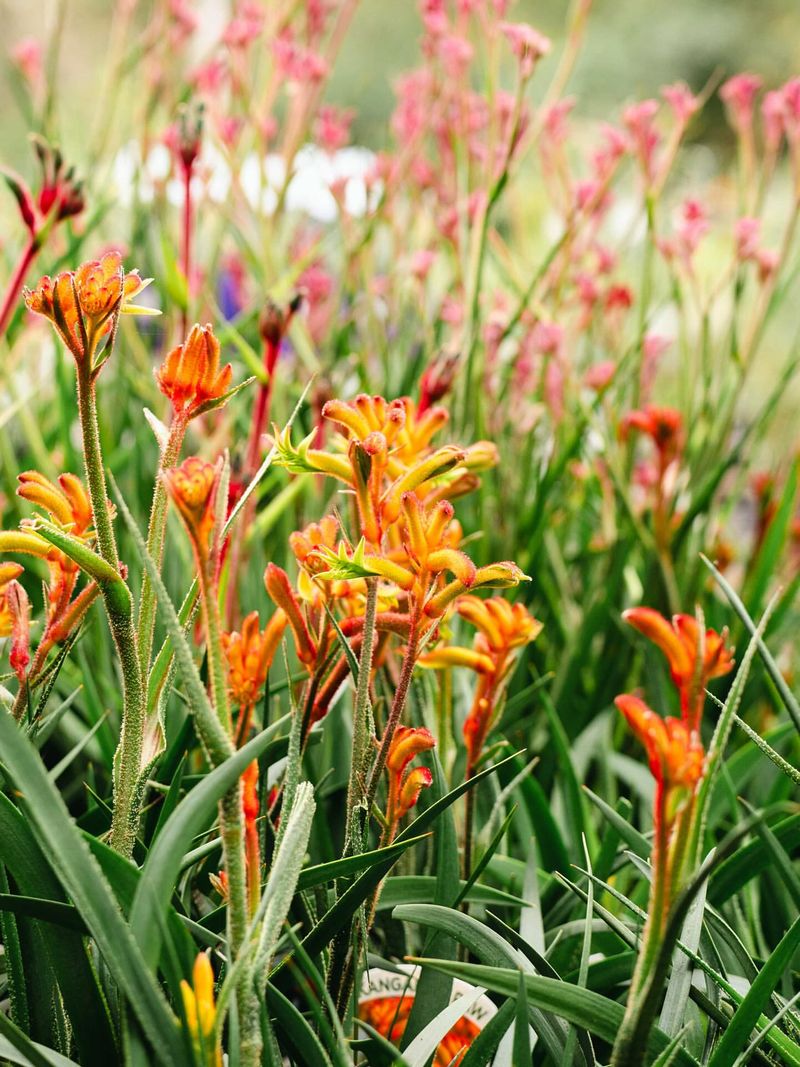
Kangaroo Paw is one of those plants that makes people stop and ask, what is that? The tubular flowers, covered in a velvety fuzz, come in shades of red, yellow, orange, and even burgundy.
They look almost too interesting to be real. This plant feels right at home in our warm, dry climate. It loves full sun and well-drained soil, which makes it a natural fit for pool areas where reflected heat can be intense.
It handles drought like a champ once it gets settled in. The real win for pool owners is how little debris Kangaroo Paw creates. The flowers dry on the stalk rather than dropping into the water.
A quick trim after blooming keeps it looking sharp without a big cleanup effort.
It grows in clumping bunches, usually reaching two to four feet tall depending on the variety. Dwarf cultivars are available and work especially well in smaller garden beds along a pool fence or deck edge.
The strappy leaves add nice texture even when the plant is not in bloom.
Plant it in groups of three or five for the most visual impact. Odd numbers tend to look more natural in garden design.
A little compost mixed into the planting hole gives it a strong start and leads to a longer, more vibrant blooming season.
2. Foxtail Agave
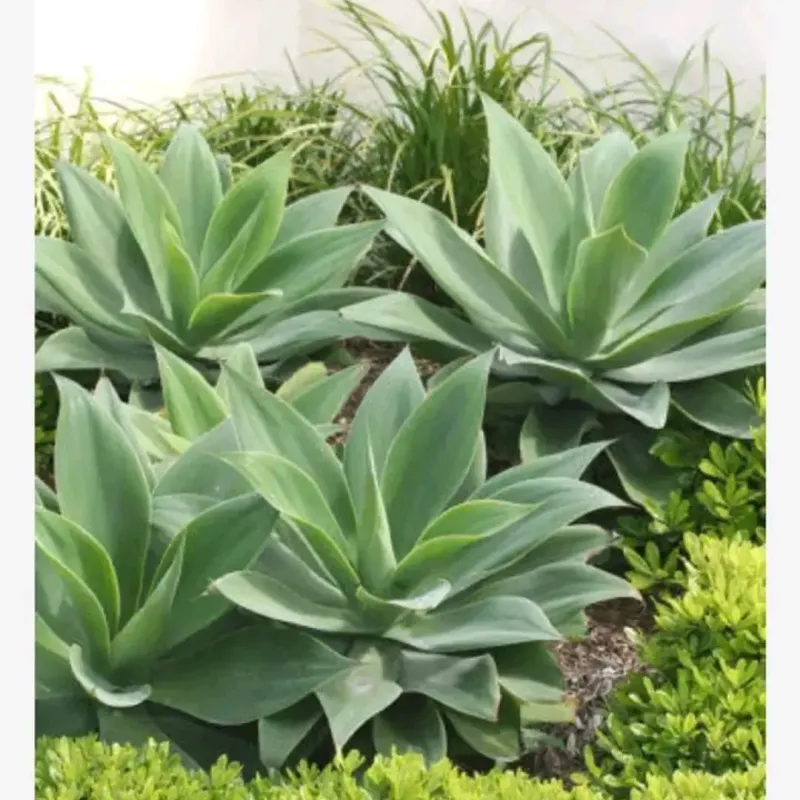
Bold, sculptural, and surprisingly soft to the touch, Foxtail Agave is one of the most pool-friendly succulents you can plant.
Unlike some agaves with sharp spines that can be a hazard near a pool, this one has flexible, spine-free leaf tips. That makes it much safer for bare feet and curious kids.
The leaves arch outward in a perfect rosette shape, giving the plant an almost fountain-like appearance. It stays tidy and compact, usually growing to about four feet wide and three feet tall.
That size works beautifully as a focal point plant in a raised bed or a large decorative pot near the pool.
Because it is a succulent, it stores water in its leaves and needs very little irrigation once established. In our warm, sunny climate, it thrives with minimal care.
Just make sure the soil drains well so the roots do not sit in standing water.
Your California Garden Changes Every Week. Your Plan Should Too.
Gardening in California changes quickly throughout the season. Every Friday you’ll receive a simple weekly plan showing exactly what to plant, prune, fertilize, harvest, and protect so you never miss the right timing.
Leaf drop is minimal, which is exactly what you want near a pool. Old leaves at the base can be gently removed a couple of times a year to keep the rosette looking clean.
The plant does produce a tall flowering spike after several years, but it happens rarely and is easy to manage.
Pair it with Blue Chalksticks or low ornamental grasses for a modern, low-maintenance poolside bed that looks professionally designed.
3. Bird Of Paradise
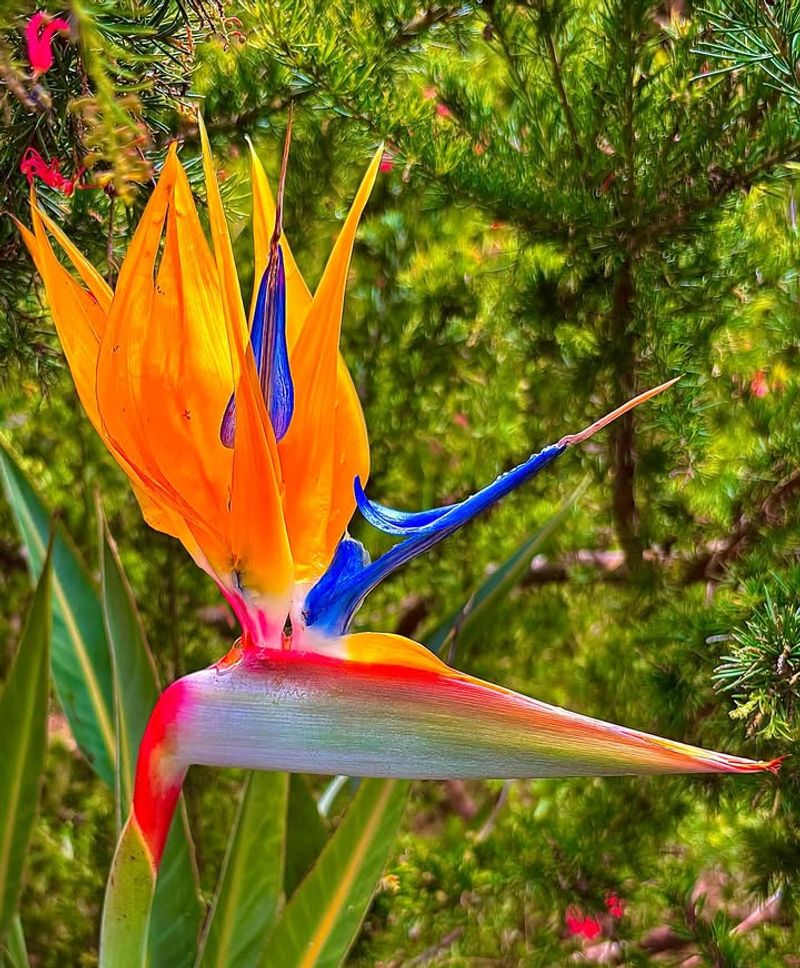
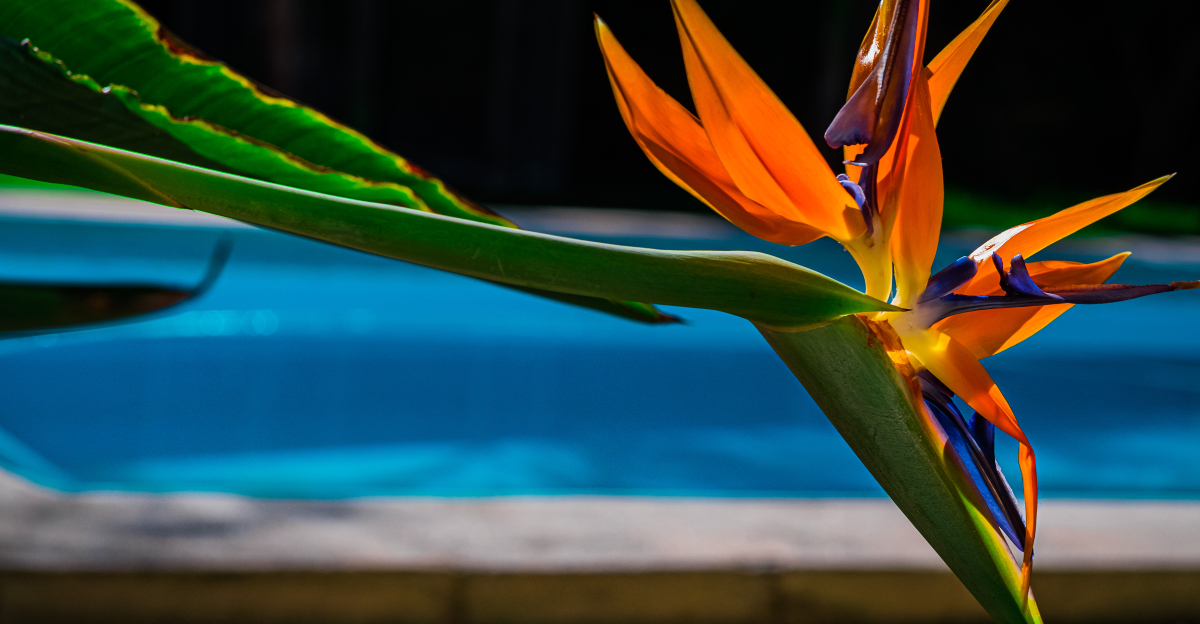
Few plants make a pool area feel as instantly tropical and resort-like as the Bird of Paradise.
Those large, paddle-shaped leaves and the iconic orange-and-blue blooms are hard to ignore. It brings serious drama without a lot of fuss.
One of the best things about this plant is how clean it keeps the pool area. Unlike flowering trees that drop petals constantly, Bird of Paradise holds its blooms upright.
The flowers sit on tall stalks and stay put until they fade, making cleanup easy.
It grows well in full sun and handles the heat of a poolside location without complaint. Once established, it needs very little water, which is a big bonus in our state’s dry summers.
It does best when planted a few feet away from the pool edge so the roots have room to spread.
You can find Bird of Paradise in two main sizes. The standard variety can grow quite tall, while the dwarf version stays more compact, around three to five feet.
The smaller size is often a better fit for tighter pool decks.
Fertilize it a couple of times a year with a balanced fertilizer to encourage those showstopping blooms.
With enough sun and occasional deep watering, this plant rewards you with one of the most eye-catching displays in the garden.
4. Blue Chalksticks
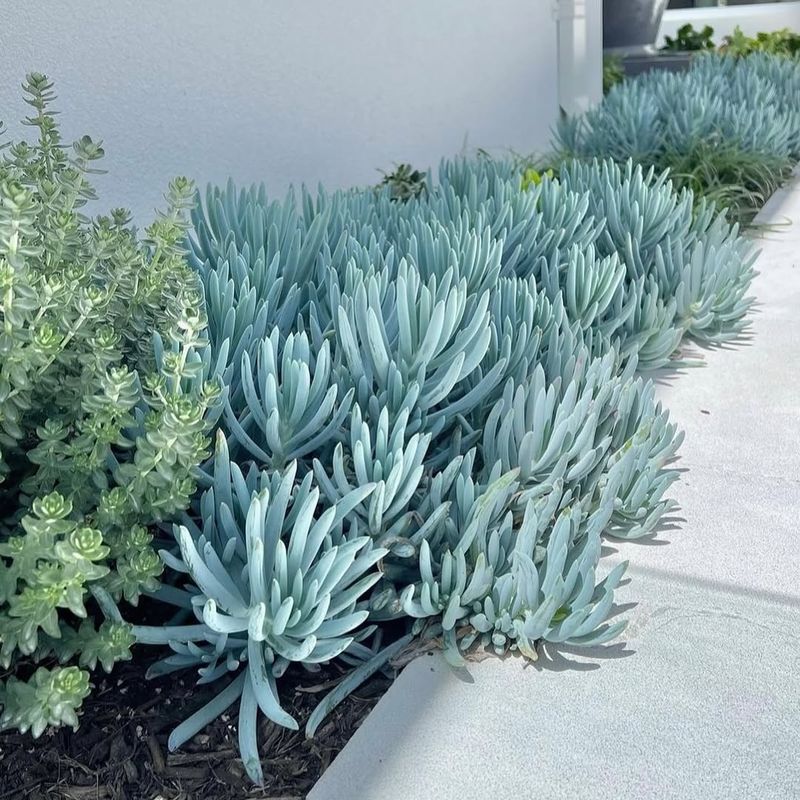
There is something almost otherworldly about Blue Chalksticks. The powdery, blue-gray fingers of this low-growing succulent seem to glow in bright sunlight.
It is one of those plants that makes a garden look expensive without costing much at all.
As a ground cover, it fills in spaces quickly and stays low to the ground, usually under a foot tall. That makes it ideal for the strips of soil between a pool deck and a fence or wall.
It will not block views, interfere with foot traffic, or drop anything into the water.
Blue Chalksticks is a drought-tolerant powerhouse. Once established, it barely needs watering.
In our warm, coastal and inland climates alike, it holds up beautifully through long dry stretches. It does prefer well-drained soil, so avoid areas where water tends to pool after rain.
The plant spreads slowly by branching outward, filling gaps without becoming invasive. If it gets a little leggy over time, a light trim brings it back to a neat shape.
Small white flowers appear in late spring, adding a delicate touch without creating a mess.
It looks stunning when paired with darker plants like Black Mondo Grass or the bold rosettes of agave.
The contrast between the cool blue-gray and deeper greens or purples creates a sophisticated palette that works especially well in modern or Mediterranean-style pool landscapes.
5. Dwarf Pittosporum
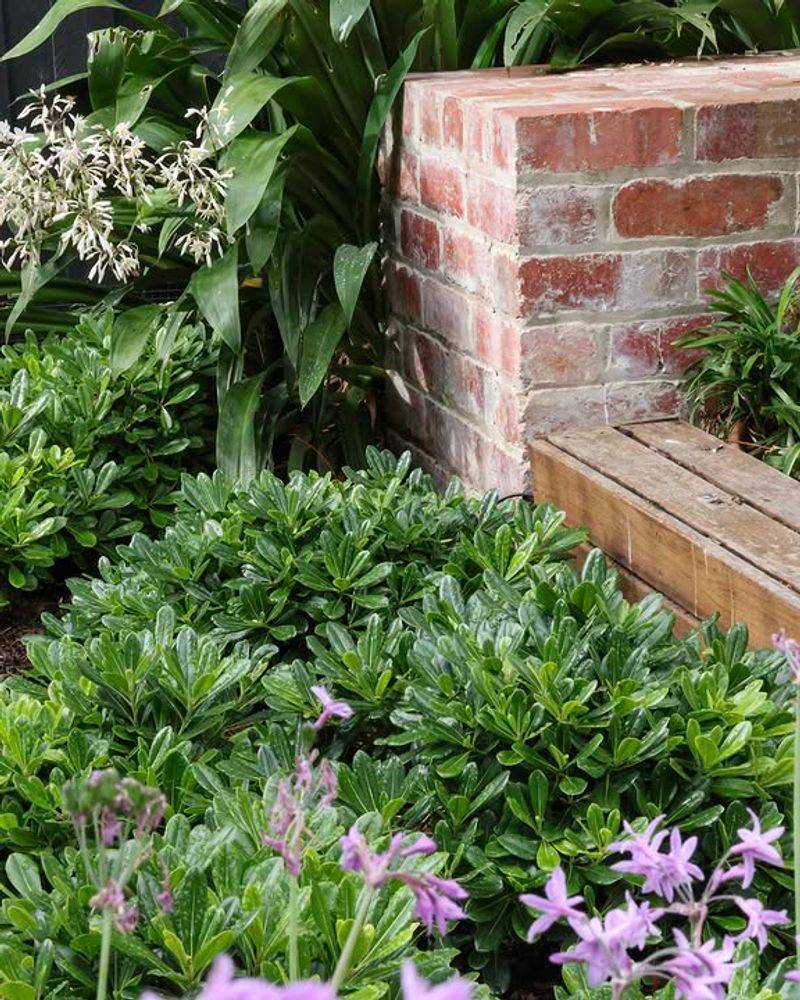
Not every pool plant needs to be a showstopper. Sometimes the best choice is something reliable, neat, and quietly beautiful.
Dwarf Pittosporum is exactly that kind of plant, and it earns its place in more pool gardens than almost any other shrub in California.
The glossy, deep green leaves stay on the plant year-round. There is no autumn leaf drop to worry about, and the plant keeps its shape with minimal pruning.
You can let it grow naturally into a soft mound or trim it into a more formal hedge. Either way, it looks polished.
It grows slowly, which is actually a benefit near a pool. You are not constantly cutting it back to keep it in bounds.
Most dwarf varieties reach about two to three feet tall and wide, making them easy to manage in tight spaces.
Fragrant white flowers appear in spring and are small enough that they do not create a debris problem around the pool. The sweet scent is a bonus that you will notice on warm evenings when you are relaxing by the water.
This shrub tolerates full sun to partial shade and handles the reflected heat from a pool deck well.
It is also relatively drought-tolerant once established, though it appreciates a deep watering every couple of weeks during hot summers. Plant it in well-drained soil and it will reward you for years.
6. Westringia
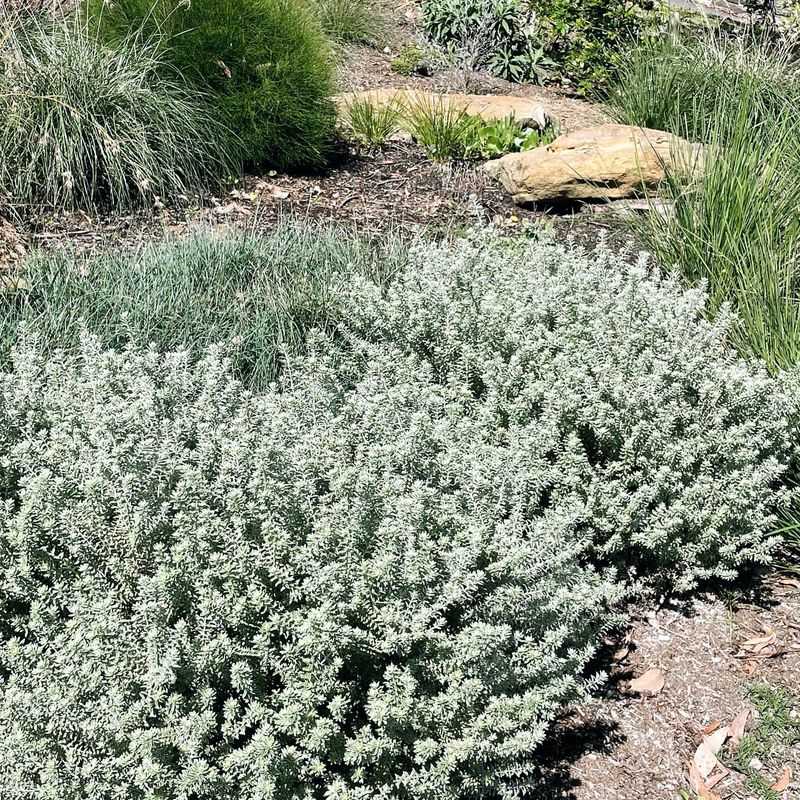
Sometimes called Australian Rosemary, Westringia is one of the hardest-working plants you can put near a pool. It looks soft and wispy but handles tough conditions like a seasoned pro.
The fine-textured, gray-green leaves create a lovely, airy look that feels relaxed and natural.
Small white or pale lavender flowers bloom throughout much of the year, especially in spring and fall. They are tiny, which means they do not create the kind of petal mess that would send you reaching for the skimmer net.
The plant just quietly blooms and looks beautiful without demanding attention.
Westringia is built for California’s climate. It thrives in full sun, tolerates coastal wind and salt air, and once established, needs very little supplemental water.
That combination makes it nearly ideal for pool-adjacent planting where conditions can be tough.
It grows into a rounded mound, typically two to five feet tall depending on the variety. Compact cultivars are available for smaller spaces.
A light trim once or twice a year keeps it tidy and encourages fresh new growth along the outer edges.
Because it holds its leaves tightly and does not shed much, the pool stays cleaner with Westringia nearby than with most other flowering shrubs.
For California gardeners who want the look of a lush, blooming border without constant upkeep, this plant is one of the smartest choices available in our region.
7. New Zealand Flax
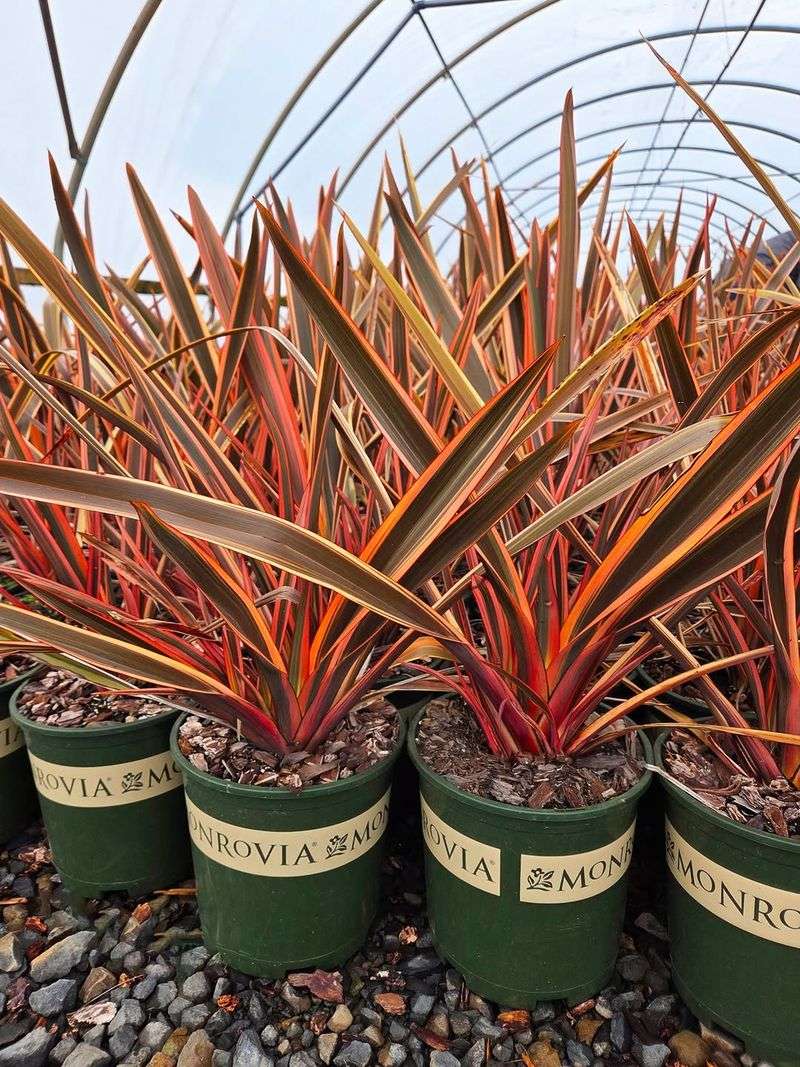
Bold, architectural, and practically zero-maintenance, New Zealand Flax is the kind of plant that transforms a pool area into something that looks designed by a professional. The long, strap-like leaves shoot upward in a dramatic fan shape.
Some varieties are solid green, while others come in stunning shades of burgundy, bronze, or striped combinations.
One of the biggest reasons pool owners love this plant is its clean growth habit. The leaves do not drop.
They stay firmly attached to the plant and only need occasional removal when they turn brown at the tips. A pair of scissors and five minutes of work keeps it looking sharp.
It grows in full sun to partial shade and handles heat, drought, and coastal conditions without skipping a beat.
Once established, it needs very little water, which fits well with water-wise landscaping goals across California.
Good drainage is important, so avoid low spots where water collects.
In terms of size, New Zealand Flax ranges from compact two-foot varieties to impressive six-foot specimens. Choosing the right size for your space matters.
A large variety planted too close to the pool can feel overwhelming, while a compact form in a big bed can look underwhelming.
Use it as a dramatic centerpiece surrounded by lower-growing plants like Blue Chalksticks or Society Garlic. The contrast in height and texture creates a layered, intentional look that really elevates the whole pool area.
8. Society Garlic
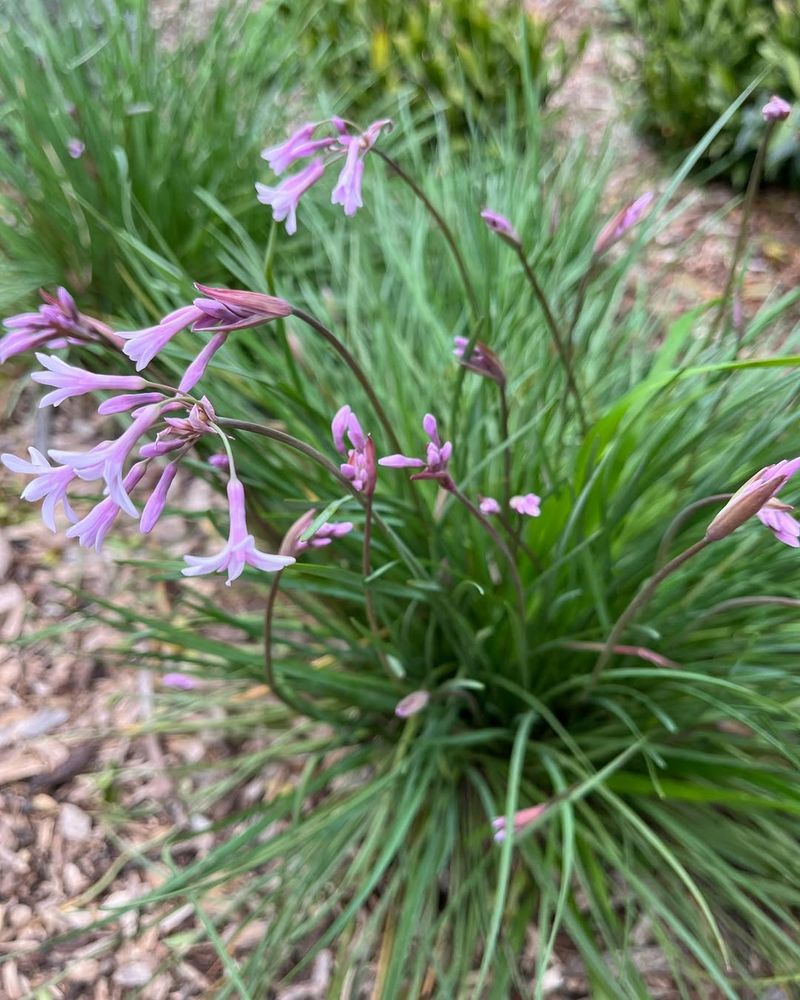
Society Garlic has one of the best personalities in the plant world. It is cheerful, easy to care for, and produces pretty clusters of lavender-purple flowers almost nonstop through the warmer months.
The name comes from the plant’s mild garlic scent, which is noticeable when you brush against the leaves but fades quickly in open air.
For pool areas, this plant is a dream. The flowers are small and held upright on slender stems, so they rarely fall into the water.
The strappy, grass-like foliage stays tidy and does not shed. You get color and texture without the cleanup headache.
It grows in clumping bunches about one to two feet tall, which makes it versatile enough to use as a border, ground cover, or accent plant in a raised bed. It fills in quickly and looks full without becoming invasive or hard to manage.
Full sun is where Society Garlic thrives, though it can handle a bit of afternoon shade. Once established, it is quite drought-tolerant, which is a real advantage during our dry summers.
Occasional deep watering keeps it blooming enthusiastically.
Cut the spent flower stalks back every few weeks to encourage fresh blooms and keep the plant looking neat.
Dividing the clumps every few years reinvigorates the plant and gives you extra divisions to spread around the pool area. It is one of those plants that just keeps giving.
9. Dwarf Natal Plum
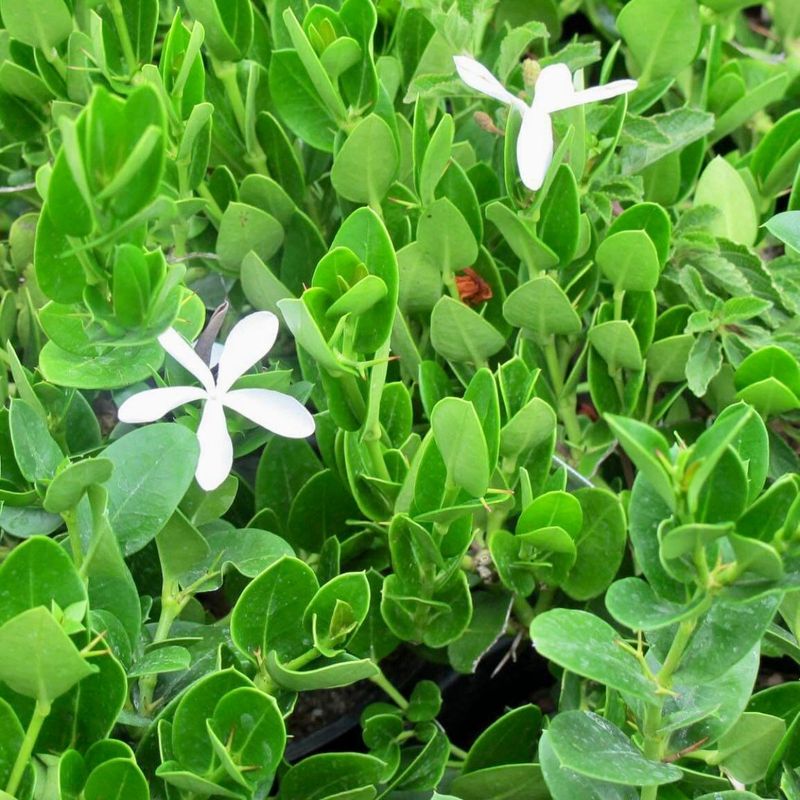
Glossy leaves, fragrant white flowers, and bright red fruit make Dwarf Natal Plum one of the most attractive low-growing shrubs for pool areas. It packs a lot of visual interest into a compact package, usually staying under two feet tall.
That small footprint makes it easy to tuck into narrow beds along a pool fence or deck edge.
The flowers are star-shaped and carry a sweet, jasmine-like fragrance that is especially noticeable on warm evenings. They appear sporadically throughout the year, with the heaviest bloom in spring and summer.
Because the flowers are small, they do not create a significant debris problem around the pool.
One thing to keep in mind is that the plant does have small thorns. Planting it a comfortable distance from the pool edge and away from high-traffic walkways is a smart move.
Once positioned well, it becomes a low-maintenance, long-lived part of the landscape.
It handles full sun and heat extremely well, which is important in spots where the pool deck reflects intense light and warmth.
Drought tolerance is good once the plant is established, though regular watering during the first growing season helps it get a strong root system going.
The small red fruits that follow the flowers are edible and have a mild, cranberry-like flavor. They add another layer of seasonal interest without creating a messy drop situation.
Birds may visit, which is a delightful bonus for any backyard setting.
10. Pygmy Date Palm
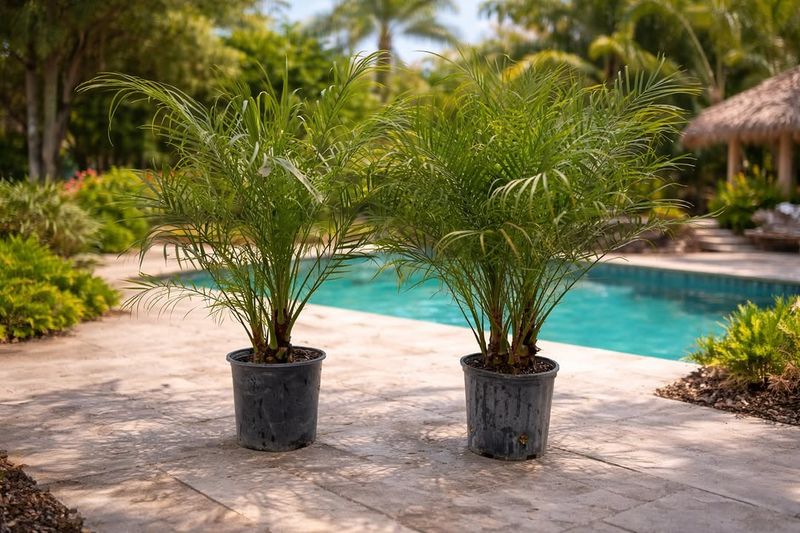
Every California pool deserves at least one palm, and the Pygmy Date Palm is one of the best choices for residential spaces. It brings that unmistakable tropical resort energy without growing so large that it becomes a problem.
Most mature plants reach six to twelve feet tall, making them manageable and proportionate for a typical backyard pool setting.
The feathery, arching fronds are graceful and move beautifully in a breeze. Unlike many larger palms, the Pygmy Date Palm does not drop heavy fronds that could damage pool equipment or create a hazard on the deck.
Old fronds can be trimmed away easily a couple of times a year.
It grows slowly, which means less maintenance over time and fewer worries about it outgrowing its space. A single specimen planted at the corner of a pool creates a stunning focal point.
Two or three grouped together can create a lush, layered look that feels genuinely tropical.
This palm loves full sun and handles heat well, making it well-suited to poolside conditions across most of California.
It is moderately drought-tolerant but benefits from regular watering during hot, dry stretches to keep the fronds looking their best.
Plant it in rich, well-drained soil and feed it with a palm-specific fertilizer a few times a year. With a little care, the Pygmy Date Palm will reward you with years of elegant, low-mess beauty right beside the water.