These California Spiders Are Garden Helpers You Should Never Remove
A spider in the garden can make some homeowners reach for a broom, but many deserve a second look. California yards are full of quiet hunters that help keep small pests in check while you are busy with other chores.
They may patrol leaves, hide near pots, or wait along fence lines where insects pass through. Most are not looking for trouble with people.
They are simply doing their part in the garden. Once you know which spiders are helpful, they become much easier to appreciate.
A tiny jumper or a careful web builder can be a sign that your yard has a working natural balance. Before removing every spider you see, it helps to know which ones are better left right where they are.
1. Orb Weavers Catch Flying Pests Between Garden Plants
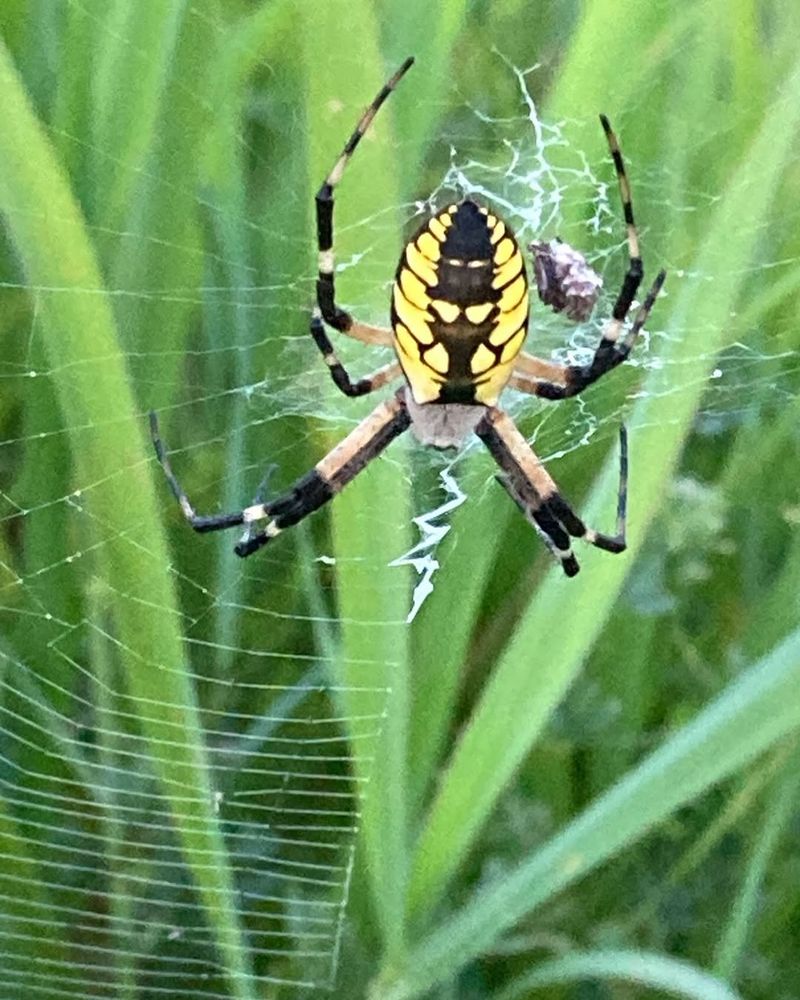
Few sights in a garden are as striking as a perfectly round web glowing in the early morning light. That masterpiece belongs to the orb weaver, one of the most useful spiders you will ever find among your plants.
These spiders spin large, circular webs that act like sticky nets, trapping flying insects before they can land on your leaves or flowers.
Orb weavers are especially active from late summer into fall. That timing works out perfectly, because pest populations tend to spike during those warmer months.
Whiteflies, moths, leafhoppers, and even small beetles get caught in these webs regularly. A single orb weaver can catch dozens of insects in just one night.
You will often spot them hanging upside down in the center of their web, waiting patiently. They are not aggressive and will not bother you unless handled roughly.
Most orb weavers found in California, like the garden orb weaver and the banded garden spider, are completely harmless to people and pets.
The best thing you can do is leave their webs alone. Try to work around them when pruning or watering.
If a web is in your way, gently move the spider to a nearby shrub. They usually rebuild overnight and get right back to work protecting your garden from flying pests naturally.
2. Jumping Spiders Hunt Aphids And Small Insects On Leaves
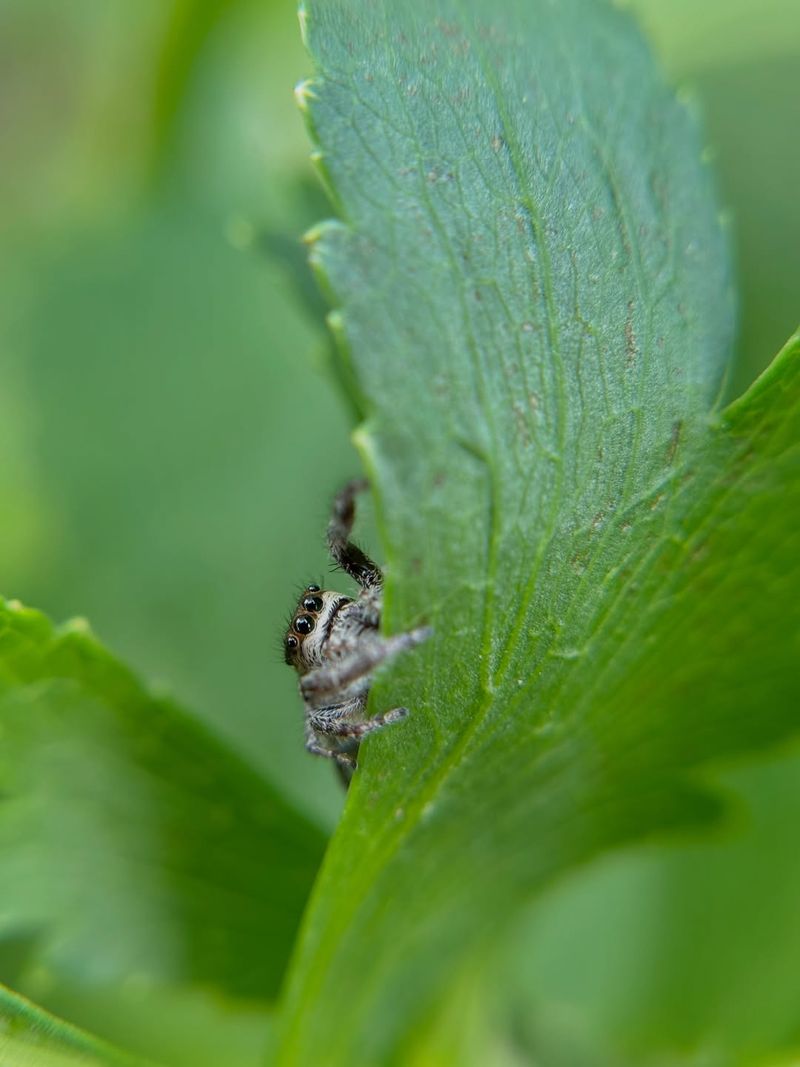
With their big, curious eyes and bouncy movements, jumping spiders are hard not to love. They are among the most active hunters in any garden and spend their days stalking prey across leaves, stems, and flower petals.
Unlike web-building spiders, these little hunters rely on speed, sharp vision, and precise jumps to catch their meals.
Aphids are one of their favorite targets. These tiny green or black bugs cluster on new plant growth and can weaken a plant fast.
Jumping spiders pick them off one by one, moving methodically across a stem or leaf. They also eat thrips, small flies, and other soft-bodied insects that damage garden plants.
What makes them especially useful is their willingness to hunt during the day. Most predatory insects prefer shade or nighttime.
Jumping spiders are out when the sun is shining, which means they are active exactly when many pests are feeding. They cover a lot of ground for their small size.
Your California Garden Changes Every Week. Your Plan Should Too.
Gardening in California changes quickly throughout the season. Every Friday you’ll receive a simple weekly plan showing exactly what to plant, prune, fertilize, harvest, and protect so you never miss the right timing.
You might notice them tilting their heads as they watch you. That behavior is completely normal and is part of how they track movement with their forward-facing eyes.
They are not a threat to people at all. Found throughout California from coastal gardens to inland yards, jumping spiders are tireless little workers that earn their place in any healthy garden.
3. Wolf Spiders Patrol The Soil For Crawling Pests
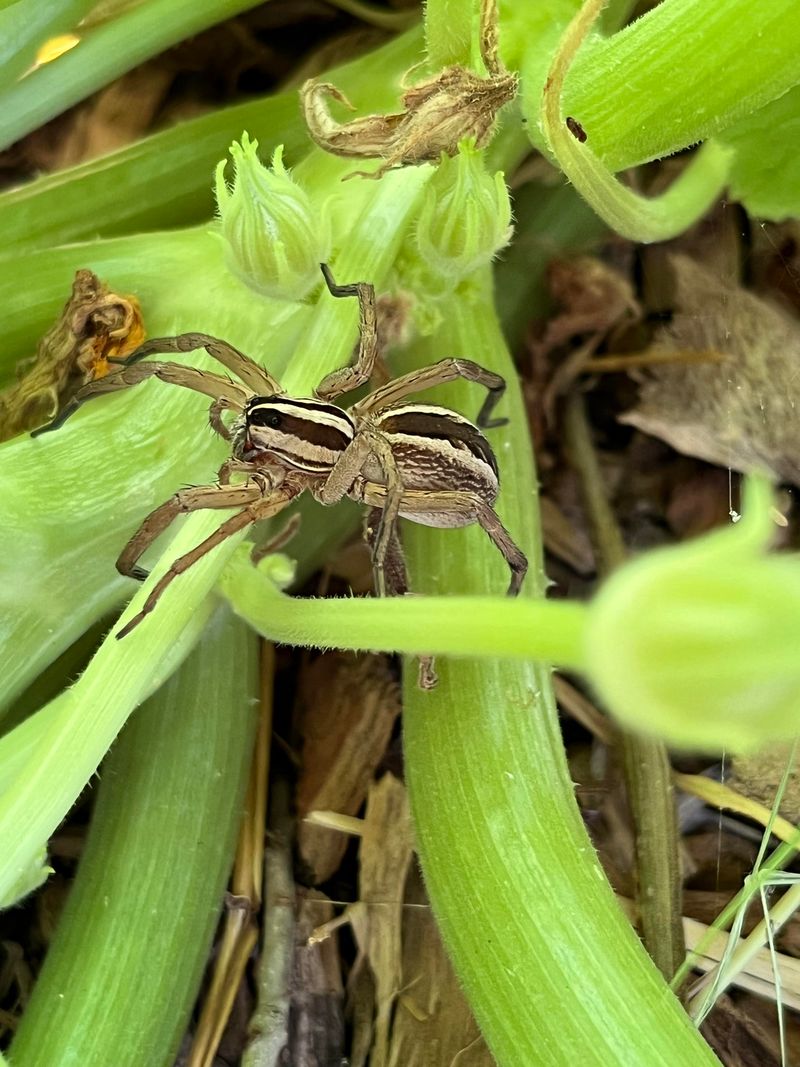
Not every garden threat flies through the air. Many pests crawl along the ground, through mulch, and under debris near your plant roots.
That is exactly where wolf spiders do their best work. These fast-moving hunters patrol the soil surface and low ground cover, chasing down insects that other predators never reach.
Wolf spiders are big, hairy, and fast. They can look intimidating at first glance, but they are not dangerous to people.
Their venom is mild and they almost never bite unless cornered or squeezed. In fact, spotting a wolf spider in your garden beds is a very good sign that your soil ecosystem is healthy.
They eat cutworms, earwigs, small beetles, ants, and other crawling insects that feed on roots and seedlings. Cutworms alone can wipe out a row of young vegetable plants overnight.
Having wolf spiders patrolling the soil is one of the best natural defenses against that kind of damage.
Female wolf spiders carry their egg sacs and even their young on their backs, which is a fascinating behavior you might observe if you look closely. They do not build webs and prefer to roam freely.
In the northern parts of California and the Central Valley, wolf spiders are especially common in vegetable gardens and raised beds, making them one of the hardest-working ground-level helpers around.
4. Crab Spiders Wait On Flowers For Unwanted Visitors
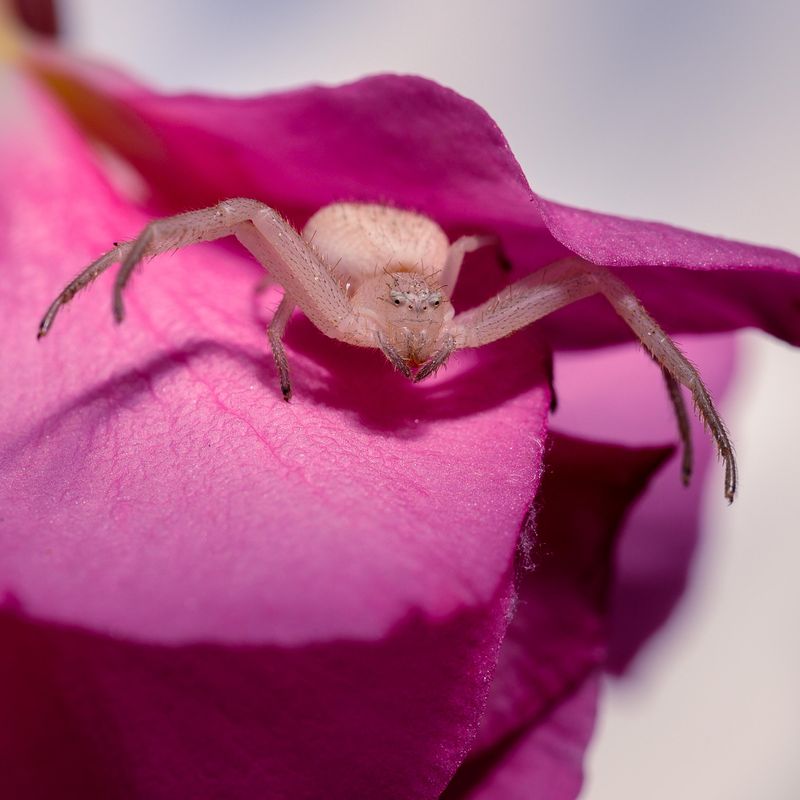
Some hunters do not chase their prey. They wait for it.
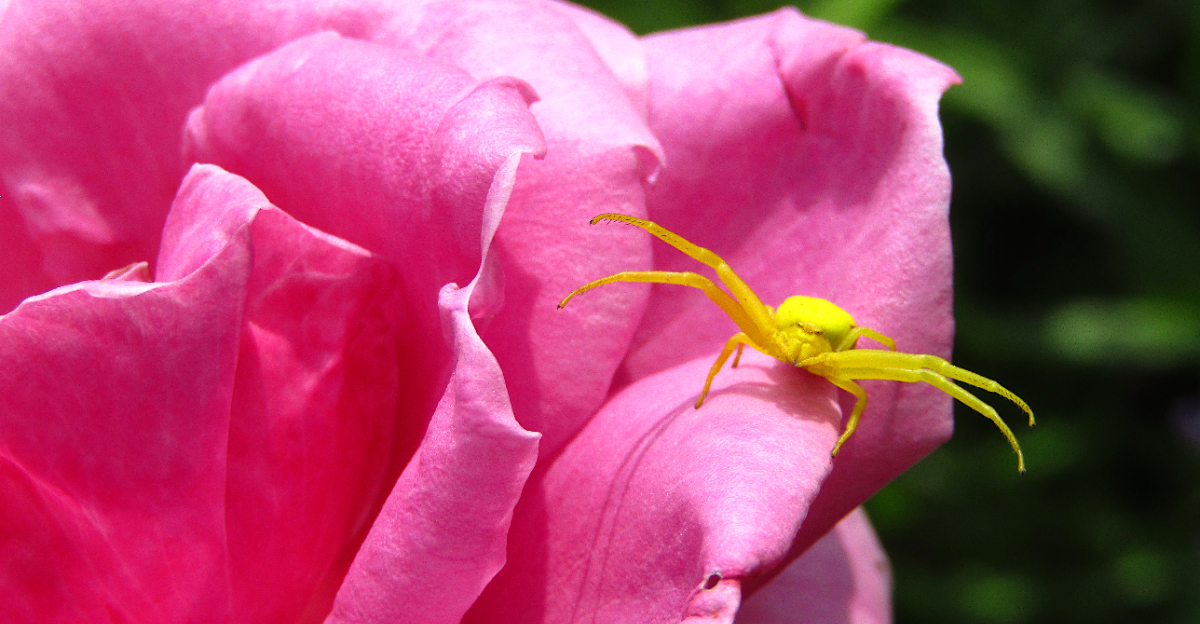
Crab spiders are masters of patience and camouflage, blending into flower petals so well that even insects flying right toward them have no idea what is waiting. Their front legs are spread wide, ready to grab anything that lands too close.
What makes crab spiders so valuable is where they hunt. Flowers are a major gathering point for pest insects like aphids, thrips, and certain beetles that feed on pollen and petals.
Crab spiders position themselves right in the middle of that activity and quietly remove the insects that would otherwise damage your blooms.
Some species can even change color slowly to match the flower they are sitting on. A yellow crab spider on a sunflower is nearly invisible.
A white one on a daisy blends right in. This camouflage works so well that even experienced gardeners often miss them entirely during a casual walk-through.
They are completely harmless to people and do not build webs. Their hunting style is still and silent, which means they do not disturb other beneficial insects like bees and butterflies that visit the same flowers.
In gardens across California, from coastal wildflower patches to backyard rose beds, crab spiders are quiet protectors that keep flower-feeding pests in check without any effort on your part. Let them stay.
5. Funnel Weavers Build Pest-Trapping Webs In Shrubs
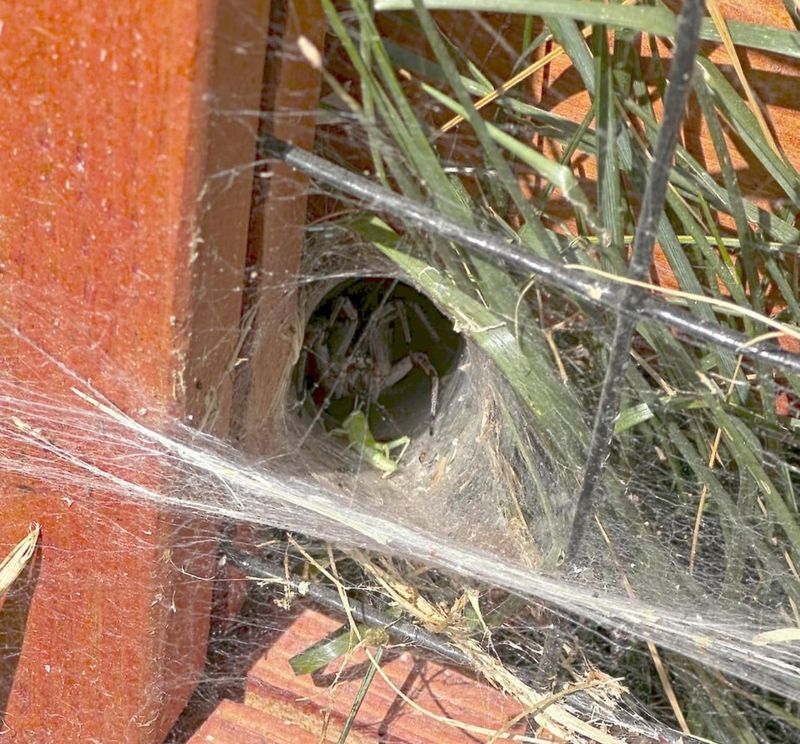
Have you ever noticed flat, sheet-like webs stretched across the base of a shrub with a small tube disappearing into the center? That is the work of a funnel weaver.
These spiders build one of the most clever traps in the garden. The flat sheet catches insects that trip or fall onto it, and the funnel below is where the spider waits to pull them in.
Funnel weavers are especially common in dense shrubs, ground cover plants, and low hedges. They prefer spots with some shelter and good insect traffic.
Grasshoppers, beetles, and small flies are common catches. Because their webs stay in place for weeks, they work around the clock without needing to rebuild every day like orb weavers do.
These spiders are shy and fast. The moment they sense vibration, they dart into the funnel and wait.
They rarely wander out into open spaces, which makes them easy to live alongside. Most people never even realize they are sharing their garden with a whole community of funnel weavers.
You will find them in higher numbers during fall when cooler temperatures push insects lower to the ground. Across the shrubby hillsides and landscaped yards throughout California, funnel weavers are steady, reliable pest trappers.
Avoid spraying shrubs with pesticides, since that removes these helpful spiders along with the pests they are already managing for you.
6. Cobweb Spiders Catch Insects In Quiet Garden Corners
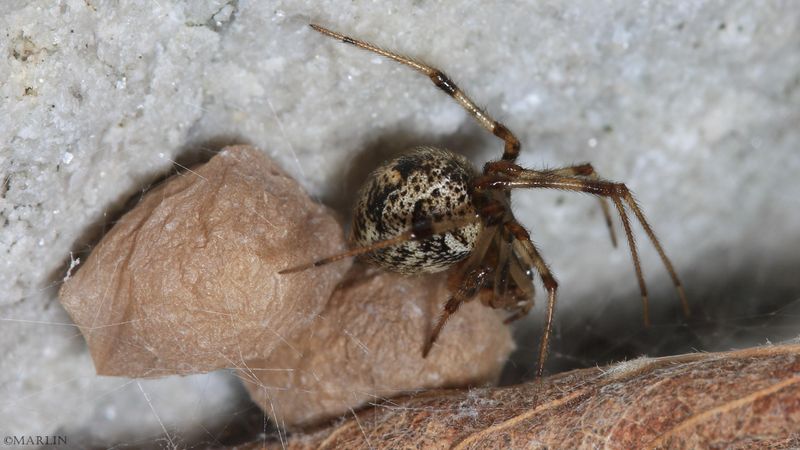
Cobweb spiders get a bad reputation mostly because of their messy, tangled webs. Unlike the neat circles of an orb weaver, cobweb spider webs look disorganized and dusty.
But do not let appearances fool you. Those irregular threads are actually highly effective traps that snag crawling and flying insects from multiple directions at once.
These spiders love quiet, undisturbed spots. Corners of fences, the undersides of garden furniture, spaces between pots, and shaded walls near garden beds are all prime locations.
They set up their webs and wait for insects to stumble or fly into the sticky threads. Once trapped, the insect is quickly subdued and consumed.
Common prey includes fungus gnats, small flies, and even ants. Fungus gnats are a real nuisance for container gardeners and raised beds because their larvae feed on plant roots.
Cobweb spiders stationed near your pots can help keep those gnat populations from getting out of hand.
The cobweb spider family includes many harmless species found throughout our state. Most are tiny and easy to overlook.
Some have patterned abdomens in red, brown, or cream that are actually quite beautiful up close. Instead of sweeping away their webs in garden corners, try to leave them in place.
Those messy threads are quietly doing pest control work that benefits your entire garden space every single day.
7. Sac Spiders Hunt At Night When Other Predators Rest
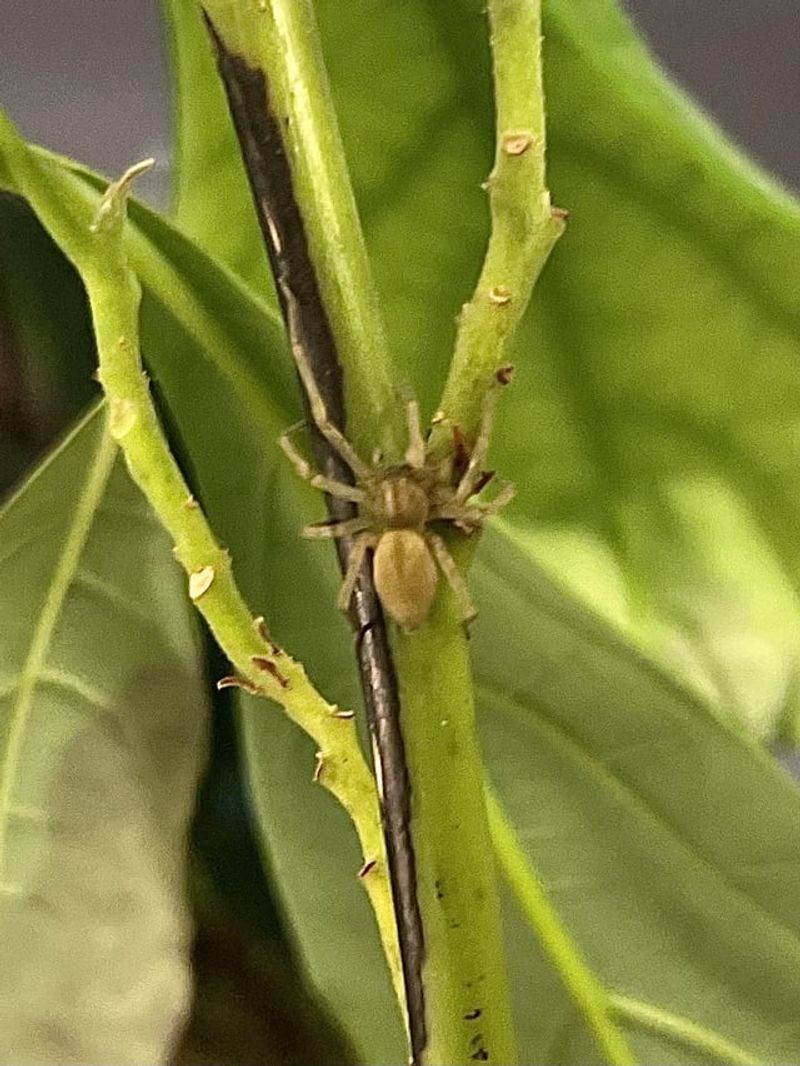
When the sun goes down and most garden activity slows, sac spiders are just getting started. These nocturnal hunters roam plant surfaces after dark, actively searching for insects that feed on leaves and stems during nighttime hours.
They do not rely on webs to catch prey. Instead, they chase it down with surprising speed and agility.
Sac spiders are named for the small silken sac they build during the day to rest inside. You might find these tiny pouches tucked between leaves or in the fold of a plant stem.
At night, they leave the sac and begin their patrol. They eat aphids, small caterpillars, leafhoppers, and mites, all of which can cause serious damage to vegetables and ornamental plants.
Their pale yellow or cream-colored bodies make them easy to spot with a flashlight during a nighttime garden walk. They move quickly and confidently across leaf surfaces.
Because they are active when most gardeners are indoors, they often go unnoticed and unappreciated.
Sac spiders are found throughout California in vegetable gardens, flower beds, and even on indoor houseplants near open windows. They are not aggressive and rarely interact with people.
Bites are uncommon and mild. Giving them space to roam at night means your plants get an extra layer of protection during the hours when pest insects feel safest.
That is a trade worth making.
8. Cellar Spiders Help Control Small Flying Insects Near Patios
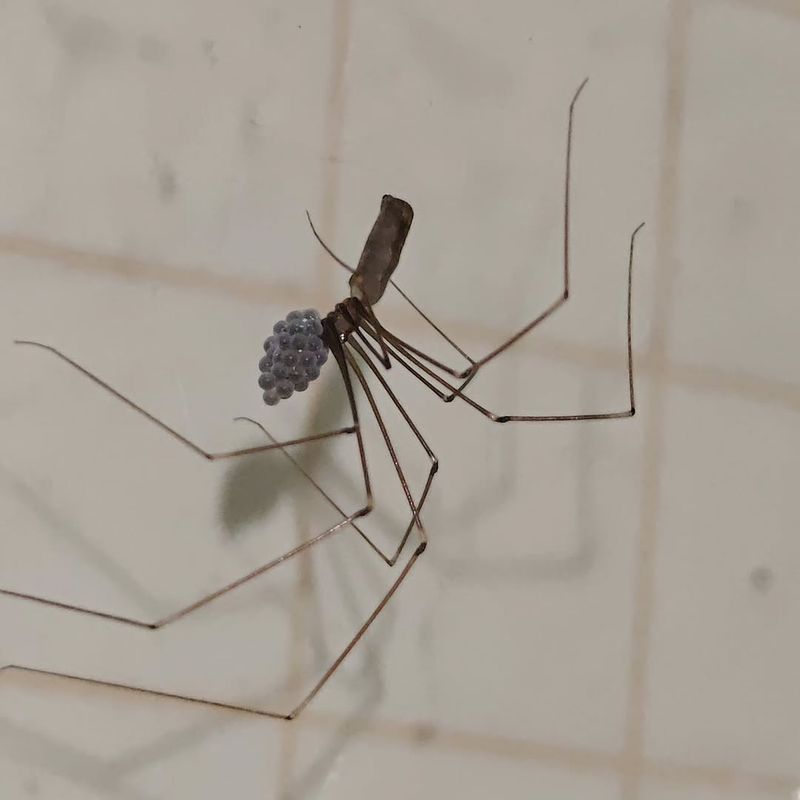
You have probably seen them dangling from the ceiling of a garage, porch, or garden shed, those long-legged spiders with tiny bodies that look almost too fragile to be real. Cellar spiders are common near patios and outdoor living spaces, and they are doing something very useful while they hang there.
They catch the small flying insects that lights and warm air tend to attract after sunset.
Fungus gnats, fruit flies, small moths, and mosquitoes all end up in their loosely strung webs. The webs may look flimsy, but they are surprisingly effective.
Cellar spiders also have an unusual behavior where they shake their web rapidly when disturbed, which makes them look like a blur and can confuse or deter larger predators from attacking them.
One fascinating thing about cellar spiders is that they will sometimes take over webs built by other spiders and eat the original occupant. This sounds harsh, but it means they are highly adaptable survivors that can thrive in a wide range of outdoor conditions.
They are not picky about location as long as insects are nearby.
Near patios and outdoor seating areas across California, cellar spiders quietly reduce the number of annoying flying insects without any sprays or traps needed. They are completely harmless to people and pets.
Their presence near an outdoor light or garden wall is a sign of a healthy, balanced outdoor environment that is managing itself naturally.