These Common Hedges Are Becoming An Invasive Problem In Ohio
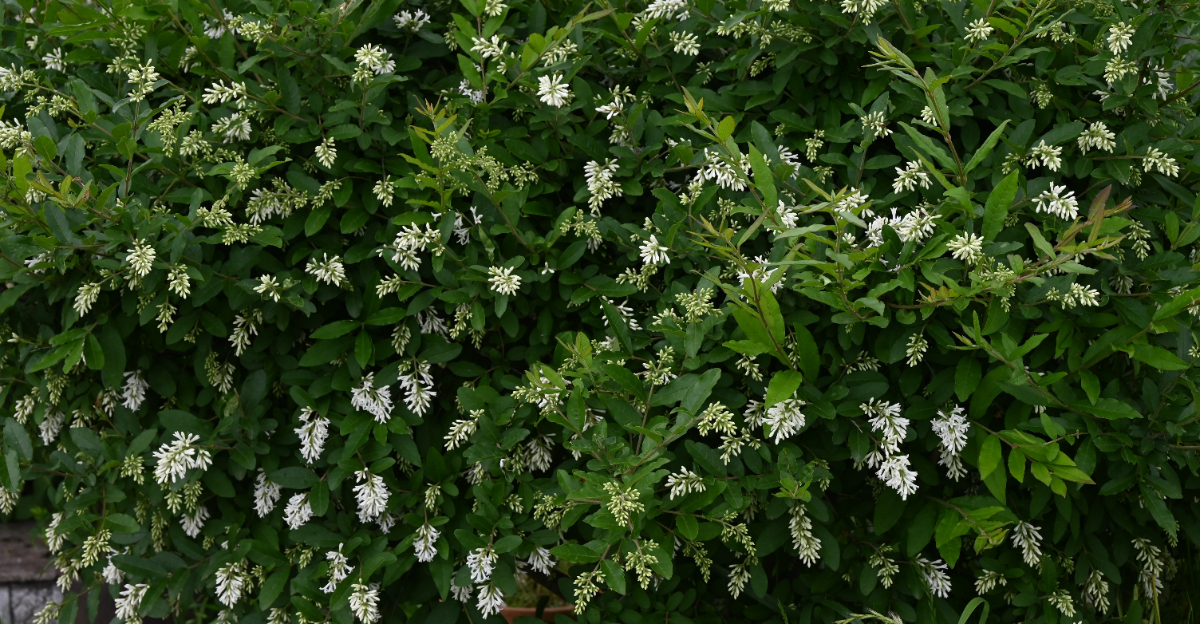
Some of Ohio’s most familiar hedges have been doing damage well beyond the property lines they were planted to define. The dense, fast growth that made them attractive is the same quality making them a problem in natural areas across the state.
They are still on nursery benches. Still being planted this fall by homeowners who have no idea that what goes in the ground today is what land managers spend real resources removing from natural areas every spring.
Several Ohio counties have already moved toward restricting them. Others are watching what happens next.
The gap between how these hedges get marketed and what research has confirmed they actually do to ecosystems has been closing for years. The sales pitch has not caught up.
A hedge that looks responsible from the street can be anything but on the other side of the fence line. Some of the most common ones in Ohio qualify.
1. Burning Bush: Bright Color With A Hidden Cost
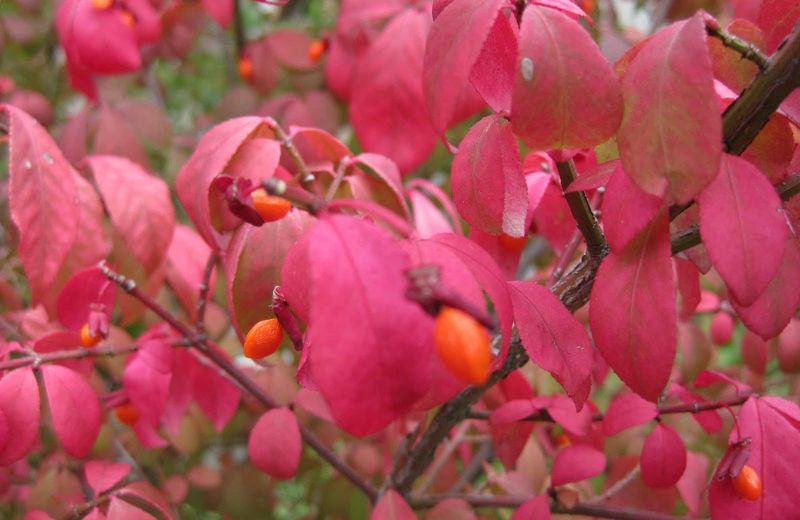
Every fall, burning bush puts on a brilliant red show that can make an ordinary yard look painted. Yet its beauty helped it spread far beyond garden beds across the state.
Birds eat the small berries and carry seeds into woods, parks, and vacant lots.
Also called winged euonymus, this shrub often has cork-like ridges running along its branches. Young plants may appear beneath trees, where they form thick patches that block sunlight from native wildflowers.
Burning bush is considered invasive in Ohio, so gardeners should avoid planting or spreading it. Removing a small shrub is easiest when the soil is moist.
Pull the entire root system because pieces left underground may send up fresh shoots. Larger bushes usually require careful digging, repeated cutting, or treatment by a trained landscape professional.
Never dump branches or berries along a road or wooded edge. Bag fruiting material according to local waste rules, and watch the site for seedlings during future growing seasons.
Gloves are useful because the twigs can scratch bare skin.
For similar fall color, consider native black chokeberry, eastern wahoo, or highbush blueberry. Each offers seasonal interest while supporting insects and birds.
Ask a local nursery for the scientific name before purchasing, since common plant names can be confusing. A thoughtful replacement can keep the fiery autumn display without sending unwanted seedlings throughout the neighborhood.
2. Japanese Barberry: A Thorny Yard Escape Artist
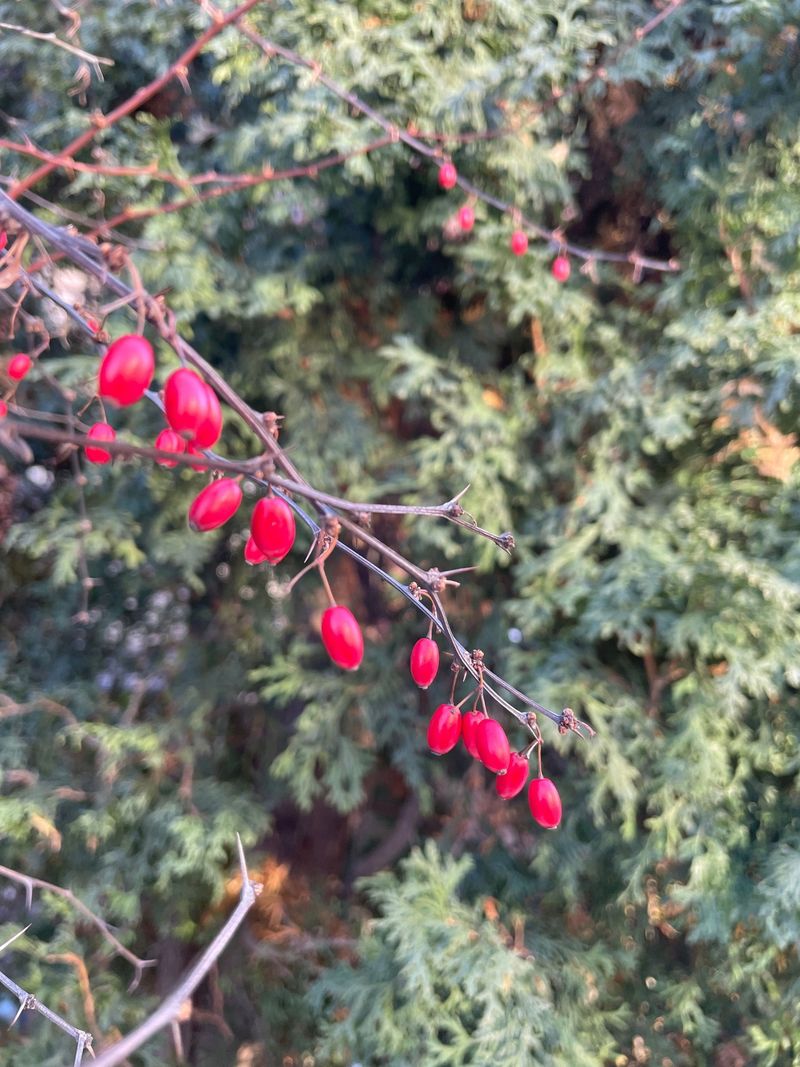
Sharp thorns are not the only trouble hiding inside a Japanese barberry hedge. The compact shrub produces bright berries that birds carry into natural areas.
Its seeds grow well beneath forest trees, even where many native plants struggle.
Garden centers once promoted barberry as a tough, colorful border that tolerated poor soil and hungry deer. That toughness becomes a problem after it escapes cultivation.
Dense growth changes woodland habitat and leaves little room for young native shrubs.
Identification starts with the single thorn found where leaves meet each twig. Leaves are small and oval, while berries often remain visible into winter.
Your Ohio Garden Changes Every Week. Your Plan Should Too.
Gardening in Ohio changes quickly throughout the season. Every Friday you’ll receive a simple weekly plan showing exactly what to plant, prune, fertilize, harvest, and protect so you never miss the right timing.
Some varieties have purple or golden foliage, but unusual leaf color does not prevent them from spreading. Japanese barberry is considered invasive in Ohio, although it is not currently on the state’s list of plants banned from commercial sale.
Wear thick gloves, long sleeves, sturdy pants, and eye protection during removal. Small plants can be pulled with a weed wrench when soil is damp.
Cut larger stems carefully, then ask an extension educator about legal and effective control options.
Check beneath nearby trees for seedlings for several years. Seeds can remain unnoticed in leaf litter, so one afternoon of work may not solve the whole problem.
Dispose of berry-covered branches through an approved local method rather than placing them in open brush piles.
Native alternatives include New Jersey tea, fragrant sumac, and ninebark. Fragrant sumac works especially well on sunny slopes and forms a low, spreading border.
Choosing a native shrub also gives caterpillars and pollinators more useful food.
3. Common Privet: The Formal Hedge That Wanders
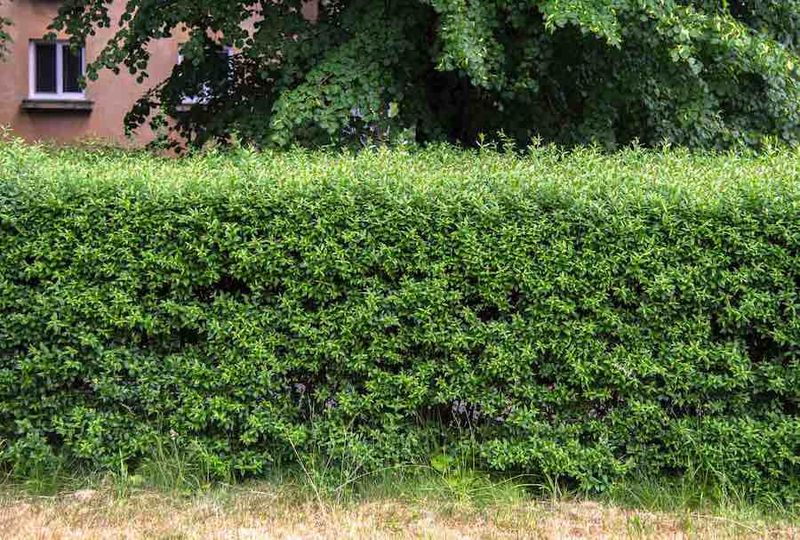
For generations, clipped privet marked property lines with tidy green walls. Common privet can still look controlled beside a driveway, but flowering branches tell another story.
Birds carry its dark berries away and scatter seeds across fields and forest edges.
The shrub has opposite leaves, meaning two leaves grow across from each other on the stem. Creamy white flower clusters appear in warmer months and may have a strong smell.
Dark purple or black fruit follows, giving wildlife an easy delivery system.
Escaped privet grows into dense thickets that shade smaller native plants. Its many stems also make neglected areas harder to restore.
Invasive plant restrictions for common privet took effect January 1, 2026, prohibiting its sale, propagation, distribution, and import.
Begin control by checking whether the hedge contains nesting birds. If wildlife is using it, contact a knowledgeable professional before trimming.
Small seedlings can be hand-pulled, while established shrubs may need repeated cutting and careful root removal.
Plan the replacement before opening a large gap along a sidewalk or property line. Inkberry holly offers evergreen leaves in suitable soil.
Arrowwood viburnum, ninebark, and gray dogwood can create privacy with flowers, fruit, and seasonal color.
New shrubs need mulch and regular water while their roots become established. Keep mulch away from trunks and avoid piling it deeply.
With patient care, a mixed native screen can look polished while offering far greater value to Ohio wildlife.
4. Border Privet: Small Leaves, Worth Watching
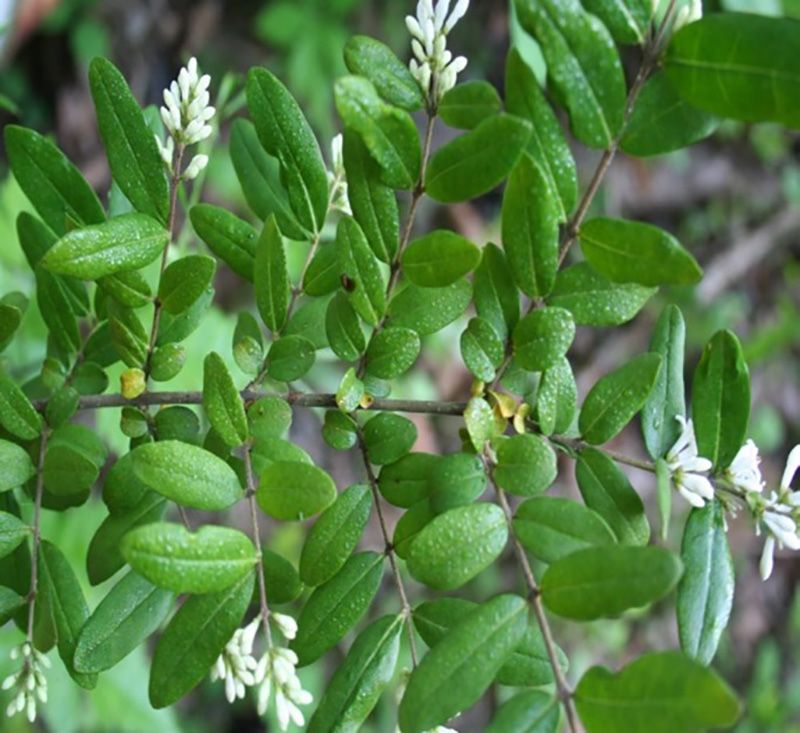
A few tiny leaves can help separate border privet from other shrubs, yet identification is not always simple. This Asian species resembles common privet and may be sold under confusing names.
Accurate identification matters because several privets can escape yards and form thickets, although border privet is not currently classified as invasive in the state.
Border privet usually has small, opposite leaves on slender branches. White flowers develop in clusters, followed by dark fruit that attracts birds.
Plants tolerate regular trimming, roadside conditions, and a wide range of soils, which explains their long landscaping history.
Frequent shearing may hide flowers for a while, but it does not make the shrub environmentally safe. Missed branches can bloom and produce fruit.
Roots may also spread, while discarded clippings containing berries can introduce seeds to another location.
Take clear photographs of leaves, bark, flowers, and fruit before starting removal. An Ohio State University Extension office or local conservation district may help confirm the species.
Knowing the plant prevents accidental removal of a similar native shrub.
After confirmation, pull seedlings and dig manageable plants when the ground is soft. Mature hedges can have tangled roots and may require professional equipment.
Follow rules and product labels if any control treatment is recommended for regrowth.
Try native northern bayberry where soil and sunlight fit its needs. American hazelnut creates a looser screen and produces useful nuts.
For a shorter boundary, compact ninebark varieties offer flowers and peeling bark without the same invasive risk. Mixing species also prevents one pest or disease from damaging the entire hedge at once.
5. Chinese Privet: Fragrant Flowers, Unfriendly Spread
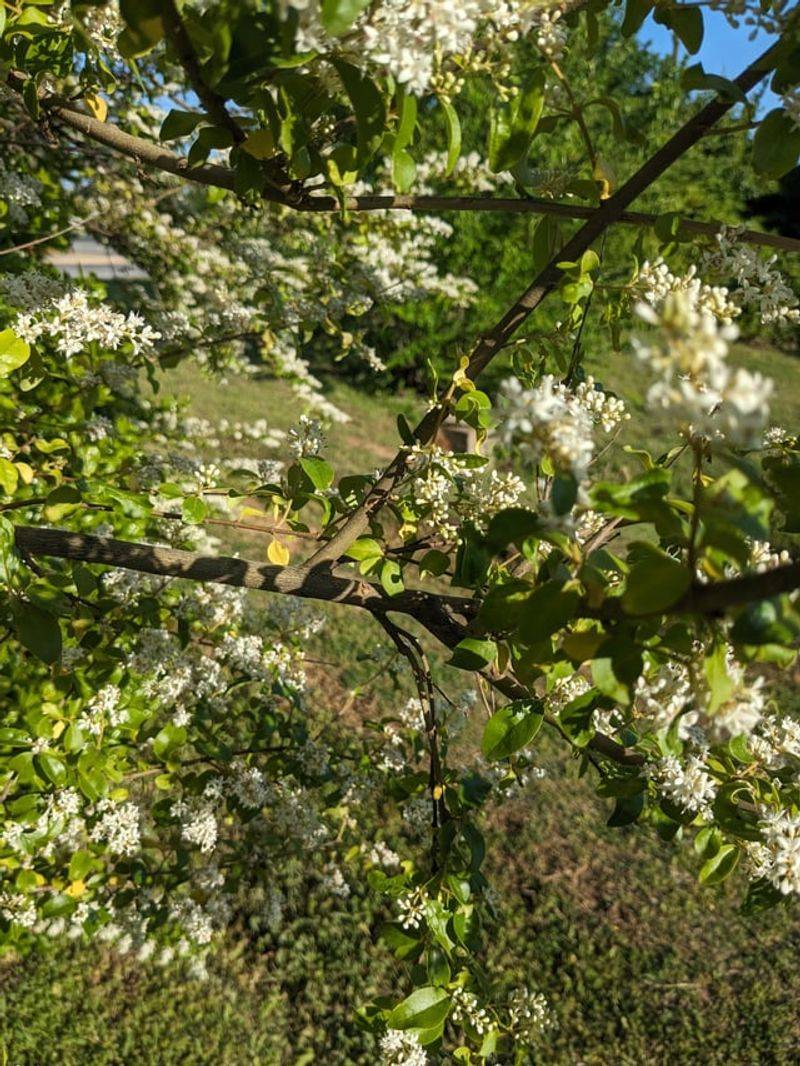
Sweet-smelling blossoms can make Chinese privet seem welcome near a porch. Unfortunately, its heavy flower clusters may become large crops of berries.
Birds spread those seeds along streams, woodland borders, fence rows, and other disturbed ground.
Chinese privet often keeps some leaves during mild weather, giving it an advantage over plants that rest through winter. The leaves grow opposite each other and may feel slightly leathery.
Pale dots can sometimes be seen on the lower leaf surface.
Do not rely on appearance alone, since privet species can look remarkably similar. Photograph the plant through several seasons and request help from a local extension office.
A correct name matters because Ohio’s restrictions differ among privet species and because the best control method depends on the plant involved.
Removal should begin before fruit forms whenever possible. Pull young plants slowly to bring out the roots, then press disturbed soil back into place.
Revisit the area because sprouts and hidden seedlings can appear after the original shrub is gone.
Large stands near water need extra care. Soil disturbance may cause erosion, and treatment products may have special limits around streams.
A certified professional can create a plan that protects water, nearby native plants, and people using the site.
For replacement, consider spicebush in partial shade or buttonbush in moist ground. Wax myrtle may suit protected sites within its proper growing range.
Layering several native shrubs creates privacy at different heights and provides flowers across more of the season. That varied screen also looks natural while serving pollinators and songbirds.
6. European Cranberrybush: Look Beyond The Red Berries
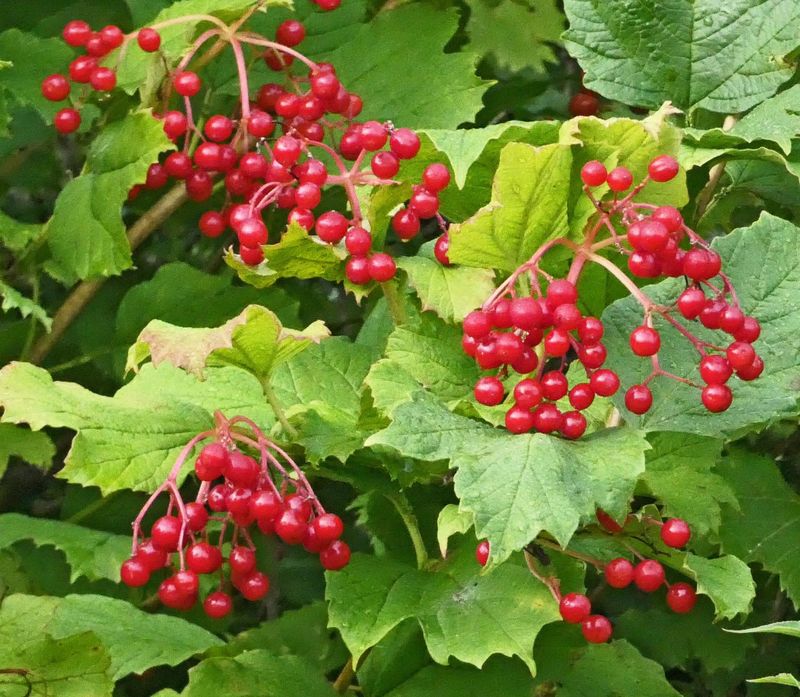
Bright red fruit gives European cranberrybush a cheerful look when many gardens are turning brown. The shrub was widely planted for flowers, fall color, and screening.
However, it can escape cultivation and compete with native plants, and the Ohio Invasive Plants Council currently considers it potentially invasive in our state.
Despite its name, it is a viburnum rather than a true cranberry. Broad leaves have three lobes and resemble small maple leaves.
Flat clusters of white flowers appear in spring, followed by shiny red fruit later in the year.
The hardest part may be separating it from American cranberrybush, a native relative with valuable habitat benefits. Small glands near the leaf stalk can help with identification, but the differences are easy to misread.
Seek expert confirmation before removing an established shrub.
If the plant is verified as European cranberrybush, collect fruit before it spreads. Pull small seedlings when the soil is damp and monitor nearby fence lines.
Larger specimens may resprout, so build follow-up visits into the removal plan.
Never substitute another plant based only on a store label that says cranberrybush. Check the scientific name and ask whether the stock is the native Viburnum opulus var. americanum.
Some experts use Viburnum trilobum for the native plant, so labels may vary.
Other Ohio-friendly options include arrowwood viburnum, blackhaw viburnum, and winterberry holly. Match each choice to the site’s sunlight, moisture, and available space.
Proper placement reduces pruning, keeps the hedge healthy, and gives wildlife a dependable source of shelter and seasonal food.
7. Callery Pear: A Flowering Screen Gone Wild
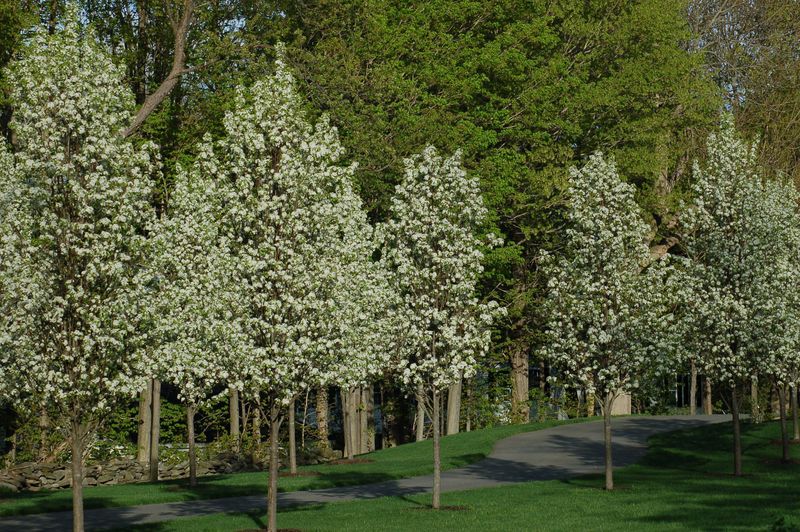
Spring roadsides covered in white blossoms may look snowy, but many of those flowers belong to escaped Callery pears. The tree became popular because it grew quickly and handled city conditions.
Closely planted rows were sometimes trained as tall screens or hedges.
Older Bradford pears were once described as unable to spread. Different varieties can cross-pollinate, however, producing fertile seeds that birds carry widely.
Their offspring may develop long thorns and form dense stands in fields, roadsides, and young woodlands.
Callery pear leaves are glossy, rounded, and finely toothed. White flowers appear before or with early leaves and often have a sharp smell.
Small brown fruit is less noticeable than the blossoms, but it allows the tree to travel far beyond a yard.
Ohio prohibits the sale and distribution of Callery pear, so choose another species for new landscaping. Property owners are not generally required to remove an existing yard tree, but current state and local guidance should always be checked.
Rules may change over time.
Because mature trees have brittle branches and heavy trunks, professional removal is often safest. Young sprouts should be pulled with the full root attached.
Monitor cut areas for regrowth and inspect nearby ground for thorny seedlings.
Serviceberry, eastern redbud, flowering dogwood, and American plum offer beautiful spring flowers. Select a species that fits the soil and overhead space.
A well-placed native tree provides shade, seasonal color, and wildlife support without creating a thorn-filled stand beyond the property line.