These Common Mushrooms Often Appear In Georgia After Summer Rain
Summer rain in Georgia is basically a starting gun for mushrooms, and if you’ve ever walked outside after a good soaking to find your lawn or mulch beds suddenly covered in fungi that weren’t there yesterday, you already know how fast things can change.
It’s one of those moments that’s equal parts fascinating and slightly alarming, especially if you have curious kids or pets nearby.
These mushrooms aren’t random invaders though.
They’re the visible fruiting bodies of fungi that have been quietly living in the soil, decaying wood, or organic matter beneath the surface all along, just waiting for the right combination of heat and moisture to make their appearance.
One important note before going any further: this is purely about identification and understanding what’s growing in your yard.
Eating wild mushrooms without expert verification from a trained mycologist is something to avoid entirely.
1. Fairy Ring Mushrooms Show Up In Lawns
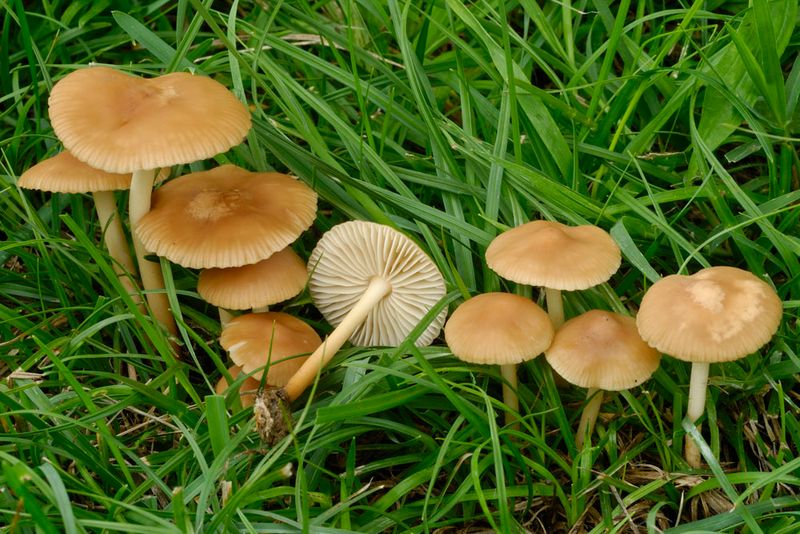
Walking out to mow the lawn after a rainy Georgia week and spotting a perfect arc of mushrooms in the grass is one of those surprisingly common yard discoveries.
Fairy ring mushrooms are not a single species but rather a pattern caused by fungi spreading outward from a central point underground.
As the fungus grows, it breaks down organic matter like old roots, buried wood, or decomposing thatch, releasing nutrients that sometimes cause the grass inside or along the ring to look greener or, in some cases, slightly stressed.
The rings can range from a few feet across to much larger circles depending on how long the fungus has been growing beneath the surface.
In Georgia yards, they tend to show up most noticeably after periods of heavy summer rain followed by warm, humid days.
The mushrooms themselves are often small, tan, or brown with rounded caps.
Most fairy ring fungi in lawns are not harmful to turfgrass in any serious way, though the rings can be persistent from season to season. Improving drainage, aerating the lawn, and breaking up thatch can sometimes reduce their appearance over time.
The fruiting mushrooms are temporary and will break down naturally within a few days.
Homeowners should avoid letting children or pets handle or mouth any lawn mushrooms, since identification from a safe distance is the wise approach in any Georgia yard.
2. Puffballs Appear After Wet Weather
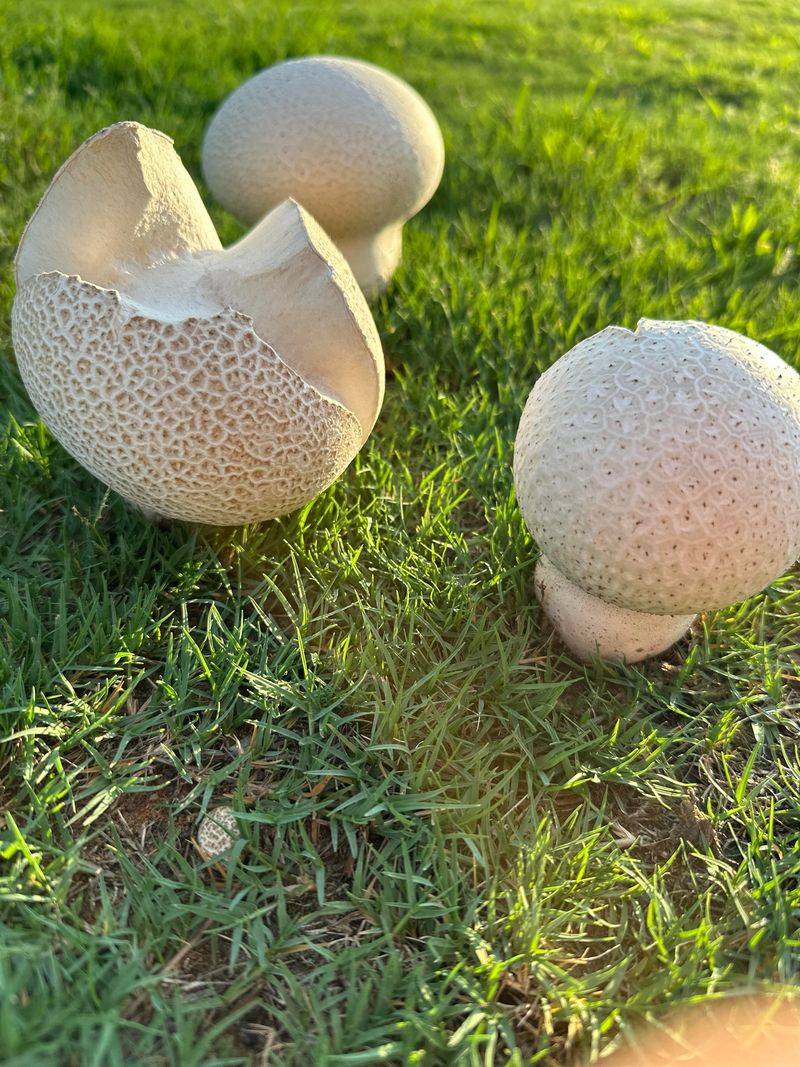
Round, white, and almost ball-like, puffballs have a look that tends to stop Georgia homeowners in their tracks.
They can appear in lawns, along wooded yard edges, near old stumps, or tucked into mulched beds, and they seem to emerge almost overnight after a good soaking rain.
Puffballs get their name from the way mature specimens release spores in a puff of smoky cloud when disturbed or struck.
In Georgia, puffballs range from golf-ball size to surprisingly large specimens that can reach several inches across. They start out firm and white, then gradually soften and turn yellowish or brown as they age and begin releasing spores.
Your Georgia Garden Changes Every Week. Your Plan Should Too.
Gardening in Georgia changes quickly throughout the season. Every Friday you’ll receive a simple weekly plan showing exactly what to plant, prune, fertilize, harvest, and protect so you never miss the right timing.
The fungi behind puffballs are typically decomposers, breaking down organic material in the soil or mulch beneath them, which is why they tend to cluster near decaying wood, buried roots, or richly organic garden areas.
Wet summer weather in Georgia provides the moisture and warmth these fungi need to push their fruiting bodies above the surface.
While puffballs are sometimes described as edible by experienced foragers, no wild mushroom should be consumed without expert identification in person, because some toxic species can resemble puffballs at certain growth stages.
From a lawn and landscape perspective, puffballs are generally harmless to plants and turf. They break down quickly, returning nutrients to the soil, and they typically disappear on their own within a week or so after appearing.
3. Stinkhorns Rise From Mulch And Soil
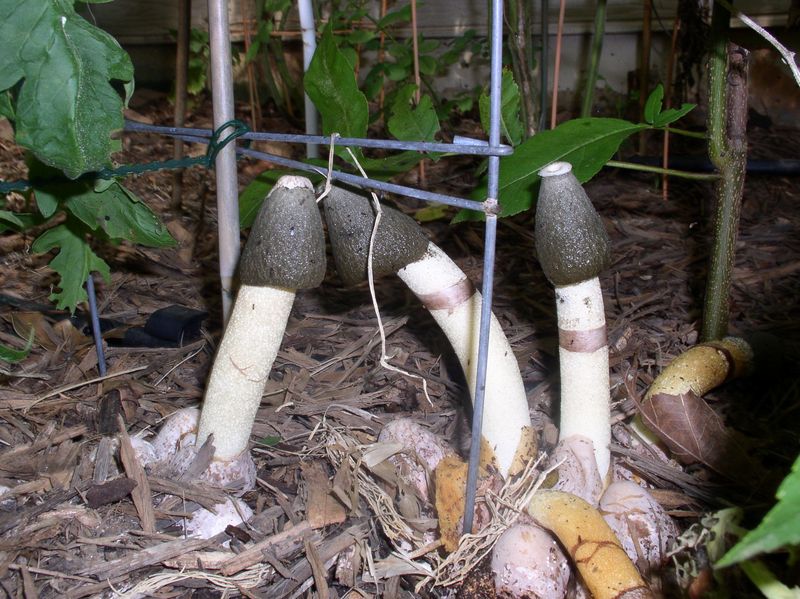
Few yard discoveries are quite as startling as stepping near a landscape bed and catching an unexpectedly foul smell on a warm Georgia morning. That odor often leads straight to a stinkhorn mushroom pushing up through the mulch.
Stinkhorns are among the most distinctive fungi that appear in Georgia yards, and their smell is intentional. The dark, slimy material on their caps contains spores, and the odor attracts flies and other insects that carry those spores elsewhere.
These fungi tend to emerge from wood chip mulch, compost-rich soil, or areas with buried decaying wood, making them common in landscaped beds around Georgia homes.
Before the stinkhorn fully emerges, it starts as a white, egg-like structure just below or at the soil surface.
Once conditions are right after summer rain, the stalk elongates rapidly, sometimes within hours.
Stinkhorns are not harmful to landscape plants, and they are a sign that fungal decomposers are actively breaking down organic matter in the mulch or soil.
Their presence tends to be temporary, and they collapse and disappear within a day or two.
Removing the white egg stage before it opens can reduce the odor if the smell becomes bothersome near entryways or outdoor seating areas.
As with any yard mushroom in Georgia, stinkhorns should not be handled casually by children or pets, and they should not be consumed under any circumstances without professional identification.
4. Green-Spored Parasols Need Extra Caution
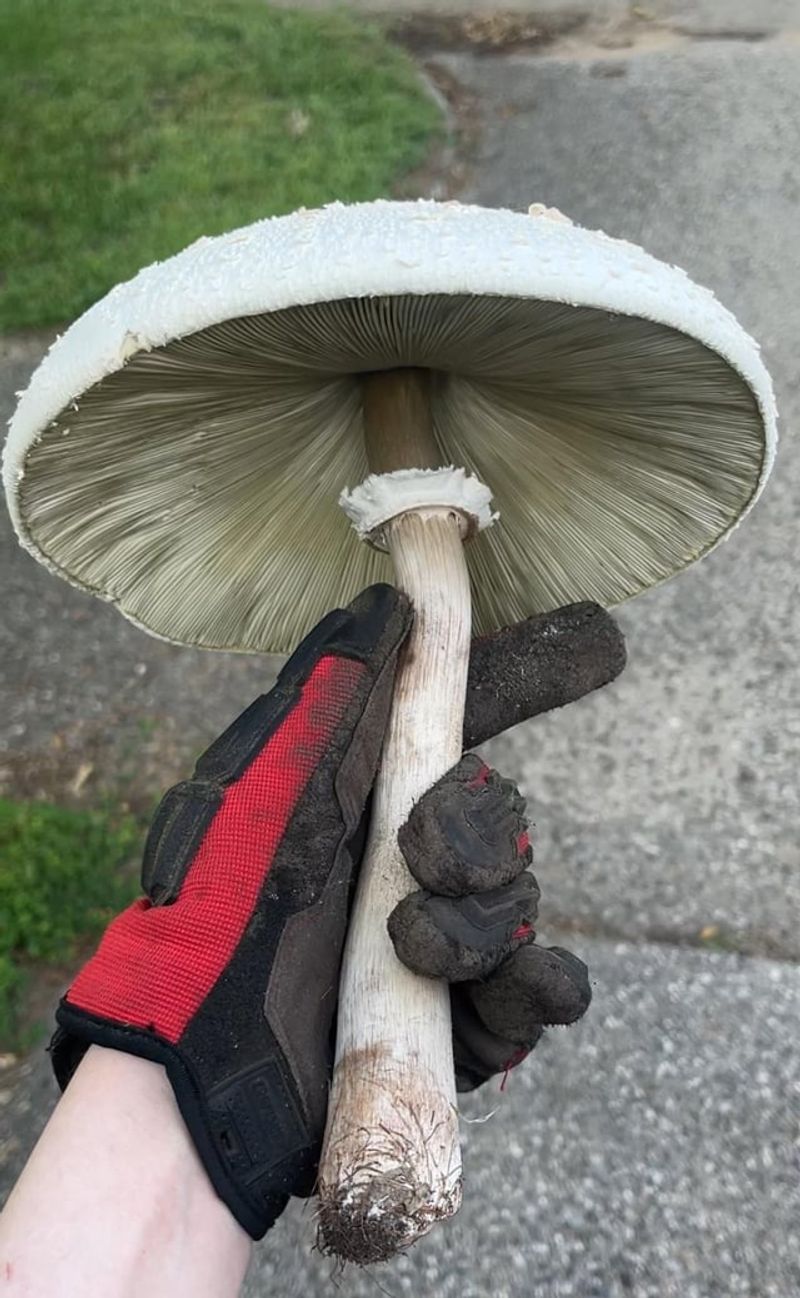
Broad, flat-capped, and sometimes reaching impressive sizes, the green-spored parasol is one of those Georgia lawn mushrooms that deserves a respectful distance.
It tends to appear in turfgrass, open lawn areas, and along shaded edges, particularly after summer rain saturates the soil.
The cap can look almost like something you would find at a farmers market, which is exactly why extra awareness matters here.
The green-spored parasol, sometimes called Chlorophyllum molybdites, is considered one of the more commonly encountered toxic mushrooms in North American lawns.
It causes significant gastrointestinal distress in people who consume it, and it is unfortunately sometimes mistaken for edible parasol species by those without formal mycology training.
The greenish tint to the gills and spore print is a key distinguishing feature, though color alone is never a reliable identification method for any wild mushroom.
In Georgia, this mushroom tends to fruit in warm-season lawns, often appearing in groups or scattered clusters after periods of summer rain and high humidity. It favors open, sunny turf as well as partially shaded lawn edges.
From a landscape standpoint, it does not harm turfgrass, and the fruiting bodies will break down on their own.
However, households with young children or curious pets should remove the mushrooms promptly using gloves, bagging them securely before disposal.
Identification should always be confirmed by a trained expert before any handling decisions are made with confidence.
5. Inky Caps Break Down Quickly After Rain
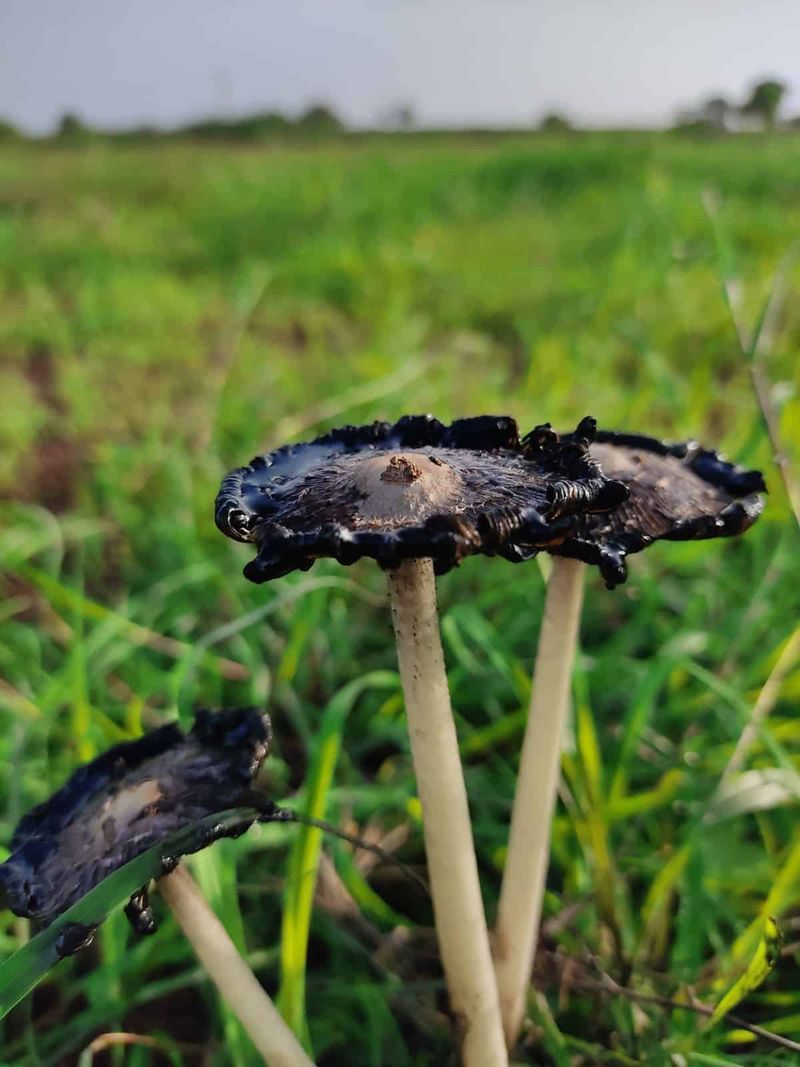
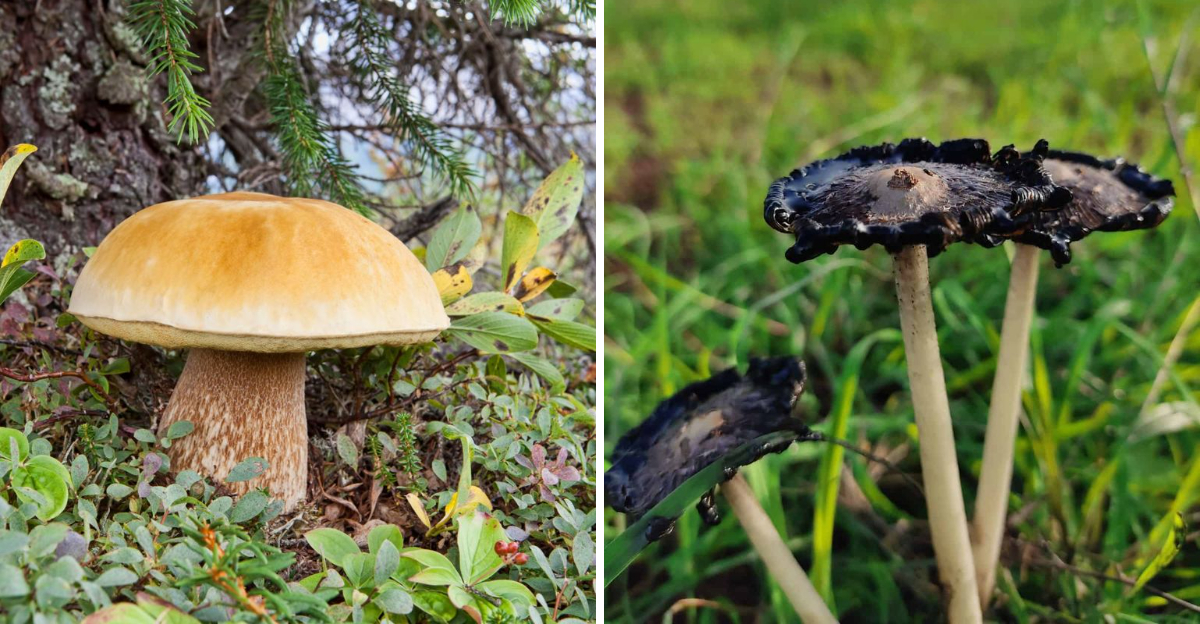
There is something almost theatrical about inky cap mushrooms. They push up from soft Georgia soil or turf, look tidy and pale for a short window of time, and then begin dissolving themselves from the edges inward into a dark, inky liquid.
This process, called autodigestion, is how these fungi release their spores, and it happens surprisingly fast after the mushrooms emerge following summer rain.
Inky caps tend to appear in Georgia lawns, near old stumps, along garden paths, or in areas where decaying organic matter is present below the surface.
Some species grow in tight clusters, while others appear in loose groups scattered across a lawn or shaded bed.
They are often small to medium in size, with oval or bell-shaped caps that open and begin dissolving within a day or two of appearing.
From a yard perspective, inky caps are decomposers doing their natural work in the soil. Their quick appearance and equally quick breakdown mean most homeowners notice them only briefly before they are gone.
The dark liquid they leave behind is harmless to turf and soil.
Some inky cap species are discussed in foraging literature, but wild mushroom identification requires professional expertise, and no yard mushroom in Georgia should be consumed based on appearance alone.
Keeping pets away from dissolving mushroom clusters is a reasonable precaution, and young children should be taught not to touch or taste anything growing in the lawn without adult guidance.
6. Bird’s Nest Fungi Hide In Mulched Beds
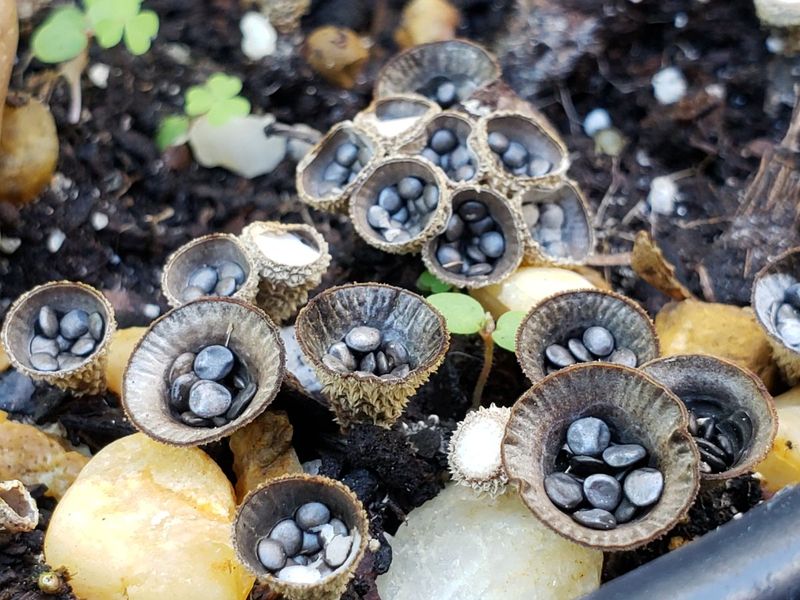
Tucked low in a mulched garden bed, bird’s nest fungi are easy to miss unless you are crouching down to pull weeds or plant something new.
These tiny fungi look remarkably like miniature bird nests, complete with small egg-like structures called peridioles sitting inside a cup-shaped base.
They are genuinely one of the more charming and curious things a gardener can stumble across after summer rain.
Bird’s nest fungi thrive in wood chip mulch, straw, and other organic mulch materials commonly used in Georgia landscape beds. The cups are usually only a few millimeters wide, so they can go unnoticed for weeks.
After rain, water droplets hit the open cups and splash the peridioles outward, dispersing spores in a clever mechanical process that requires no insects or wind to function.
These fungi are harmless to landscape plants and are actually a positive indicator of active organic decomposition in mulched beds. Their presence means the mulch is breaking down as intended, enriching the soil beneath.
Bird’s nest fungi are not toxic in a landscape context, but like any wild fungus, they should not be consumed or handled casually without proper identification.
Children often find them fascinating up close, which makes them a fun yard discovery to share with curious kids as long as the rule of looking without touching is reinforced.
They typically disappear as mulch dries out between rain events in Georgia summers.
7. Shelf Fungi Grow On Old Wood
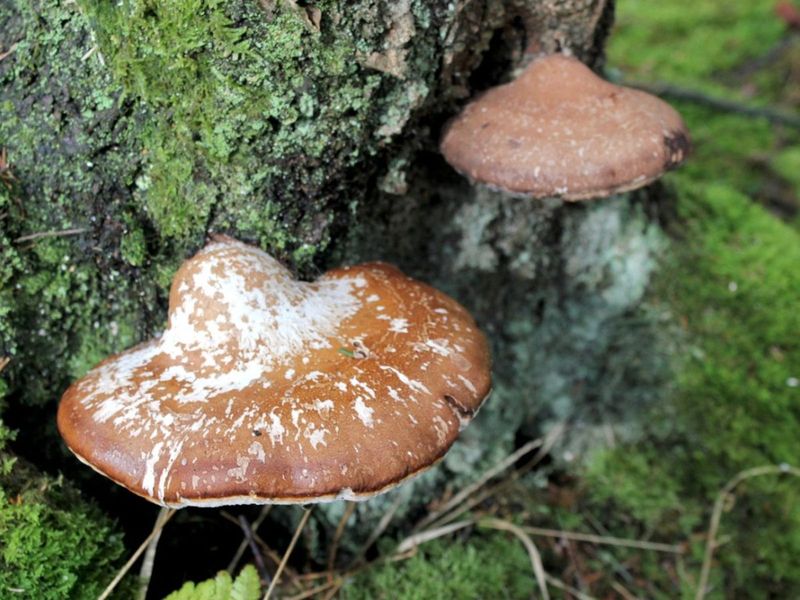
Old stumps, fallen logs, and aging trees along Georgia wooded yard edges sometimes develop thick, layered brackets of shelf fungi that can look almost architectural.
Unlike the soft mushrooms that appear briefly in lawns after rain, shelf fungi tend to persist for much longer, growing slowly over weeks or months and sometimes returning season after season on the same piece of wood.
Shelf fungi, also called bracket fungi, are wood-decay organisms. They break down lignin and cellulose in old wood, which is an important ecological process but also a sign that a tree or stump is in an advanced state of decay.
In Georgia yards, they often appear on old oaks, sweetgums, pines, and other hardwoods that have standing sections in decline, fallen limbs, or buried root systems still decomposing underground.
Summer rain encourages shelf fungi to produce fresh growth layers and can trigger the release of spores from existing brackets.
The fruiting bodies themselves are firm, leathery, or woody in texture and come in a range of colors from white and cream to orange, brown, and dark gray depending on the species.
Shelf fungi on a living tree can sometimes indicate internal wood decay worth monitoring, especially for trees near structures or high-traffic areas. Removal of the bracket itself does not stop the underlying fungal activity in the wood.
A certified arborist can assess whether a tree showing shelf fungi poses any structural concern worth addressing in a Georgia yard.
8. Boletes Appear Near Trees And Wooded Edges
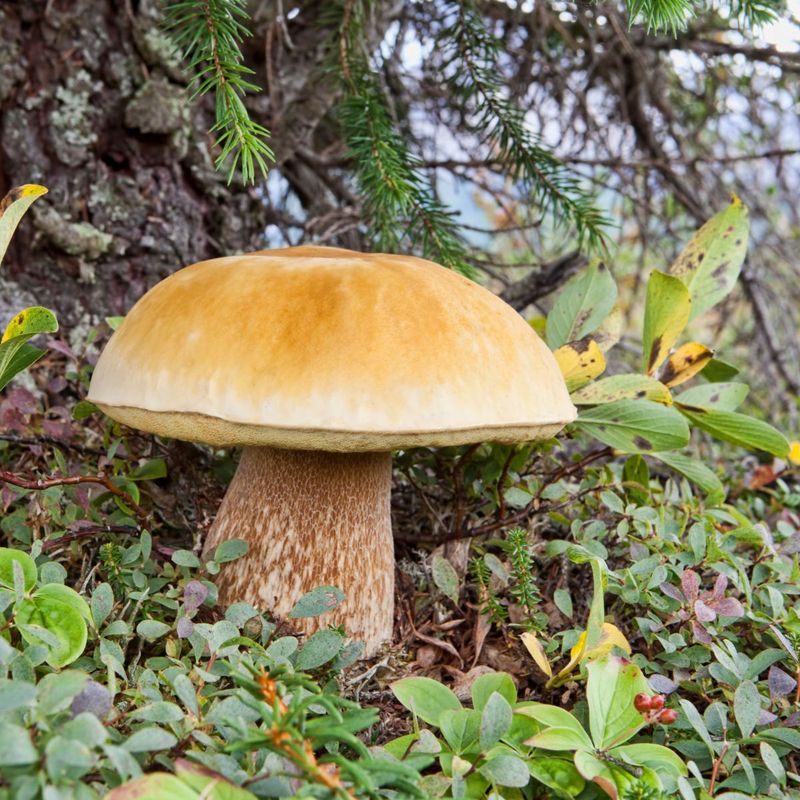
Along the shaded edges where Georgia lawns give way to trees and natural wooded borders, boletes are among the more substantial mushrooms that can appear after summer rain.
They tend to have thick, meaty caps and stout stalks, and instead of gills on the underside of the cap, boletes have a sponge-like layer of tiny pores.
This pore surface is one of the easiest ways to recognize a bolete in the field.
Boletes are most commonly found near oaks, pines, and other trees because many species form mycorrhizal relationships with tree roots. This means the fungus and the tree exchange nutrients in a mutually beneficial underground partnership.
When summer rain soaks the soil and temperatures stay warm, boletes send up their fruiting bodies, which can appear singly or in small groups near the base of host trees or along root lines extending into shaded lawn edges.
From a landscape perspective, boletes associated with healthy trees are generally a positive sign of active mycorrhizal networks in the soil. They do not harm turf or tree roots.
However, bolete identification is complex, and some species can cause illness if consumed.
Several edible boletes are well-regarded by experienced foragers, but look-alike species exist, and no bolete found in a Georgia yard should be eaten based on appearance alone without confirmed expert identification.
Appreciating them as part of the yard ecosystem is the safest and most rewarding approach for most homeowners.