The Summer Fig Tree Adjustment Most Georgia Homeowners Never Make
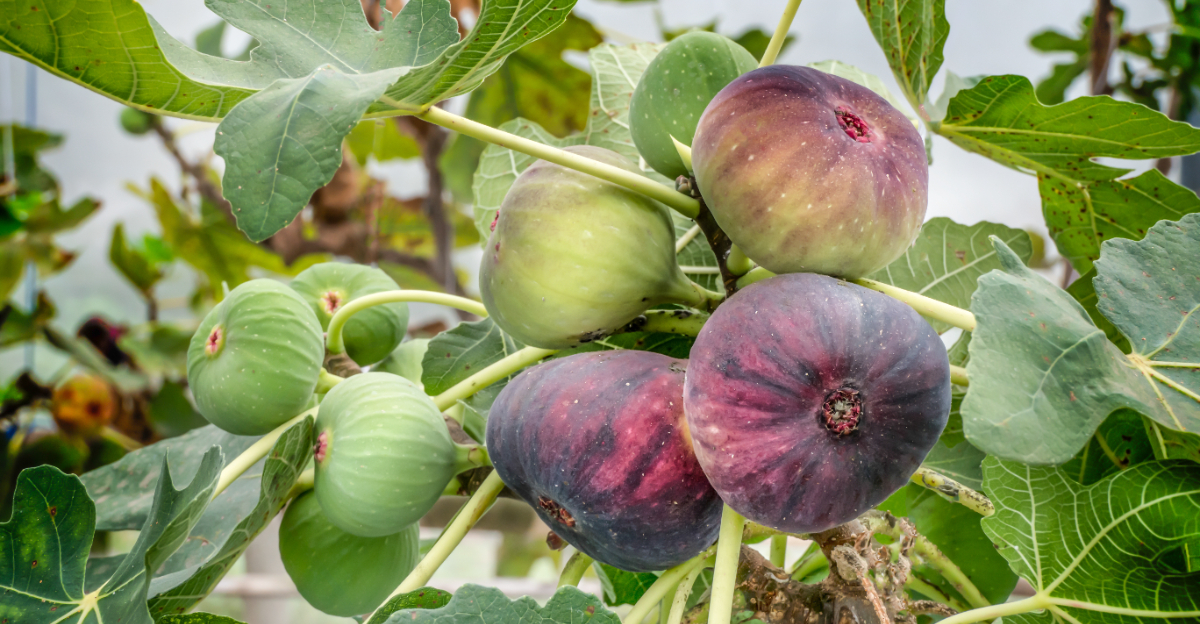
Fig trees have a reputation for being easy to grow, which is why many homeowners leave them alone once summer arrives.
The tree looks healthy, fruit is developing, and it seems like everything is moving in the right direction.
That is exactly when one simple task is often overlooked. Missing it does not usually cause immediate problems, but it can affect how the tree performs through the rest of the season.
Georgia’s hot, humid weather creates conditions that are very different from spring. A care routine that worked earlier in the year may not give a fig tree everything it needs once temperatures stay high for weeks at a time.
Small adjustments can have a much bigger impact than many people realize.
One overlooked summer habit can help a fig tree stay healthier, support better fruit development, and carry less stress through the hottest part of the growing season.
1. Check Soil Moisture Before Reaching For The Hose
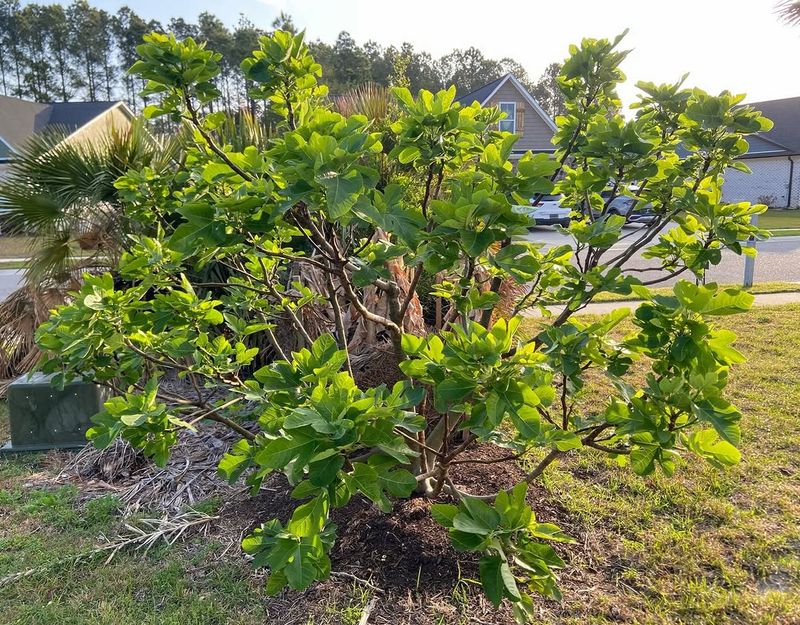
Watering a fig tree without checking the soil first is one of the most common mistakes backyard growers make.
Overwatering is just as harmful as underwatering, especially during humid Southern summers when the soil holds moisture longer than you might expect.
Stick two fingers about two inches into the soil near the base of the tree.
If it feels damp, hold off on watering. If it feels dry and crumbly, it is time to water thoroughly.
Fig roots go deep, so surface dryness does not always reflect what is happening below. A quick squeeze test of the soil gives you real information instead of guessing.
Watering on a fixed schedule regardless of conditions leads to soggy roots, which reduces fruit quality and stresses the tree. Adjust based on what the soil actually tells you.
After heavy rain, wait at least two to three days before checking again. Summer thunderstorms in the region can deliver more water than a tree needs in a single afternoon.
Trusting your fingers over a calendar is the smarter move every time.
2. Water Deeply During Extended Dry Spells
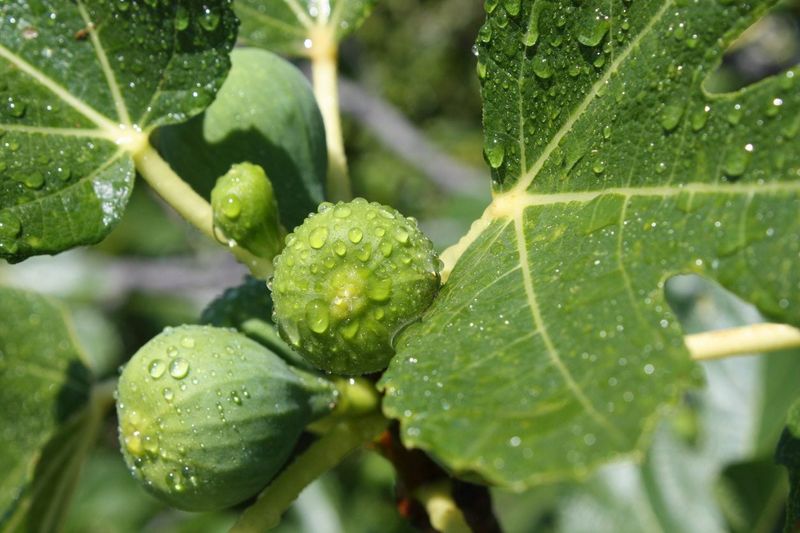
Shallow watering trains fig roots to stay close to the surface, where summer heat bakes the soil fastest. Deep watering pushes roots downward, where moisture lasts longer and temperatures stay cooler.
During a dry stretch of five or more days, water slowly and directly at the base of the tree. Let the water soak in gradually rather than running off the top of the soil.
A slow trickle from a hose for twenty to thirty minutes works better than a quick burst with a sprinkler. Sprinklers also wet the leaves, which can encourage fungal problems in warm, humid conditions.
Young fig trees need more frequent deep watering than established ones.
A tree planted within the last two years has a smaller root zone and dries out faster during hot spells.
Mature figs in well-amended soil can handle short dry stretches without much trouble.
However, when temperatures stay above ninety degrees for several days in a row, even older trees benefit from a good deep soak every five to seven days.
Your Georgia Garden Changes Every Week. Your Plan Should Too.
Gardening in Georgia changes quickly throughout the season. Every Friday you’ll receive a simple weekly plan showing exactly what to plant, prune, fertilize, harvest, and protect so you never miss the right timing.
Consistent deep watering during peak summer heat directly supports fruit size and flavor.
3. Refresh Mulch Before Summer Heat Peaks
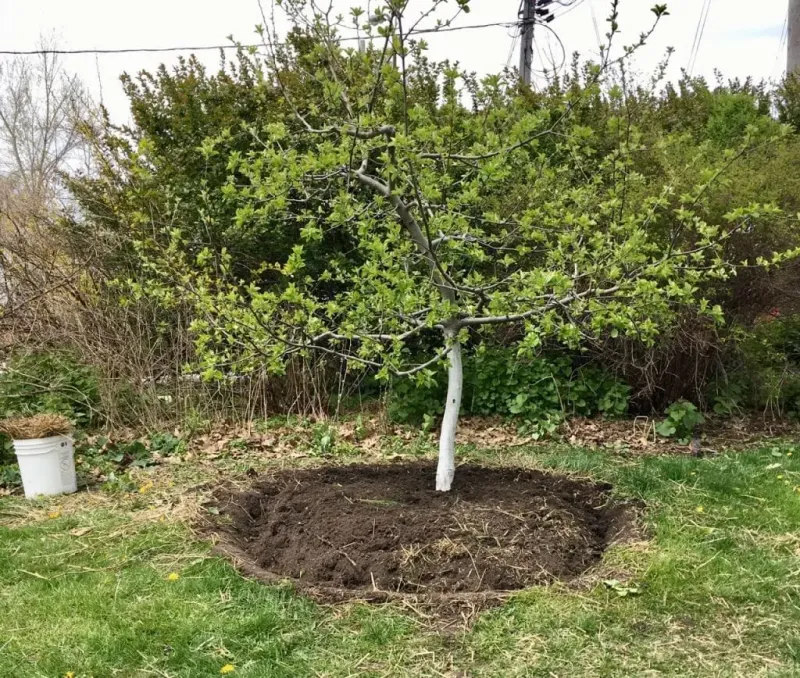
Bare soil around a fig tree in summer acts like a skillet. Soil temperatures under direct sun can climb high enough to stress surface roots and speed up moisture loss faster than most gardeners realize.
A fresh layer of organic mulch keeps the soil cooler, holds in moisture, and reduces the need for frequent watering. Aim for a layer about three to four inches thick spread in a wide circle around the tree.
Pull the mulch back a few inches from the trunk itself.
Mulch piled directly against bark can trap moisture and encourage rot over time.
Wood chips, pine straw, or shredded leaves all work well. Pine straw is especially popular in the Southeast because it is affordable, easy to find, and breaks down slowly.
Refresh your mulch layer in late spring or early June before the worst heat arrives. By midsummer, old mulch has often compacted and lost much of its insulating value.
A fresh top-up costs very little but pays off in reduced watering needs and healthier root conditions throughout the hottest weeks of the year.
Checking and refreshing mulch is one of the easiest steps most homeowners skip entirely.
4. Remove Root Suckers To Maintain A Tree Form
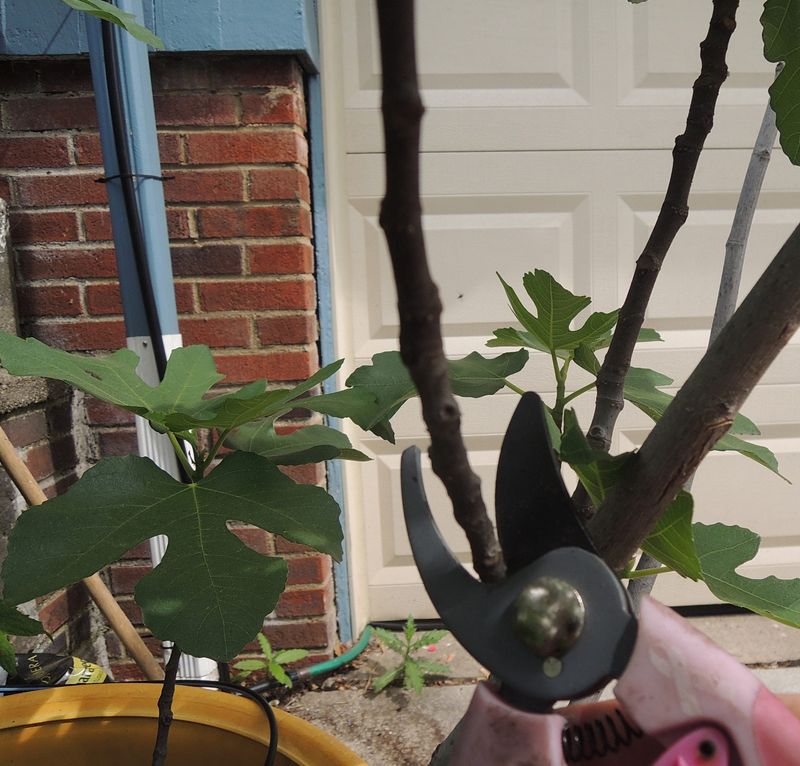
Root suckers are sneaky. One week the base of your fig tree looks clean, and the next week a cluster of thin green shoots has appeared from nowhere, all competing with the main trunk for energy.
Suckers are shoots that grow from the roots or from the base of the trunk below the main branching structure. Left alone, they turn a tidy tree form into a messy, dense shrub over a single season.
Removing them promptly takes only a minute and makes a real difference. Pull or cut suckers as close to their point of origin as possible.
Cutting them at ground level often causes them to regrow quickly.
Wear gloves when working with fig trees. The milky sap they release can irritate skin, especially in hot weather when sap flows more freely.
Suckers pull water and nutrients away from the main canopy, which can reduce fruit production. A tree putting energy into a dozen unwanted shoots at its base has less to spend on ripening fruit.
Check the base of your fig tree every couple of weeks from June through August. Consistent removal keeps the tree focused and easier to manage at harvest time, which makes the whole growing season more rewarding.
5. Watch Leaves For Early Signs Of Rust
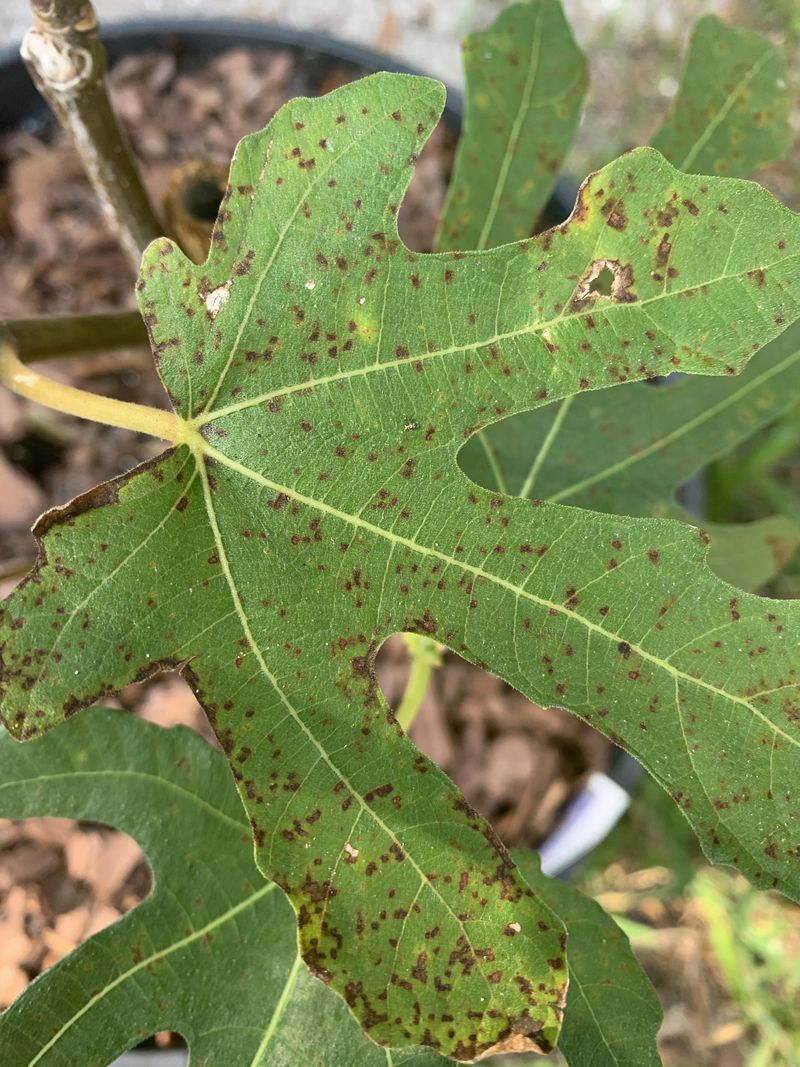
Fig rust is one of the most common leaf problems in the humid Southeast, and it tends to show up quietly before most homeowners notice anything is wrong. Catching it early makes management far easier.
Look for small yellow spots on the upper surface of leaves. Turn the leaf over and you will often see orange or rusty-brown powdery patches underneath.
That is the fungal spore mass that spreads the infection.
Rust spreads fastest during warm, wet weather with poor air circulation. Dense, unpruned trees with leaves crowded together give the fungus ideal conditions to move from branch to branch.
Heavily infected leaves will turn yellow and drop prematurely. A severe case can strip a tree of most of its foliage by late summer, which weakens the tree heading into fall.
Remove and bag any infected leaves that fall to the ground. Do not add them to a compost pile, since the spores can survive and spread later.
Improving air circulation through light pruning and spacing can reduce how often rust appears. Copper-based fungicide sprays are an option for severe outbreaks, but always read label directions carefully before applying anything to a fruit-bearing tree.
Staying watchful from July onward gives you the best chance of keeping rust under control.
6. Harvest Ripe Figs Promptly To Reduce Pest Problems
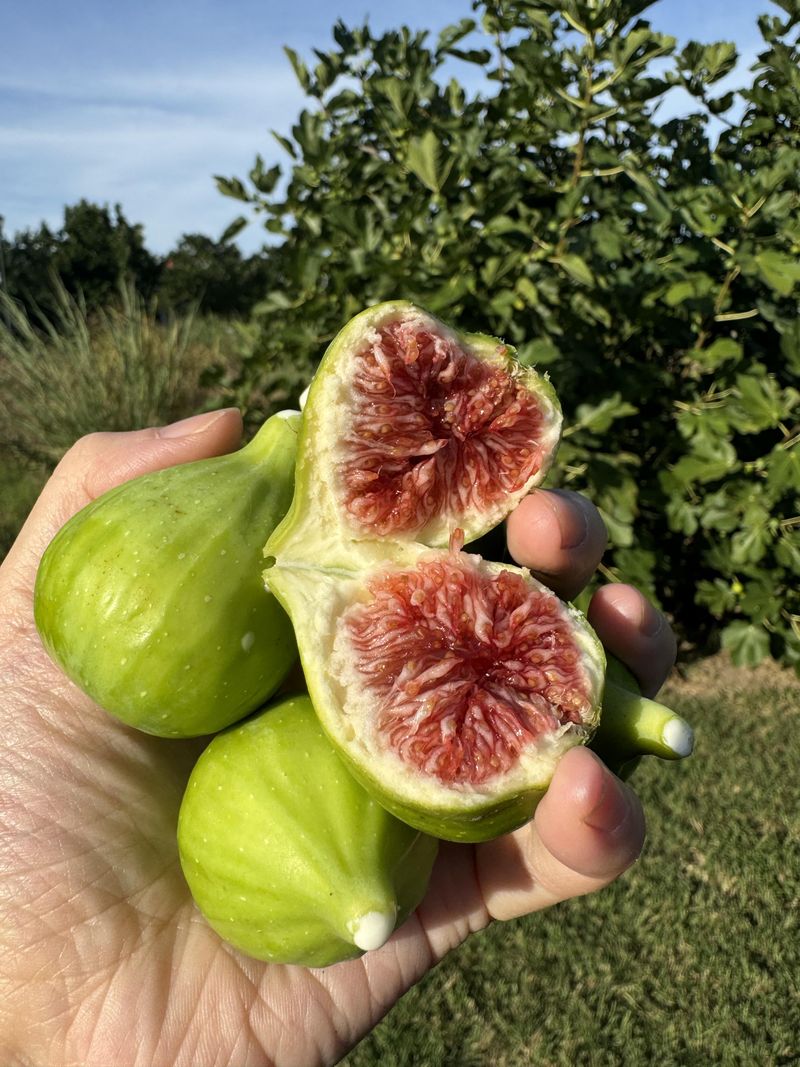
Ripe figs left on the tree for too long become a pest magnet almost overnight. Beetles, fruit flies, and wasps zero in on overripe fruit quickly, and once they find it, they tend to stay.
A fig is ready when it droops slightly on the stem, feels soft to a gentle squeeze, and the skin shows its full color. Varieties differ, but most ripe figs will also have a small drop of nectar at the eye end.
Check your tree every one to two days during peak ripening season. In the South, that usually runs from late June through August depending on your variety and local conditions.
Harvest in the morning when temperatures are cooler. Figs picked in the heat of the afternoon bruise more easily and do not store as well.
Fallen or overripe fruit on the ground should be picked up and removed right away. Rotting figs draw pests that will then move to healthy fruit still on the tree.
Staying on top of harvest is not just about enjoying fresh figs at their best. It is also one of the most practical ways to keep pest pressure low without reaching for any kind of spray.
A clean tree and a consistent harvest schedule work together.
7. Avoid Heavy Pruning Until Dormant Season
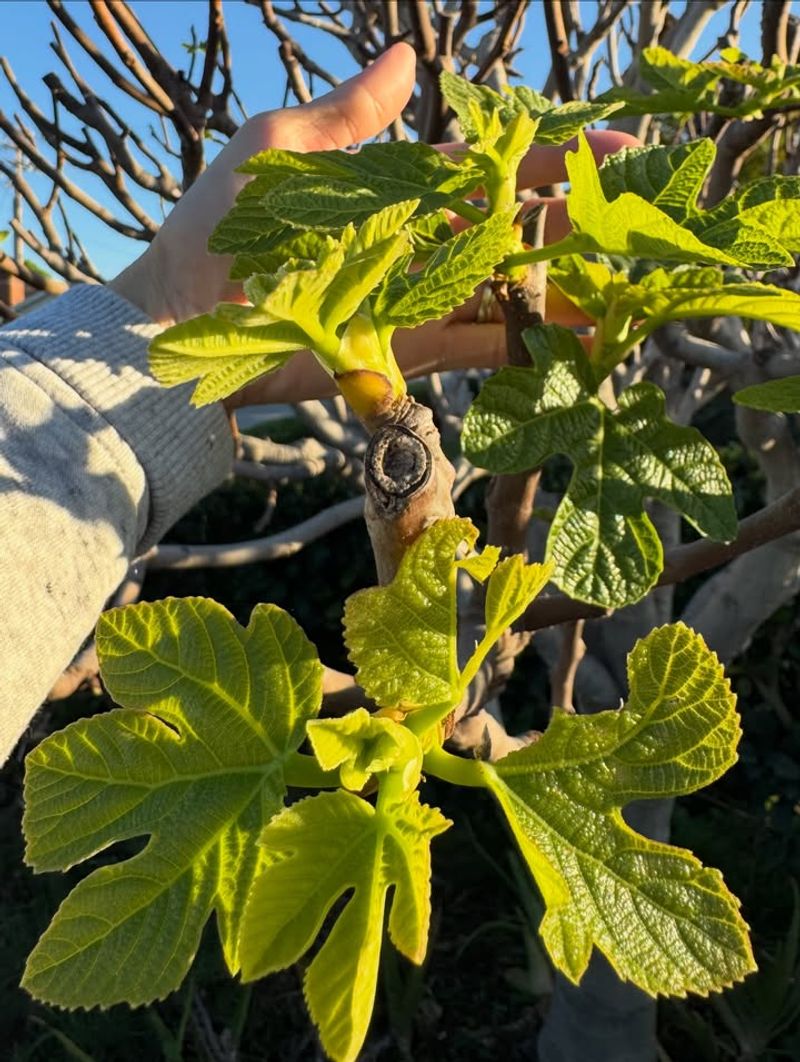
Pruning a fig tree hard in the middle of summer feels productive, but it usually backfires. Heavy cuts during active growth push the tree to spend energy on regrowth instead of fruit production.
Summer is not the time for reshaping the whole tree. Save major structural pruning for late winter when the tree is fully dormant and you can clearly see the branch framework without leaves in the way.
Light cleanup is fine during summer. Remove any crossing branches that rub together, any clearly broken limbs, and any branches that are no longer alive or showing no new growth.
Keep it minimal and targeted.
Large cuts made in summer also leave the tree exposed to heat stress and potential disease entry points right when conditions are hardest. Wounds heal much more efficiently during cooler dormant periods.
Georgia fig growers who prune heavily in July or August often notice reduced fruit the following season. The tree uses significant reserves to recover from aggressive cutting, which can affect next year’s bud development.
Patience pays off with figs. A light touch in summer and a thorough prune in late February or early March gives you the best combination of a manageable tree and a strong crop year after year.
Timing your pruning correctly is one of the simplest improvements you can make.