These Flowering Shrubs Thrive With Neglect In Oregon
Some gardens get daily attention, carefully curated and fussed over through every season. Most gardens, though, get real life: missed watering weeks, sporadic pruning, and the occasional total abandonment during a busy stretch.
The good news is that a well-chosen flowering shrub doesn’t hold any of that against you. Oregon’s climate does a lot of the heavy lifting on its own, with reliable rainfall and mild temperatures that keep plants going even when their owners have completely checked out.
And flowering shrubs built for tough love don’t just survive neglect, they genuinely thrive on it. Over attention is actually a bigger threat to these plants than ignoring them ever could be.
So if your track record with high-maintenance plants has left you shy about trying again, these are the shrubs that will change your mind and transform your yard in the process.
1. Blueblossom
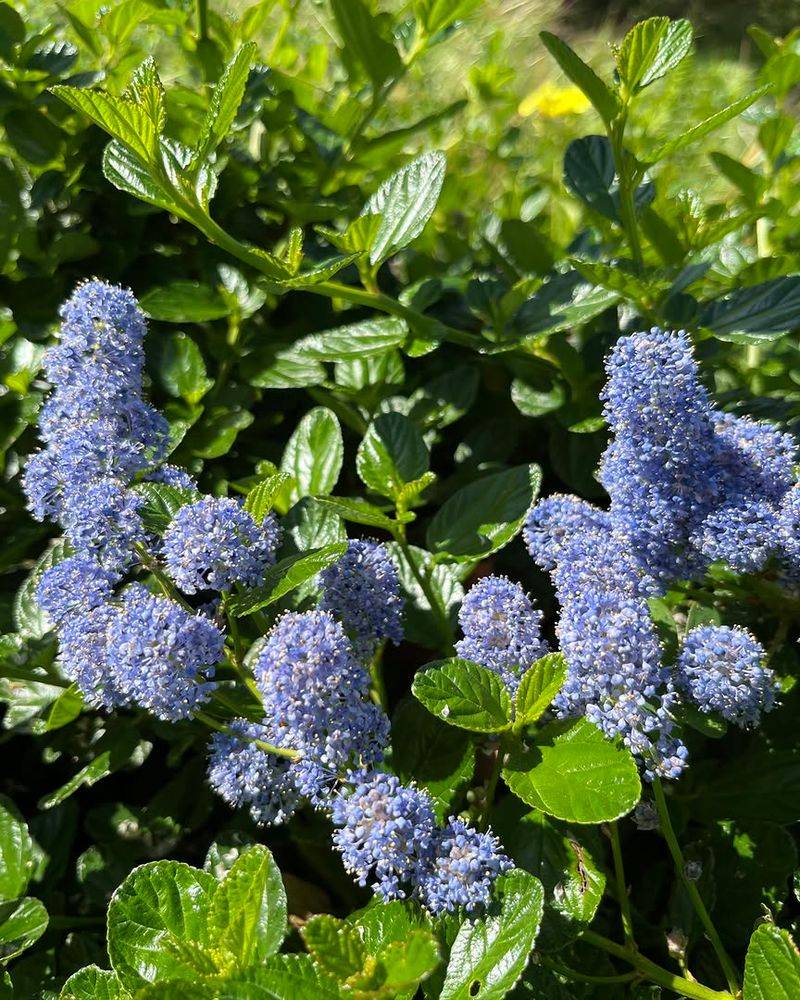
Picture a shrub so covered in bright blue flowers that it almost looks like a piece of the sky fell into your yard. That is Blueblossom for you.
This fast-growing native shrub is one of Oregon’s most eye-catching plants, and it thrives with almost zero attention once it gets going.
Blueblossom, known scientifically as Ceanothus thyrsiflorus, loves the mild, wet winters and dry summers that Oregon’s western regions are famous for. It does especially well along the coast and in the Willamette Valley.
Plant it in a sunny spot with decent drainage, and it will reward you with massive clusters of blue blooms every spring.
One of the coolest things about this shrub is that it actually improves the soil around it. Like other members of its family, Blueblossom can fix nitrogen from the air into the ground.
That means it feeds itself and helps neighboring plants too. Bees absolutely go wild for the flowers, making it a pollinator powerhouse.
It grows quickly, sometimes reaching ten feet tall and wide. You rarely need to water it once established.
Pruning is optional. In Oregon’s landscape, Blueblossom is as close to a no-maintenance showstopper as you will ever find.
2. Golden Currant
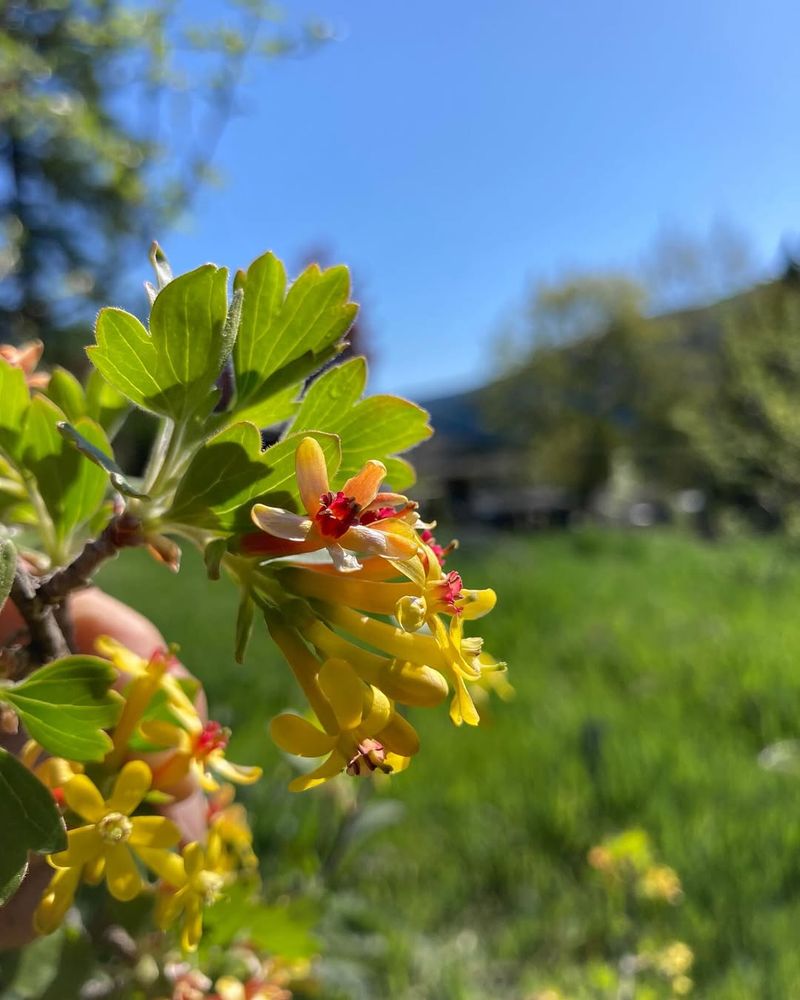
There is something almost cheerful about a Golden Currant in full bloom. Bright yellow flowers practically glow against the green foliage, and the sweet, spicy scent can stop you in your tracks.
This shrub knows how to make an entrance.
Golden Currant, or Ribes aureum, is native to much of western North America, including Oregon. It is incredibly adaptable and grows well in both moist and dry conditions.
You will find it thriving along stream banks, open hillsides, and even in rocky spots where other plants give up. That kind of toughness is rare and valuable.
In Oregon, this shrub blooms in early spring, often when not much else is flowering yet. That makes it a critical early food source for hummingbirds and native bees just waking up after winter.
After the flowers fade, the shrub produces small berries that ripen from yellow to red to deep purple. Birds love them, and so do people.
Your Oregon Garden Changes Every Week. Your Plan Should Too.
Gardening in Oregon changes quickly throughout the season. Every Friday you’ll receive a simple weekly plan showing exactly what to plant, prune, fertilize, harvest, and protect so you never miss the right timing.
The berries are edible and have been used in jams and jellies for generations. Golden Currant grows to about six feet tall and spreads slowly over time.
It handles Oregon’s variable rainfall like a champ, needing little to no supplemental watering once established. Truly a plant that earns its spot.
3. Douglas Spirea
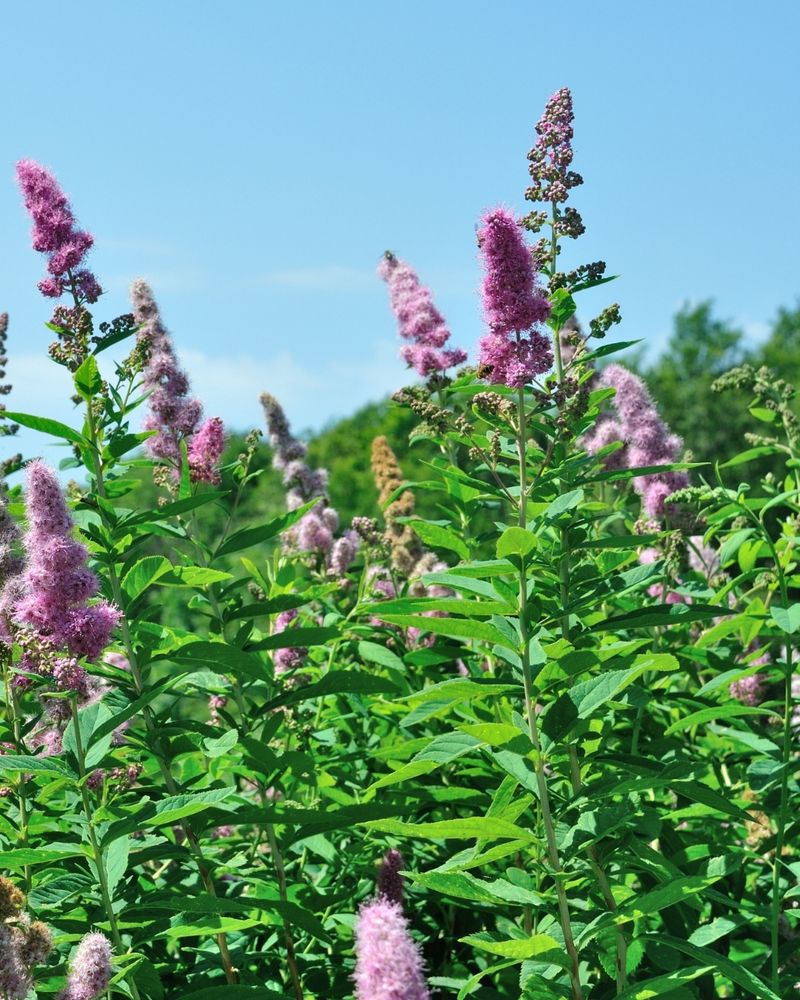
Fluffy pink flower plumes rising above dense green foliage, Douglas Spirea is one of those plants that looks like it belongs in a fancy garden but actually grows happily in the wild corners of Oregon without any help from you. It is bold, beautiful, and wonderfully easy to live with.
Spiraea douglasii is a native Oregon shrub that thrives in moist areas. It loves stream banks, wet meadows, and soggy spots that most other plants avoid.
If you have a low-lying area in your yard that stays wet, Douglas Spirea will absolutely love it there. It blooms from late spring into summer, giving you weeks of that rosy pink color.
Beyond looks, this shrub plays an important role in the ecosystem. Its dense growth provides excellent cover for small birds and mammals.
Pollinators, especially native bees and butterflies, flock to the flowers in large numbers. In Oregon’s wetland restoration projects, Douglas Spirea is often one of the first plants chosen because it establishes quickly and stabilizes soil along waterways.
It spreads by underground stems, so it can fill in a wet area over time. That spreading habit is actually an asset if you want to control erosion.
Heights typically reach four to six feet. Low maintenance does not even begin to describe how hands-off this beauty truly is.
4. Blue Elderberry
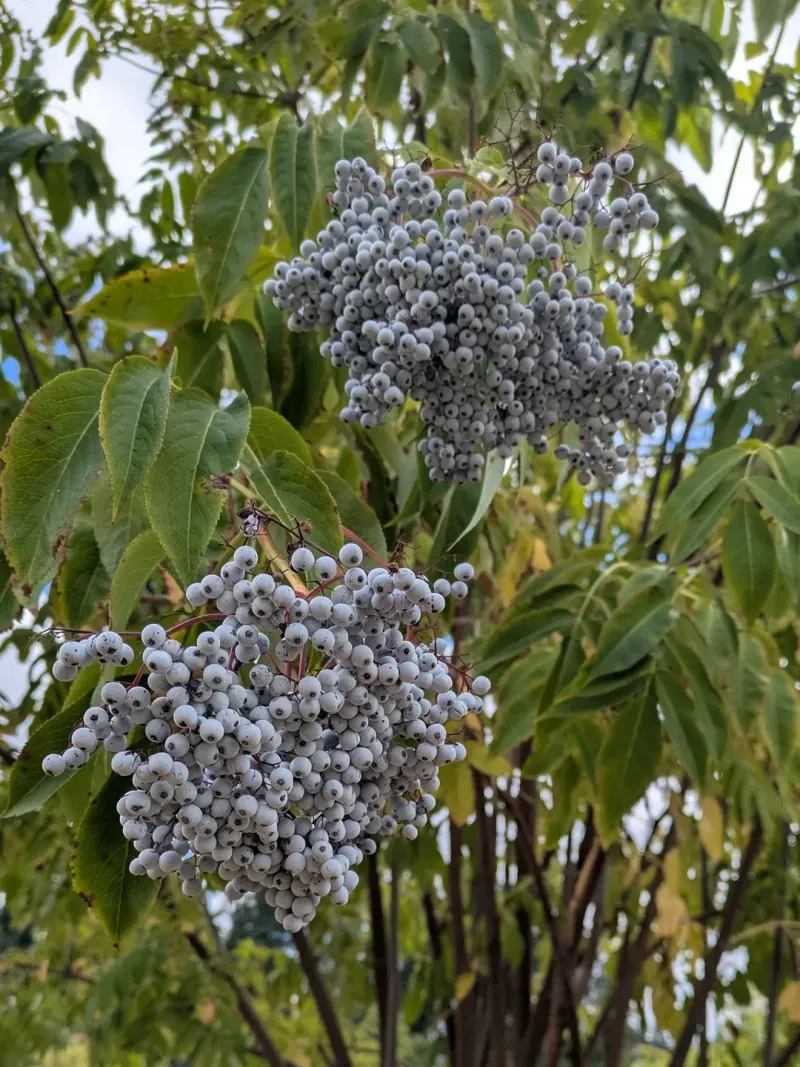
Few native shrubs in Oregon pull double duty as well as Blue Elderberry. In early summer, it bursts into huge, flat-topped clusters of creamy white flowers that attract dozens of pollinator species at once.
Then, by late summer, those flowers turn into heavy bunches of blue-black berries that wildlife cannot resist.
Sambucus cerulea grows fast and big, sometimes reaching twenty feet tall if left alone. That might sound like a lot, but in Oregon’s open spaces and sunny slopes, it fits right in.
It handles dry summers surprisingly well once established, which makes it a great choice for gardeners in the Rogue Valley, the Columbia Gorge, and other drier parts of the state.
The berries have a long history of use by Indigenous peoples throughout the Pacific Northwest. They were dried, cooked, and made into syrups and wines for centuries.
Today, home foragers and wildlife alike still benefit from this shrub’s generous harvest. Just remember that raw berries can cause stomach upset, so always cook them first.
Blue Elderberry is also a fast-growing privacy screen. Plant a few in a row and within a couple of years you will have a lush, productive living fence.
It asks for very little in return, just sunshine and some patience while it gets established in Oregon’s diverse soils.
5. Nootka Rose
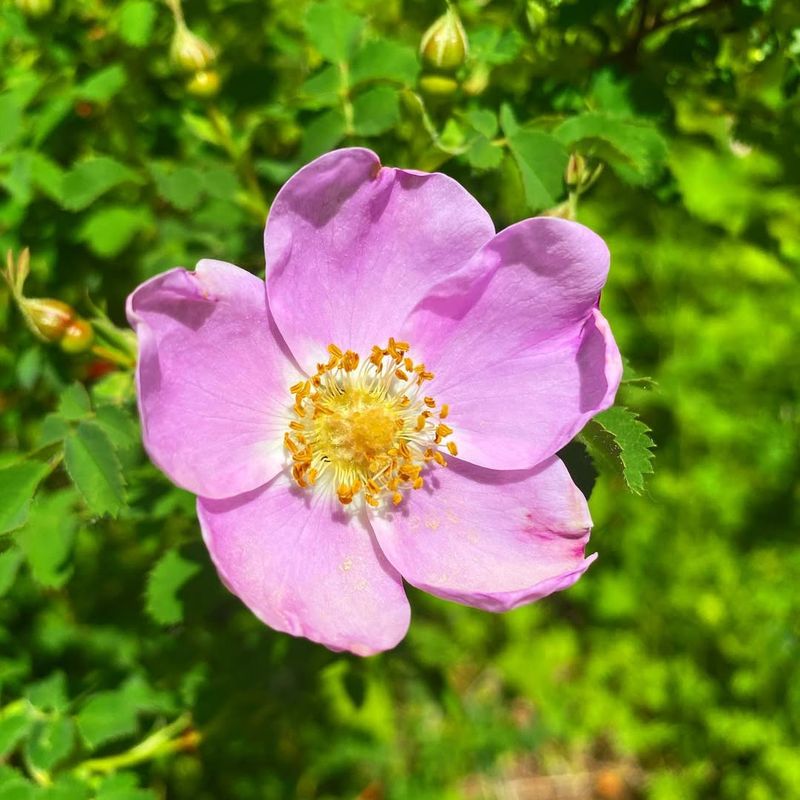
Wild roses have a magic that cultivated ones sometimes lose, and Nootka Rose captures that magic perfectly. Large, soft pink flowers open up in late spring with a fragrance that is light, fresh, and unmistakably wild.
Growing along Oregon’s forest edges and stream banks, this shrub brings old-fashioned beauty to modern landscapes.
Rosa nutkana is one of the most widespread native roses in the Pacific Northwest. It grows across western Oregon and into the mountains, adapting to a wide range of soils and moisture levels.
It does well in both sunny and partially shaded spots, making it more flexible than many other flowering shrubs. Once rooted, it requires almost no care at all.
The thorny canes make Nootka Rose a natural barrier that deer and other browsing animals tend to avoid. After the flowers fade, large red rose hips develop and persist well into winter.
These hips are packed with vitamin C and are a critical food source for birds during Oregon’s cold months. Cedar waxwings and robins are especially fond of them.
Spreading slowly by underground roots, Nootka Rose can form a loose thicket over time. That is actually perfect for erosion control on slopes.
It grows four to eight feet tall and pairs beautifully with other Oregon natives. A truly resilient and rewarding shrub for any low-maintenance landscape.
6. Baldhip Rose
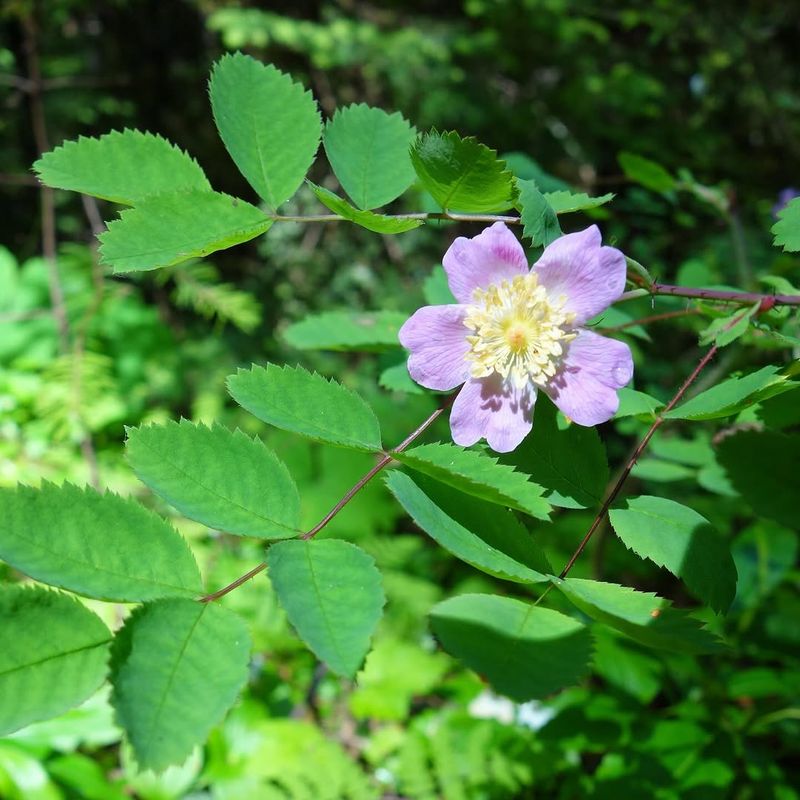
Not all roses need to shout to be noticed. Baldhip Rose is the quiet, graceful cousin in the rose family, with dainty pink blooms and slender stems that weave through the forest understory with effortless charm.
It is small, subtle, and surprisingly tough for its delicate appearance.
Rosa gymnocarpa is one of Oregon’s smallest native roses, usually reaching only two to four feet tall. It thrives in shaded woodlands and along the edges of conifer forests, which makes it unusual among flowering shrubs.
Most flowering plants want full sun, but Baldhip Rose is perfectly happy with filtered light under Oregon’s big Douglas firs and Western red cedars.
The flowers are tiny, barely an inch across, but they appear in generous clusters from late spring into early summer. After flowering, the shrub produces small, smooth red hips that are technically edible but quite tart.
Birds still enjoy them, especially during lean winter months when food is scarce in Oregon’s forests.
What makes this rose special for gardeners is its ability to grow where almost nothing else will. Under dense tree canopies, in rocky woodland soil, with no irrigation and no fertilizer, Baldhip Rose just keeps going.
It spreads slowly and does not become invasive. For shaded Oregon gardens, it is honestly one of the best choices you can make.
7. Oso Berry
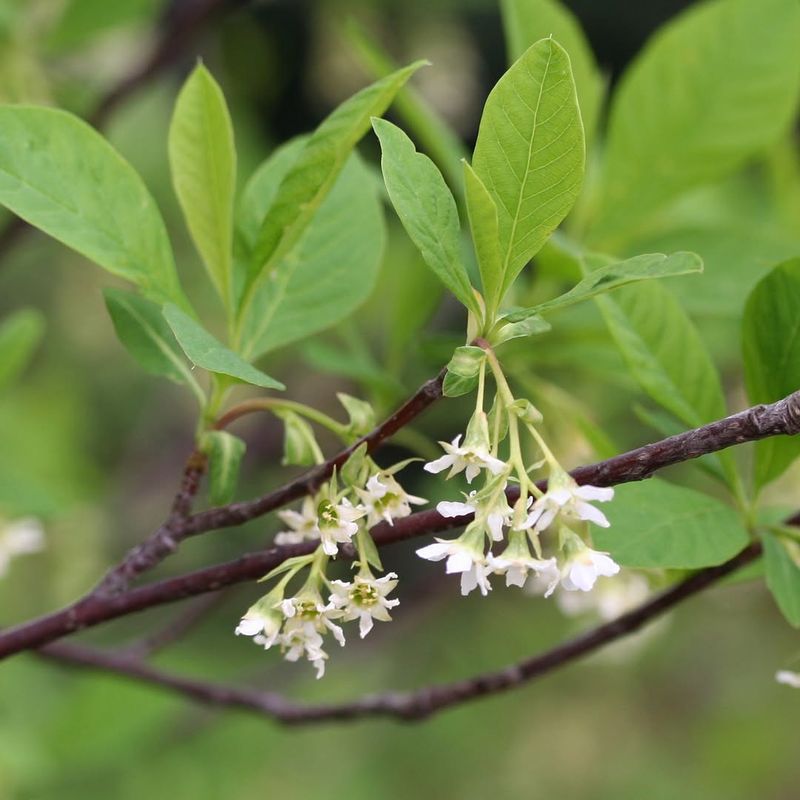
Every Oregon spring, Oso Berry is one of the very first native shrubs to wake up. Before most plants have even thought about leafing out, Oso Berry is already dangling clusters of small white flowers from its bare stems.
That early bloom makes it a lifeline for hungry pollinators coming out of winter dormancy.
Oemleria cerasiformis grows naturally along stream banks and in moist, wooded areas throughout western Oregon. It handles shade well and often grows beneath large trees where few other flowering shrubs can manage.
The flowers have a faint almond-like scent that is pleasant up close. Male and female flowers grow on separate plants, so you need both to get berries.
The small blue-black fruits that follow look like tiny plums and ripen by early summer. Birds love them fiercely, and the berries tend to disappear fast.
Indigenous communities throughout the Pacific Northwest have eaten these fruits for thousands of years, though they are quite bitter when eaten raw and much better cooked or dried.
Oso Berry grows six to fifteen feet tall and spreads by suckering to form loose colonies. In Oregon’s moist forests and riparian areas, it is a key player in the native plant community.
For gardeners who want a low-fuss shrub that blooms early and feeds wildlife generously, Oso Berry delivers every single year.
8. Twinberry Honeysuckle
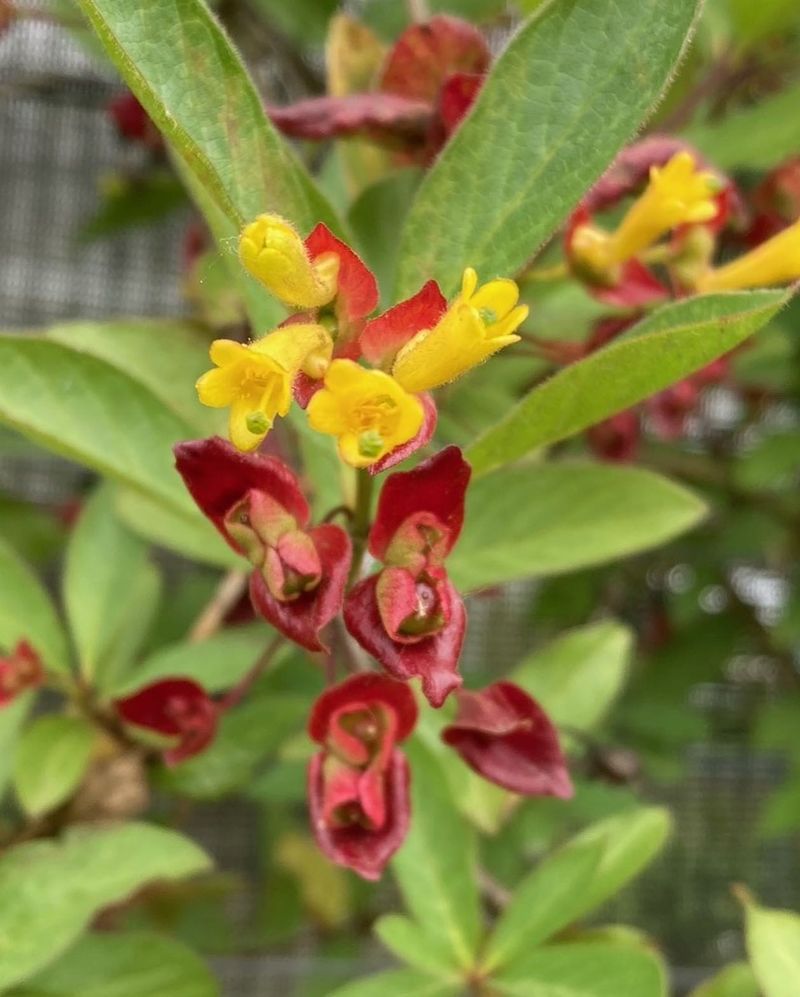
Twinberry Honeysuckle has one of the most interesting fruiting displays in all of Oregon’s native plant world. Each pair of yellow flowers is cradled by two leafy bracts that turn deep red as the season progresses.
When the twin black berries ripen inside those red bracts, the effect is almost theatrical, like tiny jewels on a velvet cushion.
Lonicera involucrata thrives in moist to wet environments across Oregon. Stream banks, wetland edges, and shaded forest clearings are its favorite spots.
It grows four to nine feet tall and spreads to form dense clumps over time. In Oregon’s rainy western regions, it establishes quickly and rarely needs any supplemental water or care after the first year.
Hummingbirds are the primary pollinators of Twinberry Honeysuckle. The tubular yellow flowers are perfectly shaped for a hummingbird’s long bill.
After pollination, the black berries attract a wide variety of birds including thrushes, waxwings, and grosbeaks. The berries are not tasty for humans but are a very important food source for Oregon’s native bird populations.
For rain gardens, bioswales, or any wet corner of your Oregon property, Twinberry Honeysuckle is an excellent choice. It tolerates seasonal flooding that would stress most shrubs.
It also provides excellent visual interest across all seasons, from the bright spring flowers through the dramatic red and black fruit display of summer and fall.
9. Evergreen Huckleberry
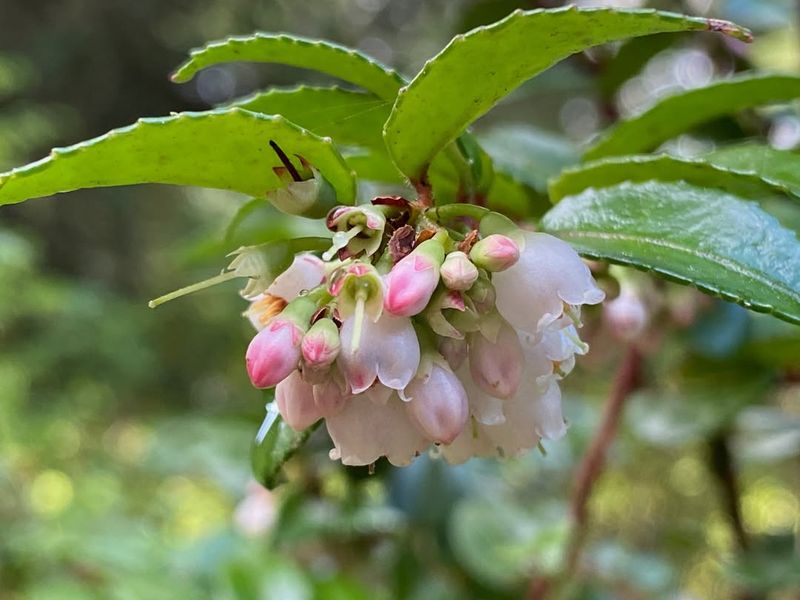
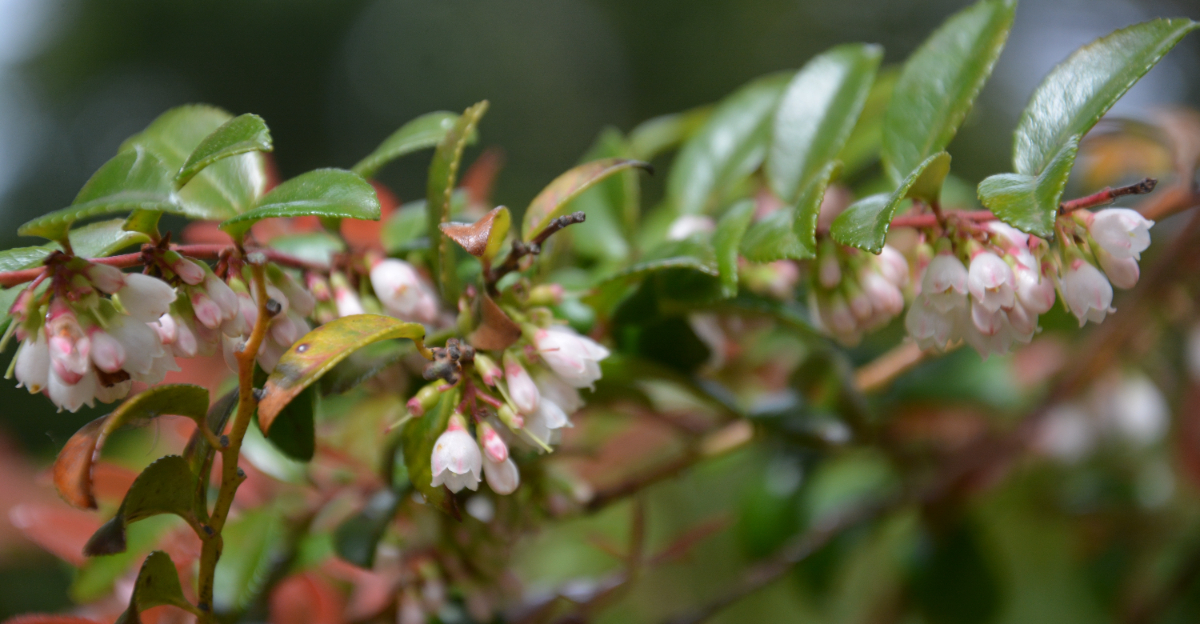
Walk through almost any coastal Oregon forest and you will likely brush past Evergreen Huckleberry without even realizing it. This dense, glossy-leaved shrub is one of the most familiar plants in the Pacific Northwest, beloved by foragers, florists, and wildlife alike.
Its small pink bell-shaped flowers are easy to overlook, but the berries they produce are legendary.
Vaccinium ovatum is an evergreen shrub that holds its dark green leaves year-round, making it attractive in every season. It grows slowly but steadily, eventually reaching four to eight feet tall in shaded forest settings.
In Oregon, it thrives under the canopy of coastal forests where fog keeps moisture levels high and direct sun is limited.
The berries ripen in late summer and fall, turning from red to deep blue-black. They are smaller than commercial blueberries but packed with rich, complex flavor.
Florists prize the glossy foliage for floral arrangements, and it has been commercially harvested in Oregon’s coastal counties for decades. Birds, bears, and other wildlife compete eagerly for the fruit each season.
For Oregon gardeners with shaded spots and acidic soil, Evergreen Huckleberry is practically perfect. It needs no pruning, no fertilizing, and very little water once established.
The foliage stays beautiful through winter when most other shrubs look bare. Few plants offer this combination of year-round beauty, wildlife value, and edible reward with such minimal effort.